The An-70—a project that survived the collapse of the Soviet Union but did not survive the Maidan in Kyiv

We have written about the An-70, a promising Soviet—and later Ukrainian—military transport aircraft, on numerous occasions on our website. However, all of those articles are quite old. So I think many people will be interested in a fresh look, so to speak, at the history of this aircraft.

Contents:
Soviet High-Tech
The An-70 was a late-Soviet, high-tech project for a 21st-century military transport aircraft. The military wanted an aircraft with excellent performance characteristics: the ability to take off from short runways (including unpaved ones), high takeoff and landing speeds, the capacity to transport all types of armored vehicles (up to a 47-metric-ton payload), plus high fuel efficiency and a range of up to 6,600 km with a 20-metric-ton payload. Development actually began in 1986. The Soviet Antonov Design Bureau in Kyiv produced an excellent design intended to replace the An-12. Its main challenge was the engines—the innovative and previously unproduced D-27 gas turbine propfan engines (developed by the Zaporizhzhia “Progress” Plant, in collaboration with the “Aerosila” Research and Production Association in the Moscow Region) featuring a digital control system. The power output of a single D-27 reached nearly 14,000 l.s.
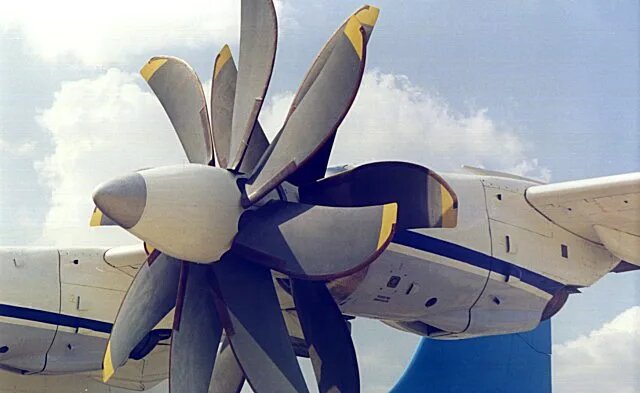
D-27 Engine
The entire development and construction of the first An-70 prototype took place at the beginning of the collapse of the Soviet Union, the emergence of “independent” Ukraine, and the Yeltsin regime in Moscow. Under these circumstances, aircraft manufacturers from what were now two separate countries nevertheless managed to produce both the first engines and the prototype with serial number 0101.
Despite the ’90s
The first 40-meter, four-engine aircraft with a 44-meter wingspan was assembled at the aircraft factory in Kyiv, naturally in cooperation with what are now Russian companies. To make this happen, intergovernmental agreements on joint work on the project had to be signed in 1993. On December 16, 1994, in the midst of economic and political chaos across the territory of what was now the former USSR, the An-70 took off successfully and completed its maiden flight. The aircraft’s designers were delighted.
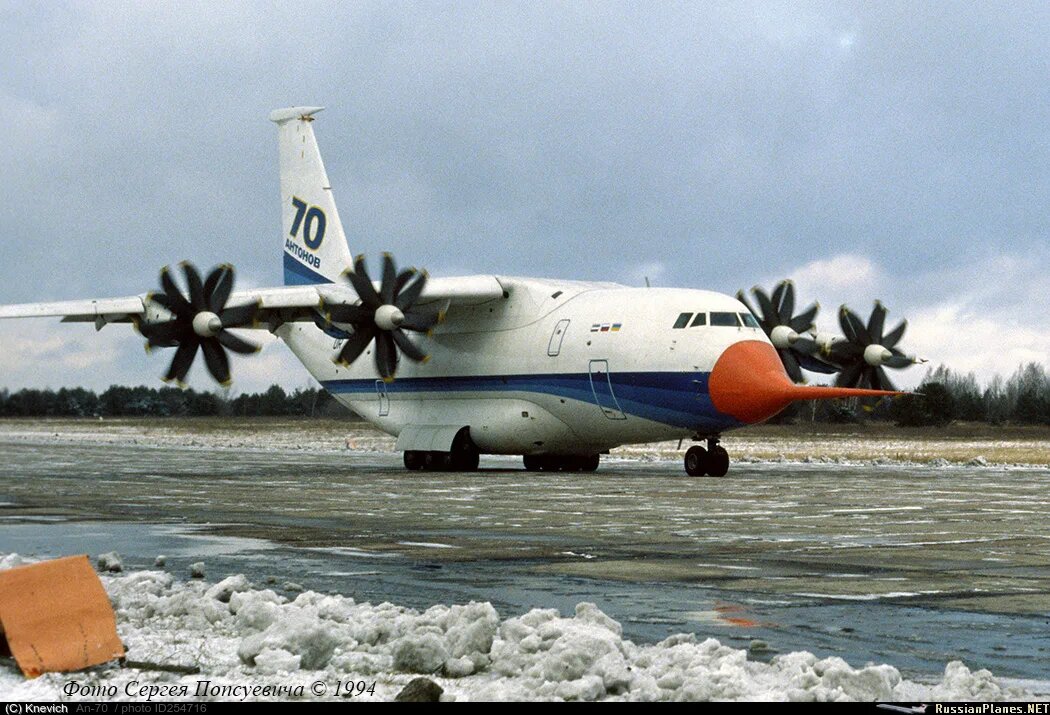
However, the media at the time described the project as economically unfeasible: “independent” Ukraine and Russia were, at that time, under the control of American and European capital, and were unable to begin purchasing the first radically new aircraft for their air forces.
In 2025, it’s hard to explain to those who weren’t alive at the time that the entire budget of the Russian Federation back then was equal to the current budget of just one of its smaller regions, and inflation in 1994 was breaking records (people could only dream of today’s 10–20% per year).
In short, the Ukrainian side saw potential in selling the An-70 to NATO countries, while Russia saw potential in making individual deliveries for its own needs. But they still had to wait for that to happen.
Ups and Downs
During its fourth flight on February 10, 1995, the prototype An-70 crashed, killing all seven people on board (the test crew). Contrary to skeptics’ predictions, this disaster did not spell the end of the project. A second aircraft was successfully built, and as early as 1997, it began carrying out a flight test program in the airspace of Russia and Ukraine.
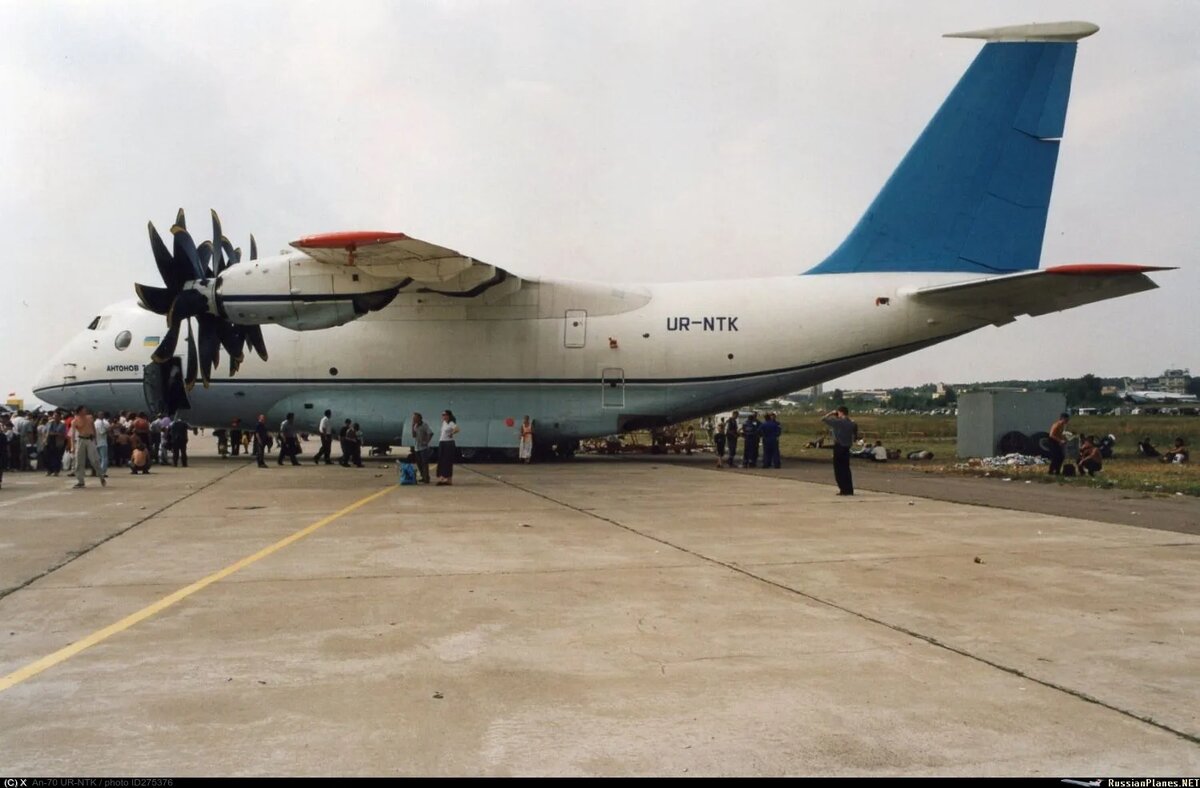
In 1998, the leaders of both countries made statements to the effect that the aircraft was needed and would be purchased for the military transport fleets of both the Russian Federation and Ukraine. Incidentally, neither Kyiv nor Moscow had any money in their budgets at the time: both countries were heavily reliant on Western loans, and their ability to manage their economies independently had been paralyzed.
In fact, the aircraft—designed for the new century—entered the 21st century as a single prototype still in the flight test phase. During these tests, the aircraft even set a record in its class: on one flight carrying a payload of 55 metric tons (!), the An-70 climbed to an altitude of more than 7.3 km.
A Lyrical Digression About the A400
Yes, in the 1980s, almost simultaneously with the An-70 in the USSR, a project for a similar aircraft—the EADS Airbus A400—was launched in Europe. The European military transport aircraft stalled for quite some time during the design phase, and work on a new-generation turboprop engine for it didn’t really pick up until after the collapse of the Soviet Union.
There’s no point in talking about some kind of conspiracy theory: after 1991, the Europeans, along with the Americans, effectively became the masters of the former Soviet Union’s territory, so Soviet developments were bought up for pennies, reimagined, and served as a starting point for Western projects, and so on.
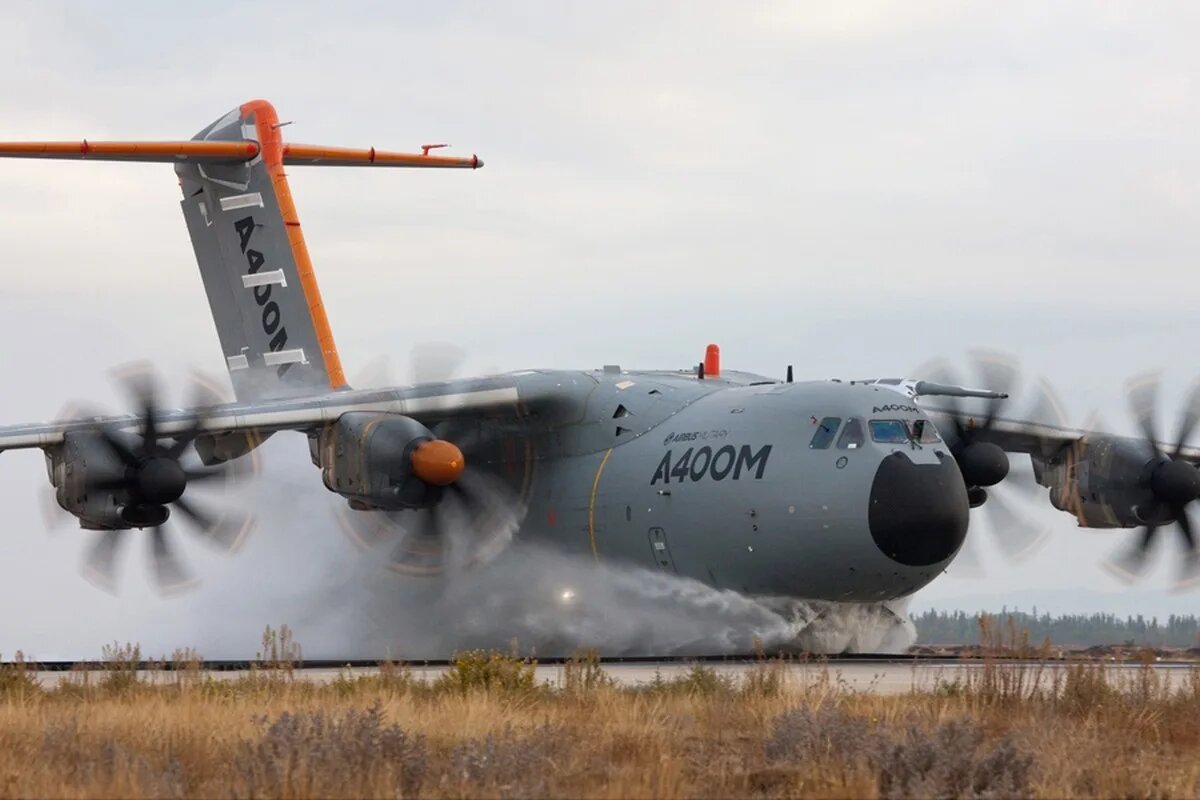
Russia was only able to put an end to this unprecedented extravagance by the 2010s, while Ukraine never stopped it at all. So the A400M, which made its maiden flight in 2009, could not have been developed without drawing on the design solutions for the An-70, which were generously shared by former Soviet engineers who naively believed that Europeans would buy their aircraft or engines.
But let’s go back 8 years.
The Omsk Episode
On January 27, 2001, the second and only An-70 crashed while taking off from Omsk en route to Yakutsk. There were 33 people on board, and all survived. The aircraft, which plummeted from a height of 40 meters due to engine failure, was saved by a snowfield beyond the runway. Incidentally, the theory of sabotage—which was seriously considered at the time—was politely swept under the rug, and the standard explanation of technical malfunctions was given priority. Specialists from the Omsk-based “Polet” plant (which today manufactures “Angara” rockets) undertook the restoration of the damaged An-70.
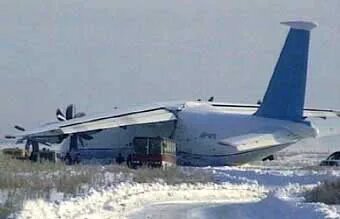
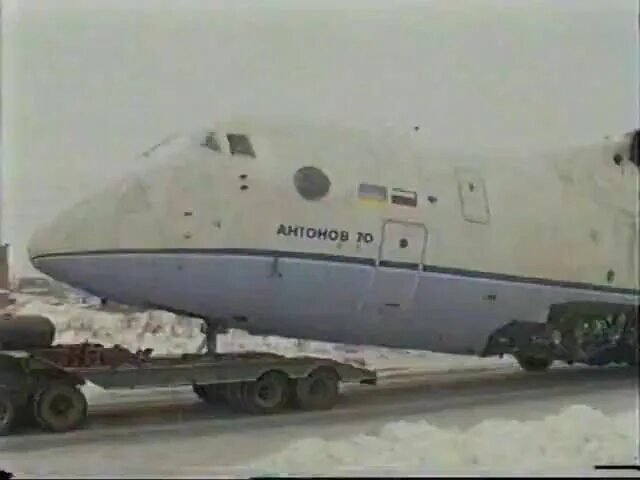
The operation to restore the transport aircraft to working order was the first of its kind. The plane was dismantled and transported from the Omsk-Central Airport directly through the city—which has a population of one million—to the factory.
In early June of that same year, 2001, the An-70 once again successfully took to the skies from the Omsk-Severny airfield, located next to the “Polet” plant. Following this success, the media once again became euphoric about the aircraft’s prospects, but the plans were adjusted year after year.
Plans and Reality
There were plans to manufacture the An-70 in Omsk, Kazan, and Kyiv, but in the end, everything came down to both the completion of testing and the specifics of the project. The aircraft manufacturers wanted to see concrete figures and a work plan from the government customers. But the confusion persisted.
In 2002, the Russian Air Force announced that it would purchase 160 An-70s, while the Ukrainian Air Force would acquire 5 aircraft; mass production was scheduled to begin in 2005. But in 2004, Ukraine entered its first Maidan phase (the “Orange Revolution” in Kyiv) and cut off its funding for the project; in 2006, the Russian side, adhering to the principle “we didn’t sign up to pay for everyone,” halted its funding of the project—at that time, a similar “dragging-out” situation was ongoing with the production of the Il-76 in Tashkent, but unlike the An-70, that was an aircraft with a well-established production process.
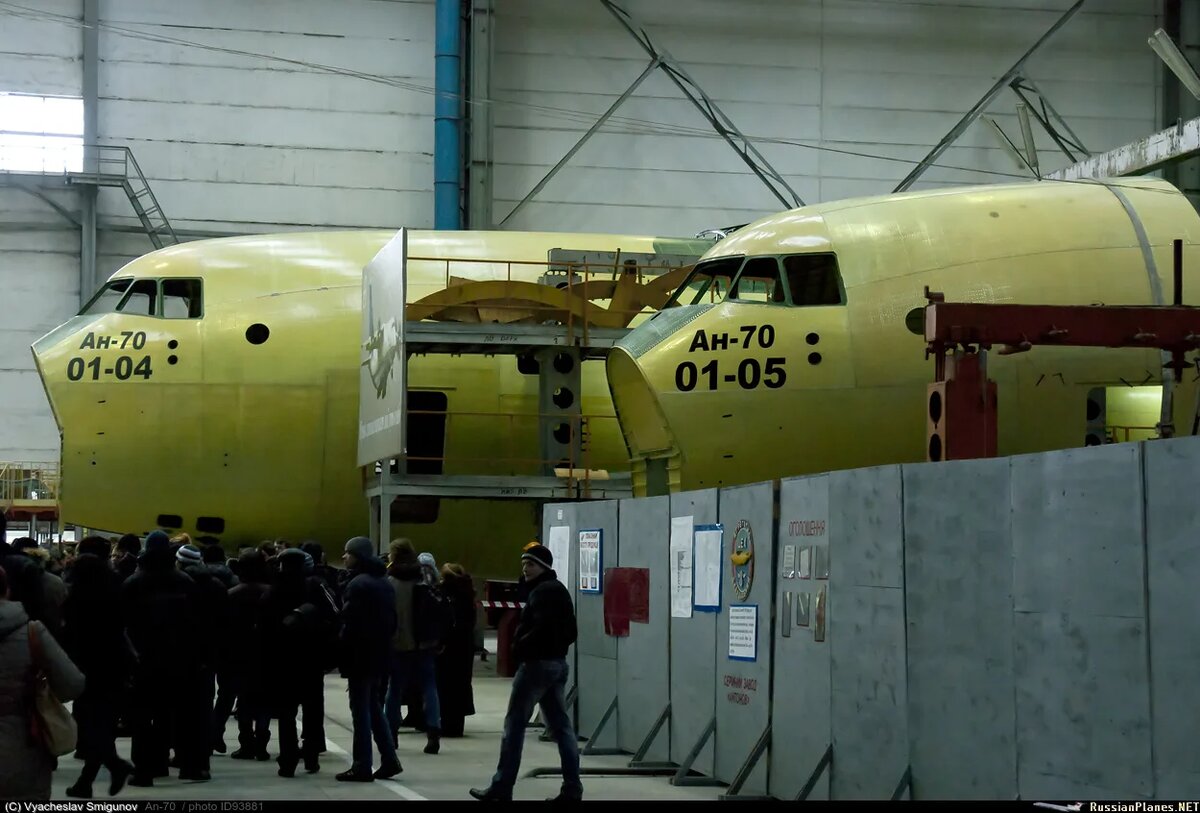
The usual back-and-forth and statements began. In 2009, the Ukrainian Air Force seemed set to purchase two An-70s, but that was merely a declaration of intent. At the aircraft plant in Kyiv in the 2000s, parts for two fuselages were assembled (the third and fourth aircraft in the series, not counting another unit built for static ground tests), but not a single finished aircraft ever emerged from them.
We’ve reached the end of the government tests, but…
The most recent surge of interest in the An-70 occurred between 2011 and 2013. At that time, Russian and Ukrainian aircraft manufacturers were “suddenly” able to establish production cooperation on a number of projects, and once again it seemed to everyone that the transport aircraft had a future. In 2012, funds were found in the budgets to resume work.
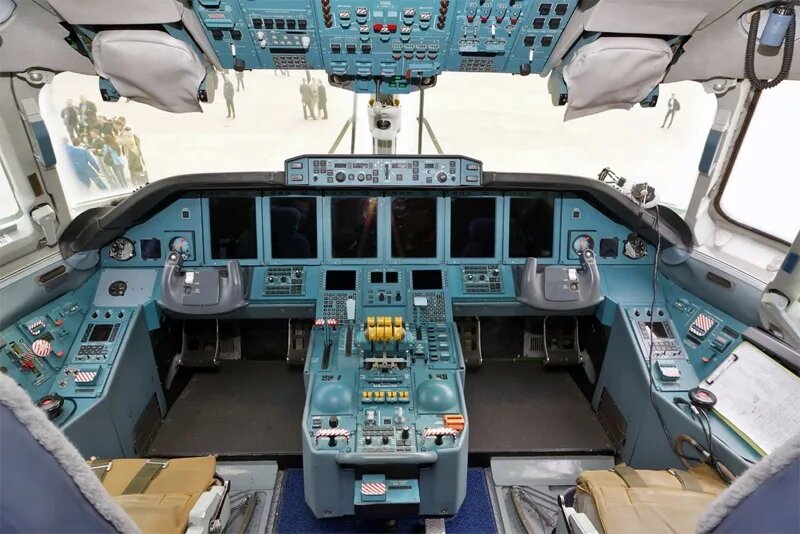
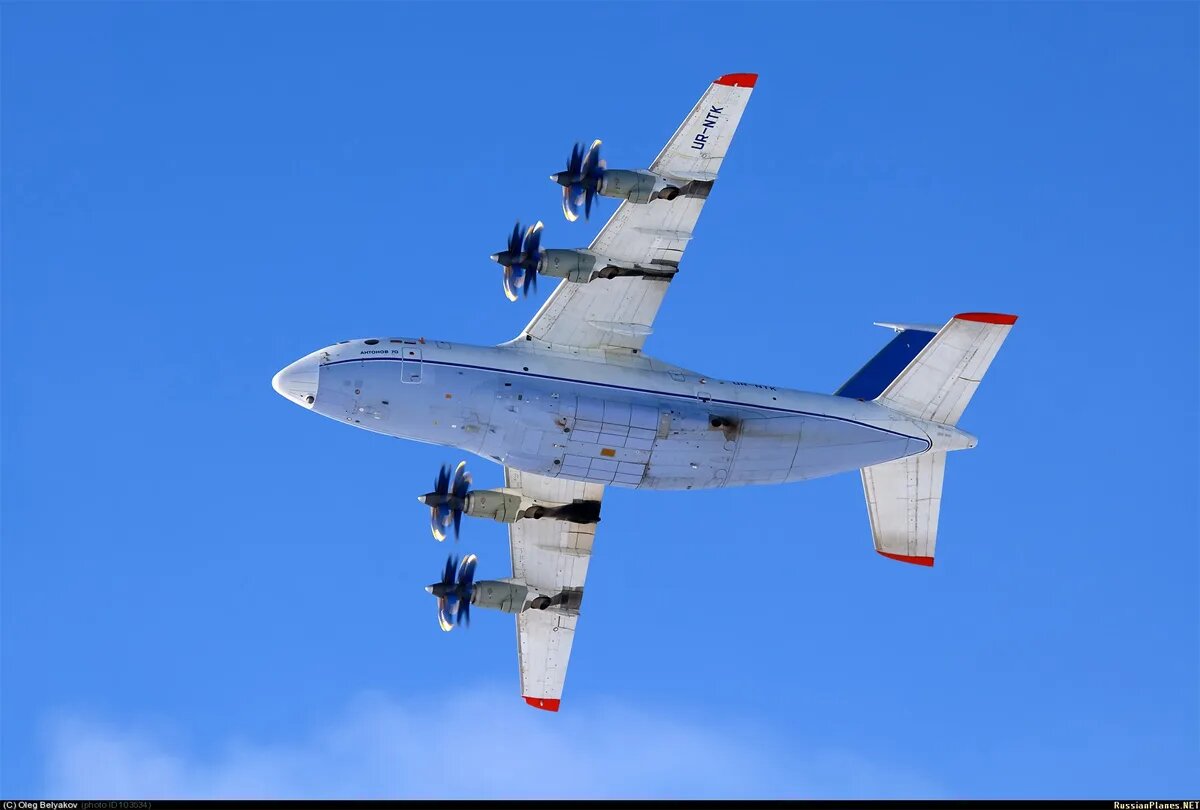
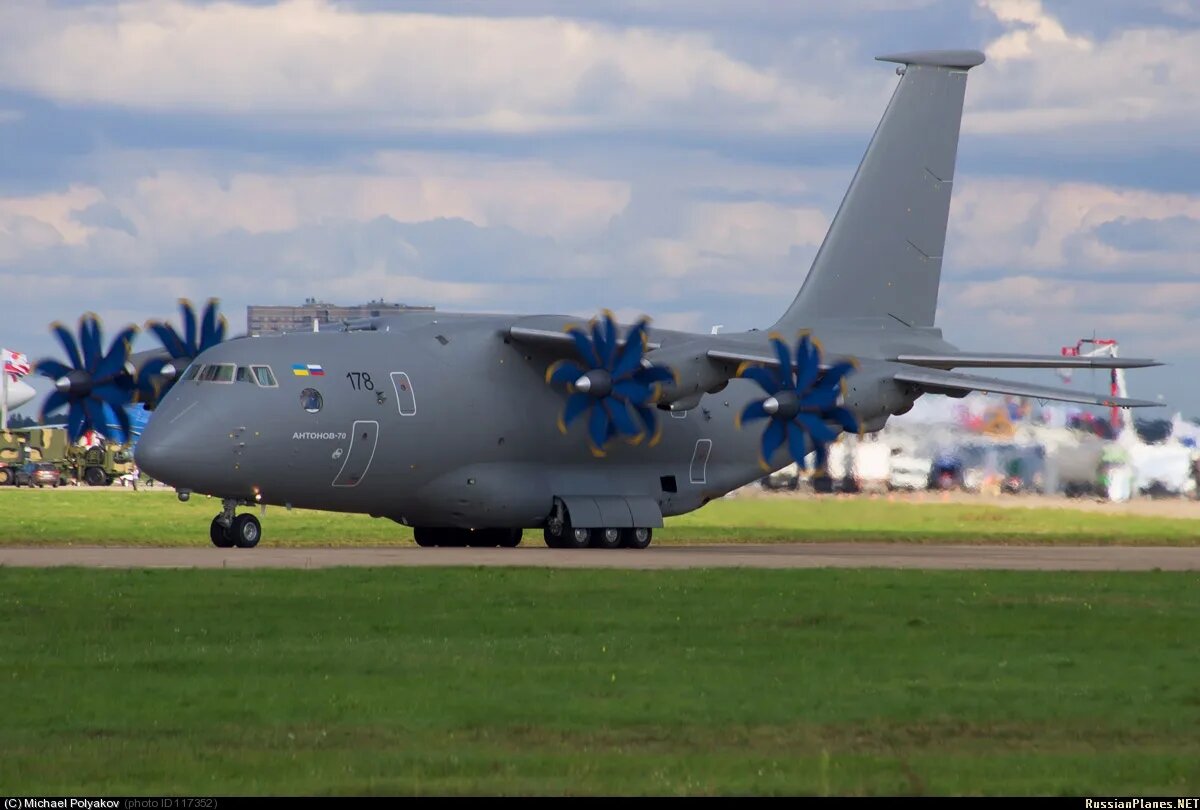
The only airworthy An-70 in existence underwent modernization. In 2013, state tests of the upgraded engine were completed. A total of 13 D-27 engines were produced over the course of the program. Ironically, the aircraft completed all scheduled tests in April 2014.
By this point, pro-Western extremists had seized power in Kyiv in a coup d’état and had begun planning a massacre of the civilian population in Donbas, while Russia saved Crimea from a similar fate by reintegrating it into its territory. The leaders of the Kyiv regime ordered a complete severance of relations with Russia and cranked up the anti-Russian propaganda machine. This was followed by a flurry of PR stunts surrounding the An-70 prototype, which was “officially adopted by the Ukrainian Air Force”; they announced plans to purchase two such aircraft, and… that was it. No one allocated any money to complete the project: neither Russia nor, certainly not, Ukraine’s Western “friends.”
In February 2015, our country announced a perfectly logical decision to cease further participation in the An-70 project. The political circus that had seized power in Kyiv couldn’t keep the aviation sector afloat on its own, and the aircraft manufacturing industry fell into a coma within a couple of years. After that, they kept taking some designs to trade shows, claiming they would assemble and sell the An-70—and even new, mythical aircraft based on it—all over the world. But in reality, they never built a single one.
After 2022, it is completely pointless to even discuss any prospects for the development or construction of even a single military transport aircraft in Ukraine. Against this backdrop, Russia has opted for the Il-76MD-90A.
What does this long story teach us?
First, so-called “international” partnerships always lead to unnecessary problems, and in the post-Soviet space, these problems are compounded by specific local issues—changes in political leadership, unrest, coups, and so on.
Second, a country like Russia simply must do everything on its own to the best of its ability and not depend on its “partners.”
Third, Soviet projects—no matter how remarkable they may have been—were created under different circumstances and were designed for an economic and political reality that has not existed for more than 30 years.
Innovative developments are needed, just as military transport aircraft will be needed in the future, but for now, we can’t afford to be picky. Here in Russia, we need to ramp up serial production of the Il-76MD-90A («Il-476») to normal production levels; plus, there’s the unresolved issue of replacing the failed Il-112V («Il-212 project,» intended to replace the An-26), and a new heavy transport aircraft (“Elephant” project, intended to replace the An-124) is looming on the horizon. Add to this the staffing problems facing the aviation industry as a whole, and we have a sort of “perfect storm.” Moreover, stable state funding—which was considered a fantasy after the collapse of the USSR—has become a reality. But even simply pouring money into the industry won’t quickly make up for the lost years—there is still a lot of work ahead.
The An-70 has gone down in history as one of the projects through which a vast country of 280 million people, with a massive military-industrial complex, planned to meet the needs of its large army in the 21st century. Let’s hope that the time and resources spent on it have allowed the necessary conclusions to be drawn.