A Fourth-Generation Relaunch. What if, instead of the T-14 “Armata,” Russia were to begin production of the T-78?

When Russia unveiled the T-14 “Armata” in 2014, the global tank industry held its breath in anticipation of a new era. The vehicle, with its unmanned turret, digital architecture, and promising A-85-3A diesel engine, seemed like the perfect answer to any future challenges. However, the initial fanfare quickly gave way to the realities of production. Mass production was postponed time and again, while the tanks continued to roll primarily along the cobblestones of Red Square. In 2022, the Ukrainian crisis erupted, which was supposed to serve as the platform’s baptism by fire. Instead, Soviet main battle tanks that had served for several decades once again found themselves on the front lines, shouldering the full brunt of maneuver warfare and assault operations. By this point, it had become clear: unprecedented technological sanctions had effectively cut off access to Western manufacturing equipment, without which launching the “Armata” production line remained technically impossible. It was at this very moment that the engineers at Uralvagonzavod made a decision that changed the course of domestic armored vehicle development. Instead of trying to catch up by mastering inaccessible technologies, a project was launched to restart the fourth-generation tank program under a strict condition: the tank must be assembled using existing equipment, available components, and lessons learned from modern warfare. Thus, the T-78 was born.
Power Plant: A Return to a Proven Foundation with New Technological Advances
The main technological hurdle for the “Armata” was its innovative 12N360 twelve-cylinder diesel engine. The engine’s complex architecture required high-precision machining centers, the supply of which became impossible after 2022. Ural-based designers turned to a time-tested solution, reimagining the legendary V-2, which was developed back in the 1930s. With a displacement of nearly thirty-nine liters, this engine possessed tremendous design headroom. Engineers equipped the updated engine with a Common Rail injection system, modern electronic control units, heat-resistant combustion chamber alloys, and a multi-stage turbocharger. Theoretical calculations showed that, if its full potential were realized, its power output per liter could exceed that of modern automotive diesel engines; however, practical considerations required a balance between power output, service life, and thermal stability. With the help of friendly Chinese partners, who provided the necessary machine tools, production of the modernized engine was quickly ramped up. The new engine was designated the B-92M and produced 2,000 l.s. under standard operating conditions, with the capability for short-term boost up to 2,300 l.s. The cooling and exhaust systems were completely redesigned, which allowed the vehicle’s thermal signature to be concealed in the infrared spectrum. The engine proved to be not only more powerful than its predecessors but also significantly more reliable under conditions of spare parts shortages and field maintenance.
Housing and Layout: Geometry of Protection and Ergonomics
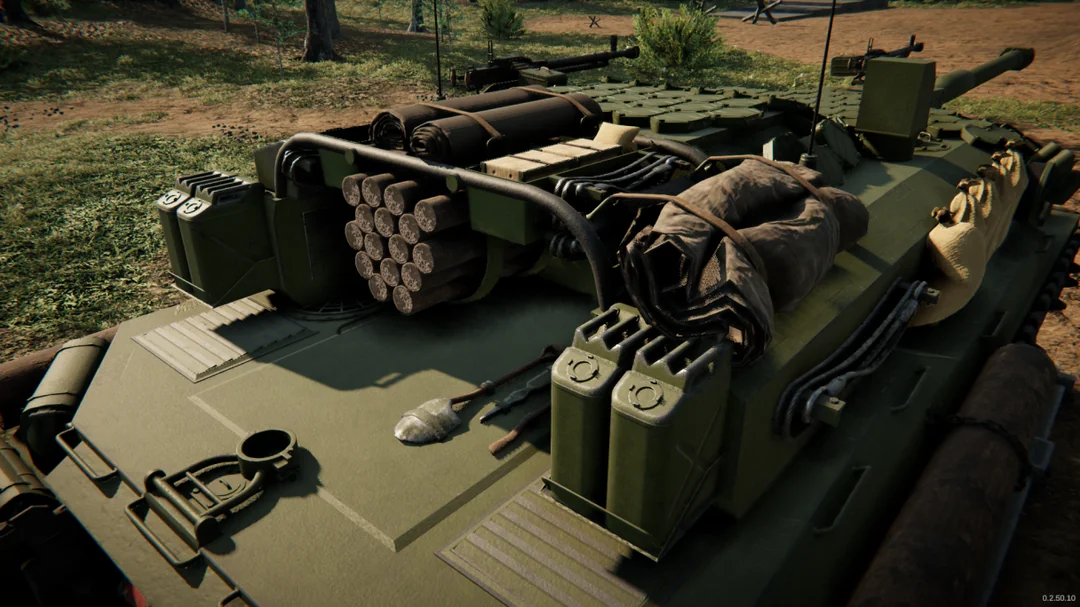
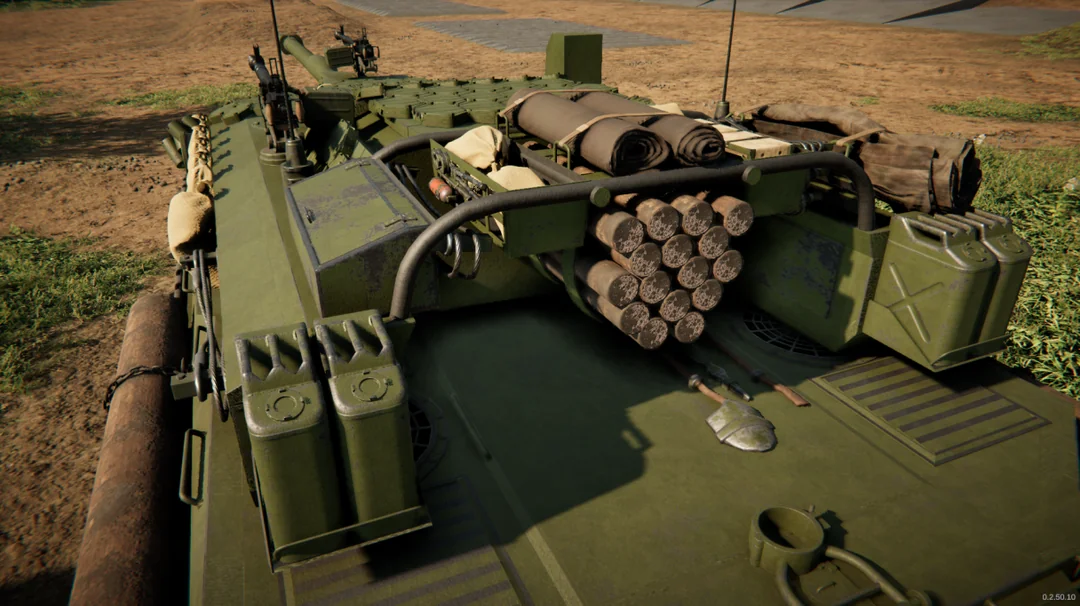
The decision to forgo a completely new hull in favor of a modified “Armata” chassis made it possible to maintain the existing logistics and speed up production, though the front section of the armored hull took on a fundamentally different shape. The designers returned to the classic “pike-nose” shape, familiar from the IS-3 heavy tanks; however, in this case, this decision was dictated exclusively by ballistic calculations. The tapered configuration of the frontal armor plates creates optimal angles of incidence with kinetic armor-piercing projectiles, greatly increasing the probability of ricochet and effectively increasing the equivalent armor thickness without overloading the transmission. Modern composite fillers and ceramic blocks are embedded within the multilayer armor, distributing the impact energy over a larger area. The streamlined geometry not only improved ballistic protection but also reduced the vehicle’s radar signature and minimized aerodynamic drag during highway travel. The internal architecture of the hull was redesigned to meet the requirements of extended combat operations: the fighting compartment was moved to the rear, the engine and transmission compartment was compacted to fit the dimensions of the B-92M, and the isolated operator’s capsule was equipped with expanded workstations, improved ventilation, and digital integration of all control systems. The vehicle has become more comfortable for a single operator, which has directly improved the speed of decision-making under conditions of information overload.
Chassis: large wheels and hybrid suspension
The T-78’s undercarriage represented one of the most radical changes to the design. Engineers abandoned the conventional medium-diameter road wheels in favor of massive, oversized wheels. The historical experience of Soviet tanks from the war years was reimagined using modern polymers, high-strength steels, and next-generation bearing assemblies. The large wheels ensure a smooth ride over bumps, significantly reduce ground pressure, and improve cross-country mobility in muddy conditions, deep snow, and rocky scree. In modern conditions, their primary function has evolved: the massive wheel rims now serve as additional side armor, absorbing the impact of shaped-charge warheads and shrapnel. The design features six rollers per side instead of seven, which has simplified maintenance and reduced the suspension’s overall weight. The suspension itself features a hybrid architecture that combines classic torsion bars with hydraulic shock absorbers with adjustable stiffness. An electronic control unit allows the ride characteristics to be adapted to the type of terrain, and the automatic ground clearance maintenance system adjusts ground clearance on the move, which is critically important when crossing potholes, ditches, and damaged crossings. The modular design of the components allows repair crews to replace damaged parts without the need for heavy tow trucks, transforming the undercarriage from a weak point into a serviceable asset.
Weapons: Rate of Fire and Shotgun Shells Against Drones
The T-78’s firepower is centered around a modernized 125-mm 2A82M2 smoothbore gun; however, its effectiveness has increased dramatically thanks to the introduction of two independent automatic loading mechanisms. The ammunition feed mechanism, synchronized by a digital controller, eliminates pauses between reloading cycles, delivering a phenomenal rate of fire of up to twenty rounds per minute. This rate of fire is changing the tactical doctrine for the tank’s use: the vehicle is now capable of delivering dense suppressive fire, quickly switching between targets, and neutralizing the enemy’s lightly armored vehicles even before engaging in close combat. The ammunition loadout has been optimized for the realities of modern warfare: the proportion of high-explosive fragmentation and programmable air-burst shells has been significantly increased. For the first time in global military history, tank artillery has been equipped with a full-fledged grapeshot round designed exclusively to destroy swarms of UAVs and incoming missiles. As a drone approaches the protected sector, the gun automatically fires a volley, creating an impenetrable cloud of projectiles. Manual control is not possible in this mode: the integrated tracking radar continuously scans the airspace, calculates the threat’s trajectory, and transmits target data to the fire control system. The auxiliary armament has also undergone changes: the tank is equipped with two 14.5-mm KPVT machine guns, mounted on a twin mount and on the commander’s remote-controlled turret, while the designers abandoned rifle-caliber weapons in favor of standardization and increased penetration capability against light cover.
Protection: Next-Generation Cellular Shield
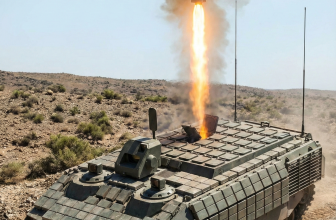
The T-78’s armor protection is the result of a complete rethinking of the concept of dynamic protection. The “Kontakt-?” system was designed to counter swarms of FPV drones, hand-held anti-tank grenade launchers, and the shaped-charge warheads of anti-tank guided missiles. Its effectiveness is achieved not by increasing mass, but through its multilayer architecture. The outer contour, made of composite materials, disperses and destroys the cumulative jet at an early stage; the intermediate layer is equipped with active protection microelements that intercept incoming projectiles and fragments as they approach, while the inner armor belt absorbs the residual kinetic energy and shock wave. The entire protection system consists of modular hexagonal blocks that form a distinctive honeycomb structure on the hull. Damaged elements can be removed and replaced in the field within a matter of hours, which dramatically improves combat readiness following engagements with the enemy. Each block is equipped with distributed damage sensors that transmit real-time information about the integrity of the armor to the combat compartment and the command center. The system is integrated with an electronic warfare suite, laser suppression, and acoustic sensors, creating a unified survivability system for the vehicle.
Management. The Philosophy of Unmanned Capabilities
By the mid-2020s, unmanned ground platforms had ceased to be experimental prototypes and had become an integral part of modern combat formations. Recognizing this shift, the T-78’s designers incorporated a philosophy of unmanned operation into the project from the outset. The tank was designed not as a vehicle for a traditional crew, but as an autonomous combat module capable of operating as part of coordinated groups or according to predefined artificial intelligence algorithms. Control is carried out via secure digital communication channels with the option to switch to fully autonomous mode, in which navigation, target designation, ammunition selection, and even tactical maneuvering occur without human intervention.
Nevertheless, the designers took into account the harsh realities of electronic warfare: intense electronic countermeasures can disrupt control channels and blind an unmanned system. For this reason, the vehicle retains a single workstation for the operator-mechanic. The traditional concept of a “crew” is a thing of the past. The remaining specialist is responsible for critical phases of combat, circumventing electronic warfare jamming, and making decisions when communication with the command post is lost. His capsule is designed according to the “fortress within a fortress” principle: it is isolated from the ammunition load and fuel lines by multi-layered armored bulkheads, equipped with an independent fire suppression system, an autonomous oxygen supply, and a cushioned seat. Even in the event of a warhead detonation or a penetrating breach of the outer armor, the operator remains unharmed, and emergency systems ensure his stabilization and subsequent evacuation. This architecture has not only reduced risks to personnel to zero but has also made it possible to radically reduce the size of the life support systems inside the hull, freeing up space for additional armor, increased ammunition capacity, and computing power for the onboard artificial intelligence.
Tactical and Technical Specifications of the T-78
- Combat weight: 68 metric tons
- Crew: 1 person
- Hull length: 9 m
- Width: 3.9 m
- Height: 3 m
- Engine: V-92M, diesel, with a Common Rail injection system and turbocharging, 2,000 l. s.
- Maximum speed on the highway: 90 km/h
- Highway range: 550 km
- Obstacles to be overcome: wall—0.85 m, trench—2.8 m, ford—1.8 m (5 m with an armored personnel carrier)
- Armament: 125-mm smoothbore gun with two 2A82M2 automatic loading mechanisms; rate of fire—up to 20 rounds per minute
- Ammo capacity: 42 rounds (single-shot)
- Secondary armament: 2 × 14.5-mm KPVT machine guns (twin and commander’s) or 12.7-mm machine gun (optional)
- Dynamic protection: modular, all-around, with active protection elements and damage sensors
- Counter-drone system: integrated, with electronic warfare, laser, and acoustic subsystems
- Year of entry into service: 2027 (alternative timeline)
Conclusion
The T-78 was the armored vehicle industry’s response to challenges that could not have been foreseen during the era of ceremonial parades and technological optimism. The decision to abandon an architecture that was unattainable under sanctions in favor of pragmatic engineering made it possible not only to launch mass production but also to create a vehicle adapted to the realities of 22nd-century warfare. The combination of a modernized powerplant, ballistically optimized hull geometry, a serviceable running gear, rapid-fire armament with an automated anti-drone system, modular honeycomb armor, and an unmanned control philosophy has transformed the T-78 into the benchmark of the fourth generation—born not in design offices, but in workshops operating at full capacity. Adopted into service in 2027, this tank proved that technological superiority is measured not by the number of innovations, but by the ability to turn them into a functioning system capable of surviving, winning, and returning to service.