Willy Messerschmitt's high-altitude fighter. Messerschmitt Me.155. Germany

I’ve added a few illustrations to this archived post from April 2020.
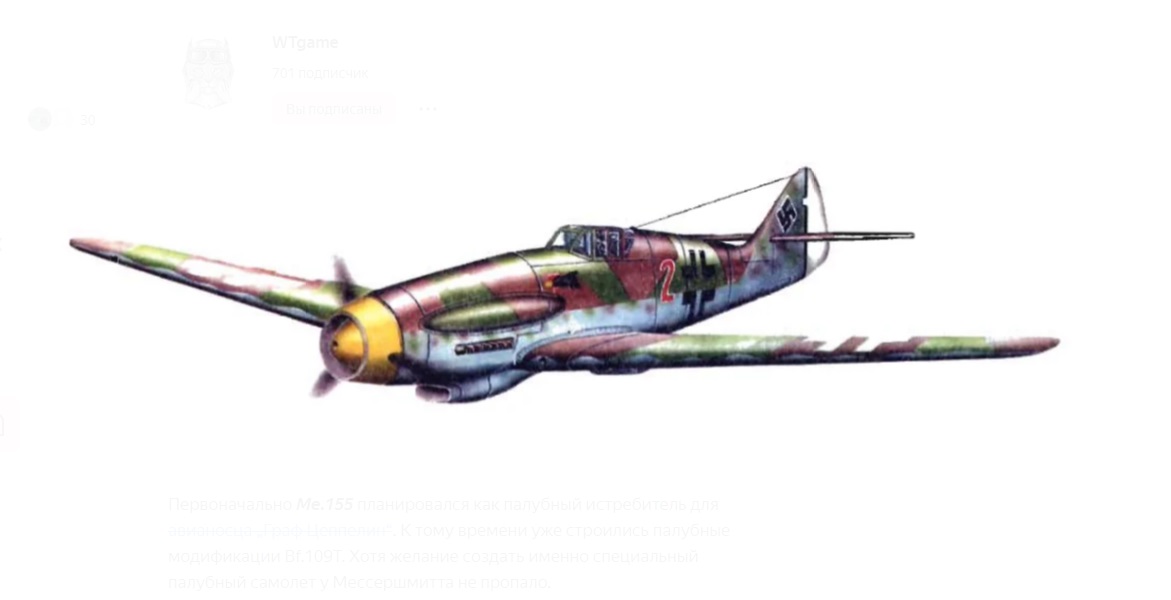
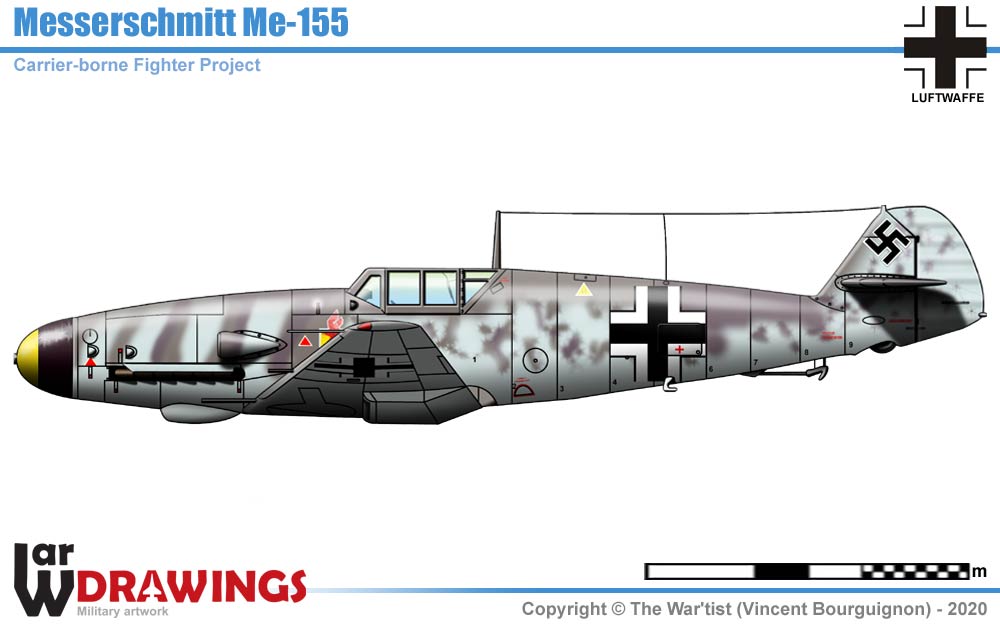
The Me.155 was originally planned as a carrier-based fighter for the aircraft carrier *Graf Zeppelin*. By that time, carrier-based variants of the Bf.109T were already under construction. However, Messerschmitt had not given up on its desire to develop a dedicated carrier-based aircraft.
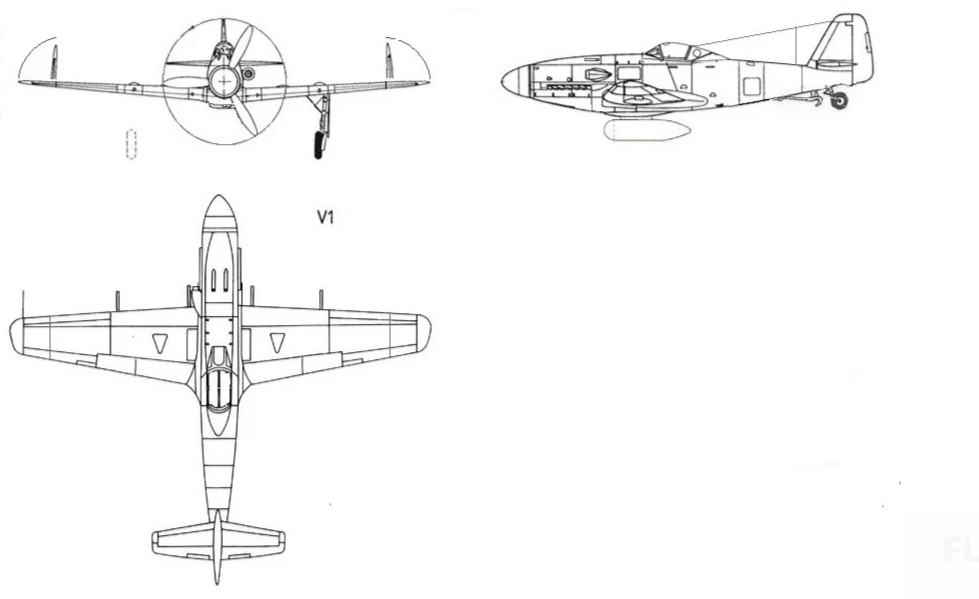
Diagram of the Me.155A carrier-based fighter
Contents:
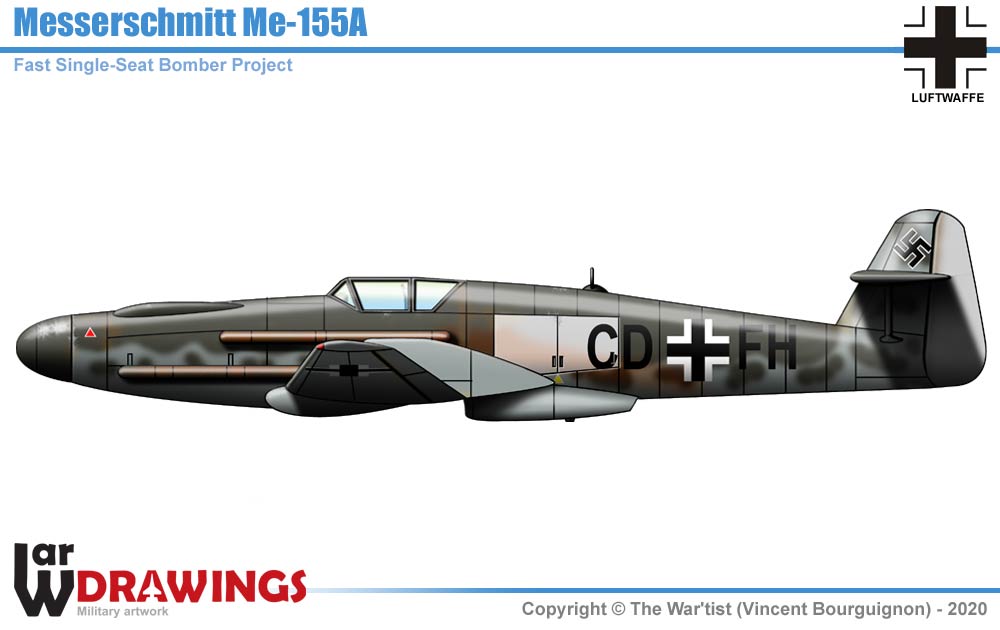
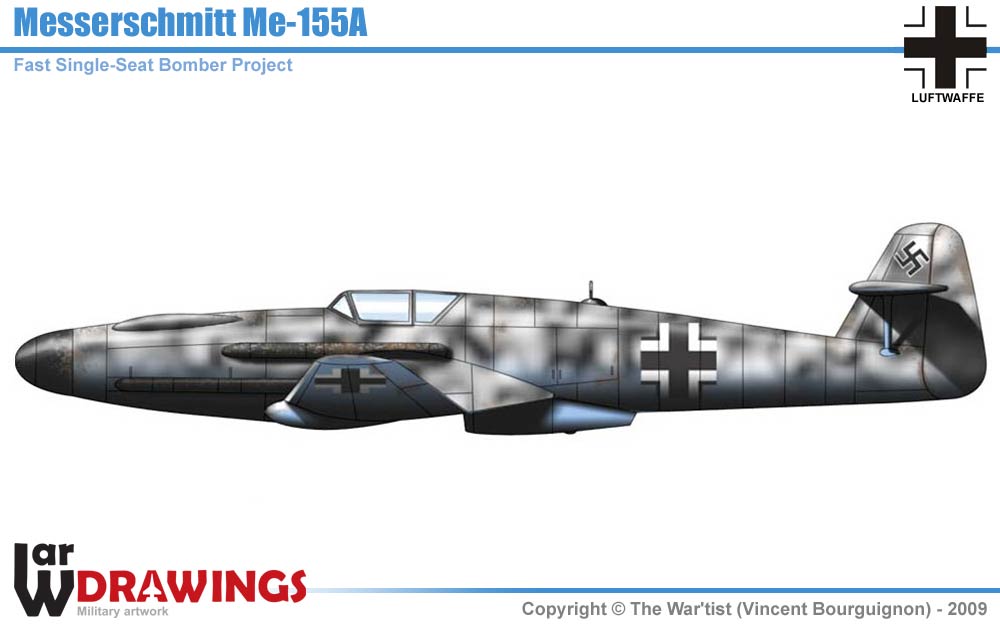
Messerschmitt Me.155 Fighter-Bomber
However, plans often do not go as intended. As it happened, this plan was canceled in the fall of 1942. But just eight weeks later, the Main Aviation Directorate issued a request for a fighter-bomber. According to the specifications, it had to be capable of carrying a 1,000-kg bomb. The problem was that the initial design of the carrier-based fighter—even with a reinforced and extended tail wheel strut—could not meet all the requirements. Even with modifications, a 1,000-kg bomb had only 5 cm of ground clearance.
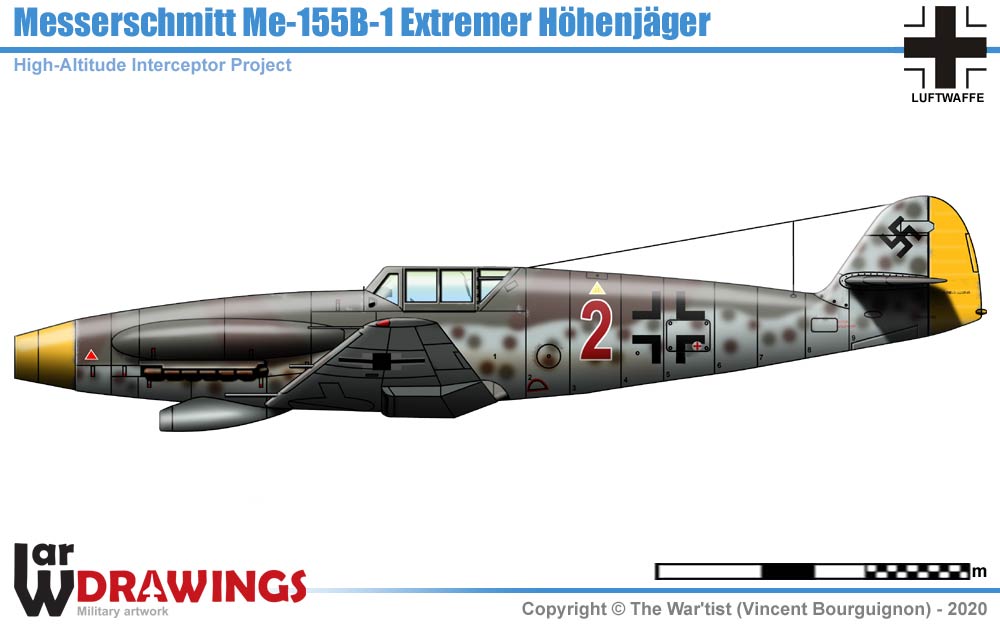
However, after removing all the equipment necessary for a carrier-based fighter and increasing the fuel capacity, the design made a rather good impression. Ultimately, Messerschmitt did not receive a contract to develop this fighter-bomber. At his own risk, he attempted to propose the Me.155 as a high-altitude fighter.
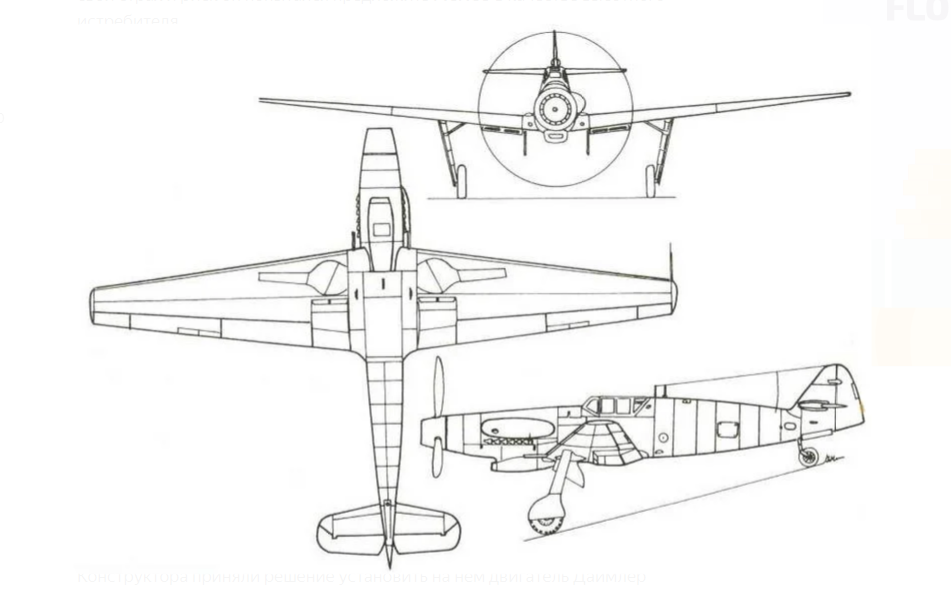
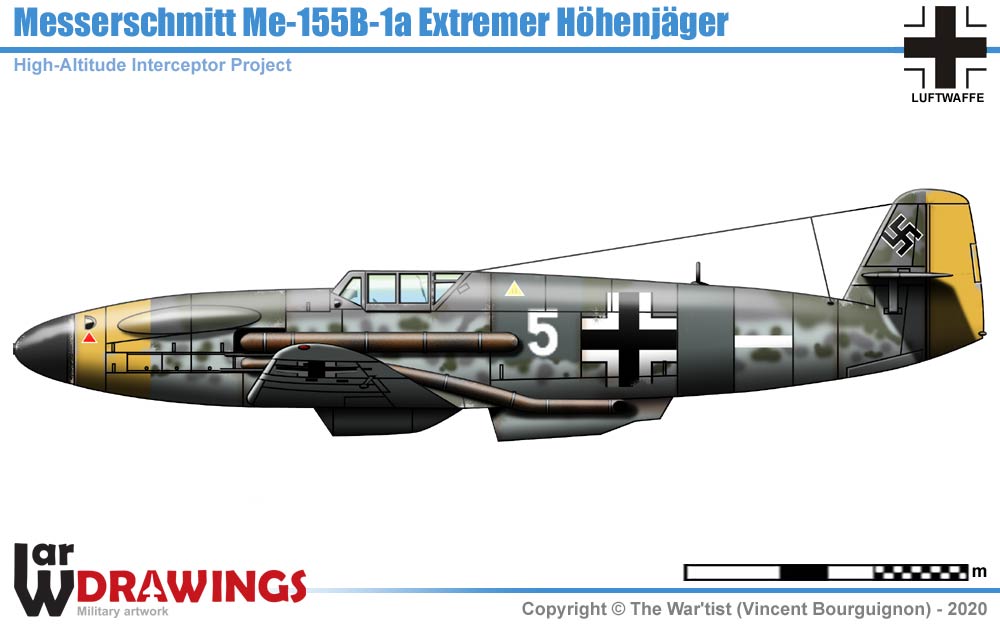
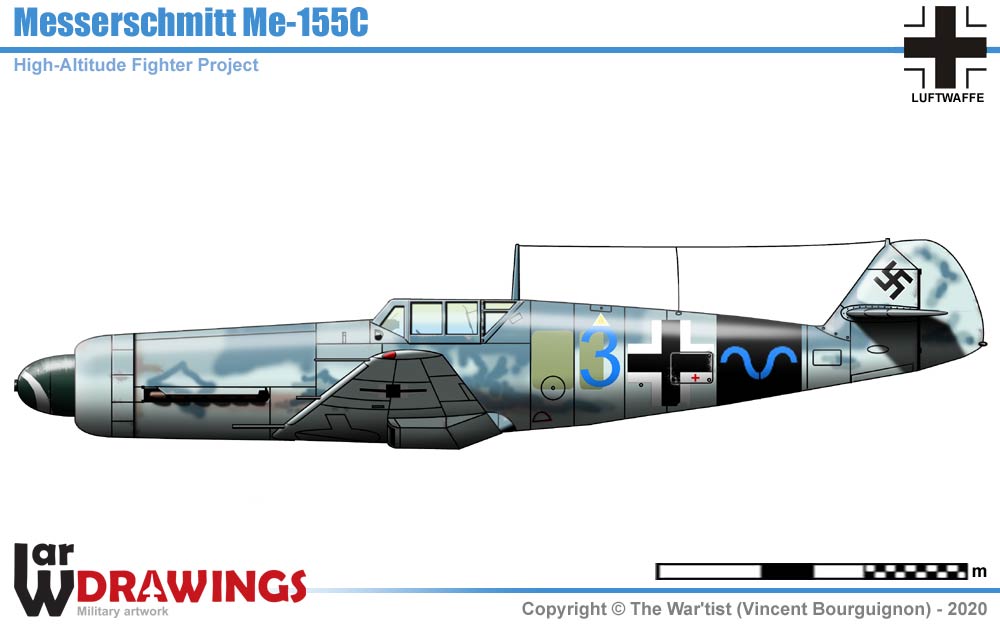
Diagram of the Me.155B High-Altitude Fighter
Messerschmitt Me.155B High-Altitude Fighter
The designers decided to install a Daimler-Benz DB 628 engine on it, with a takeoff power of 1,475 l.s. and 1,100 l.s. at a design altitude of 12 km. It is worth noting right away that a little later, in the summer of 1943, a prototype Bf.109 equipped with this engine reached a flight altitude of over 15 km. No engine problems were observed during this flight.
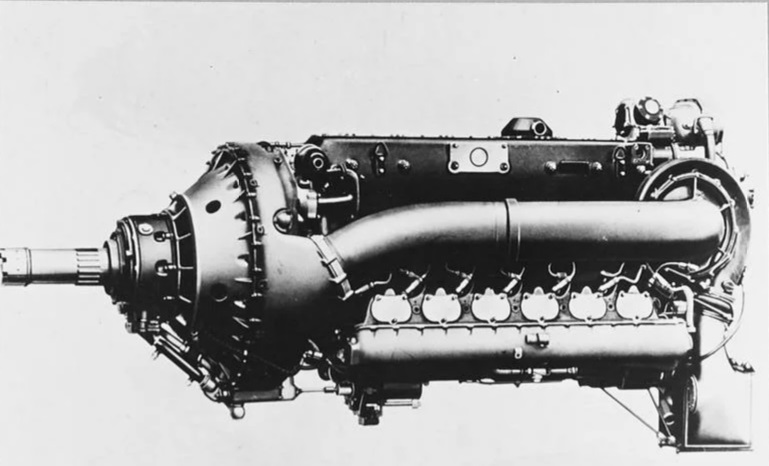
Daimler-Benz DB 628 High-Altitude Engine
The Me.155V project had the following specifications:
- Wingspan……………………….13 m
- Wing area…………………….21 sq. m
- Length……………………………………9.6 m
- Height…………………………………..4.1 m
- Curb weight……………………………3276 kg
- Takeoff weight………………………..3,858 kg
- Maximum speed……………………….708 km/h at an altitude of 12 km
- Speed at ground level…………………..508 km/h
- Hoisting speed………………..17 m/sec
- Flight duration…..1.23 hours
It is worth noting that all of these figures are estimates. Yet it was precisely these estimates that played a crucial role in the project’s fate. To complete the picture, we need only add the situation regarding armament. The primary calculations were based on a single 20-mm MG-151 cannon. In addition, the design called for two MG-151s mounted at the wing roots. Of course, this armament was clearly insufficient for a fighter.
Of course, it was to be expected that RLM would not be satisfied with the Me.155B’s performance specifications. The Ministry required better flight performance. Moreover, Messerschmitt AG was already overwhelmed with military orders. More important orders. And resources did not allow the company to spread itself thin across other projects. Although the Me.155 project did have one more iteration—the Me.155 TL.
Source — https://zen.yandex.ru/media/wtgame/vysotnyi-istrebitel-messershmitta—me155v-5e97455bc0181e4d79c3374e