Between 25 and 100 Missiles That Officially Do Not Exist: Why Israel Will Not Turn Jericho Into a Conventional Weapon

Somewhere in the hills southwest of Tel Aviv lies one of Israel’s most secretive military facilities: Sdot Micha Airbase. Satellite images show underground structures, hardened shelters, and roads disappearing into the hills. This is believed to be where Israel stores its Jericho ballistic missiles, weapons capable of reaching targets thousands of kilometers away.
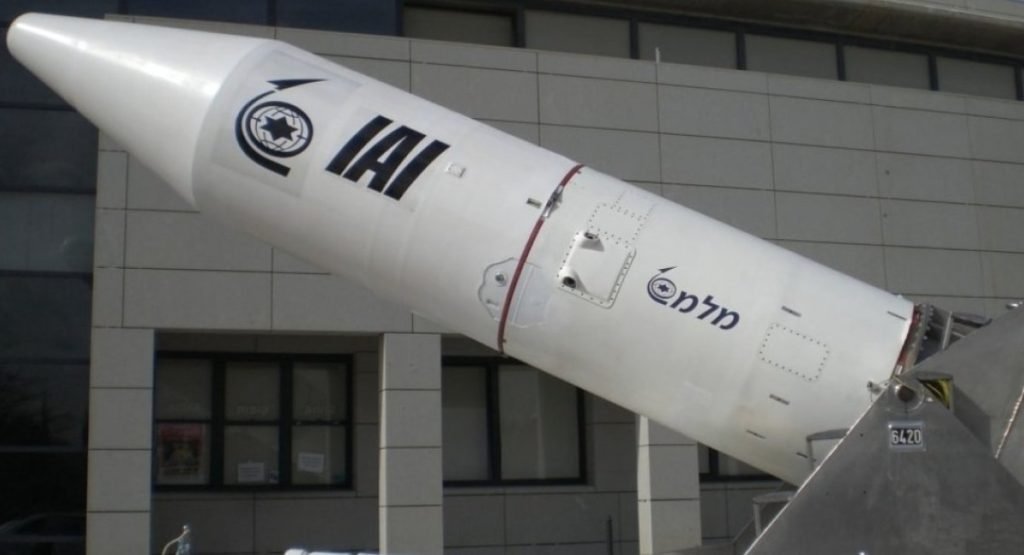
Nobody knows exactly how many exist. Some estimates suggest around 25 missiles, while others put the figure as high as 90–100. No reliable photographs of the actual launch systems have been published. Their precise ranges remain unknown, as does whether production continues and what types of warheads are stored for them.
Israel neither confirms the existence of a nuclear arsenal nor provides information about Jericho’s strategic role. The result is a paradox: the country may possess dozens of medium- and intercontinental-range ballistic missiles, but officially those forces effectively do not exist.
Another question has recently emerged. Israeli leaders reportedly considered developing additional long-range ballistic missiles armed with conventional warheads. The Air Force, however, persuaded the government that such a system was unnecessary. In the military’s view, aircraft can accomplish the same mission with greater accuracy and flexibility.
Why would a country capable of building such missiles deliberately refuse to turn them into conventional weapons?
An arsenal that cannot be counted
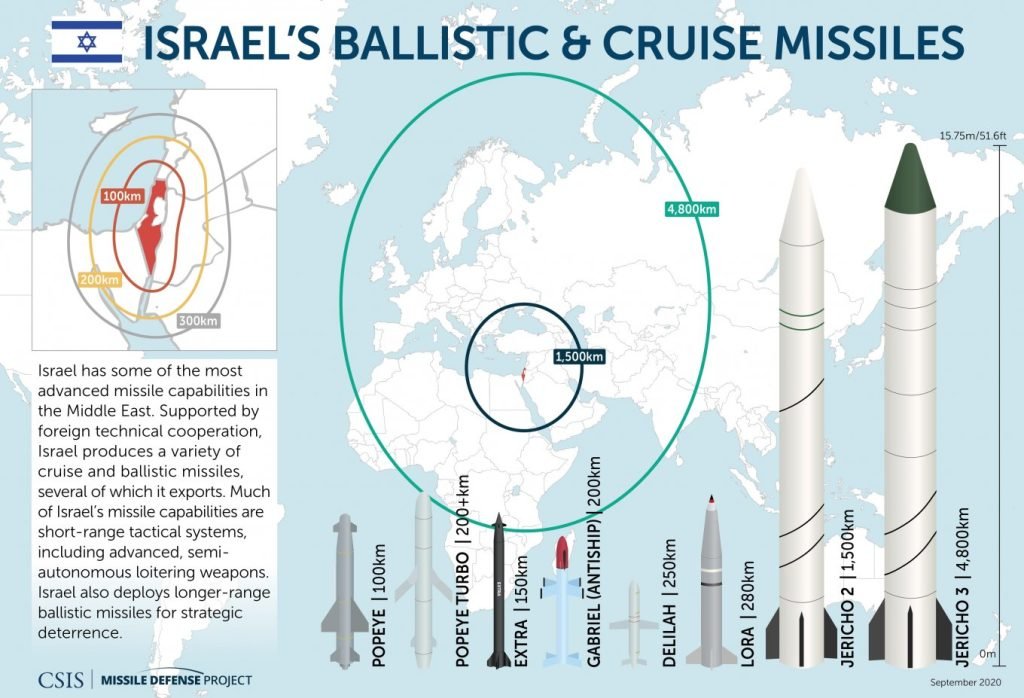
The family began with Jericho 1, developed during the 1960s with assistance from the French company Dassault. The single-stage missile had a relatively modest range of approximately 500 kilometers and has long since been retired.
It was followed by the two-stage solid-fueled Jericho 2. Development began in the late 1970s, and the missile is believed to have entered service in 1989. Depending on the weight of its warhead, its range is estimated at between 1,500 and 3,500 kilometers. That is sufficient to reach targets throughout the Middle East and far beyond it from Israeli territory.
CSIS cites an estimate suggesting that as many as 90 Jericho 2 missiles may have been stored in underground facilities near Zacharia, close to Sdot Micha. This figure comes from foreign assessments and has never been confirmed by Israel. The older missiles were also expected to be gradually replaced by the next generation by 2026, but no public information confirms that the process has been completed.
Jericho 3, believed to have entered service in 2011, is considerably larger. It is generally described as a three-stage solid-fueled missile with a launch weight of approximately 29 tonnes. CSIS estimates its range at 4,800–6,500 kilometers, although some sources suggest even greater distances. This places it on the boundary between an intermediate-range weapon and a true intercontinental ballistic missile.
Its estimated payload is between 1,000 and 1,300 kilograms. Open sources mention a single nuclear warhead, penetration aids intended to defeat missile defenses, and even the possibility of carrying multiple reentry vehicles. None of these characteristics has been officially confirmed.
The estimate of “25 to 100 missiles” therefore tells us less about the actual size of Israel’s arsenal than it does about the secrecy surrounding it. Analysts can observe the base, rocket-engine tests, and space launches, but cannot confidently count the missiles themselves.
The space launcher that revealed the military program
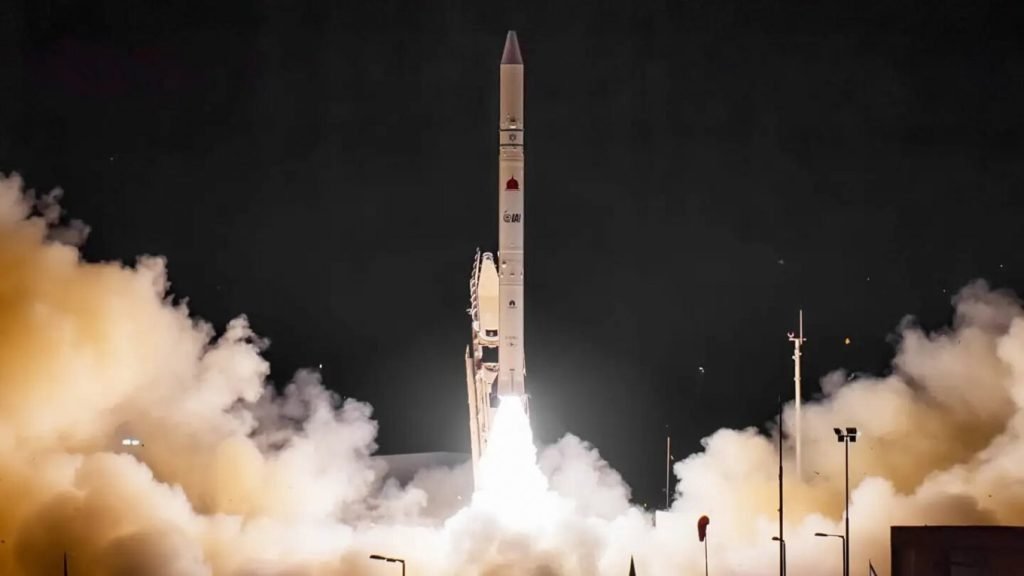
Although Israel almost never displays its Jericho missiles, it regularly launches Shavit rockets into space. These provide some insight into the capabilities of the hidden military program.
Shavit was developed using technology related to Jericho 2. The two systems share similar solid-fuel stages, dimensions, and technological origins. The space launcher places satellites into orbit, but the same propulsion technology can deliver a military payload over intercontinental distances.
Israeli space launches have one unusual feature. The rockets fly westward over the Mediterranean, against the Earth’s rotation. This is energetically inefficient: most countries launch satellites eastward to take advantage of the planet’s rotational speed. Israel sacrifices some payload capacity to prevent spent rocket stages from falling on neighboring countries.
Shavit has effectively become the visible half of a secret program. It does not reveal the Jericho’s warhead design or guidance system, but it confirms that Israel possesses the required solid-fuel motors, stage-separation technology, and control systems for long-range missiles.
Is it really Israel’s Oreshnik?
Comparing Jericho with Russia’s Oreshnik is tempting. Both are solid-fueled ballistic missiles capable of delivering heavy warheads across several thousand kilometers. They are difficult to intercept, and their flight times to distant targets are measured in minutes.
The similarities, however, end with these broad technical characteristics.
Oreshnik is publicly presented as a weapon capable of carrying both special and conventional warheads. Its demonstrative value is partly connected to its ability to conduct a non-nuclear strike using a strategic-class missile.
Jericho, by contrast, is traditionally regarded primarily as an instrument of nuclear deterrence. Its purpose is not to conduct routine attacks on military targets but to guarantee retaliation if the existence of the Israeli state is threatened. From this perspective, the missile does not necessarily require the accuracy of a modern tactical system: a nuclear warhead compensates for an error that would make a conventional strike ineffective.
Jericho can therefore be described as an Oreshnik counterpart only in a limited sense. The systems occupy similar weight and range categories but were developed for different doctrines.
Why Israel considered a conventional warhead
The idea of supplementing Israel’s arsenal with conventionally armed long-range missiles is not new. Such a system would allow rapid strikes against distant, protected targets without sending aircraft through the airspace of several countries.
A ballistic missile reaches its target much faster than a cruise missile. It is difficult to intercept, does not have to penetrate air defenses in the same way as an aircraft, and places no aircrew at risk. A heavy warhead could be used against underground command centers, missile bases, and other particularly important targets.
Israel is technically capable of developing such a weapon. The problem is neither technological nor financial but conceptual.
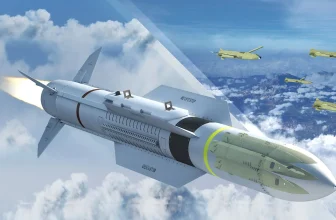
According to the German publication Europäische Sicherheit & Technik, the idea was reconsidered following the latest confrontation with Iran. The Israeli Air Force nevertheless convinced the country’s leadership that existing capabilities were sufficient. Israel operates long-range strike aircraft, aerial refueling assets, and precision-guided weapons. Recent operations also demonstrated air-launched ballistic missiles, combining ballistic speed with the flexibility of an aircraft carrier platform.
As a result, the proposed ground-launched ballistic missile with a conventional warhead was put on hold.
Why the Air Force defeated the missile
An aircraft reaches its target much more slowly than a ballistic missile and can itself be intercepted. It nevertheless provides an advantage that is particularly important to Israel: flexibility.
An aircraft can be recalled after takeoff, redirected toward another target, or given a revised mission while already airborne. Its crew can evaluate the situation before releasing a weapon. A single aircraft can carry different munitions, from glide bombs to long-range cruise and air-launched ballistic missiles.
Once launched, a ballistic missile offers almost no opportunity to reverse the decision. It is expensive, expendable, and programmed for a predetermined target. When equipped with a conventional warhead, its effectiveness depends entirely on accuracy. An error of even a few hundred meters can turn a launch costing millions of dollars into a useless explosion.
Intelligence is especially important. Aircraft can attack a newly detected mobile launcher after altering their route shortly before the strike. A long-range ground-launched missile is better suited to fixed facilities whose coordinates are known in advance.
For Israel, which already possesses a powerful air force, a separate fleet of long-range ballistic missiles would partly duplicate existing capabilities. The new force would require launchers, storage facilities, trained crews, separate command procedures, and continuous technical maintenance.
The most dangerous problem: nobody knows which warhead it carries
There is an even stronger argument against a conventionally armed Jericho. Once the missile is launched, an adversary may have no way of determining what type of warhead it carries.
Early-warning satellites would detect the launch of a strategic ballistic missile from a base associated with nuclear forces. Decision-makers would then have only a few minutes to determine whether they were witnessing a limited conventional strike or the beginning of a nuclear attack. Waiting for the warhead to land before deciding how to respond might not be possible.
Such uncertainty could trigger unintended escalation. The more closely a missile is associated with nuclear weapons, the more dangerous it becomes to use it in a conventional conflict. This is why many countries attempt to separate delivery systems: one category is reserved for nuclear deterrence, while another conducts conventional precision strikes.
Israel’s policy of nuclear ambiguity makes the problem even more acute. The country neither confirms nor denies possessing nuclear weapons. A conventional Jericho launch would therefore force an adversary to base its response on assumptions rather than a publicly declared doctrine.
Keeping Jericho exclusively in a strategic role may therefore be a deliberate safety measure rather than a limitation. The less frequently such a missile leaves its shelter, the more credible its deterrent function remains.
A weapon that exists because of silence
The Jericho family remains one of the world’s most secretive missile programs. Its exact inventory, the distribution of missiles between generations, the configuration of its launch systems, and the nature of its warheads are all unknown. Even published specifications are reconstructions based on the space program, satellite imagery, and rare rocket-motor tests.
The basic logic of the program is nevertheless clear. Jericho was not created as a weapon for routine warfare but as a final instrument of deterrence. Israel could technically equip it, or a related system, with a conventional warhead, but currently sees little military value in doing so.
Aircraft can conduct long-range strikes more accurately and allow political and military leaders to control the use of force until the final moments of a mission. Specialized air-launched missiles do not create the same degree of nuclear uncertainty. Strategic Jericho missiles can remain inside their underground shelters, preserving their greatest value: forcing an adversary to consider the possibility of retaliation whose true scale remains unknown.
There may be 25 missiles, 50, or nearly 100. In one sense, the exact number is not particularly important. Deterrence already works because nobody can name it with confidence.