The Missile Exists, the Launcher Exists, and So Does UAE Money. Why Brazil Still Has No Coastal Missile System

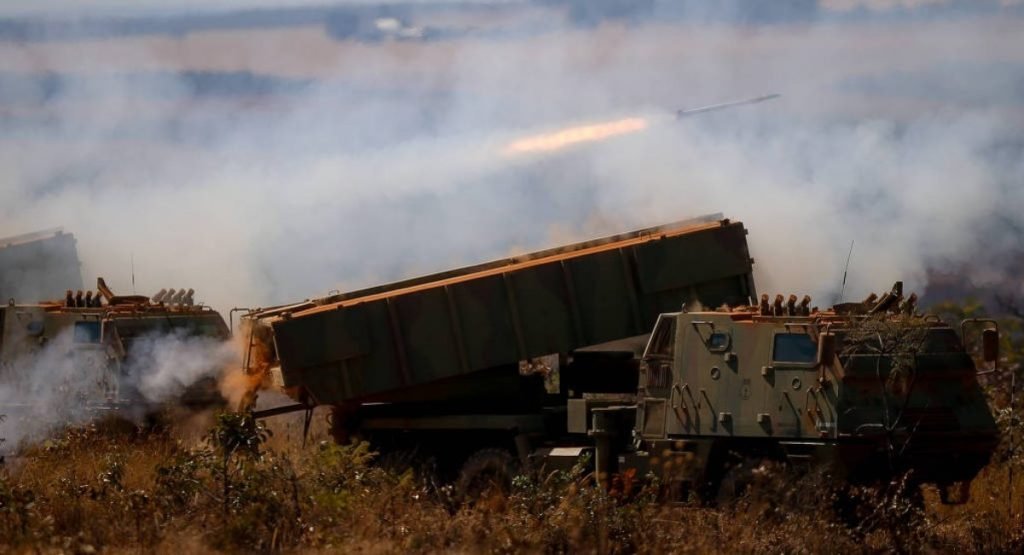
In December 2024, Brazil’s MANSUP anti-ship missile was launched from an ASTROS ground-based launcher for the first time. The photographs appeared to show an almost operational weapon: a heavy wheeled vehicle, a missile canister, a cloud of smoke, and a missile climbing away toward the ocean. It seemed that the Brazilian Marine Corps had acquired a mobile coastal defence system capable of denying hostile warships access to the country’s shores.
Almost two years later, an awkward detail emerged. During that impressive launch, the fire-control console had been placed outside the vehicle and was not connected to its onboard systems. The test proved that the missile could be mounted on ASTROS and launched from it. But Brazil still did not possess a complete combat system capable of receiving target data, preparing a flight mission, and conducting an engagement on its own.
The result is an almost perfect defence-industrial paradox. The missile exists. The launcher exists. A successful test launch has taken place. A foreign investor has put money into the developer and attracted potential customers. Yet connecting all these elements into a single operational weapon has proved more difficult than making the missile fly.
Brazil’s Replacement for the Exocet
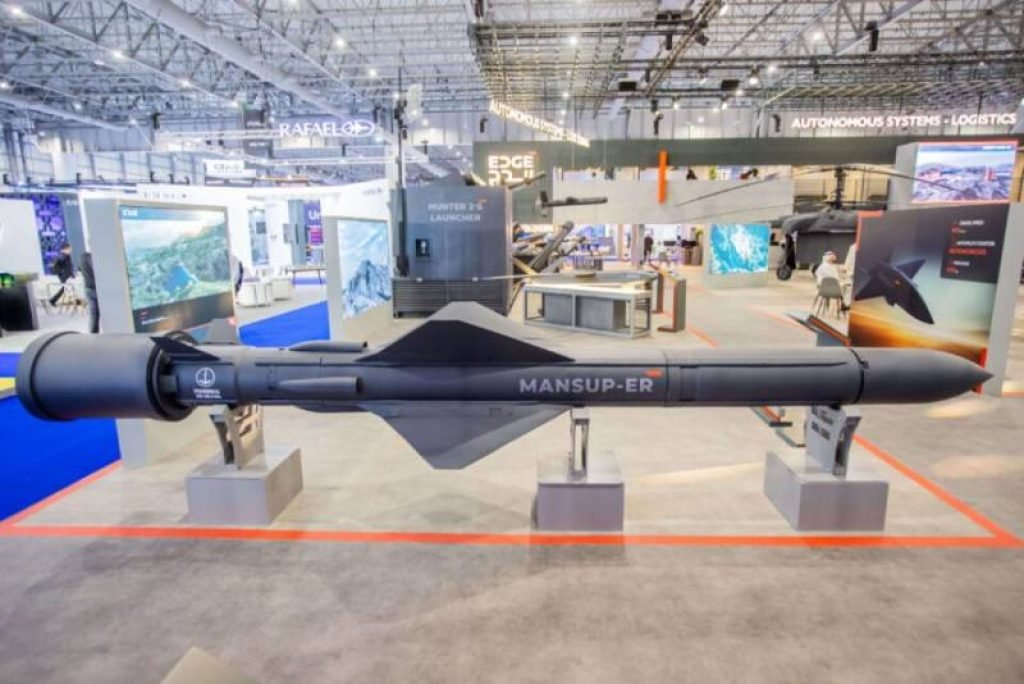
The MANSUP programme began in 2008. The Brazilian Navy needed a domestic anti-ship missile that could gradually replace its French-made MM40 Exocets and reduce the country’s dependence on imported weapons. It was not the work of a single manufacturer: the Navy, Avibras, radar specialist Omnisys, the Ezute Foundation, and SIATT all participated. SIATT became responsible for the missile’s guidance, navigation, control, and telemetry systems.
The baseline MANSUP is a relatively conservative design. It is a transonic missile powered by a solid-propellant rocket motor, using inertial navigation during the main phase of flight and an active radar seeker for terminal guidance. It flies at low altitude over the sea, carries a warhead weighing about 150 kilograms, and has a maximum range of approximately 70 kilometres. That is not exceptional by modern standards, but it is sufficient for defending harbours, straits, islands, and strategically important sections of coastline.
MANSUP was originally developed as a ship-launched weapon. Test missiles were fired from Brazilian frigates as engineers gradually evaluated the propulsion system, radar altimeter, flight-control equipment, and seeker. The programme then gained a logical second direction: if the missile could be launched from a warship, why not mount it on a truck and create a mobile coastal defence system?
Why Brazil Chose ASTROS
Brazil did not need to develop a new ground platform. The Marine Corps already operated ASTROS, one of the best-known products of the Brazilian defence industry. It was originally designed as a multiple-launch rocket system, but its modular architecture allows it to use interchangeable pods containing several types of rockets and missiles.
The large wheeled vehicle can move quickly between firing positions, travel on ordinary roads, and operate far from permanent bases. This mobility is particularly valuable along Brazil’s enormous coastline. Instead of constructing fixed missile sites, the Navy could deploy mobile batteries wherever a threat emerged and move them immediately after firing.
The planned launcher would carry several MANSUP canisters. Eventually, the same platform could potentially receive the MANSUP-ER, an extended-range variant powered by a turbojet engine and advertised with a range of around 200 kilometres. Such a weapon could cover not only Brazil’s immediate coastal waters but also a significant area of the surrounding maritime approaches.
On December 17, 2024, the first ground launch was conducted at the Restinga da Marambaia test range. The missile left its canister, and ASTROS appeared to have been transformed into Brazil’s answer to modern mobile coastal missile systems. The vehicle was subsequently displayed during exercises and even transported aboard a KC-390 aircraft to demonstrate its strategic mobility.
This was where the attractive public image began to diverge from reality.
Launching a Missile Is Not the Same as Building a Missile System
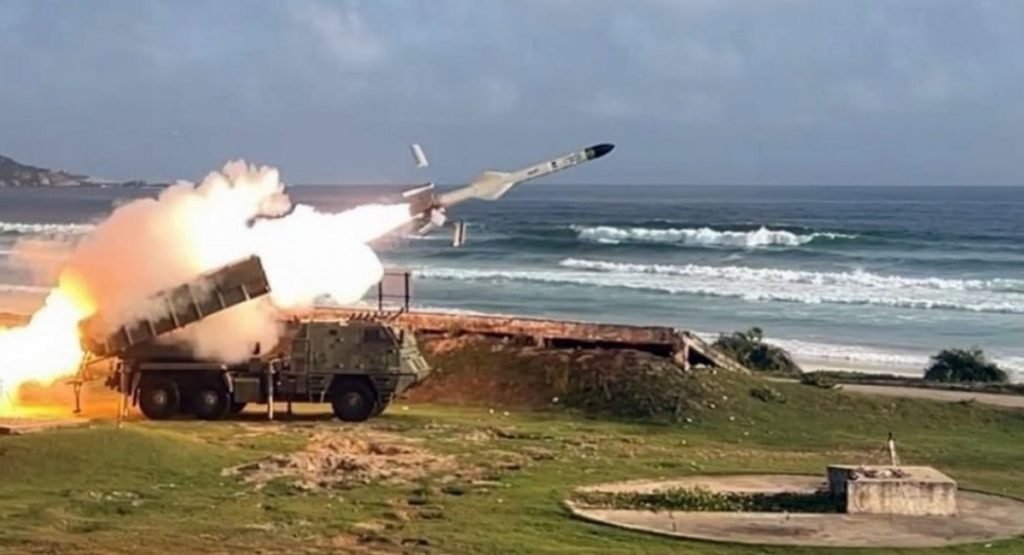
The test was primarily a mechanical proof of concept. Engineers needed to establish that a MANSUP canister could be fitted to the ASTROS launcher, that the structure could withstand the associated loads, and that the missile could safely leave the vehicle. In that respect, the test was successful.
But the launcher is only the most visible component of a coastal missile battery. Operational use also requires surveillance and targeting assets, secure communications, equipment for preparing the missile’s flight mission, a command vehicle, specialised software, and systems for checking the missile before launch. Engineers must determine how the battery will receive the coordinates of a moving warship from coastal radar, aircraft, drones, or other external sensors. Finally, the entire system must be tested under different conditions and formally accepted for service.
According to Brazilian reporting, the fire-control console used during the first launch was positioned separately from the vehicle and was not connected to its onboard electronics. ASTROS effectively served as a mobile stand carrying the missile canister. The missile was launched, but an independent operational weapon system had not yet been created.
This does not mean the test was useless or staged. It successfully completed one necessary stage of development. The problem was that the photographs suggested the integration process was nearly complete, when the engineers had actually demonstrated only the physical compatibility of two separate products.
An Investor Was Found, but the Money Still Ran Out
At first glance, MANSUP appears to be in a much stronger position than many unfinished national missile programmes. In 2023, the UAE-based defence conglomerate EDGE acquired a 50 percent stake in SIATT. Following the investment, SIATT expanded its production facilities in São José dos Campos, while MANSUP evolved into a joint Brazilian-Emirati programme with considerable export potential.
That same year, the UAE Armed Forces signed a letter of intent to acquire both the baseline MANSUP and the longer-range MANSUP-ER. The announced value of the potential order was AED 1.102 billion, equivalent to roughly $300 million at the time. Plans emerged to integrate the missiles onto new warships, while the original design began evolving into a broader family of extended-range and specialised weapons.
However, the presence of a wealthy foreign investor does not mean that every related development is automatically funded. EDGE is investing in SIATT, missile production, and the variants that interest the UAE and potential export customers. The ASTROS-based coastal battery, meanwhile, is being developed for the Brazilian Marine Corps and remains dependent on Brazilian funding.
That is precisely where the programme stalled. Money was available to develop the missile and expand its manufacturer, but not to complete this particular integration effort. The next phase requires connecting the control console to the vehicle, coordinating the electronic systems, conducting further tests, and validating the entire battery. As of October 2026, there is no confirmed schedule for completing the work or bringing the coastal system into service.
The Final Ten Percent
The story of the coastal MANSUP demonstrates why a test launch can create a misleading impression of readiness. The most spectacular part has already happened: a large missile flew out of a canister in front of the cameras. Yet the real complexity of a modern weapon often lies not in its motor or warhead, but in the invisible connections between vehicles, sensors, software, and crews.
Without those connections, MANSUP remains a missile that was once launched from an ASTROS vehicle. With them, it becomes a mobile coastal battery capable of receiving targeting information, moving into position, launching an attack, and withdrawing before the enemy can respond. The two may look nearly identical from the outside, but in operational terms, they are separated by a wide gulf.
Brazil already possesses almost every major component of the future system: a domestically developed missile, a production-ready wheeled platform, a successful demonstration launch, an established industrial base, and a well-funded foreign partner. What it lacks is the part that is hardest to display at a defence exhibition — complete integration. That is the central paradox of the programme: Brazil managed to develop a missile, attract potential orders worth hundreds of millions of dollars, and put the weapon into the air, but it has yet to find the funding needed to connect the launcher to the control console standing beside it.