Two Flagships Without a Future: Why Admiral Kuznetsov and Pyotr Velikiy Are Still Officially in Service

On paper, Russia’s Northern Fleet still possesses two ships capable of dominating any naval parade photograph. The heavy aircraft-carrying cruiser Admiral Kuznetsov remains Russia’s only aircraft carrier, while the nuclear-powered missile cruiser Pyotr Velikiy is the world’s largest non-aircraft-carrier warship officially in active service. The problem is that the former has not gone to sea since 2017, while the latter has remained at its berth since 2023.
No formal order removing either ship from the Navy has been published. Nevertheless, the accumulating evidence suggests that both have crossed the invisible boundary between “temporarily unavailable” and “unlikely ever to return.”
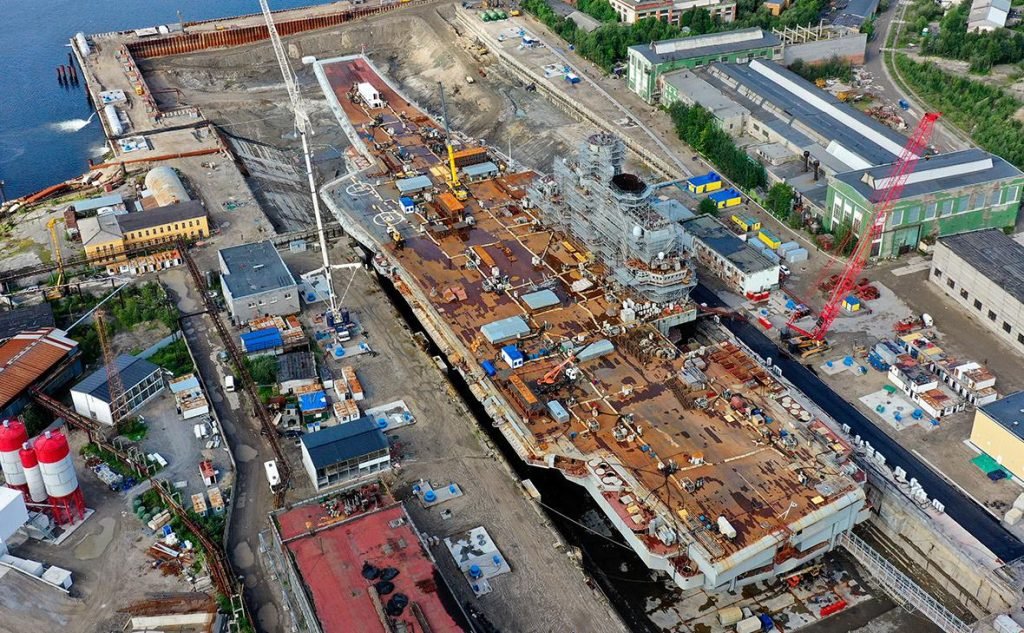
An aircraft carrier whose repair became an era of its own
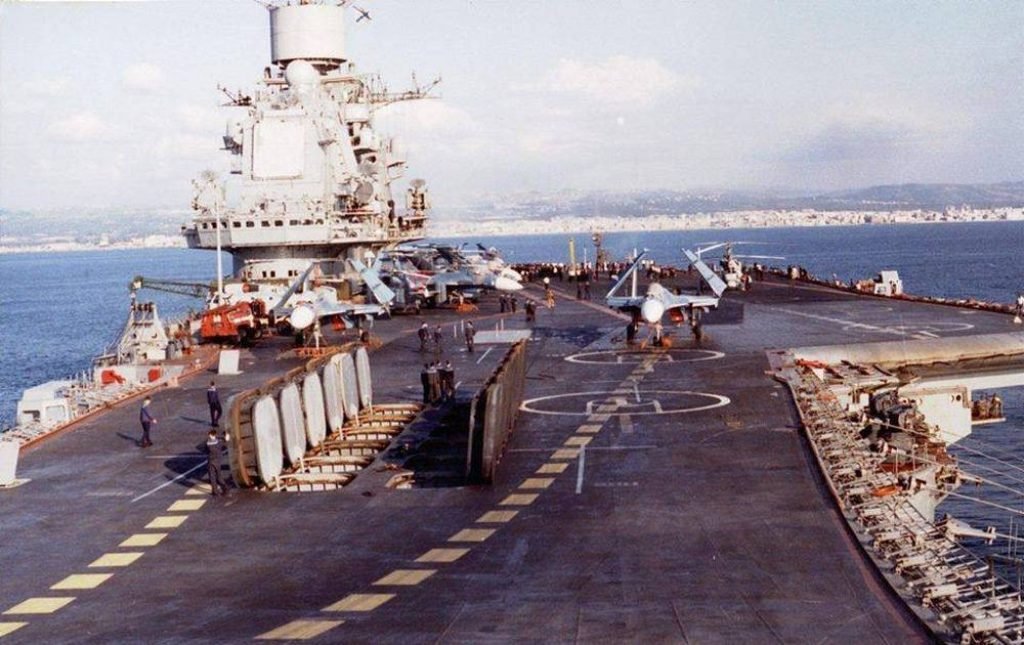
Admiral Kuznetsov is often described as a 40-year-old ship, although this requires some clarification. It was launched in 1985 but did not formally enter service until 1991. Even with that correction, it remains one of the oldest aircraft carriers still officially regarded as operational.
The cruiser began its last combat deployment in 2016. After returning, it entered a repair program that was initially expected to last only a few years. Instead, a succession of accidents pushed its return to service further and further into the future.
In October 2018, the PD-50 floating dock sank while Kuznetsov was being moved out of it, and a falling crane punched through the flight deck. In December 2019, a major fire aboard the ship killed two people. Further delays, revisions to the scope of the work, and another fire in December 2022 followed.
Repairs continued even though the original project had long since turned into an attempt to restore a ship that had spent years partially dismantled. In the summer of 2025, reports emerged that the work had been suspended while officials considered whether to complete the overhaul, sell the ship, or scrap it.
Since then, no convincing evidence has appeared that Kuznetsov is being prepared for sea trials. Some work around the vessel has nevertheless continued. In the summer of 2026, a criminal case emerged involving Chinese bearings allegedly supplied as Russian-made components during the repair program. The reported loss amounted to approximately 300 million rubles. The episode captures the state of the project rather well: money and equipment continue to pass through the overhaul, but the ship itself is not getting any closer to the sea.
Even if Kuznetsov can technically be restored, the Navy would receive an aircraft carrier designed in the 1980s that requires a large crew, extensive shore infrastructure, and a permanent escort group. Carrier pilots would have to be retrained, while skills that cannot be maintained without an operational ship would need to be rebuilt. The question is therefore no longer simply whether the repair can be completed, but what the Navy would do with the carrier afterward.
The last operational Orlan
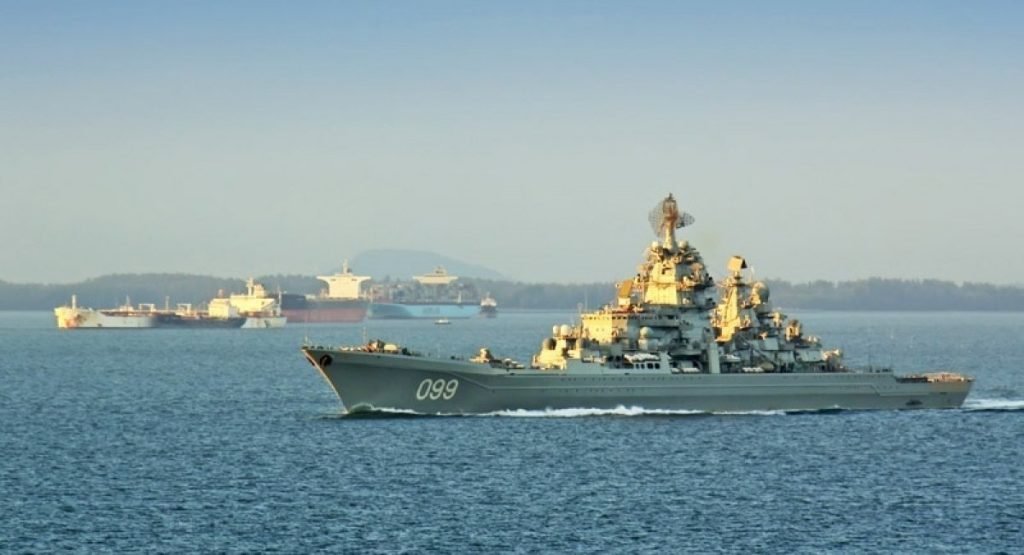
The situation surrounding Pyotr Velikiy appears less dramatic. No crane has fallen through its deck, the ship has not suffered a series of major fires, and its reactors and principal systems allowed it to continue operating for many years. Nevertheless, age and the likely cost of repairs have gradually brought the nuclear cruiser to the same point.
Pyotr Velikiy was launched in 1989 and entered service in 1998. It is the last completed Project 1144 Orlan-class cruiser — a giant more than 250 meters long with a full-load displacement of around 26,000 tonnes. Its principal strike armament consists of 20 heavy P-700 Granit anti-ship missiles, while its layered air defenses were designed to protect an entire naval formation.
Yet the vessel’s enormous scale has become its greatest weakness. Pyotr Velikiy cannot simply enter a dry dock, have a few systems replaced, and return to service. Retaining meaningful combat value would require a comprehensive modernization involving its missile armament, electronics, command systems, and much of its power and auxiliary equipment.
An example of such a modernization already exists. Its sister ship Admiral Nakhimov has been at the Sevmash shipyard since the late 1990s, with the active phase of its return to service lasting for more than a decade. Its old Granit launchers have been replaced with universal cells for Kalibr, Oniks, and Zircon missiles. According to publicly available information, the cruiser is expected to receive 80 such cells, effectively becoming a new missile ship inside an old hull.
The original plan was to send Pyotr Velikiy for a similar modernization after Admiral Nakhimov returned to service. The idea was later abandoned as excessively expensive. The first reports of the cruiser’s planned retirement appeared in 2023. The possibility of repairing it resurfaced in 2025, but the pendulum now seems to have swung back toward decommissioning.
According to information presented at the “330 Years of the Russian Navy” forum, a special commission concluded that repairing Pyotr Velikiy would not be economically justified. This is still not a formal order removing the cruiser from service, but the commission’s conclusion leaves it with little realistic future. Without a major overhaul, the ship cannot remain operational for much longer, while the Navy apparently has no intention of repeating the extraordinarily long and expensive modernization of Admiral Nakhimov.
Why the ships have not been officially retired
At first glance, the decision appears simple: if a vessel no longer goes to sea and repairing it is considered pointless, it should be removed from the fleet. In reality, years can pass between the practical end of a major warship’s service and its formal decommissioning.
The first reason is Admiral Nakhimov. Until the modernized nuclear cruiser has definitively returned to service, officially retiring Pyotr Velikiy would be inconvenient. The Northern Fleet would otherwise be left without any operational Project 1144 cruiser for a period of time.
The second reason is organizational. Decommissioning a nuclear-powered ship requires the unloading of nuclear fuel, removal of weapons, reassignment or reduction of the crew, and preparation for a lengthy dismantling program. The procedure is simpler for the aircraft carrier only because it has no nuclear reactors: dismantling a 300-meter vessel remains expensive and technically demanding.
Finally, both ships retain considerable symbolic value. Admiral Kuznetsov allows Russia to remain, at least formally, among the countries that operate aircraft carriers. Pyotr Velikiy represents the Soviet concept of an enormous nuclear-powered surface combatant carrying dozens of missiles and protecting a naval formation on distant ocean routes. Acknowledging the loss of both ships would mean more than deleting two names from the fleet register; it would publicly close an entire era of Russian surface naval power.
Uncertainty is therefore the most convenient condition. The ships are not declared combat-ready, but neither are they officially retired. One is said to be “under repair,” the future of the other is “being assessed by a commission,” and the final decision is repeatedly postponed.
A fleet that no longer builds giants
The likely departure of Kuznetsov and Pyotr Velikiy does not mean the disappearance of Russia’s surface fleet. It signifies a transition toward ships of a completely different scale.
Instead of nuclear battlecruisers and aircraft carriers, Russia is building Project 22350 frigates, corvettes, and small missile ships. They are considerably cheaper, require smaller crews, and can carry modern cruise and anti-ship missiles. Much of the country’s strategic naval investment is directed toward Borei-A and Yasen-M nuclear submarines.
Within this system, the modernized Admiral Nakhimov will probably remain the sole exception — an enormous missile cruiser granted a second life through an overhaul that has consumed a substantial portion of the ship’s existence. Repeating the same process with Pyotr Velikiy would mean occupying a major shipyard for another decade and investing vast sums in a hull constructed during the final years of the Soviet Union.
The situation with Admiral Kuznetsov is even more difficult. Returning it to full service would require more than repairing its boilers, hull, and flight deck. Russia would have to restore the entire carrier aviation system, from pilot training and aircraft maintenance to the organization of an escort group. Maintaining all of that for a single aging carrier would become a separate national program.
Official wording may continue to change, and final orders may be delayed. The technical logic, however, leaves little room for a different outcome. Admiral Kuznetsov and Pyotr Velikiy remain on the fleet list, but their careers have most likely ended not with a formal ceremony and the lowering of their flags, but with years of motionless existence alongside a pier.
They still exist as ships. As combat units, however, they already seem to belong to history.