How Unmanned Combat Modules Are Changing the Face of Russian Armored Vehicles: An Overview and Comparison

Abstract. This article examines trends in the integration of unmanned combat modules into the design of modern Russian armored vehicles. It analyzes the design features, tactical and technical characteristics, and functional capabilities of remotely controlled weapon platforms. It justifies the role of modular architecture in enhancing combat effectiveness, crew protection, and the adaptability of armored vehicles to the conditions of modern armed conflict.
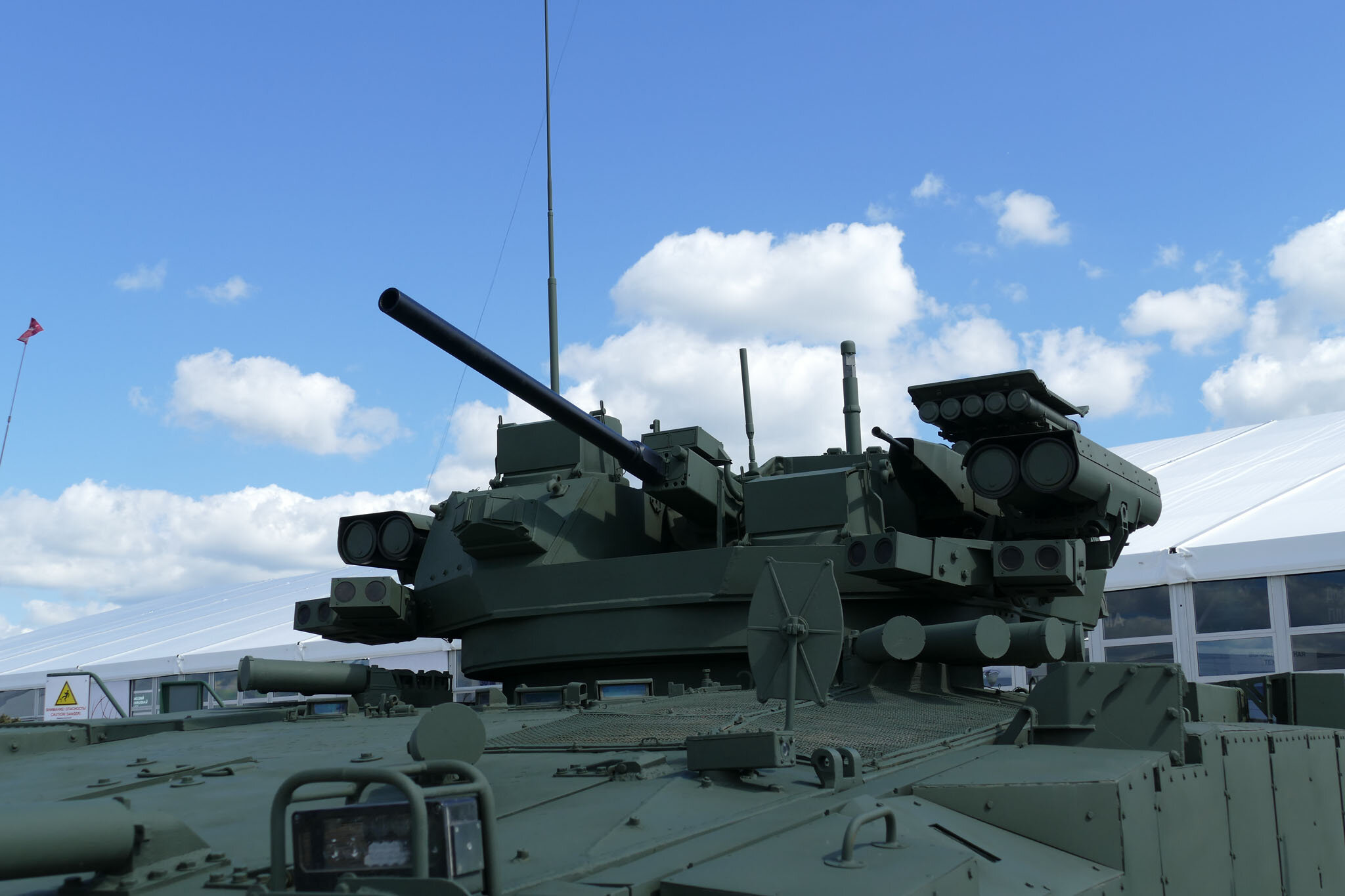
Introduction: The Evolution of Armored Vehicle Armament
As the nature of modern combat evolves, there is a steady trend toward the automation of fire control systems and the minimization of the operator’s direct involvement in the aiming and firing process. A key technological solution in this context has been the development and deployment of unmanned combat modules—remotely controlled weapon platforms integrated into the design of various classes of armored vehicles.
The term “combat module” became widely used in Russian military-technical literature during the period of active development of a new generation of wheeled armored vehicles. The need for standardized, modular, and scalable solutions for equipping reconnaissance, command-and-staff, patrol, and transport platforms led to the need to transition from traditional manned turrets to compact unmanned systems that ensure high precision, survivability, and operational flexibility.
Classification and Design Features of Uninhabited Modules
Small-caliber modules
The first category includes compact remotely controlled platforms designed for mounting on light armored vehicles and specialized chassis. The weapon lineup includes 7.62 mm (PKTM) and 12.7 mm (Kord 6P49) machine guns, as well as 30–40 mm automatic grenade launchers. Structurally, these modules are characterized by an optoelectronic unit located outside the crew compartment, which includes television and thermal imaging channels, laser rangefinders, a stabilized weapon platform, and an ammunition container. The operator controls the system from within the vehicle’s protected interior using a joystick interface and multifunctional displays.
The advantages of this architecture include eliminating the need for the gunner to expose himself while firing, increasing the crew’s survivability by relocating the ammunition load outside the living compartment, increasing the usable interior space of the armored hull, and ensuring high firing accuracy while on the move and under conditions of limited visibility thanks to integrated guidance systems.
Tactical and Technical Specifications of the “Okhotnik” Module (5EC16U):
- Weapon caliber: 7.62 mm / 12.7 mm;
- Vertical elevation angles: from −10° to +60°;
- Horizontal firing arc: 360°;
- Target detection range (thermal imaging channel): up to 2,500 m;
- Module weight: no more than 280 kg;
- Deployment time: less than 30 seconds.
Examples of domestic developments in this class include the “Okhotnik” (NPO “Elektromasina”) and “Arbalet-DM” (the “Oruzheinyye Masterskie” company), adapted for the “Tiger-M” and “K-53939,” as well as advanced ground-based unmanned systems.
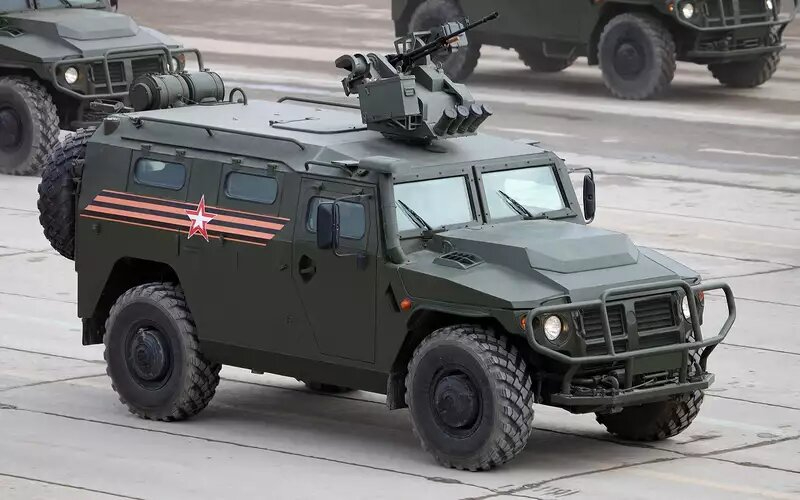
A Russian «Tiger» armored vehicle, armed with an «Arbalet-DM» module featuring a 12.7 mm machine gun.
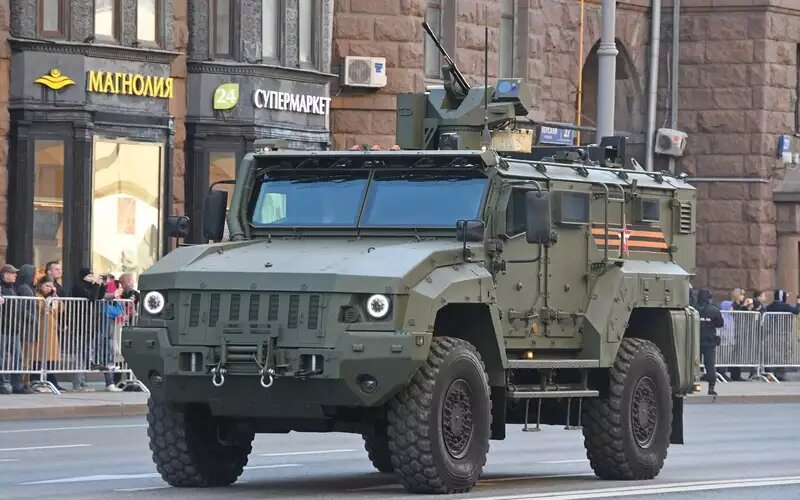
K-53939 armored vehicle equipped with the remotely controlled «Okhotnik» system.
Combined machine gun and cannon modules
The second class of unmanned combat modules is designed for use in armored personnel carriers, heavy armored vehicles, and airborne forces equipment. These systems are equipped with 30-mm automatic cannons (2A42, 2A72) in combination with twin machine guns and smoke-screen systems. Key functional features of these systems include two-axis weapon stabilization, a ballistic computer, and automated target tracking, the ability to use remotely fused munitions to counter unmanned aerial vehicles, as well as an extended vertical guidance sector (up to +60°), ensuring effective countermeasures against aerial threats.
Tactical and Technical Specifications of the 32V01 Module (Burevestnik Central Research Institute):
- Main armament: 30-mm 2A72 automatic cannon;
- Co-mounted weapon: 7.62-mm PKTM machine gun;
- Gun ammunition capacity: up to 300 rounds;
- Machine gun ammunition capacity: up to 2,000 rounds;
- Vertical elevation angles: from −5° to +70°;
- Horizontal tracking speed: up to 60 degrees per second;
- Weight of the module with ammunition: approximately 950 kg.
Examples of this category include the Belarusian-Russian “Adunok BM-30” module and the domestic 32V01 system, which is mounted on “Typhoon-VDV” armored vehicles, “Vystrel,” and specialized ZA-SpN platforms.
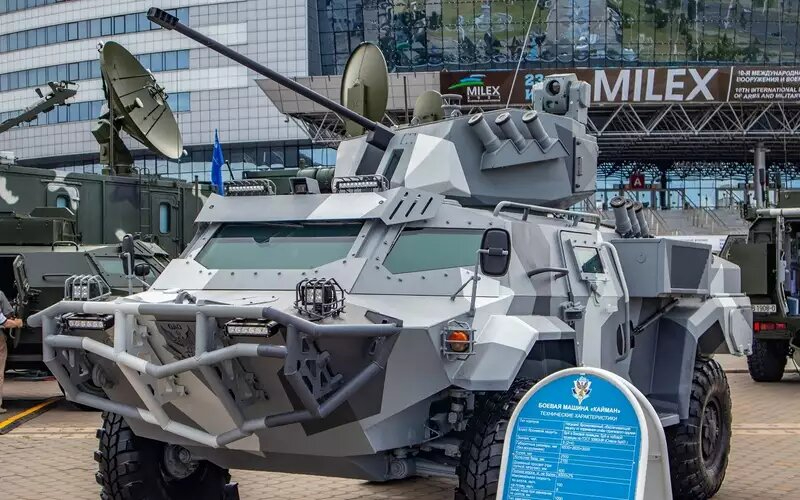
The Belarusian BM-30 Adunok combined module is mounted on a Cayman reconnaissance vehicle
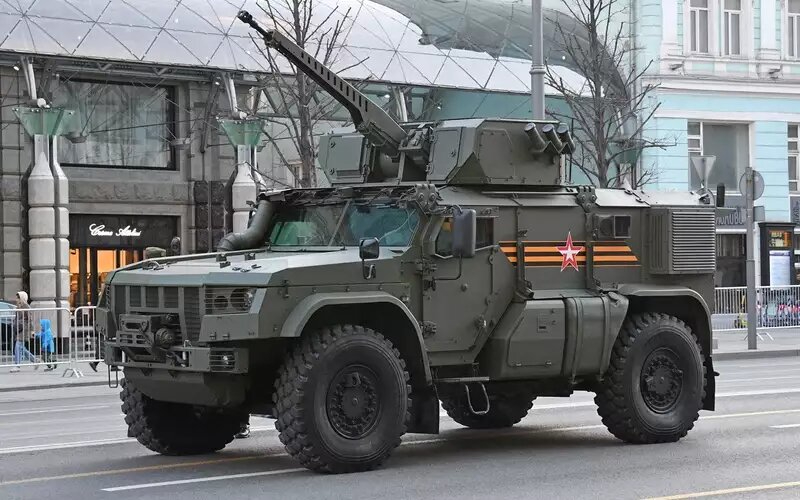
The Russian 32V01 machine gun and cannon system mounted on the Typhoon-VDV winged infantry armored vehicle
Comparative Analysis: Unmanned Modules and Traditional Tower-Type Installations
Despite the obvious advantages of unmanned modules, their use does not imply the complete replacement of traditional manned turrets. The analysis reveals a number of systemic limitations related to ammunition capacity, the level of armor protection, reloading capabilities under combat conditions, and the impact of the module’s weight on the chassis’s stability. In unmanned modules, the ammunition load is typically limited by the capacity of external containers and does not exceed 300 rounds for a 30-mm gun, whereas in conventional turrets, ammunition is stored inside the turret, allowing for a capacity of up to 500 rounds or more, with the ability to replenish from internal stowage. The module’s armor is generally lighter and less integrated into the vehicle’s overall protection system, which reduces its resistance to weapons. Reloading an unmanned module in the field often requires personnel to exit the vehicle, which creates additional risks, whereas in manned turrets, this operation can be performed from inside the vehicle if a mechanized ammunition feed system is available. Finally, the weight and placement of an unmanned module impose strict constraints on the chassis’s center of gravity, requiring careful balancing during the design phase.
Thus, unmanned modules are best suited for reconnaissance, perimeter security, countering lightly armored targets and unmanned aerial vehicles, whereas conventional turret-mounted systems remain the preferred choice for fire support and direct combat vehicles, which require a substantial ammunition load and maximum protection.
Development Prospects and Integration Trends
The current stage of development of unmanned combat modules is characterized by several interrelated areas. The first of these is increasing autonomy through the implementation of algorithms for automatic target recognition and tracking based on computer vision and machine learning. The second area is network integration, which involves ensuring that the modules interact with reconnaissance, command-and-control, and target-acquisition systems within a unified information loop. The third is the development of modularity and scalability through the creation of standardized interfaces for the rapid replacement of weapons and optoelectronic components in the field. The fourth area is the adaptation of modules for the use of specialized munitions with programmable detonation and electronic countermeasures to effectively counter unmanned aerial vehicles.
Conclusion
The integration of unmanned combat modules into the design of Russian armored vehicles represents a natural stage in the evolution of weapon systems, driven by the need to improve crew survivability, strike accuracy, and operational flexibility. Despite a number of design limitations, remotely controlled platforms demonstrate high effectiveness in specialized missions and serve as an important complement to traditional turret-based solutions.
Further refinement of unmanned combat modules, focused on the development of intelligent guidance systems, networked communication protocols, and modular architecture will provide the Russian Armed Forces with a technological advantage in the context of hybrid conflicts and asymmetric threats.