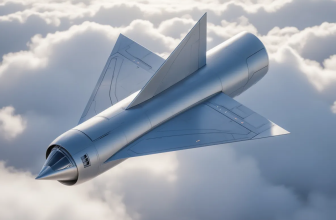
A Victim of Perestroika: A Joint Project by Tupolev and Antonov. The Tu-674 “Apogee” Spaceplane, Which Was Supposed to Revolutionize the Industry

Not long ago, the Stratolaunch air-launch aerospace system was under development in the United States. The system was quite thoroughly designed; in fact, a twin-fuselage carrier aircraft was unveiled in 2017. At the time, this project caused quite a stir. However, few people know that as early as the 1980s, the Tupolev and Antonov Design Bureaus in the USSR jointly developed something similar. We’ll discuss this project below.
An Ambitious Project at the End of an Era
On the eve of the collapse of the Soviet Union, the domestic aviation and space industry was preparing to carry out truly ambitious projects. One of the most ambitious—yet least realistic—projects of that time was the development of the Tu-674 “Apogee” air-space aircraft. Work was carried out by the Tupolev and Antonov design bureaus. Since the project was never completed, very little information about it has survived in open sources. Nevertheless, it is known for certain that the system under development was conceived as a super-heavy and fully reusable vehicle, capable of achieving a true breakthrough in the exploration of near-Earth space.
A Unique Hydrogen Power Plant
The orbiter’s power plant deserved special attention. The Tu-674 “Apogee” spaceplane was to be equipped with a unique hydrogen engine, which in itself represented the pinnacle of engineering thought at the time. The project was being prepared for implementation with such seriousness that individual components and assemblies of this promising propulsion system had already undergone successful flight tests on the famous Tu-155 experimental aircraft, long before full-scale assembly of the spacecraft had even begun.
Giant twin-fuselage carrier aircraft
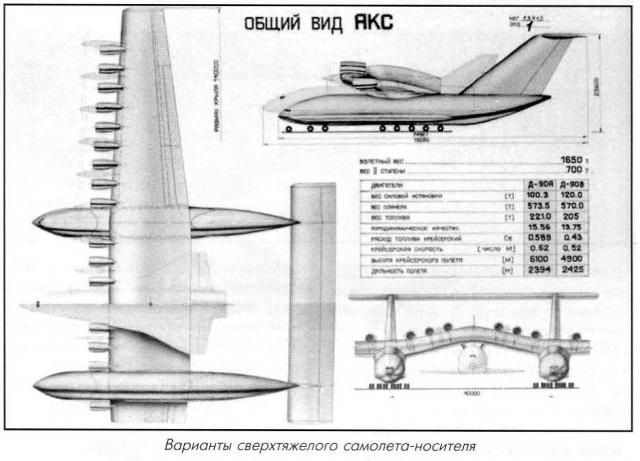
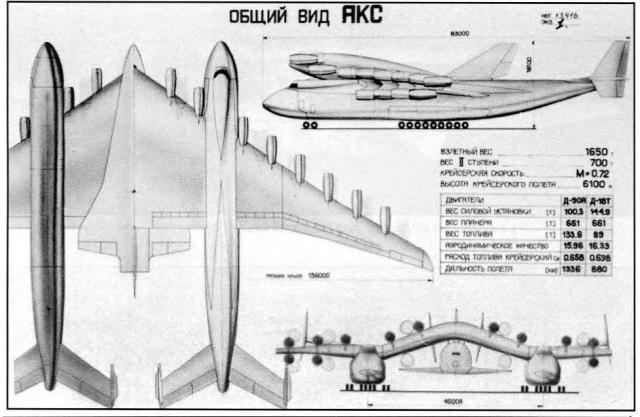
Unlike the “Energia-Buran” complex, where the orbiter was launched into orbit using a powerful launch vehicle, the Tu-674 “Apogee” was planned to be launched using a completely different method. This required an unusual and, by the standards of the time, gigantic carrier aircraft. It was to be built using components and systems from the world’s largest aircraft, the An-225 “Mriya,” which had originally been designed for another promising project, “MAKS.” The carrier aircraft was to have two fuselages, with a colossal twin wing situated between them.
The Concept of an Air Launch
The spacecraft’s aerodynamic design was truly impressive in its scope and complexity. Turbojet engines were mounted on the twin wings between the fuselages, and it was beneath these wings that the Tu-674 “Apogee” spaceplane itself was to be mounted. Additional engines were mounted on the outer sections of the wings on both sides of the fuselages. In total, this marvel of an aircraft was designed to carry at least eighteen engines on board, making it the multi-engine aircraft with the most engines in history.
The very concept of launching a spacecraft into space seemed like something out of a science fiction story. A giant carrier aircraft would take off with the orbiter attached under its wing, climb to an altitude of about ten to twelve kilometers, and then release the spacecraft. Once in free fall at a predetermined altitude, the Tu-674 “Apogee” would ignite its main hydrogen engine and hurtle into space, taking advantage of the air launch to save a tremendous amount of fuel.
The Tragic Ending of the Project
It would seem that the project was destined for success and would certainly have been implemented, but the harsh reality turned out to be far more disheartening. In 1991, the Soviet Union ceased to exist. Along with that great country, the domestic space industry also collapsed. Funding was completely halted, and many cutting-edge projects were shut down, including the legendary “Energia-Buran” combination. The Tu-674 “Apogee” project did not escape this sad fate either; it remained only on paper and in the form of individual test stands. Had this complex been realized, it would have radically changed not only the concept of launching and operating reusable space orbiters but also the entire field of manned spaceflight, putting it several decades ahead of its Western counterparts.
Technical Specifications:
- Aircraft Type: Super-heavy aerospace aircraft (orbiter)
- Developers: A joint project of the Tupolev Design Bureau and the Antonov Design Bureau
- Carrier Aircraft: A Twin-Fuselage Giant Based on the An-225’s Components
- Number of engines on the carrier aircraft: At least 18 turbojet engines
- Orbiter propulsion system type: Unique hydrogen propulsion system
- Launch method: Air launch from under the wing of a carrier aircraft
- Air launch altitude: 10–12 kilometers
- Reusability: Full (with an aircraft-style landing, similar to the «Buran»)
- Project status: Closed in 1991 following the collapse of the Soviet Union
Sources:
https://www.secretprojects.co.uk/threads/antonov-projects.11520/page-2#post-235554