The British Empire could afford to take a break from building battleships during the interwar period, but England was always building cruisers; there weren’t many of them at the time.
The 1930 London Naval Treaty on the Limitation of Naval Armaments imposed restrictions on the light cruisers of the major powers for the first time. Displacement limits were set for ships planned for construction. Britain was permitted to build light cruisers (with guns up to 155 mm) with a total displacement of up to 192,200 metric tons.
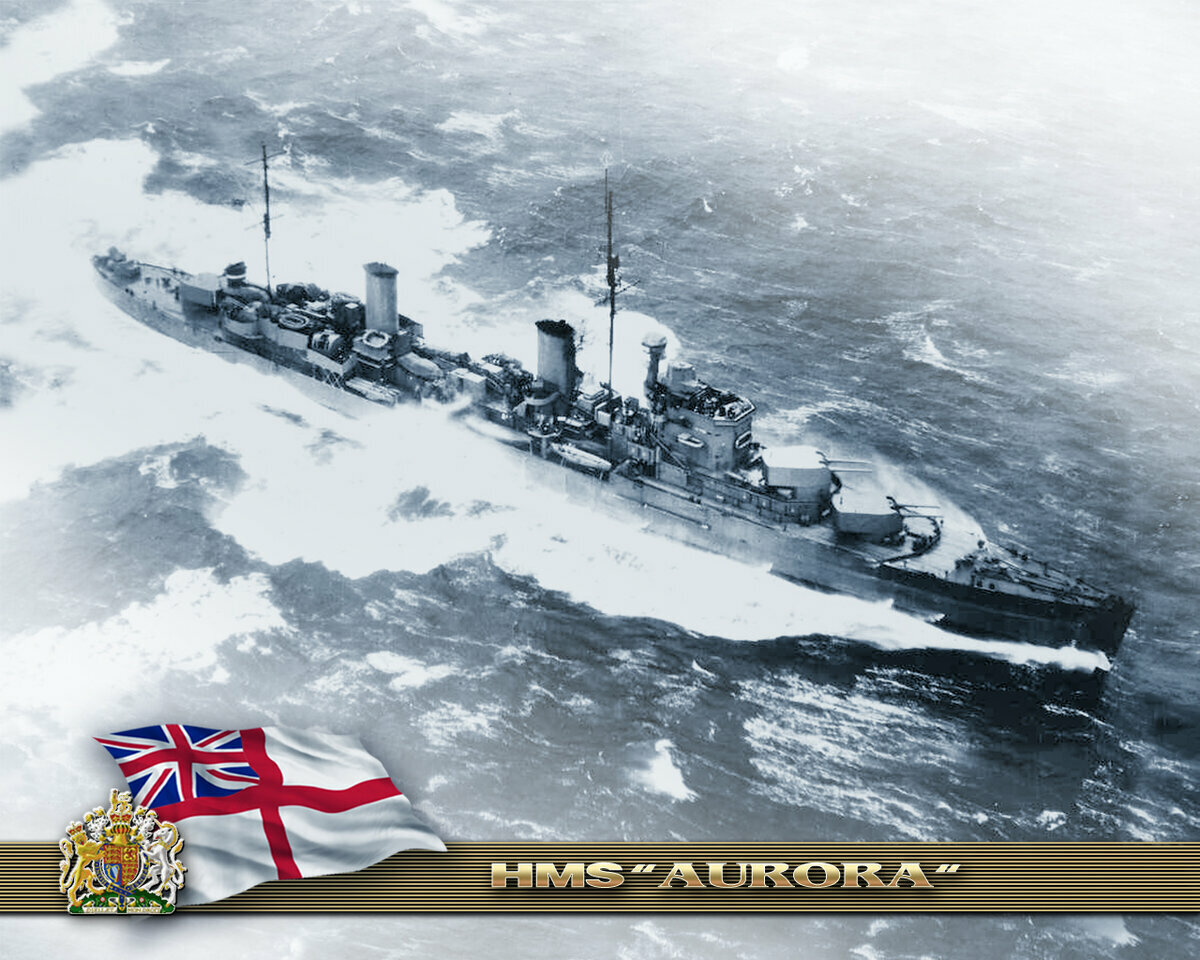
Given the situation, the Admiralty decided to follow the principle of “more for less” and ordered four small cruisers with a displacement of up to 6,700 metric tons. The four light cruisers of the “Aretuza” class were intended to replace the obsolete “C” and “D” class cruisers.
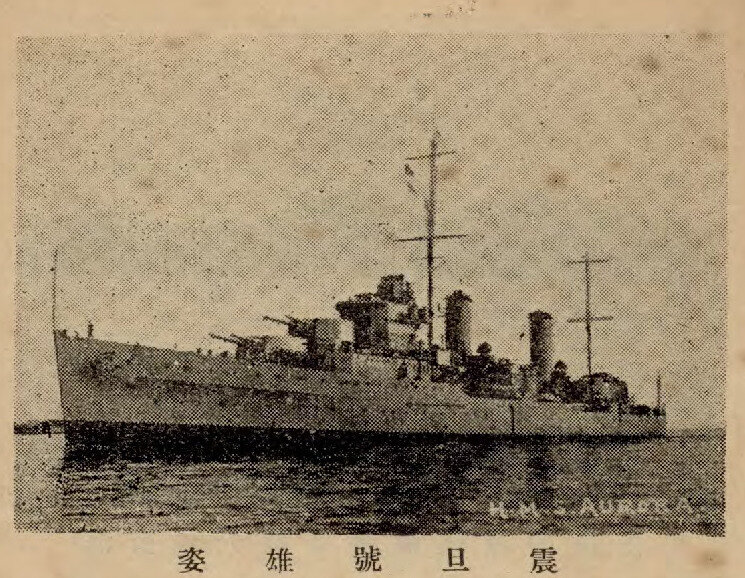
These were the “Arethusa”-class cruisers: “Arethusa,” “Galatea,” “Penelope,” and “Aurora.” They were a scaled-down version of the successful “Linder”-class cruisers (which were too large to serve as escort ships for destroyers), distinguished by a staggered arrangement of the power plant, two funnels, three main-caliber turrets, and thinner armor. Due to the absence of a fourth turret, the new ships were approximately 15 meters shorter. The armor layout remained the same, but the belt—covering 35% of the ship’s length—was thinner, at up to 57 mm. A total of 618 metric tons of homogeneous, non-cemented NC-type armor.
The cruiser’s main armament consisted of six 152-mm/50 Mk.XXIII guns, which were manually loaded and locked, a feature that significantly complicated the gunners’ work. The armor-piercing and high-explosive shells weighed 50.8 kg, and the firing range at a barrel elevation angle of 45 degrees was 23,300 m. The practical rate of fire was 8 rounds per minute. The torpedo armament consisted of two triple-tube 533-mm torpedo tubes; Mk.IX steam-gas torpedoes were used (total length 7.27 m, warhead weight 327 kg, range 13,700 m at a speed of 35 knots).
During the construction of the cruisers, it was decided to reinforce their air defense capabilities by replacing the single-barrel 102 mm anti-aircraft guns (which remained only on the first two ships) with twin-barrel Mk.XIX 102 mm anti-aircraft guns. The «Penelope» and «Aurora» were equipped with these guns.
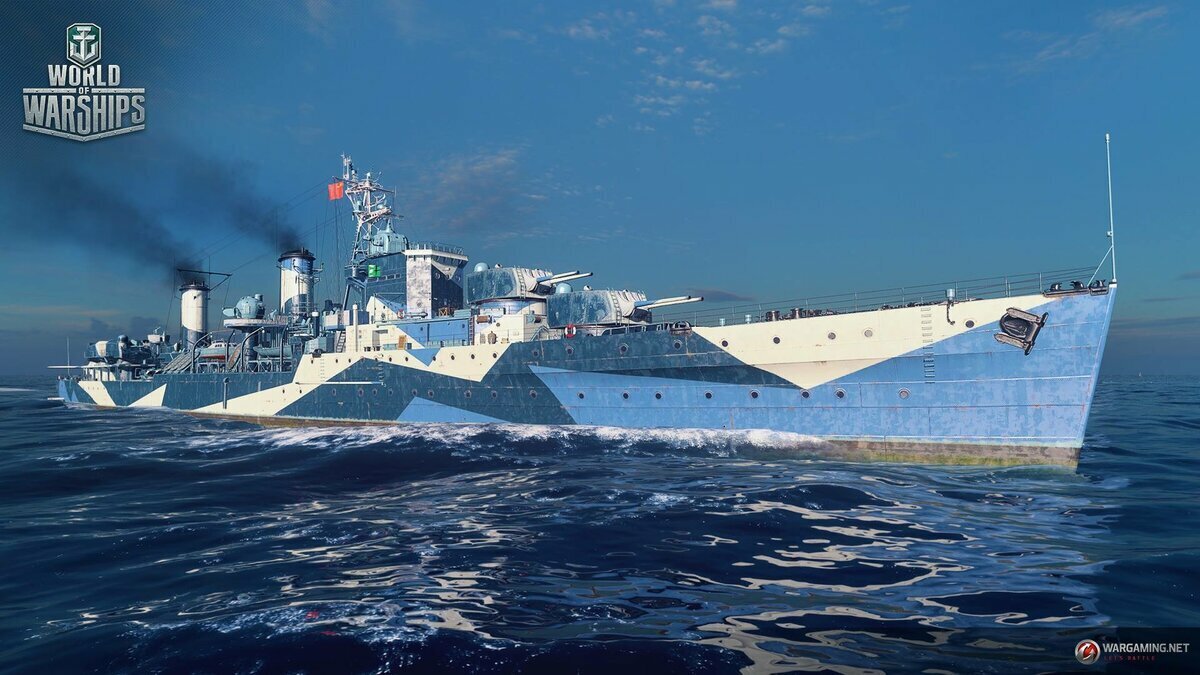
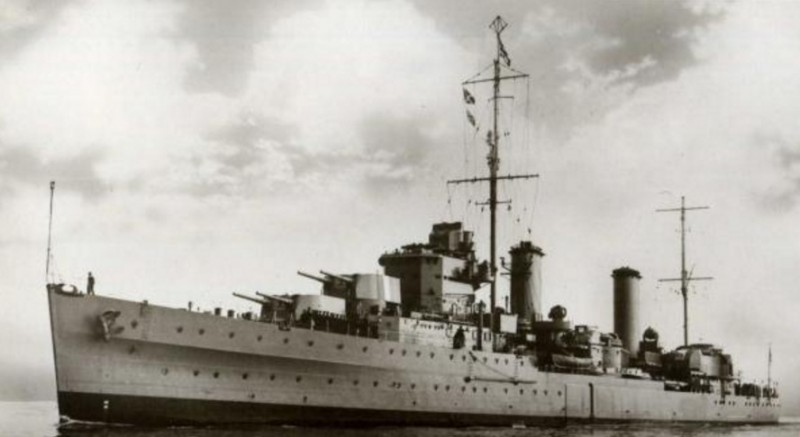
The *Aurora*, the tenth ship of that name in the Royal Navy since 1758 (and the second light cruiser). It cost the treasury nearly 1.25 million pounds sterling. Motto: Post Tenebras Lux (“Light after darkness”). Emblem: a rising sun on a red background with silver and gold. Lady Fisher, wife of Admiral “Jackie” Fisher, served as the cruiser’s godmother.
The *Aurora*, laid down under the 1934 program, was completed as the flagship of the Metropolis Fleet’s destroyers and did not have a catapult; in its place was a superstructure housing the command center.
Thanks to the extensive use of welding, the cruiser turned out to be more than 200 metric tons lighter than the design specifications. Only the most critical structural elements were riveted.
The reduction in size made it possible not only to create a more suitable squadron scout, but also to squeeze two more “Southampton”-class cruisers into the 91,000-metric-ton limit that remained in effect until 1936.
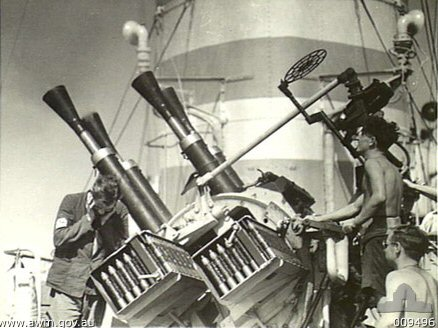
In 1940–1941, the ships “Aurora,” “Aretuza,” “Galatea,” and “Penelope” were equipped with 2×4 40-mm “pom-pom” automatic anti-aircraft guns. In 1942, the 12.7-mm machine guns were removed from the *Aurora* and the *Penelope* had their 12.7-mm machine guns removed and were fitted with 4 to 8 20-mm “Erlikon” automatic cannons; by 1944, the number on the *Aurora* had increased to 9. By the end of the war, the full displacement of the *Aurora* and *Aretuza*, taking into account the modernizations, was 7,180–7,400 metric tons.
The others—«Galatea» and «Penelope»—were lost.
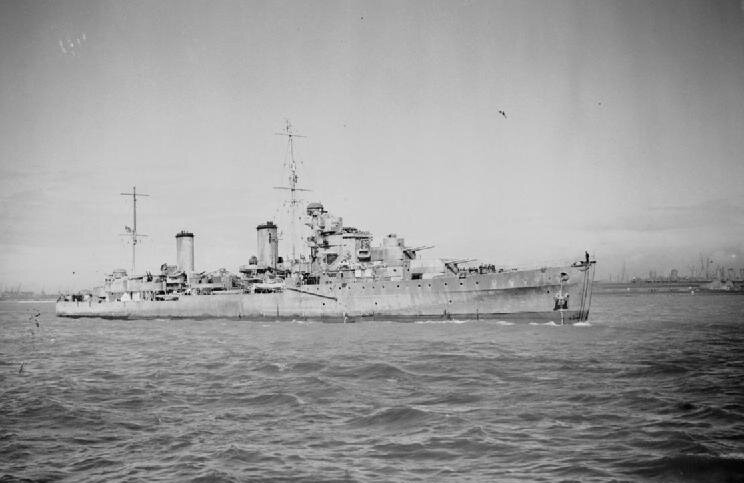
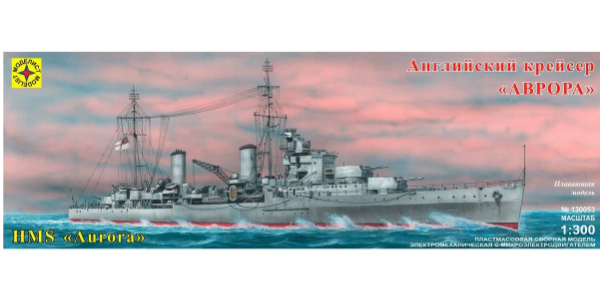
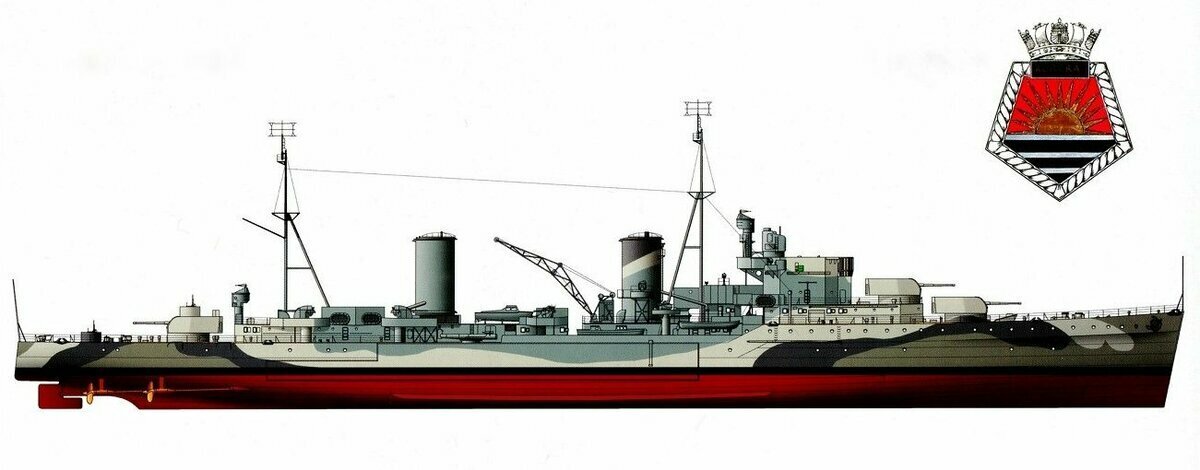
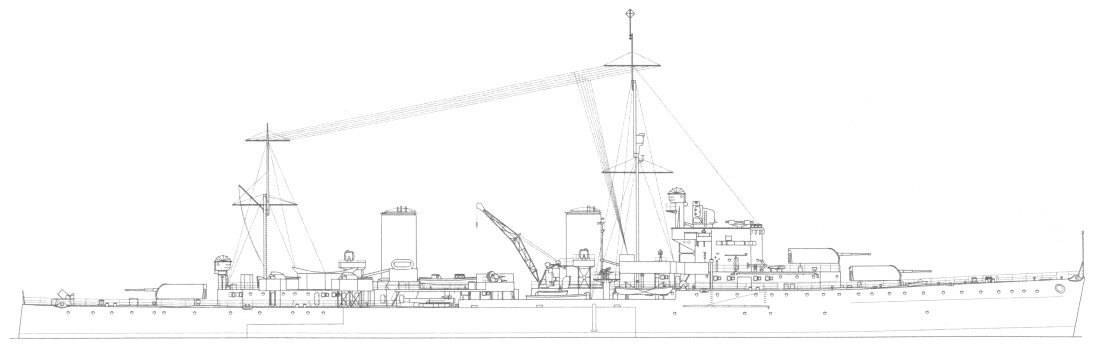
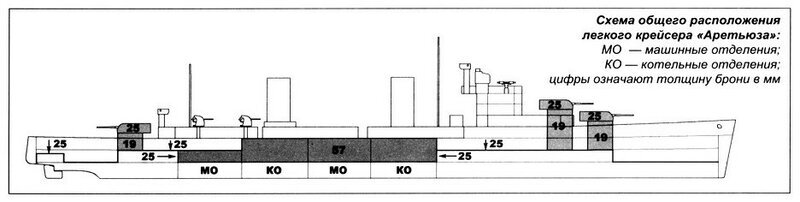
HMS Aurora. Royal Dockyard, Portsmouth. Laid down on July 23 (27), 1935. Launched on August 20, 1936. Commissioned on November 8 (12) (September 11), 1937.
It was handed over to Nationalist China as Chongqing in 1948, and came under Communist China’s control as Chongqing in 1949, Huang He (Xuan He) in 1951 (1959), Pei Jing (Pei Chin) in 1951 (1965), and Guangzhou in 1958; later decommissioned. It fell apart in the 1990s.
It was sunk by an aircraft of the Republic of China in March 1949 at Taku. It was later refloated and converted for other purposes. It was never repaired and later served as a residential and storage vessel. It was decommissioned during the Cultural Revolution.
Standard displacement: 5,220–5,270 metric tons; full load displacement: 6,665–6,715 metric tons. Length: 146.3/506 feet (154.2 m). Beam: 51 feet (15.5–16 m). Draft: 13.75–14 feet (4.3 m), 5.6 m.
Propulsion: four steam turbines manufactured by Wallsend Slipway & Engineering Co. Ltd. with Parsons gearboxes; four Admiralty-type three-drum liquid-fuel boilers; four shafts; 64,000 l.s. Speed: 32.3 knots. Fuel capacity: 1,325 metric tons of fuel oil. Range at 15 knots: 5,500 nautical miles. Crew: 500.
Armor: Initial configuration: 1 to 3 inches (76 mm) — turret protection; 2.25 inches (70 mm) — belt (only in front of the main and command turrets); 1 inch (25 mm)—deck, turrets, barbettes, and traverses
Weapons:
Original armament: 6 × 6-inch (152 mm/50) guns, 4 × 2 QF 4-inch (102 mm/45) Mk V anti-aircraft guns, 2 × 4 0.5-inch (12.7 mm) machine guns, 2 × 3 21-inch (533 mm) torpedo tubes.
As of April 1941: 3 × 2 6-inch (152-mm/50) guns, 2 × 2-pounder (40-mm) quadruple Pommeau anti-aircraft guns, 3 × 20-mm single Oerlikon anti-aircraft guns, 2 × 0.5-inch quadruple machine guns, 2 × 3 21-inch (533 mm) torpedo tubes.
As of December 1943: 3 × 2 6-inch (152-mm/50) guns, 2 × 40-mm quadruple Bofors anti-aircraft guns, 4 × 20-mm Oerlikon anti-aircraft guns with dual mechanical drive, 3 × 20-mm single Oerlikon anti-aircraft guns, 2 × 0.5-inch quadruple machine guns, 2 × 3 21-inch (533 mm) torpedo tubes
Upgrades:
In June 1940, the cruiser *Aurora* was equipped with 2×4 40-mm “pom-pom” guns and a 20-tube launcher for unguided “UP” rockets (removed in the second half of 1941). In April 1941, Type 290 and Type 284 target detection and fire-control radars were installed; in August—6×1 20-mm/70 “Oerlikon” guns, while the 12.7-mm machine guns were removed at the same time. In June 1942, three 20-mm automatic cannons and the Type 290 radar were removed, and Type 273, 281, and 285 radars were installed. In early 1944, 4×1 20-mm/70 “Oerlikon” guns were replaced with 2×2; in 1945, another 3×1 were replaced with 1×2.
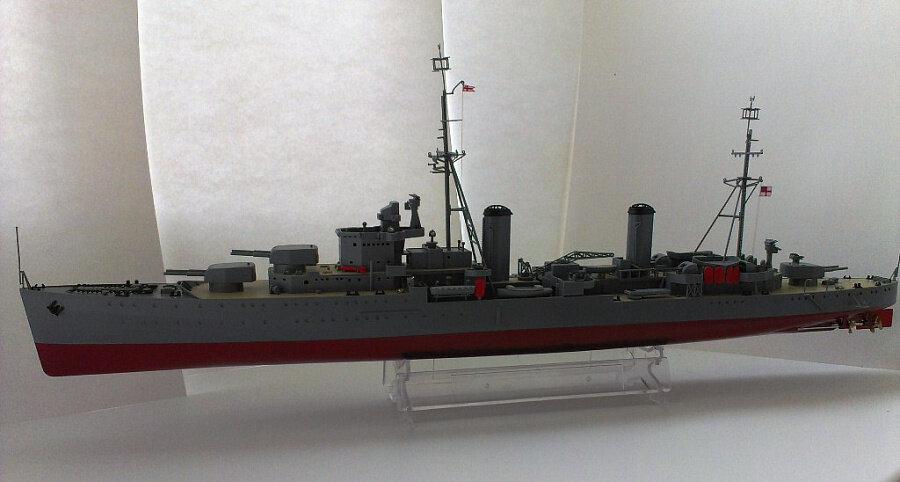
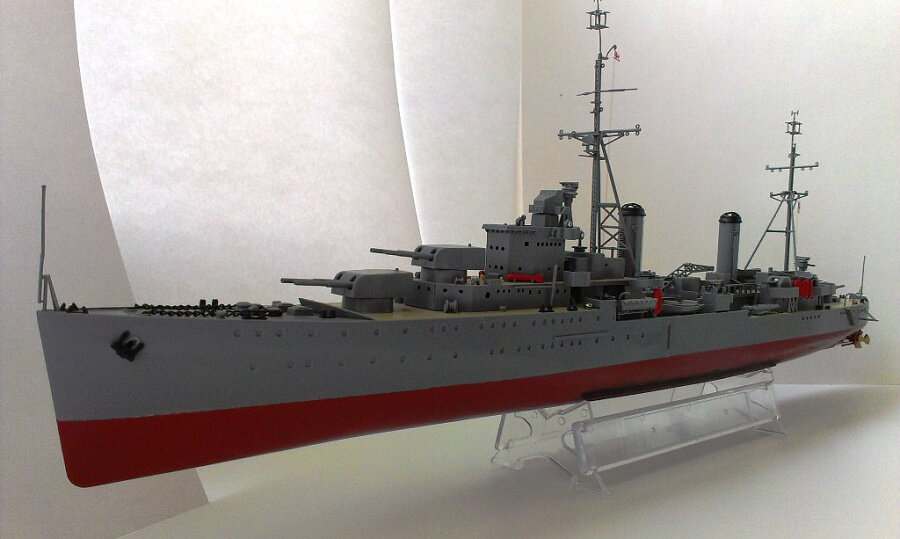
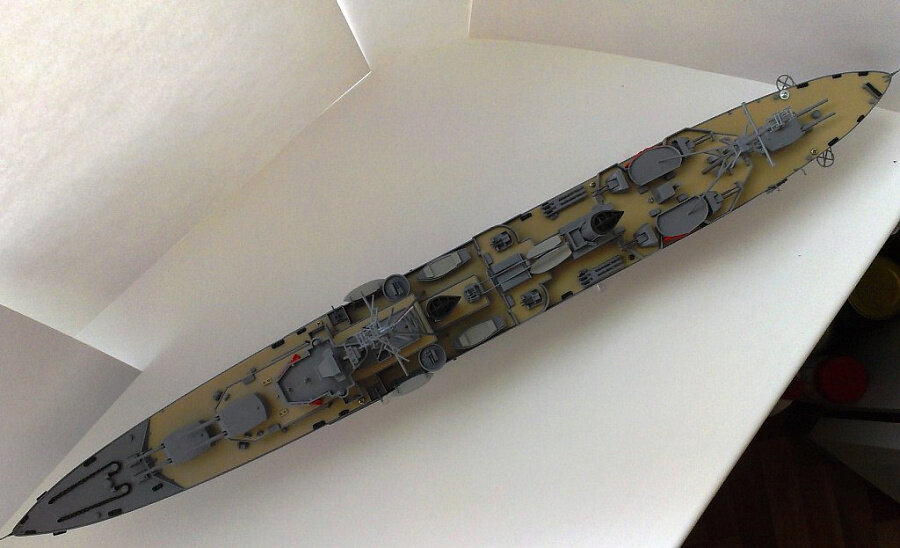
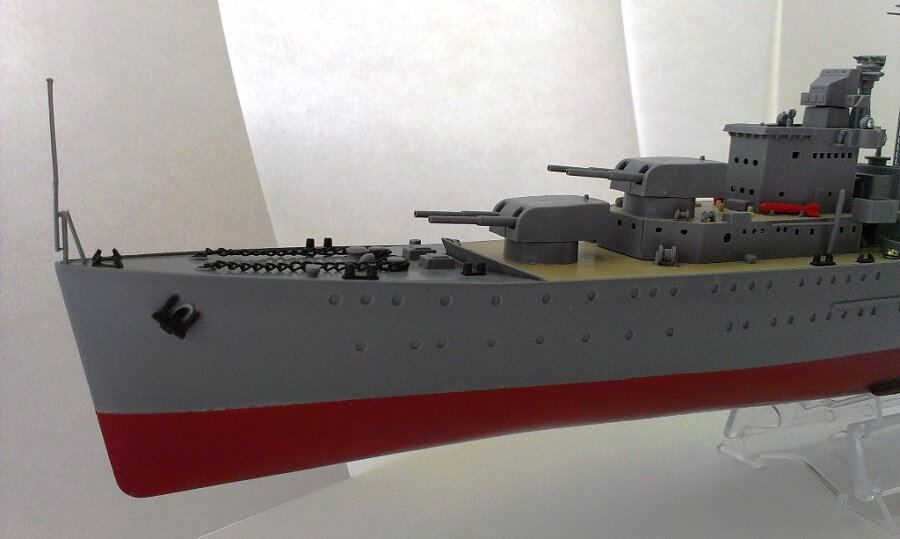
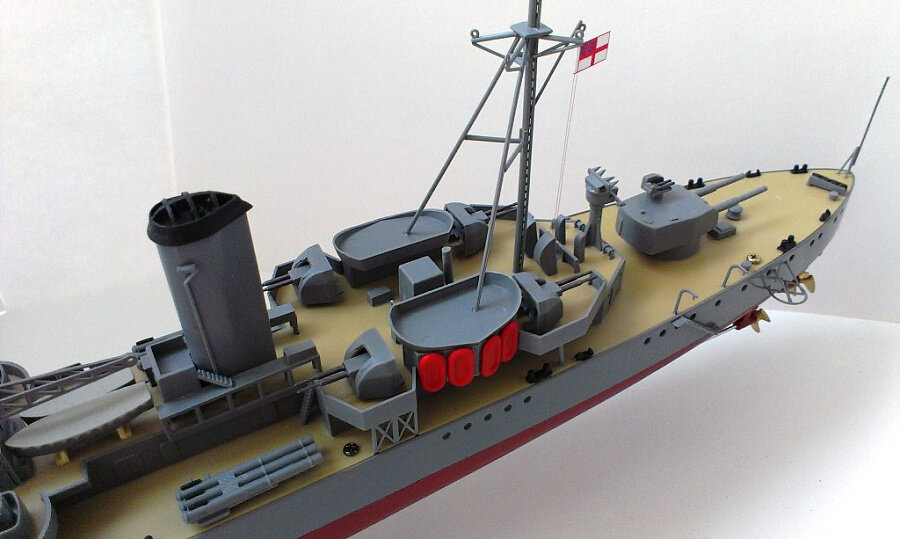
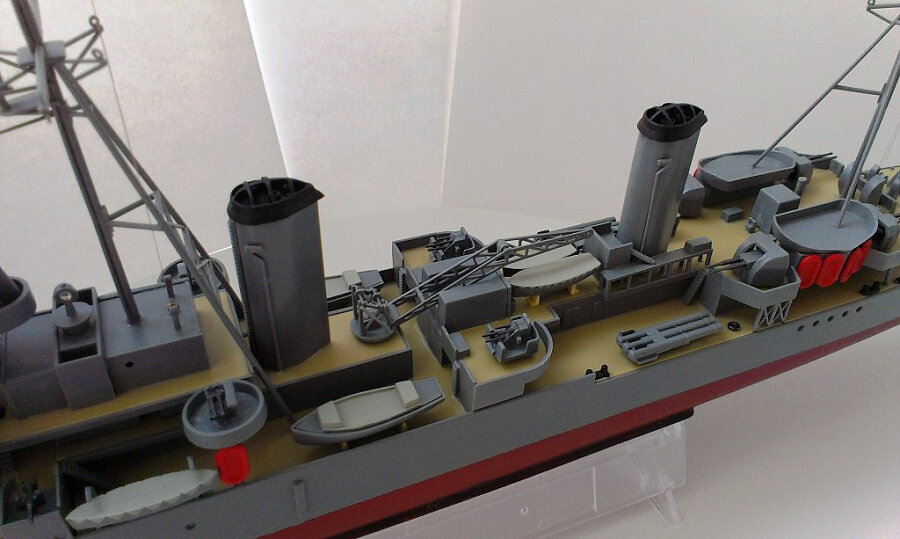
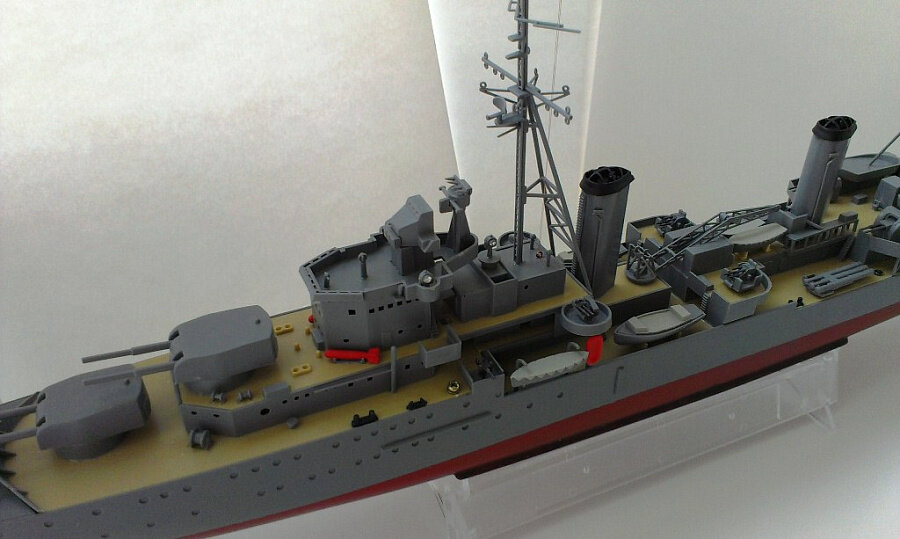
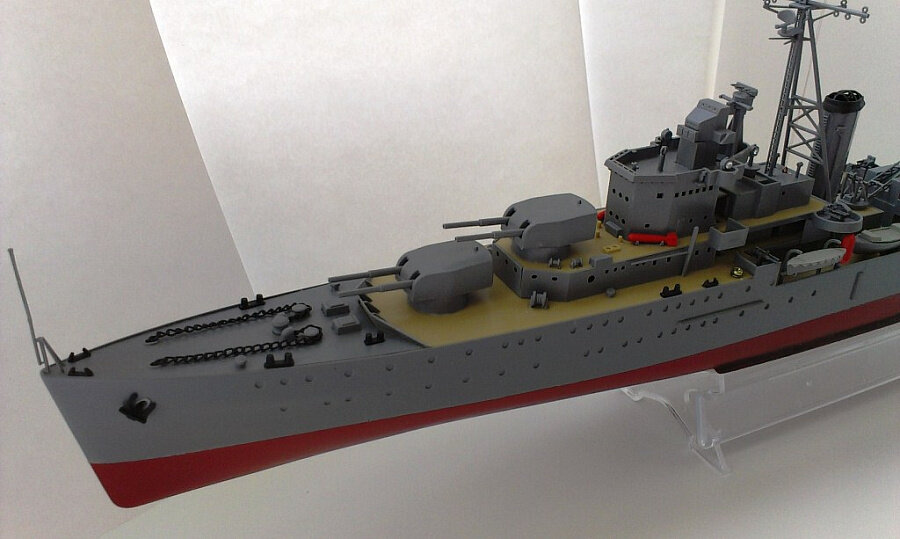
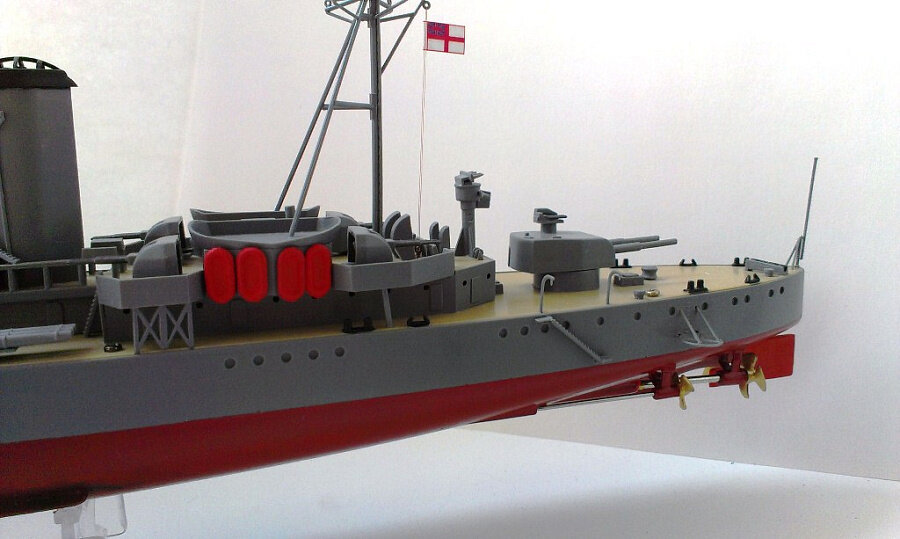
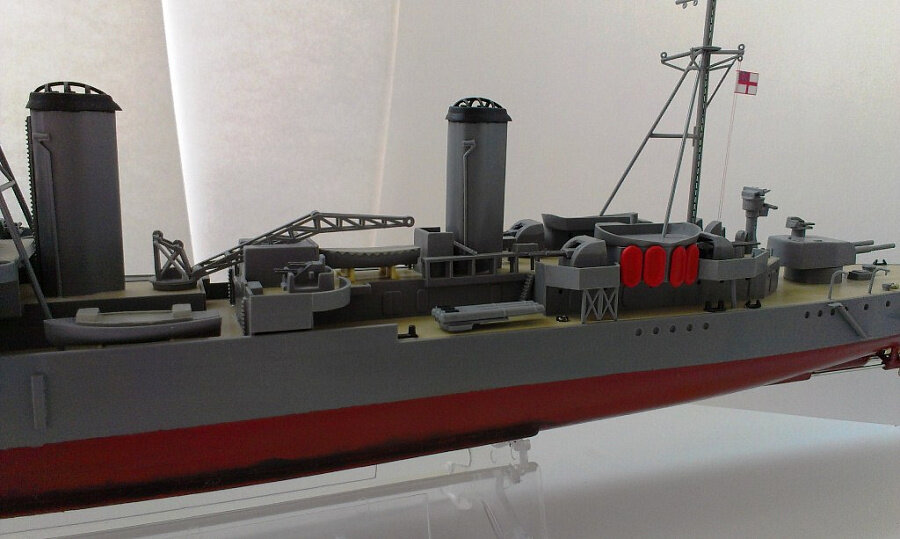
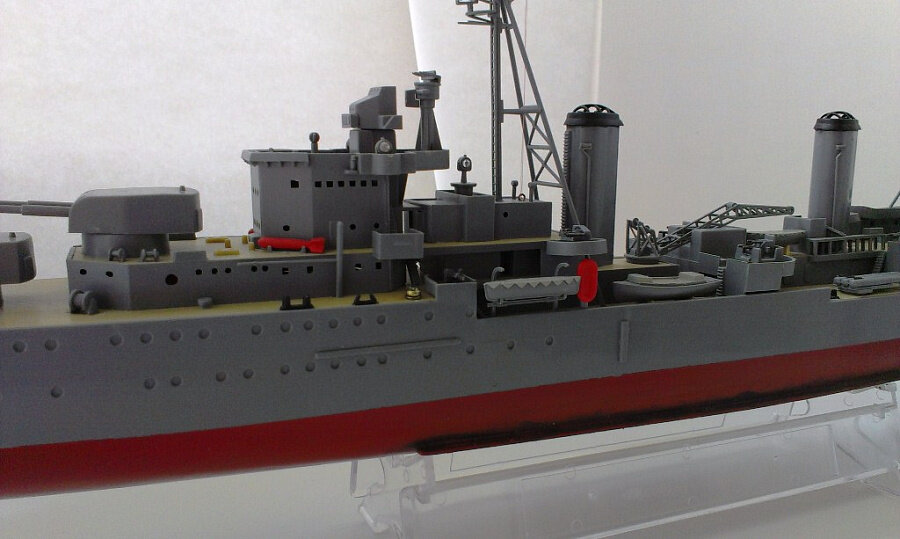
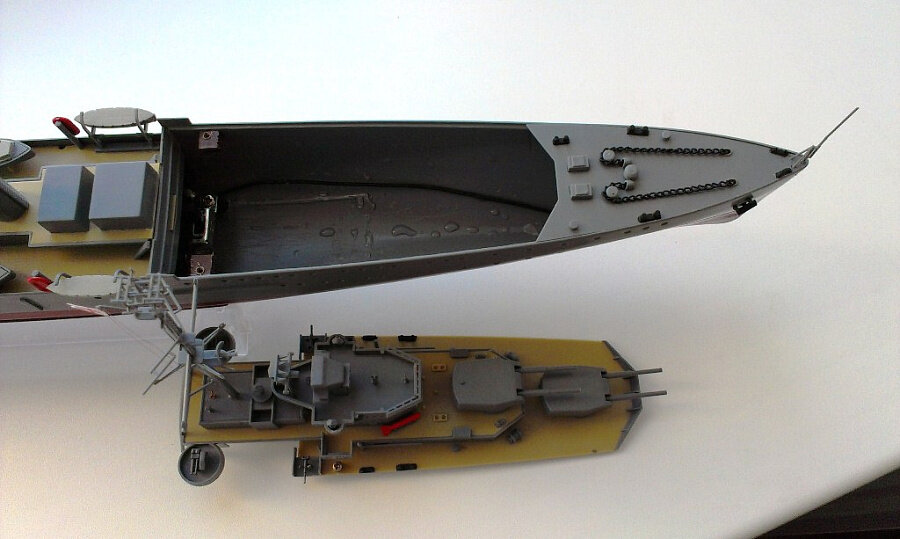
The British “Aurora” entered service with the Home Fleet. As of September 1939, she was part of the 2nd Cruiser Squadron; with the outbreak of World War II, she escorted convoys to Scandinavia and participated in the hunt for the German battleships “Scharnhorst” and “Gneisenau,” and shelled German forces in Narvik. On May 7, the “Aurora” took a direct hit from a 250-kg bomb dropped by a German bomber and was forced to withdraw for repairs. After operations in Norway, she, together with the cruiser “Kenya,” kept watch on the “Bismarck,” and in May 1941, as part of the escort for the aircraft carrier “Victory,” she provided cover for the hunt for the “Bismarck.”
The British fleet then began hunting down German supply ships scattered across the Atlantic, which were being used by German raiders and submarines. On June 3, 1941, the cruiser intercepted one of the German supply ships, the tanker *Belchen*.
From July through August 1941, as part of Formation “K” alongside the Home Fleet, the cruiser took part in Operation “Rukavitsa” to occupy Spitsbergen and Bear Island. A supply point for Arctic convoys bound for the USSR was established on Spitsbergen.
During the second northern campaign, on September 5, 1941, a German convoy carrying reinforcements for Dietl’s corps near Murmansk was intercepted off the coast of Northern Norway, along with the cruiser *Nigeria* (two large transports escorted by the artillery training ship *Bremse* and several armed trawlers). During the battle, the German training ship *Bremse* (armed with four 127-mm guns) was sunk, but the transports managed to take refuge in the fjords.
In the fall of 1941, the cruiser, along with the sister ship *Penelope* and the destroyers *Lance* and *Lively*, was transferred to the Mediterranean Sea, and on October 21, it arrived in Malta. The ships formed Task Force “K,” whose mission, based in Malta, was to cut off communications to enemy forces in North Africa.
On November 9, 1941, as the flagship of Formation “K” (HMS Penelope, HMS Lance, and HMS Lively), the Aurora took part in the destruction of the Italian convoy “BETA” (the “Duisburg Convoy”), two heavy cruisers (the *Trento* and the *Trieste*), ten destroyers, and seven merchant ships. During the battle, the Italian destroyer “Fulmine” was sunk, as were the German transports “Duisburg” and “San Marco,” the Italian transports “Maria,” “Sagitta,” and “Rina Corrado,” as well as the Italian ships “Conte di Misurata” and “Minatitlan.” The Italian destroyers “Grecale” and “Euro” were damaged.
On November 24, Task Force “K,” with the same composition, intercepted an Axis convoy traveling from the Aegean Sea to Benghazi approximately 100 nautical miles west of Crete. Two German transports, the Maritza and the Procida, were sunk by HMS Penelope and HMS Lively, despite the presence of the Italian destroyers Lupo and Cassiopea, which withdrew without engaging in battle.
On December 1, 1941, Force “K” (HMS Aurora, HMS Penelope, and HMS Lively) attacked a small Italian convoy. The tanker *Iridio Mantovani*, carrying 8,600 metric tons of fuel for Axis forces in North Africa, was escorted by the Italian destroyer *Alvise Da Mosto*. The tanker had already been damaged by an attack from British Bristol Blenheim bombers. The destroyer attempted to tow the tanker, but it was sunk during another air raid. It was while rescuing the survivors that the destroyer was attacked by Force “K”. The attempt to fight back failed; after taking several hits, including one to the ammunition magazine, the destroyer quickly sank approximately 75 miles northwest of Tripoli, after which the British finished off the burning and sinking tanker.
The *Aurora* also took part in the First Battle of Sirte on December 17, 1941. On December 19, while en route from Tripoli, she struck a minefield and was severely damaged (the hull was damaged along a 40-meter stretch, the elevators in the bow turrets jammed, the electrical equipment was damaged, and her speed dropped to 10 knots). The cruiser *Neptune* and the destroyer *Kandahar* were lost in that engagement. The cruiser returned to Malta for repairs; it was patched up for three months under German bombardment, and then sailed to the mother country for a complete overhaul, which was completed in July 1942.
After undergoing repairs, the cruiser was assigned to Formation «N,» and in November, it joined the task force for the North African landings (Operation «Torch»).
During an operation off the coast of Oran on November 8, 1942, the Allied cruiser was attacked by the French destroyers *Tramontana*, *Tornado*, and *Typhoon*. The first was sunk by fire from the cruiser, while the second, having sustained damage, ran aground. The third took refuge in the harbor. On November 9, the flagship *Épervier* and the destroyer *Typhoon* attempted to break out to sea. The *Aurora* severely damaged the *Epervier* with accurate fire, forcing it to beach as well; the *Typhoon* managed to escape under cover from the coastal batteries.
In December, the cruiser operated as part of Force «Q» off the coast of Bon to counter the evacuation of Axis troops and supply convoys between Trapani and Tunis.
On the night of December 2, 1942, when Force “Q” (the cruisers *Aurora*, the “Argonaut,” and the “Sirius,” along with the destroyers “Kiferon” and “Quentin”) attacked an Italian convoy (four transport ships escorted by three destroyers and two minesweepers). During the artillery battle, the destroyer “Folgore” and all four transports were sunk. Thirty-two vehicles, four tanks, 12 88-mm guns, and 698 metric tons of other cargo, along with 2,200 sailors and soldiers, were lost at sea.
As part of the 15th Cruiser Squadron, the *Aurora* took part in the capture of the islands of Pantelleria and Lampedusa, the invasion of Sicily, and the landing at Salerno (Operation Avalanche); in October 1943, she moved to the Aegean Sea, where she shelled German-occupied islands. On October 30, she was attacked by German Junkers 87 and 88 aircraft near Castellorizo, surviving a 500-kilogram bomb hit behind the stern funnel. As a result of the explosion and fire, 47 crew members were killed.
The *Aurora* was forced to sail to Taranto for repairs, where it remained until April 1944. In August 1944, the cruiser took part in the landings in southern France (Operation Dragoon), then returned to the Aegean Sea to assist in the liberation of Athens.
At that time, actor Kenneth More was serving on the cruiser’s crew; using his well-trained stage voice, he kept the crew in the hold informed of what was happening on deck via the public address system.
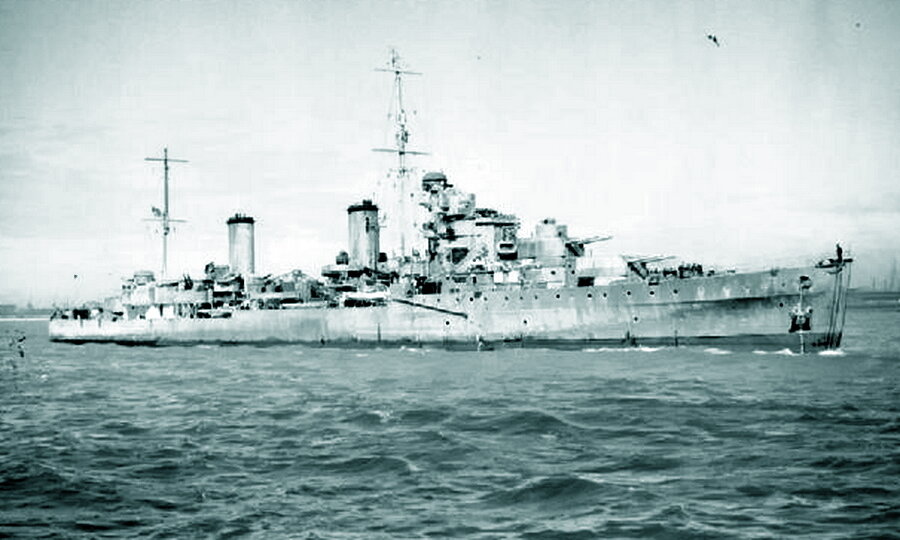
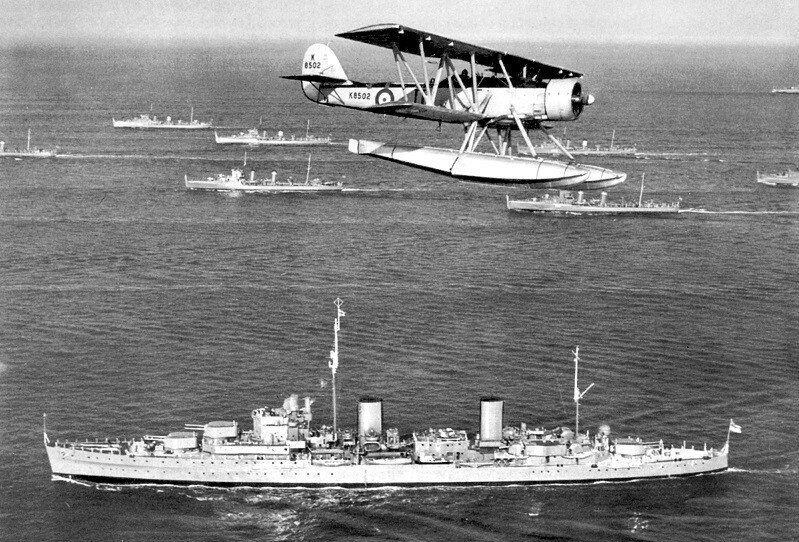
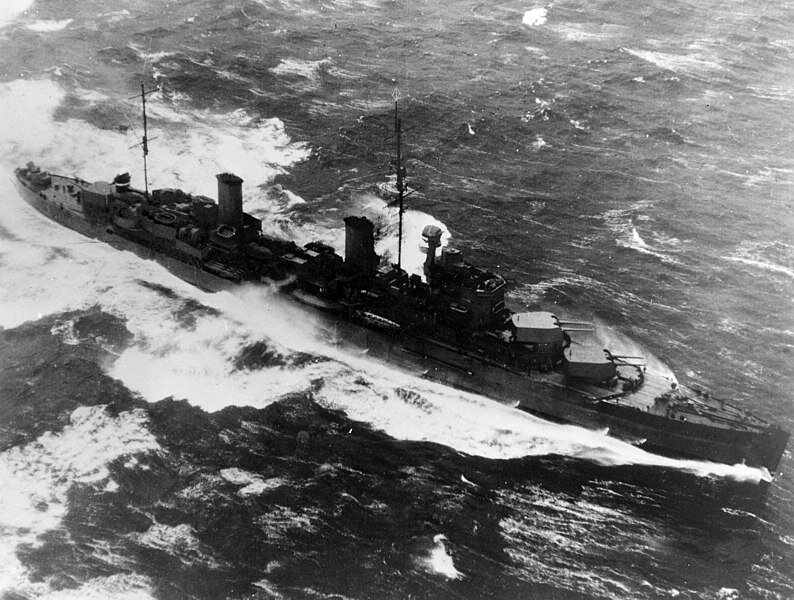
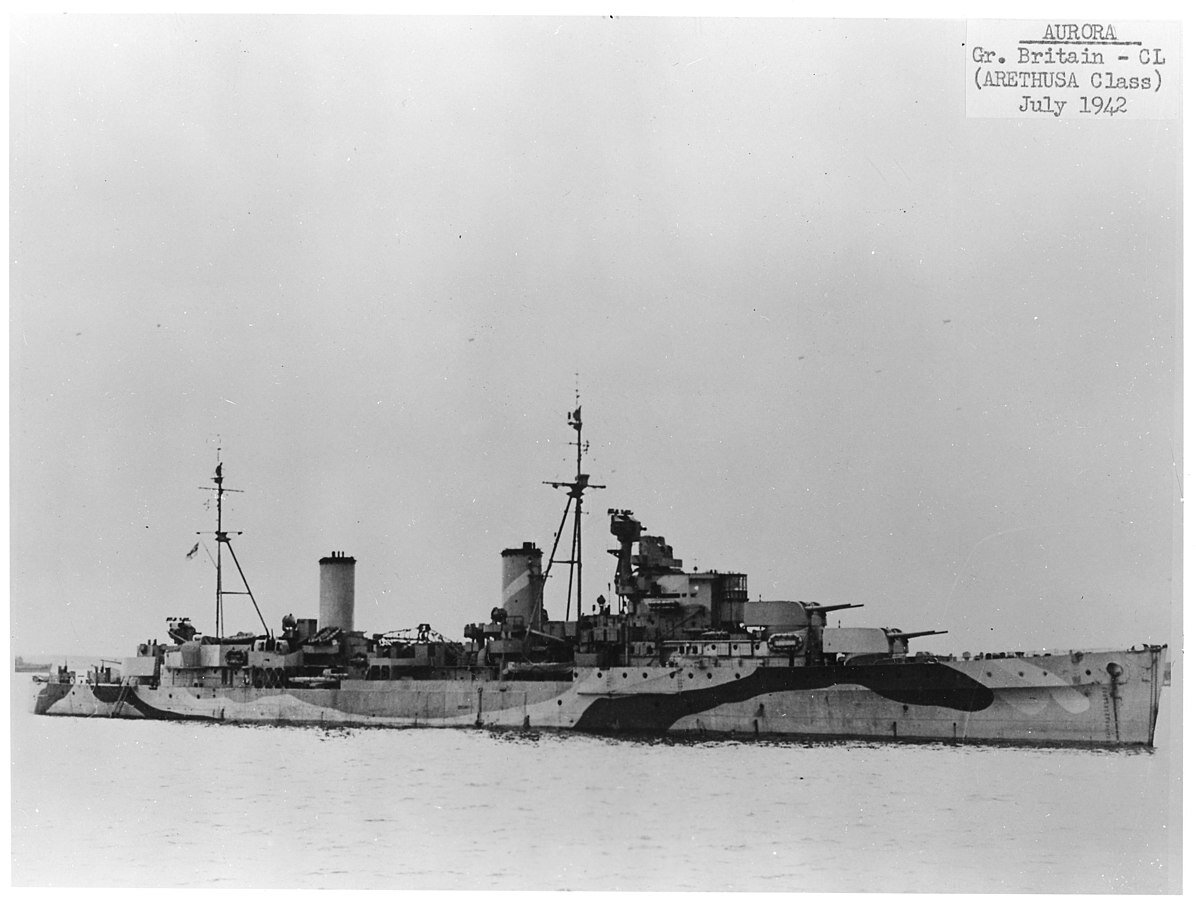
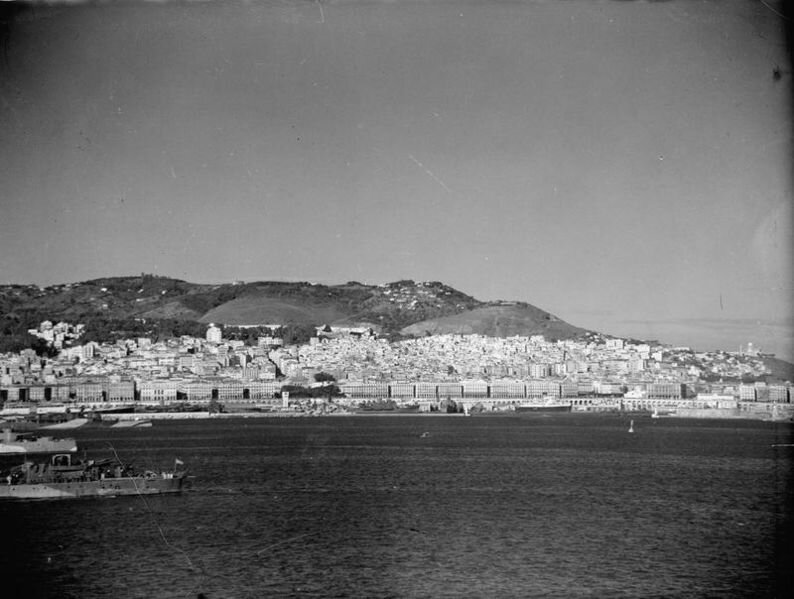
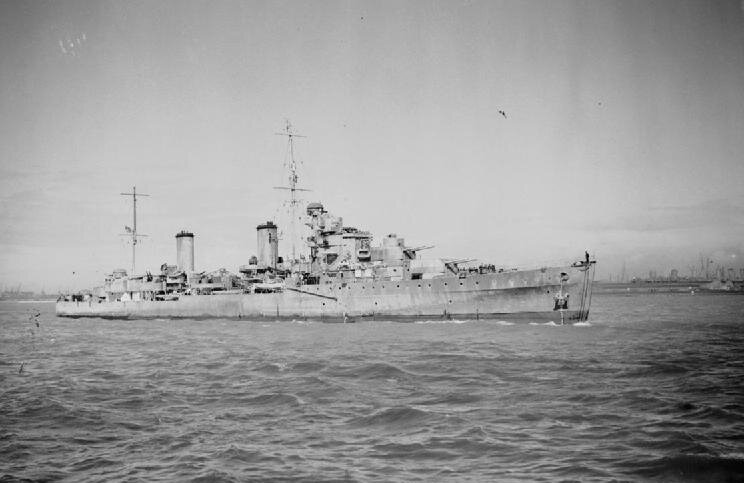
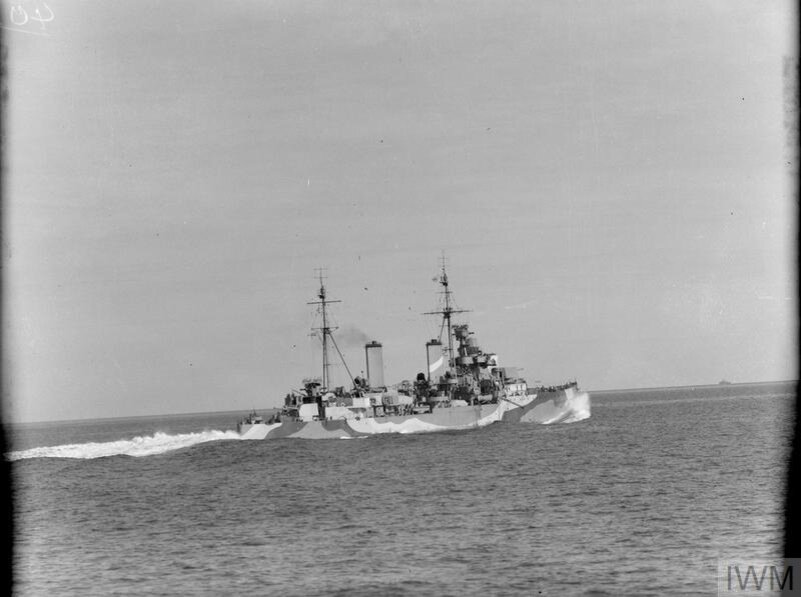
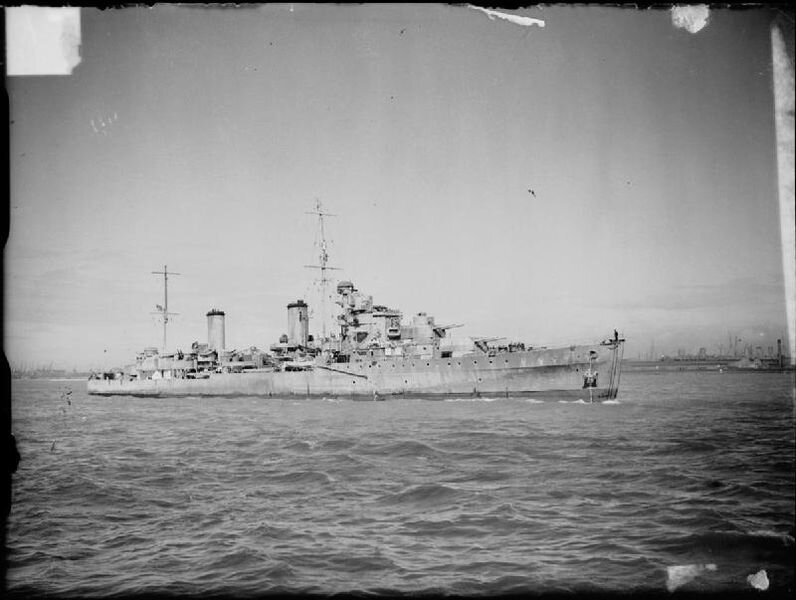
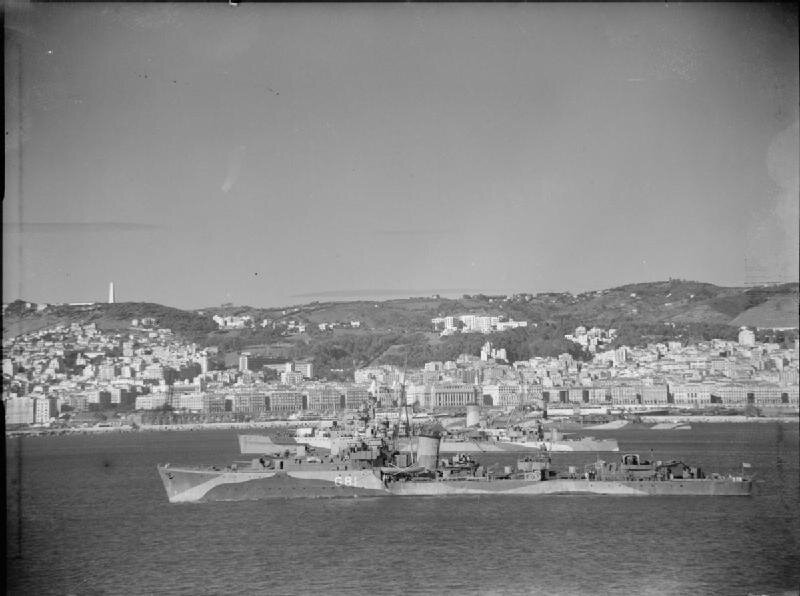
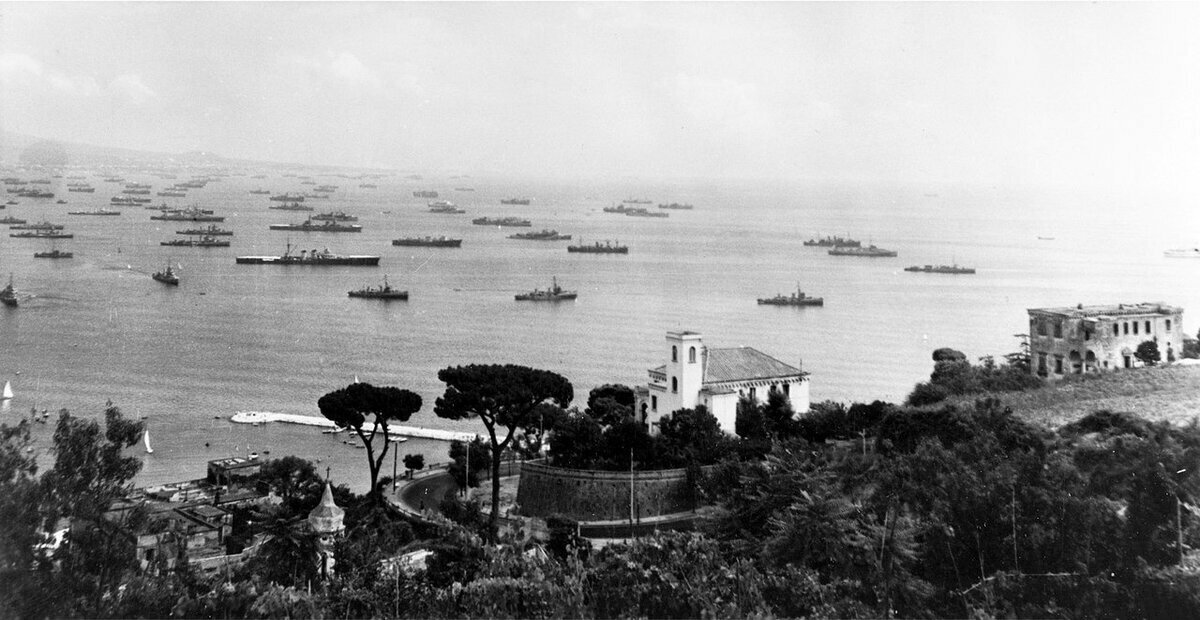
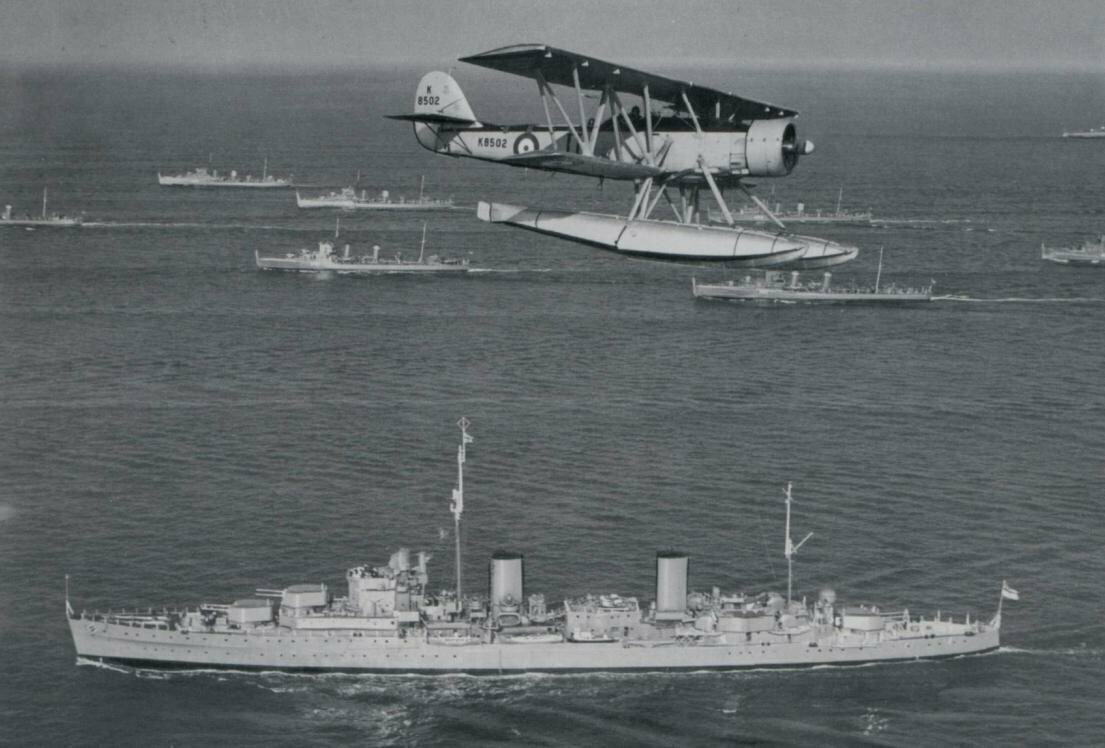
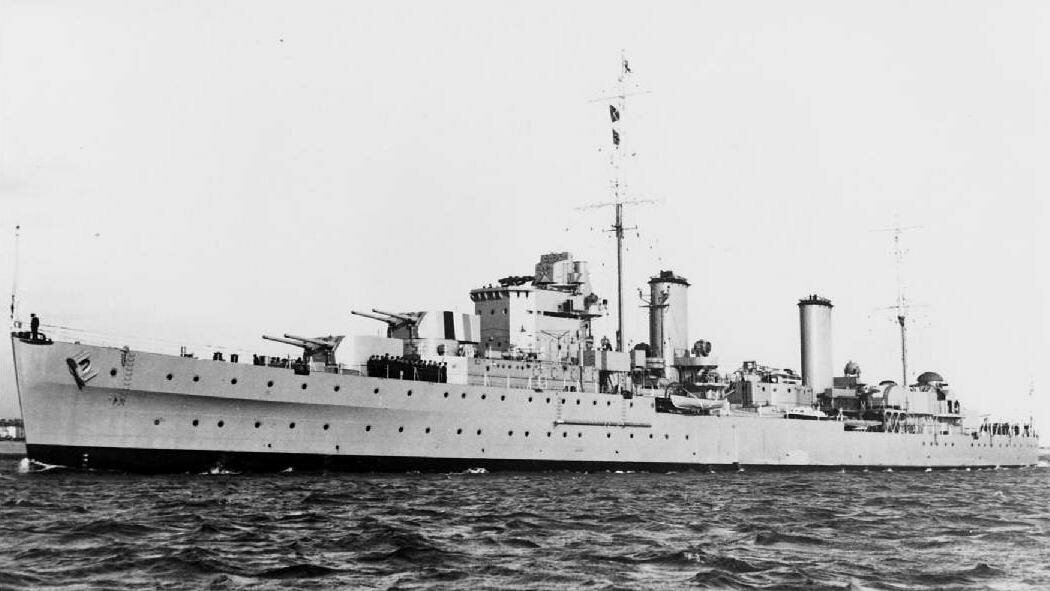
HMS Aurora in the North Atlantic in November 1940
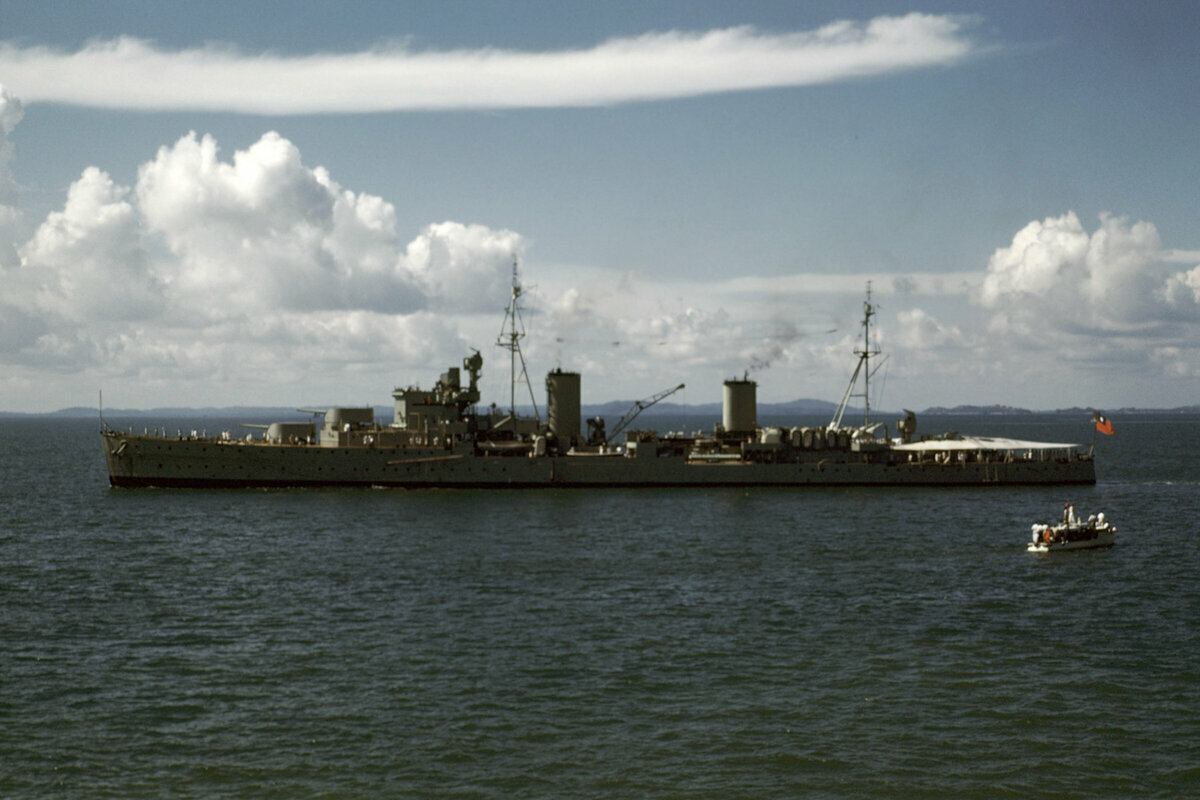
After the war, the fate of the two remaining “Aretuza”-class cruisers was predictable: these small ships lacked the resources for modernization and were destined for the scrapyard. The “Aurora,” however, was lucky.
A civil war continued in China between the Kuomintang, backed by the West, and the Communists, backed by the USSR. On May 19, 1948, the cruiser *Aurora* was sold to the Kuomintang government of China. Formally, this was in compensation for six Chinese customs patrol ships and one cargo ship that had been privatized by the British in Hong Kong during the Sino-Japanese War and lost during World War II.
On June 10, in Malta, one of the Kuomintang’s finest naval officers, 46-year-old Dan Zhaoxiang, took command of the ship.
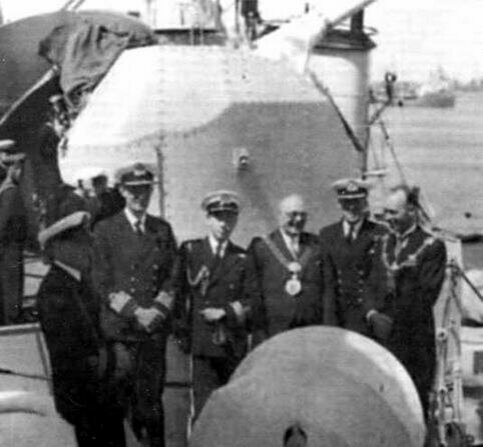
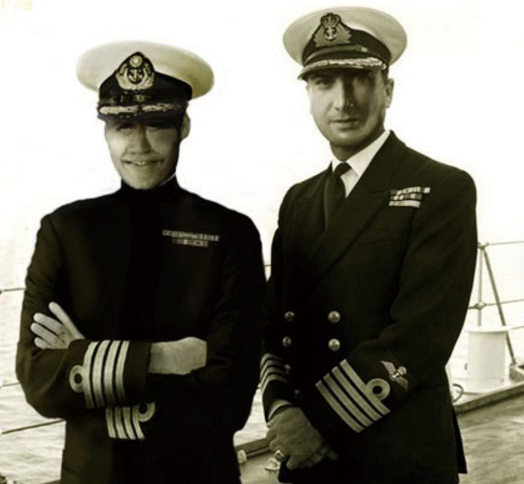
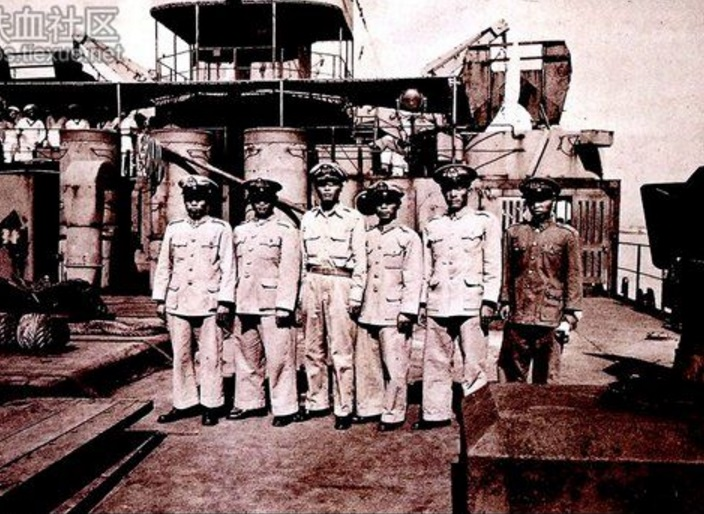
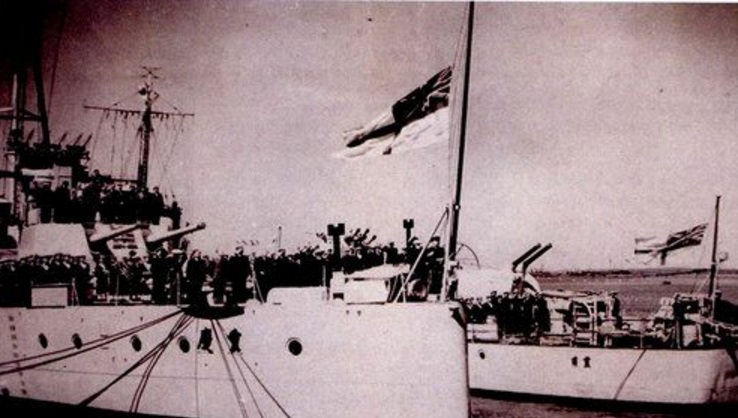
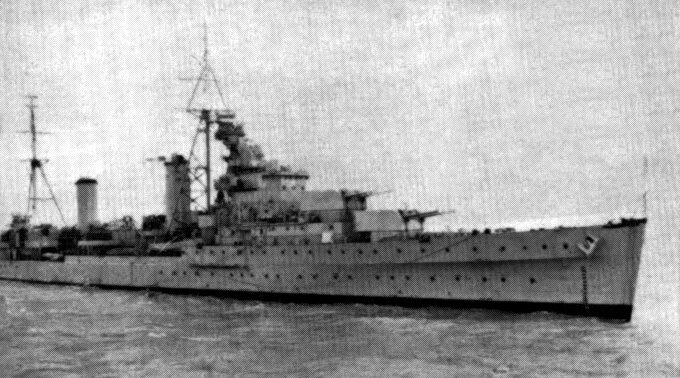
That same year, the cruiser—renamed “Chung King” by the Kuomintang in honor of the wartime capital of China—arrived in China and took part in the fighting on the side of the Kuomintang. It became the flagship of the Republic of China Navy.
In the fall of 1948, the cruiser’s guns fired on units of the 4th Column (from late 1948 to early 1949—the 41st Corps of the PLA) of the Second People’s Liberation Army of China. During the Jinzhou Operation against the Tashan positions held by the 10th, 11th, and 12th Red Divisions, up to 1,500 main-caliber shells were fired over the course of six days of battle. According to the PLA command, the 4th Column lost more than 10,000 men but still repelled the Kuomintang offensive. Subsequently, the “Chongqing” operated at the mouth of the Yangtze River to prevent the Kuomintang fleet from escaping to the open sea.
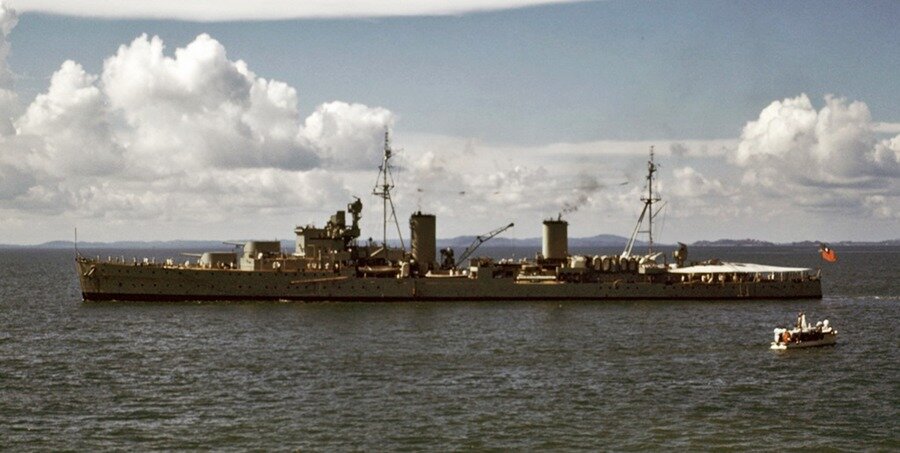
The cruiser *Aurora* as part of the Republic of China Navy (Singapore, 1948).
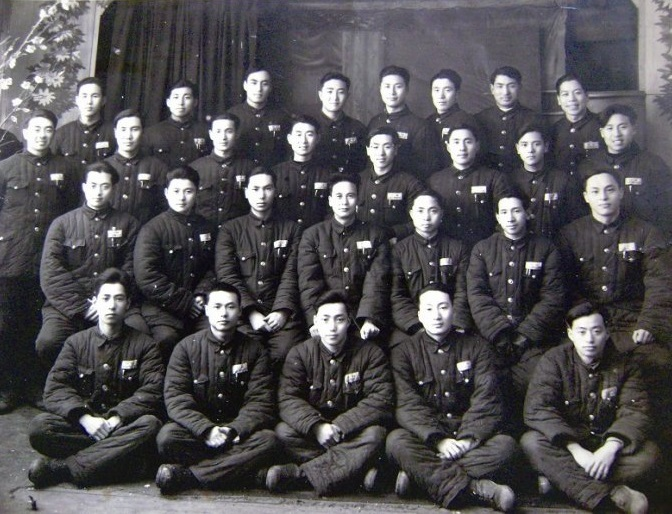
But it turned out that a powerful communist “Organization for the Liberation of the Cruiser Chongqing” was operating among the ship’s crew, and the cruiser’s commander, Deng Zhaoxiang, was a member of it. Many of the cruiser’s approximately 600 crew members sympathized with the Red Army. In early 1949, an underground Communist group of 17 people was formed, and they were soon joined by 16 more crew members. Deng Zhaoxiang’s defection to the revolutionaries’ side, however, completely changed the situation.
The cruiser performed poorly in the Kuomintang Navy; desertion rates reached as high as 50%, the level of training among its sailors and officers was very low, and they did not know how to operate the equipment entrusted to them.
On February 25 (or, according to other sources, March 2), 1949, the crew, along with the ship, defected to the Communists. The cruiser sailed from Usunkou Harbor (near Shanghai) and was handed over to the People’s Liberation Army at either Weihai (Shandong) or Yangtang (all of which are nearby). The red flag was raised on the ship. Whether this was on the initiative of the captain or one of the non-commissioned officers, there are, as always, different accounts. They didn’t even change the ship’s name. Deng Zhaoxiang remained in command.
Upon learning that his largest ship had defected to the Communists, Chiang Kai-shek personally ordered it to be destroyed at any cost. The *Chongqing* headed north into the Liaodong Bay but was unable to find shelter. On March 17–19, it was bombed by Kuomintang B-24 bombers; a heavy bomb that exploded close to the starboard side disabled the artillery fire control system, killing four people. On orders from Beijing, the damaged cruiser was scuttled on March 20 near the eastern wall of Pier No. 3 at Huludao Port. The crew was reassigned to other ships.
«In February 1948, the British government transferred the heavy cruiser *Chongqing*, the finest cruiser in the Kuomintang fleet, to the Kuomintang. On February 25, 1949, the cruiser’s officers and crew revolted, broke with the reactionary Kuomintang government, and joined the Chinese People’s Navy. On March 19, U.S. imperialists and Kuomintang bandits dispatched heavy bombers and sank the *Chongqing* at Hulutao, in the Liaodong Bay in northeastern China.
On the other hand, Rear Admiral A. Kuzmin wrote that “The cruiser… was scuttled by its crew to save it.” Apparently, it ran aground.
A former British cruiser, addressing the British Prime Minister, quoted Mao Zedong’s speech delivered on April 30, 1949: “Could it be that Mr. Attlee does not know which country transferred the ‘Chongqing,’ a heavy cruiser that was recently sunk, to the Kuomintang?”
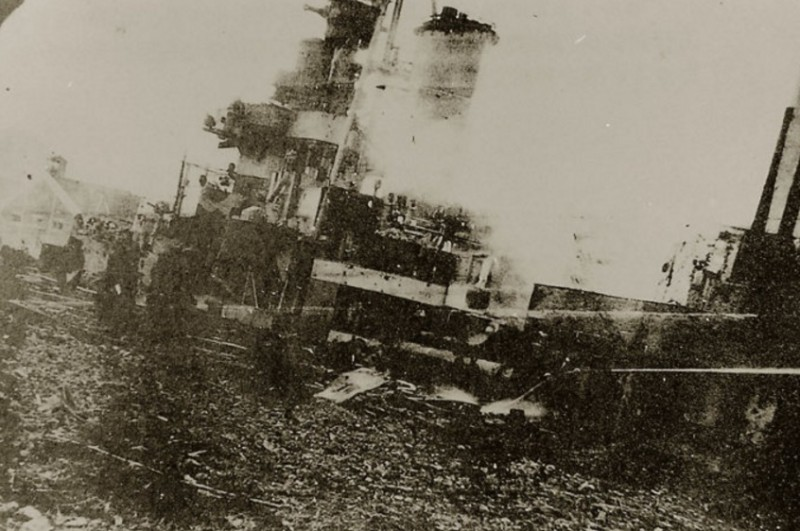
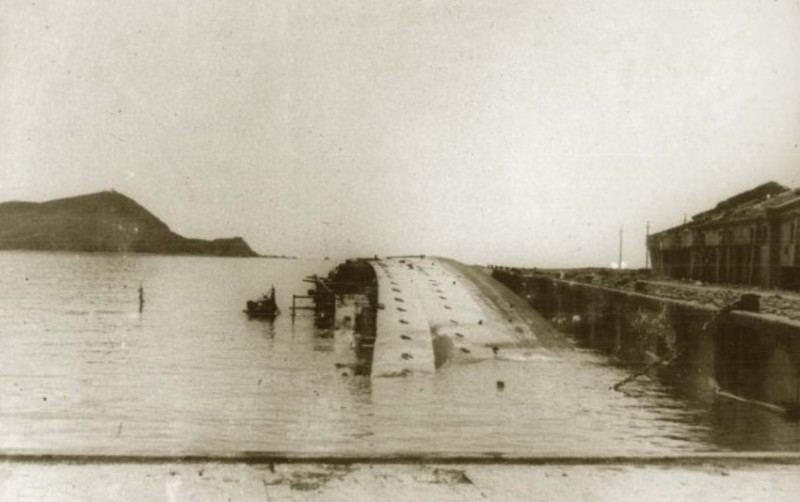
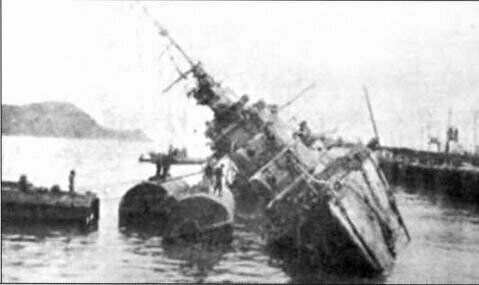
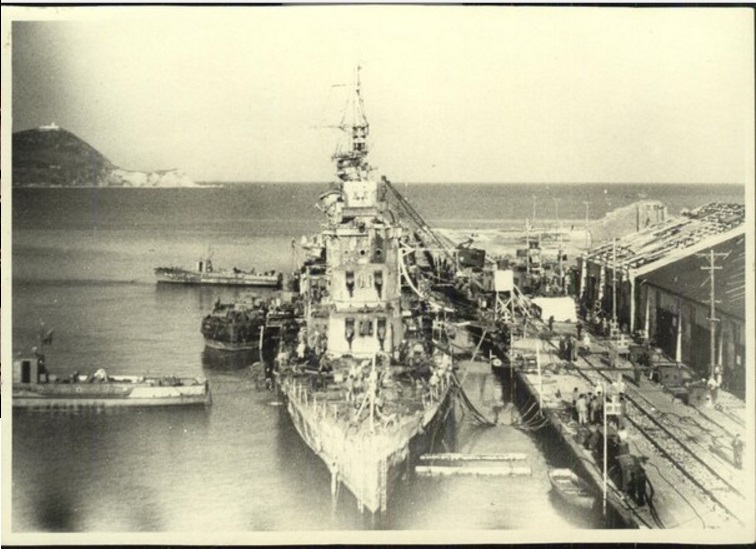
The cruiser was placed on a level keel in May 1951.
With the help of Soviet specialists from EPRO, the ship was raised in 1951, but they did not restore it to its original condition.
«From an engineering standpoint, the salvage of the cruiser *Chongqing* (7,322 metric tons) is also of interest. The ship was lying in one of the ports at a depth of 11 m with a 92° list to starboard. The distance from its bow to the quay wall was only half a meter, and from the stern—13 m. Therefore, before turning, the ship had to be pulled away from the pier using 28 pairs of 60-metric-ton blocks, secured to mooring posts at another pier.”
To lighten the cruiser, the deck openings were sealed, up to 3,000 cubic meters of water were pumped out, and four 80-metric-ton pontoons were attached. Then, using winches, the ship was placed on a level keel. After installing shafts in the deck openings located below the waterline, the cruiser was drained and floated to the surface. The work cost nearly three times less than the estimated cost. Engineers V.N. Grigoriev and A.I. Zavtrakov provided technical guidance for the design and salvage operations.” N.P. Chiker. “Special Purpose Service.”
On May 16, 1951, the *Chongqing* was raised to the surface and towed to Dalny, to a ship repair yard. Following a factory inspection, only the turbine gear units, electrical equipment, communications systems, and optical instruments were deemed beyond repair. A 1953 report by the Chinese Navy command stated that the cruiser could be restored as a combat vessel. However, the PRC did not have the necessary funds at that time.
The cruiser’s engines were removed and transferred to the Shanghai Electric Power Administration. They were replaced with engines from the sunken coastal defense ship Hai Yung (a former Qing dynasty cruiser). The hull was used as a floating barracks and warehouse.
On October 27, 1959, the ship was towed to Shanghai to be converted into the rescue vessel “Huanghe” (Yellow River). The modernization budget was estimated at 3 million yen, but after 275,000 had been spent, the project was abandoned.
In the early 1960s, the Chinese Communists wanted to restore the ship’s original name «Aurora» and erect their own monument to the ship of the revolution, but after Khrushchev’s purge, relations between the PRC and the revisionists in the USSR deteriorated, and the idea was abandoned.
The ship was transferred to Tianjin in June 1965, renamed “Beijing” (Pei Ching), and used as barracks. Later, the ship was renamed “Guangzhou.” It was decommissioned during the Cultural Revolution. The hull was scrapped for metal as late as the 1990s.
A plaque bearing her name and a ship’s bell are preserved at the Chinese People’s Revolutionary War Museum.
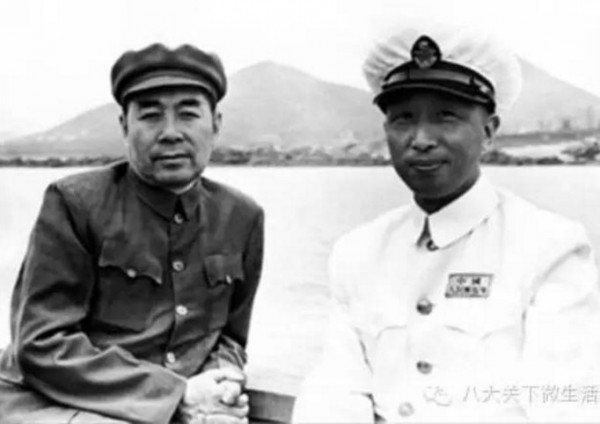
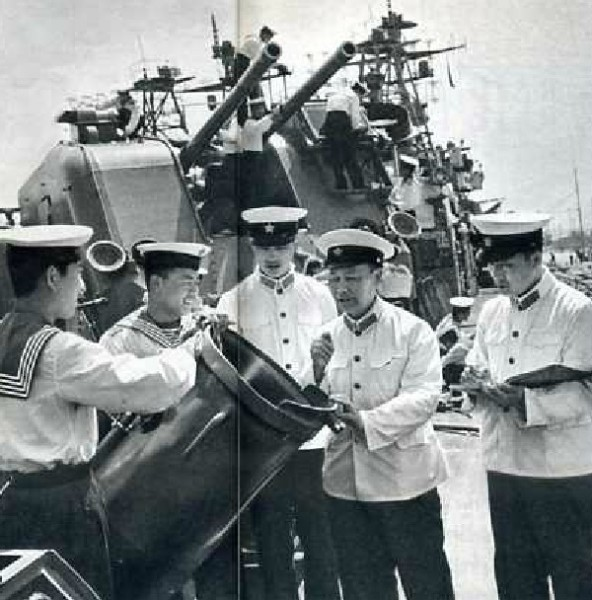
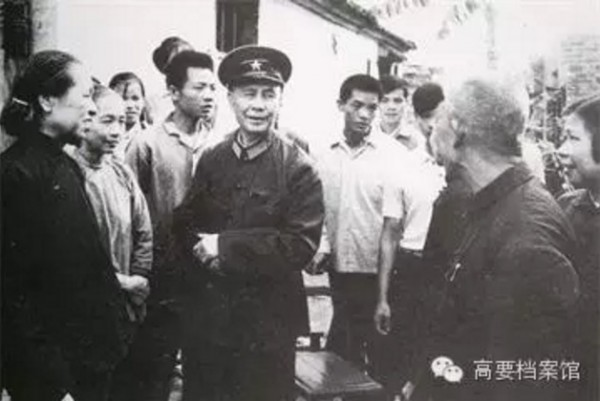
Dan Zhaoxiang (1903–1998), incidentally, became a vice admiral of the People’s Navy in 1955 and was awarded the Order of Liberation , First Class, and later rose to the rank of Deputy Commander of the entire Navy of the People’s Liberation Army.
Unfortunately, the information regarding the ship’s service after it was raised is incomplete and contains conflicting dates. It has not yet been possible to fully sort through the available data.
Source — https://dzen.ru/a/YskWb44DEDsgXPgZ