German Fighters vs. Allied Tethered Balloons. Part 1: The Battle Against the "Eyes of the Artillery"

Contents:
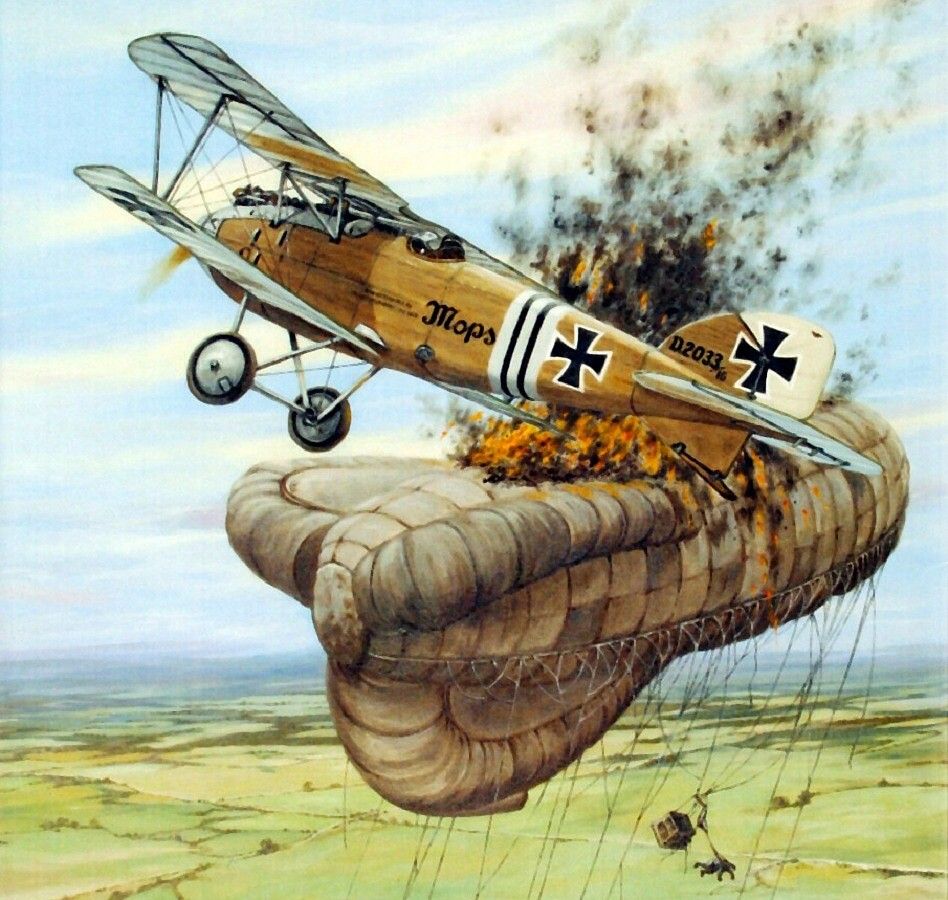
Editor’s Preface: To protect their troops from enemy fire directed from tethered balloons, the primary task of fighter squadron pilots became the destruction of these “eyes” of the artillery. Among these pilots, Heinrich Guntermann stood out in particular, proving especially successful in the fight against tethered balloons. Bruno Schmäling recounts the battle against enemy balloons.
With a high of about 23 degrees Celsius, August 9 was a fairly cool day during the otherwise quite hot summer of 1917. The 15th Fighter Squadron (Jagdstaffel 15) was based at the Boncourt-Aisne airfield, approximately six kilometers northeast of Sisonne. Two Albatros D.V. fighters were preparing for takeoff.
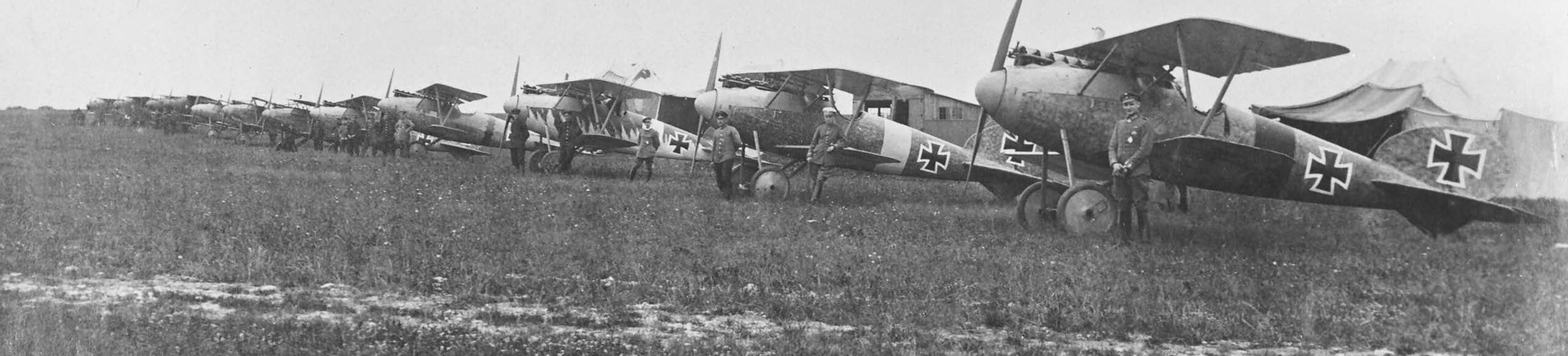
aircraft of the 15th Fighter Squadron. Thanks to his numerous successes, Heinrich Gontermann was appointed commander of this squadron
In the spring of that same year, this new “trend” spread among many fighter squadrons of the military air force. To better identify the increasingly numerous German aircraft, pilots painted various colorful emblems on their planes. However, some of the 15th Squadron’s aircraft were painted only in camouflage. The fuselage, all upper and side surfaces of the wings, and the horizontal and vertical stabilizers were painted with patches of silver, dark green, and rust-red. This camouflage offered the hope that the aircraft would remain unrecognized by enemy planes flying overhead. As a means of quick identification, one of the aircraft had a red stripe painted around its fuselage. This was the pilot’s nod to his first posting—the 5th Westphalian Uhlan Regiment, whose uniform featured red cap bands, red collars, and red cuffs. The second biplane had a blue stripe painted around its fuselage as a personal identification mark.
An “expert” on combating tethered balloons
The pilot of the “Albatross” with the red fuselage stripe was Lieutenant Heinrich Gontermann (Lt. Heinrich Gontermann), who commanded the 15th Squadron for three months. Around his neck hung the German Empire’s highest military decoration—the Order of Pour le Mérite (For Merit)—which was awarded to him on May 12, 1917, following his twentieth aerial victory.
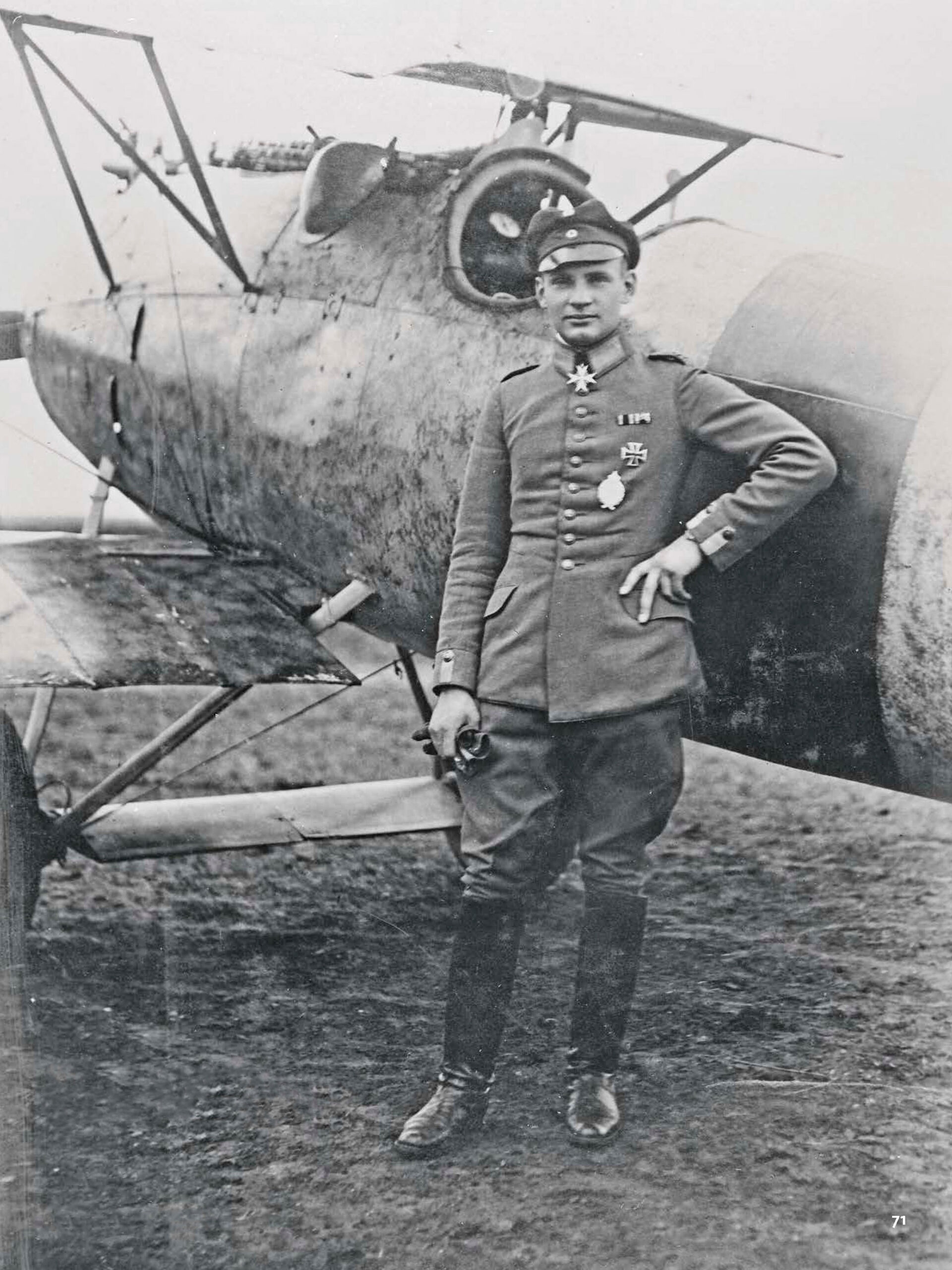
Heinrich Gontermann was considered an “expert” in combating enemy tethered balloons. Lieutenant Gontermann mastered the most effective tactic for dealing with tethered balloons: a dive attack from beneath the clouds.
By the morning of August 9, 1917, Heinrich Guntermann’s total number of confirmed victories had reached 26, nine of which were against tethered balloons, making Guntermann an “expert” in combating such enemy aircraft. The day before takeoff, an order was sent from the 5th Army headquarters to attack the French tethered balloons, which were located between the Argonne Forest and the Hessian Forest and which were using them to correct artillery fire with great precision against German positions in the area. Heinrich Guntermann then contacted the air defense officer in charge of that sector of the front to obtain as much information as possible about these enemy balloons and the anti-aircraft guns and machine guns defending them. Lieutenant Guntermann then requested all available data on the terrain—such as cloud cover and wind direction—from the army meteorological service. To finalize preparations for the combat mission, Heinrich Guntermann used the information he received to calculate the optimal route and the estimated flight time to the destinations.
While Heinrich Guntermann climbed into the cockpit of his “Albatros” and fastened his seatbelt, a second Albatros D.V. fighter with a blue fuselage stripe was preparing for takeoff next to him. Flying alongside Heinrich Guntermann was his friend, Lieutenant Hans-Hermann von Budde (Leutnant Hans-Hermann von Budde). Unlike his comrade, von Budde was not an ace, but Gontermann knew he could rely on his comrade completely.
Hunting in Enemy Territory
A few minutes later, two Albatros D.V. fighters took off, gained altitude, and turned south toward Reims. Then, north of the city, they turned southeast. A few minutes later, the Albatros with the blue ribbon turned back, while Heinrich Guntermann’s plane, flying at high altitude, crossed the front line unhindered in the Beaumont area. Maintaining a high altitude, he flew about five kilometers deep into French-controlled territory. Over the Montagne de Reims forest, Heinrich Guntermann turned his “Albatros” eastward. If he had encountered a squadron of enemy fighters so far behind the front lines, he would not have stood a chance.
About 70 kilometers east of Heinrich Gontermann is the position of the French tethered balloons of the 46th Company (46 Compagnie; 46 Cie). Standing in the basket of one of the tethered balloons was Senior Lieutenant Barriere (Leutnant (S./Lt) Barriere), who was observing the German lines through field binoculars. He regularly reported the impact points of shells fired from the artillery pieces assigned to him via telephone. First Lieutenant Barriere had an excellent reputation for his precise direction of artillery fire against enemy positions. A few hundred meters away from him, at an altitude of about 1,000 meters, the tethered balloon of the 51st Company was swaying.
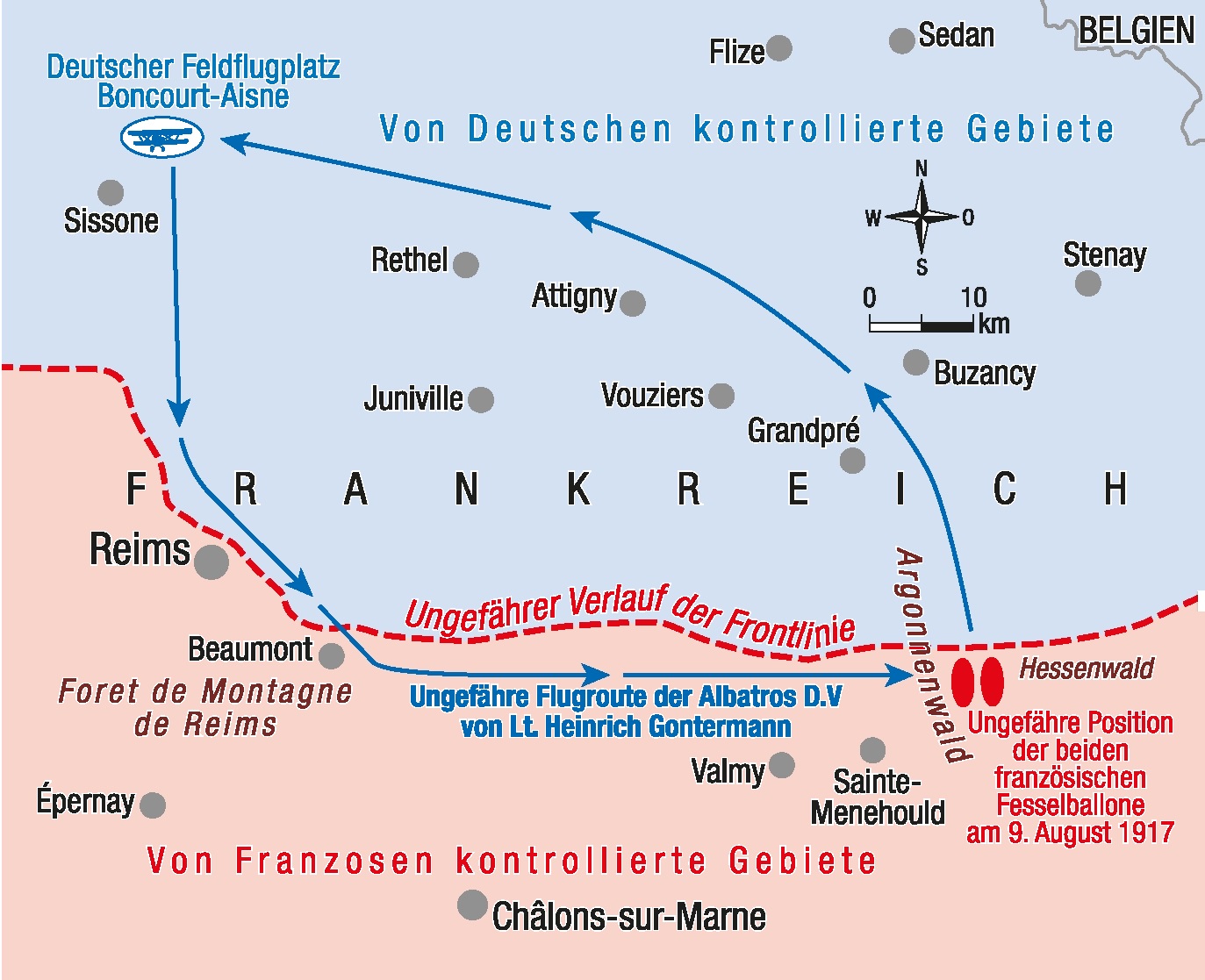
Gontermann’s flight path when he shot down two tethered balloons on August 9, 1917
Heinrich Guntermann was approaching the two tethered balloons at a speed of about 150 km/h. The “Albatross” was flying high above the clouds, and its pilot could not see the balloons. Therefore, as he approached his target, Lieutenant Guntermann had to rely on his own calculations. Only by relying on these calculations could he determine when he would be directly above the tethered balloons. When the “Albatross” was close enough to the balloons, Heinrich Guntermann shut off the engine, and the plane began to glide almost silently as it descended. The only sound was that of the wire struts. The clouds had cleared slightly, and below, one could see the tethered balloons that had been reported the day before. Heinrich Guntermann positioned himself at an angle to the first of the balloons, turned on the ignition, the Mercedes engine started immediately, and the “Albatross” went into a dive to attack. At that moment, the French ground-based air defense units realized the impending danger. Anti-aircraft guns and machine guns were aimed at the rapidly descending aircraft and began firing; shells exploded near the “Albatros,” but Heinrich Guntermann calmly continued on his course.
Hell on the Front Lines
Lieutenant Barrier immediately realized the danger he was in. Without a moment’s hesitation, he climbed onto the edge of the basket and jumped down. The parachute, attached to the outside of the balloon’s basket, opened instantly, and Barrier descended smoothly.
Meanwhile, Heinrich Guntermann closed to point-blank range and opened fire on the gas cylinder with a series of well-aimed bursts from both machine guns. The bullets tore through the envelope, the phosphorus incendiary rounds ignited the hydrogen, and within seconds the tethered balloon exploded, turning into a huge fireball. Heinrich Guntermann steered his “Albatros” away from the inferno that had erupted. The Albatros D.V. flew past the wreckage of the balloon so closely that the pilot could feel the heat of the burning gas. In his rearview mirror, Lieutenant Gontermann could still see the remains of the balloon falling downward in a column of black smoke for some time.

a tethered balloon that was destroyed on November 14, 1916, near Eychuk, Belgium, after coming under fire from a German aircraft

The flammable gases used to fill the tethered balloons caused them to catch fire quickly when struck by incendiary bullets
Meanwhile, the French anti-aircraft gunners focused their attention on the “Albatross.” Anti-aircraft shells were exploding around the plane, and bursts of machine-gun fire sliced through the air, closing in on the “Albatross” closer and closer. But instead of turning north toward his own positions, Heinrich Guntermann attacked the second tethered balloon of the 51st Company. The observer sitting in the basket saw the neighboring balloon explode. He jumped out with a parachute and safely descended to the ground. When the first balloon was attacked, the French ground crew had already begun pulling the second balloon toward the ground, so at the moment of the attack on the first balloon, it was at an altitude of only 600 meters. But there was no longer enough time to save the balloon. Gontermann’s “Albatross” machine guns roared again, and the bullets once more found their target. The flames quickly spread across the envelope of the tethered balloon, and within a few seconds, it was completely engulfed in fire.
Triumphant Return
Making tight turns and constantly changing altitude at short intervals, the Albatros D.V raced toward the German positions under a barrage of shells. Bullets struck the fuselage, but shortly thereafter, Gontermann found himself over his own territory. He spotted Lieutenant Hans-Hermann von Budde’s Albatros, which had taken off with him and was now escorting him on the return flight to Boncour. About 40 minutes later, both “Albatrosses” landed at their airfield, where word of the successful destruction of the two tethered balloons had already been received. German Guntermann, drenched in sweat, climbed out of his plane and was quickly surrounded by the pilots of his squadron and ground crew, who greeted him with shouts of “hurrah.” Technicians inspected the “Albatross,” which had sustained several hits. Fortunately, none of the bullets had struck any vital parts of the aircraft. That evening, there was a festive celebration of the victory over the two tethered balloons. While the squadron’s pilots were in high spirits, the calm introvert Heinrich Gunterman sat quietly in his chair and watched his subordinates with a smile.
The French «Brief Overview of Air Combat Operations» reported that day:
«Both observers landed safely; Lieutenant Barrier injured his leg during the parachute landing.»
Four wins in four minutes
On August 13, 1917, Heinrich Guntermann scored another victory: on that day, two more French tethered balloons fell to the ground, leaving trails of smoke in their wake. Then, on August 19, 1917, within four minutes, Lieutenant Guntermann managed to shoot down four balloons in the Aisne region. No German fighter pilot had ever accomplished such a feat before.
These successes did not go unrecognized. On August 23, 1917, General Ernst von Hoeppner, commander of the German Air Force, announced in his order:
“Lieutenant Gontermann, the seventeen enemy aircraft you have shot down are proof of your bravery; seventeen times, enemy tethered balloons have been set ablaze behind enemy lines as a sign of your victory. Once again, I pay tribute to the victor.”
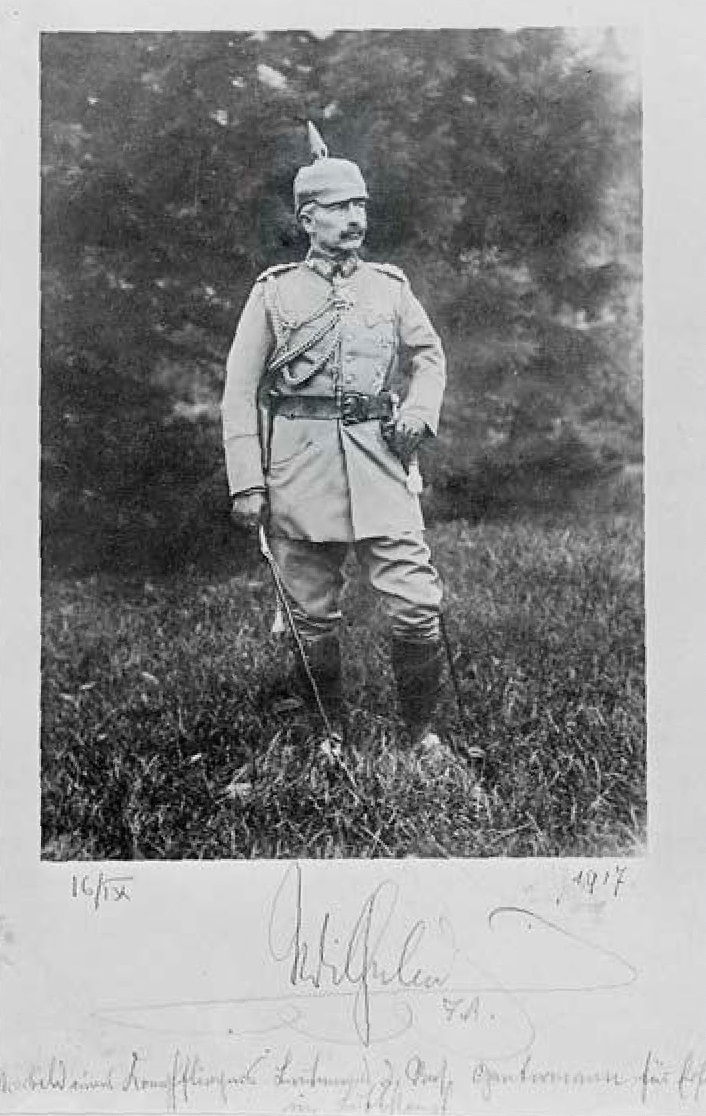
an award with a personal dedication to Heinrich Guntermann, which he received for his extraordinary achievements
APPENDIX. Air-to-Ground Artillery Fire Correction
Thanks to positional warfare, artillery became the main weapon of the ground forces for shelling enemy positions and inflicting as many casualties as possible on the enemy.
However, the enemy’s infantry positions were not visible from the ground, so it was necessary to position the observer as high up as possible so that he could clearly see the enemy trenches and direct the artillery fire.
There were two means of accomplishing this task: spotter aircraft and tethered balloons.
Unlike a spotter aircraft, the tethered balloon could be deployed for a more or less unlimited period of time. It remained stationary in one place and, as a result, was able to provide accurate information on enemy positions and the impact of friendly artillery fire. In addition, communication with artillery crews via telephone lines was simple and fast. This made it possible to avoid the misinterpretations that regularly occurred when light signals were transmitted from aircraft. Consequently, tethered balloons were of paramount importance to the troops.
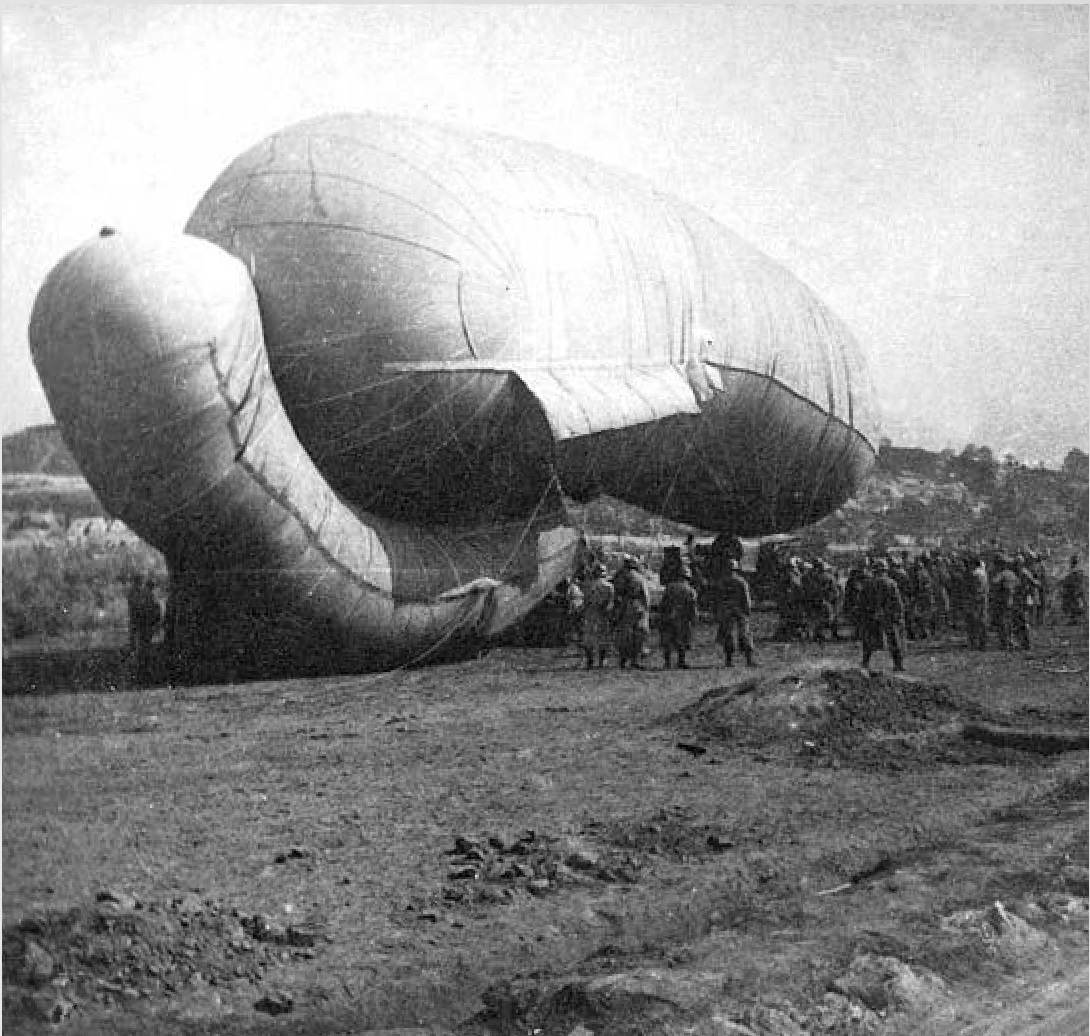
1916: French soldiers prepare a tethered balloon for takeoff near the Somme

French tethered balloons at La Ferme de Vadenay, France. The photograph was taken on May 15, 1917

It took a large number of soldiers to lift a tethered balloon into the air. However, they made it possible to direct accurate artillery fire
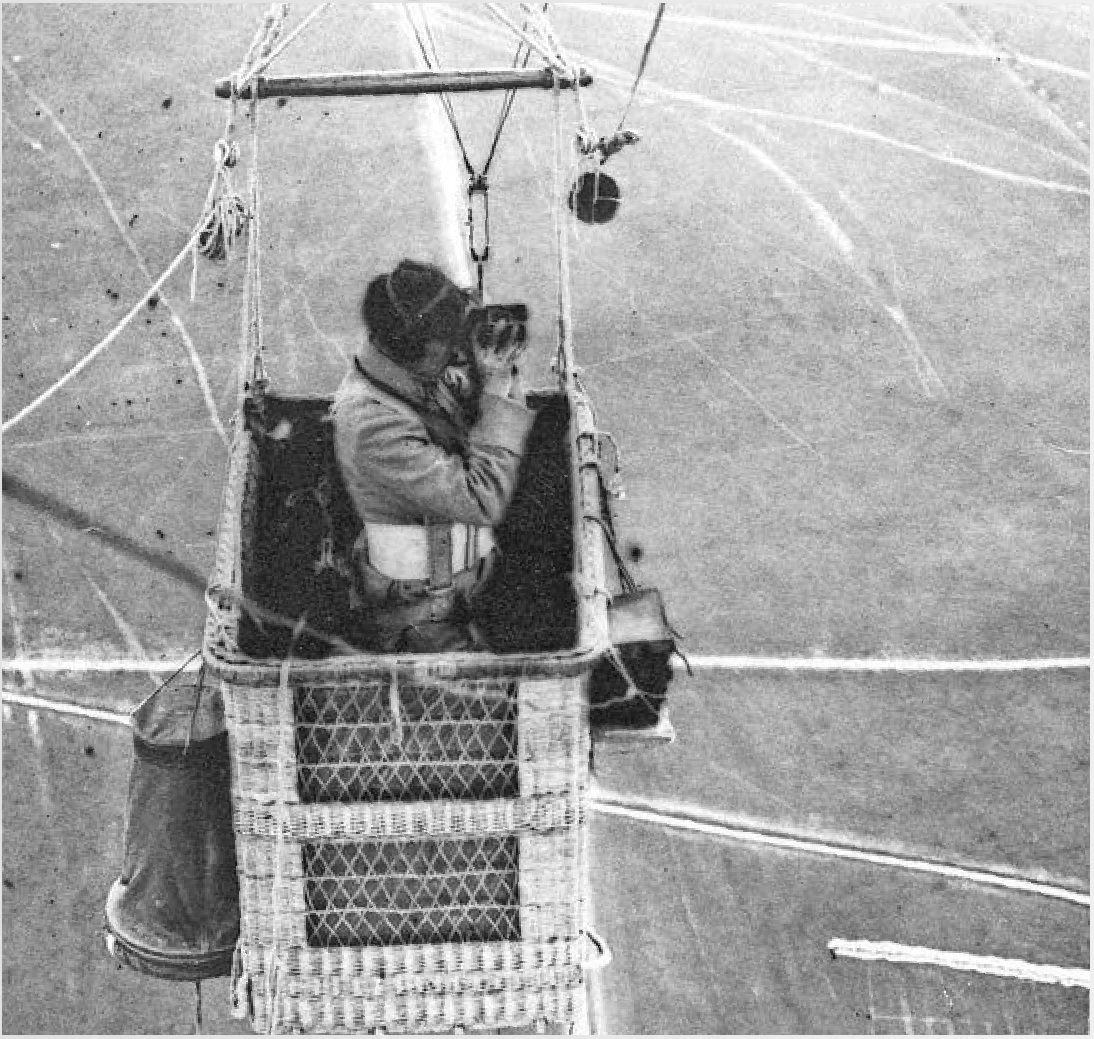
Perfect visibility: Observers provided their units with precise information on enemy positions
If a tethered balloon was shot down, it took an average of about two days to deliver a new tethered balloon to the site, inflate it, and launch it. However, during the period when tethered balloons were unavailable, the intensity of artillery activity in the area was significantly reduced. Consequently, the destruction of a tethered balloon was considered more valuable than the destruction of an enemy aircraft, as it provided longer-lasting protection for friendly troops against the enemy’s precision artillery fire.
Since the airship crews had no means of self-defense, they were protected as much as possible by anti-aircraft guns and machine guns. These were positioned to unleash a hail of shells and a torrent of bullets on any aircraft that might appear from any direction. From time to time, the French Air Force deployed fighter planes to protect its tethered balloons.
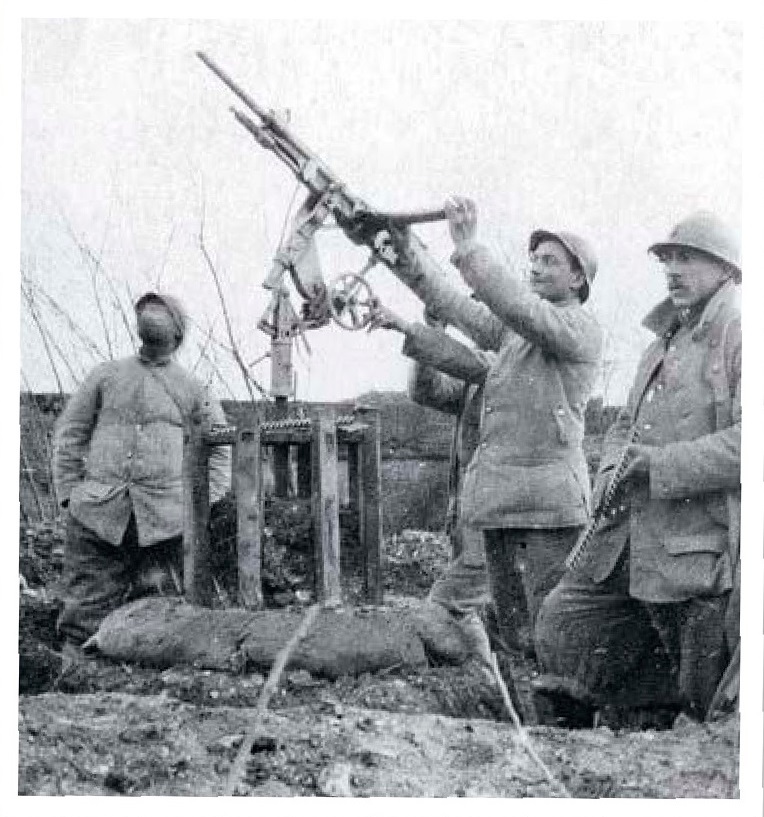
This French machine gun was used to defend tethered balloons in February 1917 near Seicheprey

Since the balloons enabled the artillery to fire with precision, and replacing one balloon with another took about two days, the French and British deployed anti-aircraft guns around them
The second part of this article will focus on the German pilots who were not so fortunate during their attacks on Allied tethered balloons.
Unless otherwise noted, the photos in this article are from Bruno Schmeling’s collection.
Source: Bruno Schmäling, “How the Swiss Got Their Hands on Imperial Aircraft: A Deceptive Maneuver—Zeppelin C.II,” *Flugzeug Classic*, March 2024, pp. 70–75
Translation first published at – https://vk.com/@710541705-nemeckie-istrebiteli-vs-privyaznye-aerostaty-souznikov-01