Dear colleagues, as I promised—here’s the first AI-related post of the new year)
Contents:
The Suez Crisis of 1956 proved to be an extremely unpleasant moment of truth for the Royal Navy. Its technological lag behind the Soviet and American navies became painfully obvious. With the exception of their electronic equipment, British ships remained virtually the same as they had been at the end of World War II—and a decade later, they already looked like floating anachronisms. Against Soviet jet bombers armed with rocket torpedoes and long-range guided missiles, Her Majesty’s sailors could offer only obsolete anti-aircraft guns and virtually useless small-caliber automatic cannons.
And while British admirals might previously have consoled themselves (faint) hopes that their carrier-based fighters could protect Her Majesty’s ships from destruction from the air, the Soviet Navy’s rapid deployment of a strike group consisting of the light aircraft carrier Chkalov, the battleship *Novorossiysk*, and the battlecruiser *Stalingrad*—finally put an end to these illusions. It became clear that in the event of a major conflict, the British fleet would have to operate in contested airspace.
The conclusions were drawn immediately—the British Navy’s air defense had to be radically strengthened. And the sooner, the better. While it had previously been assumed that the Royal Navy could afford to “wait” until specially built missile ships (the planned “County” class), after the Suez Crisis, such an attitude was already seen as “too little, too late.”
As part of emergency measures, Defense Minister Duncan Sandys’s “white paper,” presented in 1957, strongly urged attention be paid to the “missilization” of the existing fleet. To this end, two light cruisers were selected in 1958: the *Lion* (Tiger class), which was being completed afloat, and the *Swiftsure* (Minotaur class). On both ships, the stern gun turrets were replaced with the GWS.1 guided missile system, equipped with the “Armstrong Whitworth Seaslug” anti-aircraft missile.
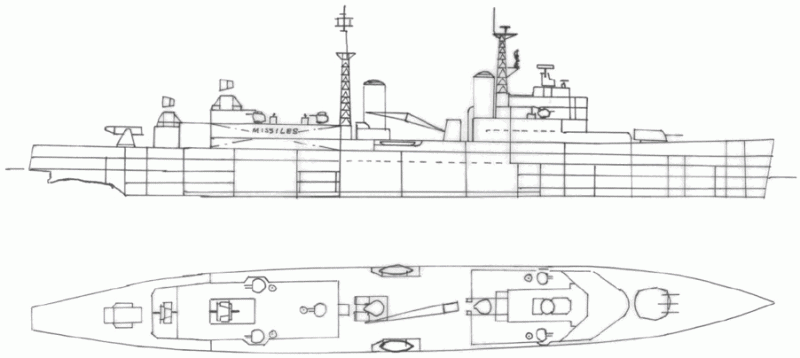
Commissioned in 1960 and 1961, respectively, these cruisers became the first ships in the British Navy to carry anti-aircraft missile systems. However, the hastily prepared modernization plan was not without its flaws. The main point of criticism was the presence of only two separate fire control channels and a single launch channel—which meant the cruisers could engage no more than two targets at a time.
The small size of the British light cruisers compared to their counterparts became a stumbling block. Even the newest “Tiger” had a full load displacement of only 11,700 metric tons—nearly a third less than the American “Cleveland” (14,000 metric tons) or the Soviet “Sverdlov” (16,000 metric tons). Military-built light cruisers were even smaller. This significantly limited their potential for modernization.
And that was when the British admirals turned their attention to battleships.
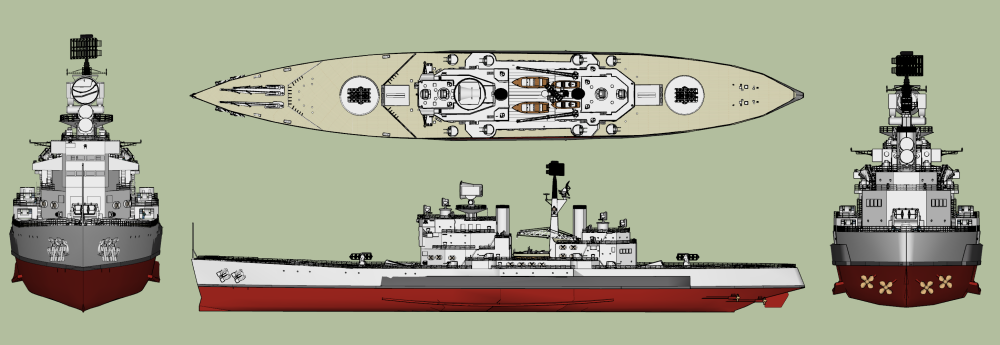
Four high-speed battleships of the “King George V” class were still in the Royal Navy’s reserve. Designed and laid down as early as the 1930s, these large 37,000-metric-ton ships, armed with 356-mm guns, were placed in reserve shortly after the end of the war and put into long-term storage. Although their artillery was hopelessly obsolete, the battleships’ hulls were still sturdy, and their propulsion systems were in good condition. They were ideal candidates for modernization.
The idea of converting “KGV”-class battleships into missile carriers was first proposed in the early 1950s, but it was not pursued at the time. After the Suez Crisis, however, interest in the concept was reignited. Calculations showed that the modernized battleships would be able to support up to four missile fire control channels each without any risk of overloading—in other words, the equivalent of two modernized missile cruisers or four “County”-class missile destroyers. Installing other modern equipment on the battleships, such as the extremely effective (but also extremely heavy!) Type 984 3D surveillance radar, posed no problems either.
Initial plans called for the modernization of all four ships; however, financial realities forced the admirals to take a more realistic view of the situation. The battleship King George V, which entered service in 1940, was deemed too worn out. The modernization of the battleship *Duke of York* was discussed at length, but in the end, that plan was also abandoned. As a result, it was decided to modernize only the two newest battleships—the *Anson* (pennant number 79) and the *How* (pennant number 32)—which were in the best technical condition.
MODERNIZATION
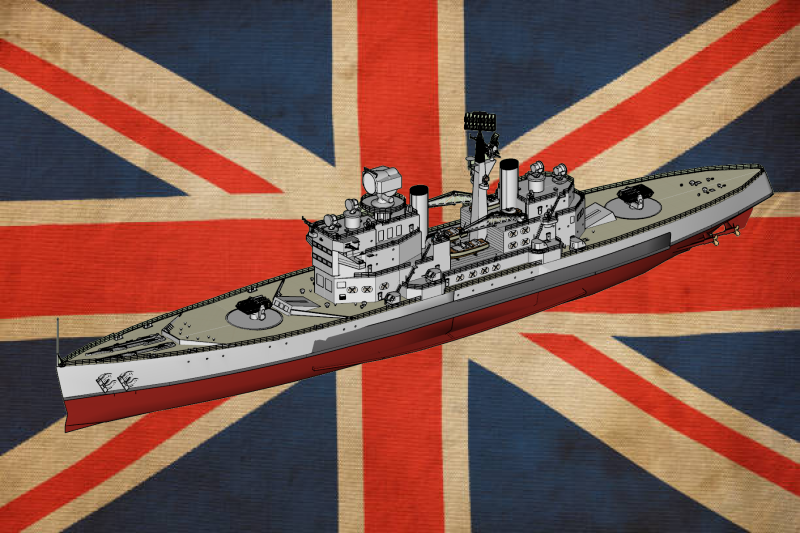
During the modernization program, which lasted from 1958 to 1964, both battleships were completely rebuilt. All of their previous armament—including guns, turrets, and ammunition magazines—was removed, as were the old superstructures, masts, and funnels. The silhouette of the ships above the main deck was completely transformed.
The modernized ships were equipped with a completely new set of weapons and electronic systems—centered around the GWS.1 “Seaslug” anti-aircraft missile system. Their primary mission was to escort aircraft carrier task forces and repel (in coordination with carrier-based aircraft) massive enemy air and missile attacks. A secondary mission was to deliver missile and nuclear strikes against ships and coastal targets. In effect, the former battleships became “heavy escort ships” with an emphasis on air defense.
Although formally the ships were merely a modification of the “KGV”-class battleships, the British Navy regarded them from the very beginning as a separate class—logically pointing out that the battleships had undergone a virtually complete redesign and had radically changed their tactical role. As a result, even before they entered service, both battleships were classified as a separate class, the “Anson” class.
MAIN WEAPONS
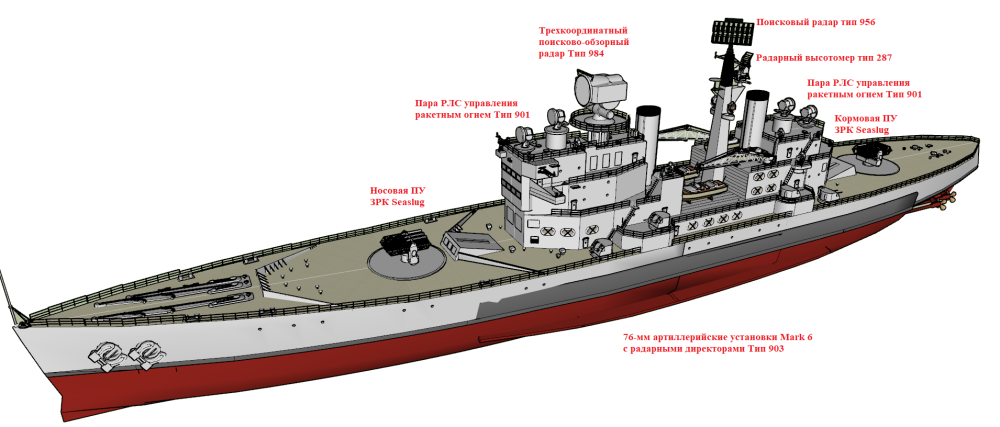
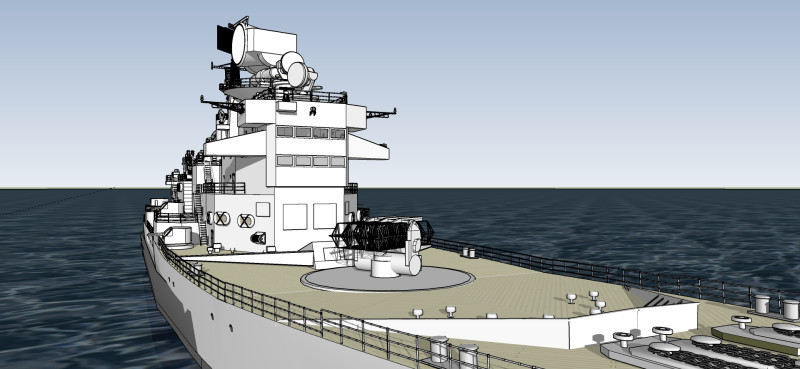
The main armament of the “Enson”-class missile battleships consisted of two GWS.1 “Seaslug” anti-aircraft missile systems, located in the bow and stern, respectively. Each system included one rotating launcher, an below-deck missile magazine with an automated feeding system (via a hatch protruding above the deck), two Type 901 target tracking/missile guidance radars, and an ADAWS automated fire control system:
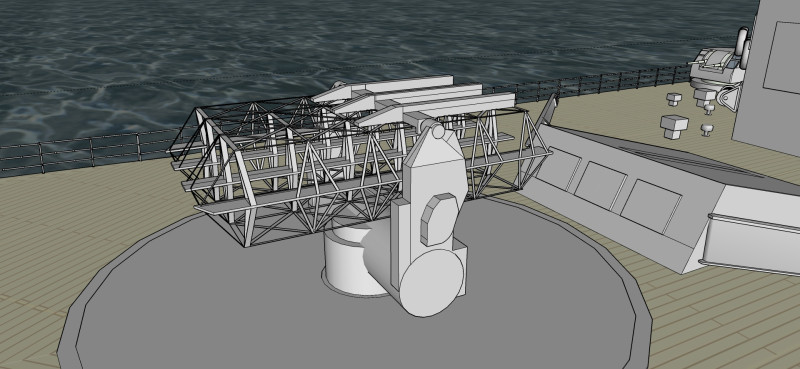
The three-rail launcher was developed in response to initial skepticism regarding the “Seaslug’s” effectiveness; it was assumed that a salvo of at least three missiles would be required to guarantee the destruction of an air target. Subsequent tests, however, demonstrated that the “Seaslug” has a perfectly acceptable probability of hit even with a two-missile salvo.
Since loading the center rail slowed down the reloading process, it was typically used only to mount specialized weapons: anti-surface missiles (“Blue Slug”) or nuclear anti-aircraft missiles (“Red Slug”). Nuclear missiles could only be launched from the center rail, as it was the only one equipped with the special adapters required to activate the specialized warhead.
The ammunition magazine on the “Enson”-class battleships had a complex design. Most of it was located beneath the battleship’s armored deck—above which only the loading compartment (which had anti-splinter armor) and the glacis, through which the missiles were fed to the launcher, protruded.
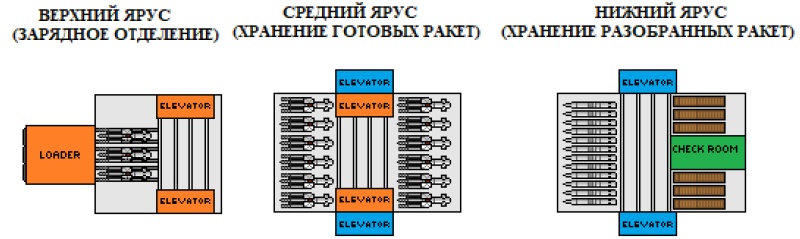
The upper deck served as the loading compartment. It housed a swinging loading cradle that fed the missiles through hatches in the deck glacis onto the launch rail. A combat load of three missiles, ready for immediate loading, was also stored here. Via rail guides running across the compartment, the missiles were fed to the loading positions by two hoists located on either side of the loading compartment.
The middle level was used to store combat-ready munitions. Here, 24 fully assembled and combat-ready missiles were stored on two-tier racks. Two automated transport carts moved along rails running across the compartment between the racks; upon command from the control system, they retrieved the missile selected for loading from the rack and transported it to the elevators. These same carts were used to place missiles, fed from the long-term storage section, onto the racks.
Finally, the lower level was intended for long-term storage of disassembled missiles. Here, the missiles were stored on racks, with their wings and stabilizers removed and their boosters dismantled—the boosters were stored separately in transport containers. When it was necessary to replenish the ready-to-use warhead inventory, the missiles were removed from the racks, fitted with boosters, wings, and stabilizers, and were transported on transport carts to side lifts, which moved the assembled missiles to the middle tier (for safety reasons, there was a transfer compartment between the lower- and middle-tier lifts).
The total ammunition load for each system consisted of 72 missiles (24 ready for use and 48 disassembled). The ship’s total ammunition load thus consisted of 144 missiles of the following types:
* Sea Slug — the basic version of the missile, which used “riding the beam” guidance (i.e., the missile moved toward the target along a narrow, rotating radar beam, automatically maintaining its position near the beam’s axis of rotation). It was equipped with a 90-kg high-explosive fragmentation warhead.
* Homing Slug — a homing version of the missile, equipped with an adapted American semi-active radar homing interferometric seeker from the RIM-8 “Talos.” The interferometer antennas were mounted on the wings. It was considered significantly more effective than the basic Sea Slug, but its high cost limited its use.
* Red Slug — a nuclear version of the missile, equipped with a 2-kiloton “Tony” warhead (the British version of the American W44). It was designed to engage dense formations of bombers or maneuvering supersonic targets. The nuclear missiles were equipped with special safety systems that prevented the accidental loading of such a missile onto a launch rail and unauthorized launch.
* Blue Slug — an anti-ship version of the missile, equipped with a radar altimeter (for low-altitude flight) and a heavier 135-kg (300-pound) semi-armor-piercing warhead. It was designed to engage both enemy ships and coastal targets.
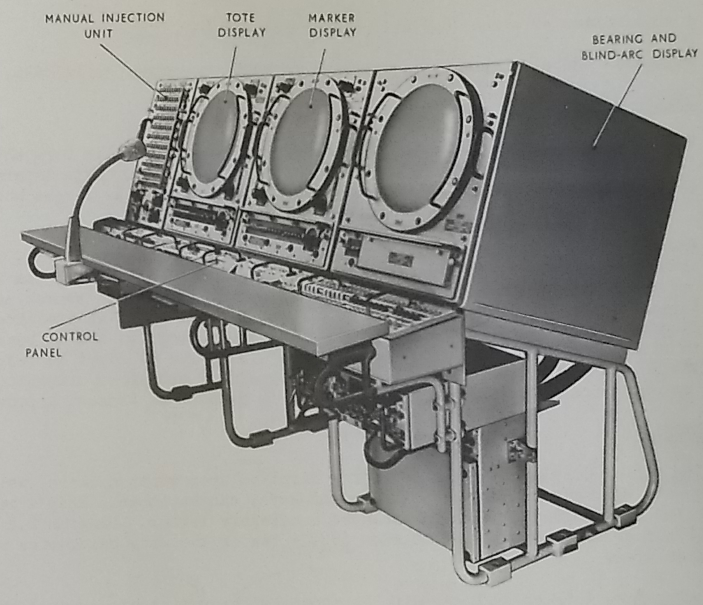
ADAWS Control Terminal
Fire control for the air defense missile system was carried out using the automated ADAWS (Action Data Automation Weapon System) system. Based on Ferranti’s POSEIDON programmable computers, the system processed data from the ship’s radars, performed “friend-or-foe” identification and target classification, allocated fire control channels, and generated fire solutions. For its time, this system was extremely advanced and sophisticated: it allowed not only for control of the ship’s own fire, but also (via a shortwave digital data exchange system) for the management of the formation’s anti-aircraft fire, distributing targets among individual ships.
SUPPORT WEAPONS
The battleships’ secondary armament consisted of eight 76-mm/70-caliber Mark-6 automatic guns mounted in twin turrets. These guns were intended for the ships’ self-defense against air attacks and for engaging targets that had passed beyond the range of anti-aircraft missiles. Fire control for the gun mounts was provided by eight Type 903 radar directors.
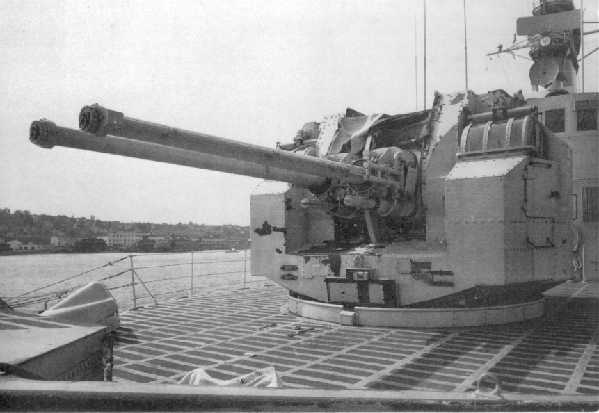
The original design also called for equipping the battleships with four 40-mm STAAG twin-barrel guns with radar guidance, but this was ultimately abandoned due to the questionable effectiveness of small-caliber artillery.
STRATEGIC WEAPONS
Even during the design phase, the modernized battleships were considered launch platforms for the U.109BT “Red Rapier” “flying bombs.” Originally developed at the request of the RAF, these radio-controlled bomber-projectiles—the ideological successors to the German V-1—were transferred in 1955 to the Navy, which deployed them on a limited basis aboard certain warships:
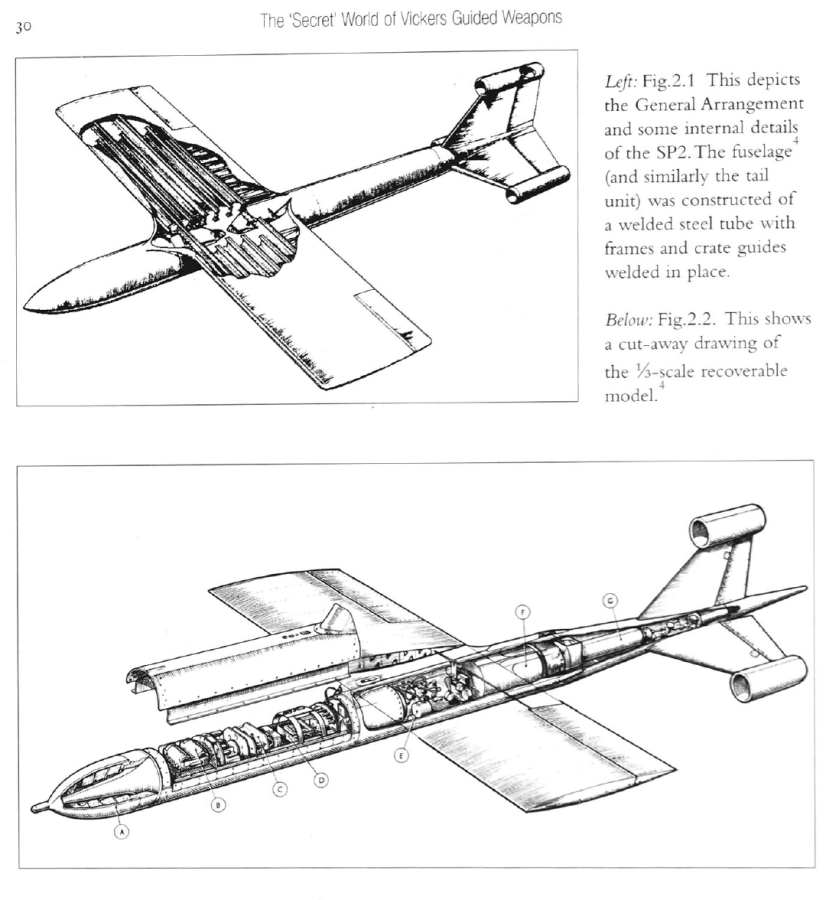
To accommodate cruise missiles, the battleships were equipped with two hangars in the stern, each designed to hold eight fully assembled missiles—or thirty-two in disassembled form. Launches were to be carried out from a launch ramp across the hull. However, by the time the battleships entered service, the U.109BT “Red Rapier” was already considered obsolete, and as a result, it was not installed on the ships.
Instead, in 1966, the battleship «How» was equipped to carry four American RGM-6C «Regulus» cruise missiles. These cruise missiles were a modification of the standard Regulus, equipped with the ATRAN low-altitude terrain-following navigation system:
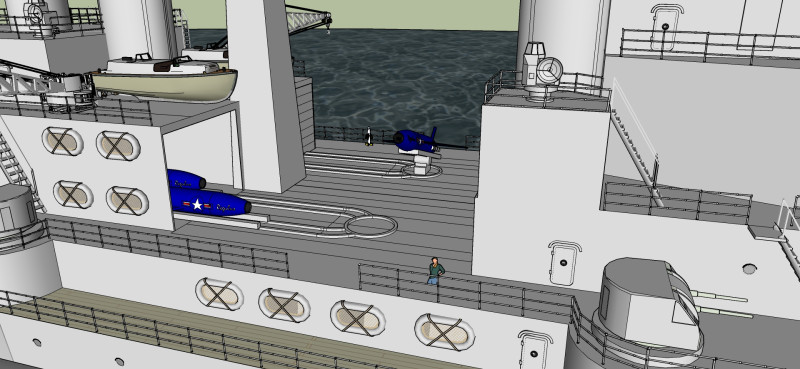
Missiles of this type were procured as a temporary measure to equip the fleet with strategic deterrent capabilities until nuclear-powered ballistic missile submarines entered service. In the British Navy, the missiles were equipped with British-made 800-kiloton “Orange Herald Small” nuclear warheads—the most suitable in terms of size. However, the missiles did not remain in service for long and were removed from the battleship as early as 1970. The remaining equipment was used to launch training target drones.
ELECTRONIC EQUIPMENT
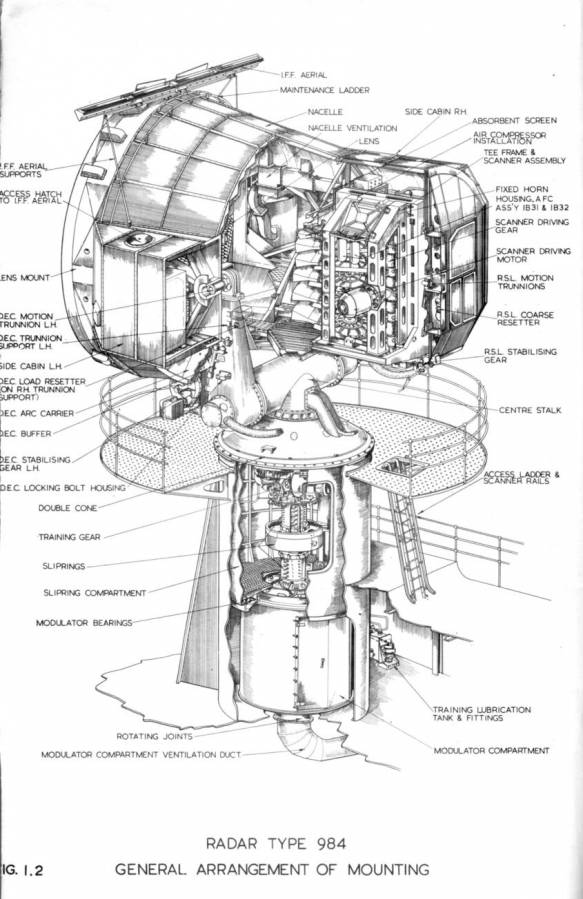
The substantial size of the “Enson” battleships made it possible to equip them with the most advanced electronic systems in the British Navy—the Type 984 three-coordinate radar, which had previously been used only on heavy aircraft carriers:
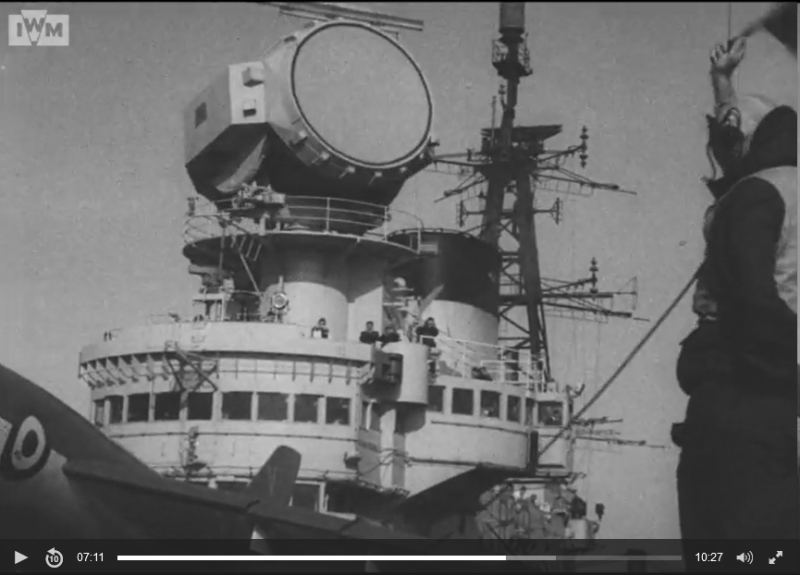
The massive antenna (weighing more than 30 metric tons) used five movable radiators to form a planar scanning beam using a Lünberg spherical lens. The beam—as well as the echo reflected from the target—was focused using a wide convex lens made of metal tubes. For its time, this bulky radar was an extremely sophisticated system capable of determining a target’s azimuth, range, and elevation angle in a single scan cycle. The maximum detection range for a high-altitude target was 330 km, and for a small, low-flying target, 72 km.
To provide a backup in case the main radar failed, the “Enson”-class battleships were also equipped with a more traditional setup consisting of a Type 956 two-coordinate search radar and a Type 278 altimeter mounted on the stern mast.
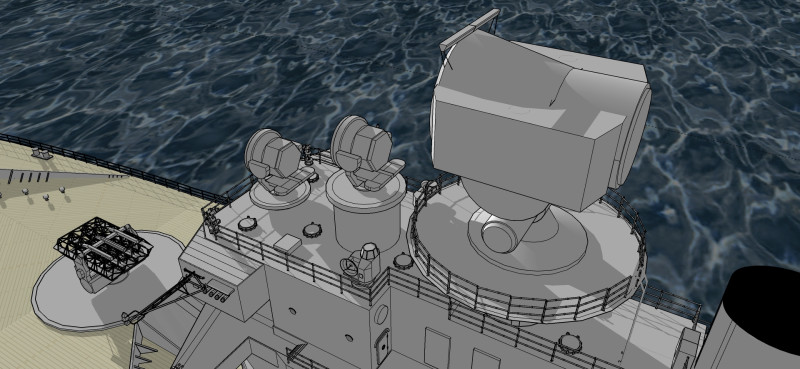
A Type 987 radar was used for navigation; it was also used to detect surface targets. Target acquisition for surface targets and low-flying air targets was carried out using a pair of Type 993 radars.
Fire control for the “Seaslug” air defense system was carried out using two pairs of Type 901 radars (later designated Type 901M and Type 901M2). Artillery fire control was carried out using eight Type 903 radar directors. The entire control system was fully integrated, and the failure of one radar could be compensated for by another without creating any “gaps.”
POWER PLANT
The battleships’ propulsion system remained the same—a boiler-turbine system. Although during the modernization, the possibility of replacing it with a combined steam-gas turbine system was discussed—which would have involved dismantling half of the boilers and installing full-power gas turbines in their place — once inspection results showed that the battleships’ original boilers and turbines were still serviceable for at least another decade, it was decided to abandon the costly replacement.
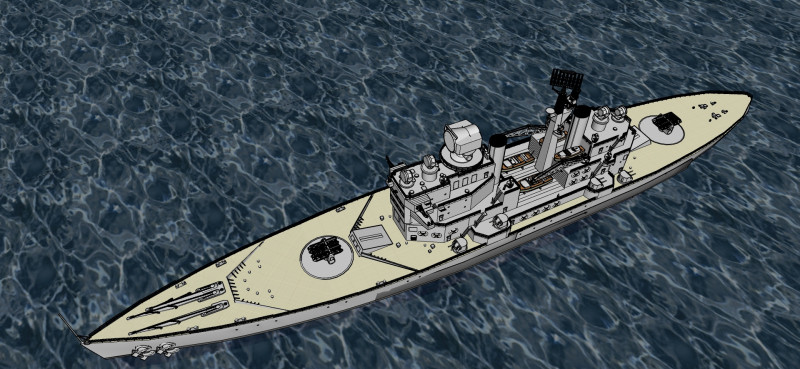
Instead, the power plant control system was partially automated in order to reduce the required crew size. In addition, the smokestacks and ventilation ducts were equipped with nuclear-proof protection, including filters and automatic shut-off valves that respond to sudden pressure changes (to prevent the boilers from rupturing due to a shock wave).
HISTORY
Although it was originally expected that the modernization of both battleships would be completed in 1962, the actual scope of the work led to significant delays. The *Anson* was—formally—commissioned in January 1964, but continued to undergo modifications and trials for many months afterward. Similarly, the *How* was commissioned in November 1964, but did not enter full service until the summer of 1965.
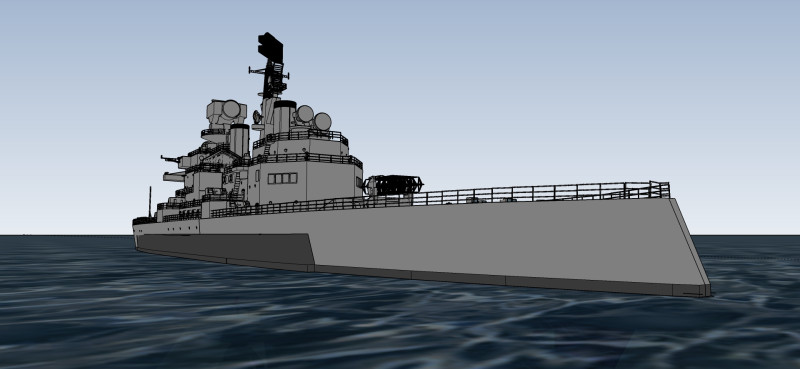
The primary mission of the “Enson”-class battleships was to escort the heavy aircraft carriers “Eagle” and “Ark Royal.” Thanks to their powerful missile armament and advanced electronic systems, the battleships were regarded as the “nerve center” of the fleet’s air defense, coordinating the actions of other ships and carrier-based aircraft in repelling enemy attacks. During fleet exercises in 1968, led by the *Anson*, successfully repelled more than two dozen simulated attacks, including a massive “salvo” of unmanned target drones approaching from various directions.
Over the course of their service, the battleships underwent a series of modernizations. For example, in 1968, two aft elevated 76-mm gun mounts were removed from the *Anson* and replaced with *Sea Cat* anti-aircraft missile launchers. The *How* underwent a similar modernization in 1970. The ships also underwent repeated modernizations regarding their primary armament: their “Sea Slug” and “Homing Slug” missiles were replaced in the early 1970s with GWS.2 models, which had significantly greater range and effectiveness. Finally, the Type 984 radar and the ADAWS fire control system underwent a major modernization in the 1970s, with a transition to integrated circuits and fully digital data processing.
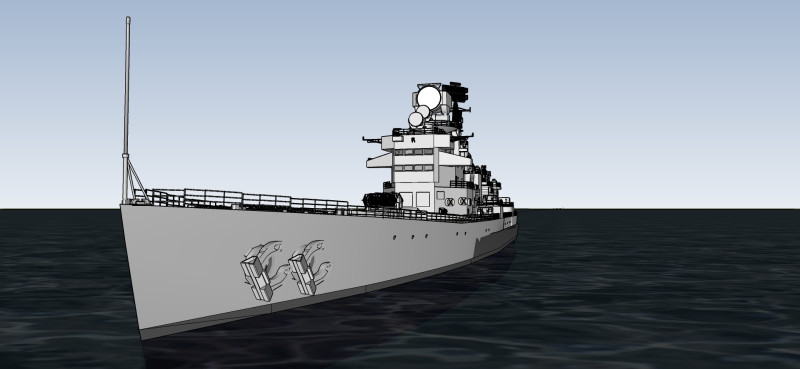
In 1970, the “How” was equipped with a helicopter pad and a Canadian-style telescopic hangar for experimental purposes, but the results of the experiment were deemed unsatisfactory—the hangar restricted the firing arc of the stern launchers, and the helicopter inside it suffered severe damage from missile launches.
Only the *Enson* saw combat. In 1975, during the Australia-Indonesia Confrontation, the battleship was assigned to the forces urgently dispatched to support Australia in the event the crisis escalated. On October 14, 1975, the *Anson* opened fire on a real target for the first and last time—a Tu-143 unmanned reconnaissance aircraft that the Indonesians were using to track a British task force. After an attempt by a carrier-based fighter to intercept the reconnaissance aircraft failed, the battleship fired two “Sea Slug” anti-aircraft missiles at it and (with “remarkable effect”) scored a direct hit on the drone.
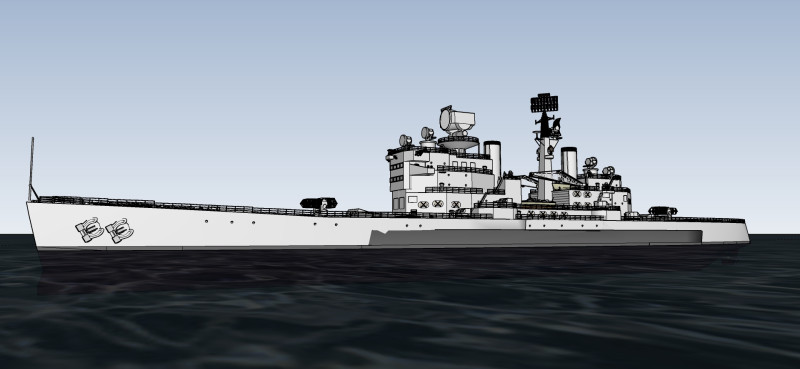
In 1978, the aging *Enson* was decommissioned from active service and reclassified as a training ship. The “How” lasted longer, but due to increasing wear and tear on its propulsion system, it was decommissioned and placed in reserve in 1980. During the Falklands War in 1982, the British Navy considered the possibility of urgently reactivating the missile battleships but quickly abandoned the idea: a preliminary analysis showed that it would take at least half a year to restore the *Anson* to operational status and twice as long to repair the *How* (assuming, of course, that enough sailors could be found to man the ships).
In the late 1980s, Britain’s first and last missile-carrying battleships were finally decommissioned and sold for scrap.