Рассказ о снегоходе Snow Tractor T36 от Iron Fireman Manufacturing Company
When the topic of combat vehicles designed for use in winter conditions comes up, the image of a snowmobile usually springs to mind. This is especially true when discussing combat operations during World War II. Indeed, Soviet snowmobiles became the most widely used type of combat vehicle in the first half of the war, but by 1944 the situation had changed significantly. The snowmobile concept turned out not to be the most successful. They worked well in northern conditions, but in some areas their use proved impractical—especially toward 1944, when the front shifted westward.
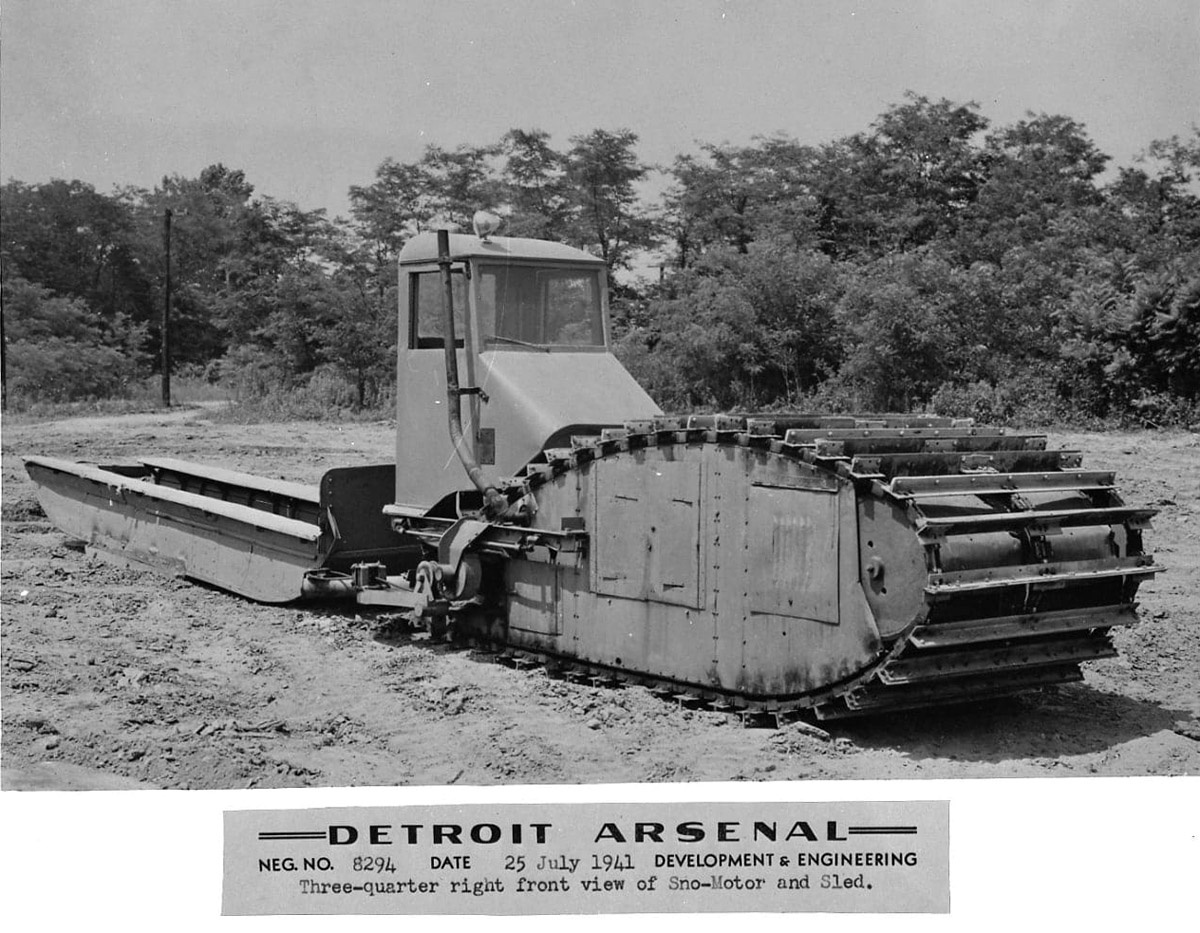
Sno-Motor, the predecessor to the T36. The military liked the concept, but it still needed some fine-tuning.
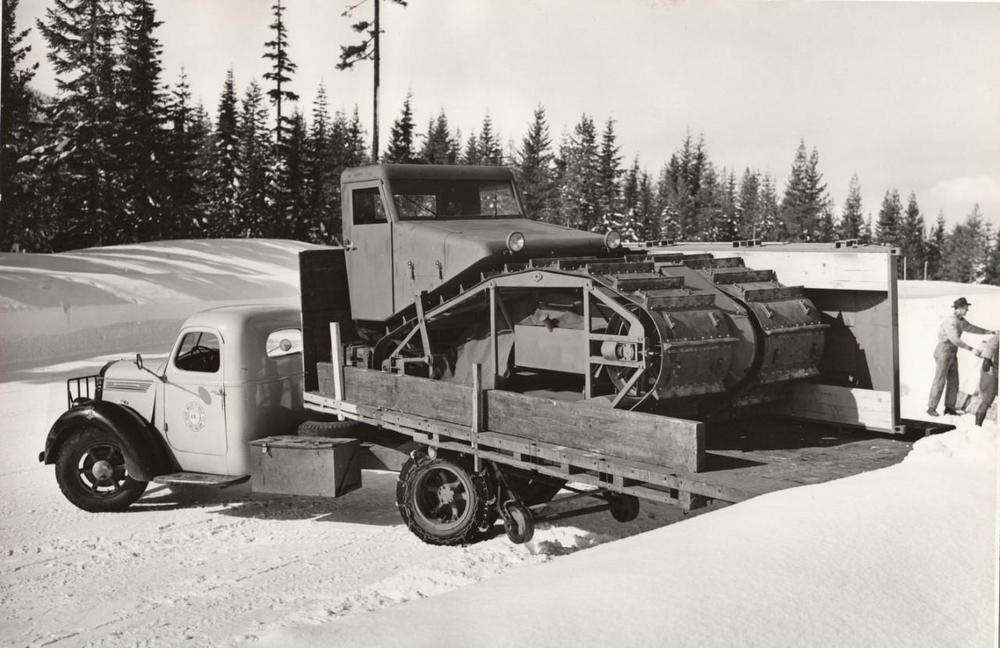
The winter of 1944–45 was a time when American troops made the most active use of vehicles designed for winter combat operations. This fact isn’t widely known, but it’s worth noting nonetheless. The M29C Cargo Carrier became the most widely produced military snow and swamp vehicle, and it remained in active service well beyond World War II. Less common vehicles, including some highly specialized ones, were overshadowed by this vehicle. This is particularly true of the T36 Snow Tractor, a snow-tracked tractor developed in 1944 by the Iron Fireman Manufacturing Company.
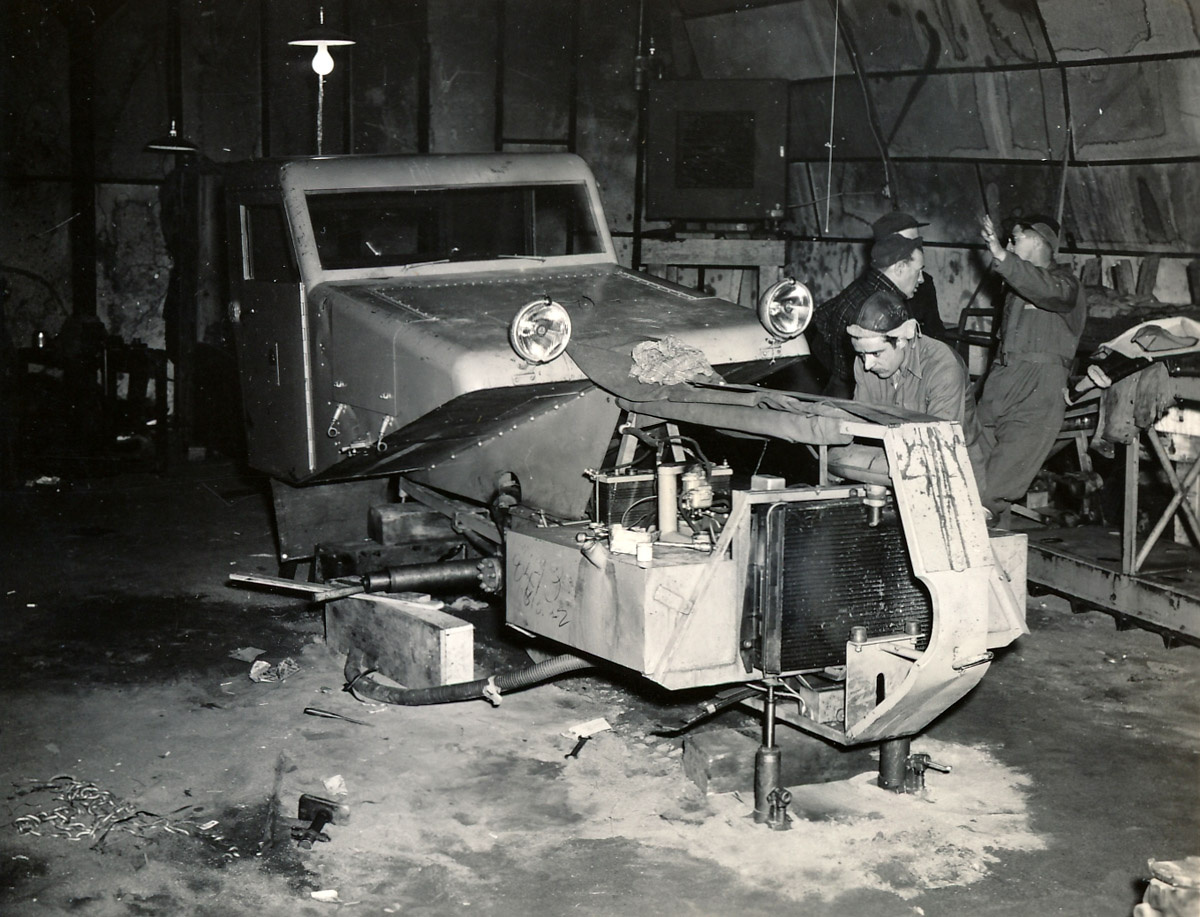
Assembly of the first Snow Tractor T36 prototype, April 1944
Unlike Sudebaker, where the M29 Cargo Carrier was developed, the creators of World War II’s strangest snowmobile were not involved in the automotive industry. Founded in the mid-1920s, the Iron Fireman Manufacturing Company in Portland made its name with automatic coal-feeding systems. Even its logo—a robot (Iron Man) loading coal— Later, a branch was established in Cleveland, and the Iron Fireman product line gradually expanded. By the start of World War II, the company was very actively engaged in mechanical engineering, covering a wide variety of fields.
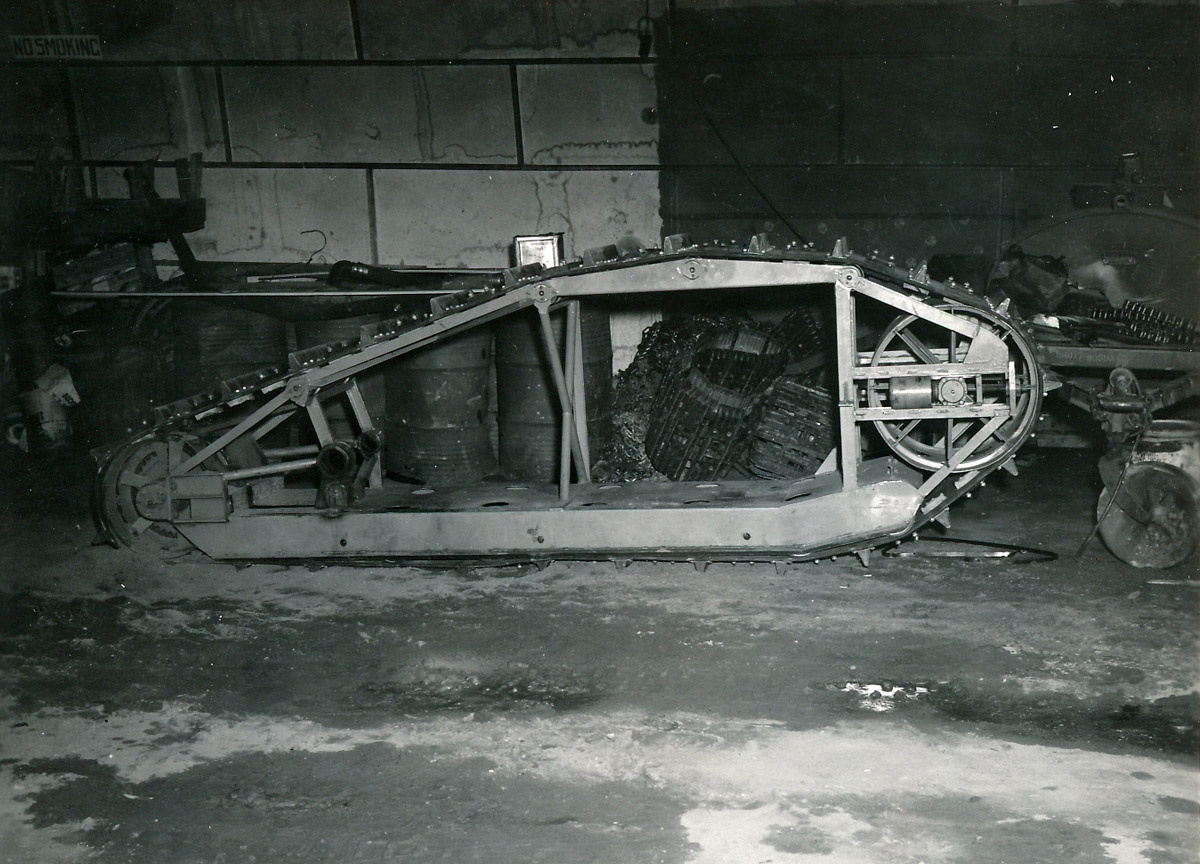
The engine—it now consisted of two parts
Even before the United States entered World War II, the Iron Fireman Manufacturing Company had military contracts. Although they did not manufacture entire products, the plants in Portland and Cleveland were involved in a wide variety of fields. This included, unexpectedly, aircraft manufacturing. The company produced various components for Boeing B-17 bombers. Engines for Liberty Ships, various components for artillery systems, and fuses for aerial bombs were just some of the items the company produced. After the war, Iron Fireman abandoned its old business, focusing instead on something more technologically advanced, especially as coal gradually took a back seat.
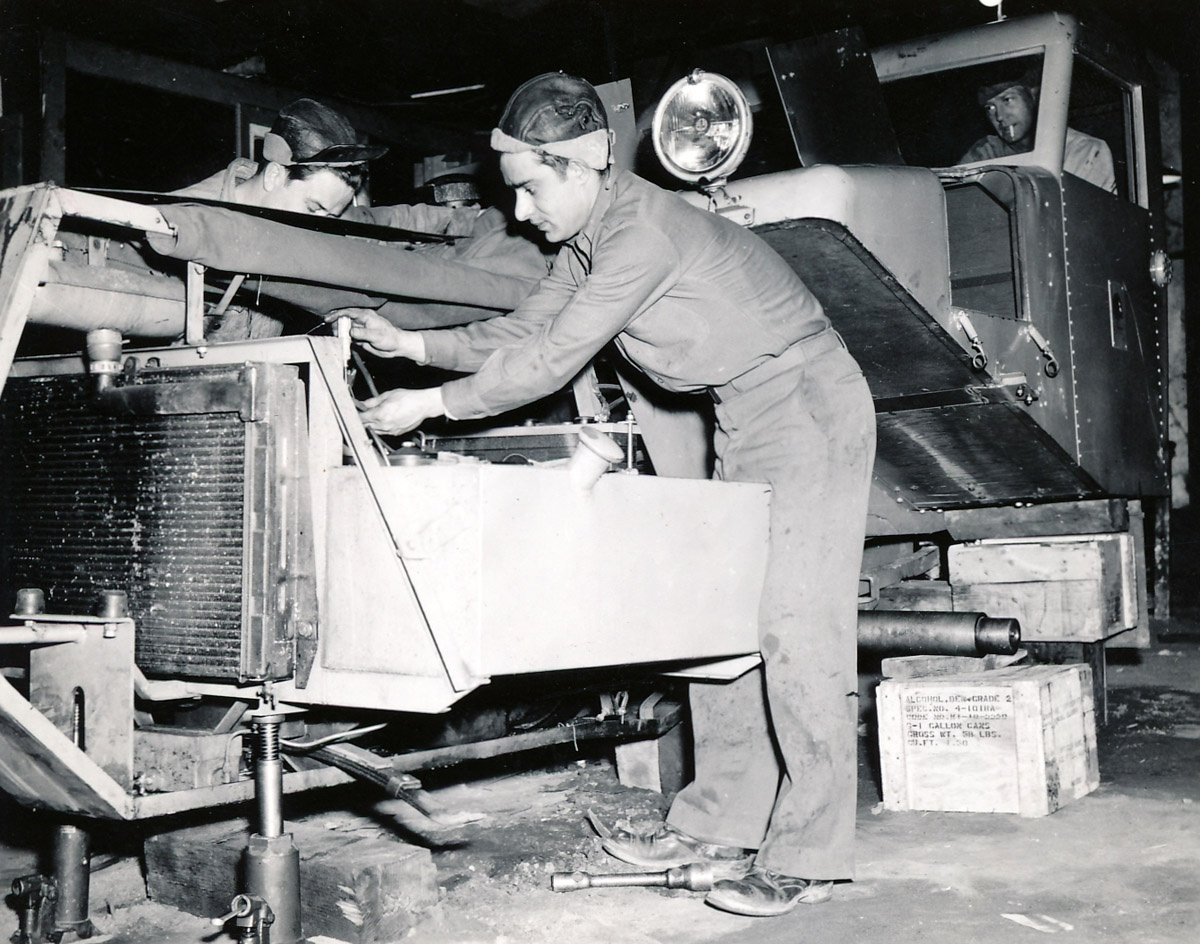
The engine, radiator, and tanks were housed in a single unit
You might wonder, what do snowmobiles have to do with this? In fact, it’s quite straightforward. The thing is, back in July 1941, the Detroit Arsenal conducted tests on a rather unusual vehicle known as the Sno-Motor, or Monarch Sno-Motor. This snowmobile was developed in the 1930s by Ted Flynn (Monarch Forge & Machine Works). The strange machine consisted of a chassis with a very wide track stretched across it and a small cab at the rear. A trailer was attached to the rear, capable of carrying up to 2.5 metric tons of cargo or up to 18 people. The Sno-Motor turned by maneuvering the sled-like trailer. The first prototype was built in 1936, and production continued until the early 1950s.
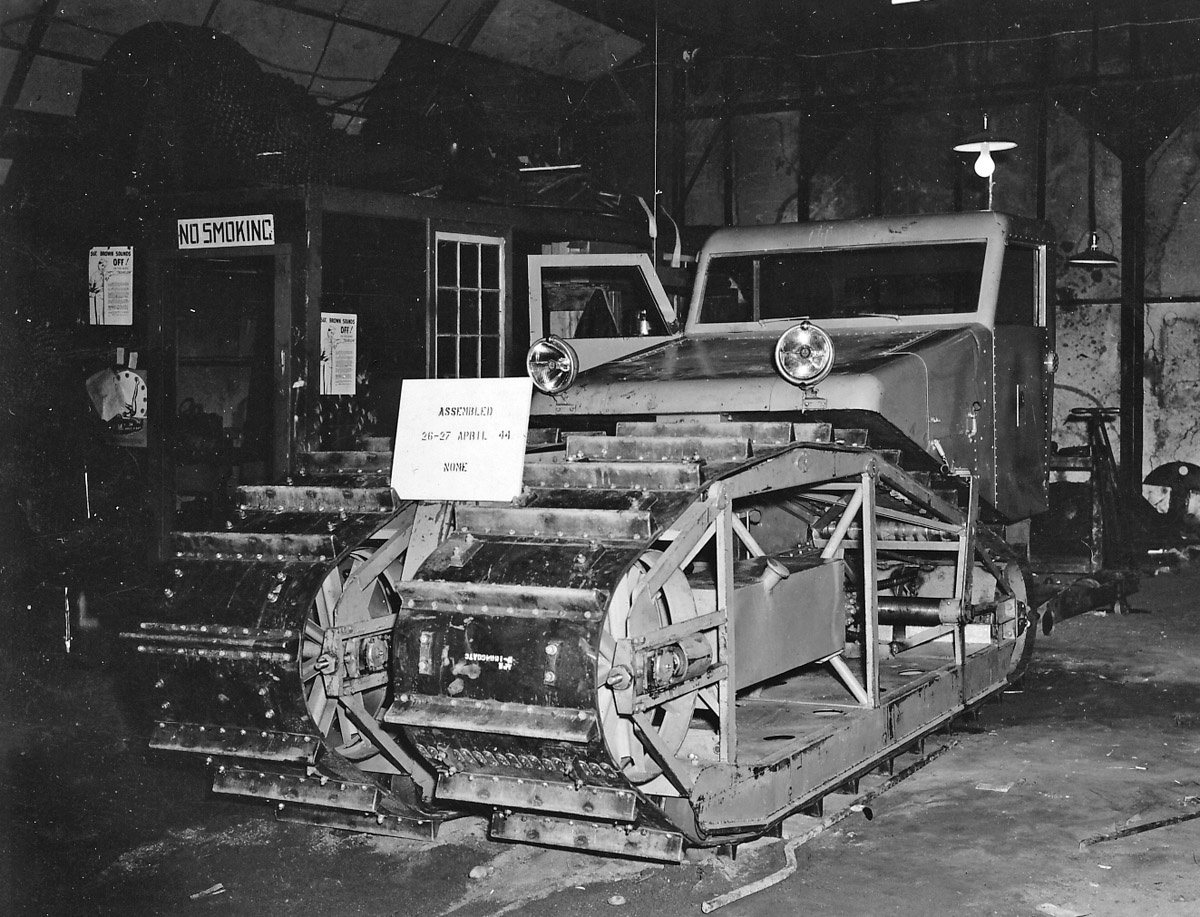
The machine, fully assembled
The Sno-Motor’s design turned out to be extremely unusual, but the U.S. military was intrigued by the idea itself. In short, the Iron Fireman Manufacturing Company was tasked with creating a Sno-Motor for an average-sized person. That is, one that used a standard engine (the Sno-Motor was powered by a Hercules engine) and, most importantly, was capable of turning on its own, without a trailer. As a result, a prototype of the Snow Tractor T36 was built in April 1944. It had a cockpit very similar to that of the Sno-Motor (though now a two-seater), but overall it turned out to be a completely different, more successful vehicle.
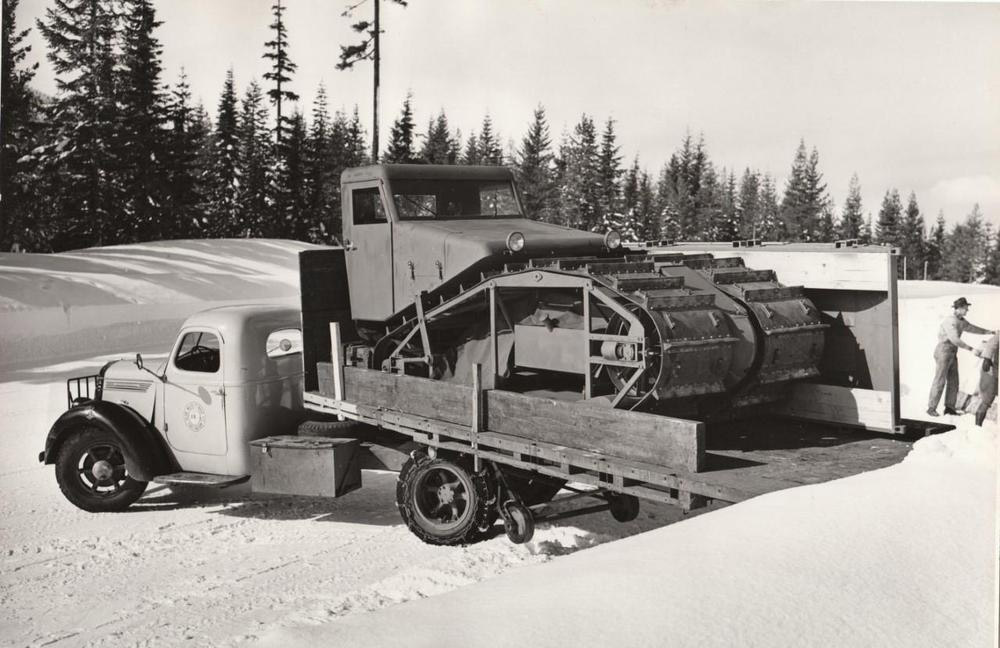
A total of 4 prototypes were built
While on the Sno-Motor the cab was mounted to the main body via side struts, here it was an integral part of the overall frame. Inside the frame was a Dodge engine from the T214 model, one of the most common engines at the time. Thus, the Iron Fireman’s creation already featured some standardization. There were now two tracks, and the undercarriage was attached to the frame on the left and right sides. Incidentally, Sno-Motor later adopted the same design. However, the undercarriage of the Snow Tractor T36 turned out differently. For example, the tracks were made of reinforced rubber, to which lugs were attached.
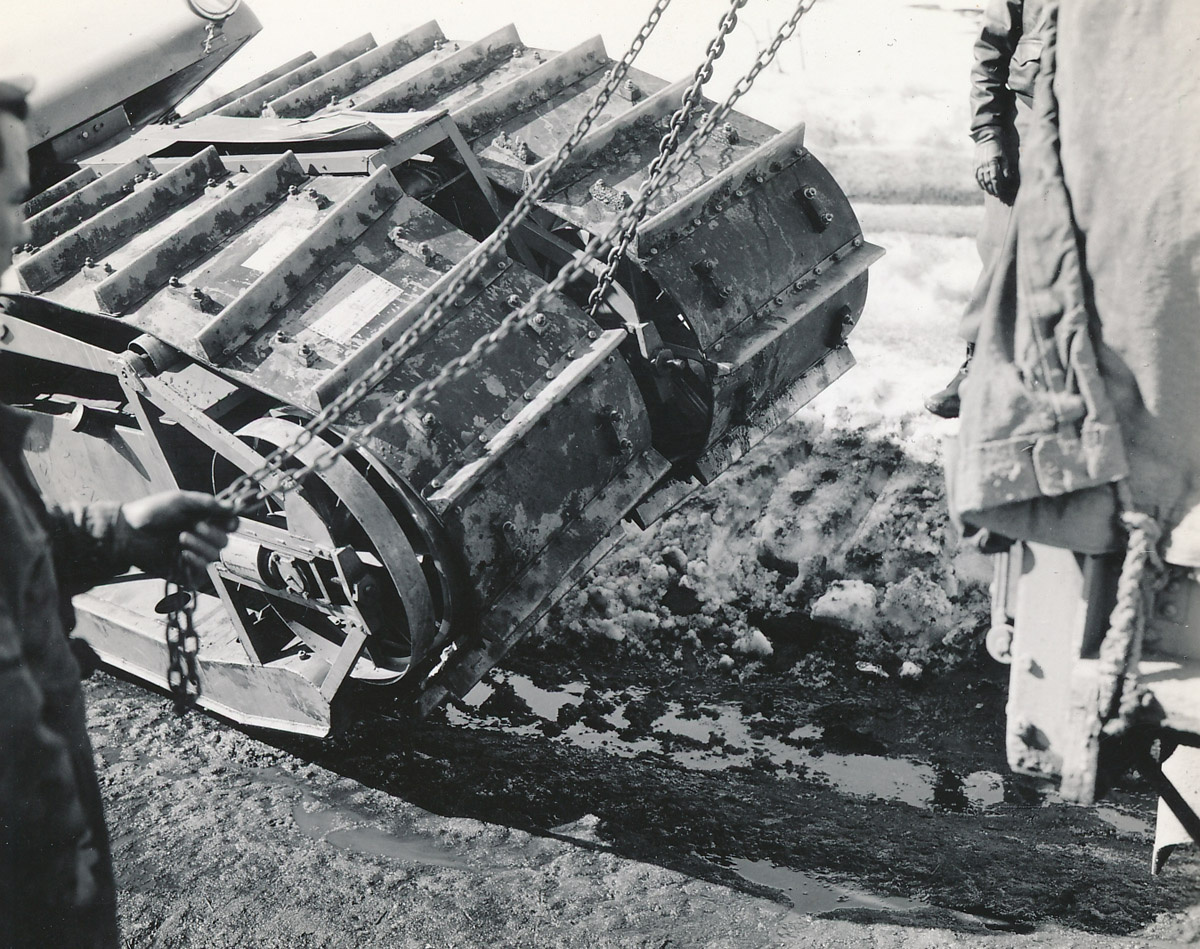
Testing has shown that further refinement is needed
Based on the results of testing the pilot models (a total of four were built), a number of suggestions emerged regarding both the engine and the cockpit. The cockpit required the most changes; even in its two-seater configuration, it seemed too small. As a result, the decision was made to build a three-seat cockpit that was larger and more comfortable. At Sno-Motor, by the way, the cockpit remained small. In addition, changes were needed to the design of the tracked propulsion system and the transmission.
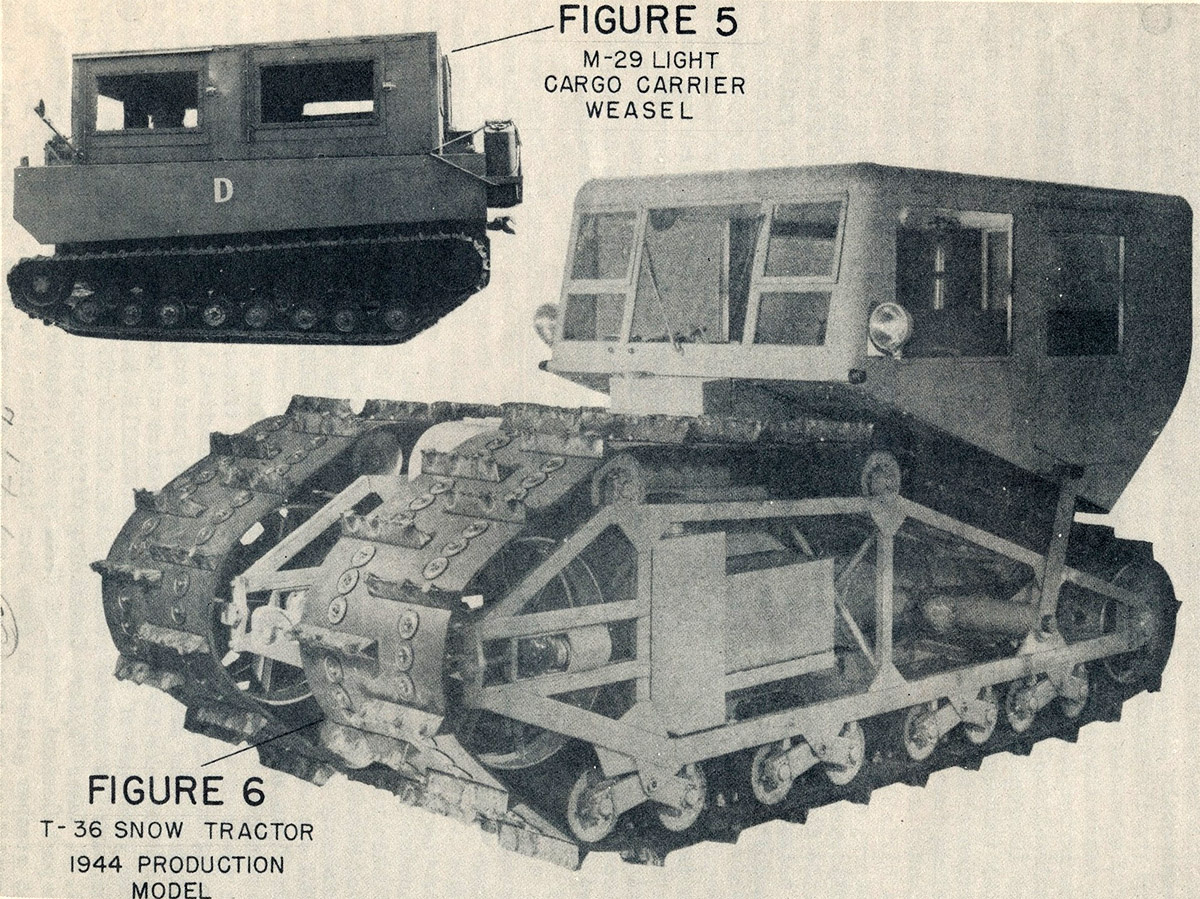
Серийный Snow Tractor T36
This is how the production version of the Snow Tractor T36 came into being, which became a semi-production model. According to available data, 36 such vehicles were manufactured in September 1944. The production version of the vehicle featured a modified transmission, partially standardized with the Cletrac high-speed tractor. The tracks were also modified, featuring better-designed lugs. The vehicle could be equipped with an SCR-187 radio, which was by no means superfluous. If necessary, the vehicle could tow up to one and a half metric tons of cargo in special sleds attached to the rear hook.
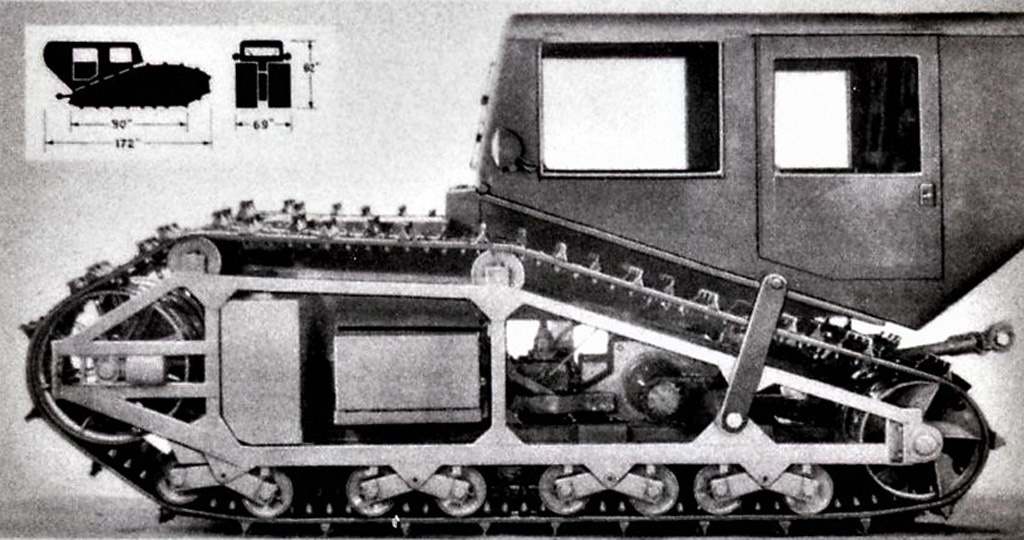
A total of 36 vehicles of this type were manufactured
All in all, it turned out to be a rather interesting vehicle that could be used both as a transporter and as a tractor. A speed of about 40 km/h was sufficient for the main tasks assigned to such equipment. At the same time, the Snow Tractor T36 was noticeably superior to the Sno-Motor in terms of handling, not to mention crew comfort. Instead of a tiny cab, it had a fairly spacious interior that could potentially accommodate more than three people.
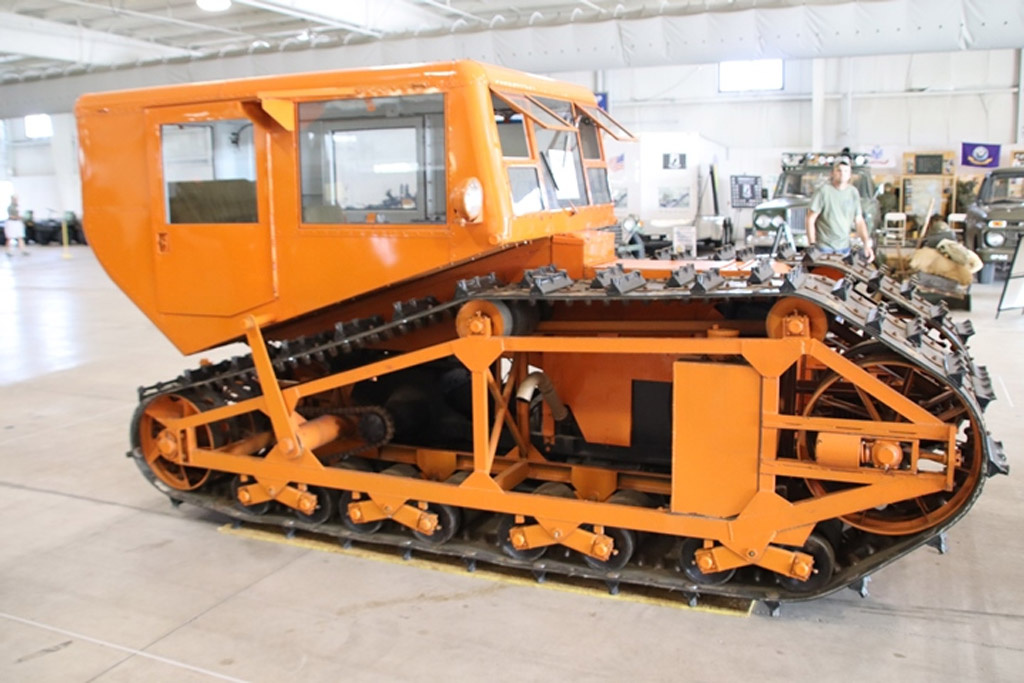
Four specimens have survived to the present day
The main obstacle to mass production was the vehicle’s overly narrow specialization. Its predecessor was designed for operations in mountainous, snow-covered terrain. These are very specific conditions that required equally specific vehicles. For the U.S. Army, such conditions existed in Alaska, but in the areas where American troops were actually fighting, the M29C Cargo Carrier was more than sufficient. It was significantly more maneuverable, could carry four people, and could also tow a sled. Given this context, it’s no surprise that the T36 Snow Tractor was never put into service.
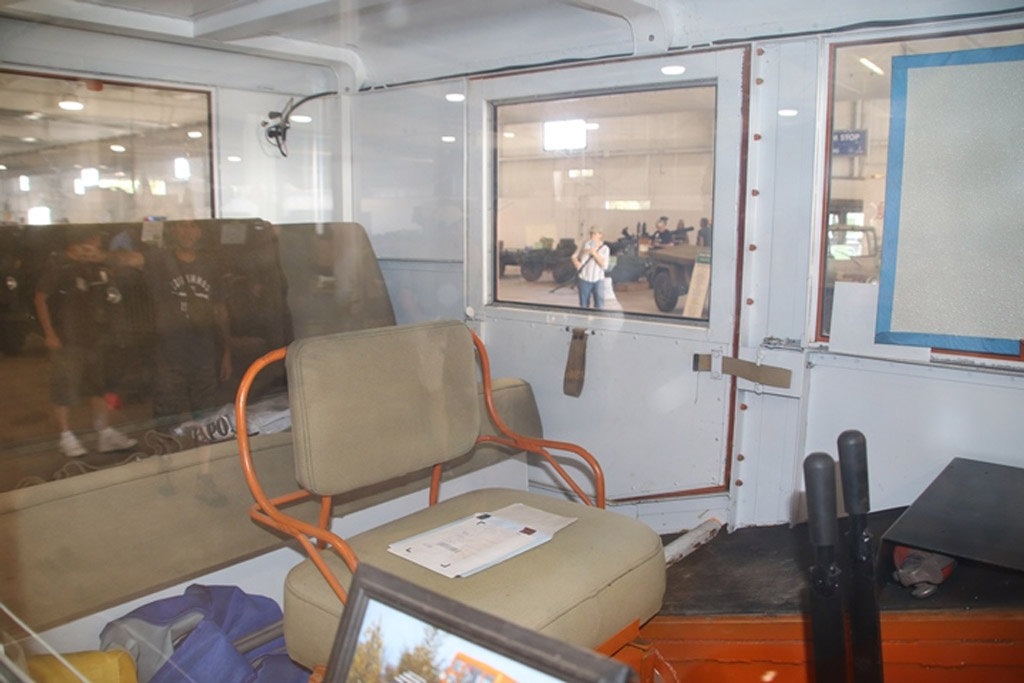
Inside the cabin. It’s quite spacious, unlike its predecessor
At present, there are at least four known Snow Tractor T36s that have survived to the present day. Thanks to components that aren’t particularly hard to find (thanks to partial standardization), restoring the vehicle isn’t overly complicated. Overall, it can be said that the vehicle was a success, but only for very specific conditions. This was the main obstacle to achieving truly large-scale production.
List of Sources:
-
-
- usautoindustryworldwartwo.com
- mapleleafup.net
-