The Latest from the Russian Air Force: What Is Known About the Combat Deployment of the Newest MiG-35 Fighter Jet in Ukraine

We have been following the MiG-35 fighter jet on our website since the first online mentions of this aircraft. The first article on our website dedicated to the MiG-35 dates back to January 2017. It reported that the new fighter jet was already flying. In May 2024, there was a report that mass production of the aircraft had begun.
This article will discuss its combat use in Ukraine, as reported by the Bulgarian publication *Bulgarian Military*. Where the Bulgarians got this information is another question. Here, we’ll take a look at what the Bulgarian media is reporting.
You can find out more about this aircraft in the article at this link. In a nutshell, it’s a 4+ generation fighter. In other words, it has all the characteristics of a fifth-generation fighter except for stealth capabilities—and, as a result, the price.

According to public statements by representatives of the United Aircraft Corporation, the fighter jet is currently completing the stage of state testing under combat conditions. Upon completion of this phase, the Russian Ministry of Defense will make a final decision on transferring the aircraft to the Russian Aerospace Forces. Issues regarding orders and deliveries of the MiG-35 to foreign customers will also be resolved.
The MiG-35 was originally developed using technologies and materials typical of fifth-generation fighter jets. Its mission is to operate in areas of intense armed conflict and to penetrate strong enemy air defenses, including modern air defense systems. The aircraft is capable of reaching speeds of up to 2,100 km/h, with a service ceiling of 16 km and a maximum range of 3,000 km. It can also withstand g-forces of up to 9G.
The publication *Bulgarian Military* emphasizes that this fighter jet can successfully engage aerial targets regardless of the time of day or weather conditions, as well as attack ground and sea targets. For the MiG-35, it makes no difference whether its targets are moving or stationary.
Compared to the base version, the upgraded MiG-35 features reduced radar cross-section, new avionics standardized with those of the Su-30SM2 and Su-35SM, a new wing with increased surface area, and the capability to employ the latest high-precision airborne weapons. It has been reported that the MiG-35 can use the full range of the latest guided and unguided missiles, just like the Su-35S and Su-57 fighters, as well as the latest high-precision guided munitions, including several types of air-to-ground bombs equipped with guidance and correction modules. In addition, the fighter will be equipped with the latest jam-resistant BINS-SP2M navigation system, designed for the fifth-generation Su-57 fighters. It is twice as accurate and has a longer service life than previous versions of inertial navigation systems, is highly reliable, and requires no special maintenance.
— Bulgarian Military
The aircraft will be equipped with a suite of detection and targeting systems and weapons, including a new optical-radar station and a revolutionary targeting system that projects images of targets onto the pilot’s helmet. The “Zhuk-A” radar system, with its advanced AFAR antenna, is resistant to jamming and can track up to 30 targets at a range of up to 300 km. In this regard, the MiG-35 will become one of the world’s longest-range fighters.
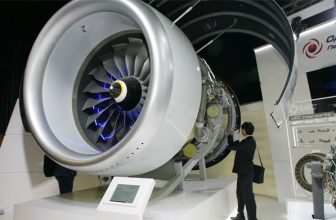
As for the powerplant, the MiG-35 will be equipped with new, more fuel-efficient modular engines that offer increased thrust and service life, as well as an afterburner and a digital control system. Possible options include either the RD-33MKV with thrust vectoring or a modified version of the RD-33MK. However, there is currently no precise information on which engines will ultimately be installed on the aircraft.
There is also no information available regarding the implementation of two other unique capabilities of the MiG-35. The aircraft is expected to serve as an aerial refueling tanker, refueling both other fighter jets and modern Russian drones. No other fighter jet in the world possesses this capability, and it is unclear whether the new Russian aircraft actually needs it.