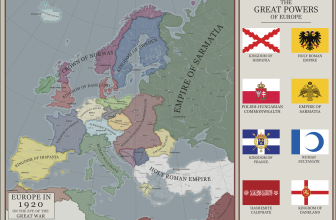
The Munich Shuffle, or What If the Signing of the Munich Agreement Were Postponed? Part 40: Italy’s Suffering

Although the main theme of this part is revealed in the post’s title, the key revelation is that “Barbarossa” will take place in this world as well. However, the timing of its implementation remains unclear for now. As for the possible differences between the German invasion of the USSR and the events of real history, we’ll learn more about that in subsequent parts.
Marshal Badoglio’s return to Italy proved to be a difficult ordeal. During his journey, the plane that was supposed to carry him was shot down. At the time, Badoglio was at the airfield and watched as the plane crashed with its engine on fire. Because of this, the marshal had to change his route and delay his departure for several days until a new route could be planned. However, these delays gave Badoglio time to formulate some new strategic plans.
Marshall arrived in Rome on January 26, 1941, and was briefed on the details of the British attack on Taranto. Mussolini tried to keep the scale of the disaster a secret, but he failed. On top of that, news of the unfolding British offensive in East Africa left Badoglio and the entire General Staff on edge, wondering who might bear the brunt of Mussolini’s wrath. It was not out of the question that Badoglio might be dismissed. However, since he had previously warned of the looming crisis—a warning that his successor as Chief of Staff, Marshal Cavallero, had ignored—this did not happen.
It is important to understand, however, that Cavallero did not do this out of foolishness, but because he knew that Badoglio’s requests would not sit well with Mussolini and could undermine his own position. However, there was no way to justify the failure of the offensive in Greece, and Cavallero was dismissed.
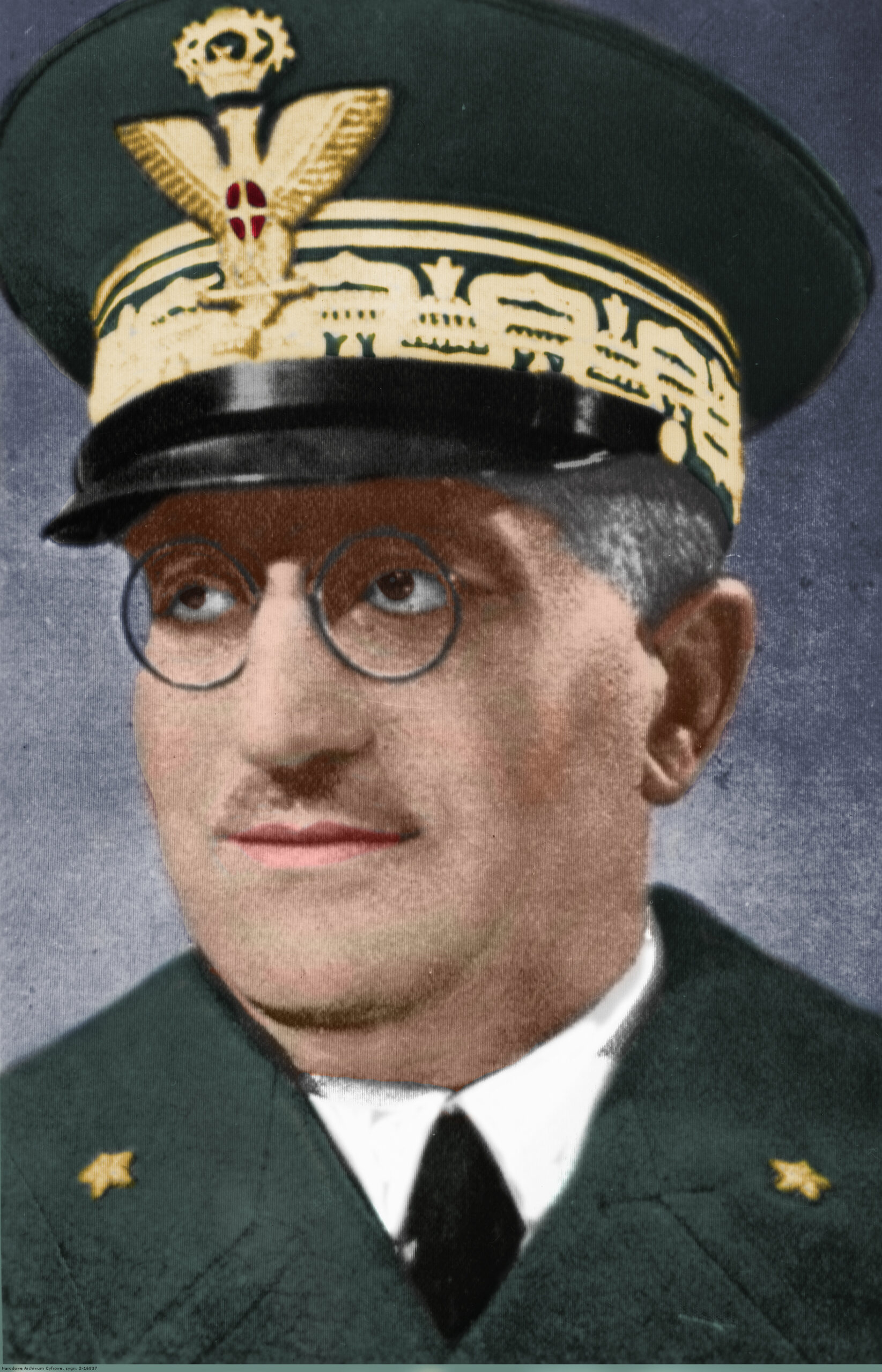
Marshal Hugo Caballero
As for the situation in Albania, it had stabilized, largely because the Greeks had exhausted their resources, and only a modest amount of weapons and ammunition had arrived from the British. Similarly, the Royal Air Force squadrons assigned to provide air support to the Greek Army did not arrive in Greece in time.
However, even such modest assistance caused serious concern in Rome, as it suggested that the British were prepared to land in Greece, rather than simply sending surplus weapons and attacking Italian supply ships.
It should also be noted that while Mussolini was fixated on the situation in Greece, Badoglio was equally concerned about the situation in North Africa. Badoglio’s decisions did nothing to improve the situation in Albania. Instead, he began preparing an offensive against Egypt, where, in his view, the British had exhausted their forces due to operations in East Africa.

Marshal Pietro Badoglio
Despite all the efforts of Count Ciano, who tried to temper the enthusiasm of his colleagues—who were convinced that the Germans were planning to launch a new offensive against the British in the spring of 1941. This idea grew into a conviction and formed the basis of many Italian plans, right up until the start of Operation Barbarossa, which the Germans had not disclosed to the Italians. The irony was that by the spring of 1941, the British had far more information about Germany’s intentions than their Axis partners. Moreover, the sources of this information were wide-ranging, ranging from intelligence reports gathered by Bletchley Park to aerial reconnaissance data showing that the tugs and barges being amassed to transport the invasion forces were scattered along the coast. The hapless Abwehr agents sent to Britain also played a significant role in uncovering Hitler’s plans; they were captured by British intelligence in large numbers, and ultimately succeeded in misinforming the German high command.
As a result, the British became increasingly convinced that Hitler was once again turning his attention to his long-standing ambitions to conquer new territories for the German people in the USSR, rather than to resolving the British question. At the same time, it cannot be overlooked that the USSR largely ignored British signals on this matter, even when they came from Soviet agents within British intelligence. In the USSR, with a tenacity better suited to other purposes, they were convinced that a German war against the USSR was impossible. And all those numerous reports were part of German disinformation.
Historians are still debating why this happened.
But let’s return to Italian affairs. Even in the absence of precise information about Germany’s plans, Badoglio’s assessment of British strength in Egypt ran counter to the reports from Marshal Italo Balbo, commander of the 10th Army, which stated that, in light of growing British power in Egypt, a substantial reinforcement of Italian troops in Libya was urgently needed before any offensive actions could be considered. The fact that Balbo had been making such requests ever since the idea of invading Egypt was first proposed a year earlier somewhat undermined his authority. However, this did not excuse Badoglio’s failure to either verify or refute Balbo’s claims regarding British strength in Egypt.
In addition, he ignored the current state of the Regia Marina (the Italian Navy), which, due to its catastrophic losses at Taranto, was unable to ensure the uninterrupted movement of Italian convoys—a factor that was vital to any offensive.
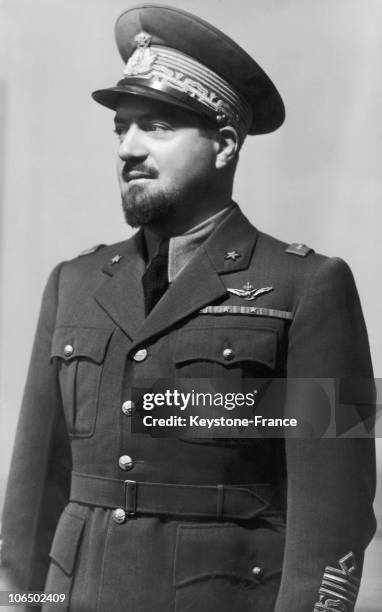
Marshal Italo Balbo
There was a certain irony in the fact that now, when the conditions for an attack on Egypt were worse than they had been the previous fall, Mussolini was inclined to accept Badoglio’s argument for carrying out the Egyptian operation simply because he wanted to. Accepting Badoglio’s arguments about Britain’s weakness in Egypt meant that he could ignore Balbo’s complaints, while continuing to demand action; and instead of reinforcements, Balbo received a scathing rebuke and an order to prepare an offensive in Egypt as soon as possible.
It is worth noting that Balbo did everything in his power to carry out the commander-in-chief’s order. He devised an operational plan—one that was extremely concise: to cross the Egyptian border and immediately take up defensive positions in order to wait and gather resources for the continuation of the operation.
And what’s even stranger is that Mussolini approved this plan. Some believe this happened because the main objective of the offensive in Egypt was not to defeat the British, but merely to tie down their forces in Egypt so they could not come to the aid of the Greeks. However, Badoglio was more optimistic; he expected that as soon as the Italian offensive began, the weak British defenses would collapse. This would allow Balbo to advance and seize the supplies and weapons abandoned by the British; he even predicted that Alexandria would be in Italian hands by summer. And this would ensure that Italy would not be ignored in the inevitable future peace negotiations. Naturally, this was, to put it mildly, a fanciful plan that took no account of the actual situation.
As for the situation in Greece, in addition to the buildup of Italian forces, there was also the sensitive issue of German intervention. The fact that the Greeks were able to neutralize any threat from Bulgaria served as a major incentive for their efforts to fight the Italians. It should be noted that the success on the Bulgarian front was primarily the result of pressure on Bulgaria from Turkey.
At the same time, Bulgaria, which was under strong German influence, could certainly have intervened if German diplomats had pursued this line of action. Germany could have forced the Bulgarians to take a more aggressive stance. It could also have put pressure on the Turks, who were very afraid of a conflict with Germany. Such actions would almost certainly have led to the deployment of German troops in Bulgaria. As soon as those troops were in the Balkans, it would have left the Greeks no choice but to divide their forces and deploy a contingent toward the Bulgarian front, which would have made life considerably easier for the Italians and might well have enabled them to secure victory.
It should be noted that Berlin was not averse to providing assistance to the Italians in the Balkans. It was important to the Germans that Italian troops remain in Albania, as this ensured the Axis’s influence over countries such as Bulgaria. Furthermore, the loss of Albania would have made the vital oil fields in Ploiești, Romania, an easy target for Royal Air Force bombers based in Greece, which could potentially lead to major strategic problems for Germany.
On top of everything else, another humiliating defeat could have destabilized Mussolini’s regime, and it could not be ruled out that Italy might break away from the Axis and join the British, provided that the Italian fascists were defeated.
It is true that Hitler later bitterly complained that diverting forces to aid the Italians had delayed the start of Operation Barbarossa, which ultimately deprived them of the opportunity to capture Moscow. However, given that about three million German soldiers took part in the invasion of the USSR, it is hard to imagine that diverting a few divisions would have had any significant impact on the outcome. It is far more likely that the start of Operation Barbarossa was delayed due to wet weather, which made most of the dirt roads in the western Soviet Union impassable for military vehicles, which, in turn, significantly limited German logistics and called into question the operation’s success.
Initially, the Germans agreed to launch an offensive from Bulgaria into Greece to assist in the planned spring offensive against the Greeks. However, German generals later opted for a strategic alternative—launching the attack from Yugoslavia—and troops were redeployed to Austria, Hungary, and Romania, in the expectation that the Yugoslavs could be forced to grant the Wehrmacht transit rights or simply to invade if those concessions were not granted.
The Yugoslavs yielded to pressure from Berlin and joined the Tripartite Pact on March 21, 1941, but on the condition that they would not grant any transit rights. This posed a major obstacle to German plans, until a coup in Yugoslavia on March 27—provoked in no small part by the decision to sign the Pact—gave the Wehrmacht a pretext for invasion. Yugoslavia’s armed forces were much weaker than Greece’s, and the country was torn by ethnic tensions that would further undermine its ability to defend itself.
Even as the Germans were preparing their attack from Bulgaria, and Yugoslavia was still out of reach, Mussolini was determined to launch a new offensive from Albania in the hope of breaking through the Greek defenses and securing a decisive victory before the Germans began their offensive.
A new Italian offensive against Greece began on March 9, 1941. However, it did not turn out to be the success Mussolini had hoped for. Even his personal presence at the start of the offensive did not bring the Italians any decisive victories; the Greek army continued to hold its ground firmly, and the Italians’ suffering continued.

Greek artillerymen in the mountains
Источник — https://www.alternatehistory.com/forum/threads/munich-shuffle-1938-1942.518000/page-37#post-22765206