Germany has become a leader in the development of 30-mm aircraft and anti-aircraft guns. These weapons fill the gap between 20-mm and 37–40-mm artillery systems. In terms of destructive power and range, 30-mm shells significantly outperform their 20-mm counterparts, while 30-mm artillery systems weigh much less than 37–40-mm systems and typically have a higher rate of fire and a larger ammunition capacity.

Contents:
The MK.103 30-mm aircraft cannon and anti-aircraft mounts based on it
By the mid-1930s, Luftwaffe military leaders and German experts in aviation armament had already come to realize the need to develop aircraft cannons with a high rate of fire, with a caliber exceeding 20 mm but less than 37 mm. The 30-mm caliber was chosen as the most optimal, as it provided a reasonable balance between projectile power, rate of fire, and the weight of the gun. It was not only the Luftwaffe that showed interest in such armament, but also the navy, which planned to equip seaplanes with 30-mm cannons featuring high ballistic performance to combat enemy surface submarines and combat boats.
Operational experience with the 30-mm MK.101 (Maschinenkanone 101) cannon, developed by Rheinmetall-Borsig AG and adopted in 1940, did not live up to expectations. The MK.101 was based on a short-stroke barrel, and the use of a magazine feed (with a capacity of 10 to 30 rounds) limited the rate of fire to 260 rounds per minute and complicated the gun’s integration into aircraft. The gun, with a loaded drum, weighed 185 kg and was 2,592 mm long. Due to its considerable size and weight, as well as the limitations of the magazine capacity, this aircraft gun did not see widespread use.
Despite these shortcomings, one of the positive outcomes of the Luftwaffe’s use of the MK.101 was the development of a highly effective 30×184 mm round. The 455-gram armor-piercing incendiary round, traveling at an initial velocity of 760 m/s, could penetrate 32-mm armor at a distance of 300 m at a 90-degree angle of impact. Later, a sub-caliber armor-piercing tracer round was added to the ammunition load for 30-mm aircraft cannons; at the same range and at a 60° angle, it could penetrate 50-mm armor.

30-mm armor-piercing incendiary round for the MK.101 cannon
In early 1943, production began on the improved 30-mm MK.103 aircraft cannon, which had been stripped of many of its predecessor’s shortcomings. Without ammunition, the new cannon weighed 145 kg. An open box containing a belt loaded for 100 rounds weighed 94 kg. The operating mechanism used a combined system: the extraction of the spent cartridge case, feeding of the next round, and feeding of the belt were accomplished by a short recoil of the barrel, while the energy of the powder gases was used to cock the bolt and open the barrel bore. The barrel bore was locked by a longitudinally sliding bolt with locking lugs that spread apart. German engineers implemented a system for igniting the primer using an electric discharge. Electrical contact was transmitted from the onboard power supply through the gun’s housing, the barrel, and the cartridge case to the electric ignition sleeve, where it connected to a “contact striker” that ignited the charge. The MK.103 was fed using a metal belt capable of holding between 70 and 125 shells. The rate of fire reached 420 rounds per minute. Direct fire was effective at ranges up to 800 meters.

30-mm MK.103 aircraft cannon
The ammunition load for the 30-mm MK.103 cannon was significantly increased. The 330-gram 3-cm M.-Gesch. o. Zerl., containing 80 g of TNT, as well as the 320-gram high-explosive tracer 3 cm M.-Gesch. L’spur o. Zerl., filled with 71 g of phlegmatized hexogen mixed with aluminum powder.
In the production of particularly powerful 30-mm shells with a high explosive content, the “deep drawing” method was used; the subsequent procedure involved hardening the steel casing using high-frequency currents.

30-mm rounds for the MK.103 cannon, from left to right: high-explosive, high-explosive tracer, and high-explosive self-destructing
The effect of a single 30-mm high-explosive shell was comparable to that of three or four 20-mm fragmentation-tracer shells fired from a 2 cm FlaK 38 gun.
The only production aircraft equipped with an MK.103 cannon mounted in the engine cylinder bank was the Do.335. Among single-engine fighters, only the wings of the Fw.190 and Ta.152 models were capable of withstanding the recoil and weight of the MK.103 mounted in underwing pods. Therefore, 30-mm cannons of this type were most often mounted on heavy twin-engine fighters and ground-attack aircraft.
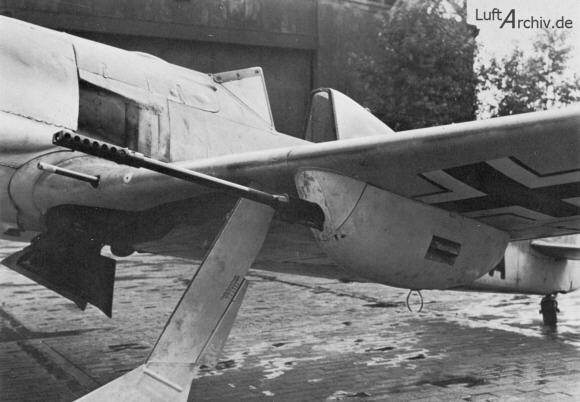
The MK.103 30-mm underwing cannon on the Fw.190F-8 aircraft
In terms of combat performance, the MK.103 fell between the Soviet 23-mm VYA and 37-mm NS-37 and was considered one of the best mass-produced aircraft cannons developed during World War II. This cannon had a significant influence on the development of aircraft armament after the war. The German MK.103 was distinguished by its relatively simple and well-engineered design, as well as its ease of assembly and disassembly. However, Soviet experts who examined a captured MK.103 discovered several shortcomings that prevented its use on single-engine fighters. The strong recoil required a multi-chamber muzzle brake, and the abrupt operation of the automatic mechanism created increased shock loads.
The MK.103 was produced in large quantities, and by February 1945, a significant number of unallocated 30-mm cannons remained in storage, leading to their use in anti-aircraft mounts.
In the early stages, around the beginning of 1943, Luftwaffe ground crews began mounting 30-mm cannons on simple, crudely made turrets to reinforce the air defense of field airfields. By mid-1943, specialists from Waffenfabrik Mauser AG had provided a 30-mm anti-aircraft gun, the 3 cm Flak 103/38, for testing, which was intended to replace the widely used 20-mm 2 cm Flak 38 anti-aircraft gun. The 2 cm Flak 38 mounting was used in the development of the 3 cm Flak 103/38.
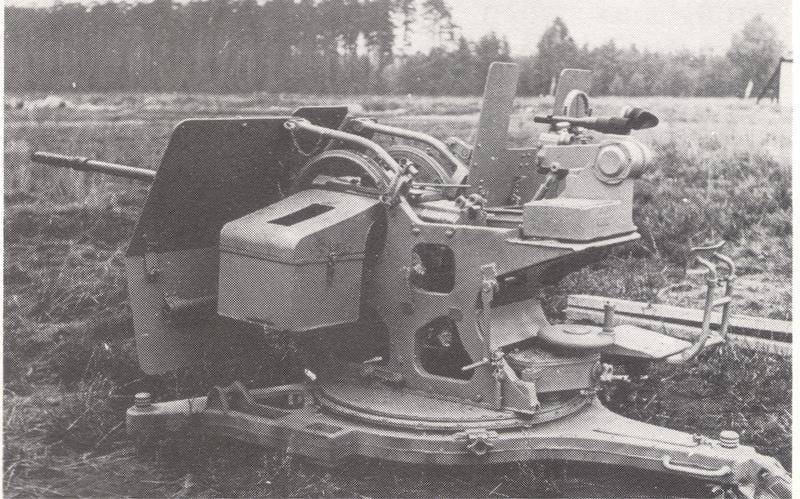
A 30-mm 3 cm Flak 103/38 anti-aircraft gun in firing position
The transition from a 20-mm caliber to a 30-mm caliber resulted in an increase in the anti-aircraft gun’s weight by about one-third. The weight of the 3 cm Flak 103/38 in transport configuration was 879 kg; after the wheeled undercarriage was detached, it weighed 619 kg. The crew consisted of 7 men.
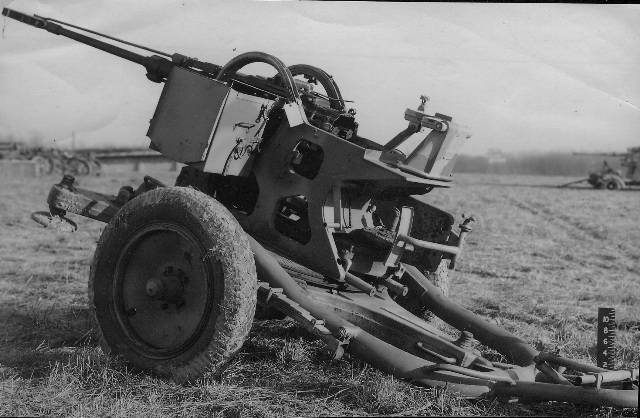
30-mm 3 cm Flak 103/38 anti-aircraft gun in transport configuration
Thanks to the use of a belt-fed system and a large magazine holding 40 rounds, the rate of fire in combat conditions increased significantly. The heavier 30-mm shell lost kinetic energy more slowly, and the maximum range for indirect fire against aerial targets reached 5,700 meters, while the maximum altitude reached 4,700 meters. According to expert estimates, the effectiveness of the 30-mm anti-aircraft gun increased by approximately 1.5 times compared to the 20-mm Flak 38. The 3 cm Flak 103/38 guns were used in both stationary and mobile configurations, mounted on armored personnel carrier chassis, in the beds of trucks, and on railroad flatcars.
In the next phase, in early 1945, the 3 cm Flakvierling 103/38 quadruple 30-mm mount was developed. The main external difference between the new 30-mm quadruple mount and the earlier 20-mm 2 cm Flakvierling 38 was the longer and more massive gun barrels with multi-chamber muzzle brakes.
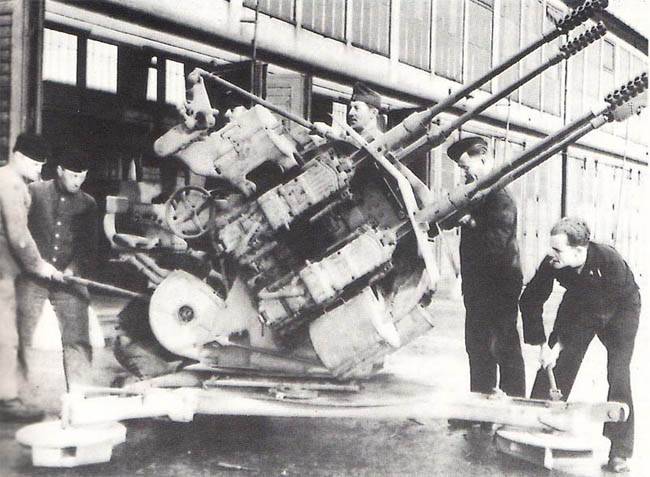
3 0-mm quadruple anti-aircraft gun 3 cm Flakvierling 103/38
The weight of the 3 cm Flakvierling 103/38 increased by approximately 30% compared to the 2 cm Flakvierling 38, but this was justified by improved combat performance, such as increased firing range, greater shell destructive power, and a higher rate of fire. The quadruple 30-mm mount surpassed all rapid-fire anti-aircraft guns of World War II in firepower, as it could fire a continuous burst of 160 shells with a total weight of 72 kg in 6 seconds.
Despite their high combat effectiveness, these German 30-mm anti-aircraft guns were produced in limited quantities, which turned out to be fortunate for the combat aviation of the Red Army and the Allies. Initially, the German Ministry of Armaments ordered 2,000 3 cm Flak 103/38 and 500 3 cm Flakvierling 103/38, but due to overburdening and a shortage of raw materials, the Third Reich’s industrial sector was unable to meet the planned production targets. As a result, only about 500 single-barrel guns and several dozen quadruple-barrel guns were produced, and due to their small numbers, they did not play a significant role in combat operations.
After the war, Czechoslovakia became the only country where these 30-mm anti-aircraft guns, previously used by the German armed forces, were in service in significant numbers.
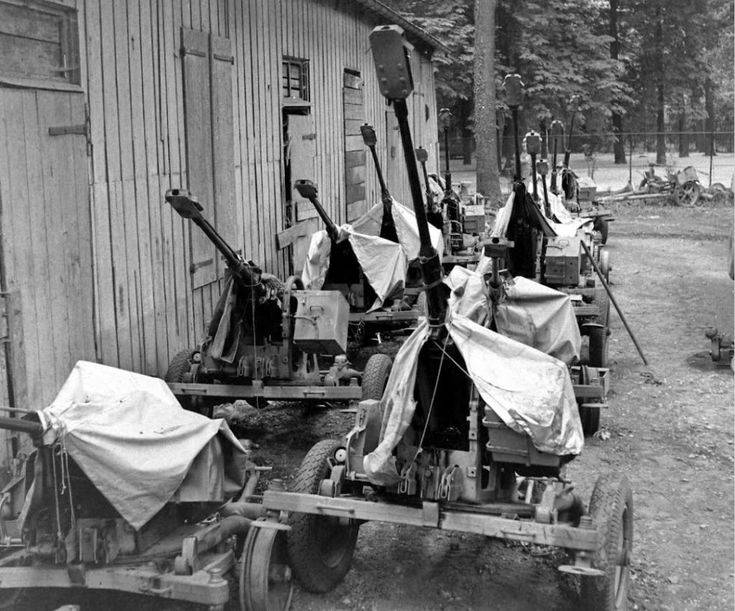
30-mm 3 cm Flak 103/38 anti-aircraft guns at the captured weapons depot
Several batteries equipped with 3-cm Flak 103/38 anti-aircraft guns were deployed in fixed positions to defend military airfields. These 30-mm anti-aircraft guns, along with 20-mm automatic cannons and captured German anti-aircraft guns of 88–105 mm caliber, were used in Czechoslovakia’s air defense system until the late 1950s.
30-mm Twin 3 cm Flakzwilling MK 303 (Br) Anti-Aircraft Gun
Building on the work of Krieghoff Waffenfabrik, which designed 20- and 30-mm aircraft cannons during World War II, engineers at Waffenwerke Brünn (the wartime name for the Czech Zbrojovka Brno) developed the 3 cm MK. 303 (Br) twin 30-mm anti-aircraft gun (also known as the 3 cm Flakzwilling MK. 303 (Br)). The main reason for the development and adoption of the twin 30-mm anti-aircraft gun in the second half of 1944 was the desire of German admirals to have much lighter mounts on small-displacement ships and submarines, with a rate of fire at least twice that of the 3.7 cm Flak M42 37-mm automatic guns, while maintaining the same effective firing range. The existing belt-fed 30-mm anti-aircraft guns, based on the 30-mm MK.103 cannon, did not withstand exposure to seawater well, required meticulous maintenance, and were not particularly reliable when operated on deck.
The prototype for the 3 cm MK.303 (Br) was the experimental MG.301 aircraft cannon, whose operating mechanism combined short barrel recoil—which unlocked the breech—with a gas-operated system that reloaded the weapon. Czech specialists made significant changes to the design of the artillery unit. It was decided to increase the anti-aircraft gun’s effective rate of fire by using twin 30-mm automatic cannons.
The 3-cm MK.303 (Br) fired powerful 30-mm rounds with a cartridge case length of 210 mm. The 330-gram projectile was accelerated to a muzzle velocity of over 1,000 m/s. The rate of fire reached 500 rounds per minute.
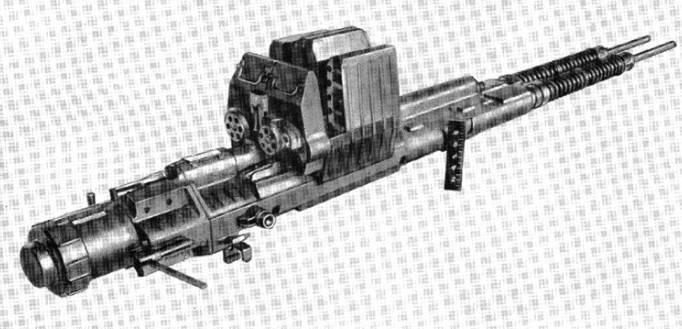
Artillery Unit Equipped with a 30-mm Twin-Barreled Anti-Aircraft Machine Gun
To improve reliability, belt feeding was abandoned in favor of 10- or 15-round magazines. With a total rate of fire of 900 rounds per minute, the effective rate of fire reached 150 rounds per minute. The gun became longer, measuring 3,145 mm including the muzzle brake, with a barrel length of 2.2 m, and its weight increased to 185 kg. The total weight of the anti-aircraft mount was approximately 1,600 kg. It provided all-around fire coverage, with vertical elevation angles ranging from –10° to +85°.
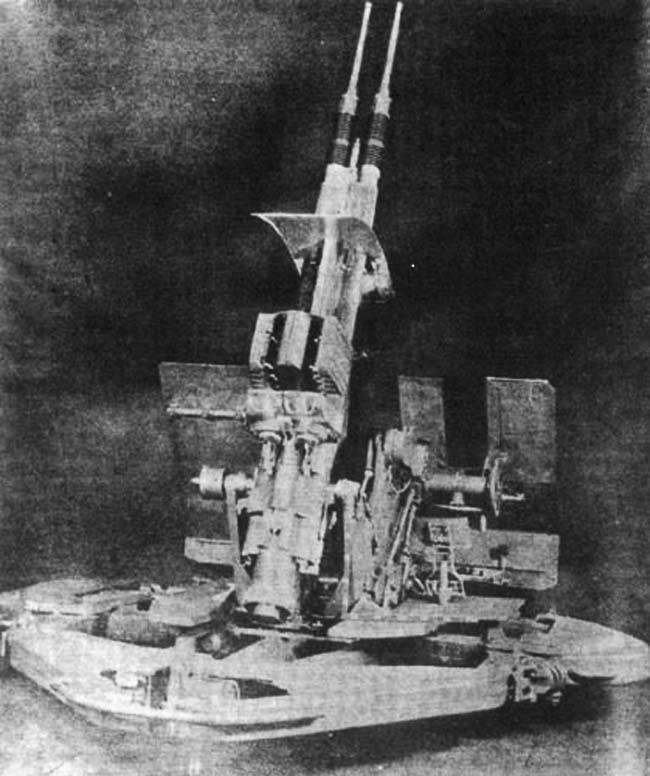
3 cm MK. 303 (Br) Twin Anti-Aircraft Gun Mount
To preserve the barrel’s service life and reduce the recoil loads on the firing mechanism, the powder charge was reduced, resulting in a muzzle velocity of 910 m/s. The effective firing range against aircraft reached 2,500 m.
English-language sources state that by the end of 1944, the Brno factory had produced 32 units of the 3 cm Flakzwilling MK.303 (Br) had been produced at the Brno factory by the end of 1944, and another 190 units were produced during the first four months of 1945. The 3-cm Flakzwilling MK.303 (Br) anti-aircraft guns, designed to arm warships, were mounted on decks only to a very limited extent and were mainly used in fixed installations at coastal facilities.
Based on the 3 cm Flakzwilling MK 303 (Br), engineers at Zbrojovka Brno designed the towed 30-mm twin-barreled M53 anti-aircraft gun in the early 1950s, which was adopted as the ZK.453, Model 1953.
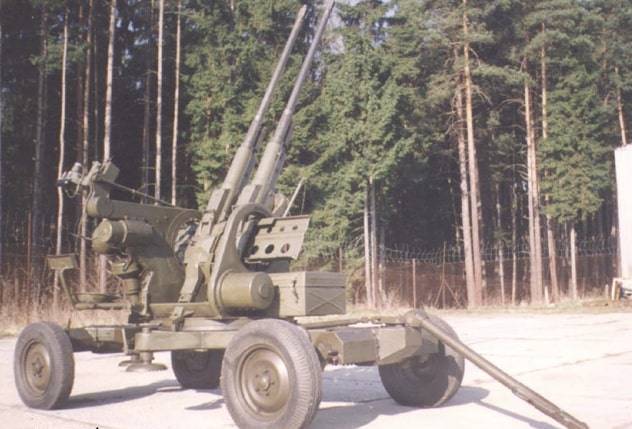
ZK.453 Towed 30-mm Anti-Aircraft Gun
The combined rate of fire from the two barrels reached 1,000 rounds per minute. However, since the anti-aircraft gun was fed from fixed 10-round magazines, its actual combat rate of fire did not exceed 100 rounds per minute. The ammunition load included armor-piercing incendiary tracer and high-explosive fragmentation incendiary shells. A 540-gram armor-piercing incendiary tracer round, with a muzzle velocity of 1,000 m/s, could penetrate 55-mm steel armor at a distance of 500 m. The 450-gram high-explosive fragmentation incendiary shell left the 2,363-mm-long barrel with a muzzle velocity of 1,000 m/s. The firing range against air targets was up to 3,000 m. The artillery unit was mounted on a four-wheeled carriage. At the firing position, it was supported by jacks. The weight in transport configuration was 2,100 kg, and in combat configuration, 1,750 kg. The crew consisted of 5 people.
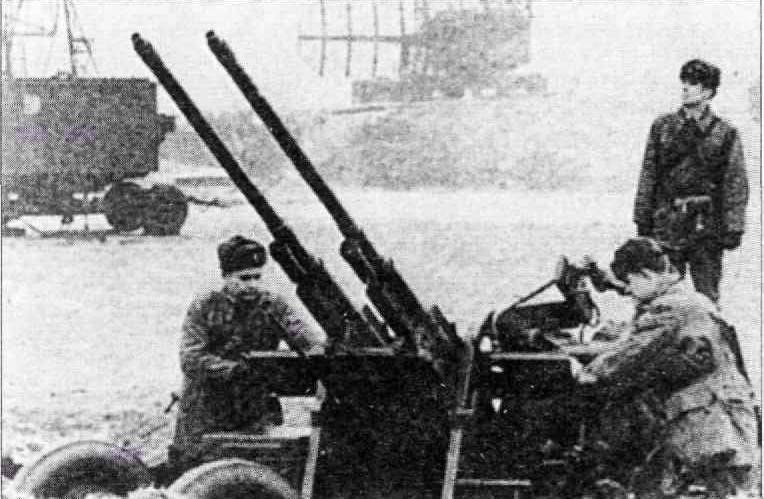
A Czechoslovakian ZK.453 anti-aircraft gun provides cover for the radar complex’s position
The ZK.453 towed anti-aircraft guns were organized into batteries of six guns each, but could be used individually if necessary. The main drawback of the ZK.453, like that of the Soviet ZU-23, is its limited effectiveness in conditions of poor visibility and at night. It was not integrated with a radar fire control system and did not have a centralized fire control station within the battery.
When comparing the ZK.453 to the Soviet-made 23-mm ZU-23, it is worth noting that the Czechoslovakian mount was heavier and had a lower combat rate of fire, but its effective firing range was approximately 25% greater, and its projectile had greater destructive power. The 30-mm ZK.453 mounts were supplied to Yugoslavia, Cuba, Guinea, and Vietnam.
The towed ZK.453 systems had low mobility and a relatively low combat rate of fire, which prevented them from being used to provide anti-aircraft cover for transport convoys and motorized infantry units. To address these shortcomings, the Praga PLDvK VZ. 53/59 self-propelled anti-aircraft gun was adopted in 1959; it was unofficially nicknamed “Jesterka” (“Lizard”) by the army. Weighing 10,300 kg, this wheeled anti-aircraft gun had decent off-road capability and could reach speeds of up to 65 km/h. Its range on highways was 500 km. The crew consisted of five people.
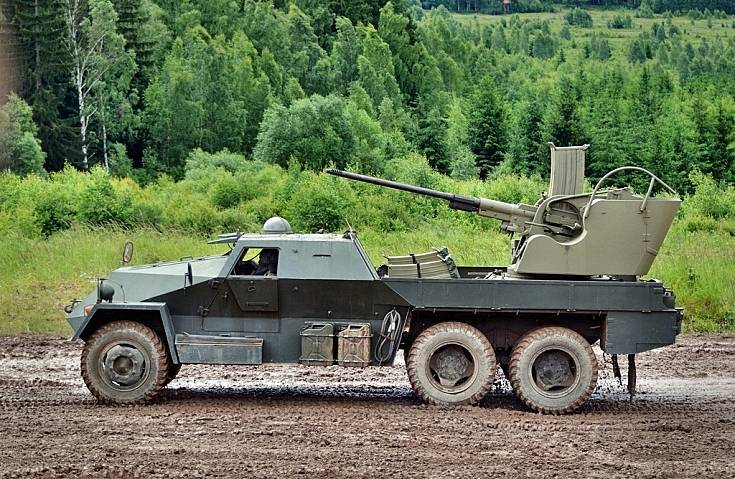
Ukrainian Armed Forces PLDvK VZ. 53/59
The Praga V3S, a three-axle, all-wheel-drive cargo truck, served as the base for the self-propelled anti-aircraft gun. The system was equipped with a new armored cab. The armor provided protection against rifle-caliber small-arms fire and light shrapnel.
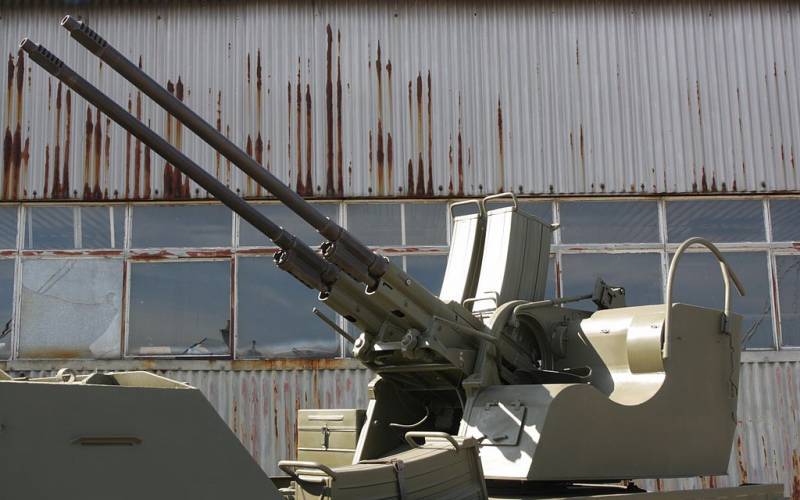
Artillery Unit of the Ukrainian Armed Forces: PLDvK VZ. 53/59
Compared to the ZK.453 variant, the artillery component of the self-propelled system was modified. To increase the rate of fire, the 30-mm anti-aircraft guns began using box magazines holding 50 rounds each. A single loaded magazine weighed 84.5 kg, and replacing it was no easy task for the two loaders, requiring considerable physical effort. The aiming speed of the 30-mm anti-aircraft mount was increased through the introduction of electric drives, while manual aiming was used as a backup. The gun could fire in a circular arc in the horizontal plane with vertical angles ranging from -10° to +85°. If absolutely necessary, it was possible to fire while on the move. The combat rate of fire was 120–150 rounds per minute, and the total ammunition load was rated for 400 rounds in eight magazines.
The artillery unit could be mounted on the ground using special guides, cables, and a winch, which allowed it to be used as a fixed installation in prepared positions. This expanded its tactical capabilities and helped camouflage the anti-aircraft battery during defensive operations.
Thanks to its simplicity, reliability, and excellent operational and combat performance, the PLDvK VZ. 53/59 self-propelled anti-aircraft gun was popular among the troops. Until the mid-1970s, Czechoslovak self-propelled systems, known as “Lizard,” were considered a modern air defense system and were actively sold on the global arms market under the M53/59 designation. They were purchased by countries such as Egypt, Iraq, Libya, Cuba, Yugoslavia, and Zaire. In the Czech Republic, the last PLDvK VZ. 53/59 self-propelled anti-aircraft systems were decommissioned in 2003. In Slovakia, approximately 40 of these self-propelled systems remained in storage until recently. These wheeled air defense systems have also been retained by the armed forces of Bosnia and Herzegovina, as well as Serbia.
The PLDvK VZ. 53/59 wheeled anti-aircraft gun systems were well suited for escorting convoys and providing anti-aircraft defense for facilities in rear areas, but could not move in formation with tanks. In the mid-1980s, Czechoslovakia developed the BVP-1 STROP-1 anti-aircraft system, based on the BVP-1 tracked infantry fighting vehicle—the Czechoslovak version of the BMP-1. In accordance with military requirements, the new system was equipped with an optoelectronic search-and-aiming system, a laser rangefinder, and an electronic ballistic computer. The BVP-1 STROP-1 self-propelled gun utilized a remotely controlled artillery unit from the PLDvK VZ. 53/59, with an effective firing range against air targets of up to 2,000 m.
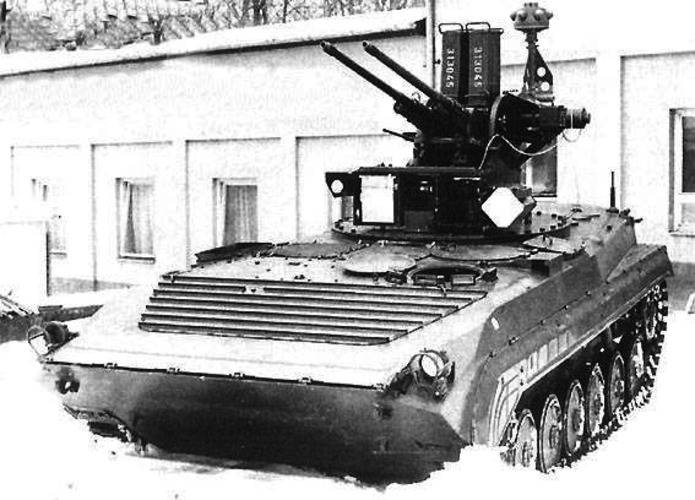
ZSU BVP-1 STROP-1
During tests conducted in 1984, the search system demonstrated its ability to detect a MiG-21 fighter at a range of 10–12 km during daylight hours and to determine the distance to it with high accuracy. At the same time, despite the decent results achieved by the guidance system during the tests, it became clear that the attempt to combine state-of-the-art electronics with anti-aircraft guns—which traced their lineage back to the 30-mm cannons used by the Germans during World War II—was doomed to failure. In the USSR, the ZSU-23-4 “Shilka” with a detection radar had been entering service since 1965, and in 1982, the “Tunguska” anti-aircraft missile-gun system was adopted by the Soviet Army. By that time, the use of anti-aircraft guns with external box-loaders had become an anachronism, and, quite predictably, the BVP-1 STROP-1 anti-aircraft system was not adopted for service.
30-mm MG.213C/30 aircraft cannon
Shortly before Nazi Germany’s defeat, Mauser-Werke A. G. submitted the 30-mm MG.213C (MK.213C/30) aircraft cannon for testing. A total of ten prototypes were produced by April 1945. Mass production was scheduled to begin in June 1945.
In terms of design, the MK.213S/30 was similar to the 20-mm MK.213S/20 cannon, which was originally developed by Krieghoff Waffenfabrik. The weapon’s operating mechanism was based on a combination of a gas-operated system with a short barrel stroke and a revolver-style feeding mechanism, which made it possible to combine several operations and thereby increase the rate of fire.

30-mm MK.213S/30 aircraft cannon
The gun weighed 82 kg. Its length was 1,630 mm. The barrel length was 1,295 mm. The rate of fire was up to 1,200 rounds per minute. The 30×85 mm ammunition featured an electric primer ignition system. To reduce the gun’s weight and ensure a high rate of fire, ballistic performance had to be sacrificed. A 330-gram projectile left the barrel with an initial velocity of 530 m/s.

30-mm round for the MK.213S/30 cannon
After the collapse of the Third Reich, the developers of the MK.213S/20 and MK.213S/30 settled in the Western occupation zones, while some managed to flee to Switzerland. As a result, the United States developed and adopted the M39 20-mm aircraft cannon, while the United Kingdom, France, and Switzerland developed their own 30-mm equivalents.
The British and French designs based on the MK.213 S/30 were developed in parallel and did not differ significantly from one another. For example, the initial version of the British Aden used a nearly exact copy of the German 30×85B cartridge, designated as 30 x 86B. The French tested a slightly more powerful 30x97B round in the DEFA 540 gun. Later versions of the British Aden Mk.4 and the French DEFA 554 were standardized to a single, interchangeable 30×113 mm cartridge.

30-mm aircraft ammunition: the British 30x86B round for the Aden cannon—a copy of the German 30x85B round from the MG 213C-30, the French 30x97B round for the DEFA 540 cannon, and the Anglo-French 30x113B round for the Aden Mk.4 cannons
The British Aden cannon was officially adopted in 1955 and was produced in five variants: Mk.1, Mk.2, Mk.3, Mk.4, and Mk.5. The Aden Mk.4 cannon weighed 89 kg, had a barrel length of 1,080 mm, an overall length of 1,660 mm, and a rate of fire of 1,200–1,250 rounds per minute. In the Aden Mk.5 cannon, the rate of fire was increased to 1,500 rounds per minute. The 30-mm Aden cannons fired standard 30 × 113B cartridges. The cartridge weighed 495 g, and the projectile weighed 237 g. The high-explosive fragmentation projectile contained 27 g of explosive. The projectile’s muzzle velocity was 805 m/s. The effective range was up to 2,000 m.

30-mm Aden Mk.4 cannon
Aden aircraft cannons were used on virtually every British aircraft from 1954 until the introduction of the Panavia Tornado in 1980.
The first mass-produced French 30-mm aircraft cannon, the DEFA 551, was installed on the Dassault Mystère IV, Dassault Mystère IIC, and Sud Aviation Vautour fighters beginning in the mid-1950s. Subsequently, DEFA 552/552A/553/554 cannons were installed on fighter and ground-attack aircraft manufactured in France, Israel, Argentina, and Sweden.
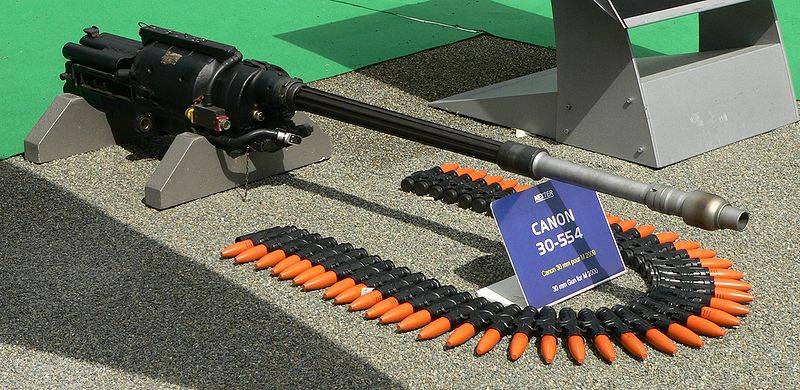
DEFA 554 30-mm aircraft cannon
The DEFA 554 gun weighs 85 kg. Its length is 2,100 mm. The projectile’s muzzle velocity is 765–820 m/s. The rate of fire is up to 1,800 rounds per minute.
In total, from the start of production through the mid-1990s, more than 14,000 DEFA cannons of all variants were manufactured and supplied to 25 countries. This cannon, whose prototype was developed more than 70 years ago, is one of the most widely used in the world.
The most powerful 30-mm cannons developed on the basis of the MK.213 S/30, were the Swiss Oerlikon 302 RK and its improved variant, the Oerlikon KCA (Oerlikon 304 RK), chambered for the 30×173 mm cartridge.

30×173 mm Armor-Piercing Tracer Cartridge
The Oerlikon 302 RK cannon weighed about 200 kg. Its total length was 2,972 mm. Its rate of fire reached 1,200 rounds per minute. A 300-gram projectile was accelerated in the 1,982-mm-long barrel to 1,100 m/s, which was significantly higher than in British and French guns, also based on the German MK design.213 S/30.
The Oerlikon 302 RK artillery system was not a commercial success but marked a milestone in the development of Swiss small-caliber guns. The United States and the United Kingdom purchased several dozen Oerlikon 302 RKs for testing. In particular, these 30-mm cannons were mounted on several American Northrop F-89 Scorpion interceptors.
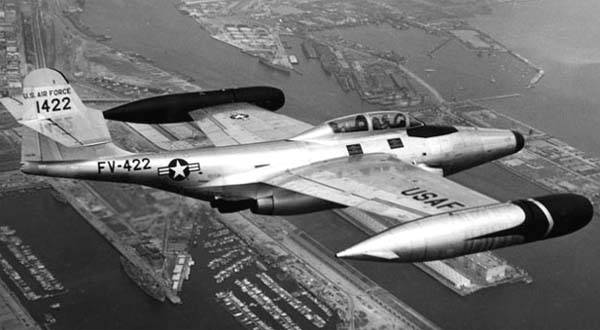
Northrop F-89 Scorpion Interceptor
The 30-mm Oerlikon KCA cannon fared better; it was adopted by Sweden under the designation Akan m/75 and mounted on Saab JA-37 Viggen fighter jets.

Oerlikon KCA 30-mm aircraft cannon
Due to the use of powerful ammunition, the Oerlikon KCA gun—despite the use of new materials and design solutions to reduce its weight—remained quite heavy and large. The gun weighed 136 kg and was 2,692 mm long. A 235-gram armor-piercing sub-caliber projectile left the 1,976-mm-long barrel at a velocity of 1,385 m/s. The muzzle velocity of a 352-gram high-explosive fragmentation round reached 1,050 m/s. When fired at a normal angle, the armor-piercing sub-caliber projectile easily penetrated 40 mm of medium-hardness armor. The rate of fire was up to 1,350 rounds per minute.
By the standards of the late 1960s and early 1970s, the Oerlikon KCA cannon was considered quite advanced, which sparked interest from the U.S. Air Force. The Swiss 30-mm aircraft cannon, designated GAU-9/A in the U.S., was considered for use on the Fairchild Republic A-10A Thunderbolt II attack aircraft, but lost out in the competition to the seven-barrel General Electric GAU-8/A Avenger, which had a rate of fire of 4,200 rounds per minute.
The American company Hughes Helicopters used the GAU-9/A cannon in a Mk.4 detachable gun pod of its own design instead of the standard M39A3 20-mm cannons. The suspension system, featuring a 30-mm KCA cannon and a 125-round ammunition load, weighed 476 kg. This variant was tested on the McDonnell Douglas F-E Phantom II fighter for ground-attack missions, but the U.S. Air Force rejected it. Subsequently, some export models of the Northrop F-5E Tiger II fighter were equipped with pods containing Oerlikon KCA cannons.
Based on material from — https://topwar.ru/225113-ispolzovanie-trofejnyh-nemeckih-30-mm-pushek-posle-okonchanija-vtoroj-mirovoj-vojny.html