An article from the “Historical Armored Vehicle” channel on Yandex Zen is being posted on the website in honor of the 110th anniversary of the production of the first prototype of the RBVZ-S-16 fighter.
The name Igor Ivanovich Sikorsky (1889–1972) is familiar, at the very least, to anyone with even a passing interest in the history of aviation. Sikorsky is generally associated with his most famous creation—the heavy four-engine bomber “Ilya Muromets.”
Some people know him as a successful designer of helicopters and seaplanes, which he began working on while in exile. But few people know that the first domestically produced mass-produced fighter jet was designed and built under the leadership of this talented engineer.
In December 1914, by decree of Nicholas II, the Airship Squadron was formed—the first formation of heavy bombers in aviation history, the backbone of which consisted precisely of the “Ilya Muromets” aircraft. Almost immediately, the need arose for an aircraft that could support these aerial giants by locating targets and could also be used for pilot training. Furthermore, despite the “Muromets” being equipped with defensive armament, a small and maneuverable aircraft could provide significant assistance in aerial combat against enemy aircraft.
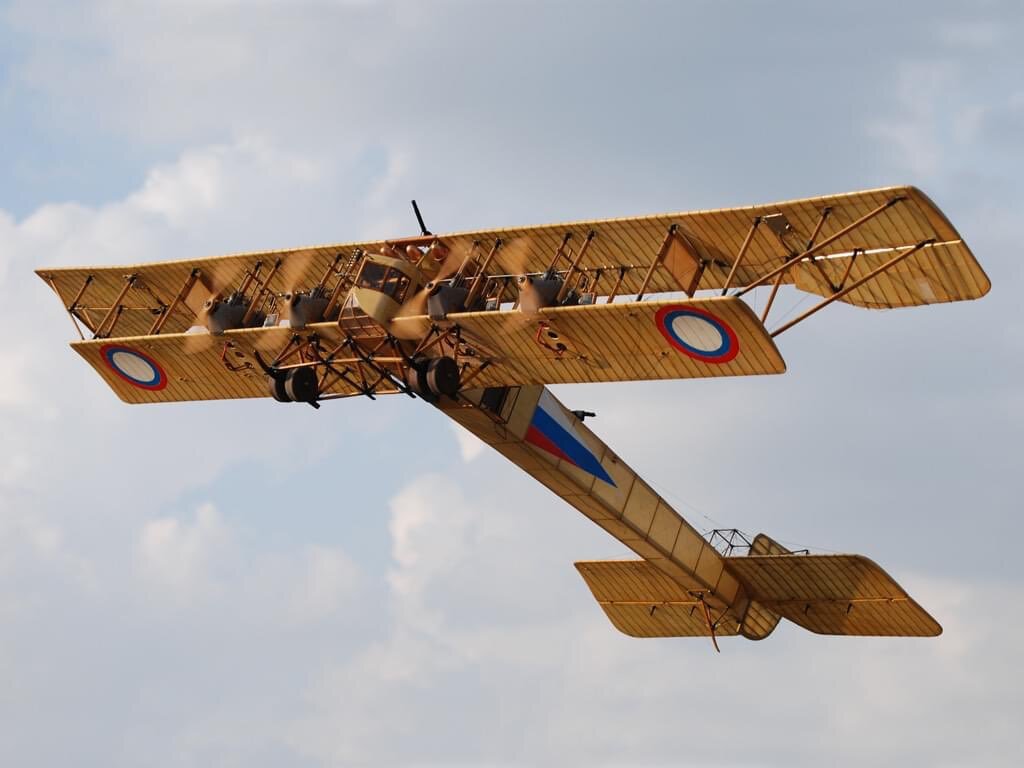
The heavy bomber «Ilya Muromets»—although not the main subject of this article—is, after all, relevant to the topic. The image is from the public domain.
Igor Sikorsky took it upon himself to develop such a machine, essentially on his own initiative. Since the designer himself was heavily occupied with work on improving the “Ilya Muromets,” Sikorsky’s friend, pilot, and talented inventor Lieutenant Georgy Ivanovich Lavrov of the Navy, provided significant assistance in the development of the new aircraft.
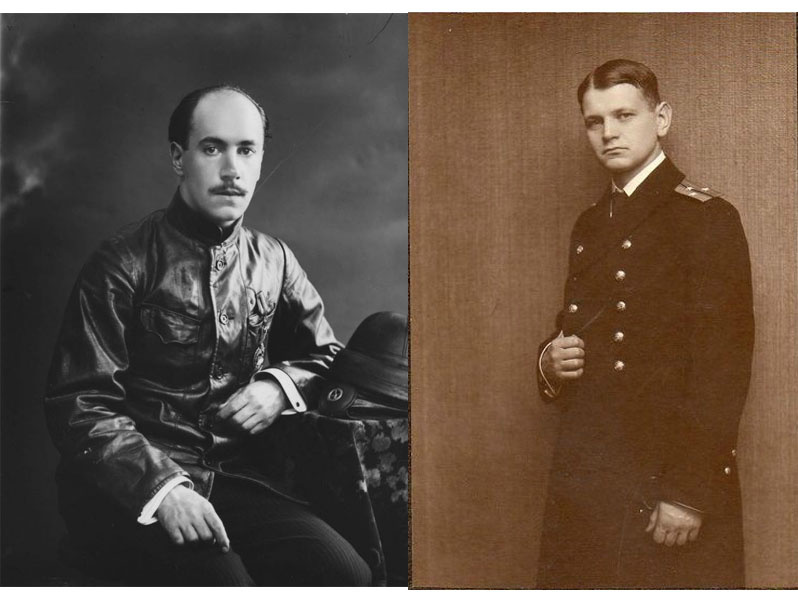
The creators of Russia’s first fighter jet: I.I. Sikorsky (left) and G.I. Lavrov
Since Sikorsky had already been working on the development of training aircraft before the war, the S-16 project—as the new aircraft came to be known—was ready as early as October 1914.
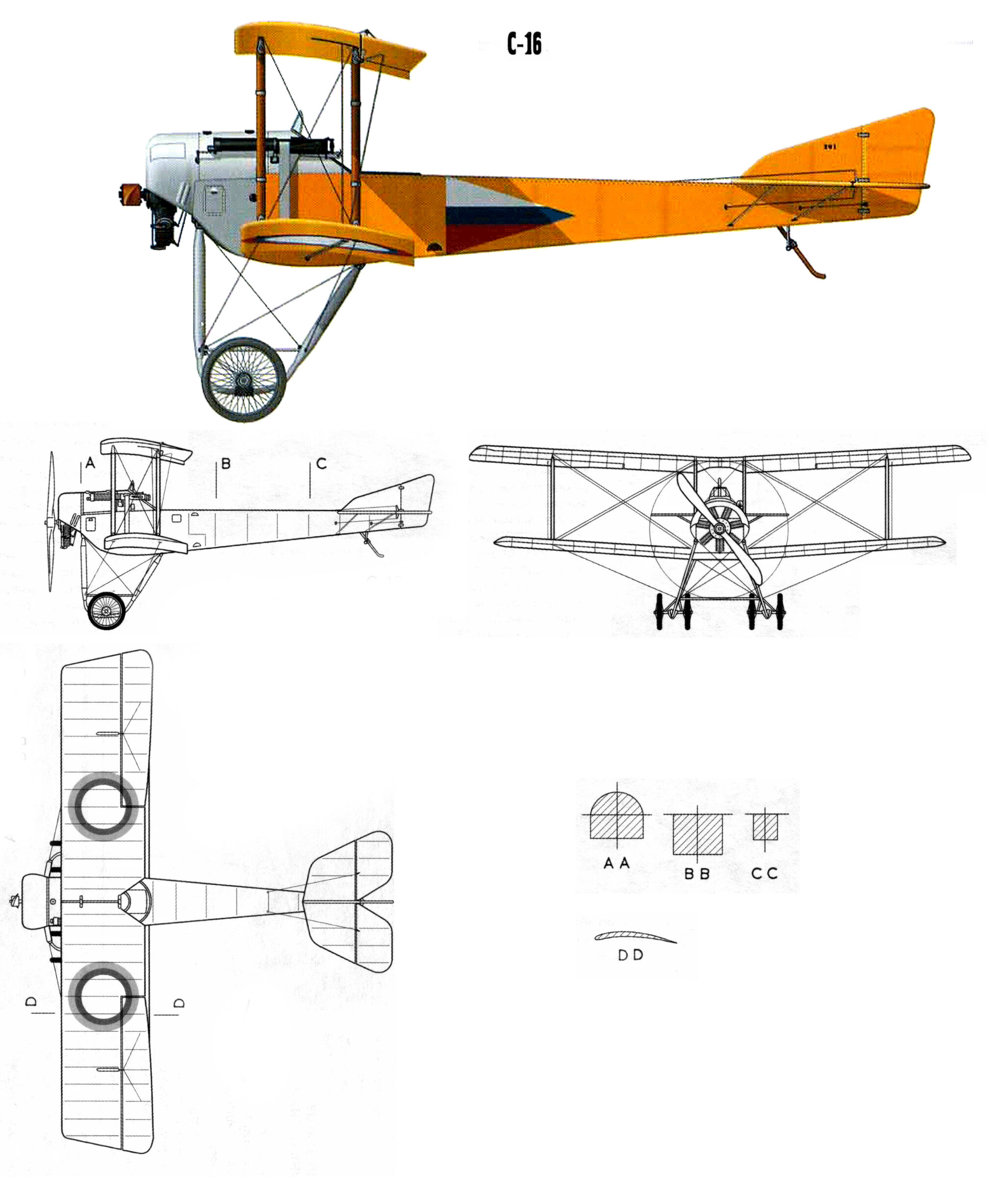
S-16 fighter. Takeoff weight: 676 kg; speed: 120 km/h; service ceiling: 3,500 m
The aircraft was a biplane with a truss-frame fuselage, the frame of which was made of ash. The forward section of the fuselage was sheathed with sheet aluminum, while the rear section was covered with fabric. The wings were wooden with fabric covering. In the two-seat version, the pilots’ seats were side by side. The landing gear consisted of steel tubes with two wheels on each strut; in winter, skis were installed in their place.
Originally, the design called for a French “Ron” engine with 110 l.s., but since there were problems with deliveries, they had to install a “Gnom” engine, which produced only 80 “horses.” This, of course, had a negative impact on the aircraft’s flight performance.
The aircraft was to be armed with a single machine gun equipped with a synchronizer—a device that synchronized (hence the name) the engine’s rotational speed with the rate of fire of the machine gun’s automatic mechanism, allowing it to fire through the rotating propeller without hitting it. Vickers or Colt machine guns were typically used. On some aircraft, in addition to the synchronized machine gun, an additional machine gun was mounted on the upper wing, firing over the propeller.
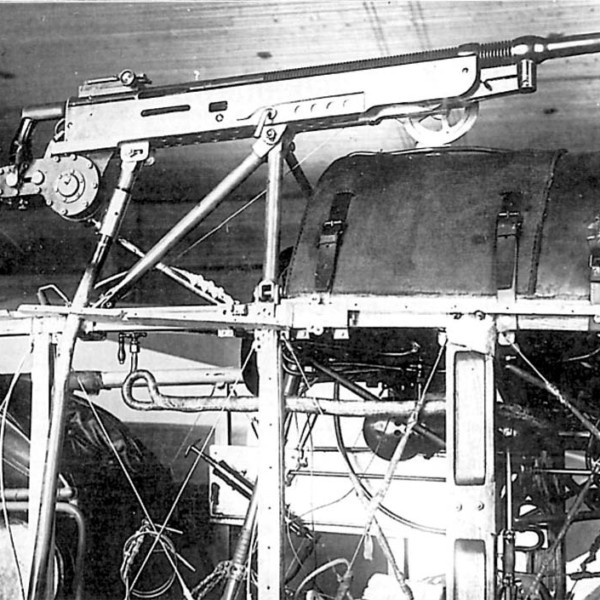
A Colt-system machine gun with a Lavrov synchronizer. Photo from open sources
Construction of the first three aircraft began in the experimental workshops of the Aeronautics Division of the Russian-Baltic Carriage Works (RBVZ) in November 1914. On January 24, 1915, the first S-16 was delivered to the Airship Squadron for testing under frontline conditions. Two more airships followed… but without engines. Incidentally, the engine for the first test aircraft was borrowed from the Naval Department—it later had to be returned. The shortage of engines meant that the aircraft did not enter service until the summer of 1915. They were mainly used for pilot training. Feedback on the aircraft was entirely positive: it was easy to fly and had performance characteristics appropriate for early 1915. Its speed was particularly impressive—144 km/h—which was quite a good figure for that time.There were no issues with its rate of climb either—the aircraft reached an altitude of 1 kilometer in 4 minutes. Overall, the aircraft proved to be a good fit.
In September 1915, the factory received an order for 18 fighter aircraft and began preparing for mass production. At the same time, Sikorsky was addressing the design flaws in the aircraft that had become apparent during test flights. In addition, he had to work hard to get mass production of the aircraft up and running: there was a shortage not only of engines but also of a whole range of components and materials, which forced him to redesign a number of parts and even set up production of steel tubes with the required profile.
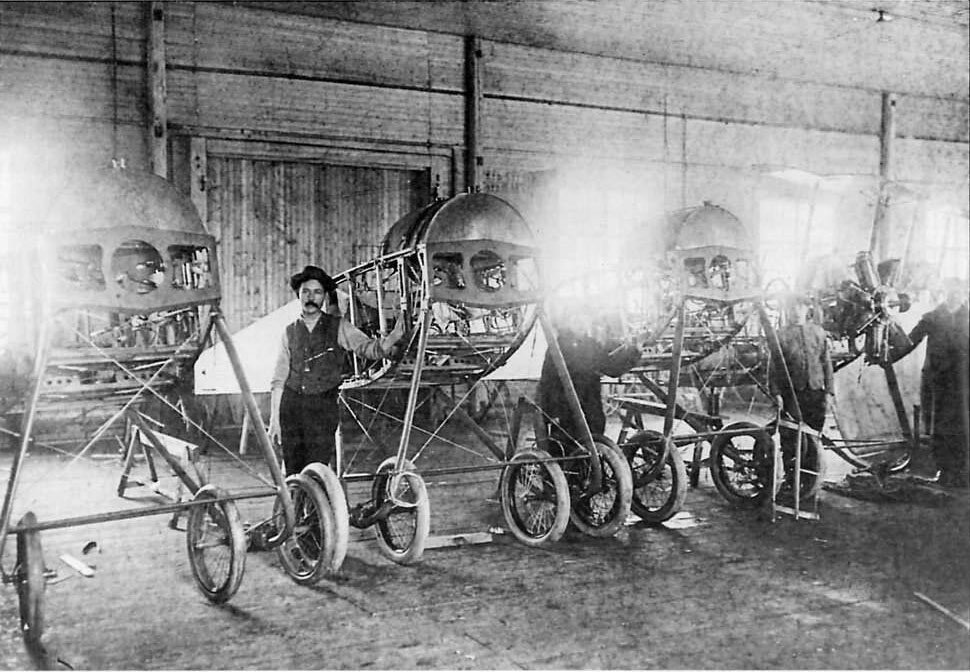
Assembly of the S-16 at the Russian-Baltic Carriage Works. Image taken from the public domain
In the fall of 1915, G.I. Lavrov, who was a passionate advocate for the development of fighter aviation and the creation of fighter squadrons, designed and built the first domestically produced synchronizer, which was very simple in design and demonstrated sufficient reliability during testing. Production aircraft began to be equipped with it. Unfortunately, under combat conditions, Lavrov’s device proved to be less effective: frequent malfunctions were one of the reasons for the S-16’s short combat service life in fighter squadrons.
As a result of all these difficulties, the first production aircraft did not begin to be delivered to the troops until March 1916. It should be noted that during that period, the Russian Air Force was severely short of fighter aircraft: more often than not, pilots themselves did their best to convert the most suitable aircraft into fighters, and some were received from the Allies as “humanitarian aid.” Therefore, the new aircraft was eagerly awaited.
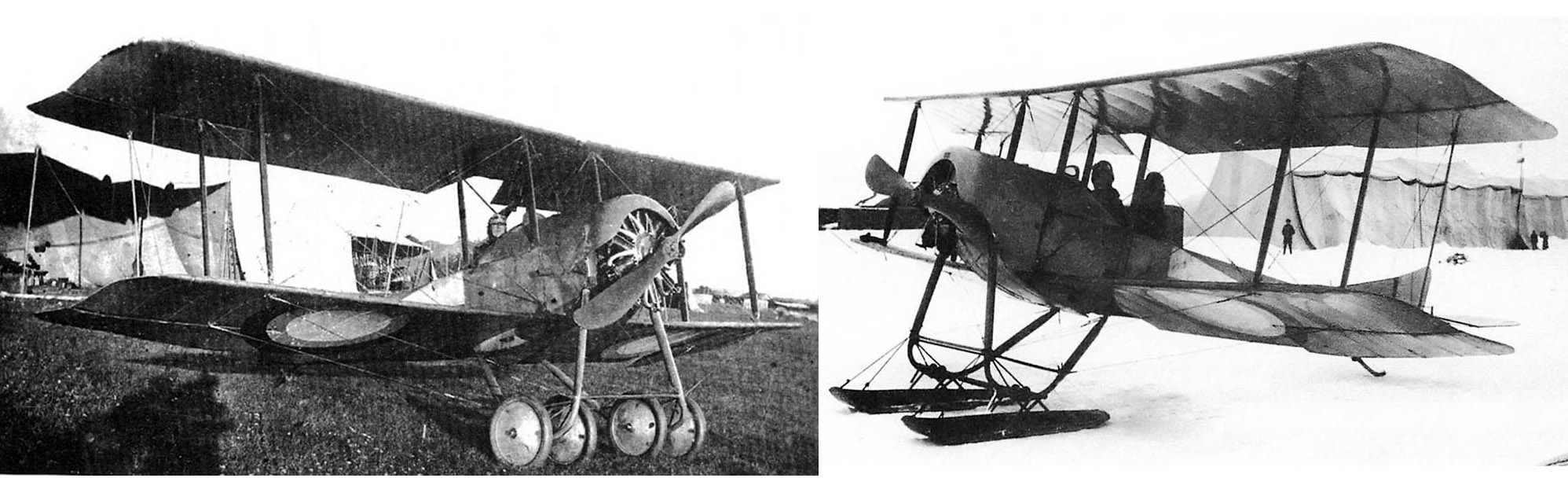
In the summer, the plane used a wheeled landing gear; in the winter, skis were fitted in place of the wheels
The first six fighters were assigned to the 7th and 12th Fighter Squadrons. The first was being formed in Kyiv, and the second in Pskov. The aircraft saw its first combat on April 15, 1916. On that day, the commander of the 7th Squadron, Lieutenant I.A. Orlov, together with flight instructor Cornet Lipsky, took off in a two-seater S-16 to intercept enemy aircraft: alas, they managed only to drive the enemy away—engine malfunctions prevented them from engaging. From then on, every sortie by the “Sixteens” ended in such skirmishes. And on April 27, the first confirmed victory was achieved in an S-16—Pilot Cornet Y.V. Gilsher shot down an Austrian “Albatros” reconnaissance aircraft. The next day, Squadron Commander Orlov also scored his first victory by shooting down another enemy two-seater aircraft. No records regarding the use of the S-16 in the 12th Aviation Squadron have survived.
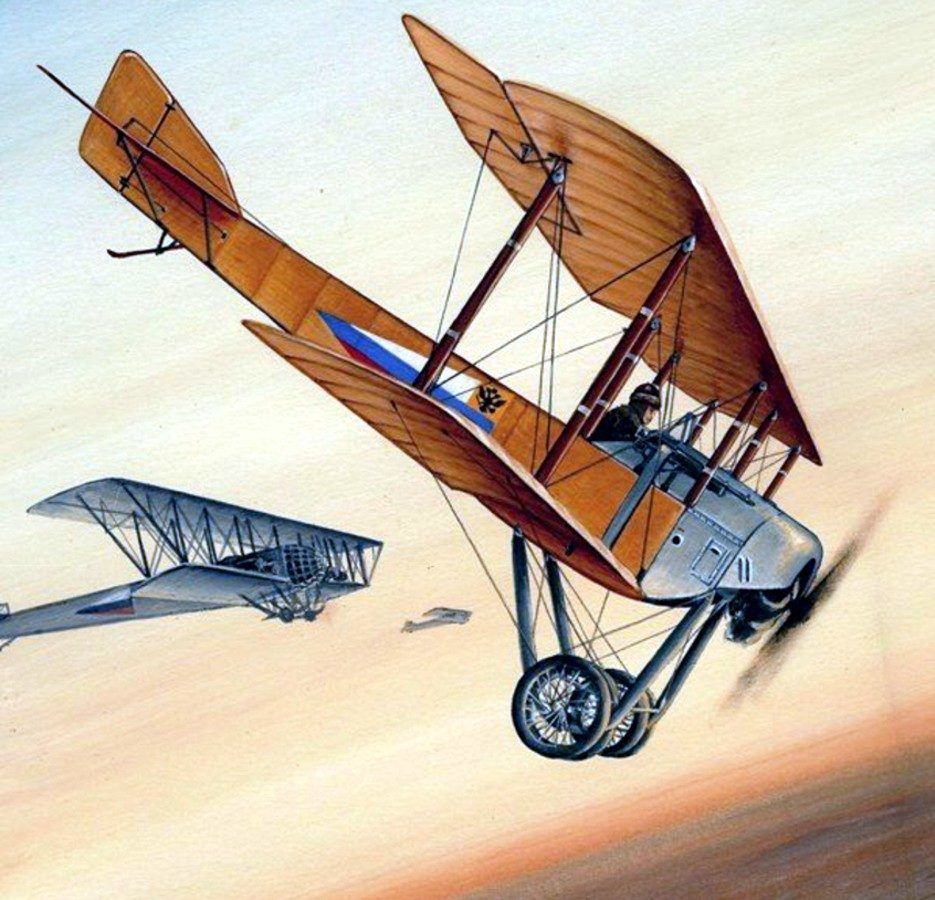
An S-16 fighter jet is escorting the «Ilya Muromets» bombers in flight. Image taken from the public domain
Sikorsky and his team did their best to improve the aircraft: in the summer of 1916, a more powerful Gnome “Monosoupap” engine (100 l. s), which led to a significant improvement in flight performance: the speed increased to 153 km/h. The aircraft’s aerodynamics were also improved—an aluminum fairing was installed behind the pilot’s cockpit. Unfortunately, a shortage of suitable engines and a severe lack of time on Sikorsky’s part—as he was literally swamped with work on the “Muromets”—prevented further refinement of the aircraft.
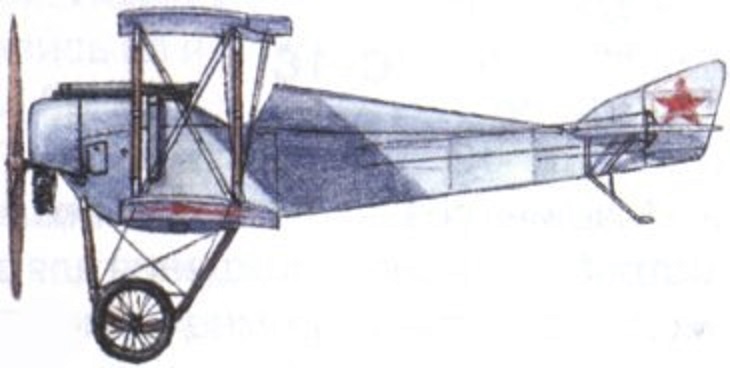
A modified S-16 with a gargrot. The aircraft bears Red Army identification markings. Image taken from the public domain
However, by the fall of 1916, our aircraft were already significantly inferior to German fighters. Therefore, when the second batch of 15 aircraft was delivered in February–March 1917, it failed to inspire any enthusiasm among the pilots—it was already an obsolete aircraft.
The aircraft’s subsequent fate was a complicated one: the planes from the 7th and 12th Squadrons were seized and transferred to the Airship Squadron, where they were used primarily for training and to guard their home airfields; and then, as early as 1918, they fell into the hands of the Austro-Germans as war trophies. The Austro-Germans transferred the aircraft to Hetman Skoropadsky, and from there they ended up with General Denikin’s Volunteer Army. The aircraft from the second batch ended up with the Red Air Force, specifically the Airship Division, where they once again operated alongside the “Muromtsy” against the Poles and Wrangel’s forces. The last remaining aircraft were decommissioned in 1923.
The S-16 was further developed into another fighter designed by Sikorsky, designated the S-20. Along with Sikorsky, a young designer named Nikolai Nikolayevich Polikarpov—the future creator of the famous Soviet fighters I-15, I-16, I-153, and the legendary Po-2 night bomber. In terms of its flight characteristics, the new fighter was on par with the most advanced aircraft technology of 1916–17.
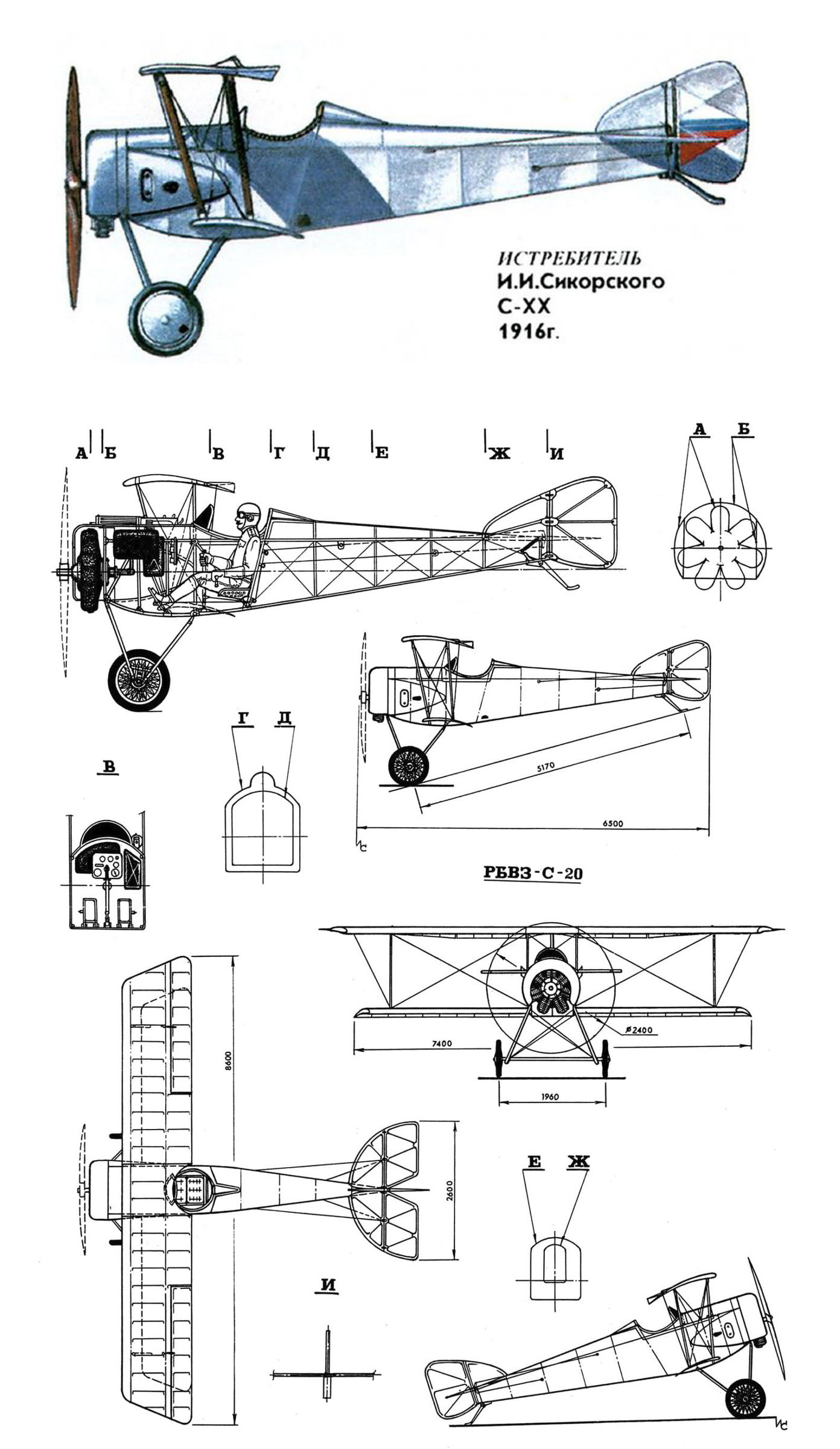
S-20 fighter. Takeoff weight: 750 kg; speed at an altitude of 2,000 m: 162 km/h; service ceiling: 5,600 m. Note that in the drawings and this diagram, the cowling does not completely cover the engine, whereas in the available photographs, the aircraft has a ring-shaped cowling.
In October 1916, a prototype batch of five aircraft was completed. Tests conducted by pilots at the Komendant Airfield in Petrograd showed that the fighter was easy to handle, “held its line well in turns, and was stable in all flight attitudes…”
The S-20 fighter was designed according to the well-established, familiar configuration of a single-strut biplane powered by a 120-l.s. “Ron” rotary engine, with a conventional two-wheel landing gear, whose wheels were mounted on a single axle, and a tail unit consisting of a keel, a rudder, and a horizontal tailplane—semicircular in plan view—comprising a stabilizer and an elevator. Ailerons were located only on the upper wing, which had a slightly greater wingspan and chord length than the lower wing, as well as the standard semicircular cutout in the trailing edge above the cockpit to provide the pilot with an upward field of view. The wing and tail assembly skins were fabric-covered. The wing tips and the geometric twist of the ailerons were designed in the style of those years. The upper wing was raised above the fuselage by half a chord to provide the pilot with forward and lateral visibility. The fuselage housed the standard instruments and systems and had a rectangular shape in all cross-sections from the engine to the tail, rounded at the nose by a cylindrical engine cowling and further rounded by a plywood fairing above the cowling, extending to the pilot’s cockpit opening and onward to the tail section. Its armament consisted of a single synchronized Vickers machine gun. According to some sources, all five aircraft did indeed see action on the front lines after testing. If Wikipedia is to be believed, they even participated in the Civil War.
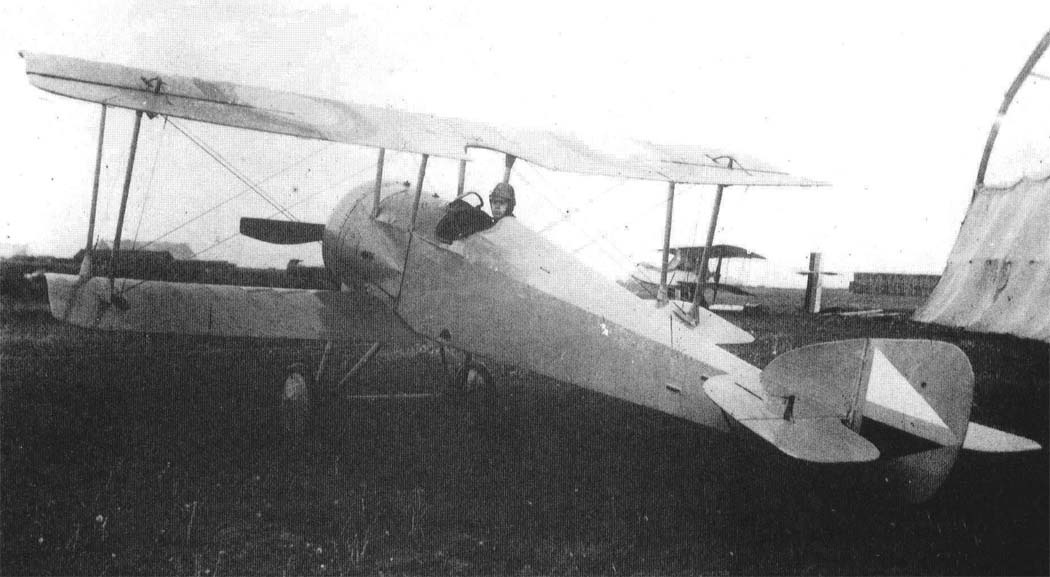
The S-20 during testing. Image taken from the public domain
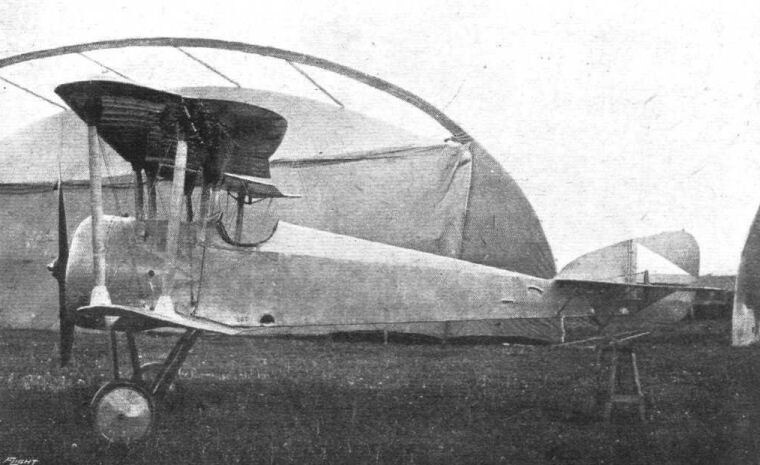
The S-20 during testing. Image taken from the public domain
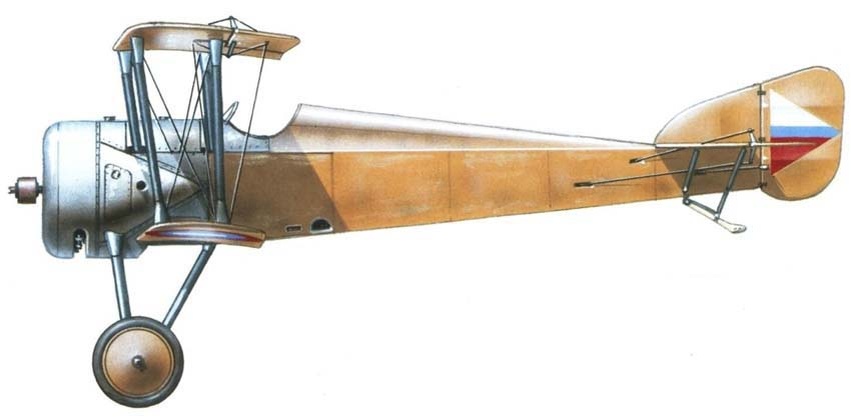
A further development of this promising combat aircraft was the S-22 fighter, whose main difference lay in the installation of a stationary—rather than rotary—Salmson engine with a power output of 150 l.s. Its armament was upgraded: two synchronized machine guns were mounted on top of the fuselage’s forward section, directly in front of the pilot’s cockpit. A single prototype of the aircraft was built in 1917; it was successfully tested, but its subsequent fate is unknown.
The events of 1917 prevented the establishment of mass production of the new fighter planes, and after the October Revolution, the factory came to a complete halt, leaving I.I. Sikorsky himself out of work. His attempts to collaborate with the new authorities were met with indifference. For example, one of the top officials of the VSNKh (All-Russian Council of the National Economy), a certain Y.M. Larin—whom Sikorsky had managed to meet at the Smolny Institute and to whom he had offered his services—declared: “We’re in the midst of a revolution, my good citizen, and we have no time for airplanes…” In 1918, the famous aircraft designer left the country for good.
Sources: V. Mikheev, A. Mikheev, A. Zhirnov, *Sikorsky C-16: The Russian Scout*; V. Kondratyev, *World War I Fighters: Part 1*