Is the American sixth-generation fighter already in the air? A strange aircraft was spotted in the sky over Area 51

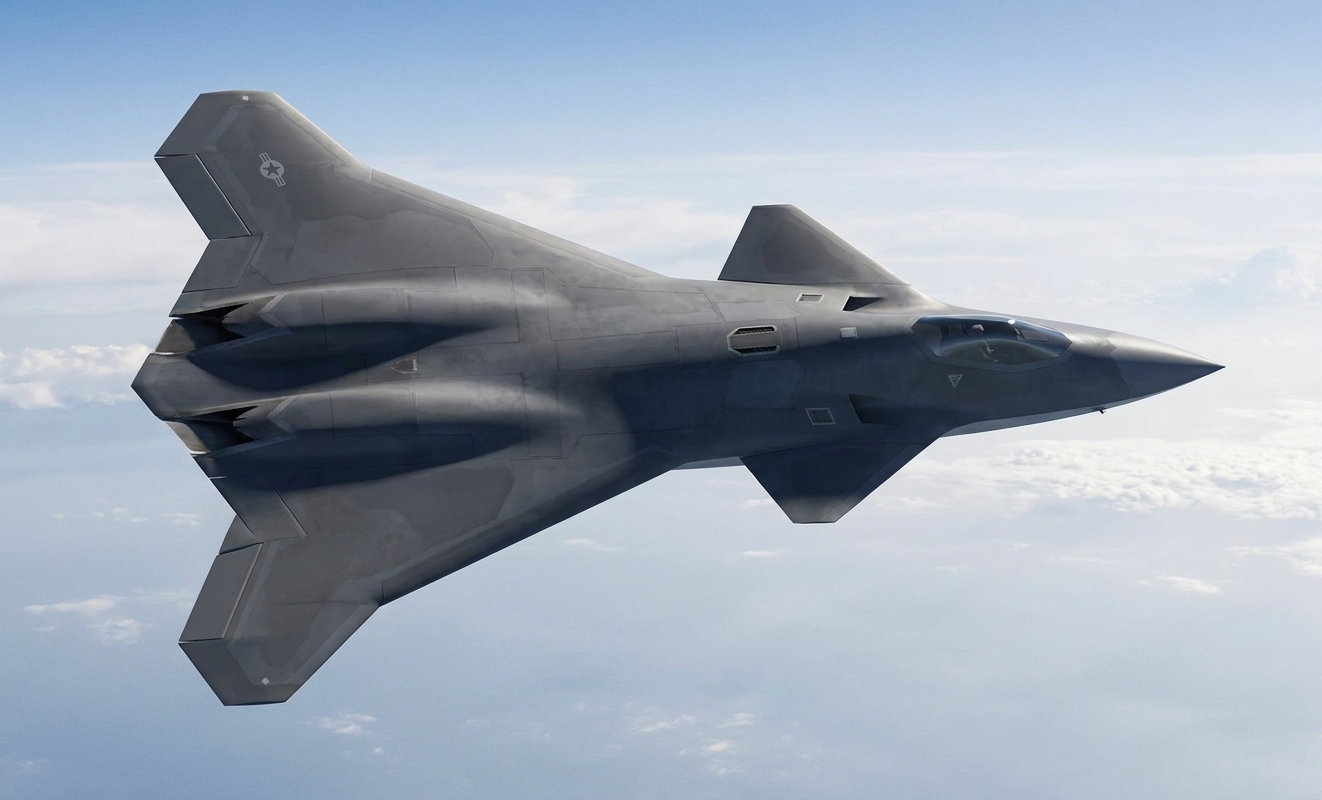
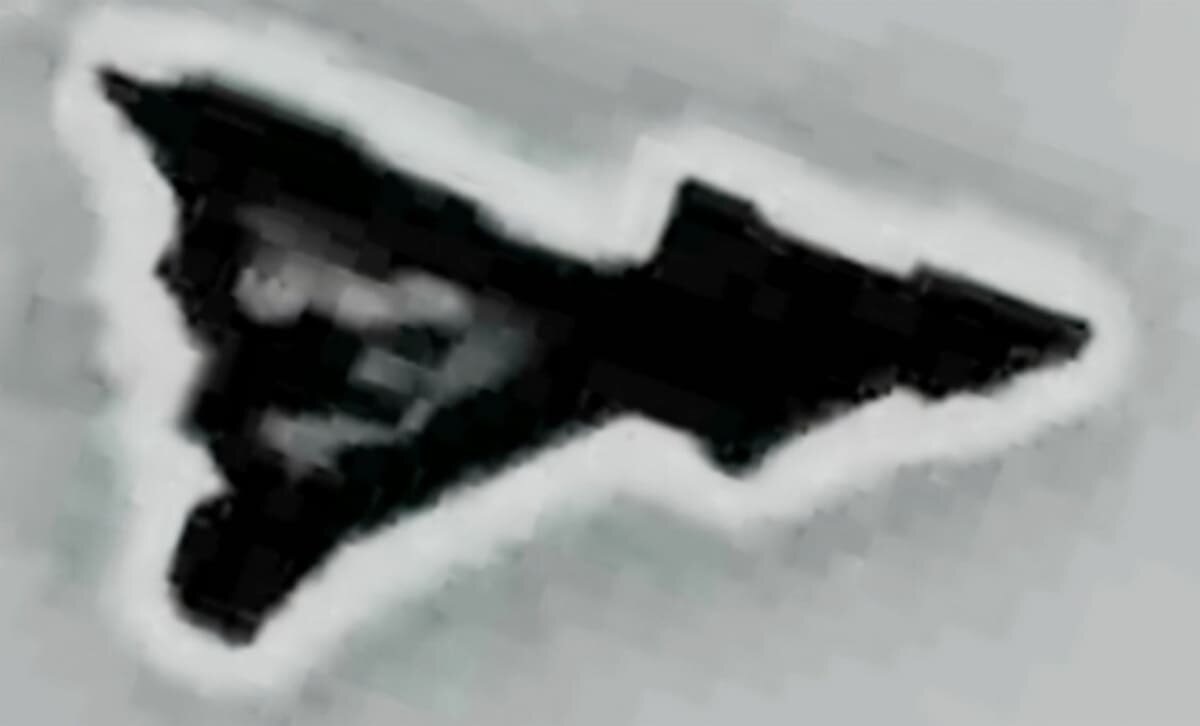
A new chapter in the global aviation mystery has unfolded around the secret U.S. Air Force test facility at Groom Lake, better known to the general public as Area 51 in the state of Nevada. A unique thermal image of an unidentified aircraft flying at extremely low altitude at night has circulated online. Experts from specialized defense publications, including the authoritative website The War Zone, agreed that the contours of the object in the image match the design of a prospective U.S. sixth-generation fighter jet with remarkable accuracy. [1, 2, 3]
An Infrared Phantom Over Nevada
The mysterious image was published by Project Fear, an independent investigative project. The object was captured in the infrared spectrum south of the small town of Rachel, located in the immediate vicinity of the test site’s secured perimeter. Observers were filming the night sky with a thermal imaging camera when a rapidly moving aircraft, which was not emitting standard navigation lights, entered the lens’s field of view. [1, 3, 4, 5, 6]
Despite the low resolution of the image and the graininess caused by the nature of infrared optics, the silhouette of the aircraft is clearly visible. The image shows an airframe with a wide nose section, large front horizontal stabilizers, and a swept-back “lambda” wing. The aircraft’s configuration indicates the use of two engines and the near-total absence of a classic vertical tail, which is a key feature for reducing radar visibility in future aircraft. [1, 2]
The Legacy of the NGAD Program and the Boeing Contract
Analysts speculate that the camera captured a prototype or technology demonstrator being developed as part of the top-secret U.S. Next-Generation Air Dominance (NGAD) program. This initiative aims to achieve absolute air superiority and involves the development not just of an aircraft, but of an entire complex, including unmanned escort satellites, new types of weapons, and state-of-the-art electronic warfare systems. The advanced manned fighter under this project has been officially designated the F-47. [2, 7, 8]
According to industry publications, Boeing was previously announced as the winner of a closed competition under the NGAD program, and its manufacturing facilities in St. Louis are currently being used to assemble the first prototypes. The shape of the object spotted over Area 51 bears a clear resemblance to the X-36 experimental aircraft, which McDonnell Douglas (later acquired by Boeing) tested in the late 1990s. Journalists do not rule out the possibility that the photograph captures a so-called “X-plane”—an early demonstration model built to validate aerodynamic calculations even before the final government contract was awarded. [2, 5, 8, 9, 10]
Verification Efforts and the Pentagon’s Position
Officials from the U.S. Air Force maintained the secrecy typical of such cases. In response to direct inquiries from specialized journalists and defense agencies, the U.S. military categorically refused to comment, neither confirming nor denying the authenticity of the infrared footage. [8, 9]
A debate has also arisen among independent experts. Some experts have expressed doubts about the image’s absolute authenticity, pointing to the possibility of a high-quality digital hoax or the fact that the camera might have captured a new heavy reconnaissance drone undergoing tests in a similar fuselage. Nevertheless, the very fact that active nighttime tests are being conducted in the skies over Nevada confirms that the sixth-generation fighter project has progressed much further than has been stated in public reports to the U.S. Congress. [1, 3, 6, 10]

Estimated Tactical and Technical Specifications of the F-47 Fighter Jet
- The aircraft’s crew consists of one person (with the option of fully unmanned robotic control).
- The airframe is 19.5 meters long.
- The wingspan of the swept-back wing is 14.2 meters.
- The height of the aircraft, measured at the highest point of the fuselage, is 3.8 meters.
- The vehicle’s maximum takeoff weight is 32 metric tons.
- The power plant consists of two advanced adaptive turbojet engines.
- The maximum flight speed at high altitude is 2.4 Mach (about 2,550 kilometers per hour).
- The cruising speed without afterburner is 1.5 Mach.
- The practical ceiling for combat operations is 19,800 meters.
- The combat range without in-flight refueling is 2,200 kilometers.
- The internal weapon bays are designed to carry a payload of up to 6,500 kilograms.
- The arsenal includes advanced long-range air-to-air missiles and close-range laser weapons.
- Its effective radar cross-section (a measure of radar detectability) is comparable to that of small birds.
List of Sources:
[1] https://dzen.ru
[3] https://dzen.ru
[5] https://dzen.ru
[6] https://t.me
[8] https://dzen.ru
[10] https://dzen.ru
[11] https://dzen.ru