Aviators of World War I. SAML Aviatik A.1(3) Reconnaissance Aircraft. Italy

When, in August 1914, following the infamous Sarajevo incident, tensions between Austria-Hungary and Serbia rapidly escalated into hostilities, Italy found itself in a difficult position. On the one hand, Italy was part of the so-called Triple Alliance with Germany and Austria-Hungary and was officially considered an ally of Germany. On the other hand, Italy had serious disputes over South Tyrol, Trieste, and a number of other territories in the Alps and the Adriatic. Ultimately, when Russia came to the defense of Serbia and Montenegro in the summer of 1914, Germany sided with Austria-Hungary, and France, Great Britain, and Belgium entered the conflict on Russia’s side, Italy did not join either side and even declared its neutrality on August 2!
Neutrality gave the Italian Air Force (Corpo Aeronautico Militare) enough time to acquire the necessary equipment. The Italian Air Force had existed since 1911, when it took part in the Italo-Turkish War in North Africa with primitive aircraft, and by the outbreak of the European war, it was equipped with a mix of “sport” aircraft from French companies such as Farman, Blériot, Nieuport, and others. At the turn of 1914and 1915, Italy could only dream of having an air force comparable in strength to that of the countries already involved in World War I, which were continuously equipping their air forces with increasingly advanced aircraft.
The Italian aviation industry was still in its infancy, and there were very few domestically developed aircraft. Under these circumstances, only licensed production could help. Even before the war began, the Italian company Bossi-Zari had started manufacturing German Albatros WDD seaplanes under license, and starting in 1915, another Italian company, Nieuport-Macchi, began producing copies of the Austro-Hungarian Lohner L flying boats.
As early as 1913, Societa Anonima Meccanica Lombarda (SAML)—founded in 1901 as a machine-building plant—acquired a license for the German Aviatik Typ 1912 biplane. Two aircraft manufactured by the company took part in a military aircraft competition organized by the Italian Ministry of War. The aircraft, piloted by German pilots from Automobil und Aviatik A.G. in Mühlhausen, did not pass the tests; nevertheless, they provided some valuable experience.
Given that the Austro-Hungarian armies had not performed particularly well from the very beginning—especially on the Russian front—Italy decided to take action. After a series of secret negotiations with Great Britain and France, Italy declared war on Austria-Hungary on May 24, 1915, thereby joining the Entente. However, war was declared on Germany in August 1916—that is, two years after the war began. During this period, SAML unsuccessfully attempted to obtain a license from the German company Aviatik for the unarmed B.I reconnaissance biplane and training aircraft, which was being produced in Germany and Austria-Hungary at the time. As a result, SAML hired a Swiss engineer who had previously worked at Aviatik and participated in the development of the B.I and other aircraft types, and who had returned home to a safe, neutral country after the war began. Work on the Italian copy of the German Aviatik B.I could begin because the Swiss engineer had brought some of the copied blueprints with him. A stroke of luck helped produce a complete set of drawings for the Aviatik B.I: a few days after the war began, an Austro-Hungarian aircraft of the same type crashed on Italian territory.
The reconstruction of the airframe of the Aviatik B.I reconnaissance aircraft did not present engineers with much work; the more challenging issue arose with the selection of the powerplant. While Germany and Austria-Hungary offered a wide selection of liquid-cooled inline engines with a power output of 120 l.s. (88 kW)—such as the Mercedes D.I and D.II or the Austro-Daimler AD 6—only one such engine was mass-produced in Italy: the FIAT A.10 (a licensed copy of the 100-sily [74 kW] Mercedes D.I engine), while the Colombo D.110 (110 l.s. [85 kW]) and Isotta-Fraschini V.4 (150 l.s. [110 kW]) engines were only just beginning to go into production. This situation led to the emergence at SAML of a total of five variants of the aircraft, which was still called the Aviatik, namely: the A.1 with a six-cylinder inline liquid-cooled FIAT A.10 engine; the A.2 with a French Le Rhone 9J rotary engine rated at 120 l.s. (88 kW); and the A.3 with an Italian Colombo D.110 liquid-cooled inline six-cylinder engine. These were the Italian “Aviatik” models, designated by the letter “A” followed by a number, while the others were identified by the name and abbreviation of the installed engine. Thus, the Aviatik Sal. variant was equipped with French liquid-cooled radial engines from Salmson: the M.9 with a power output of 110 l.s. (81 kW) or the Salmson P.9 with a power output of 140 l.s. (103 kW). The Aviatik IF variant was equipped with inline engines from Isotta-Fraschini: the V.4 with a power output of 150 l.s. (110 kW) or the V.4B with a power output of 160 l.s. (118 kW). French engines from Le Rhône and Salmson were initially imported and later manufactured by Italian engineering companies. On the A.1 and Sal variants, the radiators were located on the sides of the fuselage, while on the IF variant, they were located above the engine. The aircraft’s structure was entirely wooden, with a covering of fabric and plywood; only the ailerons and rudders had a load-bearing frame made of steel tubes.
The Italian “Aviatik” models A.1, A.2, and A.3 were used as unarmed reconnaissance and training aircraft, while the A.2 variant with rotary engines was used exclusively for training. The “Aviatik” variants powered by Salmson and Isotta-Fraschini engines were full-fledged combat aircraft. The IF and A.2 variants featured modified tail surfaces in terms of shape and dimensions. Since the SAML Aviatik Sal and IF reconnaissance aircraft encountered enemy aircraft in the air, the Italians found it necessary to arm their “Aviatiks.” To do this, the crew members’ seats had to be swapped: the pilot now sat in the front cockpit, and the observer in the rear (previously, it had been standard practice to place the observer in the front and the pilot in the rear), and the aircraft was armed with a movable 8-mm FIAT-Revelli machine gun. The machine gun was mounted in a ring-mounted mount raised to the level of the rear edge of the upper wing, and the gunner had to stand on side supports above the seat in his cockpit while firing! The armed aircraft were designated Aviatik Difesa (armed).
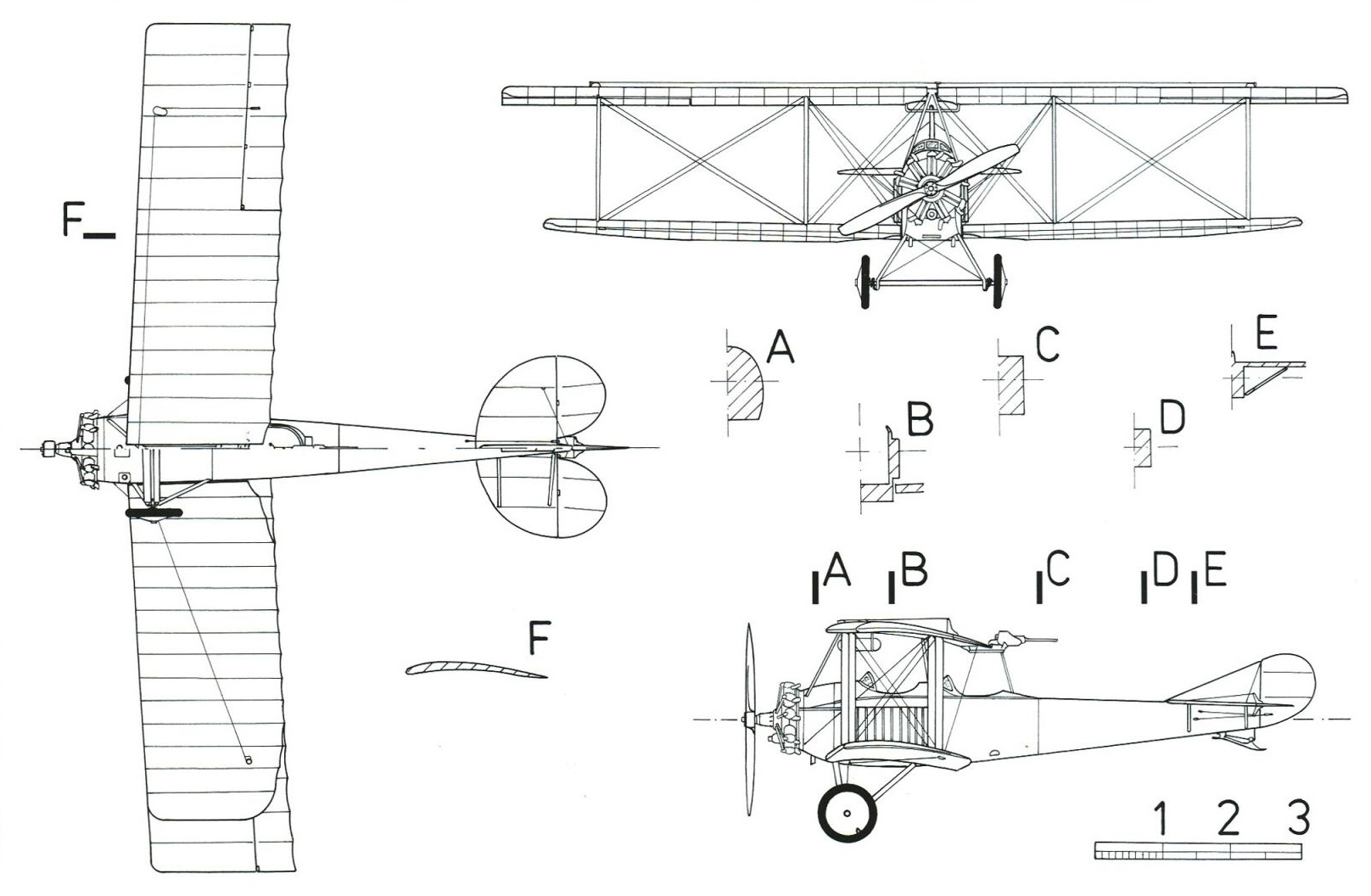
Diagram of the SAML Aviatik Sal. Difesa reconnaissance aircraft
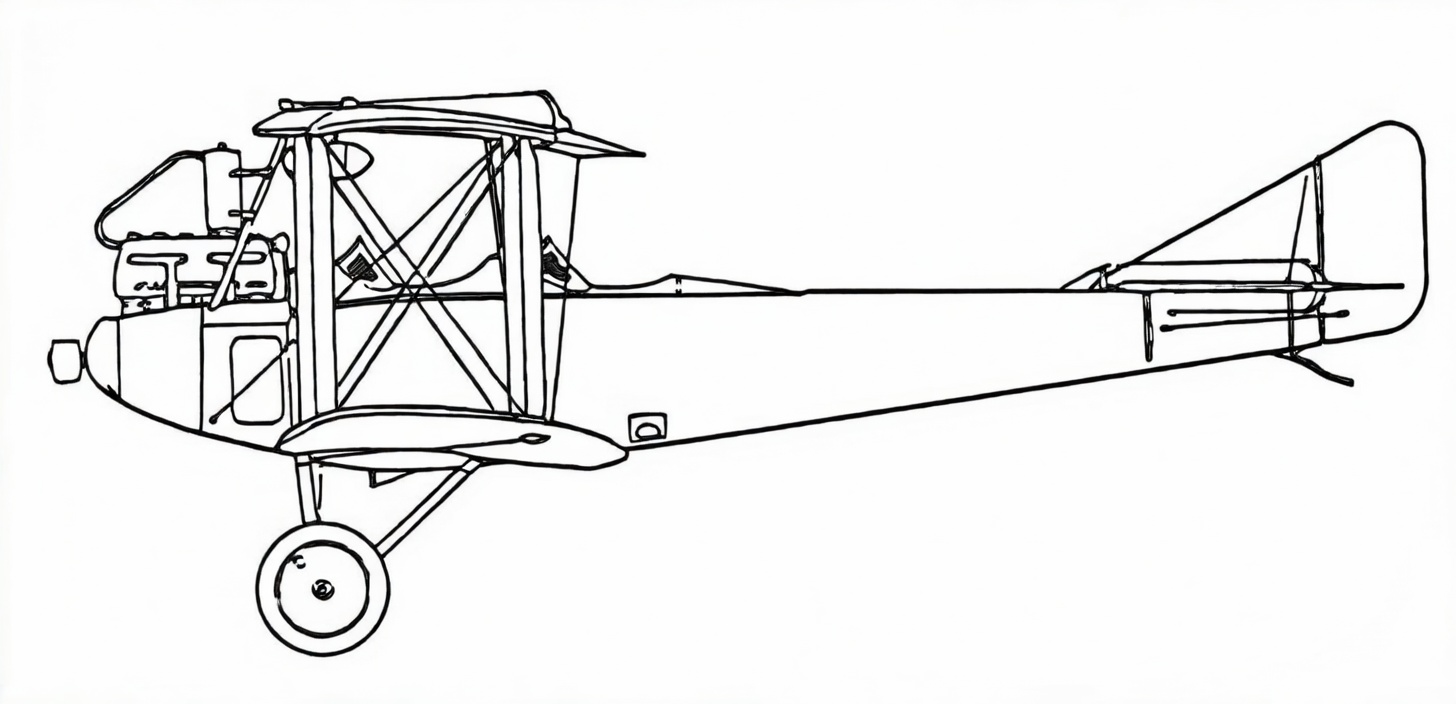
Profile of the SAML Aviatik IF Reconnaissance Aircraft
The first unit of the Italian military aviation to be equipped with SAML Aviatik A.1 aircraft was the 3rd Squadron, formed in September 1916. By the spring of 1917, four squadrons had already been re-equipped with SAML Aviatik Sal. Difesa aircraft (shown in the drawing). SAML continued to produce the “Aviatik” models until the end of that summer, by which time the design had become obsolete and its performance was deemed unsatisfactory for combat missions. They were replaced by the S.1 and S.2 reconnaissance aircraft developed by SAML and by the P-series reconnaissance aircraft produced by Pomilio.
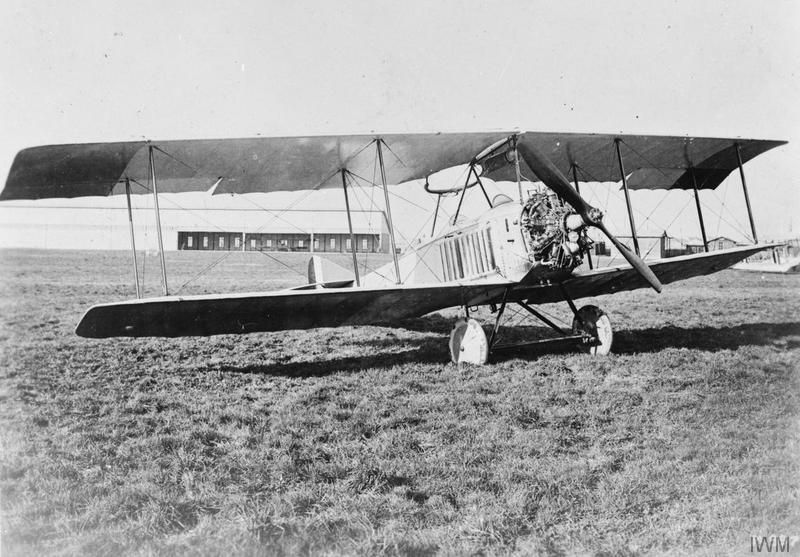
SAML Aviatik Sal. Difesa reconnaissance aircraft. Photo from i.pinimg.com
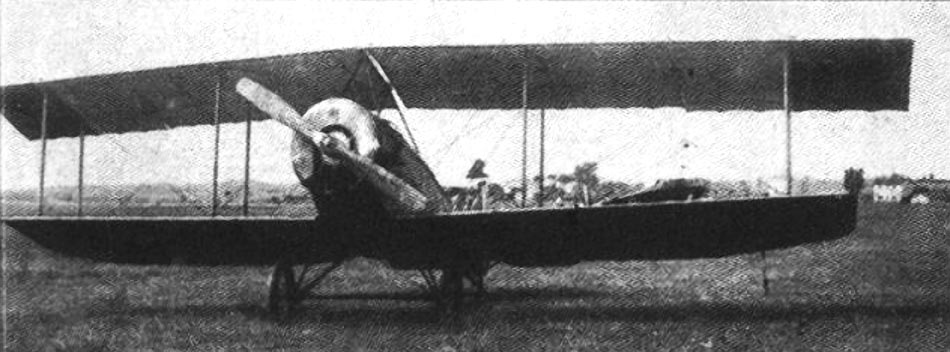
SAML Aviatik A.2 training aircraft. Photo from airwar.ru
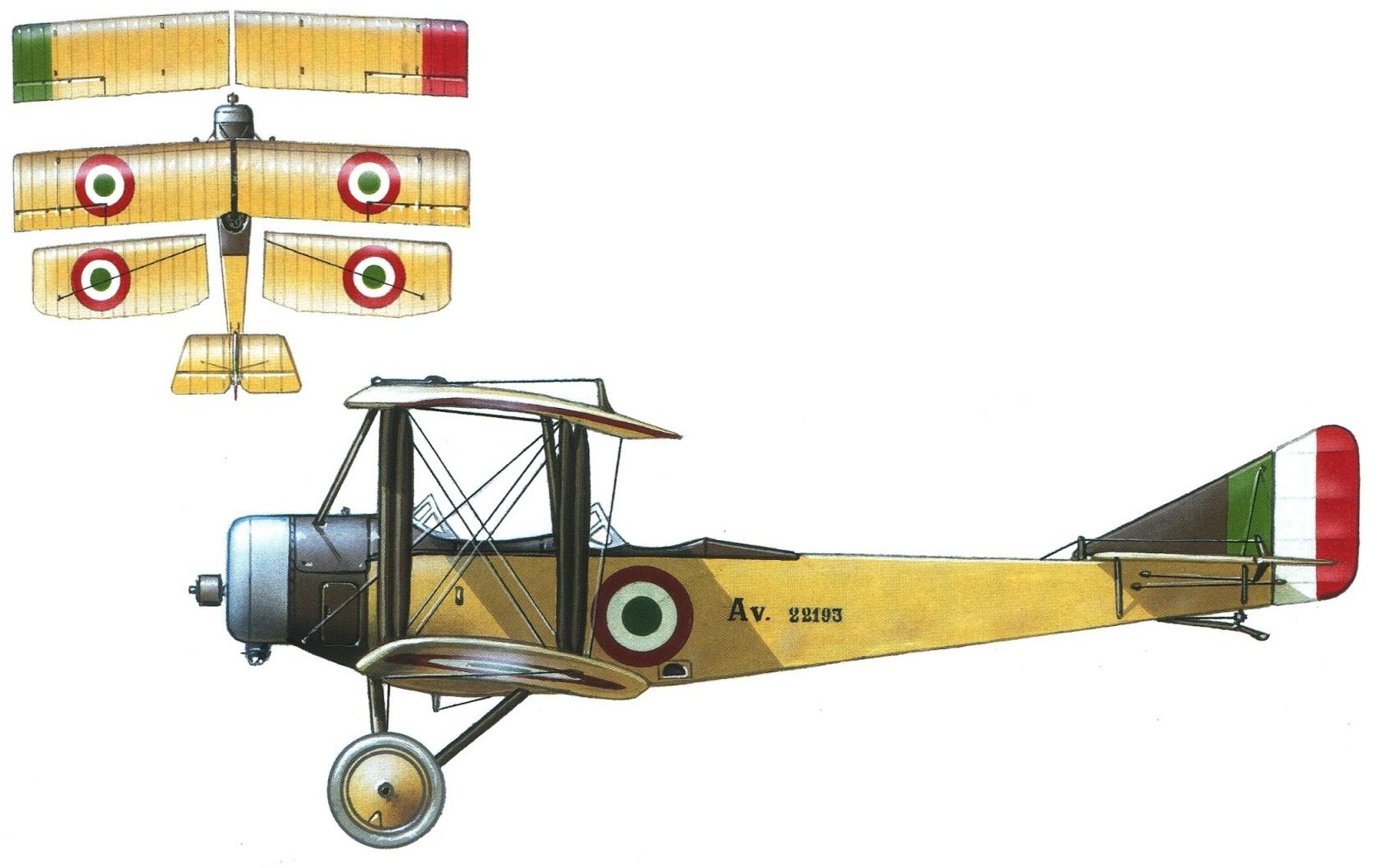
The SAML Aviatik A.2 training aircraft was painted in colors derived from materials impregnated with colorless aircraft varnish. The fabric covering was light cream in color, the plywood covering was dark brown, and the rotary engine cowling remained the color of unpainted aluminum. The small illustrations at the top left show how the identification markings were applied to the wing surfaces: red-white-green cockades were applied to the upper surface of the upper wing and to the lower surface of the lower wing (the wing tips could also be painted green and white). Tricolor cockades were applied to the fuselage sides, and the rudder and part of the tail fin were painted in the colors of the national flag
In total, during the war, SAML and four other companies produced 544 units of all variants. The A.2 variant, produced in a limited and intermittent series of 15 aircraft, remained in production until 1928! Until the early 1930s, many SAML Aviatik A.2 and A.3 aircraft that had survived the war continued to fly throughout Italy with civilian registration numbers, serving as training and tourist aircraft (sometimes converted to three-seaters). In 1921, a certain Benito Mussolini—who at the time was still dreaming of becoming the Duce—began flight training in a SAML Aviatik A.3, but crashed and did not complete his training.
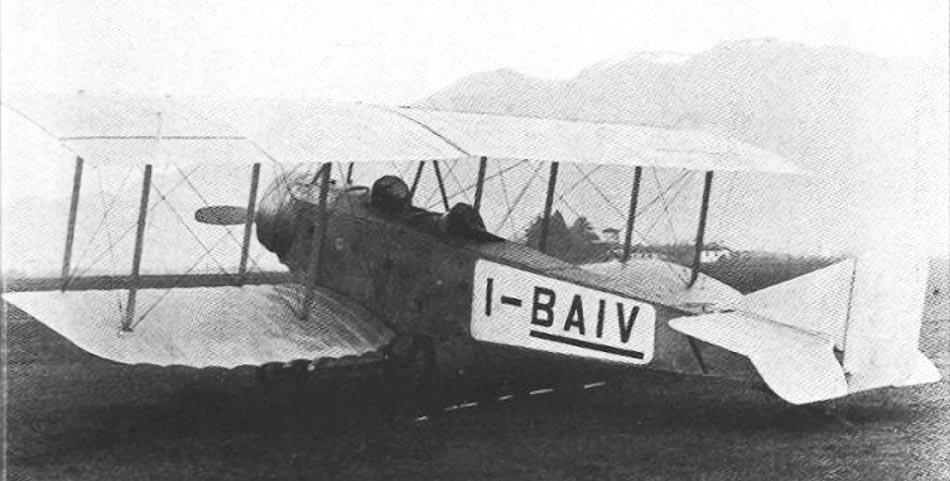
Postwar SAML Aviatik A.2 civilian passenger aircraft. Photo: airwar.ru
FLIGHT AND TECHNICAL SPECIFICATIONS
Type: SAML Aviatik
Purpose: reconnaissance aircraft and training aircraft
Status: Mass production
Crew: 2 people
Manufacturer:
- Societa Anonima Meccanica Lombarda (SAML), Monza
- Officine Elettroferroviare Talleso, Milan (under license);
- Farina Factories, Turin (under license);
- Officine Costruzioni Meccaniche Calore, Arezzo (under license);
- SCAF, Florence (under license).
| Option: | A.1 | A.2 | Department of Defense |
| Power plant: | |||
| engine type | FIAT A.10 | The Rhone 9J | Salmson P.9 with a power output of |
| power | 1×100 l.s. (74 kW) | 1×120 l.s. (88 kW) | 140 l.s. (103 kW) |
| total power | 100 l.s. (74 kW) | 120 l.s. (88 kW) | 140 l.s. (103 kW) |
| Dimensions: | |||
| wingspan | 12.00 m | 12.00 m | 12.00 m |
| length | 8.20 m | 7.80 m | 7.80 m |
| height | 3.10 m | 3.10 m | 3.10 m |
| wing area | 39.00 m² | 40.00 m² | 39.00 m² |
| Weight: | |||
| empty | 700 kg | 650 kg | 900 kg |
| takeoff | 970 kg | 920 kg | 1,190 kg |
| Flight characteristics: | |||
| maximum speed | 115 km/h | 130 km/h | 145 km/h |
| 2,000-meter climb | Twenty-eight and a half minutes | Twenty-seven minutes | 18.0 min |
| practical ceiling | 3,000 m | 2,800 m | 3,500 m |
| flight duration | 3.0 | 4.0 also | 3.5 hours |
Source: Text: Miposlav Balous, Illustration: Petr Kolmann, “Aircraft 14–18. SAML Aviatik,” “Aviation + Astronautics,” October 2010, pp. 30–31
Translation first published at – https://vk.com/@710541705-vozdushnye-rabochie-pervoi-mirovoi-saml-aviatik