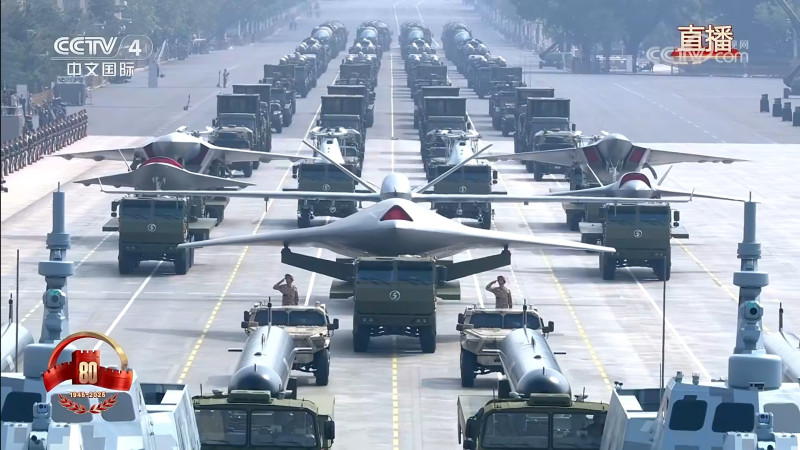
Today, a massive military parade was held in Beijing to mark the 80th anniversary of the end of World War II… and the new equipment from the PLA showcased there sent all fans of modern military technology into a near-ecstatic state. And for good reason.
(I won’t list everything that was demonstrated—some aspects don’t interest me as much, and there are others I don’t understand. But I want to highlight a few that particularly caught my eye.)
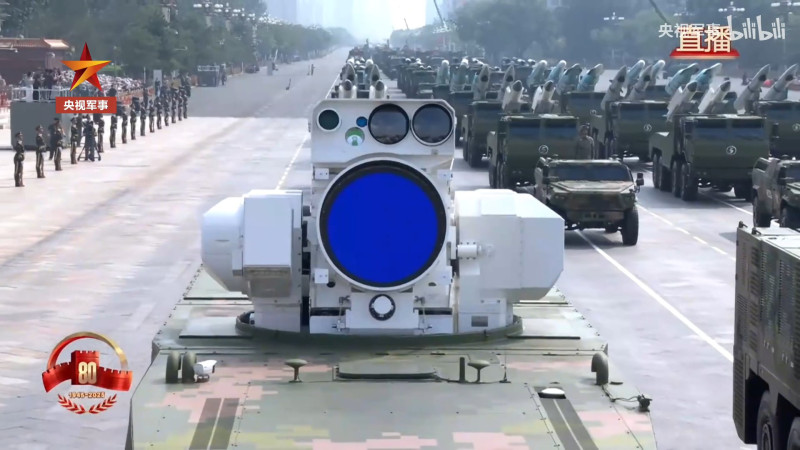
For me personally, the biggest surprise of the parade was the HUGE LY-1 combat laser with a focusing system one meter in diameter. At the parade, these laser systems were displayed mounted on HMV3 heavy-duty truck chassis, but according to official data, they are primarily intended for deployment on warships. And they marched as part of the PLA Navy’s column.
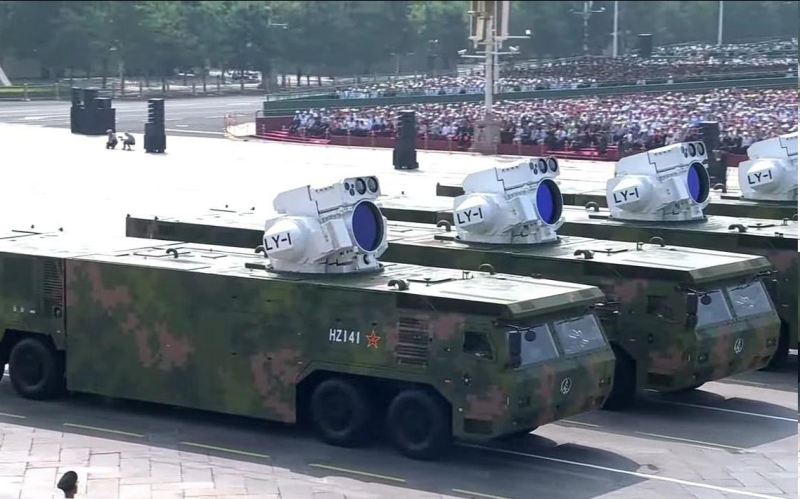
The details of the systems, of course, have not yet been made public—but I would guess that these are infrared lasers with a power output in the hundreds of kilowatts (and perhaps even in the megawatts—Chinese laser technology is quite impressive!), designed both to disable enemy sensors and to “cost-effectively” destroy drones and subsonic cruise missiles.
The same PLA Navy contingent also showcased an entire family of “YJ” series anti-ship/anti-surface missiles (“Yingzi,” if the translators are correct) ship-launched missiles, including:
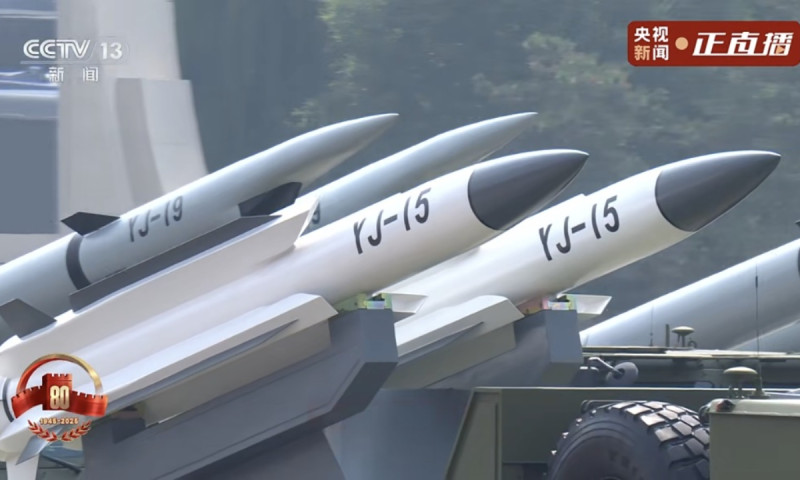
— YJ-15 — a supersonic anti-ship missile with a ramjet engine (likely the equivalent of Russia’s “Yakhont”);
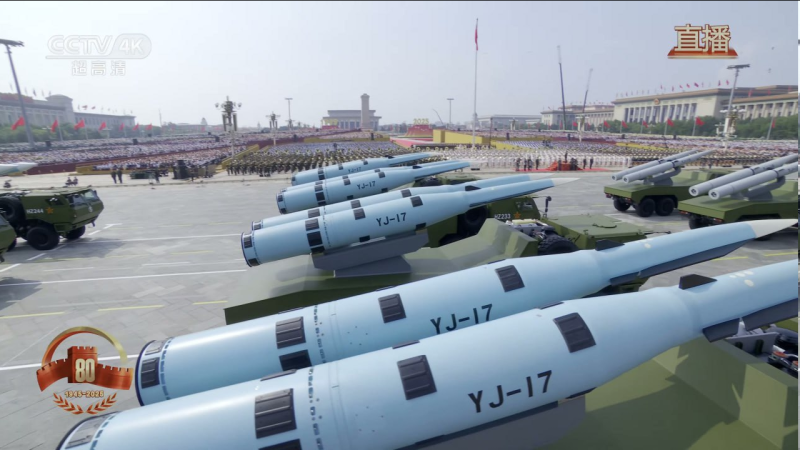
— YJ-17 — a hypersonic anti-ship missile with a gliding warhead;
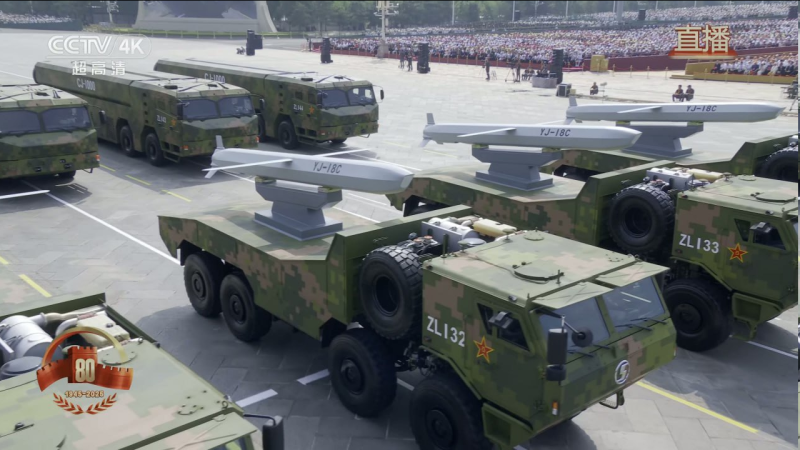
— YJ-18C — a low-observable subsonic anti-ship missile;
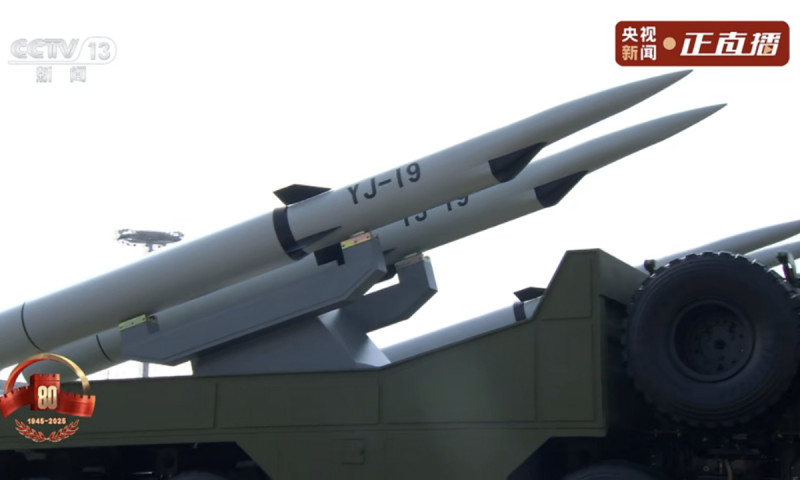
— YJ-19 — a hypersonic anti-ship missile with a supersonic combustion ramjet engine (likely analogous to the Russian 3M22 “Zircon”);
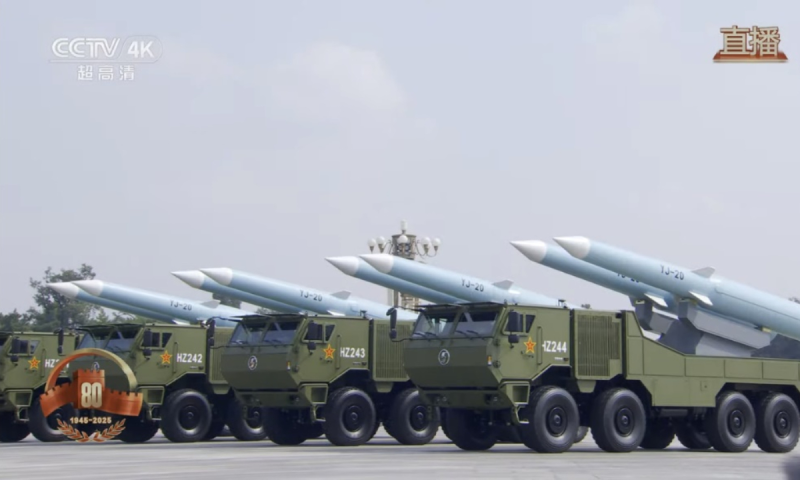
The YJ-20 is a ballistic anti-ship missile with a guided maneuvering warhead;
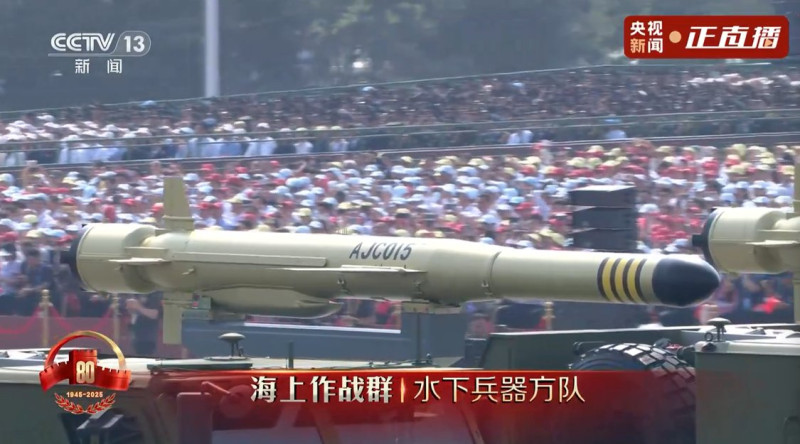
Another notable weapon was the AJC015 rocket-torpedo—unlike conventional weapons of this type (such as the ASROC anti-submarine rocket), it is equipped with a folding wing and a turbojet engine with an air intake beneath the fuselage. It can be assumed that this weapon is designed for the rapid engagement of submarines based on external target designation—for example, submarines detected by unmanned patrol boats.
Speaking of unmanned boats, they were also present at the parade:
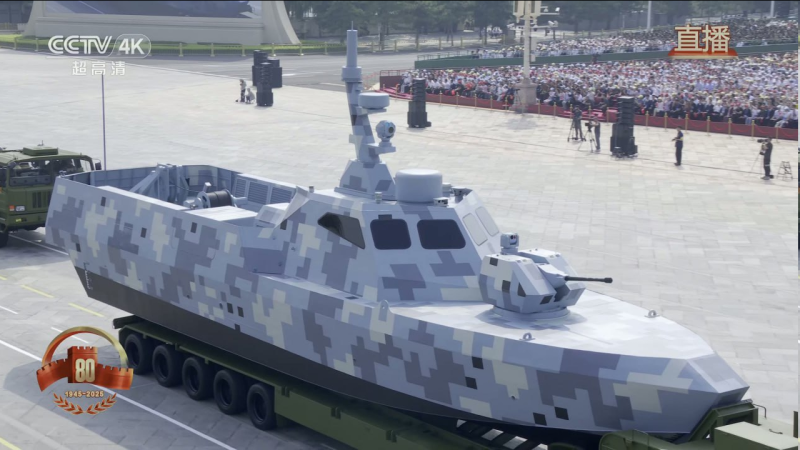
By all appearances, this boat is an unmanned forward reconnaissance vessel—minimally armed (with a single multi-purpose automatic cannon) but equipped with advanced sensor systems. Most interestingly, the boat is clearly equipped with a towed sonar—
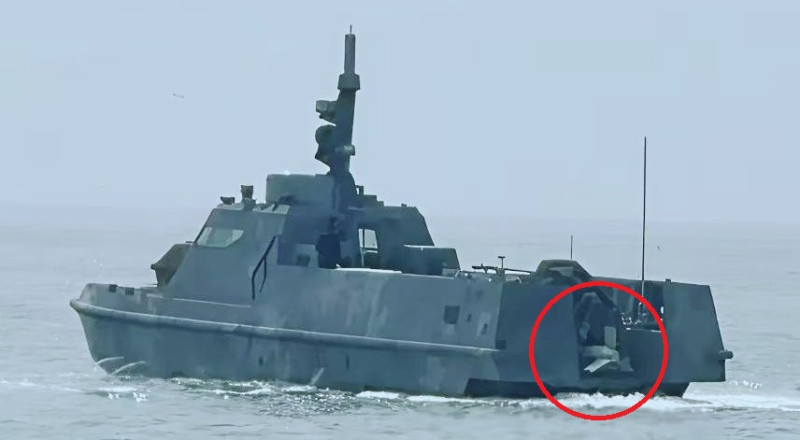
— that is, its primary mission is likely to establish an advanced defensive perimeter against enemy submarines, both to protect the coastline and to provide cover for warships and naval formations at sea.
Two large unmanned underwater vehicles were also on display:
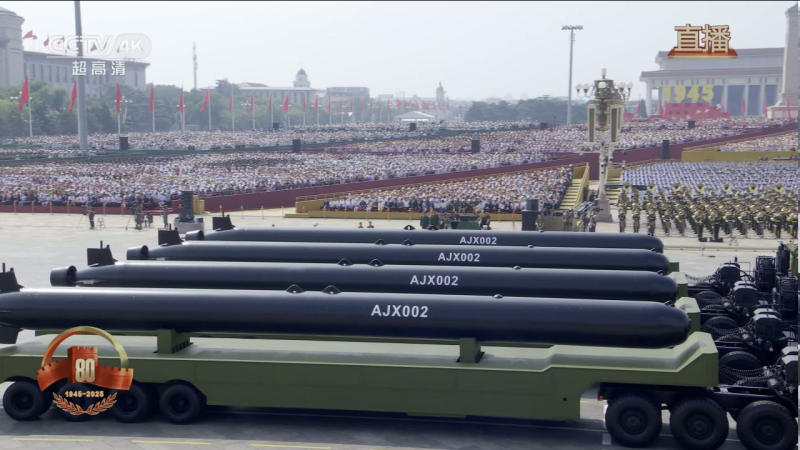
AJX002 — is described as an unmanned underwater mine-laying vehicle carrying heavy bottom mines in its hull. Its primary mission appears to be the covert deployment of minefields (or acoustic sensor arrays) near enemy bases, where submarine operations may be too dangerous;
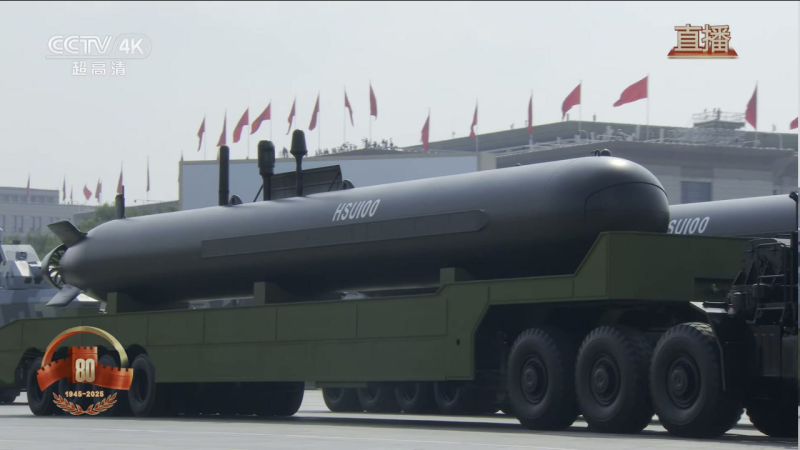
HSU100 — this large unmanned underwater vehicle is, in fact, a full-fledged mini-submarine, equipped with a bow-mounted sonar and two torpedo tubes for anti-submarine torpedoes. The likely mission of this mini-submarine is to hunt enemy submarines;
The HHQ-9C ship-based anti-aircraft missiles turned out to be a very interesting detail:
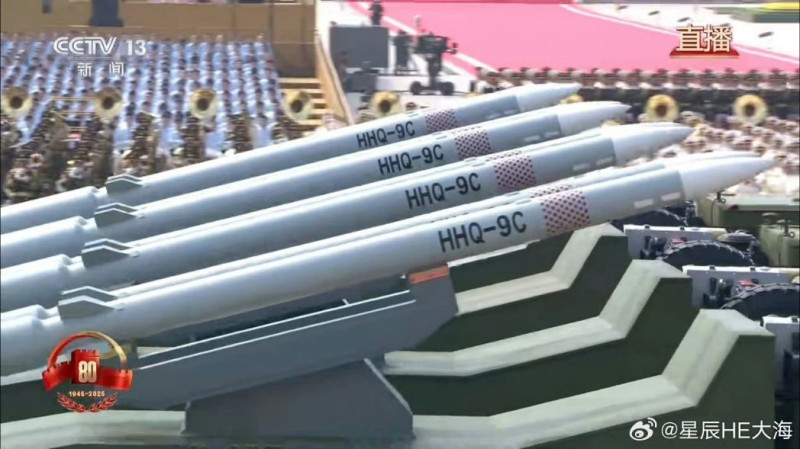
Judging by the distinctive “checkerboard” pattern on the nose, these missiles are kinetic interceptors (which destroy the target by direct impact, without an explosive warhead) equipped with an active gas-dynamic guidance system. A multitude of small solid-fuel rocket motors—pointing in different directions and ignited on command by the guidance system—are used for extremely fast and precise terminal maneuvering, which is not possible using conventional control surfaces or thrust vectoring. For Chinese surface-to-air missiles, such a guidance system (similar to that used on the American PAC-3 MSE missile) is a novelty.
The latest addition to the PLA Ground Force is the “lightweight” ZTZ-201 tank—weighing about 40 metric tons and armed with a 105-mm gun. Designed to replace obsolete light tanks and older-model main battle tanks, these “lightweight” tanks feature a “stealth” design (designed to reduce the tank’s detectability by ground-based radar systems and the radar homing heads of guided bombs and missiles), a strong emphasis on active and dynamic protection, and advanced secondary armament.
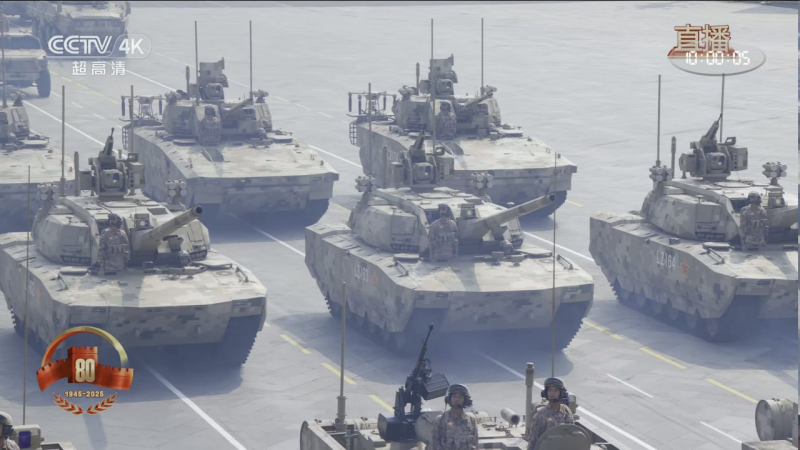
In addition to the standard remote-controlled machine gun turret, the ZTZ-201 turret also features two four-barrel turrets equipped with grenade launchers and rocket pods. These are likely part of the tank’s active protection system.
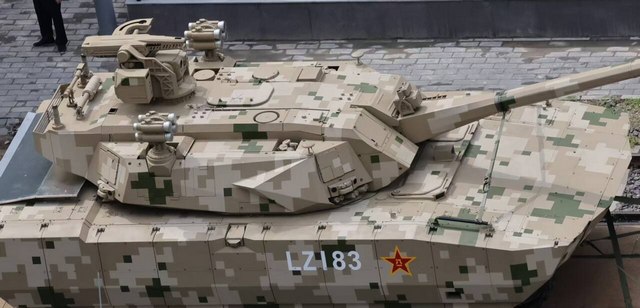
An interesting detail is that the tanks are equipped with a hybrid engine, which allows them to move almost silently using their electric motors when necessary.
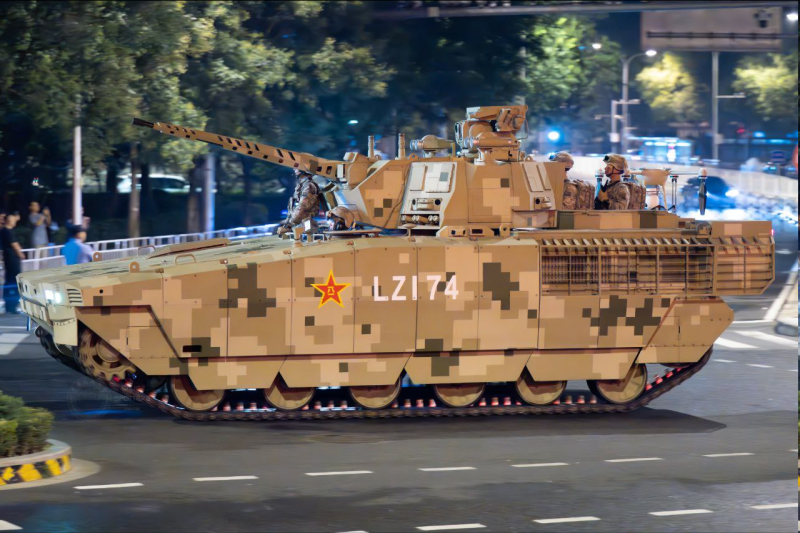
The Type 100 tank fire support vehicles, built on the same chassis, are remembered for three features:
* A fully “transparent” cockpit, with images from multiple external cameras displayed on the crew’s heads-up displays;
* A head-mounted sight that synchronizes the movements of the machine gun turret with the gunner’s head movements;
* A landing pad for a reconnaissance drone at the stern;
A tank operator demonstrates how to control the combat module using a helmet-mounted sight. In terms of drone defense, such a system could prove extremely useful—significantly reducing the response time to a detected threat.
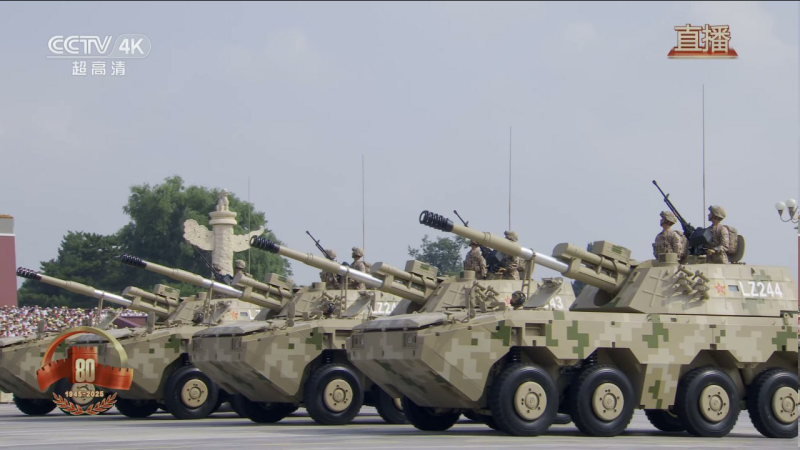
Another interesting detail was the self-propelled 122-mm howitzers on a wheeled chassis. China is clearly following the course of modern conflicts very closely and drawing conclusions from them:
In terms of defense against drones and “low-altitude” air defense, the OW5-A10 mobile laser system, with a power output of about 10 kilowatts, and the HPM3000 microwave emitter were of particular interest:
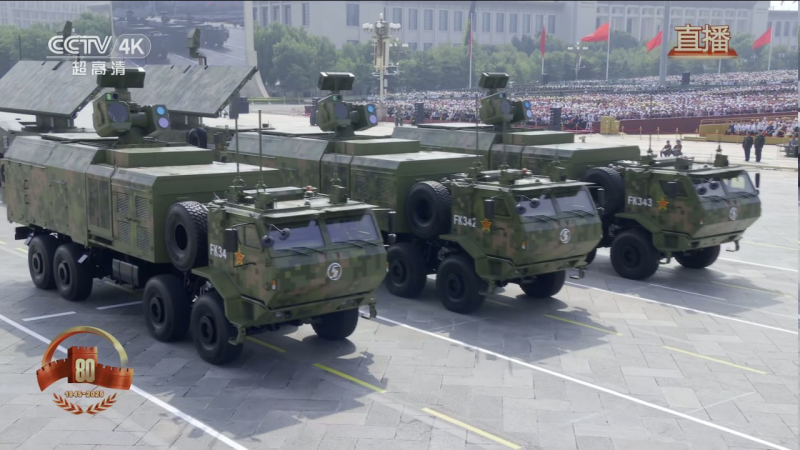
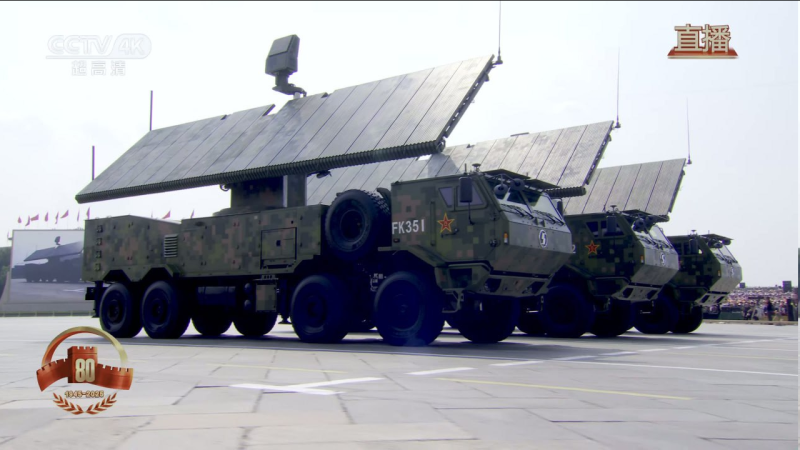
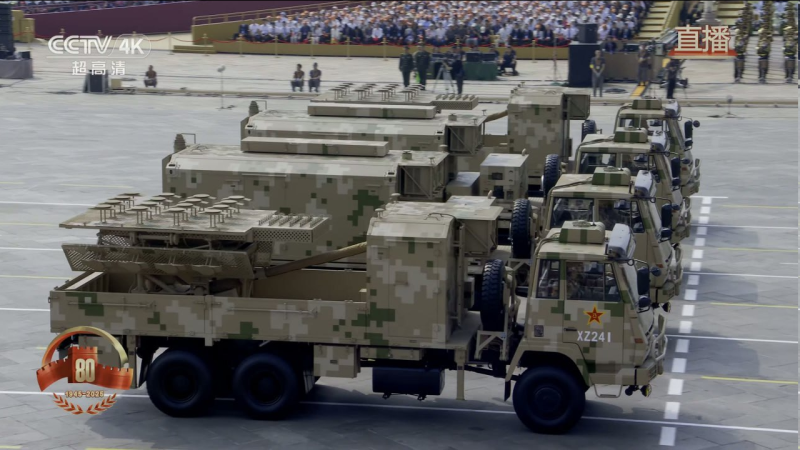
And also a whole string of electronic warfare and radio-electronic reconnaissance stations.
Of course, there was a vast array of different robotic vehicles on display: wheeled, tracked, and walking. I was particularly struck by the very cute ZRU222 robot tanks, which were somehow vaguely reminiscent of the old American M3 “Stewart” tanks:
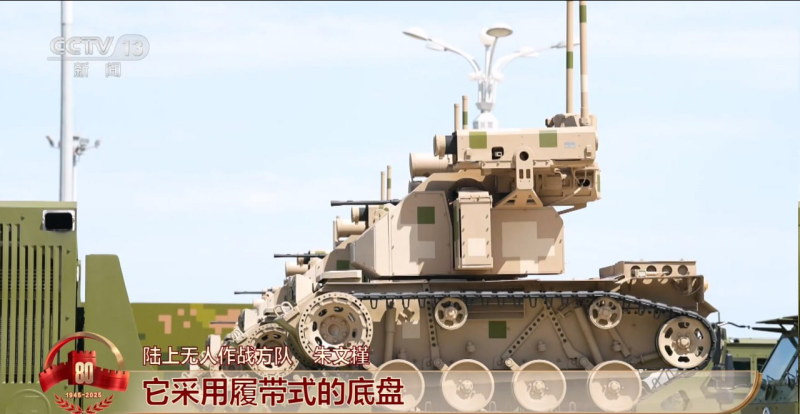
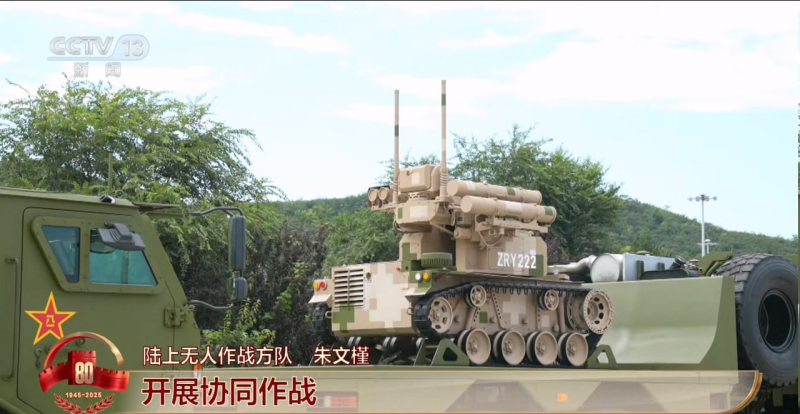
It is assumed that their primary mission is to support amphibious operations—to land as part of the first wave of the assault and serve as mobile firing positions, drawing the enemy’s attention (and fire) toward themselves.
And three infantry units on a single truck:
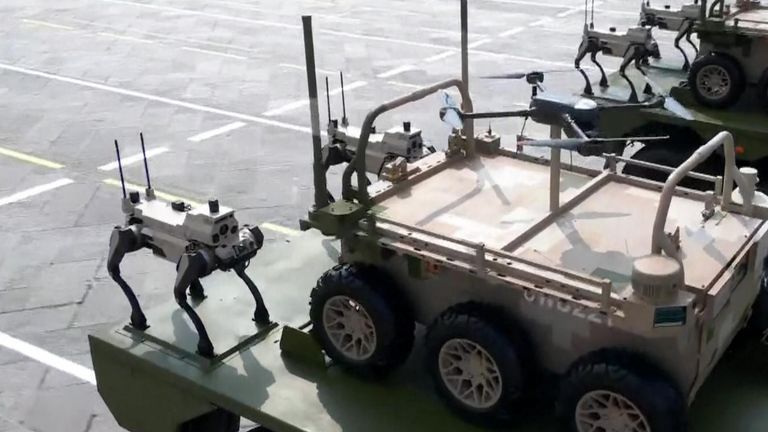
A logistics robot cart, a quadcopter drone mounted on it, and two robot wolves standing guard. This is what will replace human infantry soldiers in the future—and not too distant a future at that!
Among the new aircraft on display, large jet-powered drones—essentially robotic combat aircraft with high performance capabilities—drew particular attention:
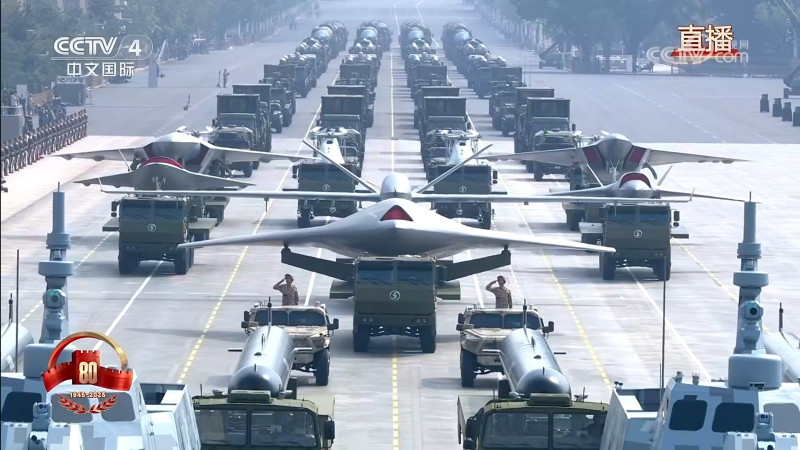
Several types of these vehicles were showcased at the parade, differing in both their intended use and design features:
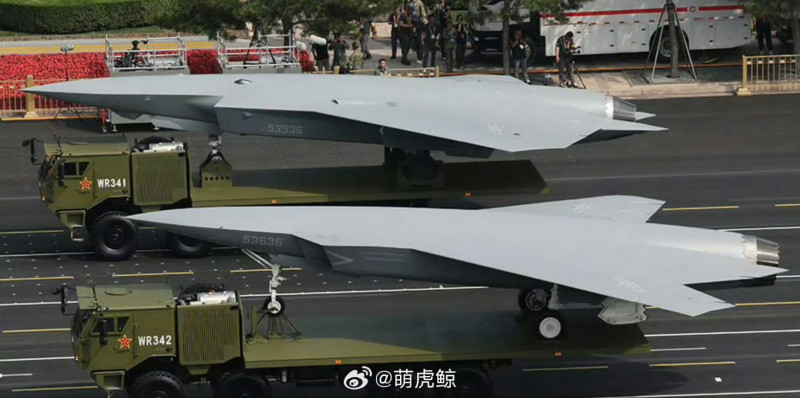
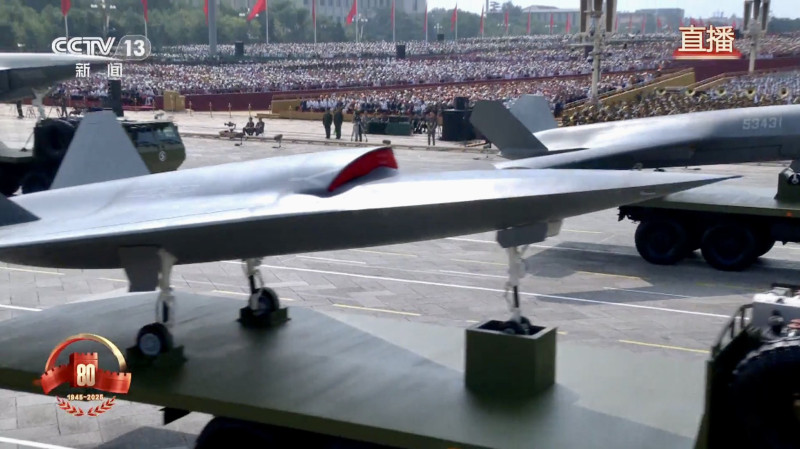
Of greatest interest was an unmanned fighter known only by the number “53636”—an unmanned, low-observable air superiority aircraft designed in a tailless configuration. Two examples of this aircraft were on display, differing significantly in wing configuration (one had a triangular wing with double sweep, while the other had a more traditional design), but similar in their use of thrust-vectoring nozzles, internal weapon bays, and highly advanced wing mechanization:
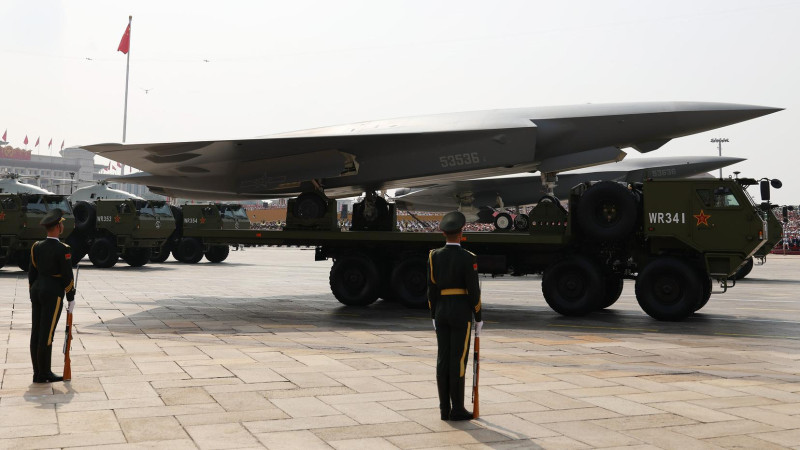
By all accounts, this aircraft is intended to serve as a “dogfighter” in contested airspace—a light fighter equipped with close-range weapons, capable of operating even under conditions of significant risk from surface-to-air missile systems and enemy aircraft. It has also been suggested that they could serve as an “extended arm” for manned fighters, allowing them to engage in aerial combat beyond the range of enemy air-to-air missiles.
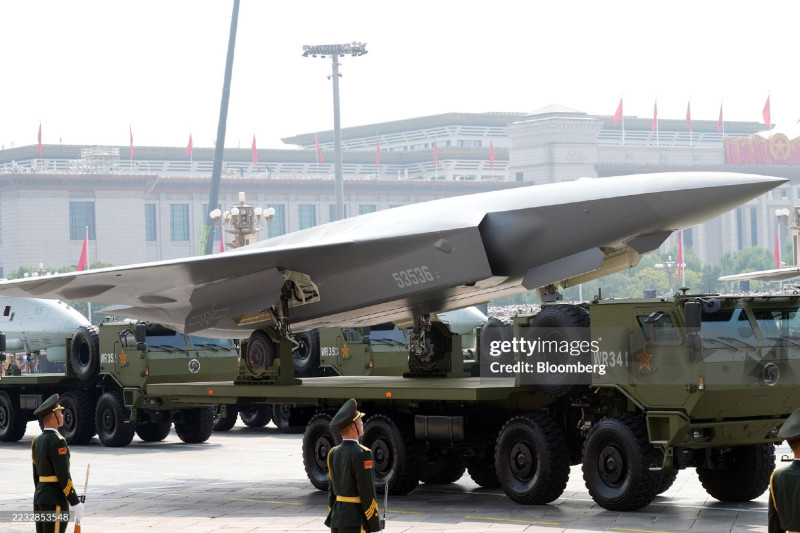
It’s interesting to note that the devices on display were clearly not just models!
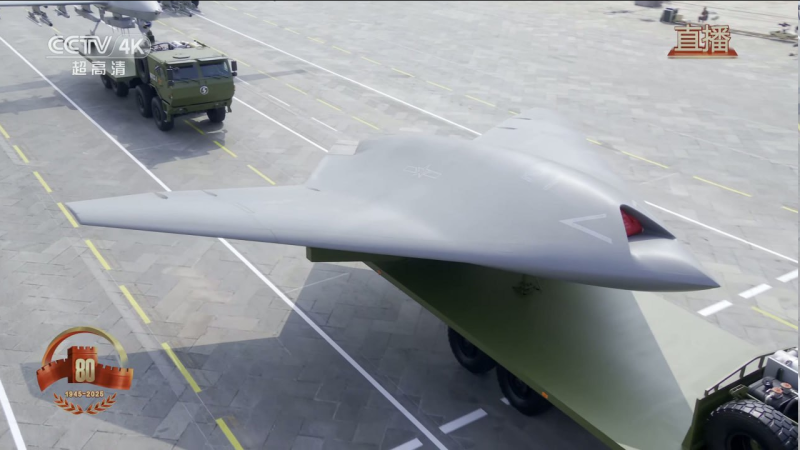
The parade also featured a couple of slightly smaller subsonic UAVs:
Judging by their subsonic aerodynamics and the overhead placement of their air intakes, these UAVs are designed to carry out strike operations against ground (and possibly surface) targets.
Also present was the Chinese deck-based UAV “Gongzi-11,” which had been spotted previously and is designed to be deployed on aircraft carriers and amphibious assault ships.
In the strategic weapons section, the most impressive sight was the display of a HUGE DF-5C intercontinental ballistic missile. The weapon is quite old (the base model entered service back in the 1980s) and uses liquid fuel (which is rather anachronistic by today’s standards), but it looks incredibly impressive:
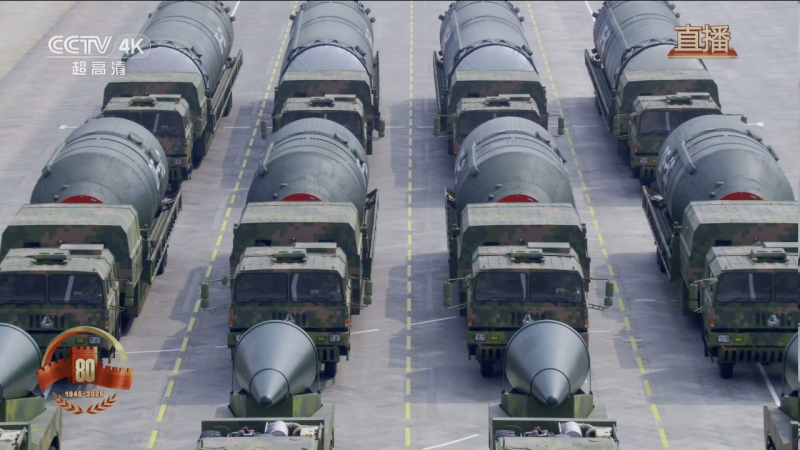
Due to its truly massive size, the DF-5C was transported in disassembled form—with the warhead, second stage, and first stage transported separately. According to statements by the PLA, the DF-5C is a new version of a heavy ballistic missile capable of delivering 10–12 individually guided warheads (each with a yield of 650 kilotons) or a 4-megaton single warhead to any point on the planet.
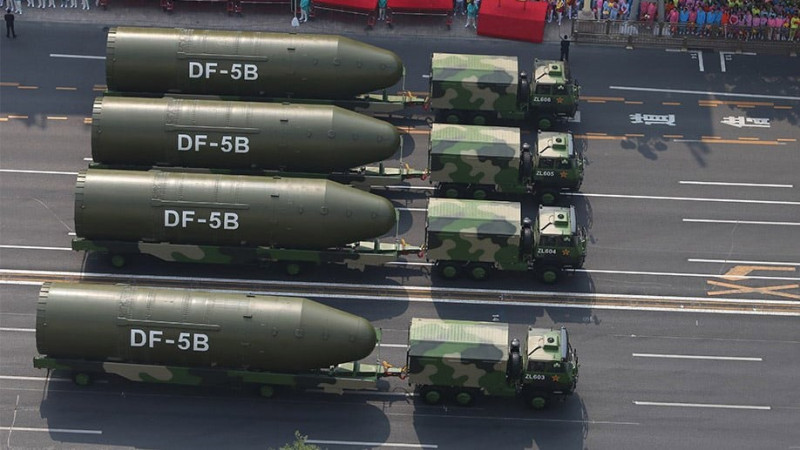
Previous version of the DF-5B
It is interesting to note that the Chinese press placed particular emphasis on the new missile’s “global” range—which suggests that the DF-5C could be used to launch “retaliatory” strikes along suborbital trajectories.
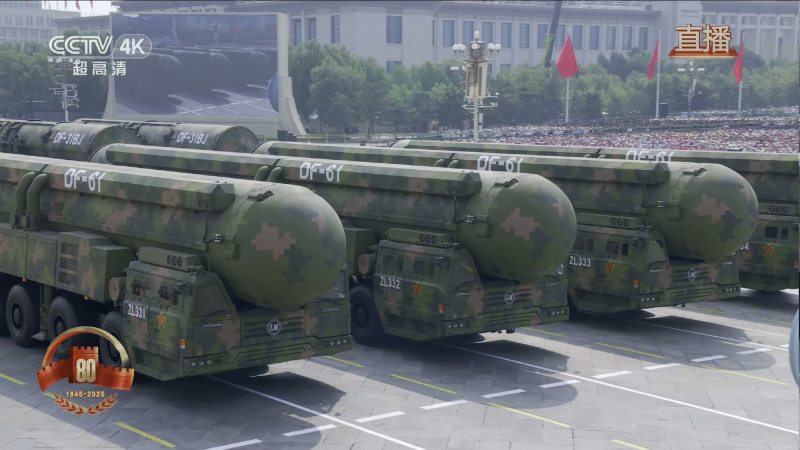
The parade also featured mobile ground-based systems equipped with the latest solid-fuel intercontinental ballistic missile, the DF-61—about which, until recently, absolutely nothing was known:
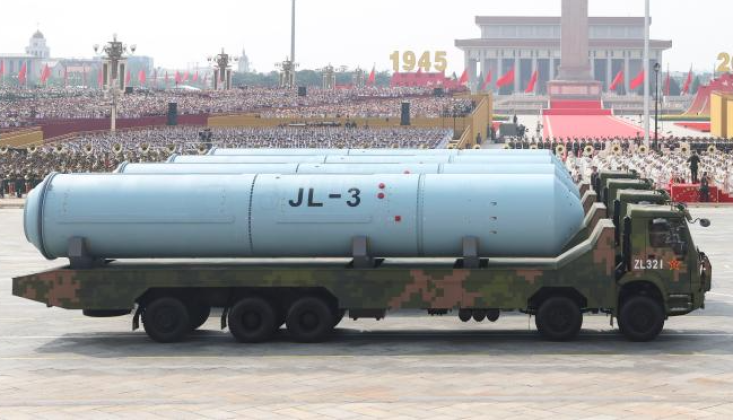
JL-3 submarine-launched ballistic missiles:
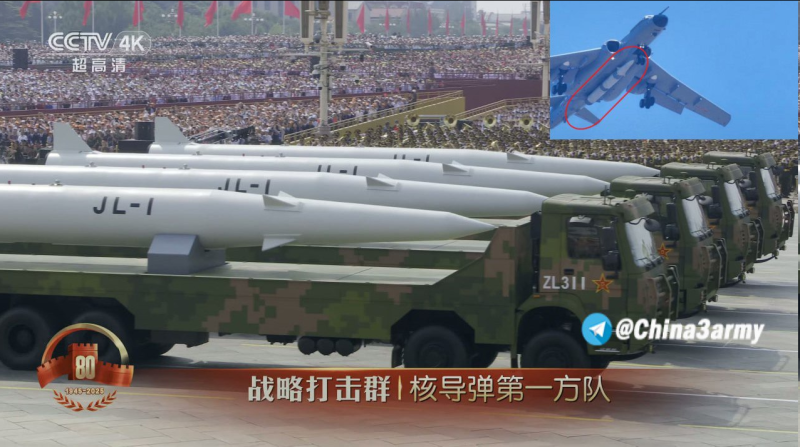
JL-1 Air-Launched Aeroballistic Missiles:
And the HQ-29 medium-range anti-missile/anti-satellite system:
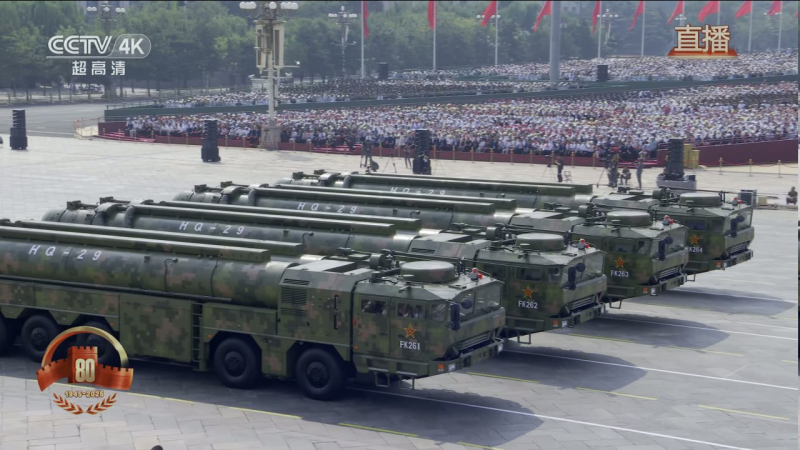
This is the first heavy mobile anti-missile system in service with the PLA, designed to intercept ballistic, hypersonic, and low-orbit targets at ranges of up to 2,000 km and at a maximum altitude of 1,500 km.
All in all… the parade is impressive. The Chinese confidently demonstrated their technical and engineering prowess by showcasing an incredible number of new developments, including some that are truly revolutionary. It’s particularly interesting that the PLA’s appearance in the parade indicates that the system is already in service, at least on a limited basis.
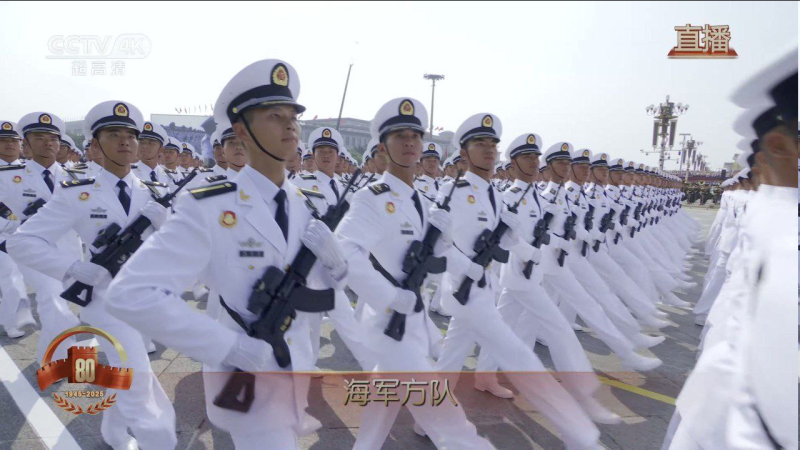
P.S. And just for the sake of aesthetics—Chinese boys and girls marching in their handsome uniforms: