A new standard for the light armored vehicles of the future. What is the British Ajax Blackjax infantry fighting vehicle all about?

At the DSEI 2025 exhibition in London, General Dynamics Land Systems unveiled the Ajax Blackjax technology demonstrator—a new addition to the Ajax family of tracked vehicles.
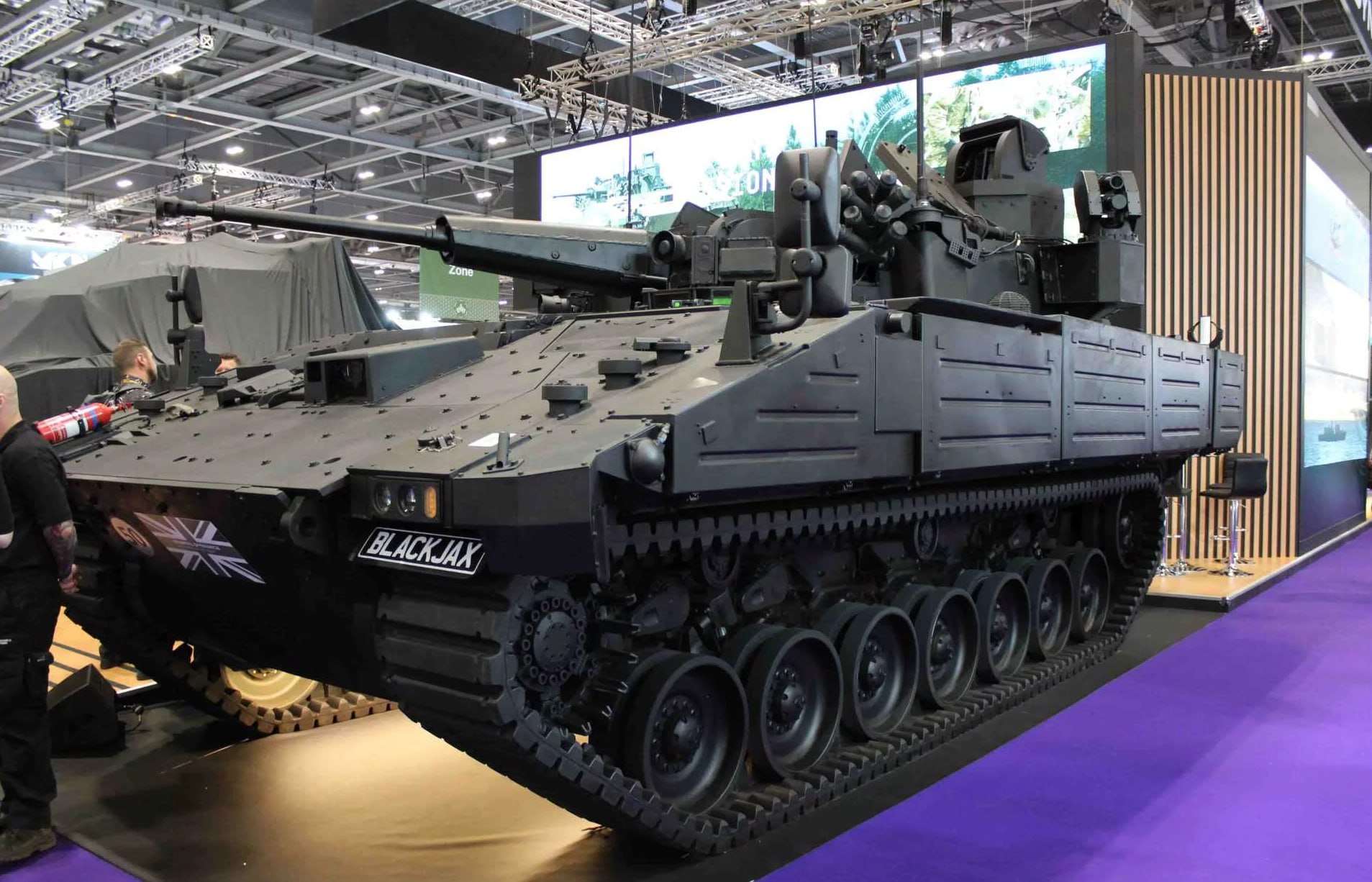
Blackjax is described as a next-generation conceptual vehicle built using the spiral development approach—a process aimed at the gradual introduction of capabilities through an iterative cycle of testing, evaluation, and refinement. The goal is to enhance combat effectiveness while maintaining the flexibility to integrate new technologies and adapt to evolving operational concepts.
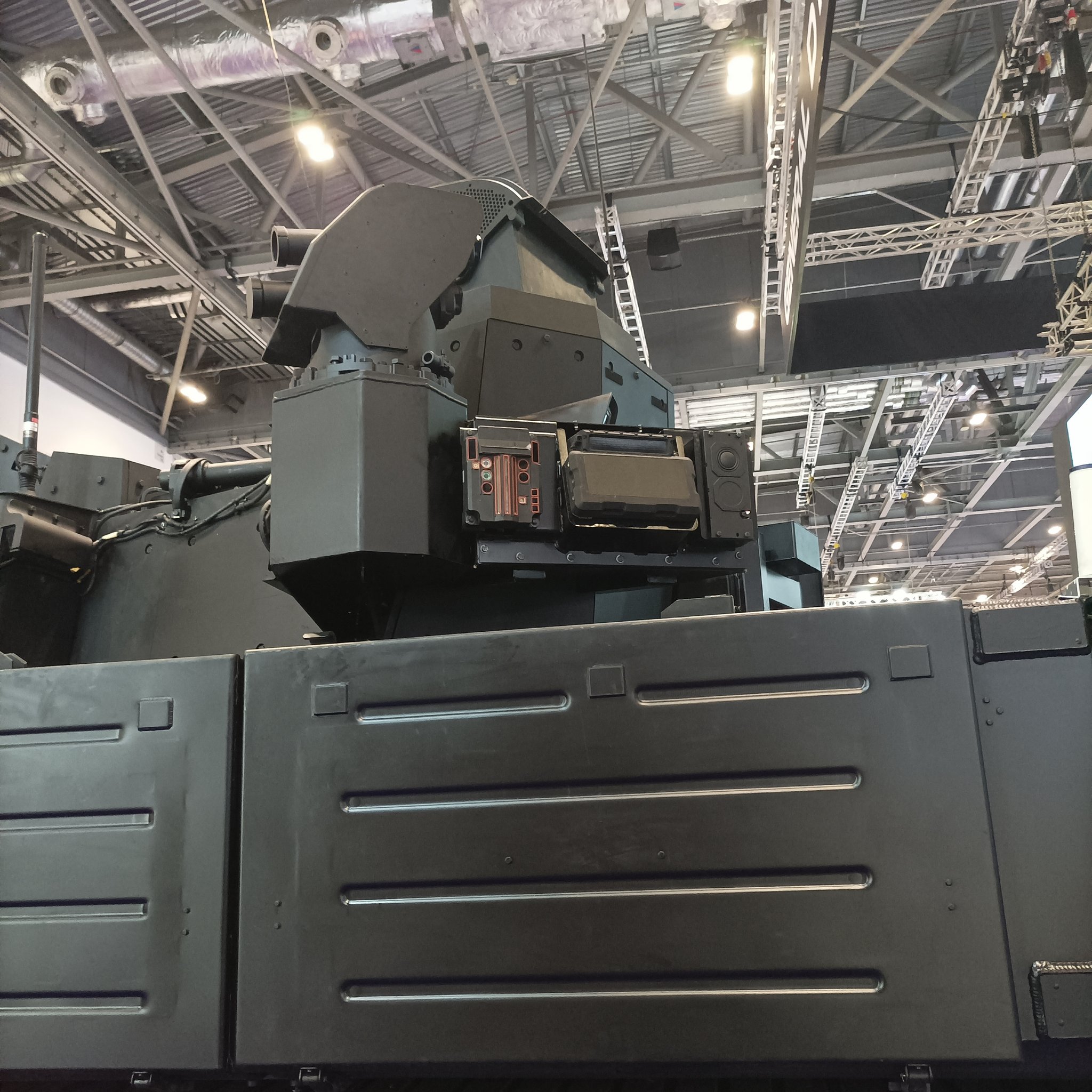
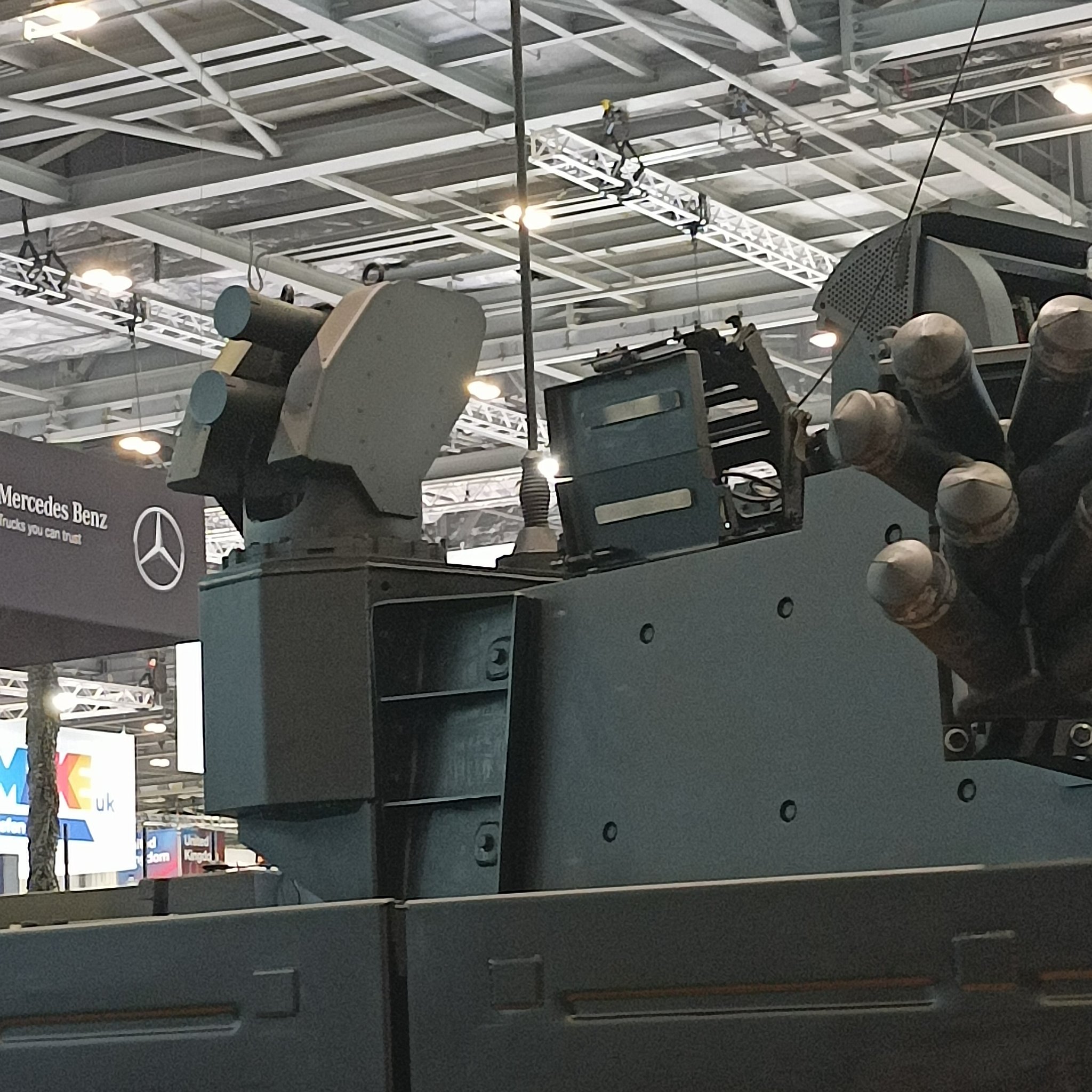
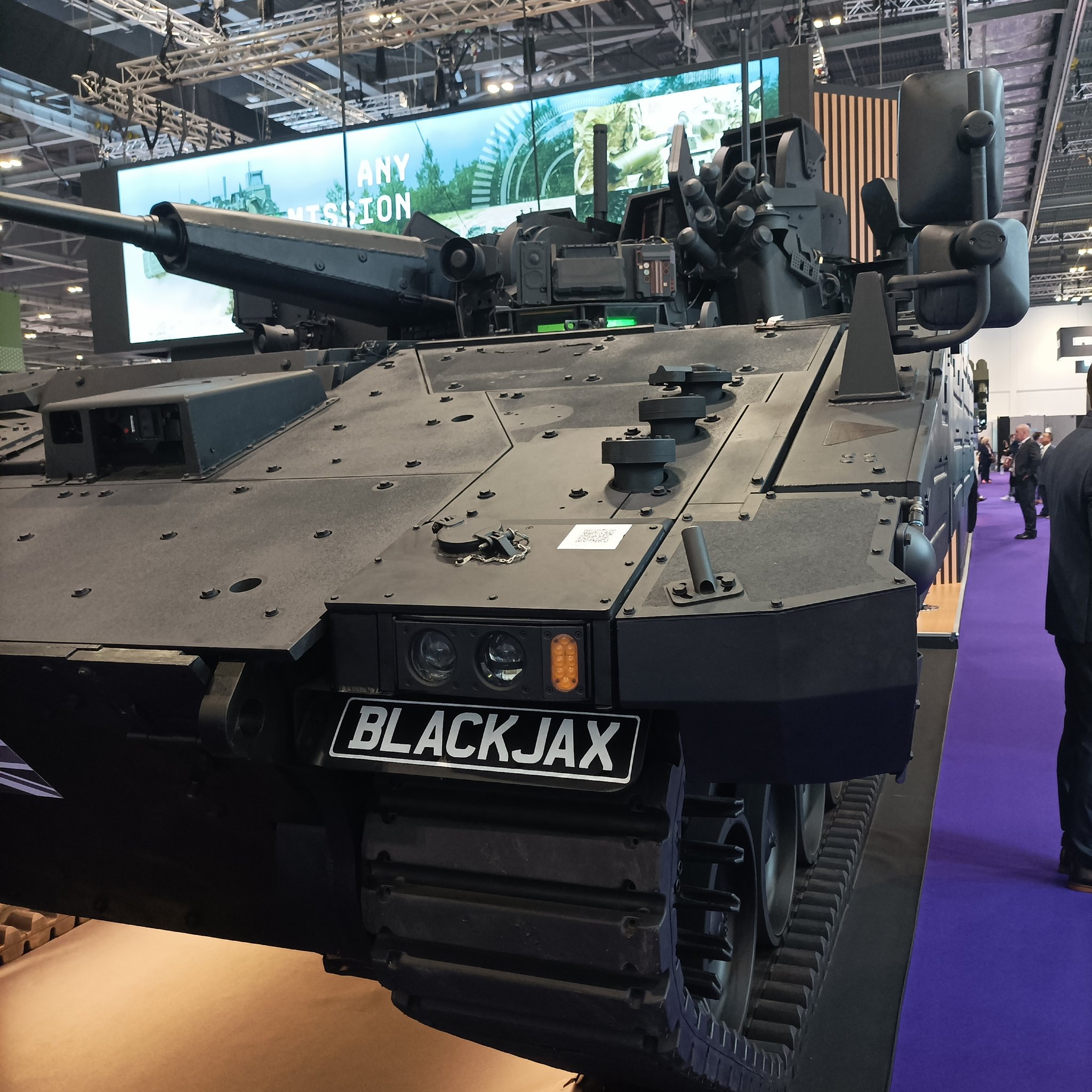
The Blackjack demonstration model is equipped with a modular integrated protection system (MIPS), which combines the Trophy sensor head with Iron Fist interceptors, and also features a modified artillery mount with an elevation angle of up to 85 degrees, expanding its potential missions beyond those of traditional infantry fighting vehicles. The vehicle can now just as effectively perform short-range air defense functions, which will be crucial for countering small UAVs.
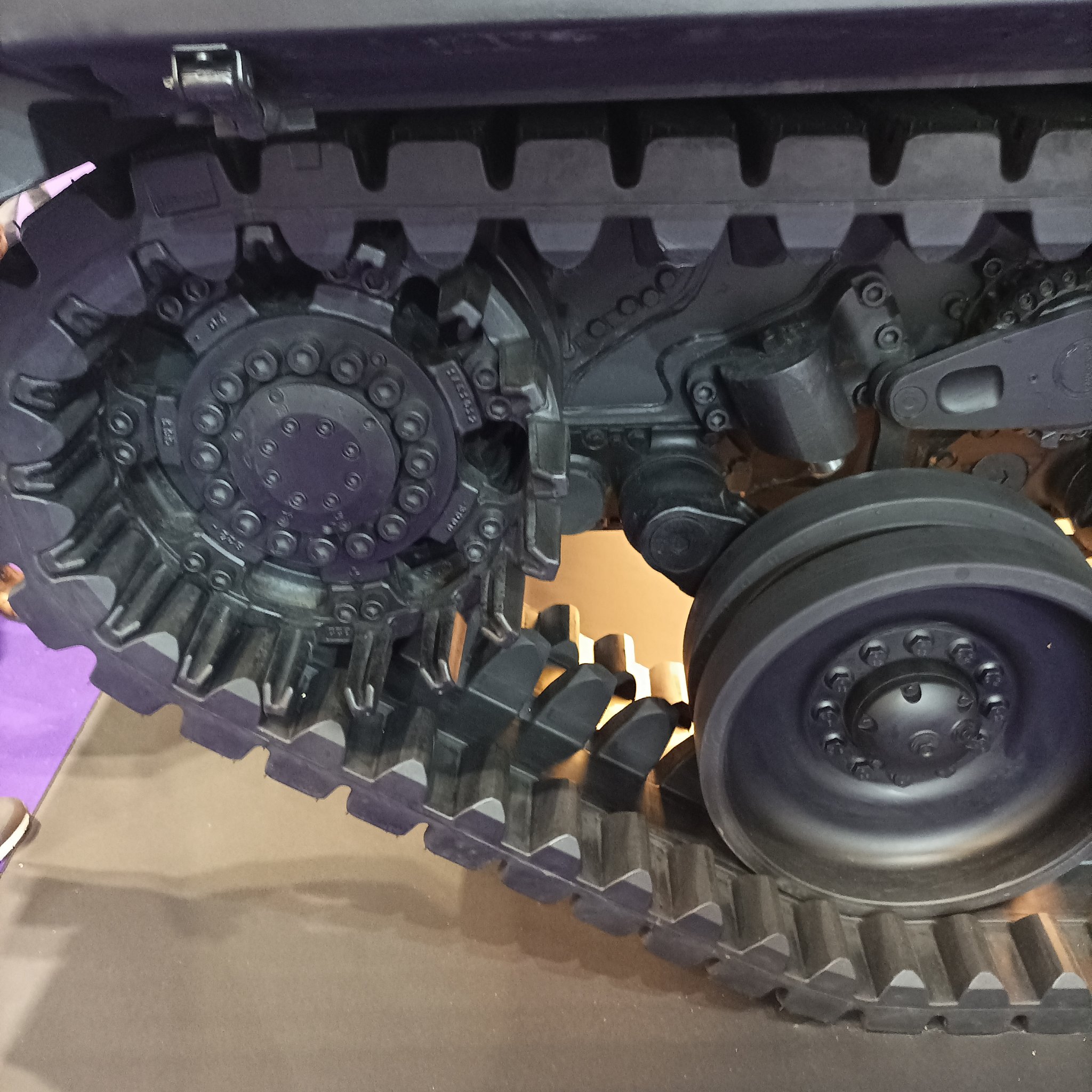
The Ajax Blackjax IFV is equipped with composite rubber tracks designed to reduce vibration and noise; in addition, this type of propulsion system improves mobility across various types of terrain, and it incorporates a Modular Integrated Protection System (MIPS), a UK-specific Active Protection System (APS) that combines Trophy sensors with Iron Fist interceptors.
The main weapon of the new combat vehicle is the 40-mm Cased Telescoped Armament System (CTAS) cannon, which is equipped with programmable air-burst munitions. These munitions will be the primary means of engaging enemy drones.
Just recently, this vehicle was unveiled in Poland at the MSPO 2025 exhibition in Kielce, marking the platform’s first public debut in the country. General Dynamics Land Systems showcased its vehicle there in the hope that the Polish Army would procure the Ayaks.
The Ajax program itself has a long development history. The vehicle is built on the ASCOD 2 chassis and has its origins in the British Future Rapid Effect System program, which began in the 2010s.
In 2014, the British Ministry of Defense ordered 589 vehicles worth 3.5 billion pounds, with deliveries expected in 2017. However, significant delays ensued due to technical issues, specifically excessive vibration and noise. Deliveries to the active army ultimately began in January 2025, more than seven years behind schedule. By April 2025, 100 vehicles had been delivered.
It should be noted that the Ajax family consists of six variants built on a common chassis. These include:
- an Ajax reconnaissance vehicle, armed with a 40-mm CTAS cannon,
- Ares armored personnel carrier,
- Athena command and staff vehicle,
- Atlas armored recovery vehicle,
- Apollo Armored Recovery and Towing Vehicle
- Argus engineering and reconnaissance vehicle.
Of the 589 vehicles ordered, 245 were Ajax reconnaissance variants, 93 were Ares, 112 were Athena, 38 were Atlas, 50 were Apollo, and 51 were Argus. The reconnaissance variant is equipped with a CTAS cannon, a twin 7.62-mm machine gun mount, and the battle-tested Kongsberg Protector combat module, which features a standardized machine gun and a Javelin anti-tank missile system.
The platform’s base weight is 38 metric tons, with the option to increase it to 42 metric tons using modular armor kits.
The platform is equipped with an 800-l.s. MTU V8 diesel engine paired with a RENK HSWL 256B transmission; it reaches a top speed of 70 km/h and has a range of approximately 500 km. The crew capacity for the Ajax variant is typically three people, while the Ares variant accommodates two crew members and four passengers.
Electronics and networking technologies are central to Ajax’s design. The platform is equipped with a 20 Gbps Ethernet backbone capable of processing and storing up to six terabytes of data, which can be distributed via the integrated Bowman communications system. It includes sensors for automatic detection, search, and tracking, and can operate these systems while stationary using a silent auxiliary power unit.
The tests, conducted since 2022, included more than 40,000 km of driving and more than 5,000 shots to verify reliability. Industrial participation was structured to emphasize a high domestic content: 80 percent of manufacturing and 70 percent of the supply chain are based in the UK, supporting more than 4,000 jobs across 230 suppliers. Final assembly takes place in Merthyr Tydfil, South Wales, with Lockheed Martin UK responsible for the turret and fire control, Thales UK for the sighting systems, Rheinmetall for turret production, and Meggitt for ammunition handling.
The Blackjax prototype reflects the future development prospects of the Ajax platform. Early studies explored additional variants, such as a direct-fire vehicle with a 120-mm gun, a self-propelled mortar, short-range air defense platforms, logistics vehicles, and medical evacuation vehicles. The Blackjax configuration combines several of these ideas, showcasing a hybrid active protection architecture, alternative track systems, and a gun assembly with high elevation capability that could provide counter-drone capabilities. Its unveiling coincided with international interest, particularly in Poland, where the Ajax is reportedly being considered as a potential chassis for the development of a heavy infantry fighting vehicle (IFV) integrated with the domestic ZSSW-30 turret. Thus, the Blackjax represents not only a possible future direction for the development of the British Army’s light armored vehicle fleet, but also an example of how a modular base platform can be adapted to meet foreign requirements in other countries.