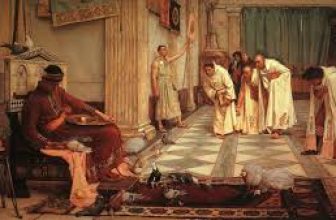
Wat Tyler: How an Unknown Craftsman Rose Against the King of England and Nearly Destroyed Serfdom

In the autumn of 2026, the historical drama The Uprising is coming to theaters. Directed by Paul Greengrass, best known for his Jason Bourne films, it takes audiences back to 14th-century England — a country that had only recently survived the Black Death, was trapped in an apparently endless war with France, and was gradually discovering that the old feudal order was beginning to crack. Andrew Garfield plays the leading role, portraying a man who, in the space of only a few weeks, went from being an almost completely unknown commoner to the leader of one of the most dangerous rebellions in English history.
His name was Wat Tyler. And this is where the first problem appears: we know almost nothing about him. His exact date of birth is unknown, historians disagree about where he came from, and even the name Tyler may originally have referred to his profession — a craftsman who worked with roof tiles. No reliable contemporary portrait survives, nor do we have letters or documents written by Tyler himself. Stories claiming that he fought in the Hundred Years’ War and acquired military experience in France appear in later sources and cannot be treated as firmly established facts. Almost everything we can trace with reasonable confidence about his life fits into just a few weeks in the summer of 1381. Yet during those weeks Tyler managed to lead thousands of armed men, enter London, bring the royal government close to collapse, and demand that the fourteen-year-old Richard II effectively dismantle a substantial part of the existing social order. Within days Tyler would be dead, the rebellion crushed, and the king’s promises revoked. Yet England would never entirely return to what it had been before.
To understand how such a man could emerge at all, however, we should not begin with Tyler.
We should begin with the plague.
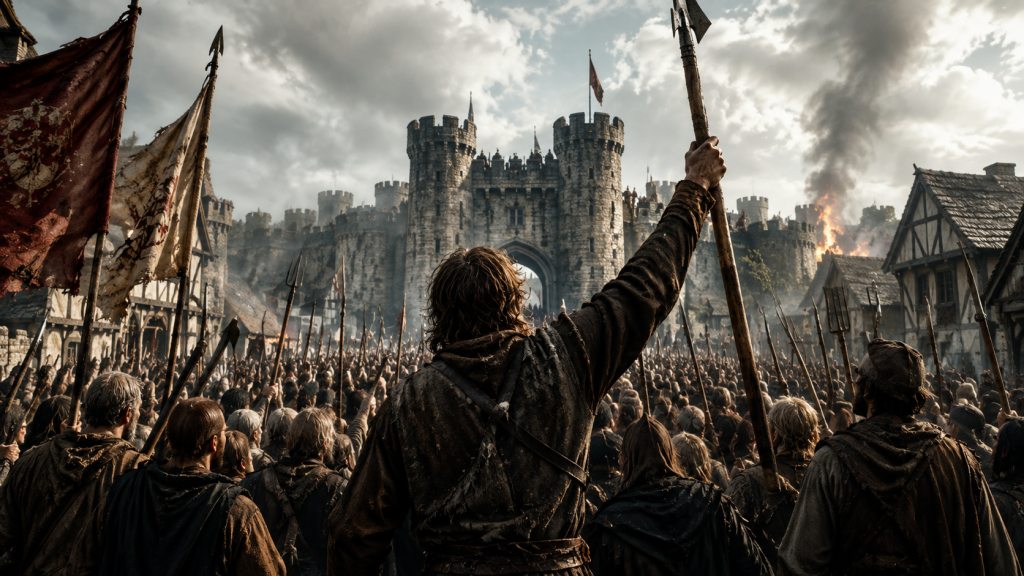
The Black Death Unexpectedly Made the English Peasant More Valuable
The Black Death reached England in 1348. Over the following years, the epidemic killed an enormous proportion of the country’s population. Estimates vary, but perhaps a third — and possibly close to half — of England’s inhabitants died. For the medieval economy this was a catastrophe, but for millions of survivors the consequences were unexpected. The land had not disappeared. Crops still had to be harvested, livestock tended, houses built, and workshops kept running. But there were suddenly far fewer people available to do all that work. Labor had become a scarce resource.
A perfectly natural economic reaction followed. Landowners began competing for workers, wages started to rise, and peasants who previously had almost no ability to dictate terms to their lords could now try to move somewhere that offered better conditions. Some dependent peasants left their manors, while others demanded that traditional labor obligations be replaced with cash rents. England’s ruling elite discovered that a social system that had seemed almost permanent was beginning to unravel simply because the balance between available land and available labor had changed.
The state responded in a very characteristic way: it tried to prevent the economy from changing. The Ordinance of Labourers appeared as early as 1349, followed in 1351 by the famous Statute of Labourers, intended to restrict wages and the mobility of workers. The authorities attempted to keep pay near pre-plague levels and force laborers to accept employment under prescribed conditions. The result was an almost perfect social time bomb. After the plague, peasants had discovered for the first time that a shortage of workers might allow them to live better, while the government effectively told them that they would not be permitted to take advantage of their new position.
Then Came a War That Someone Had to Pay For
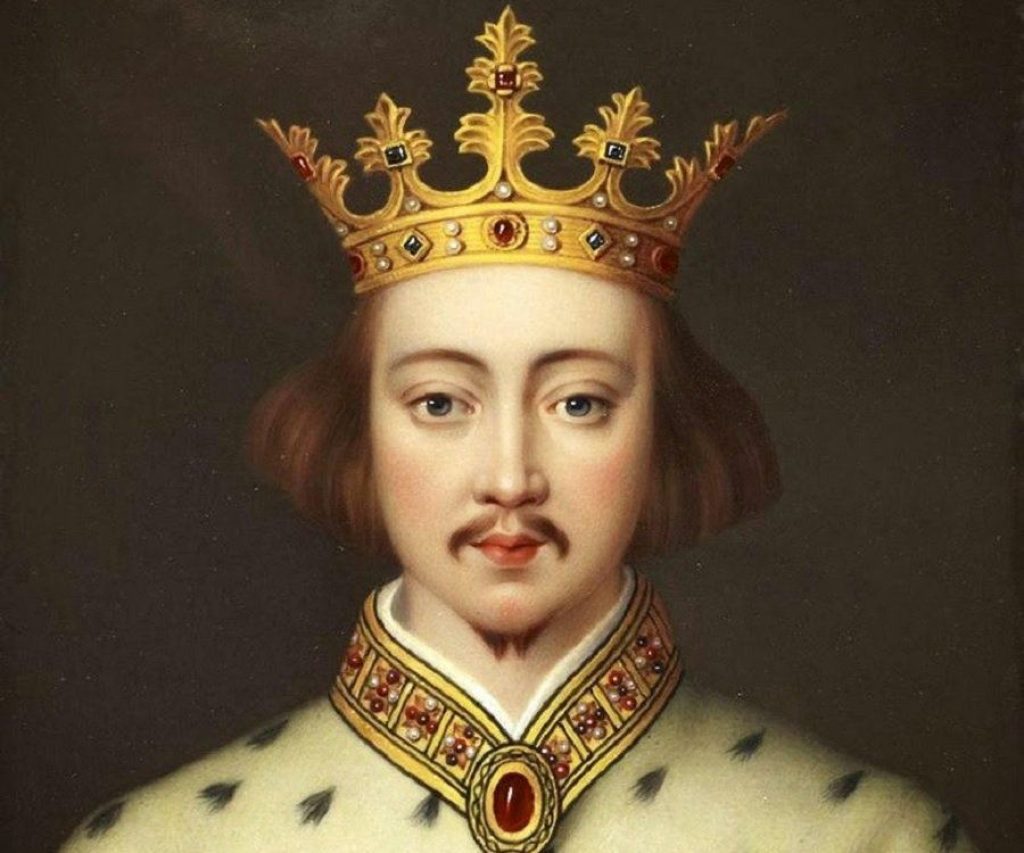
At the same time, England had been fighting France for decades. The early stages of the Hundred Years’ War had brought spectacular English victories at Crécy and Poitiers, the capture of the French king John II, and a generation under Edward III accustomed to viewing war as a source of glory, territory, and wealth. But by the end of Edward’s reign, the situation had changed. The French were gradually recovering lost territory, military expeditions were becoming increasingly expensive, England’s coastline was exposed to attacks, and the government constantly needed more money. Edward III died in 1377, leaving the crown to his ten-year-old grandson Richard II. Formally, England was ruled by a king. In practice, enormous influence rested with his relatives, senior nobles, and royal advisers, many of whom were regarded by a significant part of the population as corrupt and incapable of conducting the war effectively.
The government searched for new sources of revenue and found one in direct taxation. Three poll taxes were imposed within a few years, with the levy of 1380–1381 proving especially burdensome. The government expected to collect an average of one shilling per person above a specified age, although the amount could formally vary according to the taxpayer’s means. For a poor household this was serious money, particularly when several adult members of the family were liable. People began evading the tax on a massive scale, and collectors encountered a remarkable demographic miracle: tens of thousands of Englishmen seemed simply to disappear from the tax records.
Naturally, the government understood that the population had not actually vanished. In the spring of 1381, special commissions were dispatched to carry out new investigations and collect the missing revenue. The authorities wanted to find the taxpayers who had disappeared.
Instead, they found a revolution.
Wat Tyler Emerges From the Darkness of History
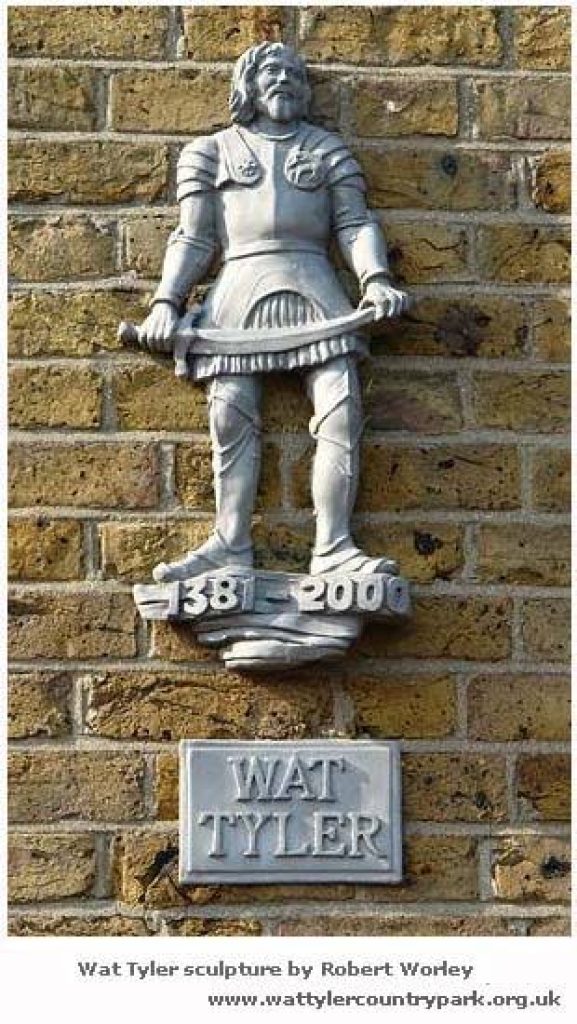
At the end of May 1381, an attempt to enforce tax collection in Essex met open resistance, and unrest spread with astonishing speed. Essex, Kent, Suffolk, Hertfordshire, Cambridgeshire — armed groups appeared, attacking representatives of the authorities, freeing prisoners, and destroying court and debt records. Even the familiar name “Peasants’ Revolt” somewhat distorts what was happening. This was not simply a mob of starving agricultural laborers carrying pitchforks. Craftsmen, townsmen, tenants, village officials, and relatively prosperous people were among the participants. Some may also have possessed military experience acquired during the Hundred Years’ War.
It was at this point that Wat Tyler appeared among the Kentish rebels. The sources do not explain why he became their leader, but his subsequent actions provide some clues as to why people were willing to follow him. Tyler clearly knew how to organize large groups, maintain at least a degree of discipline, and negotiate. It is possible that stories about his military past arose precisely because later observers found it difficult to explain how an ordinary craftsman could have acquired such abilities. Whatever the truth, what happened next looked nothing like an ordinary spontaneous rural riot: Tyler led his army directly toward the capital.
Along the way, the rebels seized administrative centers, released prisoners, and deliberately destroyed documents. This last point is particularly important. Medieval authority existed not only because of castles and armed men, but because of parchment. Who owned a piece of land? Who owed money to whom? How many days was a peasant required to work on his lord’s estate? What debts did a household carry? All of this was recorded. By burning archives, the rebels were not simply destroying paper. They were attempting to erase the legal memory of the feudal system.
A Tax Protest Suddenly Became an Argument About How Society Should Work
On June 12, the main rebel forces gathered at Blackheath near London. There the movement became associated with another man who would become a symbol of the events of 1381 — the radical priest John Ball. He is traditionally associated with the famous phrase: “When Adam delved and Eve span, who was then the gentleman?” To a modern reader, this may sound like an elegant slogan about equality, but in 14th-century society the question was explosive. If all people descended from Adam and Eve, and if birth did not make one human being a fundamentally different creature before God, then where had the hereditary right of one person to dominate another actually come from?
This was the moment when the uprising began turning into something far more dangerous than a protest against an unpopular tax. The rebels’ demands came to include the abolition of serfdom, freedom of labor, limits or standardization of land rents, amnesty for the rebels, and the removal of hated royal advisers. In the most radical accounts of their program, they were effectively demanding a dramatic simplification of the entire social hierarchy. People who had initially been furious about surrendering another shilling to the government were now asking a far more fundamental question: why should one person be dependent upon another simply because of the circumstances of his birth?
For the English monarchy, this represented an entirely different level of danger. A tax could be abolished, an official dismissed, a payment adjusted. But once tens of thousands of subjects began questioning the basic principles of the social order itself, compromise became far more difficult.
And Then the Rebels Took London
On June 13, the rebels entered the capital, assisted by part of London’s own population. Attacks began against buildings and individuals associated with the hated administration. The Savoy Palace of John of Gaunt, one of the richest and most powerful men in England, was destroyed. But far more alarming for the government was what happened at the Tower of London. The fortress, royal residence, and one of the greatest symbols of state authority was effectively opened to the rebels. Simon Sudbury, Archbishop of Canterbury and Lord Chancellor, was seized and beheaded. The royal treasurer, Robert Hales, met the same fate. For a brief period, the central government had effectively lost control of its own capital.
And here the fourteen-year-old Richard II demonstrated remarkable composure for someone his age. Instead of immediately attempting to suppress tens of thousands of armed people by force, he chose negotiation. On June 14, the king met part of the rebel movement at Mile End and agreed to a number of its demands. Charters began to be issued promising freedom from serfdom and other concessions. For a huge number of participants, this was enough. If the king himself, God’s anointed monarch, had granted them freedom, why continue risking their lives? Thousands began heading home.
But Tyler did not leave. And this is where his story becomes especially interesting, because the group that remained around him appears, according to the chronicles, to have demanded much deeper reforms. The original revolt was beginning to divide between those who had received what they wanted and were prepared to return home, and a radical core that now saw an opportunity to change England itself.
Wat Tyler’s Final Meeting
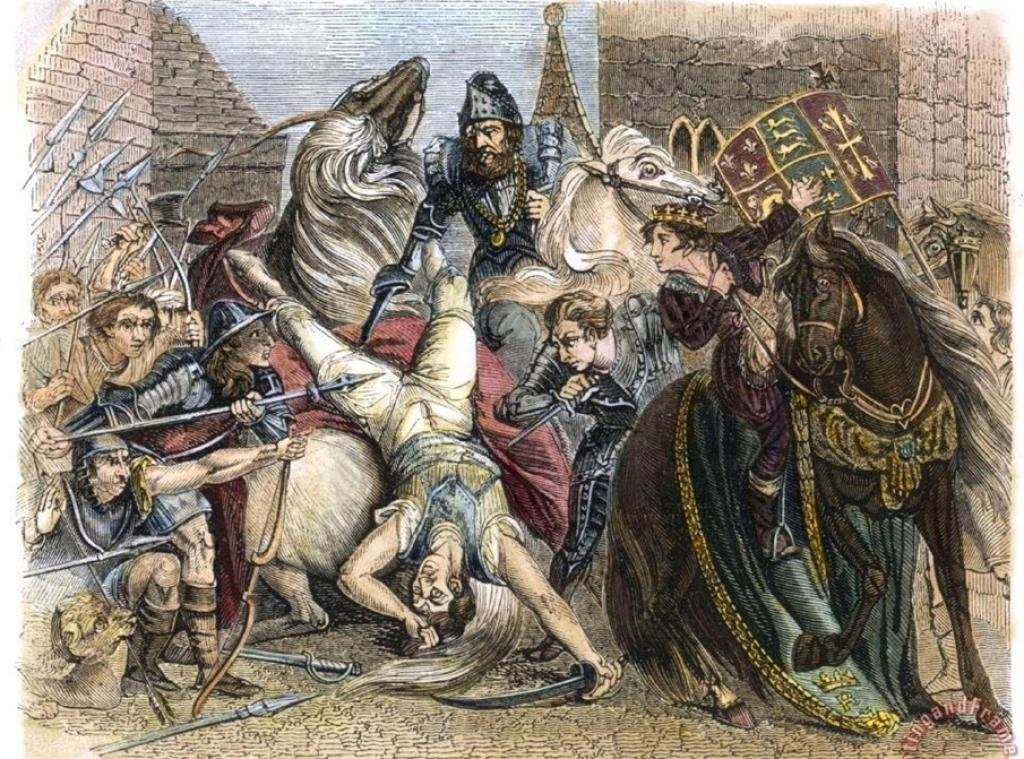
A second meeting took place at Smithfield on June 15. On one side stood the fourteen-year-old king. On the other was a man whose existence England’s ruling elite had probably not even been aware of a few weeks earlier. We cannot reconstruct their conversation word for word. The main accounts were written by chroniclers deeply hostile to the rebels, so particularly colorful descriptions of Tyler’s supposed rudeness, manners, and provocations should be treated cautiously. But the general meaning of the confrontation is clear: the rebel leader was demanding changes that went far beyond the original dispute over taxation.
Then the situation collapsed. A confrontation broke out between Tyler and the king’s men, and the Lord Mayor of London, William Walworth, attacked the rebel leader and seriously wounded him. Tyler was killed shortly afterward. It happened so quickly that a huge body of armed men suddenly found themselves staring at their mortally wounded leader while the king himself stood before them. A few wrong moves could have ended in a massacre.
Richard II then made perhaps the most famous decision of his youth. He rode toward the rebels and, according to the chroniclers, effectively told them to follow him, declaring that he would now be their leader. For a fourteen-year-old boy, it was an astonishingly dangerous political maneuver, but it worked. The crowd did not immediately rush to avenge Tyler. The king bought time, drew the rebels away from the immediate center of the capital, and waited until supporters of the government could regain control of the situation.
The King Promised Freedom — Then Took the Promise Back
Once the immediate danger had passed, the government’s tone changed. Royal forces began suppressing the remaining centers of resistance, the charters issued to the rebels were revoked, and the movement’s leaders were hunted down and executed. John Ball was captured and executed at St Albans. Revolts elsewhere in the country were gradually crushed as well. Tyler was gone, there was no unified leadership, and the government once again possessed organized armed force. At first glance, the result seemed perfectly clear: the peasants had lost, the king had won, and serfdom survived.
Yet this is where the central contradiction of 1381 emerges. Formally, the uprising really did fail. Richard II did not abolish serfdom, no great peasant constitution appeared, and Tyler’s immediate political demands were not implemented. But the economic forces that had produced the revolt could no longer be stopped by royal decree. Labor remained scarce after the Black Death, peasants continued moving in search of better conditions, wages kept rising, and landowners increasingly discovered that cash rents were more convenient and economically efficient than traditional feudal labor obligations. Wage restrictions became increasingly difficult to enforce, dependent peasants gradually purchased their freedom, and the poll tax that had directly triggered the catastrophe of 1381 was never repeated in the same form.
Serfdom in England did not disappear because Wat Tyler won at Smithfield. He did not win. It disappeared gradually because the economic world that had made the old system viable was itself fading away. The revolt merely demonstrated to England’s ruling elite how dangerous it could be to force society to live according to rules that economic change was already undermining.
A Man Who Appeared in History for Only a Few Weeks
This is what makes Wat Tyler’s biography so strange. Thousands of pages can be written about Alexander the Great. Napoleon’s life can be reconstructed almost day by day. Yet the man who brought an armed army of commoners into the English capital, took control of London, and forced an English king to discuss the abolition of serfdom barely exists in the historical record before the revolt began. He suddenly appears in the spring of 1381, acts for several weeks, and dies. Everything outside that brief period quickly becomes a mixture of assumptions, later legends, and artistic reconstruction.
That is precisely why Tyler is such an attractive figure for cinema. Where the documents fall silent, a screenwriter gains enormous freedom to build a human being around a known historical name. This is especially important to remember when watching The Uprising: the published information about the film suggests that Paul Greengrass has created a personal dramatic backstory for Andrew Garfield’s character. The film may therefore recreate the political and social atmosphere of the rebellion with considerable accuracy while presenting details of Tyler’s private life that historical sources simply cannot confirm.
But the real history is almost unbelievable even without artistic additions. In 1381, England was still a deeply hierarchical society in which royal power was understood as sanctioned by God, the landed aristocracy dominated the countryside, and a person’s birth determined much of his future. Yet only a few decades of economic change, failed taxation policies, and political crisis were enough for armed commoners to enter the capital, seize the Tower of London, and force the king to negotiate with them.
And That Is Why Tyler’s Revolt Was More Important Than Tyler Himself
We tend to imagine the Middle Ages as a society built around an almost immovable social pyramid: king, nobles, clergy, knights, peasants — everyone knows their place, and the existing order seems eternal. England in 1381 presents a very different picture. The plague destroyed an enormous part of the population and created a labor shortage. Scarcity increased the value of work. The government attempted to restrain wage growth through legislation. The continuing war demanded more money. The state imposed direct taxes. People began evading them. Tax commissions tried to force them to pay. Distrust of the political elite was already widespread. Radical preachers gave the growing anger an ideological explanation.
And then a man appeared who was capable of turning all of this into a movement.
That is why it is misleading to explain the Peasants’ Revolt simply through the poll tax. The tax was the match. The powder had been accumulating for decades. Without the Black Death, the shortage of workers, attempts to freeze wages, the Hundred Years’ War, and the crisis of royal administration, one additional shilling would probably never have brought tens of thousands of people to the gates of London.
We know almost nothing about who Wat Tyler was before 1381. We do not know what his ordinary days looked like, where exactly he learned to command men, or whether he ever actually fought in France. Cinema may now fill some of these gaps — but that will be a fictional Tyler.
The historical Tyler exists for us for only a few weeks.
Yet those weeks were enough.
In the summer of 1381, an unknown craftsman found himself standing opposite the King of England and forced him to seriously discuss a world in which a peasant would no longer belong to his lord. Tyler did not survive that day, his revolt was crushed, and the king’s promises were revoked. But the old order he had tried to destroy by force was already being dismantled by history itself — more slowly, more quietly, and far more effectively.