India Could Revive the Il-214: Why a Failed Project Has Suddenly Become Very Interesting for Russia Again

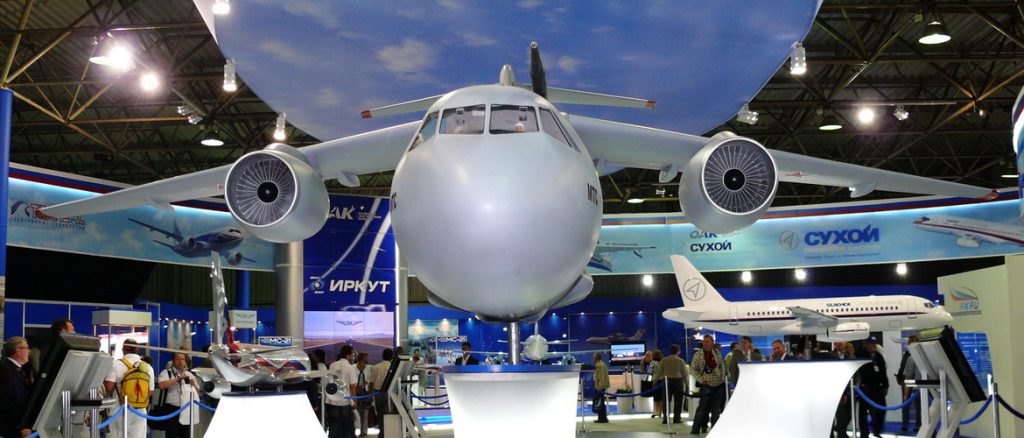
Sometimes an aircraft project is abandoned because nobody needs the aircraft anymore. With the Il-214, almost the opposite happened. The transport aircraft that Russia and India began developing jointly in the early 2000s never made its first flight. India withdrew from the program, cooperation ended, and after years of work, the most tangible result was a full-scale mock-up. The story appeared to be over. But a decade later, it turns out that the problem the Il-214 was originally designed to solve never disappeared.
In August 2026, India’s Ministry of Defence launched one of the country’s largest aviation tenders in recent years. The Indian Air Force wants to acquire 60 medium transport aircraft, primarily to replace its aging An-32 fleet and partly take over missions currently performed by heavier Il-76s. The program is estimated at roughly 1 trillion rupees, or about $10 billion. More importantly, New Delhi intends to purchase only 12 aircraft fully built abroad. The remaining 48 are expected to be manufactured in India under the Make in India initiative.
The leading candidates are already well-established aircraft. Tata could offer the American C-130J Super Hercules, while Mahindra could partner around Brazil’s C-390 Millennium. Airbus has previously promoted the A400M, although its payload capacity exceeds the upper end of India’s requirement. And then HAL appeared with a completely unexpected possibility: according to specialized media reports, the Indian company is considering returning to Russia and dusting off the old joint Il-214 project.
For now, this is not a contract, not a selected aircraft, and not even confirmation that the Russian design will definitely reach the final stage of the competition. Yet the possibility alone is remarkable because the Il-214 would have to compete against aircraft that already exist, fly, and are in serial production.
And that raises a much more interesting question than simply “Why would India want an old Russian project?”
What if India could give Russia the opportunity to finally build an aircraft that Russia itself has needed for years?
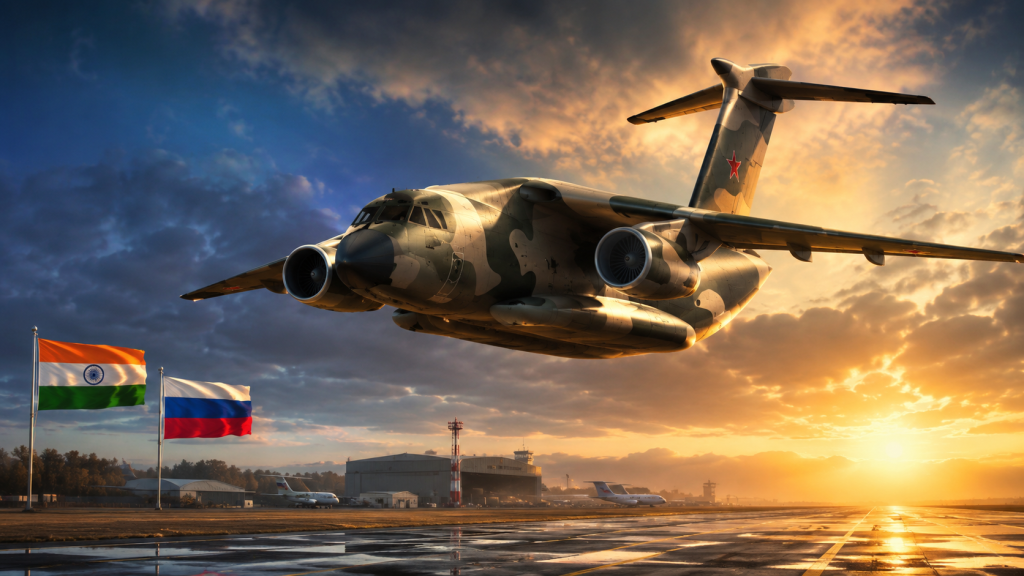
The Il-214 Was Born Because Russia and India Had the Same Problem
The project dates back to 2001, when India’s HAL, Russia’s Ilyushin, and Irkut agreed to jointly develop a new transport aircraft. In 2007, Russia and India signed an intergovernmental agreement, and in 2010 they established a joint venture. The program became known as the MTA — Medium Transport Aircraft. In Russia, the aircraft was designated Il-214.
The concept was straightforward. Both Russia and India had inherited large fleets of Soviet-designed transport aircraft, but there was a substantial gap between light transports and the heavy Il-76. Sending a large four-engine Il-76 to carry ten or fifteen tons of cargo was not always economically sensible, while aging An-12s and An-32s were gradually approaching the end of their useful lives.
The Il-214 was intended to fill precisely this gap. A twin-engine jet transport with a payload of roughly 20 tons could carry personnel, vehicles, and cargo, perform airborne operations, and handle many routine transport missions far more economically than the heavy Il-76.
On paper, the idea looked almost ideal.
But aircraft are not built on paper.
Russia and India Already Tried to Build It Once — and Failed
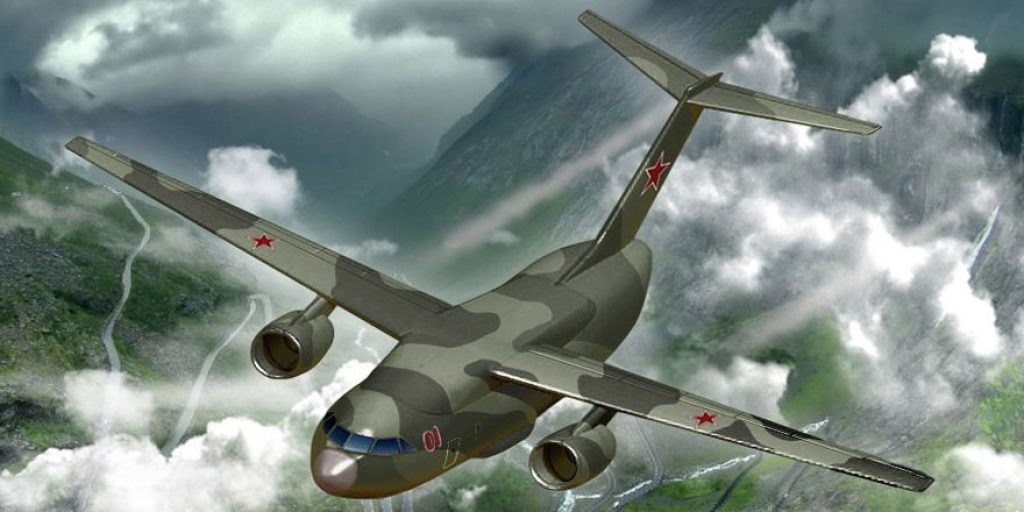
The program began running into trouble relatively early. The two sides disagreed over the aircraft’s configuration, propulsion, division of work, and technical requirements. Deadlines repeatedly slipped while development costs continued to rise. India increasingly questioned why it should continue investing in a program that, after years of work, still seemed far from its first flight.
In 2016, HAL finally withdrew from the project. Russia decided to continue development independently, and the subsequent Russian evolution of the concept became known as the Il-276. That is essentially all the explanation needed regarding the confusing designations: the Il-214 was the original Russian-Indian aircraft, while the Il-276 was its Russian continuation after India withdrew. In the context of the current story, what matters is the possible revival of the original Russian-Indian Il-214 concept.
The project never reached serial production.
And today, that is the Russian proposal’s biggest weakness.
Lockheed Martin has the C-130J, which is operated by numerous countries and is already familiar to India. Embraer has the C-390, which is in serial production and steadily gaining international customers. Russia, by contrast, would effectively be offering India an aircraft that still needs to be turned into an actual flying machine.
Yet paradoxically, that weakness could also become the Il-214’s greatest advantage.
Because Russia Can Offer India Something More Than an Aircraft to Buy
India’s tender is structured in an unusual way. The Ministry of Defence has invited Indian companies to select foreign partners. The winning team will be expected to establish production, final assembly, maintenance, and repair capabilities in India. Of the 60 aircraft, only 12 are expected to arrive fully built, while the remaining 48 will be manufactured domestically.
That matters enormously.
India is no longer satisfied with simply purchasing foreign weapons. New Delhi wants technology, manufacturing capability, engineering expertise, and the ability to gradually reduce dependence on external suppliers.
The C-130J is an American aircraft.
The C-390 is Brazilian.
India could secure deep localization of either aircraft, but their fundamental designs already exist, their intellectual property belongs to their original developers, and Indian industry would essentially be joining an established program.
The Il-214 is fundamentally different.
It was conceived from the beginning as a Russian-Indian aircraft.
If the two sides really return to the original model, Moscow could theoretically offer HAL far more than licensed assembly: Indian engineers could participate in completing the aircraft’s development, major structural components could be produced in India, modernization could be carried out jointly, and the two countries might even cooperate on exports.
The proposition to New Delhi would therefore sound very different.
Not:
“Buy our transport aircraft.”
But:
“Let’s build our own transport aircraft together.”
For India’s current industrial policy, that could be a powerful argument.
Now Look at the Same Story From Russia’s Perspective
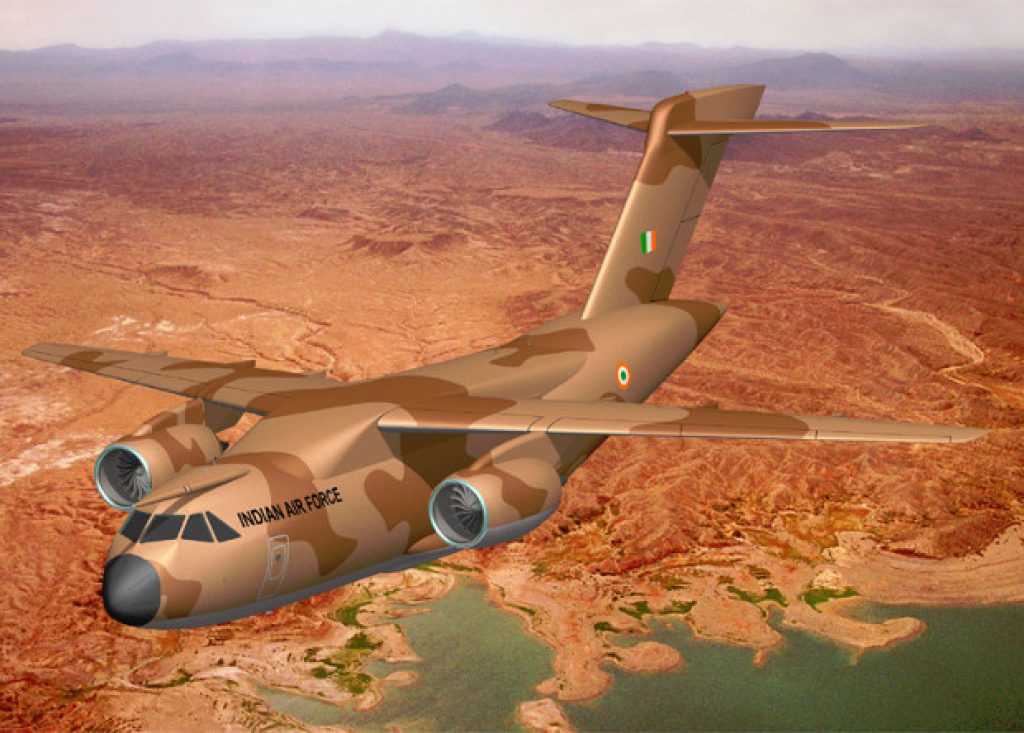
This is where things become even more interesting.
Russia has been trying for decades to solve its medium military transport aircraft problem. The Soviet An-12 has long been out of production, the remaining fleet continues to age, and heavy Il-76s are not the most economical solution for every transport mission. This is precisely why the Russian military has long required dozens of aircraft in approximately the same class as the Il-214.
But developing an entirely new transport aircraft is enormously expensive.
A new airframe has to be designed.
Static and fatigue tests must be performed.
Prototypes must be built.
Flight-control systems have to be developed.
Avionics.
Cargo-handling equipment.
Airborne deployment systems.
Engines have to be tested.
Thousands of hours of flight testing must be completed.
Factories must be prepared.
A maintenance network must be established.
And all of this has to be paid for long before the first serial aircraft begins generating any return on the investment.
This is where the potential Indian contract acquires a completely different significance for Russia.
Russia’s Biggest Gain May Not Be the 60 Indian Aircraft at All
Imagine the most favorable scenario for Moscow.
HAL selects the Il-214. Russia and India agree on a modernized configuration. New Delhi finances its share of development and guarantees an order for 60 aircraft. Russia subsequently places its own order for the type.
The economics of the entire program change immediately.
Instead of Russia funding development largely on its own for a relatively limited domestic production run, the project becomes a large international program with a guaranteed Indian market.
And 60 aircraft is already a substantial starting point.
India’s tender also leaves room for additional purchases beyond the initial batch. If Russia later orders several dozen aircraft for itself, total production could easily exceed one hundred airframes.
For the aviation industry, the difference between producing 30 aircraft and 100 aircraft is enormous.
Development costs are spread across more units. Component manufacturers receive larger orders. Establishing comprehensive maintenance and repair infrastructure becomes economically viable. Serial production becomes cheaper.
Most importantly, one of the greatest dangers facing almost any new Russian transport aircraft disappears: an excessively small production run.
India Could Effectively Help Pay for an Aircraft Russia Needs for Itself
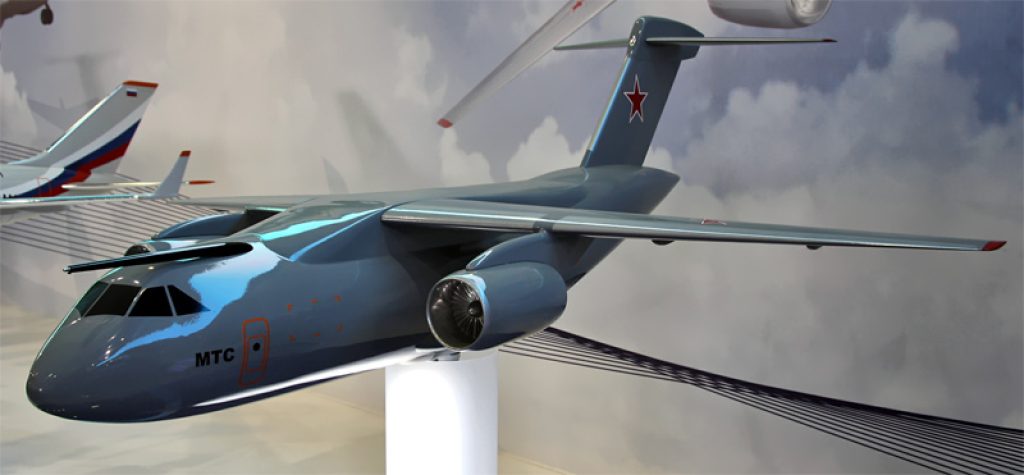
Of course, New Delhi would not be subsidizing Russian military aviation out of generosity. India would be paying for its own aircraft, its own industry, and access to technology.
But this is precisely how joint development works.
If two countries use the same basic platform, much of the cost of creating that platform does not have to be paid twice.
The aerodynamics are shared.
The basic airframe is shared.
Much of the testing is shared.
Most major systems are shared.
Production tooling serves a much larger fleet.
Every additional large order therefore reduces the financial burden of the program as a whole.
Russia could potentially acquire its own medium transport aircraft for significantly less than it would cost to develop and industrialize an entirely domestic platform for the Russian market alone.
And this may be the single greatest potential benefit for Russia in the entire Il-214 story.
Not export profits.
Not prestige.
Not even a return to the Indian market.
But the opportunity to share with India the cost of developing an aircraft both countries need.
Then There Is the Engine — and Its Impact Could Extend Beyond the Il-214
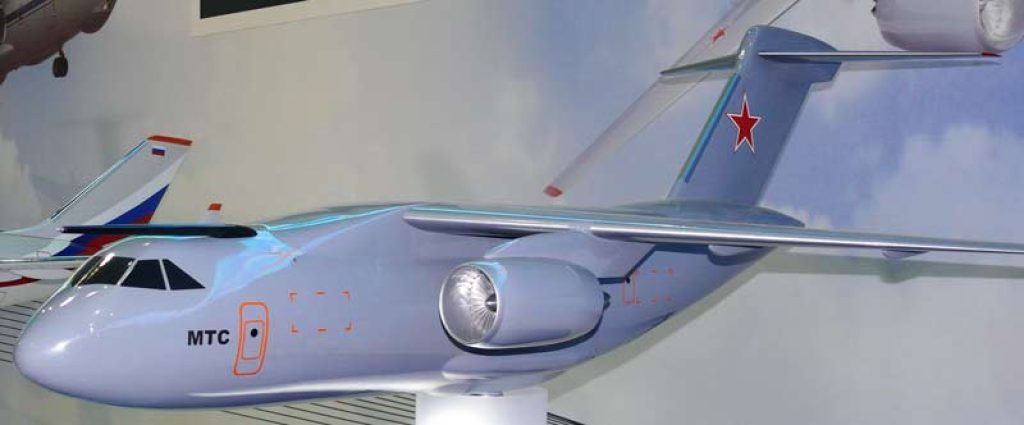
The powerplant was one of the stumbling blocks of the original project. The Indian side was dissatisfied with some Russian proposals, while developing a new engine would inevitably increase both the cost and schedule of the program. Disagreements over propulsion were among the factors that contributed to the collapse of cooperation.
If the project is genuinely revived, the engine question will have to be resolved again.
And that could matter considerably for Russian industry.
A modern aircraft engine is extraordinarily expensive to develop. The more aircraft that use it, the easier it becomes to justify development, testing, and serial production costs. A large Russian-Indian order could dramatically improve the economics of such a program.
And an engine is not necessarily limited to one aircraft.
A successful powerplant in this thrust class could potentially support other aviation programs, while a large production run would create manufacturing capacity, service infrastructure, and a supply of spare parts for decades.
An Indian order could therefore support far more than Ilyushin alone.
It could provide work for a broad segment of the Russian aerospace industry.
There Is Something Else Russia Needs: Scale
Modern aircraft manufacturing is particularly unforgiving of small production runs.
A manufacturer can design an excellent aircraft, but if only twenty are built, every individual airframe becomes expensive. Suppliers have little incentive to maintain component production. Modernization becomes costly. Potential export customers become wary of buying an aircraft operated by almost nobody else.
A large fleet solves many of these problems.
Sixty aircraft for India.
Several dozen for Russia.
Potential export customers.
Suddenly, the prospect of a fleet exceeding one hundred aircraft becomes entirely realistic.
And that transforms the economics of producing engines, landing gear, avionics, airframe structures, and spare parts.
The project gains something the Il-214 never received the first time around.
Scale.
And in aviation, scale often determines whether an aircraft becomes a viable platform for the next thirty years or remains an expensive technological curiosity.
India Could Also Help With Exports
The original MTA concept was intended not only for Russian and Indian military requirements, but also for sales to third countries.
Today, that idea may be even more attractive than it was twenty years ago.
India is actively trying to transform itself from a major arms importer into a significant exporter. If most Il-214s were produced at HAL facilities, New Delhi would inevitably have an incentive to seek additional customers.
For Russia, this could be useful.
A Russian-Indian aircraft may be viewed differently by some potential customers than an exclusively Russian platform. India could bring its own financing mechanisms, service centers, and diplomatic relationships to the program.
In theory, a fairly interesting industrial model could emerge.
Russia produces some systems and engines.
India manufactures other structural components.
HAL assembles aircraft for the Indian Air Force.
Russian factories produce aircraft for Russian requirements.
Export aircraft are manufactured according to whatever arrangement the two partners eventually negotiate.
At that point, this is no longer simply the export of a Russian aircraft.
It becomes a joint aviation ecosystem.
And such an ecosystem could survive for decades.
But Here Is the Uncomfortable Reality: the Il-214 Currently Loses to Its Rivals on the Most Important Measure
It does not fly.
That is why reports about HAL’s possible return to the project should be treated cautiously.
India will not be choosing between specifications printed on glossy brochures.
The C-130J exists.
The C-390 exists.
Both are in serial production.
Their real-world performance, maintenance costs, and reliability are known. Trained crews, spare parts, and global support networks already exist. India itself already operates the C-130J.
The Russian-Indian Il-214, meanwhile, failed to reach even its first flight during roughly a quarter-century of history. By the time India withdrew from the program, there was a full-scale mock-up — but no operational aircraft.
That is an enormous risk.
If New Delhi selects the C-390 or C-130J, deliveries can begin relatively quickly.
If it selects the Il-214, development would effectively have to be restarted.
The final configuration must be determined.
An engine selected.
The design updated using technologies available in the 2020s.
Prototypes built.
Testing completed.
Production established.
Only then can serial aircraft begin to appear.
India would therefore need to receive something very significant in exchange for accepting that risk.
Russia May Have to Offer Not the Best Aircraft — but the Best Terms
This is where the Il-214 may have its only realistic opportunity.
Competing with the C-130J on accumulated operational experience is impossible.
Competing with the C-390 on technological readiness is equally difficult.
But Russia could potentially offer something that India sometimes values even more than a finished product:
maximum technological independence.
Deep localization.
Joint development.
A high percentage of Indian components.
HAL participation in engineering work.
The ability to independently maintain and modernize the aircraft.
Shared export opportunities.
Potentially far greater freedom to integrate Indian equipment and systems.
At that point, the Il-214 is no longer competing with the C-390 and C-130J purely as an aircraft.
Two different models are competing.
Buy a proven foreign aircraft and manufacture it in India.
Or:
Work with Russia to bring a genuinely joint Russian-Indian platform into production.
That is a much more complicated decision.
For Russia, Such a Contract Could Be Worth More Than Simply Selling 60 Aircraft
If Russia simply sold India 60 finished transport aircraft, it would receive export revenue, provide work for its factories, and earn money from maintenance for decades.
That would be a good contract.
But a revived Il-214 program could work differently.
Russia could gain Indian participation in development financing.
A large initial production run.
Work for design bureaus and suppliers.
An additional market for engines and components.
Lower costs for Russia’s own aircraft.
Renewed deep industrial cooperation with HAL.
And potentially a joint route into third-country markets.
In other words, India could help solve a problem that the Russian aviation industry has been trying to address on its own for many years.
This creates a curious paradox.
Russia might earn less from directly manufacturing the Indian aircraft because 48 of the 60 machines are expected to be produced in India.
But in the long term, it could gain considerably more from the overall program.
The Most Important Il-214s Might Not Be the Indian Ones at All
For now, all of this remains hypothetical. India has indeed launched a competition for 60 medium transport aircraft, HAL is among the Indian companies involved, and specialized media have reported that the company may consider renewed cooperation with Russia around the Il-214. But there is no official decision that HAL will actually offer the aircraft, much less any decision by the Indian Air Force to select it.
And the competition is formidable.
Yet the possibility of the Il-214’s return illustrates just how strangely aviation history sometimes develops.
In 2001, Russia and India decided to build a medium transport aircraft together.
They spent years negotiating.
Created a joint venture.
Failed to agree.
Went their separate ways.
A decade passed.
India still needs a medium transport aircraft.
Russia still needs an aircraft in the same class.
The aging An-32s and An-12s have not become any younger.
And the project that was supposed to solve the problem more than twenty years ago has suddenly returned to the table.
That is why the potential revival of the Il-214 is not really interesting because Russia might sell India another batch of military aircraft.
In the best-case scenario for Moscow, something much more unusual could happen.
India could order 60 transport aircraft for itself — and in doing so help Russia finally obtain the medium transport aircraft it has needed for decades.
And if the program really does reach serial production, the most important Il-214s in this story may not be the 60 aircraft delivered to the Indian Air Force.
They may be the ones Russia orders afterward.