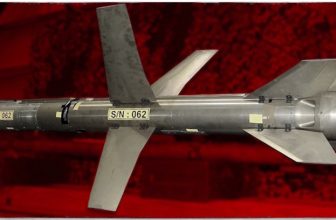
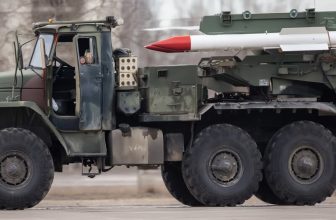
Against the backdrop of the war surrounding Iran, the topic of unusual weapons—so-called graphite bombs—is coming up more and more often.
The news simply gave us a reason to think about them again. But the technology itself is far from new—and much more interesting than it seems at first glance.
Because this is a rare type of weapon whose purpose is not to destroy a target, but to render it inoperable.
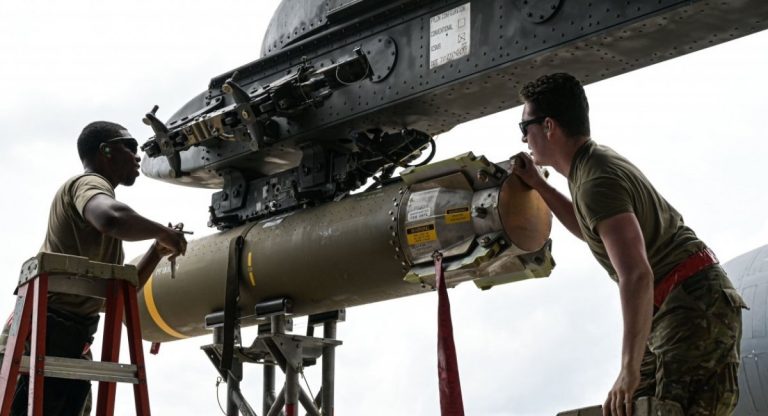
A Bomb That Doesn’t Destroy
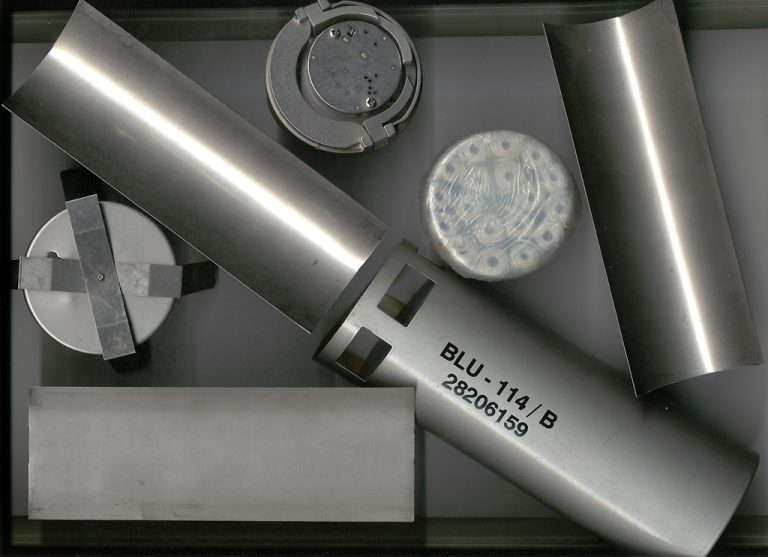
To put it simply, a graphite bomb isn’t exactly a «bomb» in the usual sense.
It does not destroy buildings or create a powerful shock wave.
Its purpose is different:
→ cut off power to a large area
And do it as quickly as possible.
Such munitions are even referred to as “soft kill” because their primary effect is to paralyze infrastructure rather than physically destroy it.
How It Works
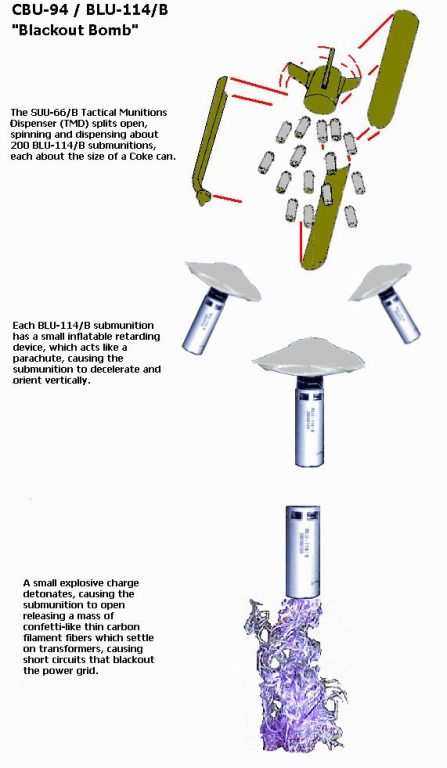
The mechanics behind this are surprisingly simple—and that is precisely what makes it so powerful.
After a bomb is dropped or detonated in midair:
- spreads out over the target
- emits a cloud of extremely fine carbon (graphite) fibers
- These fibers settle on power lines and equipment
And then the main event takes place.
Graphite is a good conductor.
When these strands come into contact with high-voltage power lines, a short circuit occurs.
Then a chain reaction:
- power surge
- network overload
- substation shutdowns
- activation of safety systems
The result is a power outage affecting a neighborhood, a city, or even a country.
Why does this work so effectively?
Power grids are complex, but they have a weak point:
they do not handle uncontrolled short circuits well.
Graphite fibers create exactly this situation:
- They’re thin.
- there are a lot of them
- They end up at different points right away
It’s not a single impact—it’s hundreds of micro-punctures happening at the same time.
As a result, the network shuts itself down to prevent total collapse.
What does the application look like?
A typical scenario looks like this:
- A delivery vehicle (aircraft or missile) delivers the munition
- Submunitions are deployed above the target
- They disperse a «web-like» cloud of conductive threads
- These wires cover the substations and power lines
It all happens in a matter of seconds.
And the effects can last for hours—or even longer.
History of Use
This is not an experimental weapon.
Graphite bombs have already been used:
- in the Gulf War
- in Yugoslavia (1999)
- in Iraq (2003)
In one instance, up to 70% of the country’s power grid was taken out of service.
And yet, most of the infrastructure remained physically intact.
Why This Weapon Is Relevant Again
Modern warfare is increasingly dependent on energy.
The following do not work without electricity:
- connection
- radars
- Air defense
- factories
- logistics
Therefore, an attack on the power grid is an attack on the entire system at once.
And this is where graphite bombs offer a unique advantage:
→ It is possible to paralyze a country without causing widespread destruction
But there’s a catch
Despite its “mild” nature, the consequences can be serious.
Because power outages aren’t just about military facilities.
It’s also:
- hospitals
- water supply
- transportation
- connection
In the past, it was precisely these widespread power outages that led to humanitarian consequences, despite the absence of direct damage.
Is it possible to quickly restore the system?
Yes—and that’s another unique feature.
Unlike destroyed structures:
- The lines can be cleared
- equipment — restart
- network — gradually restore
Sometimes it takes hours. Sometimes it takes days.
But the problem lies elsewhere:
Such attacks can be repeated over and over again, preventing the system from recovering.
Limitations of the Technology
Graphite bombs aren’t perfect.
Their effectiveness depends on:
- weather conditions (humidity may reduce the effect)
- type of infrastructure
- levels of protection and insulation
Nevertheless, most power grids remain vulnerable to such attacks.
Conclusion
Graphite bombs are an example of how the very logic of war is changing.
In the past, the objective was simple:
to destroy the target.
Now the question is increasingly phrased differently:
make it stop working.
And in that sense, such weapons may prove to be no less effective than missiles and bombs—
simply because they strike not at infrastructure, but at the very fabric of life itself.