Gripen Finally Gets Its Long-Range Spear: Why Sweden Needed Taurus After 20 Years

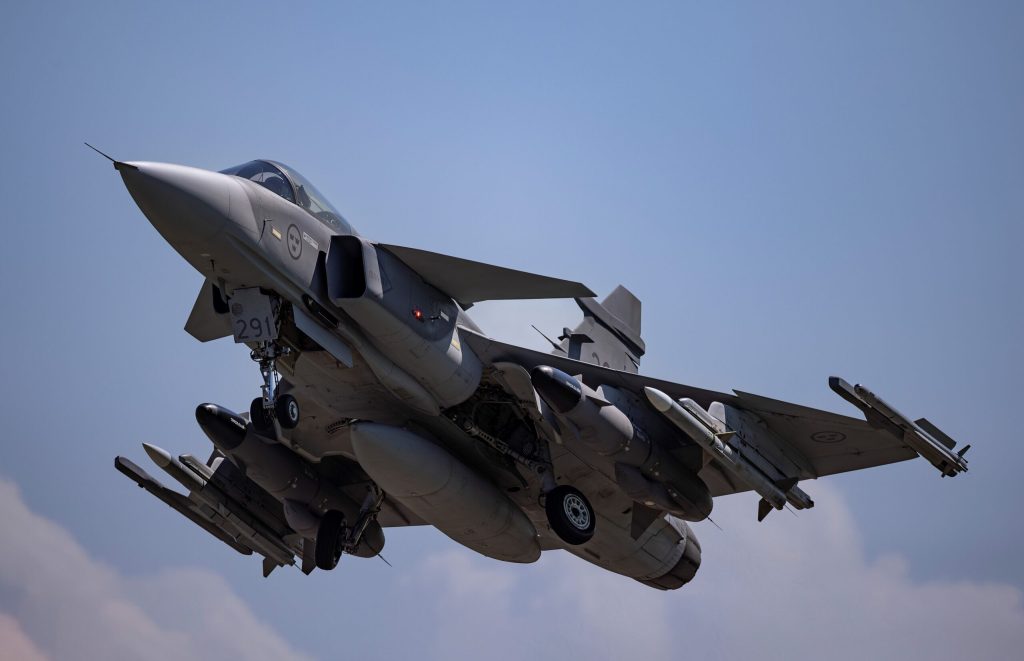
For more than two decades, this combination has existed in Saab promotional materials: the compact JAS 39 Gripen carrying two massive Taurus KEPD 350 cruise missiles under its wings. As early as 2002, Saab listed Gripen among the aircraft capable of carrying the new weapon. Taurus subsequently appeared in weapons catalogs and on demonstration aircraft, making it easy to assume that the Gripen–Taurus combination had long been an operational capability.
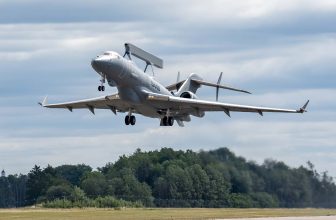
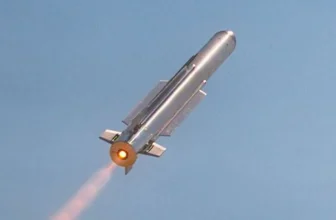
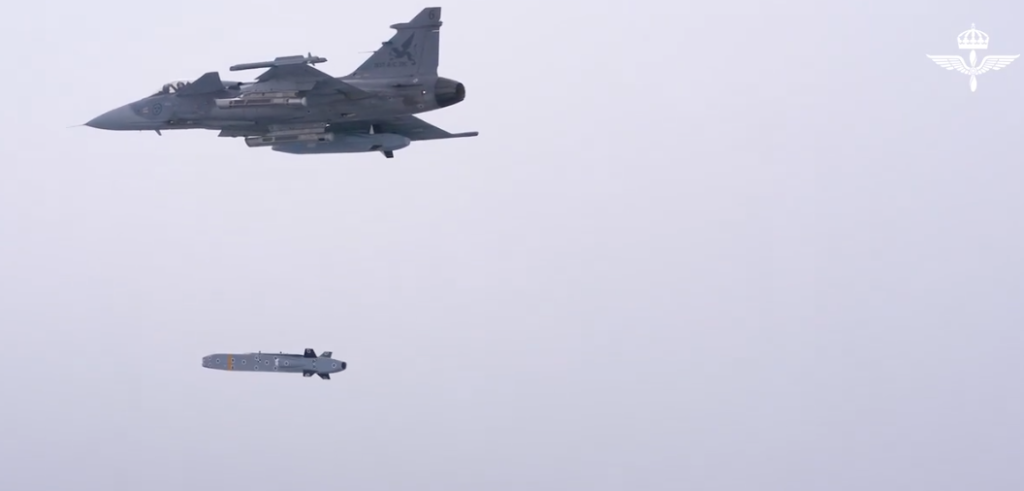
But on August 21, 2026, something happened that had never officially occurred before: a Swedish Air Force Gripen C actually launched a Taurus KEPD 350 for the first time. The test took place at the Vidsel range in northern Sweden. This was more than a publicity demonstration. Taurus had been shown with Gripen before, but Sweden had never conducted a confirmed live launch of the missile from the aircraft.
And this is where the story becomes interesting. Taurus is hardly a new missile, Gripen is hardly a new aircraft, and their compatibility has been discussed for more than two decades. So why has Sweden decided to turn a long-advertised technical possibility into a real combat capability only now?
The answer has less to do with the missile itself than with the changing role of the Swedish Air Force.
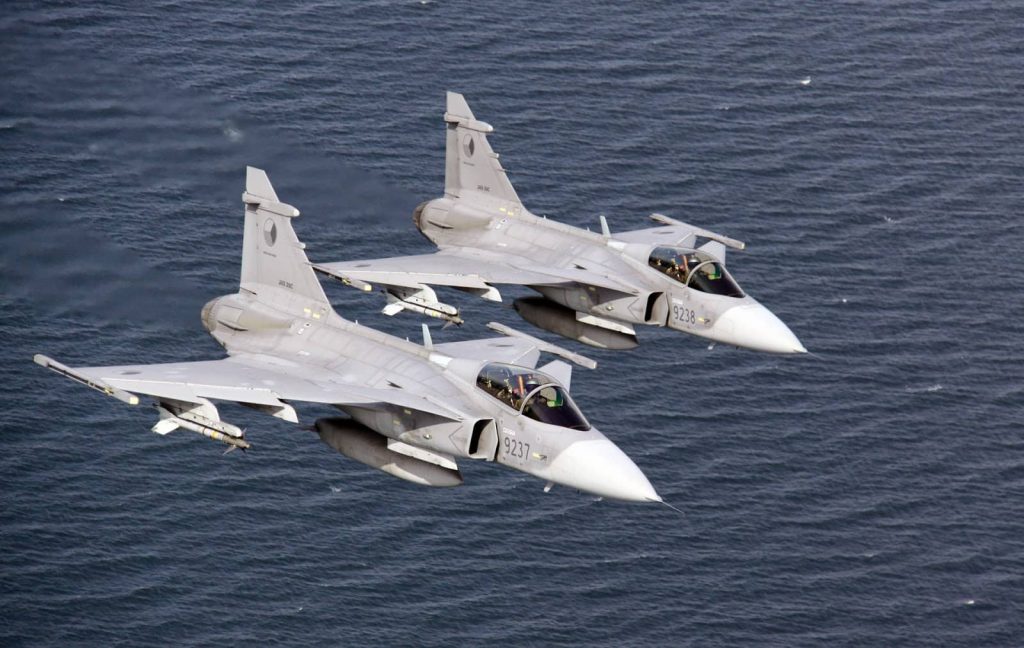
Twenty Years of “Can Carry It” — and Only Now the First Launch
The story is almost paradoxical. When the German production order for the KEPD 350 was announced in 2002, Saab explicitly mentioned the JAS 39 Gripen among potential carrier aircraft alongside the Tornado, Eurofighter, and F-16. Taurus continued to appear in Gripen weapons materials in the following years, while Saab presented it as one of the strike weapons compatible with the aircraft.
But there is a huge difference between saying that an aircraft “can carry” a missile and having an operational combat system ready for war. The weapon has to be integrated into the aircraft’s mission and weapons-management systems, data exchange has to work correctly, safe separation of the heavy missile has to be tested across different flight regimes, mission programming has to be validated, and the entire combination has to undergo certification. Only after that come trained pilots, ground crews, stocks of missiles, maintenance infrastructure, and actual operational procedures.
Until recently, Swedish Gripen units did not have that complete Taurus capability. In fact, Sweden itself was not an operator of the KEPD 350 at all. The missile entered service with Germany, Spain, and South Korea, while Sweden’s Saab participated in the program as an industrial partner.
The situation began changing only in recent years. Sweden formally moved toward acquiring and integrating Taurus for the Gripen C/D, with full integration originally expected later in the decade. Now an actual launch has already taken place in the summer of 2026, although that alone does not mean the weapon has reached full operational capability.
This creates a rather unusual situation: a weapon that existed for Gripen as a technical possibility for more than twenty years is finally becoming part of its real combat system.
What Exactly Is Taurus?
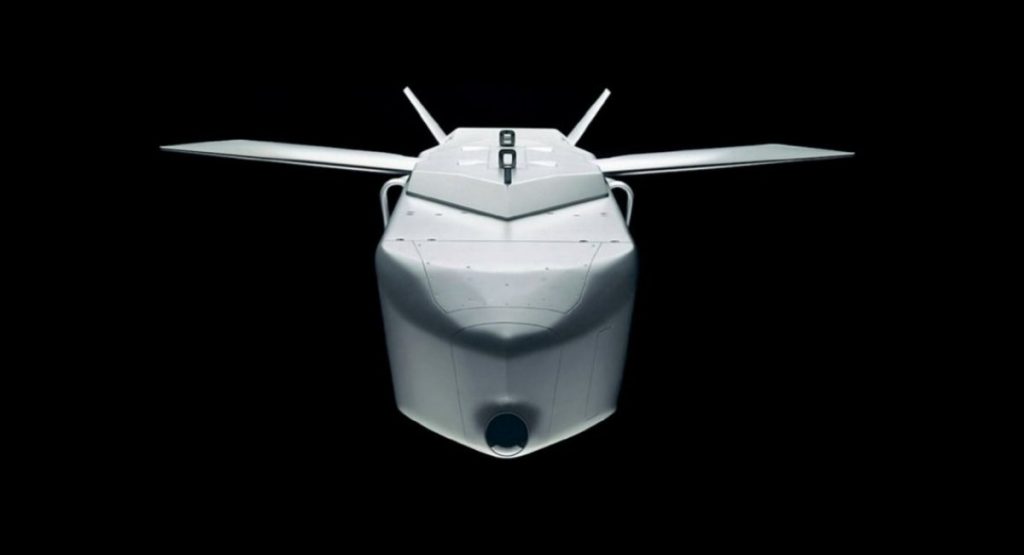
The KEPD 350 was developed by Taurus Systems, the German-Swedish joint venture established by MBDA Deutschland and Saab. It is a substantial air-launched cruise missile, approximately five meters long, with a launch weight of around 1,400 kilograms and a 481-kilogram warhead. Its flight speed is generally stated as approximately Mach 0.6–0.95. Current Saab information gives its range as more than 500 kilometers, meaning the often-repeated figure of roughly 350 kilometers reflects older public data and the KEPD 350 designation more than the currently advertised maximum range.
But range is not the Taurus’s most important characteristic. This is not simply a weapon designed to deliver a large explosive charge hundreds of kilometers away. It was created specifically to attack hardened targets deep inside hostile territory: command centers, bridges, airfield infrastructure, major radar installations, and fortified facilities.
For this purpose, Taurus uses the tandem MEPHISTO warhead. The precursor charge creates a path through the obstacle before the main penetrator enters the structure and detonates at a predetermined point. The missile is designed to recognize layers and voids within a target, allowing the warhead to explode at the desired depth inside a hardened or multi-level structure.
In other words, Taurus is not simply designed to “blow something up from far away.” Its purpose is to destroy targets that ordinary air-delivered bombs may struggle to defeat, while allowing the launching aircraft to remain far from the most dangerous part of the enemy’s air-defense network.
Why 500 Kilometers Changes Gripen More Than It Seems
The JAS 39 was originally designed primarily as a relatively light multirole fighter. Swedish doctrine emphasized operations from dispersed airfields and road bases, rapid turnaround between sorties, and relatively limited ground infrastructure. Gripen was expected to defend Swedish airspace, intercept hostile aircraft, and attack targets within tactical depth.
Taurus introduces an entirely different level of capability.
The aircraft potentially no longer needs to approach a heavily defended target. After release, the missile flies independently at low altitude, using a combination of inertial navigation, satellite navigation, terrain-referenced navigation, and image-based guidance. Its low-altitude flight profile is specifically intended to complicate interception by enemy air defenses.
As a result, the effective strike zone is no longer determined simply by the Gripen’s combat radius. The aircraft increasingly becomes a mobile launch platform, delivering Taurus to a favorable release point, launching the missile, and withdrawing without penetrating the most dangerous parts of the enemy’s air-defense network.
For a relatively small air force such as Sweden’s, that represents a qualitatively new capability.
Gripen Is Small. Taurus Definitely Is Not.
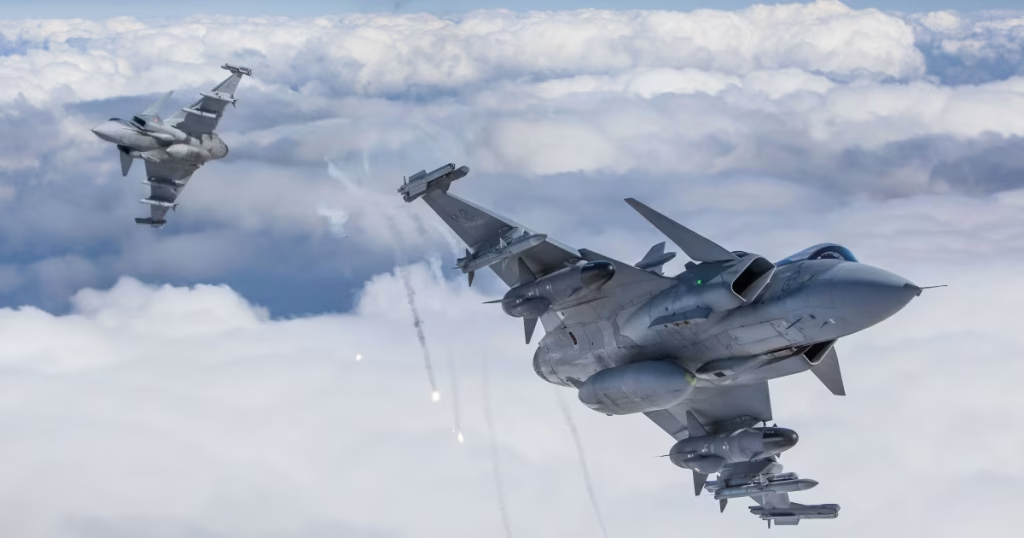
There is another interesting aspect to this combination. Taurus weighs approximately 1.4 tons. For the relatively compact Gripen C, that is a very substantial external load. The fighter’s maximum takeoff weight is around 14 tons, meaning a single missile weighs roughly one-tenth as much as the entire aircraft at maximum takeoff weight.
Gripen has often been shown in promotional material carrying two Taurus missiles. Such a configuration is technically possible, but in real operations it inevitably affects aerodynamic drag, fuel consumption, maneuverability, and the amount of other weapons the aircraft can carry. Integrating a heavy cruise missile is therefore far more complicated than simply finding a suitable pylon.
Gripen does, however, have an important advantage: its architecture was designed with the integration of different weapons in mind. Standardized interfaces reduce the amount of hardware modification required when new systems are added.
This is one reason Gripen has accumulated such a diverse range of European, American, and South African weapons throughout its service life.
Taurus Is About More Than Range
Long-range cruise missiles are often compared almost entirely by numbers: 250, 350, 500, or 1,000 kilometers. For Taurus, that approach is particularly misleading.
The missile was designed as a specialized weapon for penetrating defended airspace and attacking hardened targets. It flies at low altitude, follows programmed routes, and can use multiple navigation methods rather than relying entirely on a single source of positioning data. That matters for a weapon expected to operate in an environment affected by electronic warfare.
Target selection is even more important. A 1.4-ton cruise missile carrying an almost half-ton specialized warhead is not a sensible weapon for every target. Taurus becomes valuable when destroying one particular object can produce a disproportionately large operational effect: a bridge, hardened command center, critical airfield facility, or another important infrastructure node.
For Sweden, acquiring Taurus therefore means more than increasing the range of its aircraft weapons. It means acquiring a genuine deep-strike capability.
That represents an important shift for an air force whose historical mission was overwhelmingly centered on defending Sweden itself.
Why Did Sweden Manage Without Such a Weapon for So Long?
This is where the connection between weapons and military doctrine becomes especially clear.
For decades, Swedish combat aviation was built primarily around territorial defense. Even Gripen’s strike capabilities existed within a broader doctrine focused on deterrence and defeating an attack against Sweden. Maintaining a large arsenal of long-range cruise missiles intended to destroy targets hundreds of kilometers beyond the country’s borders simply was not a priority.
The fact that a Swedish company helped develop Taurus while the Swedish Air Force itself did not buy it therefore seems strange only at first glance. A country can manufacture or participate in the development of a weapon that does not fit the immediate requirements of its own armed forces.
Those requirements have now changed. Sweden’s accession to NATO, the restructuring of Northern European defense planning, and the renewed emphasis on high-intensity warfare have made deep-strike capabilities considerably more valuable. Gripen is no longer expected simply to defend Swedish airspace; it is increasingly part of a wider allied operational system.
Taurus fits that new role extremely well.
The Old Gripen C Is Getting a Second Life
It is also significant that the first launch was performed by a Gripen C, rather than the much newer Gripen E.
Sweden is not planning to retire its C/D fleet immediately as the new generation enters service. Around 60 aircraft are expected to undergo modernization and remain operational alongside the Gripen E. New software, avionics, sensors, and weapons are intended to keep these aircraft relevant.
Taurus potentially gives these older fighters a strategically more important role than many of the weapons for which they were originally designed. The Gripen C does not become a new aircraft simply because a cruise missile is added, but its place within the force structure changes. A fighter originally conceived primarily as a lightweight multirole platform gains the ability to attack important targets hundreds of kilometers beyond its launch point.
Taurus integration is also expected for the Gripen E, allowing Sweden to build an interesting two-tier structure: modernized C/D aircraft remain operational while the newer E gradually assumes a growing share of missions, with key weapons potentially available to both fleets.
One Successful Launch Does Not Complete the Program
There is still good reason not to overstate the significance of a single test. The August 21 launch is an important milestone, but it does not mean that every Swedish Gripen can immediately begin flying operational missions with Taurus.
Testing has to validate safe missile separation, software interaction, mission-data transfer, aircraft systems, and the weapon itself. Certification must follow, along with pilot and ground-crew training, storage and maintenance infrastructure, and the creation of an operational missile stockpile.
It is therefore more accurate to describe the launch not as the completion of integration but as the crossing of an important threshold. The program has moved from advertised compatibility and integration work to an actual airborne launch. Full operational capability is still a separate milestone.
And that is precisely why this event is more interesting than another dramatic video from a weapons range.
Gripen Is Changing Together With Sweden
Taurus has existed for more than two decades. Gripen C is hardly a new aircraft either. Even the idea of combining the two is old. In purely technological terms, the 2026 launch is therefore difficult to describe as a revolution.
But it demonstrates very clearly how much a combat aircraft’s real capabilities depend not on the age of its airframe, but on the weapons and missions assigned to it.
Gripen did not need a new engine, a new fuselage, or a higher maximum speed to acquire an entirely new role. It needed a weapon capable of reaching far beyond the tactical depth for which the aircraft was originally conceived.
That is why the first Taurus launch matters for more than simply proving that a Swedish fighter can release a 1.4-ton cruise missile. The technical possibility of doing so had been discussed for decades.
The more important change is doctrinal.
Sweden is turning Gripen from an aircraft designed primarily to meet an enemy near its own borders into a platform capable of striking critical targets hundreds of kilometers beyond them.
And that changes the meaning of the entire Gripen weapons system.