A combination of an air defense missile and a loitering munition. What is Iran's “Product 358”?

Having been subject to strict U.S. sanctions for decades, Iran has been forced to seek unconventional ways to develop its military-industrial complex. This necessity has given rise to original engineering solutions capable of surprising even experienced adversaries. A striking example of this approach is “Product 358”—a unique design that combines the characteristics of a loitering munition and an anti-aircraft guided missile. This article will focus on this new development.
Background: From Interception to Disclosure
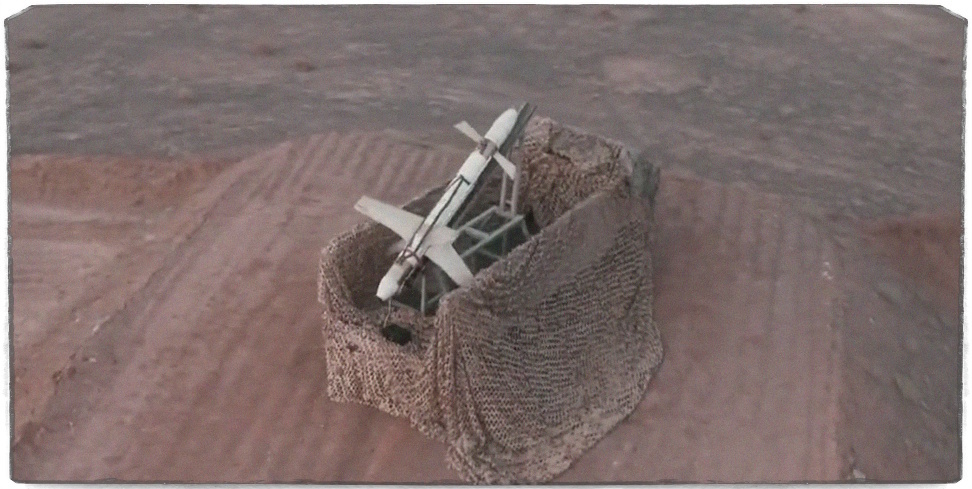
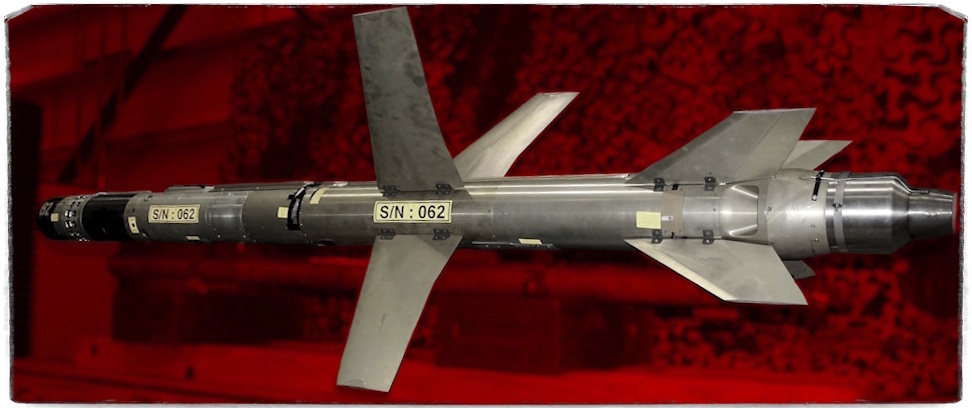
The story of “Product 358” began long before its public unveiling. In 2019, the U.S. military intercepted a civilian vessel off the coast of Yemen that was carrying a large shipment of missiles, which, as it later turned out, were intended for the Houthis. Among the standard weapons, there was a munition that did not fit into the usual classifications: experts could not definitively determine whether it was a loitering munition or an anti-aircraft missile.
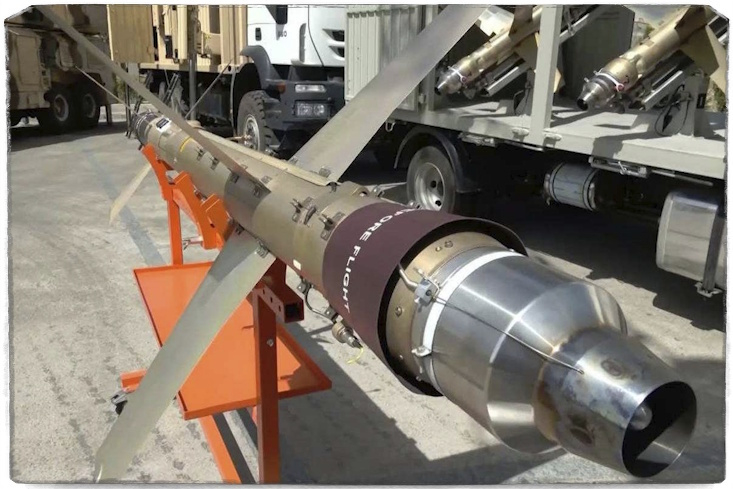
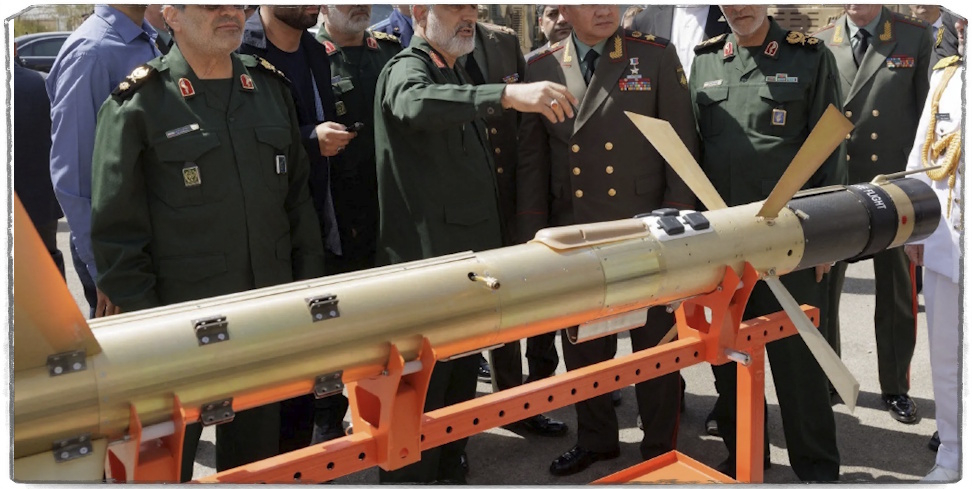
Tehran had long remained silent on the incident, but in 2023, during a visit by the then-defense minister, the veil of secrecy was lifted. At a demonstration of Iran’s achievements in the field of unmanned aviation, that very “Product 358” was displayed. At that time, the speculations of Western analysts were confirmed: the new system does indeed combine two concepts in a single airframe, creating a versatile weapon capable of engaging tactical aircraft, subsonic cruise missiles, and other similar targets.
Concept and Tactics of Use
The key feature of “Product 358” lies in its operational concept. Unlike conventional anti-aircraft missiles, which head straight for the target immediately after launch, this munition first reaches a designated area and begins to patrol, flying in figure-eight patterns while awaiting the appearance of a threat. Only after detecting a potential target does the missile switch to attack mode.
This approach makes it significantly more difficult to detect a launch. The most noticeable heat signature is generated only during the solid-fuel booster phase, which is detected by the optoelectronic systems of modern fighter jets. However, once the main engine switches to economy mode, the infrared signature drops sharply, making it much harder to detect the missile. The stated loitering time is up to twenty minutes—a figure that is not record-breaking, but quite sufficient for tactical missions.
Guidance System and Stealth
The second important aspect is the type of homing head. “Product 358” is equipped with a semi-active infrared homing head, which does not emit its own signals, further enhancing the stealth of its deployment. Given the munition’s compact size, installing a full-fledged radar seeker would be impractical: its performance would be extremely limited, and its effectiveness against low-observable fifth-generation targets would be questionable. In this case, the infrared channel represents the optimal compromise between size, cost, and combat effectiveness.
Combat Use: From Drones to Fighter Jets
It was originally assumed that the primary purpose of “Product 358” was to counter unmanned aerial vehicles, particularly MALE-class drones such as the American “Rippers.” In the early stages, that is exactly how it was used: the Houthis successfully employed the new system to intercept numerous drones.
However, the situation changed in 2026, following the start of the U.S. invasion of Iran. Despite having taken key elements of Iran’s air defense system out of commission, the U.S. took the risk of deploying fifth-generation F-35A fighter jets in the country’s central regions. It was there that they encountered “Product 358,” which, according to available data, has at least one downed stealth fighter to its credit. Actual losses could have been higher, but some of the aircraft managed to escape under their own power.
Limitations and Prospects for Development
The main drawback of this new missile remains the weight of its warhead—about ten kilograms. This is clearly insufficient to generate a dense field of fragments capable of reliably destroying a heavily armored target. Nevertheless, even with these limitations, the missile demonstrates the ability to disable aircraft, forcing the enemy to interrupt its combat missions. And in the context of modern conflict, this in itself constitutes a tactical success: damaged equipment requires time to repair, and sometimes cannot be repaired at all.
In summary, it can be said that “Product 358” clearly demonstrated both the strengths and weaknesses of the hybrid concept, but most importantly, it proved its viability. The new aircraft had a noticeable impact on U.S. air operations, forcing the U.S. Air Force to adjust its tactics in certain regions of Iran. According to available data, work on improving the platform is already underway: “Product 359” is set to replace “Product 358.” Information about it is extremely scarce, but it is known that its operational range will increase from 100 to 150 kilometers, which indirectly indicates an increase in the dimensions and, possibly, the weight of the warhead.