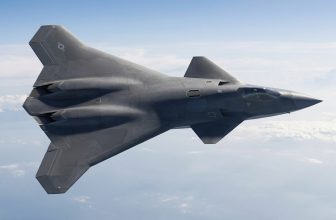
Japan is joining the hypersonic race. A hypersonic engine (ramjet) for aircraft has been successfully tested in the Land of the Rising Sun.

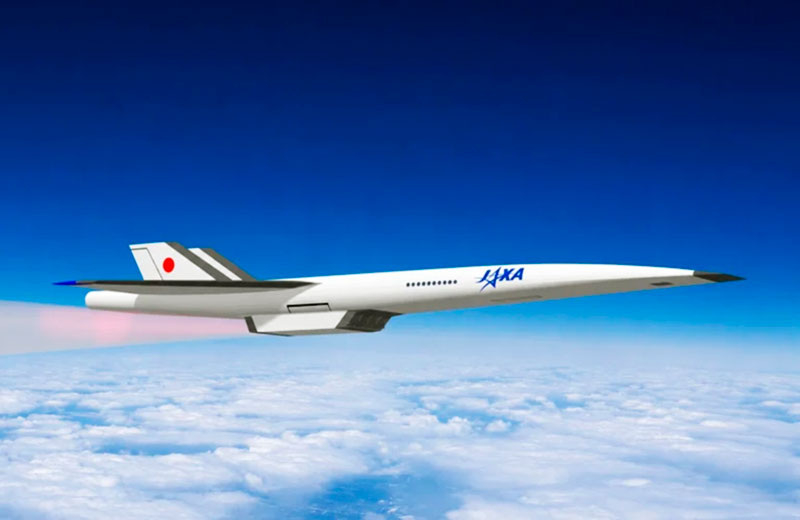
The Japan Aerospace Exploration Agency (JAXA) successfully conducted ground-based fire tests on a ramjet engine. This engine is being designed for next-generation Mach 5 aircraft capable of flying five times faster than the speed of sound.
The success of the tests has propelled Tokyo to the forefront of the global race to develop hypersonic transportation and reusable space systems. Scientists from Waseda, Keio, and the University of Tokyo worked on the engine alongside JAXA specialists.
The prototype was mounted on a special test rig at the Kakuda Space Center in Miyagi Prefecture. Engineers fully recreated the conditions that an actual glider would encounter while flying at Mach 5.
The experiment confirmed that the hydrogen ramjet can withstand enormous aerodynamic loads. The design performed as expected—the combustion chamber produced stable thrust, the control surfaces responded without delay, and the heat shield protected the internal systems.
Thermal Protection Technologies
At speeds five times the speed of sound, the air around the fuselage heats up to 1,000 °C (about 1,832 °F).
JAXA engineers confirmed that the upgraded heat shield performed its function flawlessly. The onboard avionics and the sensitive control electronics in the internal compartments operated without a single glitch throughout the entire test.
Engineers conducted a detailed study of how heat is distributed across the airframe’s surface. These measurements will help validate mathematical strength models and will form the basis for the design of future production hypersonic platforms.
At the same time, the researchers measured temperature fluctuations in the exhaust plume of the hydrogen engine. The data collected is needed to assess the environmental impact of the new power systems on the atmosphere.
Integration of the airframe and power plant
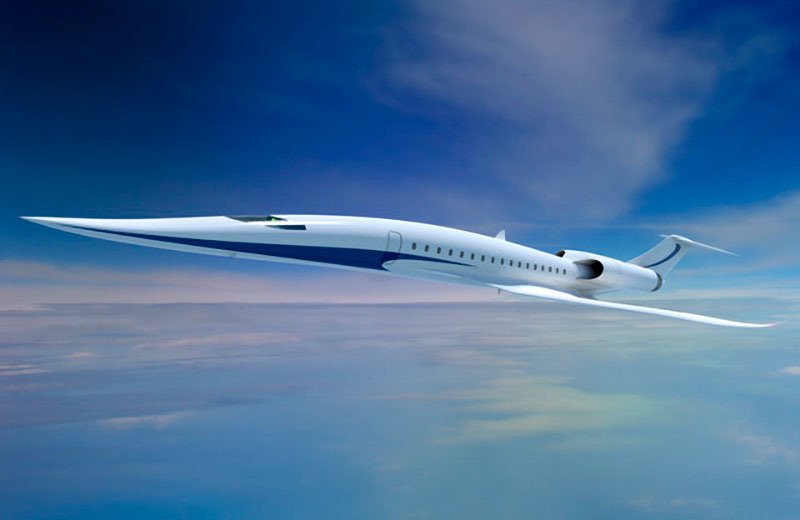
In conventional aviation, the airframe and the engine operate relatively independently. This is not the case at hypersonic speeds: here, the airframe’s geometry and the engine’s operation merge into a single entity. At extreme speeds, they have a critical influence on one another.
Shock waves from the fuselage instantly alter the density and speed of the air entering the air intake, and even the slightest deviation in the thrust vector affects the aircraft’s stability.
That is why engineers design the structure as a single, indivisible unit. The next step is to mount the spacecraft onto the launch vehicle and conduct flight tests at the same Mach 5.
Market Outlook and Competition
These tests represent an important move by Tokyo in the global technological race for ultra-high-speed delivery of cargo and passengers.
According to JAXA’s calculations, next-generation commercial airliners will be able to fly from Japan to the U.S. in just 2 hours. Trans-Pacific flights will be shorter than a typical trip to a restaurant.
The agency is also looking toward space: they want to adapt the technology for spaceplanes. Such aircraft will be able to climb to an altitude of up to 100 km, reaching the Kármán line—the official boundary of outer space.
Today, both governments and private corporations are pouring billions into hypersonic technology. Investors are interested not only in fast flights, but also in dual-use systems and low-cost methods of launching cargo into orbit.
Unlike conventional rocket engines, ramjet and scramjet engines do not need to carry tons of heavy oxidizer—they literally “draw” oxygen from the oncoming airflow.
Japan has proven that it is capable of tackling the industry’s most challenging problems: maintaining stable thrust, preserving the airframe’s structural integrity, and protecting the electronics from extreme heat.
Source — https://dzen.ru/a/ag2TT1Re-29MrwOI