An article by Yuri Pasholok from the WARSPOT website, dated May 12, 2017.
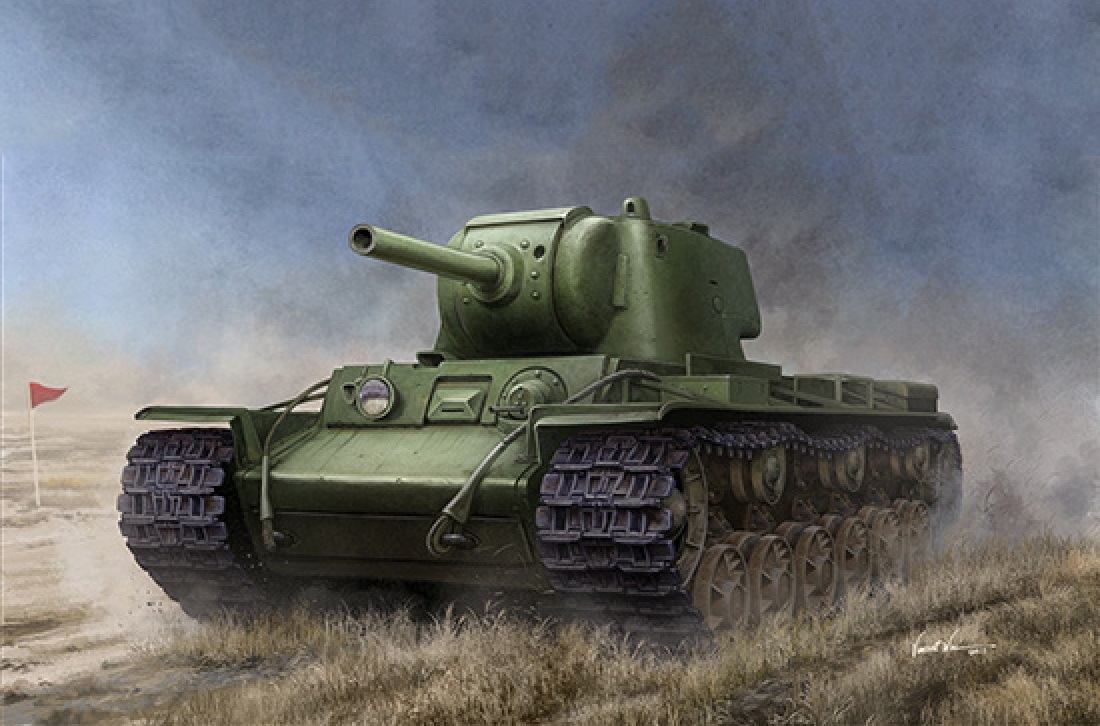
So-called artillery tanks, or support tanks, first appeared in the mid-1920s. The British were the pioneers in this field, equipping some of their Medium Tank Mk.I and Medium Tank Mk.II models with 94-mm howitzers. Later, similar vehicles were built in various countries. The Soviet Union was no exception. The first developments in artillery tanks in the USSR date back to the early 1930s; the most famous vehicle of this type was the BT-7 Artillery Tank. The KV-2 could also be classified as an artillery tank, albeit somewhat loosely. However, even before the start of the Great Patriotic War, the idea of artillery tanks had been rejected in the USSR. Nevertheless, as early as the beginning of 1942, the KV-9 was introduced, fully embodying the concept of a “support tank.”
A Child of Artillery Famine
The history of the KV-9’s development is usually described based on a report by Uralmash (the Ural Heavy Machinery Plant, UZTM) on tank production during the war years. According to the report, the design of the 122-mm caliber system “was carried out on the initiative of the design bureau and was intended to create more powerful guns for tanks than the L-11 and F-34, with which our tanks were armed at the time.” Furthermore, certain Soviet historians added fuel to the fire by claiming that the design of a 122-mm tank howitzer had begun as early as 1939, with a second attempt in the spring of 1941.
In reality, however, in 1939—and even more so in the spring of 1941—there was no interest in the M-30 howitzer as a tank weapon. At that time, the leadership of the Red Army’s Main Armored Vehicles Directorate (GABTU KA) was interested not in enhanced high-explosive effects, but in increased armor-penetration capability. The M-30 howitzer performed poorly in this regard, especially given the lack of armor-piercing shells. It is not surprising that this howitzer was not even considered as a tank armament.
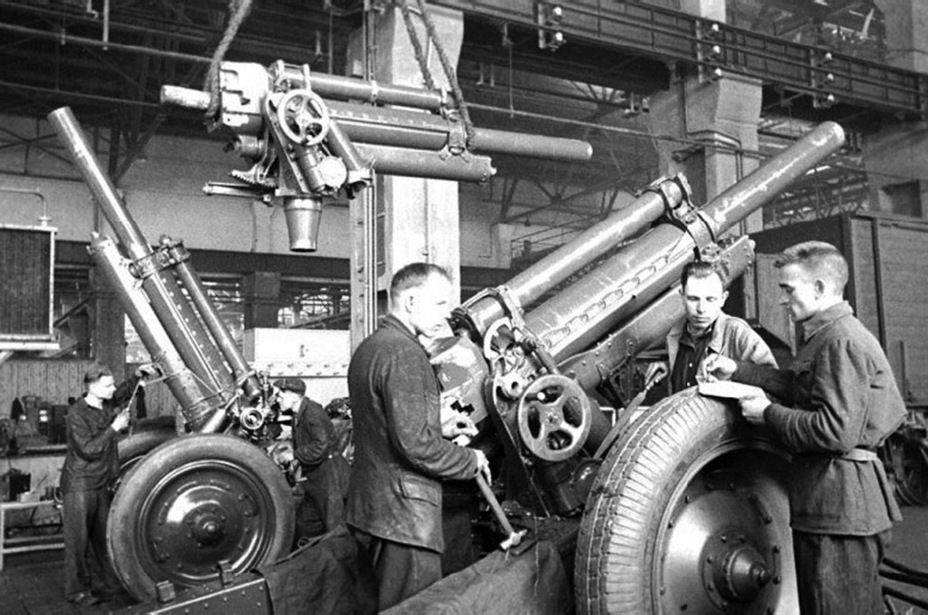
Production of the M-30 howitzers at UZTM. The well-established production of this weapon directly influenced the choice of an alternative armament system for the KV-1.
Many regard Uralmash Plant’s summary report on tank production during the war years as the primary and entirely reliable source of information. In reality, this is rather hasty. It was compiled in 1945, and due to the passage of time, as well as the chaos of wartime, a number of details in the report have been distorted. Suffice it to say that a number of vehicles designed at Uralmash—primarily self-propelled units—were omitted from this document.
This very distortion occurred in the case of the KV-9 as well. The extent to which the report does not reflect the actual situation can be seen in the journal of the Artillery Committee of the Red Army’s Main Artillery Directorate (GAU KA), dedicated to the testing of the 122-mm howitzer in the KV-9:
“In the fall of 1941, as production of KV tanks was ramping up at plants in the Urals, the issue arose that the supply of artillery armaments for the tanks was not sufficiently organized. Production of F-32 guns at the Kirov Plant in Leningrad had been scaled back due to the circumstances at the time, and the only manufacturer of tank guns was Plant No. 92 named after Stalin Plant No. 92 in Gorky, which primarily produced the F-34 gun for T-34 tanks and only began ramping up production of the 76-mm Model 1941 tank guns (ZIS-5) with a 40-caliber barrel.
To ensure the KV tanks were armed, it became necessary to set up tank gun production somewhere near the center of tank manufacturing. In addressing this task, it was necessary, first and foremost, to take into account the production capabilities of local factories and the nature of their established arms production, since it was essential to ensure the shortest possible timeframe for launching cannon production.
Based on these considerations, the Technical Council of the NKTP issued a directive to the design bureau of the Uralmash Plant—which was then one of the NKTP’s enterprises—to develop a technical design and manufacture a prototype of a 122-mm howitzer, Model 1938 (M-30) for the KV tank.”
As you can see, the text does not mention increasing the firepower of the tank gun even once. This excerpt from the journal of the Artillery Committee of the General Staff of the Red Army roughly corresponds to what actually happened. The first 17 ZIS-5 guns arrived at the Chelyabinsk Tractor Plant (ChTZ) at the very end of September 1941, and full-scale production began as early as October. In September, ChTZ delivered only 27 tanks instead of 65, and in October, only 87 vehicles were built in Chelyabinsk instead of 100. Naturally, the guns were not the only bottleneck: there were problems with the supply of V-2K engines, and a high defect rate was observed in the production of gears. Part of the responsibility for failing to meet the plan also lay with Uralmash: the October report indicated that the plant had failed to meet its production target for system armor.
The engine problems, which were quite evident due to the evacuation of Plant No. 75, were partially resolved by organizing the production of the V-2 family of engines at the Ural Turbine Plant. On December 13, Plant No. 76 was established at this facility, and the first B-2K engines had already been delivered from there in November. A full-cycle tank production facility was taking shape in the Urals.
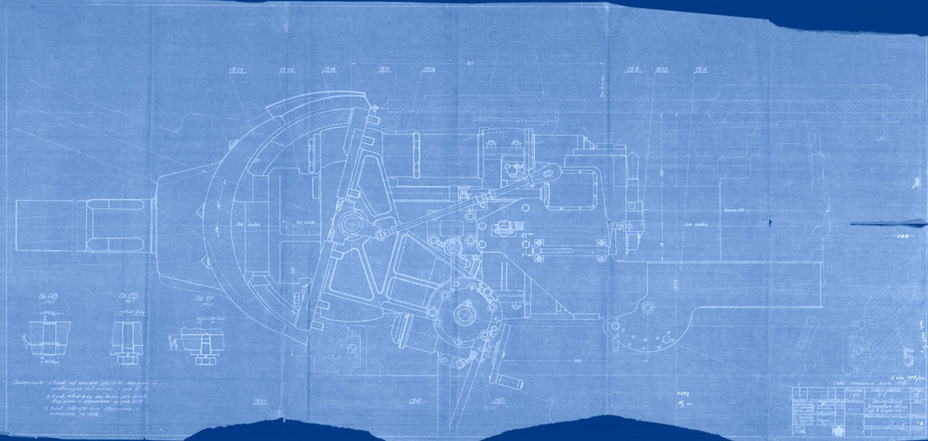
System U-11, drawing dated December 15, 1941
So where did the M-30 howitzer come from as an alternative to the ZIS-5? The answer to this question stems directly from the requirement to make maximum use of the production capacity of local factories. In 1940, Uralmash began manufacturing those very M-30s. To oversee production, F.F. Petrov, the gun’s chief designer, arrived from Molotov (now Perm). As a result, Petrov remained at Uralmash, taking a leadership position in the plant’s design bureau. Thus, there were simply no alternatives to the M-30 as a replacement for the ZIS-5. The myth about increased firepower arose against the backdrop of the emergence of another project—the U-12. It was developed on the basis of the 85-mm 52-K anti-aircraft gun, the production of which had been evacuated from Kaliningrad (near Moscow; now Korolev) to Sverdlovsk along with the design bureau of Plant No. 8.
Avar variant
According to historical records from the GAU’s Arktom, the gun mount design was completed by the 20th of November 1941. The design work was led by F.F. Petrov, chief designer of the plant’s design bureau, with L.I. Gorlitsky—who had been evacuated from Leningrad in October 1941—serving as his deputy. These two men later became key figures in the design of Soviet medium self-propelled artillery. The lead engineer on the project was V.N. Sidorenko, one of the veterans of artillery production at Uralmash. Engineers A.V. Usenko and N.V. Kurin also worked on the new system; the latter had also arrived from Leningrad. Zh. Ya. Kotin oversaw the project. In addition to his role as general supervisor of the KV project, Joseph Yakovlevich was, by that time, Deputy People’s Commissar for the Tank Industry.
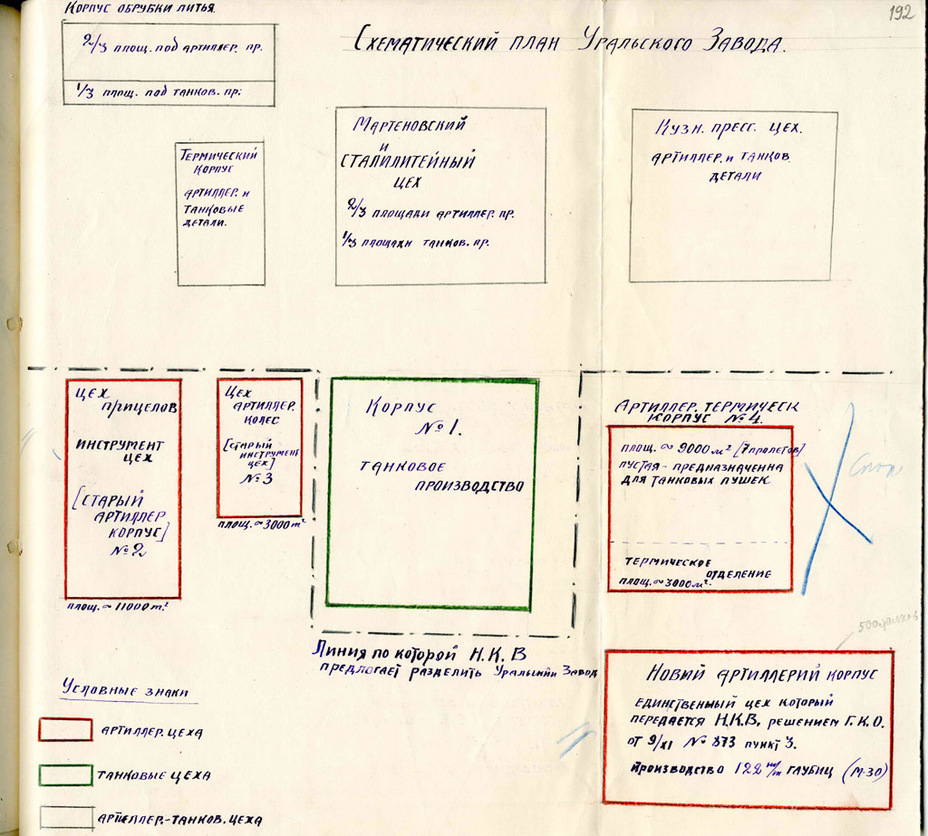
The division of UZTM’s production facilities, during which Plant No. 8 was spun off into a separate enterprise. The launch of production of the ZIS-5 tank gun at that facility put a definitive end to the truly mass production of the U-11.
The design presented at the meeting at Kotin’s office existed in two versions. The first version of the system, designated U-11, was characterized by minimal modifications to the swing mechanism of the M-30 howitzer. Unfortunately, no images of this version have survived, but overall it resembled what was intended for installation in the ZIK-11 and SG-122 self-propelled guns. Instead of a pedestal, the howitzer’s swinging section was mounted in a frame and covered with armor. This variant seemed simpler from a manufacturing standpoint, but it was completely unsuitable for use as a tank gun. First, the system had very complex and bulky armor. Second, it disrupted the overall layout of the turret as well as its balance. It is not surprising that this system was rejected.
The second version of the U-11 was more complex from a manufacturing standpoint. The barrel and breech block were carried over from the M-30, though the tube was also redesigned, and the recoil mechanisms were built from scratch. However, from a manufacturing standpoint, things weren’t as daunting as they might have seemed. The overall design of the system was fairly simple, and the newly manufactured components turned out to be perfectly suited to the factory’s technical specifications. Most importantly, no major modifications to the KV turret were required.
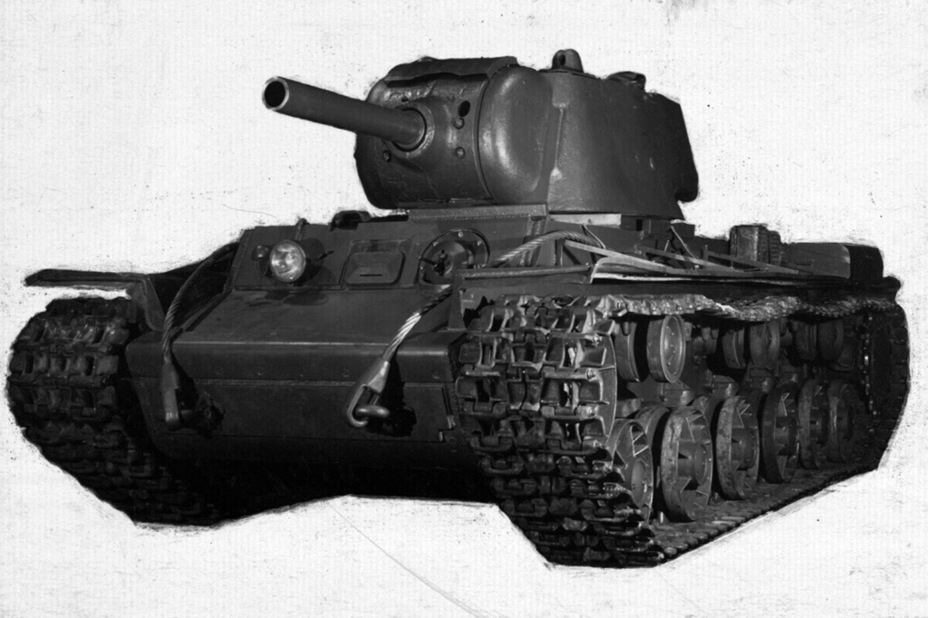
KV-9 in the factory workshop, January 1942
Following the meeting, the second option—which was much more compact and far better suited for use as a tank gun—was adopted:
«The technical meeting reached a decision that, in short, boiled down to the following. The Uralmash Plant’s Design Bureau was instructed—based on this preliminary design variant (as prescribed—Ed.)—to develop a technical design for the system and manufacture a single prototype. At the same time, given the lack of an armor-piercing projectile, the bulkiness and limited capacity of the ammunition load, the significant reduction in rate of fire, and other negative factors, the technical meeting specifically reiterated that it regarded this work as a stopgap option.”
It is not hard to see the attitude of the State Aviation Administration (GAU KA) toward the project. This was due to the fact that the peak of the “gun shortage” had passed. Moreover, following the evacuation of Plant No. 8 to Sverdlovsk, a decision was made that ZIS-5 guns would be produced not only in Gorky but also at the UZTM site. This decision was finally approved by GKO Resolution No. 1070ss “On the Construction of Plant No. 8 of the NKV.” The rollout of gun production for the KV-1 was somewhat delayed, but by January 1942, Chelyabinsk tanks had begun receiving guns from Sverdlovsk. Against this backdrop, the new gun—which was inferior in rate of fire, had uncertain penetration capabilities, and required some modification of the turret—seemed less attractive.
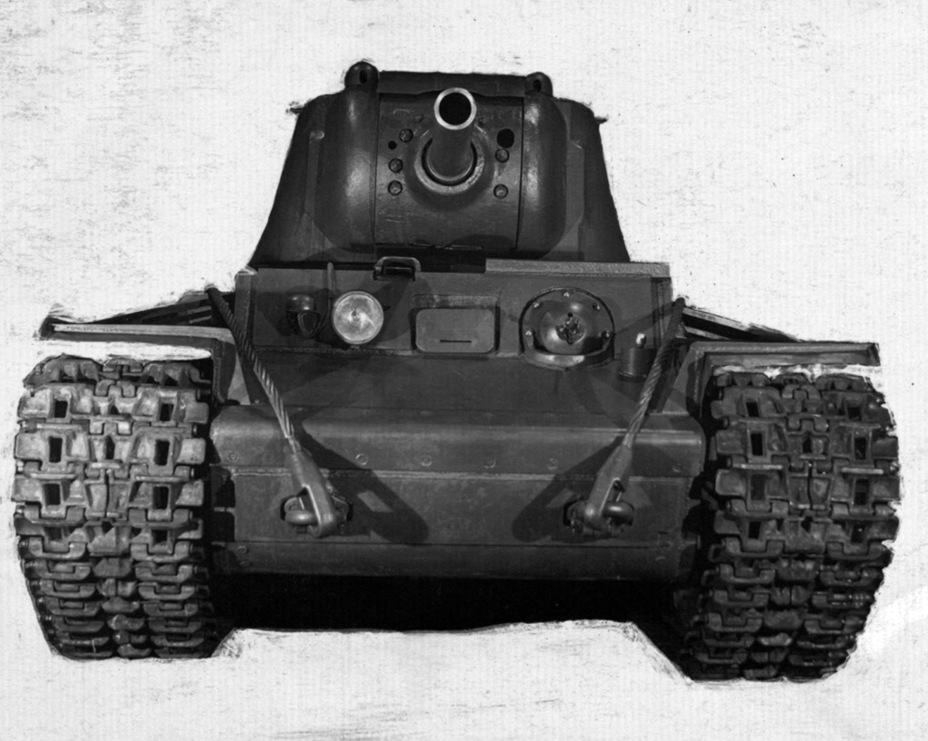
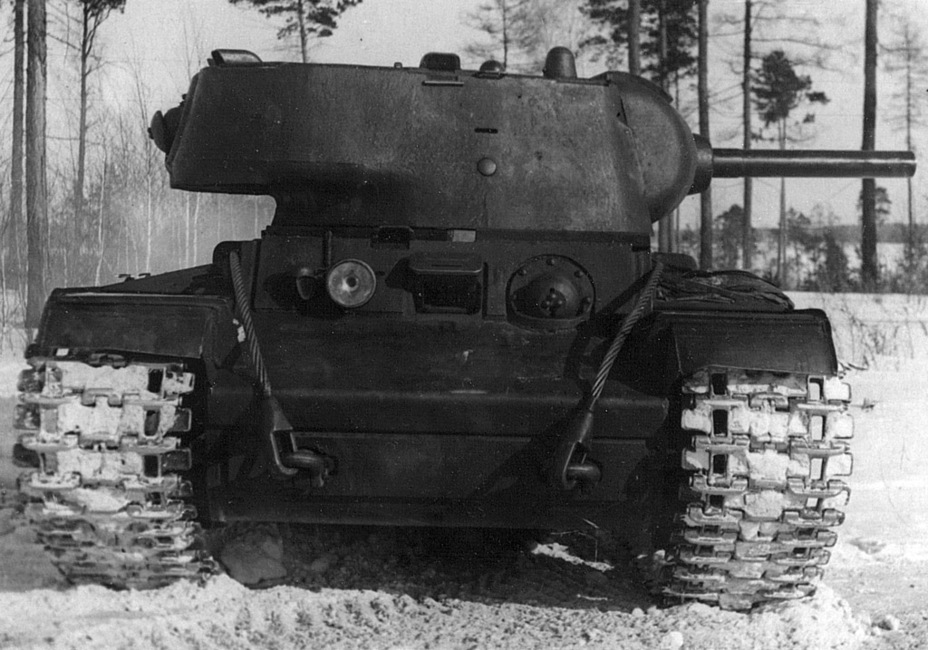
The same tank, viewed from the front
Despite the meeting’s rather bleak conclusions, the U-11 project had progressed far beyond the preliminary design stage. By December 15, 1941, the technical documentation was already complete. Designer A.S. Shneidman, who was overseeing the armament of the heavy tank, was brought in by ChTZ to work on the project. The system fit quite well into the KV-1 turret; however, it was necessary to slightly modify the embrasure, the gun mask, and the mounting of the sighting devices, as well as to create new movable armor. According to the design, the U-11’s depression angle was −3.5 degrees; the recoil mechanisms did not allow for a greater angle.
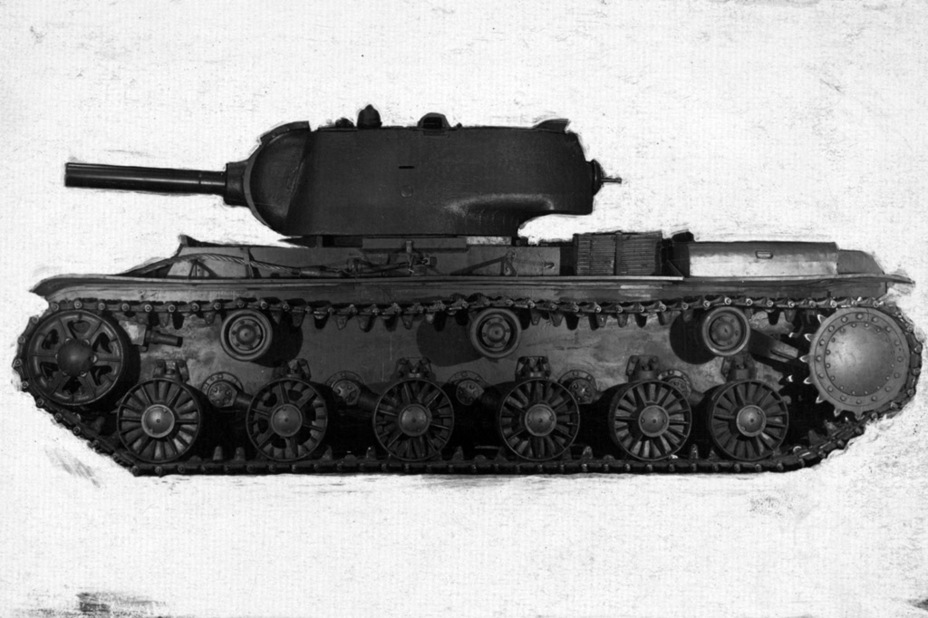
KV-9, left-side view
Toward the end of December 1941, a metal prototype of the U-11 was built and underwent factory testing on a test bench. Shortly thereafter, the armor components were ready, after which the system was sent to Chelyabinsk to the Chelyabinsk Tractor Plant (ChKZ). To mount the prototype gun, it was decided to use a KV-1 tank (No. 4996), manufactured in Leningrad and recently overhauled, instead of a new tank. According to the records, this tank had seen combat as part of the 121st Tank Brigade before arriving in Chelyabinsk. The U-11 was mounted in a cast turret, retaining the rear machine gun. Overall, the gun fit quite well into the turret, but the depression angle turned out to be even less than the design specification, at −2 degrees. Initially, it was assumed that the ammunition load would be about 50 rounds, but in the end it turned out to be slightly less—48 rounds. For comparison, the standard ammunition load for the ZIS-5 gun was 114 rounds. The ammunition supply for the machine gun also turned out to be smaller—1,943 rounds instead of 3,000. The modified vehicle was designated KV-9.
False start
Overall, the attitude toward the KV-9 at the Kirovsky Plant was, if not cool, then at least neutral. The plant’s design bureau had only a very indirect involvement in this project. Furthermore, in terms of experimental work, SKB-2 at the Kirov Plant gave much higher priority to two other tanks—the KV-7 and the KV-8. Moreover, the KV-7 was designed at Stalin’s personal request, and Plant No. 200 had already manufactured 20 hulls for these vehicles even before field trials began. Ultimately, the vehicle was rejected and sent for rework, leaving the plant with a stockpile of unused hulls. Taken together, these factors somewhat slowed down work on the KV-9 project.
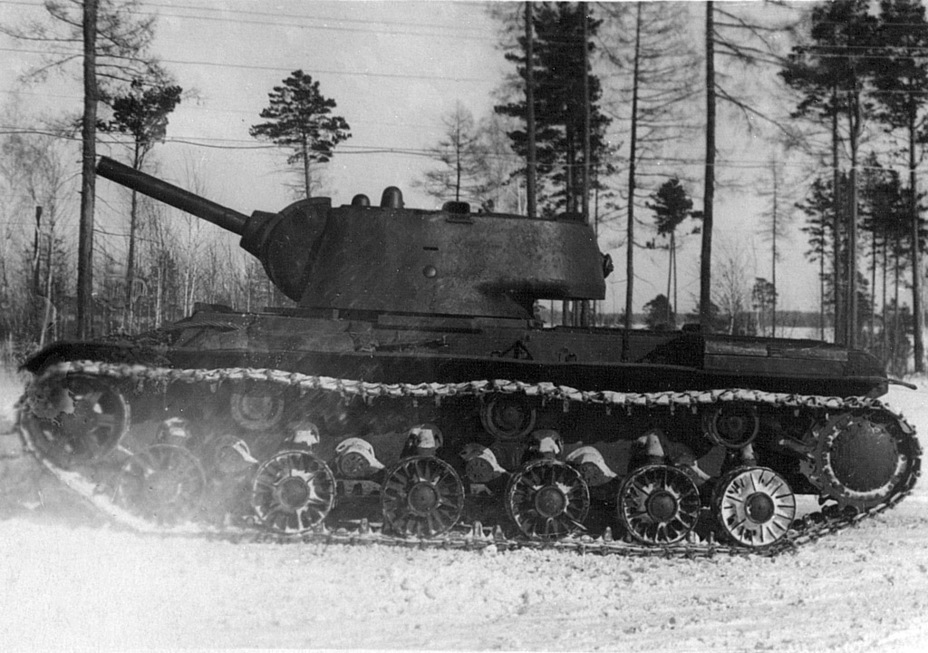
The same vehicle with its gun at maximum elevation. February 1942
On January 23, 1942, a test program for the “installation of a 122-mm howitzer on a KV-9 tank” was approved. A total of 206 rounds were to be fired, of which 150 were to be fired with an enhanced charge to test durability and 30 were to be fired to determine accuracy. It was also planned to conduct a 50-kilometer road test to assess the reliability of the gun’s field mounting, the ease of operation of its mechanisms, their susceptibility to jamming, the reliability of ammunition stowage, and the comfort of the crew’s accommodations. The following day, Order No. 012 was signed, stipulating that the tests were to be conducted at the Kopeysk Test Range from January 26 to February 5. The same order established the commission.
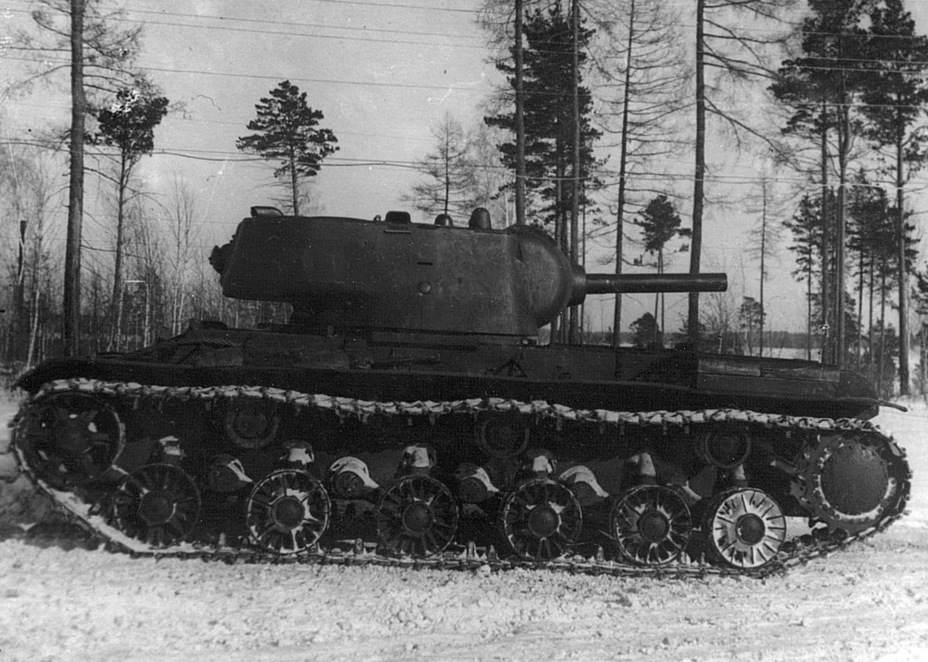
The tower is turned around
In practice, the test dates were shifted: the tests took place from February 2 to 11, 1942. A total of 210 rounds were fired, 171 of which were fired at the factory test range using gun carriage test shells and reinforced charges. The system’s recoil, ranging from 560 to 580 mm, was deemed normal. Air samples taken to determine the level of gas contamination in the fighting compartment during firing also fell within normal limits. The remaining shots were fired at the Kopeysk test range. Firing at a 5×5-meter target located one kilometer away proved quite successful—all projectiles hit the target. The results of the firing test designed to check accuracy during fire transfer were also satisfactory. From a distance of 600 meters, 1.25×1.25-meter targets were hit.
In addition, on February 10, armor penetration tests were conducted at Plant No. 200. Since the M-30 did not have any armor-piercing shells, shells from the A-19 122-mm hull gun were used. Four shots were fired at the KV-1’s cast turret from a distance of 100 meters. Each time, the powder charge was gradually increased (from 2,100 to 2,400 grams), and the projectile’s muzzle velocity rose from 525 to 573 m/s. The first and fourth shots penetrated the turret and ended up inside it, while the second and third ricocheted, knocking out the turret plug in the process.
These were quite impressive results. But there were also some complaints about the KV-9. In addition to the gun’s limited maximum elevation angle, its rate of fire was only 2 rounds per minute. There were also complaints about the loader’s working conditions. The commission demanded that the gun’s armor be improved, and other shortcomings were identified as well.
The tower is turned to the left
Despite the shortcomings identified, the commission’s overall verdict was positive:
“1. The KV-9 tank, equipped with a 122-mm M-30 howitzer, has passed testing and may be adopted by the Red Army.
2. During the production of the prototype series of the KV-9 tank, all modifications necessary to address the deficiencies identified in the tested prototype must be made, with particular attention paid to the system’s armor protection and ammunition stowage.
3. Since the tank prototype equipped with the 122-mm M-30 howitzer yielded positive results during testing, the commission considers it necessary to expedite the mass production of the KV-9 tank.”
At Plant No. 8, which had been separated from the UZTM in February 1942, preparations began for the production of a pilot batch of U-11 tank howitzers. Meanwhile, in late February, serious disputes arose between the General Armaments Directorate (GAU) and the People’s Commissariat for the Tank Industry (NKT). An analysis of the test results by the GAU’s Artillery Committee revealed a delicate issue. When firing armor-piercing shells, the pressure in the barrel reached 3,500–4,000 kg/cm²—far exceeding the standard value of 2,350 kg/cm². This was completely unacceptable; intensive firing with such a charge could lead to the destruction of the piston breechblock. And when using the permissible charge, the muzzle velocity of the armor-piercing shell would have been only 432 m/s. As a result, the U-11’s armor-penetration performance proved inferior to that of the ZIS-5. The U-11’s only advantage was the greater high-explosive effect of its high-explosive fragmentation round. Therefore, the Artillery Command of the General Armament Directorate deemed it impractical to install the U-11 in the KV-1, reiterating once again that this system was an initiative of the People’s Commissariat for Technology and Production.
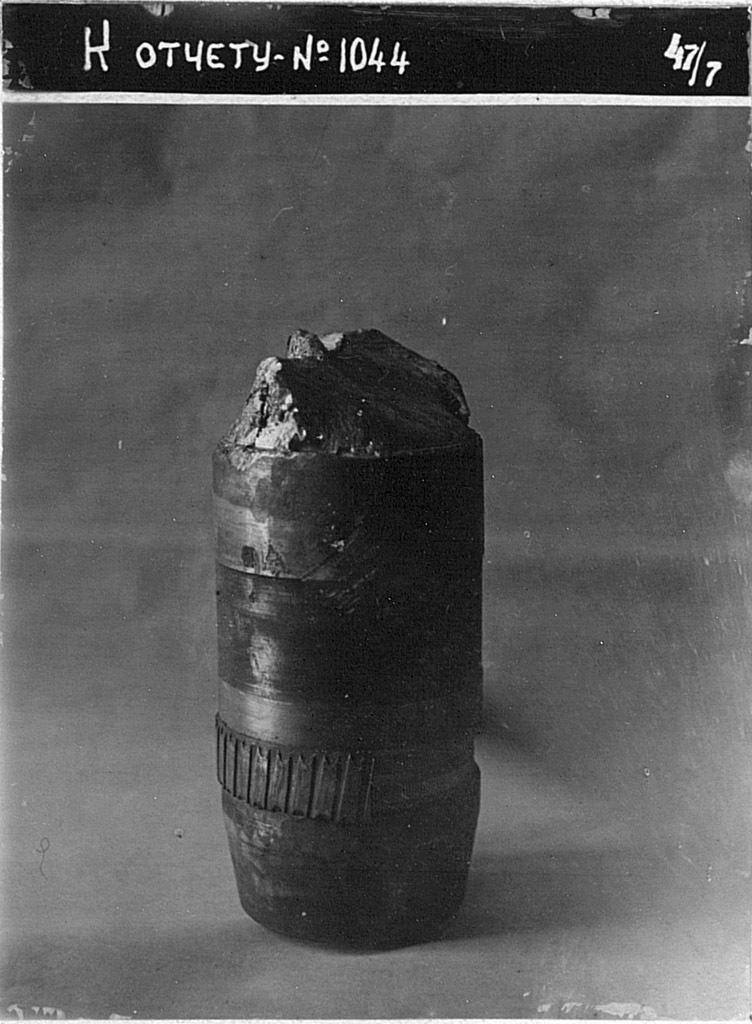
Damage to an armor-piercing shell after it was fired at the KV-1 turret
On April 2, 1942, firing tests were conducted using high-explosive fragmentation shells against armor plates. An M-30 howitzer was used instead of the U-11, since their ballistics and ammunition are identical. Firing tests on a 76-mm-thick plate showed that it sustained no damage when struck by a 122-mm high-explosive fragmentation shell. The tests were halted at that point. In effect, this marked the end of the KV-9 project. The issue of mass-producing the KV-9 was never raised again.
A number of researchers have suggested that the KV-9 was not put into production due to the tank’s excessive weight. As it turns out, that was not the reason at all. The last attempt to revive the KV-9 project was made in October 1942, but it ended in failure.
Paper reserve
By the time the high-explosive fragmentation shell firing tests on armor plates were conducted, Plant No. 8 had already begun production of a pilot batch of U-11 gun mounts. As a result, the same situation as with the KV-7 repeated itself. This time, instead of 20 unclaimed hulls, a stockpile of 10 unclaimed tank howitzers had accumulated. The question of what to do with these systems had to be resolved.
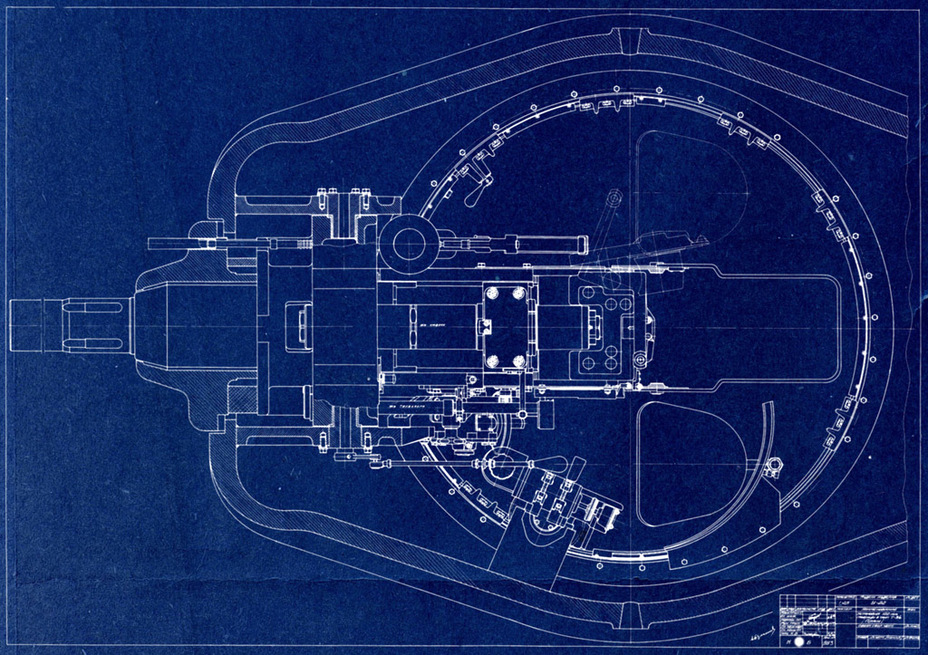
U-22, attempt to install the U-11 in the T-34 turret
After failing with the heavy tank, it was decided to turn their attention to the T-34 medium tank platform. It was precisely in the spring of 1942 that mass production of the T-34 began in earnest at Plant No. 183 in Nizhny Tagil. The People’s Commissariat for Military-Technical Affairs (NKTF) authorized joint work between the design bureaus of Plants No. 8 and No. 183. The system intended for installation in the T-34 was designated U-22 and differed only slightly from the original design. In order to accommodate a larger gun in the turret, it had to be slightly redesigned. According to calculations, the combat weight of such an “artillery tank” would have been 30.7 metric tons, which roughly corresponded to the weight of a standard T-34.
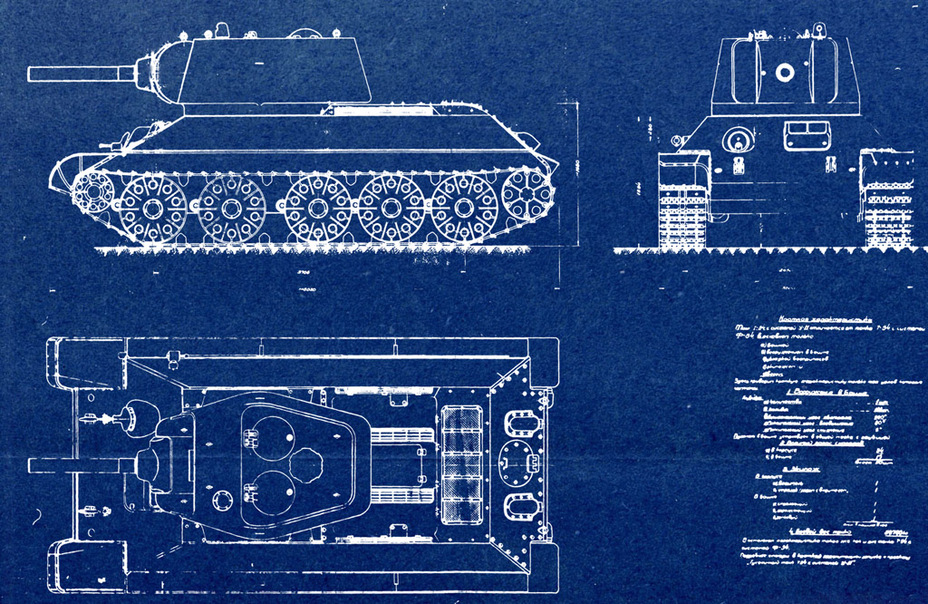
The «howitzer» T-34 project developed at Plant No. 183
In July 1942, Project U-22 was submitted to the Artkom of the GAU. The response was entirely as expected:
“The project calls for the installation of a prototype 122-mm U-11 tank howitzer in the new turret of the T-34 tank, while retaining the turret’s existing mounting.
Given that, with the proposed installation, the fighting compartment can accommodate only two crew members to operate the gun—which is completely insufficient for normal operation of the howitzer—this design is of no interest and should be rejected.
Given the existence of a prototype mounting this howitzer in the more spacious KV tank turret—which fails to meet the required standards for ease of operation and rate of fire—the development of the submitted project is clearly impractical.
To avoid a wasteful expenditure of resources in the future, the Artillery Committee of the General Armament Directorate considers it appropriate that all independent initiatives by the design bureau be preliminarily coordinated with the General Armament Directorate of the Air Force.”
In this case, it’s hard to argue with the artillerymen’s position. If the rate of fire of the 122-mm howitzer in the KV-9 was only 2 rounds per minute, here it would have been even lower. Incidentally, a number of researchers mistook this design for the ZIK-10 self-propelled gun, although in reality it was specifically a tank.
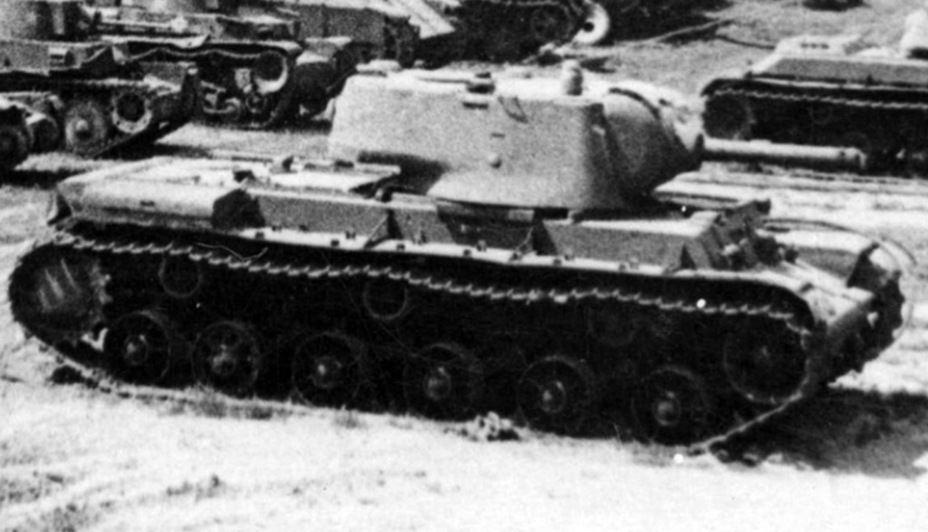
One of the last «lifetime» photographs of the KV-9, spring 1943
This was by no means the last attempt to “integrate” the U-11. In August 1942, the design bureau of Plant No. 8, under Petrov’s leadership, developed a design for the ZIK-10 self-propelled gun, which was armed with the very same U-11. Even earlier, in July 1942, Plant No. 592 had developed the SG-122U self-propelled gun with the same system. These vehicles never progressed beyond the drawing board, although the Main Armament Directorate of the Air Force was still trying to find a use for these guns, which were quite well-designed. As for the KV-9, it was placed in the equipment yard of the ChKZ factory in June 1942. In December 1943, the tank was scrapped.
The author would like to thank Sergey Ageev (Yekaterinburg) and Alexey Khlopotov (Nizhny Tagil) for their assistance in preparing this article.
Sources
-
-
- Materials from the Russian State Archive of Economic History
- Materials from the Central Archives of the Ministry of Defense of the Russian Federation
- Materials from the Russian State Archive of Social and Political History (RGASPI)
- Materials from the Sergei Ageev Archive
-