A Breakthrough or a Desecration? Russia Has Come Up With a Way to Remove Jet Engines from Airplanes

An article from the «One and a Half Engineers» channel.
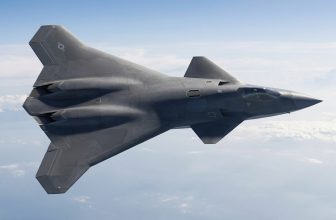
In aviation, there’s a rule that seemed set in stone: to move forward, you have to expel something backward—hot gases, a fiery plume, a roar that makes concrete tremble. But recently, a statement was made that undermines this rule from within. An engineer working on engines for the Su-57 declared: jet thrust is not the limit, and one day it will simply be a stage that we have outgrown.
And this raises a question that even skeptics can’t shake: if it’s not jet thrust, then what lifts the plane into the sky?

Who said that, and why do people listen to it?
We’re not talking about a theorist or a science popularizer, but about a person who is directly involved with actual combat vehicles. Evgeny Marchukov, chief designer at the Lyulka Design Bureau, speaks of antigravity engines as a logical continuation of evolution. This is the same design bureau that for decades laid the foundation for Russian aviation and is now responsible for the powerplants of the latest fighter jets.
That is precisely why his words don’t sound like fantasy. They sound like a statement of the problem.
But there is one detail that makes this story particularly tense. Attempts have already been made to implement similar ideas—and each time, it ended in controversy.
A forgotten story that people preferred not to recall
In the early 20th century, a young American experimenter named Thomas Brown noticed a strange phenomenon: high-voltage electrical devices seemed to lose weight. He didn’t argue—he started building. That’s how the first disc-shaped structures came to be, which began to move through the air when voltage was applied.
This later came to be known as the Biefeld-Brown effect. The devices actually took off, moved, and accelerated. The demonstrations drew crowds of military personnel, engineers, and investors. It seemed that it wouldn’t be long before a new physics of flight emerged.
But that’s when things really got interesting. Mainstream science was quick to offer an explanation: it wasn’t antigravity, but an ion wind. In other words, it was ordinary thrust, just in an unusual form. The experiments continued, but interest gradually waned.
And here’s the question that remains to this day: if it were all that simple, why do people keep coming back to this topic again and again?
A Soviet episode that is still the subject of controversy
In the USSR, such ideas were not ignored. Moreover, they were discussed at a level that is rarely mentioned in open sources. There were attempts to create devices that operated not by ejecting mass, but through interaction with the environment or fields.
One of the most talked-about episodes is the story of the so-called “gravitoplanes.” Publications, experiments, and claims—it all seemed to be on the edge of what was acceptable. Some experts rejected such developments, while others cautiously admitted that there might be a grain of truth to them.
And this is precisely where the tension arises: if that’s impossible, why hasn’t the issue gone away?
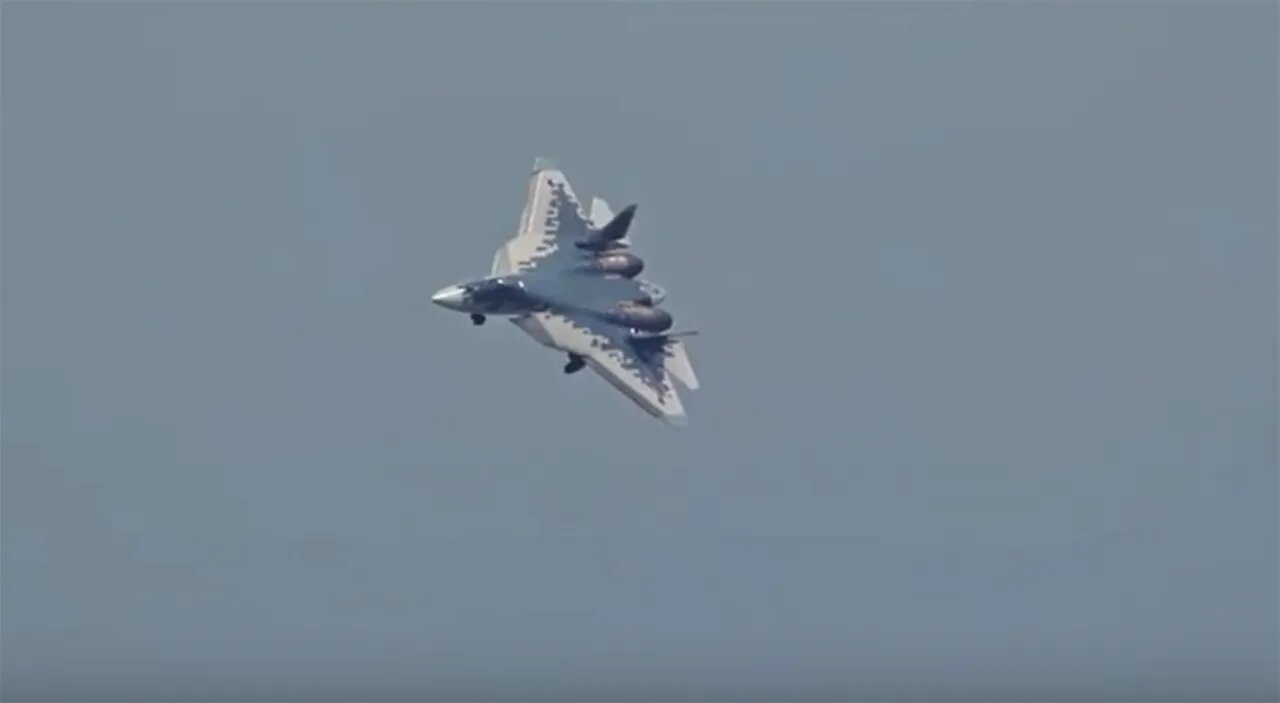
Su-57
Current Research: Cautious Interest Without Grand Claims
Today, the topic is approached differently. Without grandiose promises or sensationalism, but with meticulous experiments. Even at major space centers, researchers have studied the effects associated with the unusual behavior of fields and matter.
This isn’t about «flying saucers,» but rather an attempt to understand whether it’s possible to generate thrust without using the classic jet propulsion principle. Some experiments have revealed anomalies that have not yet been definitively explained.
And this is where the key idea of the whole story comes in.
In this story, one detail makes all the difference
A jet engine represents the limits of old-school thinking. It is efficient, reliable, and perfected. But it is always dependent on fuel, temperature, and aerodynamic drag.
Now let’s imagine a different scenario: the device interacts not with the air, but with a field. It doesn’t push against it—it changes the conditions in which it finds itself.
It sounds like science fiction. But that is exactly the direction in which goals are being set today.
How it was supposed to be—and what’s changing now
For a long time, it was believed that there was no alternative to jet propulsion. All attempts to move away from it ran up against the fundamental laws of physics.
But then some nuances emerged. Experiments with plasma, quantum effects, and field interactions showed that things aren’t quite so straightforward. It’s not yet a mature technology, but it does reveal cracks in the old worldview.
And it is precisely at this moment that engineers begin to talk not about what is impossible, but about what lies ahead.
What’s Already Available Today
At the same time, it’s important not to get carried away with fantasy. Russian aviation is already demonstrating a level of capability that, until recently, seemed unattainable. The “Product 30” engine provides enough thrust to allow the fighter to reach supersonic speeds without afterburner, which radically changes its operational tactics.
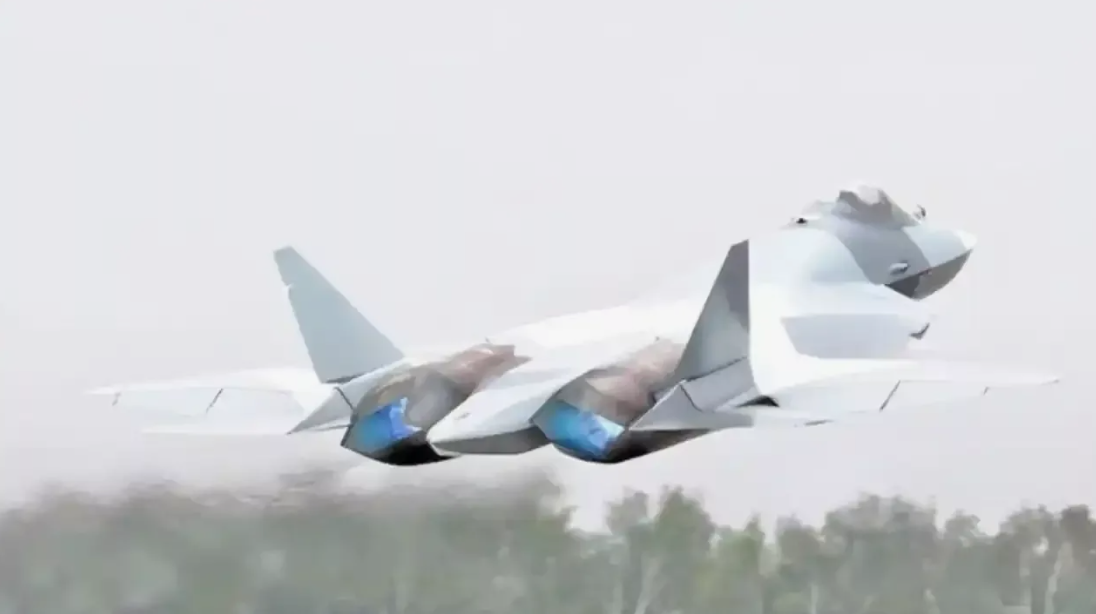
Su-57 with the «Product 30» engine
This means one thing: even with the old technology, there is still plenty of untapped potential.
But at the same time, a new goal is taking shape.
An antigravity engine isn’t a device that will appear tomorrow. It’s a benchmark—a goal that people begin working toward long before any actual prototypes are built.
And if this principle is put into practice, the consequences will be radical. Airplanes will no longer depend on fuel in the traditional sense, their heat signatures will disappear, and the very logic of aerial combat will change.
This won’t be a modernization of the air force. It will be a complete overhaul.
What we’re seeing here isn’t a fully developed technology, but a direction in which engineers are beginning to think. And that, perhaps, is the key takeaway. When someone from within the industry voices ideas like these, it’s no longer just a fantasy, but a foundation for the future.
And perhaps, decades from now, it is precisely these statements that will be remembered as the turning point that marked the beginning of a new era.
Source — https://dzen.ru/a/aetxJx5RWVEyUm3n