The Mysteries of the Origin of Races: The “Melting Pot” of Eastern Europe

An article from the «Tales of a Young Biologist» channel on Yandex Zen.
Humans of the modern anatomical type arrived in Eastern Europe about 45,000–50,000 years ago from the Near East via the Balkans. And it seems as though completely different people were flowing in a single stream to the banks of the Don, Vltava, Dnieper, Oka, and Klyazma rivers! The diversity of anthropological (pre-racial) types among the Paleolithic populations of Eastern Europe is simply mind-boggling! Well, yes, it was a time of experimentation, when most modern racial types hadn’t even begun to emerge. In those distant years, we can speak with relative certainty about the existence of the Kapoid, Pygmy, Veddoid, and Papuan-Australian races. The rest were still finding their place. Every settlement had its own racial type—or even a couple of them.
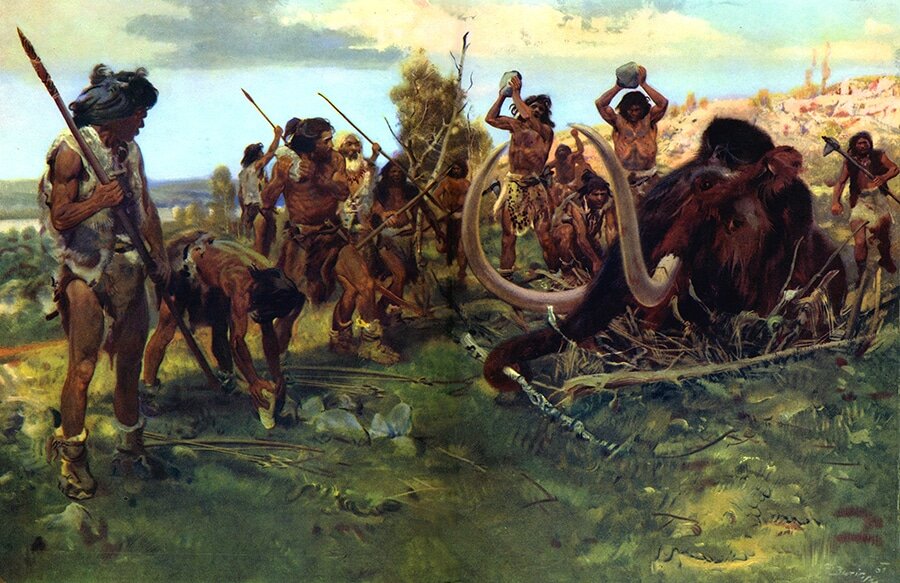
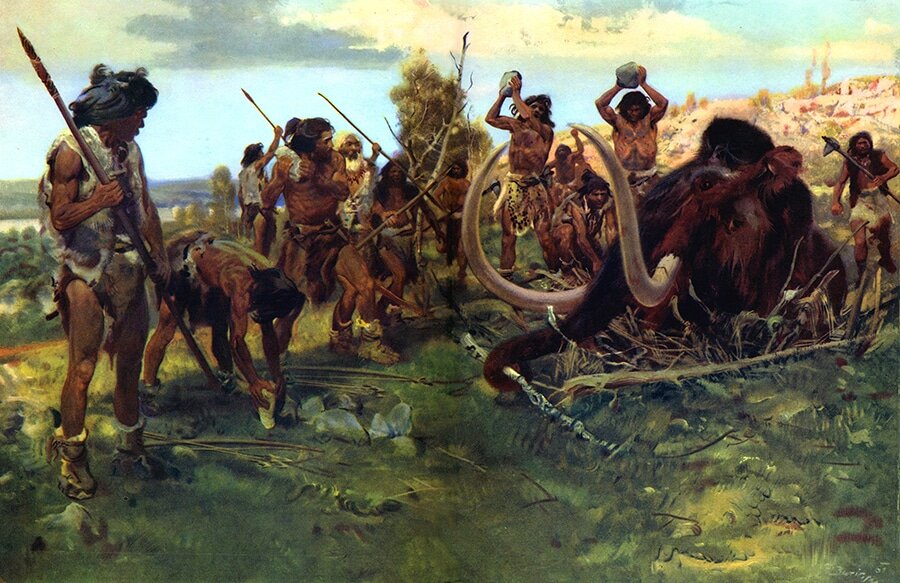
«They’ll kill the mammoth there, and let out a howl…»
This “search” for a racial phenotype is particularly evident in the skeletons and skulls of the inhabitants of Paleolithic sites on the Russian Plain: Kostyonki (in the Voronezh Region) and Sungir (in the Vladimir Region). The reconstructed appearance of the Kostyonki inhabitants reveals at least three distinct anthropological types. The majority of the population at the sites in the vicinity of the villages of Kostyonki and Borshchevo (of which more than 60 have been discovered), whose remains have been excavated, whose appearance has been reconstructed, whose genomes have been partially or fully sequenced, and on whom other fascinating and painstaking studies have been conducted, belonged to the “classic” Cro-Magnons.
People who looked exactly the same inhabited the caves of what would later become southwestern France somewhat later (35,000–20,000 years ago). They were tall (averaging over 180 cm in height), fairly slender people with distinctly European facial features, but with a number of archaic traits, such as a pronounced brow ridge and large teeth. At the same time, Cro-Magnons had a larger brain volume than you and I and were roughly equal in this regard to their neighbors—the Neanderthals. Moreover, their genome contained a significant amount of Neanderthal admixture—a result of hybridization between the two human species, which apparently occurred as early as in the Near East.
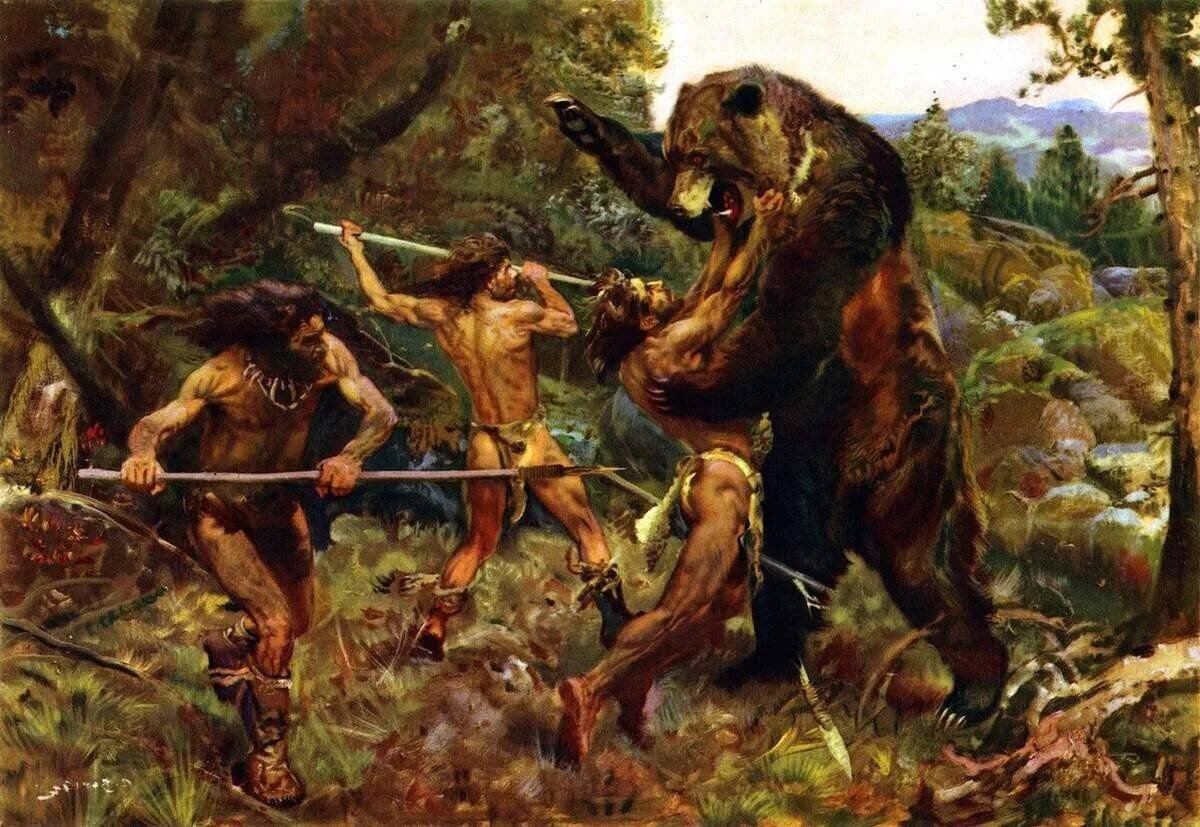
«They’ll start splitting the spoils evenly…»
There has been—and continues to be—much debate over the fair skin of members of the Cro-Magnon race. I confess that I, too, succumbed to the trend of recent years and the charm of 19th- and 20th-century paintings, in which primitive mammoth hunters were depicted as fair-skinned, blond-haired, and gray-eyed. I even defended this view in a couple of articles. But the more you read modern literature—even popular science—the more you realize that this is not actually the case. Most likely, Cro-Magnons had brown eyes and were decidedly dark-skinned (not black, I should note, but closer to modern Ethiopians, perhaps even lighter). Lighter-skinned than the Veddoids of Sunda and the Australoids of Sahul, but (perhaps!) darker than the Eastern Paleo-Eurasian peoples who arrived in Southern Siberia at that time.
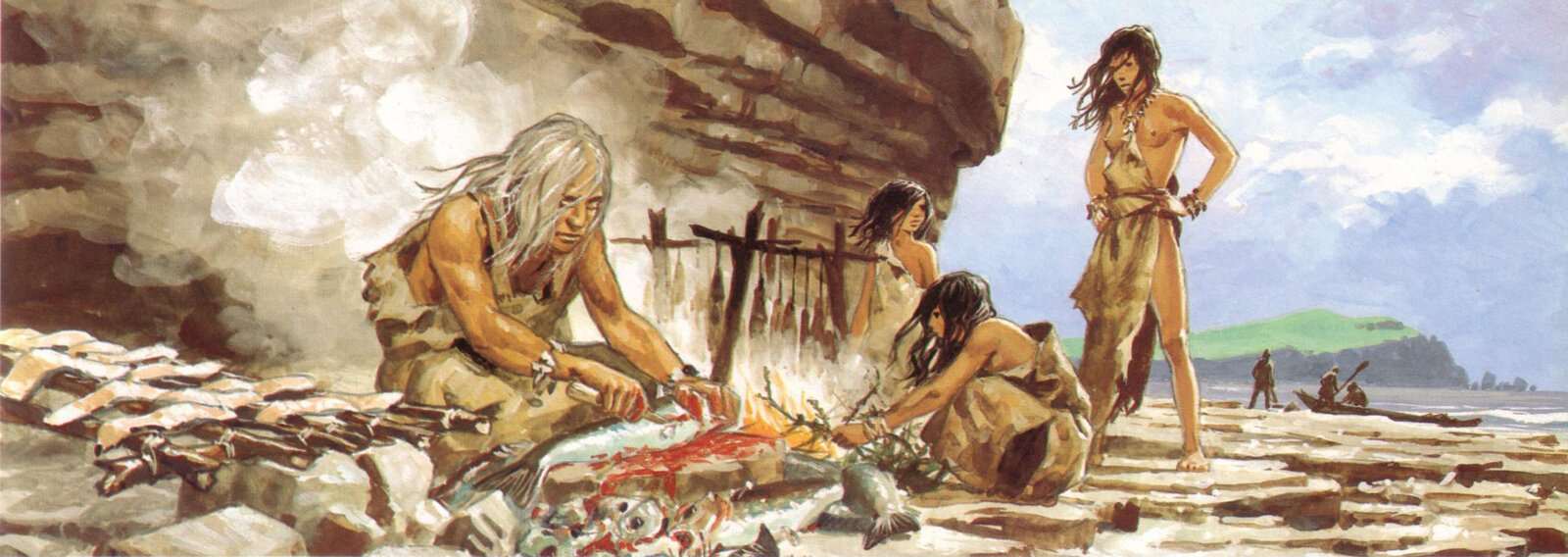
«I can’t sit here with you forever…»
But while the Cro-Magnons were indeed Cro-Magnons, representatives of other anthropological types also lived in Kostyonki during those distant times, albeit in significantly smaller numbers. For example, at the Kostyonki-15 sites, skulls and skeletons of members of the Brno-Pršedmost pre-race were discovered, similar to finds of this type in the Czech Republic and Germany. Representatives of this anthropological type were much shorter (160–170 cm), a stockier build, and a much more archaic facial structure, closer to that of Homo idaltus (the earliest Homo sapiens) than to humans who had already undergone hybridization with Neanderthals. Similar skeletons were also discovered at the Sungir-1 site near Vladimir.
Perhaps the most interesting site was Kostyonki-14, where a fascinating, nearly complete skeleton was discovered (albeit the only one found there). Gerasimov, the renowned Soviet anthropologist who was present during the excavations, set to work almost immediately on reconstructing this individual’s appearance. The result bore a striking resemblance to the most ancient Papuans of New Guinea. Today, methods for reconstructing soft tissues based on skull bones have been refined compared to Mikhail Mikhailovich’s time, so this “comrade” now looks more like a Veddan in appearance.
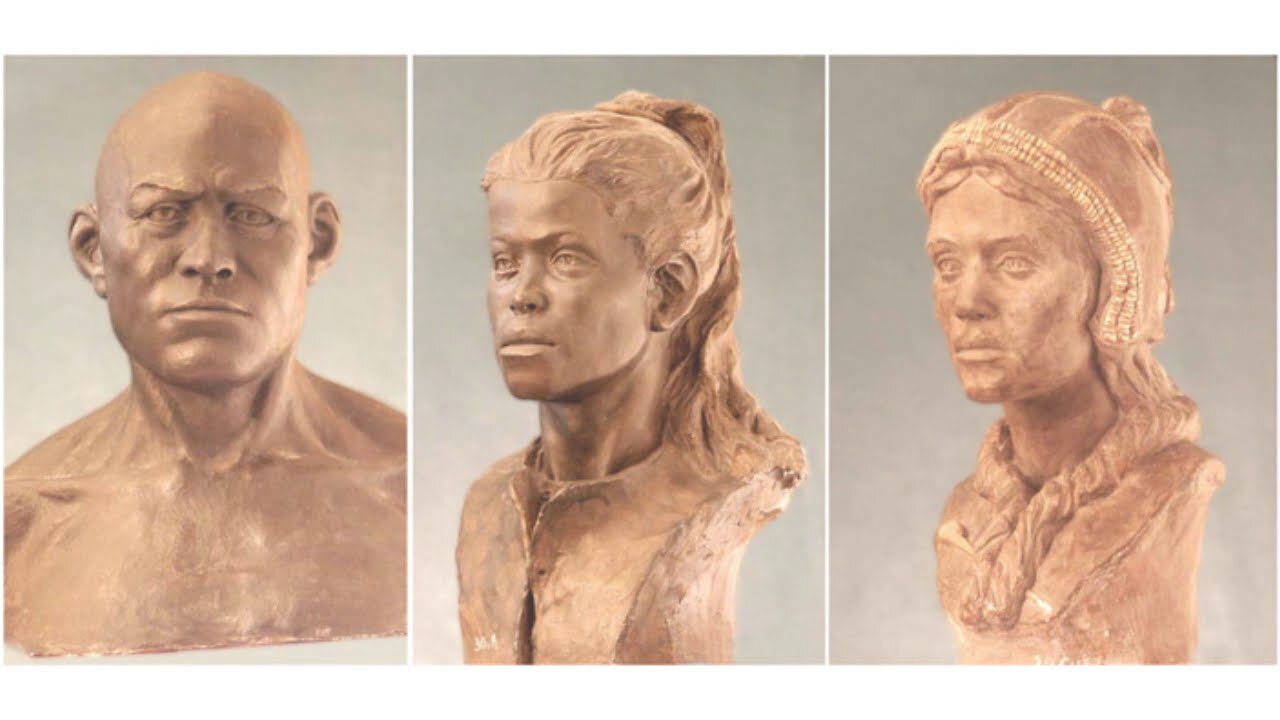
“I need to kill at least someone…” The man on the far left of the reconstruction was killed by a spear thrust to the abdomen. Reconstructions by M. M. Gerasimov based on the Sungiri skulls
Sungir is a complex of sites dating from a slightly later period than Kostyonki. But here, too, at least three anthropological types have been identified. In addition to the now-familiar “classic” Cro-Magnons and several Brno-Prshedmostians, the remains of people very similar in appearance to modern Eskimos have been discovered. They were even shorter than the Brno-Pršedmost people, even stockier, and also had flattened faces and, as yet, not clearly defined spatulate incisors. Eastern Europe 50,000–30,000 years ago was a veritable “melting pot” of a whole host of “varieties” of modern-type humans. Although, in principle, the same could be said of virtually any region of the planet at that time.