Renault is developing a successor to the legendary FT. An unmanned armored vehicle to replace traditional vehicles

A little over 100 years ago, the Renault FT tank sparked a true revolution in the world of armored vehicles—it was the first tank of a conventional design with a rotating turret and a rear-mounted engine. It remains to be seen whether the French company’s new unmanned armored vehicle will become an equally iconic machine in the modern era. However, there is good reason to take a closer look at this development.
Joint Development: Renault and John Cockerill
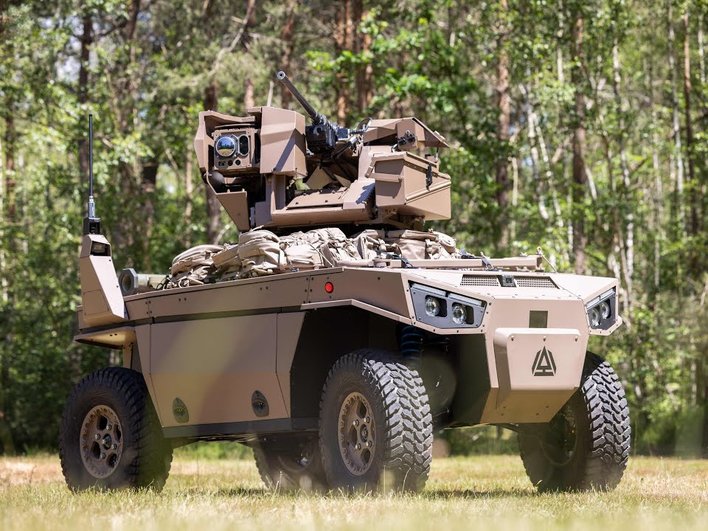
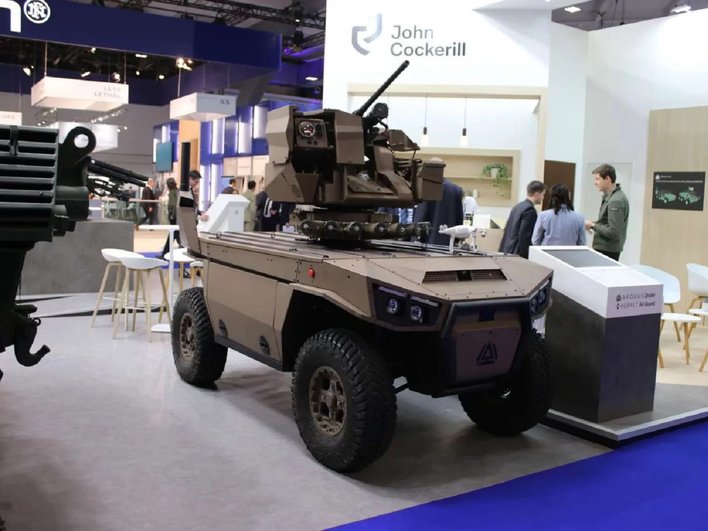
The project is being carried out not by a single manufacturer, but as part of a partnership. The French Renault Group is responsible for the chassis, powertrain, electronic architecture, and overall integration of the platform. The Belgian manufacturer of weapons and defense systems, John Cockerill, is developing and adapting the combat module that will be mounted on the vehicle. This division of responsibilities makes it possible to combine civilian automotive technologies with proven defense solutions.
Technical Features
At this time, information about the platform is limited to official statements and confirmed data. The known technical solutions are as follows:
- The platform is built using standardized Renault automotive components, which simplifies logistics and maintenance.
- A shift away from heavy armor in favor of so-called “smart architecture”: priority is given to situational awareness, network integration, and configuration flexibility.
- The vehicle’s outer perimeter is equipped with suspended cameras, optical and radar sensors, as well as communication antennas, which provide a 360-degree view and enable real-time communication.
- The power plant is fully electric, which reduces thermal and acoustic signatures and simplifies integration with power-intensive electronics.
- The design features an open architecture that allows for quick changes to payloads depending on the tactical mission without requiring extensive chassis modifications.
- Secure data transmission channels are designed to meet NATO tactical network compatibility requirements, ensuring interoperability with other components of the Alliance’s combat systems.
Specified Specifications
Based on the available data, the platform’s specifications are as follows:
- Size: comparable to a city hatchback or a Renault 5, with a length of about 3.5–4 meters.
- Design: a low-profile platform on a multi-wheeled or all-wheel-drive chassis, visually combining the features of an off-road buggy and a combat robot.
- Sensor equipment: multiple external cameras, various types of sensors, and antenna modules.
- Protection: No heavy armor; the focus is on “smart architecture,” stealth, and network resilience.
- Power source: electric.
- Chassis: modular, built using standard Renault automotive components.
- Architecture: open, designed for quick replacement of payloads.
- Communications: Secure data transmission channels compatible with NATO tactical networks.
Outlook
The concept of a compact electric unmanned vehicle reflects a global trend away from super-heavy armored vehicles toward distributed, networked, and easily replaceable platforms. Its modularity and open architecture allow the vehicle to serve as a reconnaissance platform, an electronic warfare carrier, a transport hub, or a fire support unit without the need to develop specialized variants for each task. The electric powerplant reduces operating costs and thermal signature but requires a well-developed charging infrastructure or hybrid solutions for extended autonomous operations.
The lack of a traditional armor system is offset by an emphasis on situational awareness, networked interoperability, and the ability to operate in fully autonomous or remotely controlled modes. Compatibility with NATO networks simplifies the platform’s integration into coalition operations, while the use of Renault’s civilian automotive components has the potential to reduce production costs and accelerate mass production. Nevertheless, actual combat effectiveness will depend on the resilience of communication channels under electronic warfare jamming, the maturity of autonomous driving algorithms, and the platform’s ability to operate in challenging weather and terrain conditions.
Conclusion
Renault’s new design does not attempt to follow in the footsteps of traditional tanks or infantry fighting vehicles. Instead of increasing weight and armor thickness, the platform focuses on compactness, electric propulsion, modularity, and tight network integration. Only time and real-world testing will tell whether it can replicate the historic success of the Renault FT, which set the standard for tank design more than a century ago. However, the very fact of the transition from an “armored box” to a “smart mobile platform” clearly indicates the direction in which light unmanned vehicles will develop in the coming decades.