The next-generation high-speed helicopter, the Airbus Racer, is ready to take the commercial helicopter market by storm

We wrote about this car in great detail in May of last year, 2024. However, the project has made significant progress since then. Read on to find out what’s new and what stage this development is currently at.
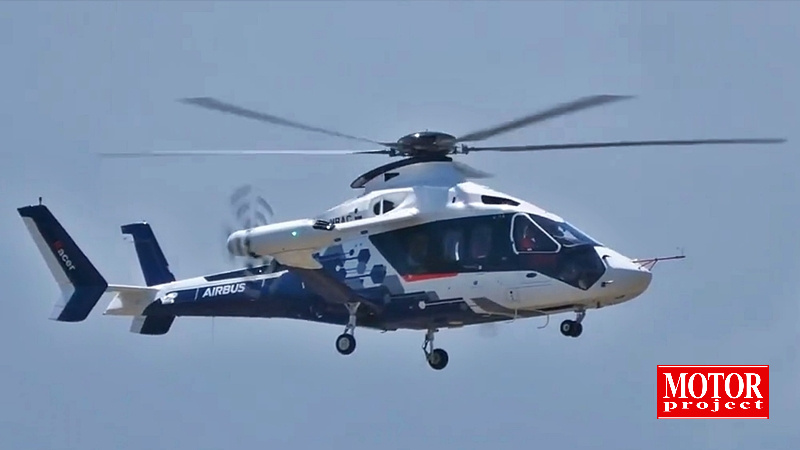
Airbus has achieved its goal: testing of the new-generation three-rotor helicopter has begun, with the aircraft effectively in its pre-production configuration. The Racer takes off confidently, and it’s already safe to say that it will be available to customers in the foreseeable future.

Designers have long been struggling to increase the cruising speed of helicopters, but so far without much success. The vast majority of production helicopters fly at a cruising speed of 240–270 km/h. In other words, the classic design has hit a wall at 300 km/h. Of course, there are record-breaking helicopters, such as our experimental Mi-24PL, which can reach speeds of up to 405 km/h, but these are all non-commercial aircraft. But wouldn’t it be great, as an ordinary passenger, to board a helicopter, take off vertically, and fly to your destination not at helicopter speed, but at airplane speed!
We’ve known how to do this for a long time: you need to add a propeller to the main rotor that generates horizontal thrust, and then—at least in theory—the helicopter will be able to fly at the same speed as turboprop aircraft. But in practice, a pulling or pushing propeller greatly complicates the task! For example, I know of only one example of such a production aircraft: the Boeing Osprey with two rotary propellers. But due to the complexity, unreliability, and high cost of its design, this tiltrotor—which flies only with the aid of computer control—has found use exclusively in the U.S. Army, while civilian customers shun it like the plague. And yet, consumers are willing to pay for speed—and pay well! This means that sales departments are pressuring engineers to develop faster vehicles, and the engineers keep taking on the challenge time and time again.

And now, the engineers at Airbus’s helicopter division are close to finalizing the design: the three-rotor Racer has not only taken to the air but has also begun testing under operational conditions. And with success! This means a truly groundbreaking helicopter will soon hit the market!
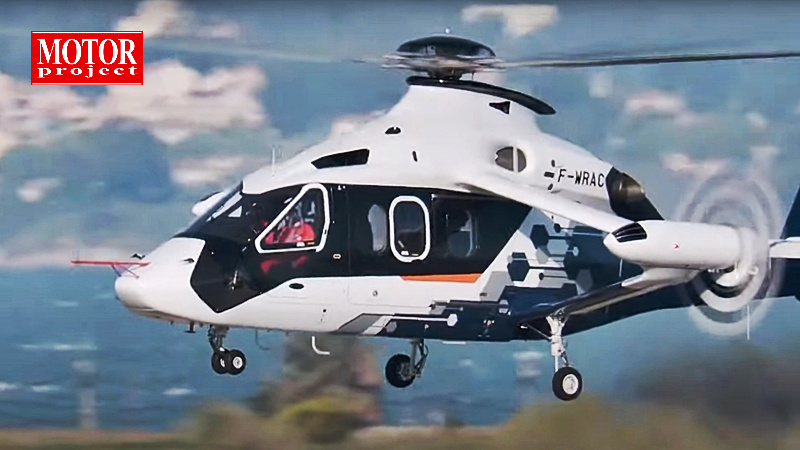
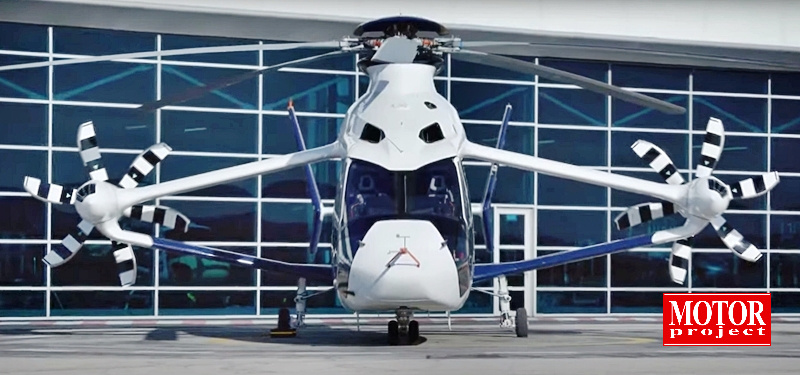
What is it like? At first glance, this helicopter uses a long-established design featuring a single main rotor and two pusher propellers mounted on either side of the fuselage, which simultaneously serve as a tail rotor designed to counteract the torque generated by the main rotor. This is already one of the new aircraft’s advantages. These two pusher propellers are mounted on small, so-called box wings. Inside the fuselage are two Safran engines, each producing 2,500 l.s., and a transmission that distributes their torque among the three propellers.

And most importantly: the developers have succeeded in creating more than just a high-speed demonstration helicopter that people will talk about and admire before sending it to gather dust in a museum. Unlike its predecessors, the Raser—designed to carry 10 passengers—is intended for effective commercial use. It will not only increase transport speed but also reduce operating costs compared to helicopters currently in use. But at what cost?
First, during horizontal flight, the small wings help generate lift, which allows the main rotor’s RPM to be reduced by 15%.
Second, during horizontal flight—which requires less energy—one of the two engines will shut down, thereby drastically reducing fuel consumption. The most efficient mode is at a speed of 333 km/h, when fuel consumption drops by a quarter! And at a cruising speed of 400 km/h, fuel efficiency increases by nearly 20%, which isn’t bad either!
Third, the Racer features a unique metal-composite fuselage that is lighter than those of conventional helicopters.
During flight tests that began this spring, the Racer has already exceeded its projected cruising speed, reaching 420 km/h on one of its flights. But that’s apparently not the limit! Its predecessor, the Airbus X3 prototype—on which the technologies for the future Racer were tested—reached speeds of up to 472 km/h in level flight—a speed typically seen in turboprop passenger airliners. So, most likely, in future test flights, the Racer will be able to achieve a comparable maximum speed.
MotorProject© Konstantin Zakurdaev
Source — https://dzen.ru/a/Z2fT6_GzWlO23_RY