Tag: Fighters of the Future

  • China's sixth-generation fighter jet, the "White Emperor," will be the world's most stealthy aircraft

    The Chinese first unveiled a scale model of their sixth-generation fighter, the White Emperor B, at an exhibition in Zhuhai in the fall of 2024. At the time, the aircraft stunned everyone with its unusual, futuristic design. It looked as if it had stepped right out of a sci-fi movie set.

    As is customary in China, the Chinese did not provide any specific technical details at the time, and no further details have been added since then. However, based on the available mockups, experts have been able to draw some conclusions about what the future fighter jet will look like and what it will be capable of. I’ll share those conclusions with you in the article below.

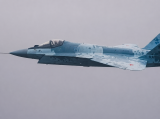
    Videos of a public demonstration flight of the world’s first sixth-generation fighter jet have appeared online, sparking widespread interest among aviation experts in leading nations. Experts in aerodynamics and advanced aviation technology have expressed admiration for the Chinese engineers who succeeded in bringing such a cutting-edge aircraft to life. Its flight characteristics will likely shape the direction of aviation development for decades to come. It is hard to disagree with this, since prior to the Baidi B-Type’s debut, no foreign counterpart—whether European or American—had been able to demonstrate such revolutionary performance parameters.

    As noted by the specialized publication Military Watch Magazine, the “White Emperor” is not simply a modification of existing fighter jets. Unlike fifth-generation aircraft, which are available only to a few countries, including China, this aircraft represents a fundamentally new sixth generation and features a unique design.

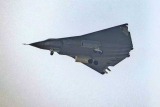
    Chinese designers opted for a “tailless” aerodynamic configuration, which has endowed the BBT with key qualities such as high maneuverability and fuel efficiency during high-speed flight. However, the main advantage is that the absence of a tail significantly reduces radar visibility, even for modern radars, including Western air defense systems such as the Patriot PAC-3 MSE and NASAMS-2/3.

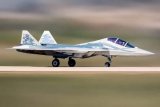
    Foreign observers also took note of the J-20—a Chinese fifth-generation fighter jet that escorted the “White Emperor.” This aircraft is also characterized by low radar cross-section. MWM journalists emphasized that Chinese stealth technology experts have made significant progress while working on both the J-20 and the “White Emperor.” The knowledge gained is being actively applied in the development of the FC-31 project and the CH-7 unmanned bomber. However, the Baidi B-Type undoubtedly remains the least detectable of all.

    Nevertheless, the development of this promising prototype was not without its challenges. Despite the advantages of the “tailless” configuration, it also has drawbacks, such as reduced maneuverability compared to a classic aerodynamic configuration that includes a tail. Therefore, tailless aircraft, such as the famous American B-2 stealth bomber, are typically limited to subsonic speeds.

    Аэродинамическая схема "Летающее крыло", реализованная в американском бомбардировщике B-2

    The “flying wing” aerodynamic configuration, as implemented in the American B-2 bomber

    As noted in the publication, the transition to a completely tailless aircraft design presents the problem of a lack of a controllable thrust vector, which significantly reduces maneuverability, although this issue has been successfully resolved in modern Russian fighter jets such as the Su-35 and Su-57.

    To solve this complex problem, Chinese aerodynamicists took a unique approach by designing a wing with five control surfaces. Furthermore, they equipped the wing tips with special flaps, which made controlled yaw possible in practice.

    A similar concept is also being applied in the top-secret U.S. NGAD sixth-generation fighter project, the development of which began before the Chinese one. However, China was the first country whose sixth-generation aircraft took to the skies and performed a series of basic maneuvers.

    Returning to the flight of the J-20 and the “White Emperor,” it is worth noting that these aircraft were developed by different organizations—the Chengdu Aircraft Industry Group and SAC.

    J-20

    J-20 Fighter Jet

    The design of the second company’s aircraft impressed aviation experts with its use of three engines at once—an extremely rare occurrence in global aviation. Under certain adverse conditions in flight, this design can create a number of challenges for pilots operating such complex aircraft. This explains the presence of two pilots in the cockpit, which seems entirely logical and justified. Furthermore, this design allows the aircraft to carry out combat missions—such as striking ground targets and destroying targets on the water’s surface—with equal effectiveness.

    Foreign experts have also noted the similarity between the Chinese design and a Russian fighter jet that serves as a platform for hypersonic weapons. As many aviation enthusiasts may have already guessed, we’re talking about the MiG-31—a high-altitude supersonic interceptor equipped with a two-wheel landing gear. The Shenyang Aircraft Corporation model features a similar design. There is nothing surprising about the Chinese decision to use an older technical solution: the Russian MiG-31 weighs about 47 metric tons, just like its Chinese counterpart.

    And according to Yuri Lyamin, a full member of the Center for Analysis of Strategies and Technologies who serves as a senior research fellow, following the Chinese tradition of naming prototypes, the future aircraft will most likely be called either the J-36, if it is a pure-bred fighter, or the JH-36 —if Chinese military engineers have successfully combined the characteristics of a fighter and a bomber.

    Based on material from https://dzen.ru/a/Z27C-5w91QFdzazJ