The LFG Roland C.II “Walfisch” Multi-Purpose Aircraft: The Kaiser’s Air Force’s High-Speed “Whale”

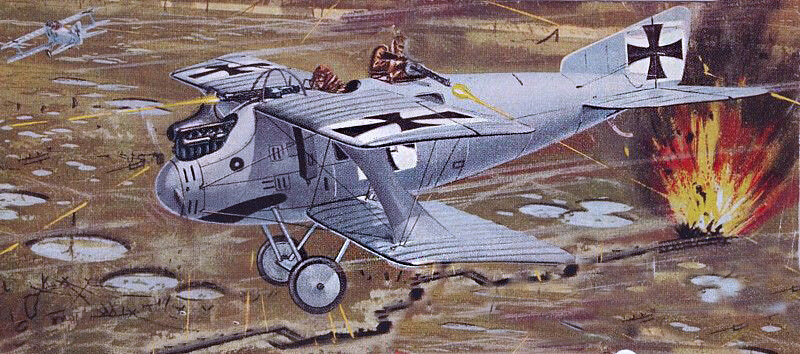
An article from the “Historical Armored Car” channel on Yandex Zen.
Indeed, the shape of this aircraft’s fuselage strongly resembles that of a mighty sea creature. Unlike its marine “namesake,” however, it could fly—and it could also fight back with machine-gun fire. And it could drop a bomb, if necessary…
In 1906, under the patronage of Emperor Wilhelm II, the airship-building company “Motorluftschiff-Studien-Gesellschaft” (“MSG”) was founded. On April 30, 1908, “MSG” became a founding member of the new aircraft manufacturing company “Luft-Fahrzeug-Gesellschaft Bitterfeld.” The company’s first products were airships designed by August von Parseval. A year later, “MSG” acquired a number of patents from the Wright brothers and changed its name to “Flugmaschine Wright Gesellschaft.” After the company had produced forty “Flyer” aircraft and trained three dozen pilots, the German Patent Court ruled that the Wright brothers’ patents were invalid. The company was forced to liquidate.
In 1912, to support the fledgling aviation industry, the Krupp Group, AEG, and a number of other major German financial and industrial “heavyweights” founded the Luftfahrzeug Gesellschaft (L.F.G.). To avoid confusion with the already well-known Luftverkehrs GmbH (L.V.G.), it was decided to add the name Roland to the abbreviation L.F.G. and make it part of the new brand. Initially, the company manufactured aircraft under license: a number of biplanes and monoplanes were produced and sent to serve in Germany’s African colonies. At the start of the war, a major order came from the military—production began on the Albatros B I and B II two-seat reconnaissance aircraft. This allowed the company to, as they say, “get the hang of it” in terms of production and then move on to building aircraft of its own design.
Noting the abundance of wire struts and struts used in the design of the licensed “Albatross” aircraft, L.F.G. engineers began searching for ways to improve the aircraft’s aerodynamics, which would allow for better flight performance without a significant increase in engine power. Extensive research was conducted by Professor Ludwig Prandtl in the wind tunnel at the University of Göttingen. In addition to his research, Prandtl actively advised the company’s chief designer, Engineer Tanzen, and his team, who ultimately developed an original design for a two-seat reconnaissance aircraft, which was named “Walfisch” (“Whale”).
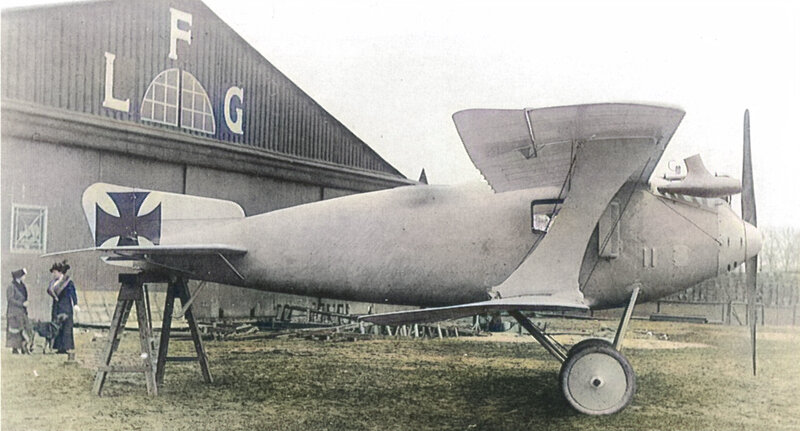
The LFG Roland C.II prototype at Adlershof Airfield, October 24, 1915
The prototype’s first flight took place on October 25, 1915. It ended in failure. Powered by a 160-si-vny Mercedes D. III engine, the aircraft had barely lifted off the ground when the engine stalled. The aircraft crashed, damaging its lower wing. Subsequent test flights went smoothly for the most part. During testing, insufficient longitudinal stability was noted, which required the pilot to remain constantly alert. Another defect was noticeable twisting of the thin wings at high speeds during dives. However, the aircraft demonstrated a speed advantage of 30 km/h over the two-seaters then in service, which enabled the company to secure its first order for 50 aircraft as early as December 23, 1915.
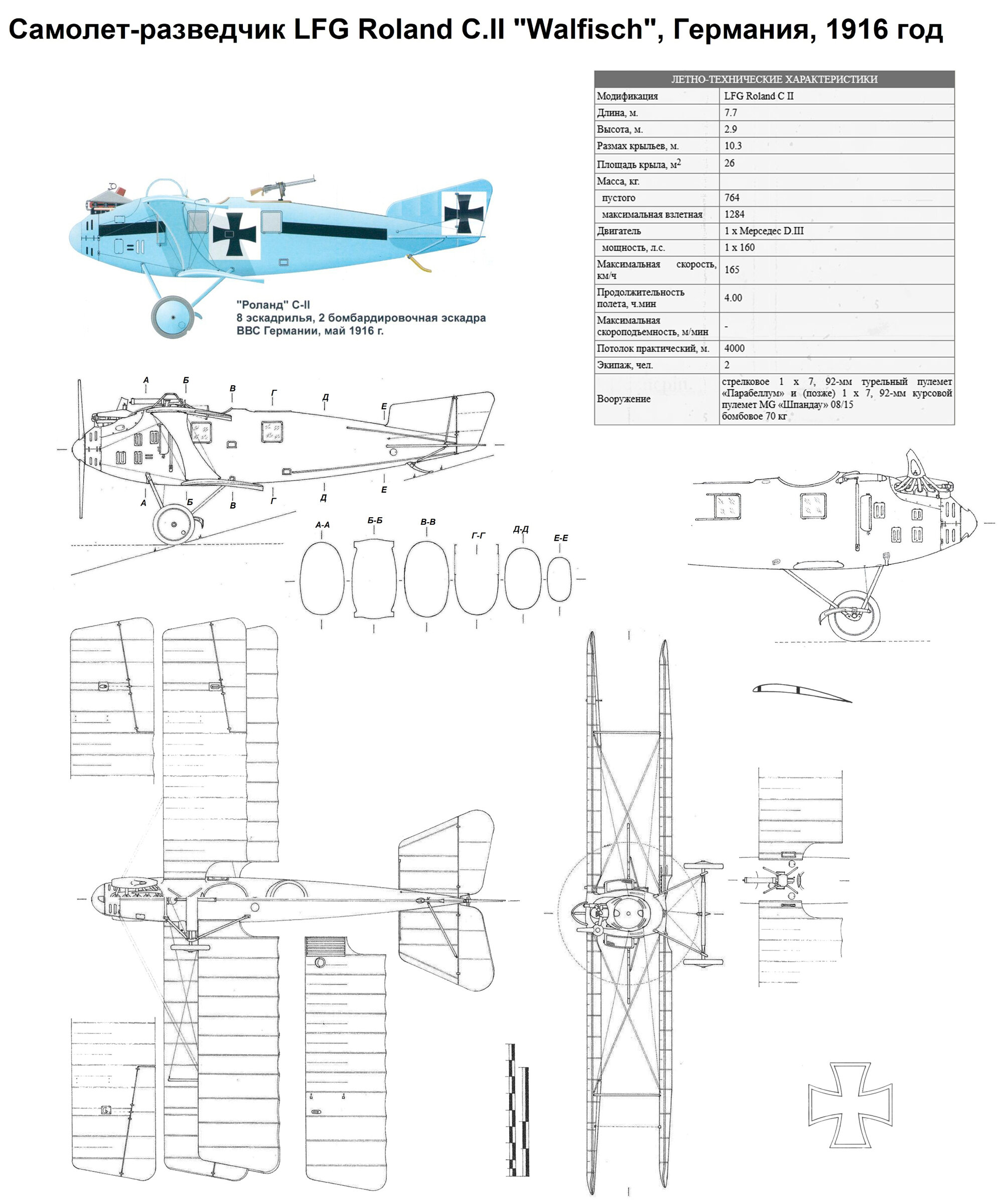
In terms of design, the aircraft was a high-fuselage biplane, which made it possible to mount the upper wing directly on the fuselage. This technical solution made it possible to eliminate the complex upper wing mounting system, thereby improving the aircraft’s aerodynamics and increasing the rigidity of the biplane frame, which was a highly sophisticated design.
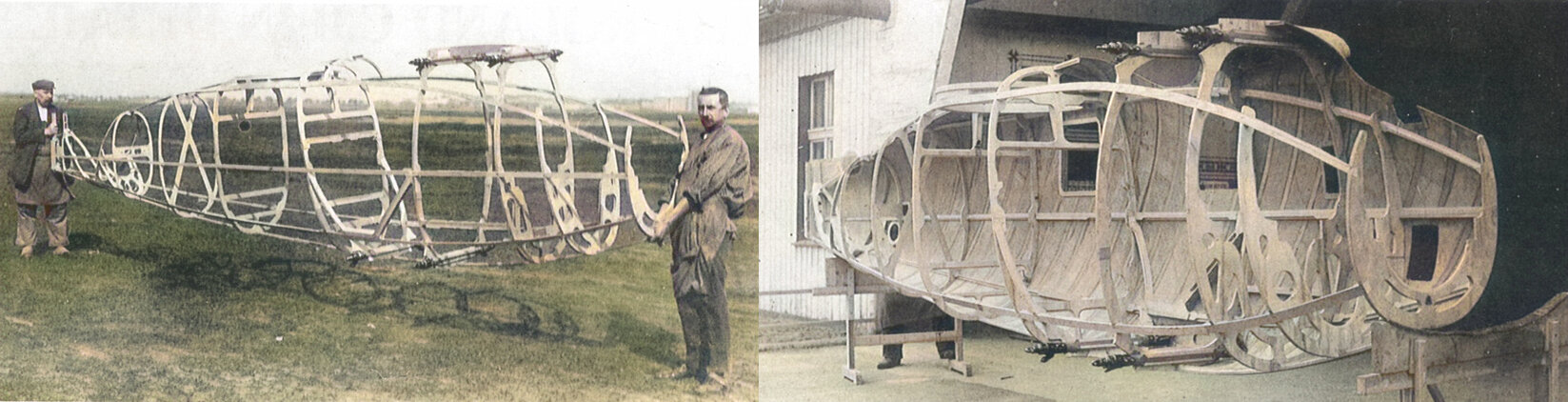
On the left, two workers are showing the fuselage frame. On the right, plywood paneling is being installed.
Compared to many of its contemporaries, whose fuselages were typically truss structures with a box-shaped cross-section, the LFG Roland C.II featured a revolutionary fuselage design. It was a semi-monocoque of elliptical cross-section, constructed with an outer skin consisting of two layers of thin plywood strips arranged at an angle to each other (known as the Wickelrumpf design, or “wrapped fuselage”). The load-bearing fuselage skin was reinforced by a structural frame. This design solution resulted in both lower drag and a better strength-to-weight ratio than was typical at the time, but it was relatively slow and expensive to manufacture. Much later, during World War II, this manufacturing method was further developed in the famous British De Havilland Mosquito. The fuselage near the engine was covered with aluminum sheet metal. Two windows were installed on each side of the crew compartment to improve visibility. A frame made of curved tubes was mounted above the pilot’s cockpit to protect the pilot’s head in the event of a nose-first crash.
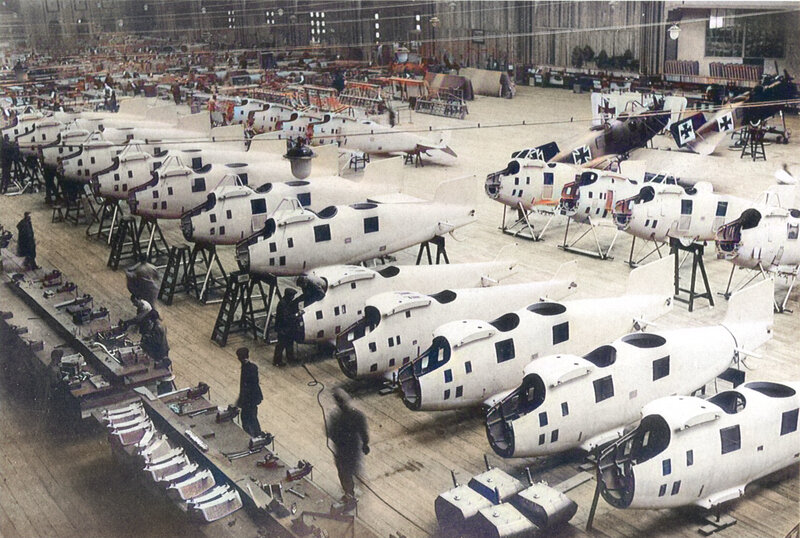
Production of “Rolands.” Fuselage assembly is underway
The wings were wooden, double-spar construction with fabric covering. The leading spar also served as the wing tip, which made the wings insufficiently rigid. To improve downward visibility, cutouts were made at the roots of both wings. The X-shaped interwing struts were concealed within the fairing to minimize drag. Ailerons were located only on the upper wing.
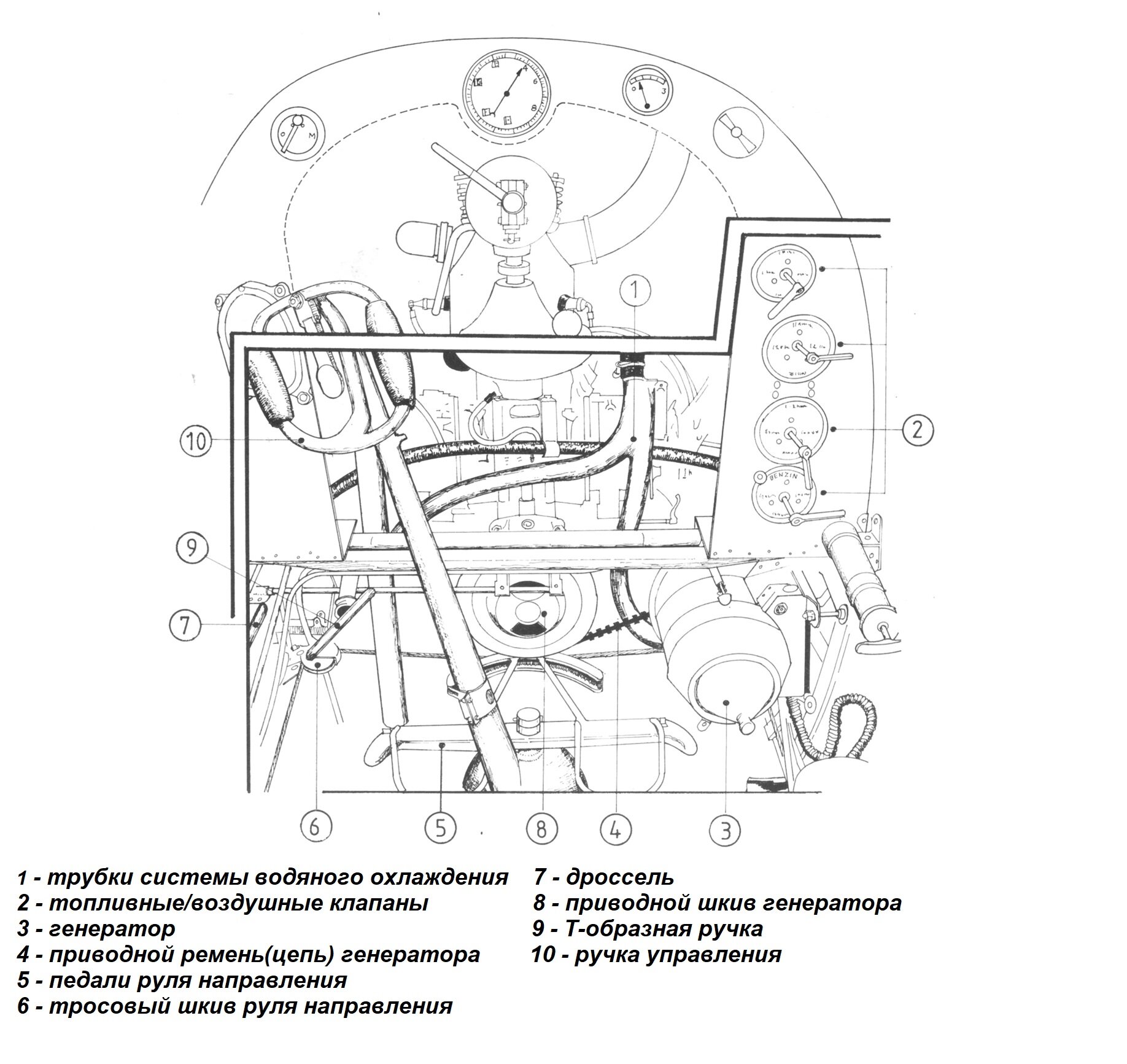
Pilot’s Cockpit Layout
The tail unit follows a classic configuration: vertical stabilizer, horizontal stabilizers, and elevators and rudders. The construction of the vertical stabilizer and horizontal stabilizers is similar to that of the wings—a wooden frame covered with fabric. The control surfaces had a steel tubular frame covered with fabric.
Two-wheeled chassis with rubber-cord suspension. Equipped with a brake hook.
The aircraft was equipped with a water-cooled Mercedes D.III inline six-cylinder engine, rated at 160 l.s., which drove a two-bladed pusher propeller. The engine was mounted on a steel-tube frame in the nose of the fuselage. The water-cooling radiators were mounted on both sides of the fuselage.
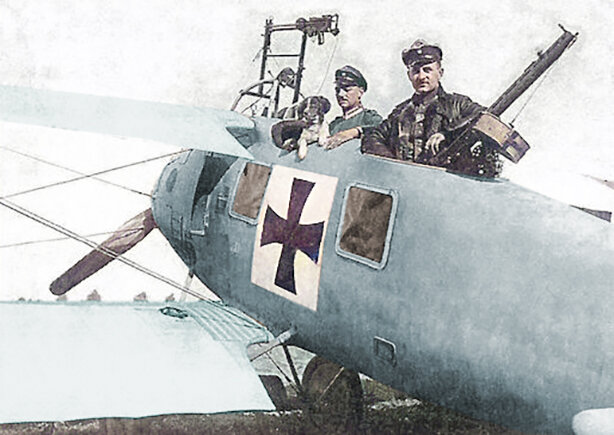
Since the early models lacked a synchronized machine gun, pilots on the front lines retrofitted their aircraft on their own. In this photo, you can see a captured British Lewis machine gun mounted on firing brackets above the propeller, apparently removed from a downed or captured aircraft.
Initially, the aircraft’s armament consisted of a single 7.92-mm “Parabellum” LMG 14 machine gun, which was mounted on a swiveling turret in the observer’s cockpit. Starting with the second production series, a synchronized “Spandau” LMG 08 machine gun was also added and mounted in the nose of the aircraft. In addition to its small arms armament, the aircraft could carry up to 70 kg of bombs.
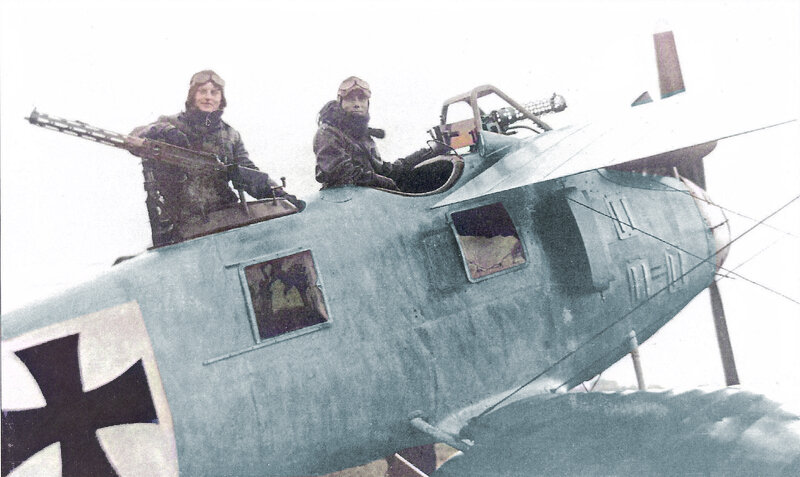
Roland C.IIa with a coaxial machine gun
The crew consisted of two people—a pilot and an observer—who were seated in open cockpits in the upper part of the fuselage.
After the aircraft entered service with combat units, the C.IIa variant appeared, which differed from the base model in that it had redesigned and reinforced wing tips and was equipped with a synchronized machine gun.
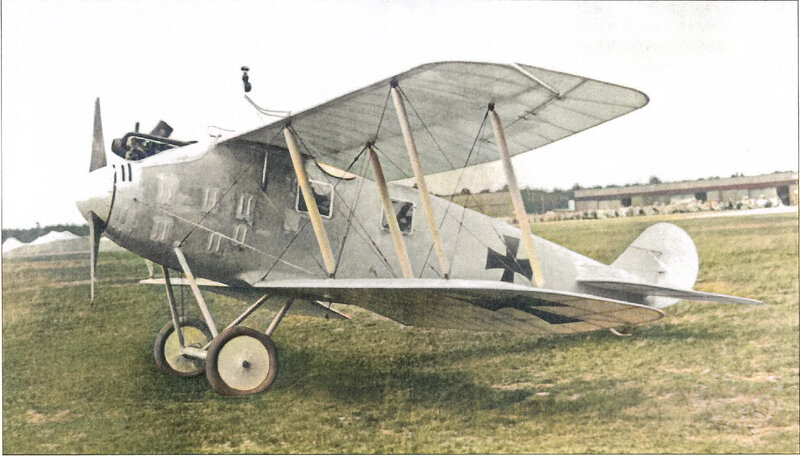
The C. III variant featured conventional wing struts and a more powerful engine. Only one unit was built.
Several prototype variants were also developed based on the Roland S. II, each built as a single example. The S. III variant was equipped with a Benz Bz.IV engine (200 l.s.) and conventional straight interwing struts. The C. VIII version differed from the C. III in that it was powered by an even more powerful 260-si-ch Mercedes D.IVa engine. In addition to LFG, the aircraft was manufactured under license by Pfalz Flugzeugwerke and Linke-Hofmann. A total of 300 aircraft were produced, 200 of which were built by LFG.
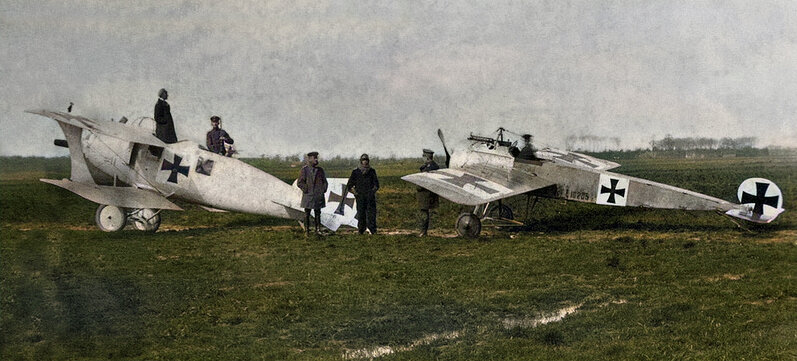
At one of the field airfields. On the right is a Fokker E.III fighter.
The new reconnaissance aircraft began arriving at combat units on the Western Front in March 1916. The “Rollands” arrived just in time for the Battle of Verdun, where they were used for long-range reconnaissance, artillery spotter missions, and, to a limited extent, to escort bombers and, occasionally, as light bombers. Thanks to its good aerodynamics, it was just as fast as the Allied fighters of the time, such as the Nieuport 11 or the Sopwith Pup, and was difficult to intercept. The exception was the Nieuport 17. The observer had an unrestricted field of fire in the upper hemisphere, as well as forward, and—after swiveling the machine gun—to a limited extent to the sides and downward. British fighter ace Captain Albert Ball, whose first downed aircraft was in fact one of the “Rolands,” rated it as the best German aircraft of the time.
In total, during their period of combat service, the following units were equipped with “Rolands”: Field Aviation Squadrons (Feldflieger-Abteilung) 1b, 2b, 5b, 18, 23, 24, 25, 62; Flieger-Abteilung (A)213, (A)227, (A)235, (A)245, and (A)252; one squadron (Staffel) from each was assigned to Combat Wings (Kampfgeschwader) I, III, IV, and VI, as well as to two flight schools and one reserve aviation unit.
German pilots went to great lengths to emphasize the fuselage’s resemblance to a whale, even adding drawings of the marine mammal’s eyes and mouth. The first pilot to “customize” his S.II in this way was Eduard von Schleuch, who later became a German fighter ace, scoring 35 aerial victories during World War I.
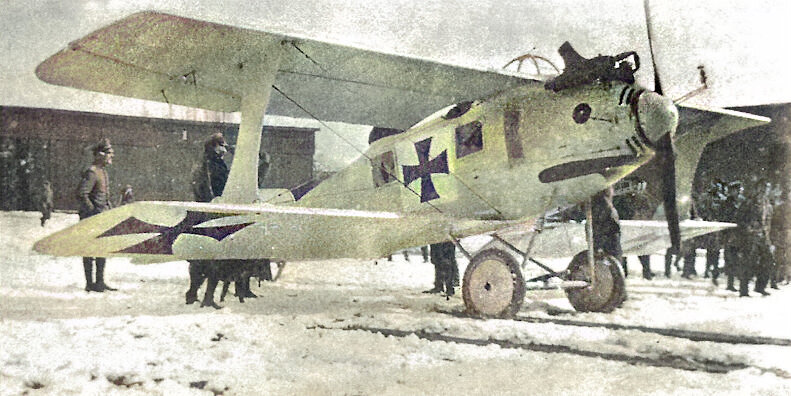
Roland S. II by Hauptmann Eduard von Schleich, Winter 1916–1917
Due to the labor-intensive nature of its production, the aircraft reached the front late and in small numbers. As of October 1916, the 56 available aircraft accounted for only 4% of all German Category C reconnaissance aircraft. By the end of December of that year, their number had increased to only 64. The rest were delivered to units as early as 1917.
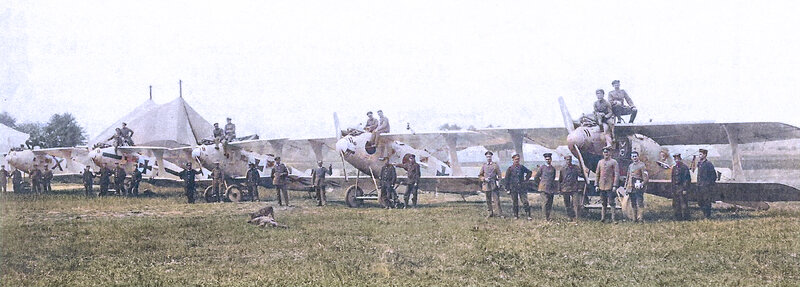
Kasta 8 Squadron, equipped with Roland S. II aircraft, at the airfield
By the end of 1916, the introduction of new aircraft meant that the “Walfisch” was no longer up to the demands of the battlefield. By that time, the Allies already had fighters capable of intercepting it. It remained in active service until the spring of 1917, when it was gradually withdrawn to training squadrons. Eventually, in June 1917, the “whales” were withdrawn from the front.
“Rolands” were also used on the Eastern Front. In fact, they remained in service with front-line units there practically until the end of hostilities. The intensity of the air war on the Russian front was significantly lower than in France, and the Russian Air Force was equipped mainly with obsolete fighter models. However, there were losses as well.
Let’s summarize. There is no doubt that the Roland C.II was a truly remarkable aircraft at the time of its creation. Essentially, it was a multi-role aircraft whose technical specifications allowed it to be used as a reconnaissance aircraft, a fighter, and a light bomber. However, the design choices made had both advantages and disadvantages. Thanks to its semi-monocoque fuselage and wing configuration, the aircraft was sturdy, aerodynamic, fairly compact in size, and had good speed characteristics. Its effective gun armament, combined with its high speed, made the aircraft a formidable opponent in aerial combat. The aircraft had a long range, which was an unquestionable advantage for both reconnaissance and escort fighter missions.
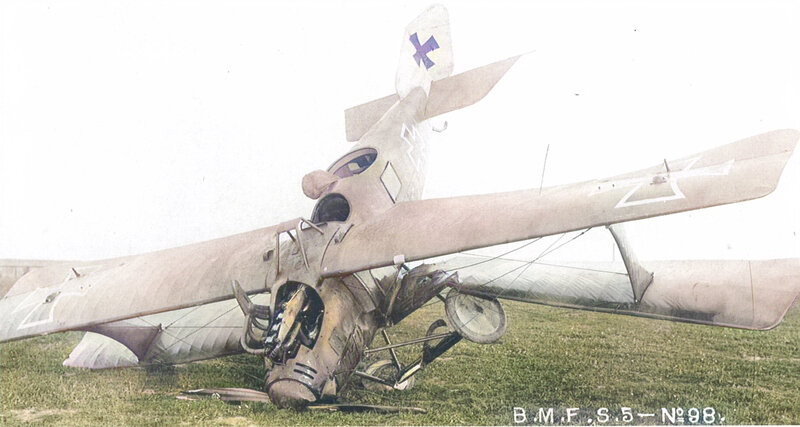
Accidents were quite common for the LFG Roland C.II. The aircraft often crashed during landing because, due to limited downward visibility, the pilot had to land the plane practically “blind.”
However, maneuverability was a weakness of the “Rollands” due to the low effectiveness of their control surfaces. The placement of the wing on top of the fuselage, on the one hand, provided the crew with an unrestricted view of the upper hemisphere, but, on the other hand, the downward view was equally poor for both the pilot and the observer. This circumstance made landing extremely difficult for the pilot, leading to numerous crashes, and the observer might fail to spot an enemy fighter attacking from below in time. The cutouts in the wings and the windows in the fuselage only partially solved this problem. The aforementioned Albert Ball repeatedly exploited this weakness of the “Rolands” by attacking from the lower blind spot. According to some accounts, he managed to shoot down several aircraft in this manner during the Battle of the Somme in the fall of 1916.
In addition, the aircraft turned out to be quite labor-intensive to manufacture, which limited its production and use to a small scale. Nevertheless, it was a very interesting aircraft, whose design represented a significant step forward in military aircraft engineering, at least in terms of aerodynamics.
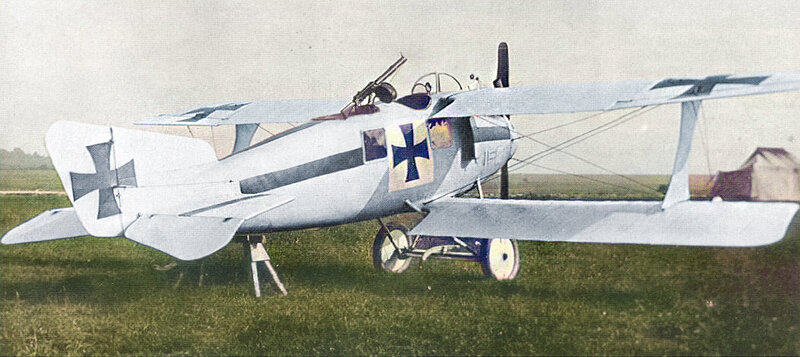
An LFG Roland C.II from the 6th Squadron of the 1st Fighter Wing
Источники: P.M. Grosz. «LFG Roland C.II» /Windsock Datafile 49, J.Herris — «Roland Aircraft of WWI», O.Thetford, P.Gray. «German Aircraft of the First World War», В. Обухович, А. Никифоров «Самолеты Первой мировой войны».