The Munich Shuffle, or What If the Signing of the Munich Agreement Is Postponed? Part 38. The Taranto Attack (Operation “Justice”)

It’s practically RI all over again. However, there are differences: the timing—in RI, the attack took place in November 1940, while in AI it was on January 3—and the results—the Italian fleet suffered more significant losses, since not one, but three aircraft carriers participated in the attack. How this might affect the future, God only knows. Share your thoughts in the comments.
By early 1941, security measures at the port of Taranto had become rather lax. Barrier balloons damaged by bad weather had not been replaced. Some anti-torpedo nets had not been repaired because they, too, had been damaged during storms, and those that remained did not provide complete protection. Overall, the ships and shore-based personnel had fallen into a dreary routine. This monotony led to a decline in discipline, exacerbated at that time by the fact that many officers who had left to celebrate the New Year had not yet returned.
Admiral Cunningham and the British Mediterranean Fleet were much more proactive and decided to postpone their own celebrations in order to finally launch the long-delayed Operation Judgment.
On the night of January 2–3, three Royal Navy aircraft carriers took up positions off Taranto and launched their planes during the night, while the Italians remained unaware of the impending disaster.
Such nighttime operations were challenging, but the crews of HMS Illustrious, HMS Formidable, and HMS Eagle had trained intensively beforehand to carry out such missions.
At the time, the Italians were unaware that the British had a third aircraft carrier, the Formidable, which had been commissioned only on November 6 and immediately sent to the Mediterranean to take part in the operation.
It should be noted separately that the Formidable was of the same class as the Illustrious. And even when Italian reconnaissance planes spotted it, they were unable to identify it as the third British aircraft carrier, believing instead that they were observing the Illustrious.
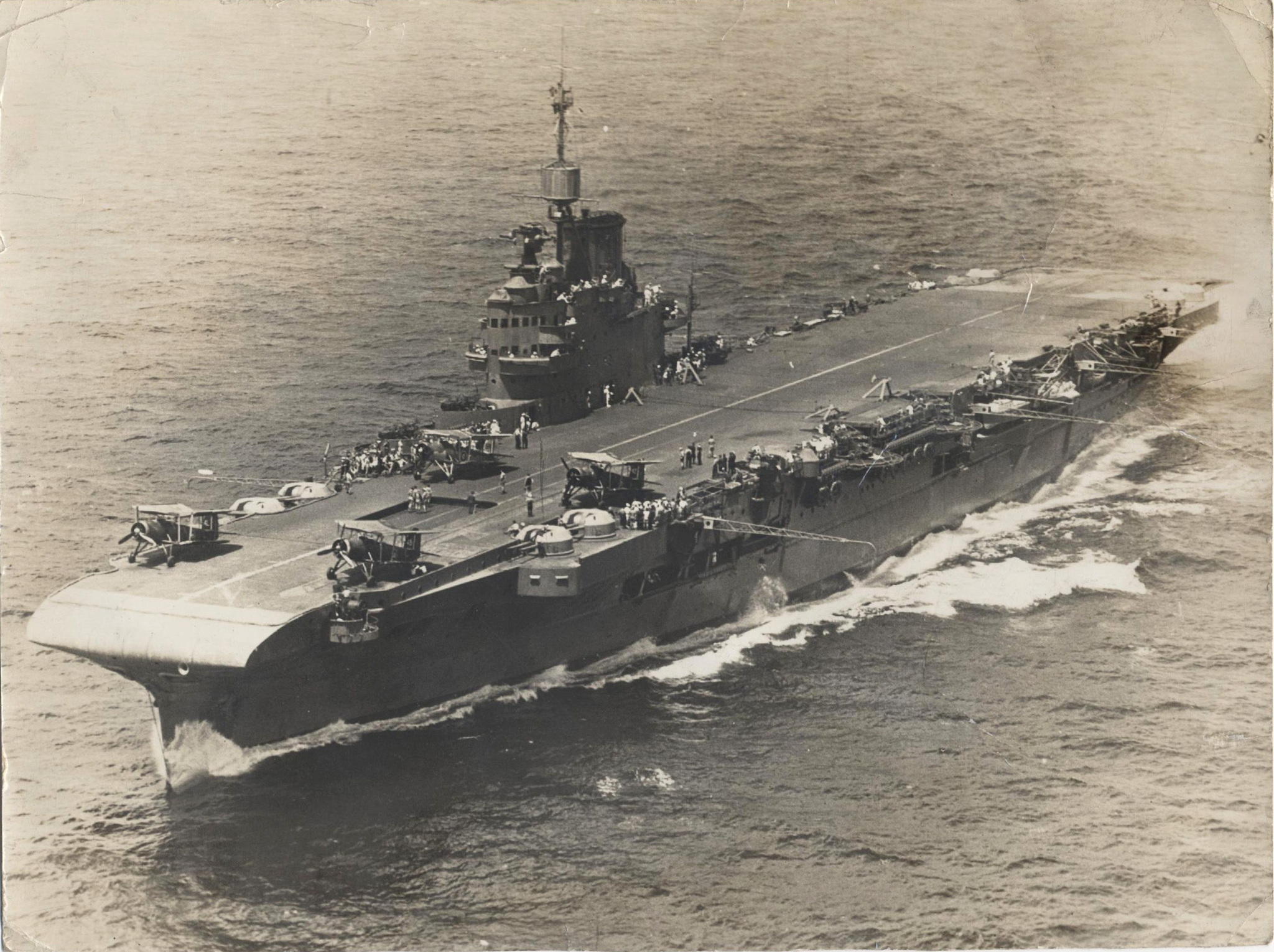
The aircraft carrier “Ilustries” in position to attack Taranto
The idea of an air strike against the Italian fleet in Taranto was conceived even before the war, in 1938. At that time, Admiral Dudley Pound, Commander-in-Chief of the Mediterranean Fleet, was concerned that the aircraft carrier HMS Glorious would be the first to be destroyed by the Italians if Italian forces in Taranto went on the offensive. However, the captain of the Glorious, Lamley Lister, assured him that his aircraft were fully capable of carrying out a night attack on the Italian ships in Taranto, and Pound ordered that pilots begin training for such operations.
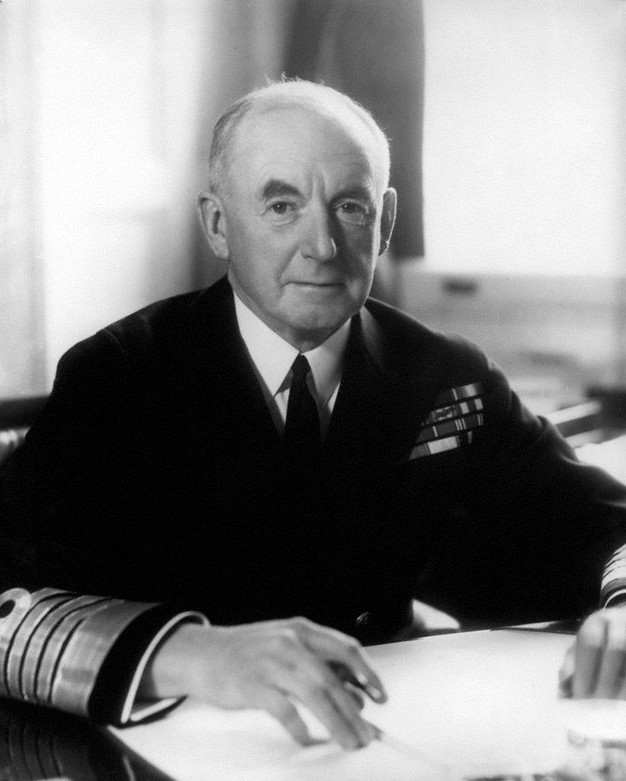
Admiral Dudley Pound
The period following Italy’s declaration of war was just as disappointing for Admiral Cunningham as it was for General O’Connor in Egypt. Both found their hands tied as Britain regrouped after the fall of France, since even Churchill did not want to risk provoking the Italians into action under those circumstances. By the end of 1940, as Italian attacks in Greece and East Africa were in full swing, British forces in Egypt had been reinforced with fresh troops and equipment. Finally, Cunningham was given the green light to carry out Operation Justice.
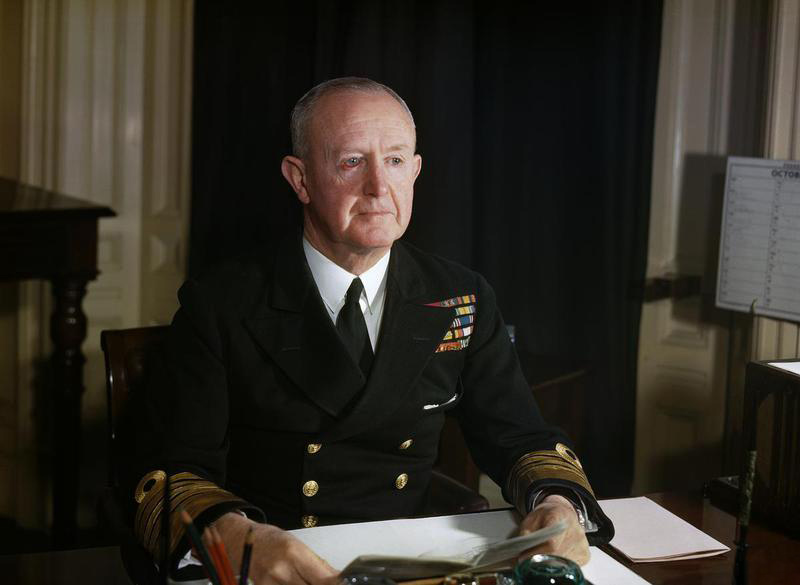
Admiral Andrew Cunningham
Three British aircraft carriers launched sixty-one Farey Swordfish torpedo bombers. The aircraft from the aircraft carrier Eagle were tasked with launching flares to illuminate targets and bombing coastal installations, while the aircraft from the Formidable and Illustrious were to launch torpedo attacks against Italian ships at anchor.
It should be noted that by the time of the attack, the Swordfish biplane torpedo bombers were quite obsolete, and by the end of 1941 they had begun to be gradually replaced by the more modern Fairey Monarch Barracuda. However, by the time of Operation Justice, they were still the main striking force of the British aircraft carriers and demonstrated that they were still capable of effectively carrying out combat missions. Most Swordfish were armed with torpedoes, though some were also equipped with aerial bombs. Signal flares, which were also carried by the British aircraft, were used to illuminate targets.
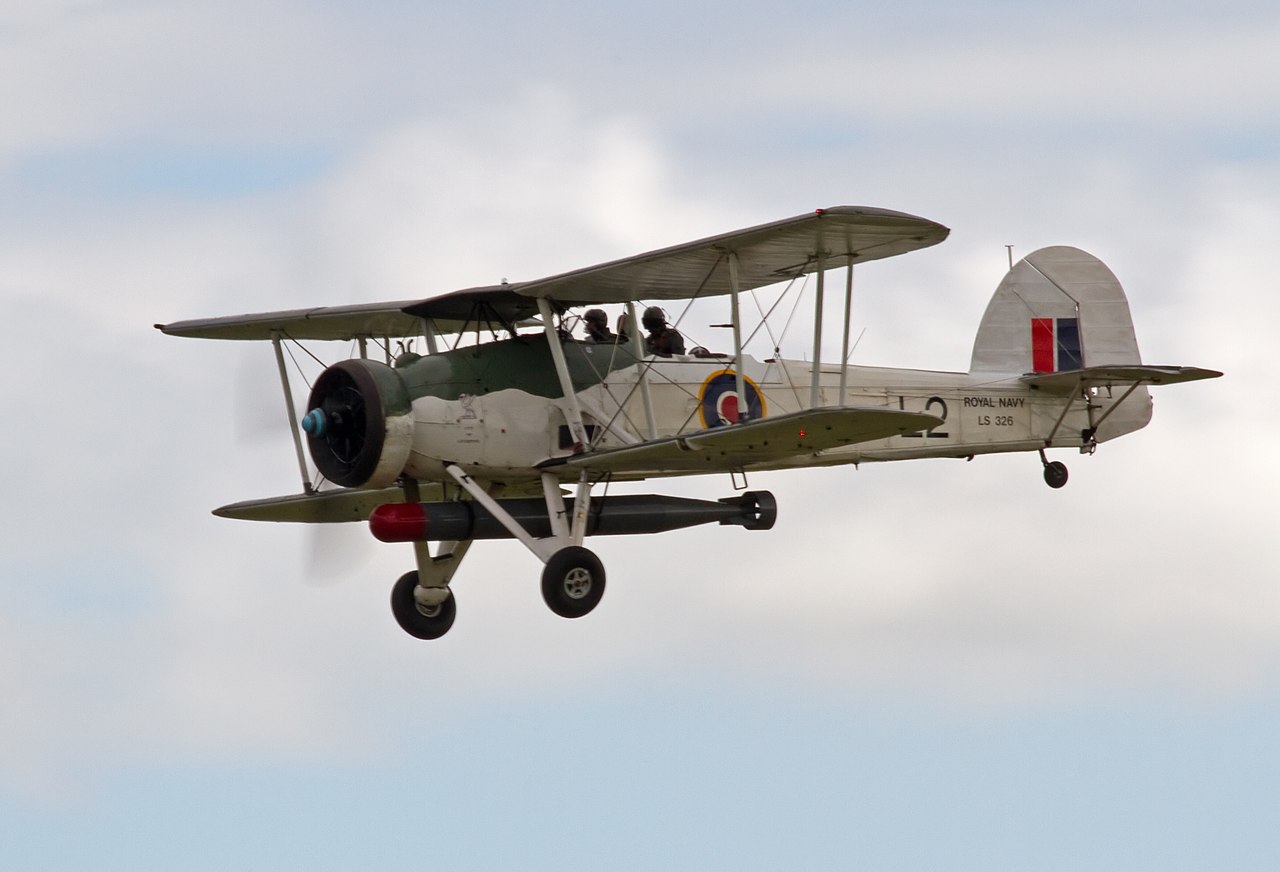
The main striking force of the British Navy in Operation Justice was the Farey Swordfish torpedo bombers
Attack aircraft from the *Formidable* and the Illustrious were approaching the harbor of Taranto in two “columns,” divided into several waves, while signal-rocket-carrying aircraft from the Igl also arrived in waves to circle over the harbor and keep it constantly illuminated. The columns of attacking aircraft spread out on approach in such a way as to create crossfire with their torpedoes, increasing the likelihood of a hit. The anti-torpedo nets in Taranto did not pose a major obstacle, as they did not reach the very bottom of the harbor, and the British torpedoes passed beneath them.
The first flashes of explosions above their ships alerted some of the Italian sailors and shore personnel, but their initial reaction was one of confusion rather than deliberate action, so the base’s anti-aircraft guns and searchlights remained off during the crucial first minutes of the attack. It was only when several planes flew over the Italian ships after dropping their torpedoes that the Italians began to realize they were under attack. However, it was already too late, as huge water spouts shot into the air after the first torpedoes hit their targets. This was followed by explosions on shore as bomb-laden aircraft began attacking coastal targets.
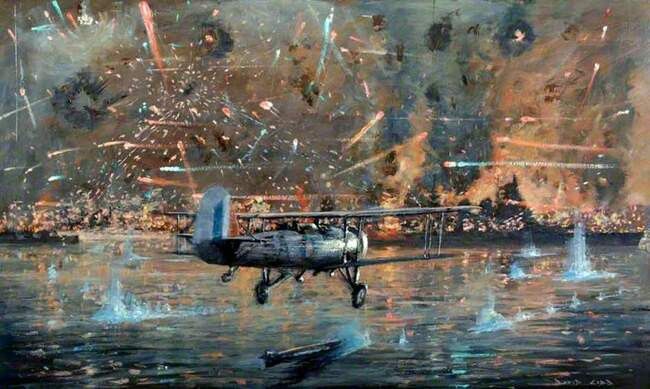
Attack on Taranto
Chaos and death reigned in the harbor as the second and third waves of attacks added more sinking ships. By the time the Italian anti-aircraft guns fired their first shots, the last of the British planes were turning back toward home, and only three of them had been shot down. All of the crews were rescued from the water by the Italians.
The Royal Navy’s losses were virtually nil, given the scale of the operation. As soon as the planes returned to the aircraft carriers, all three British strike ships and their escort turned around and began to withdraw from Taranto. However, they had nothing to worry about, as the chaos in the Italian port following the attack was too great for any meaningful response, and the British squadron sailed away safely. Shortly thereafter, aerial reconnaissance confirmed the outcome of the attack.
The Italian battleship *Conte di Cavour*, sunk during the attack on Taranto:
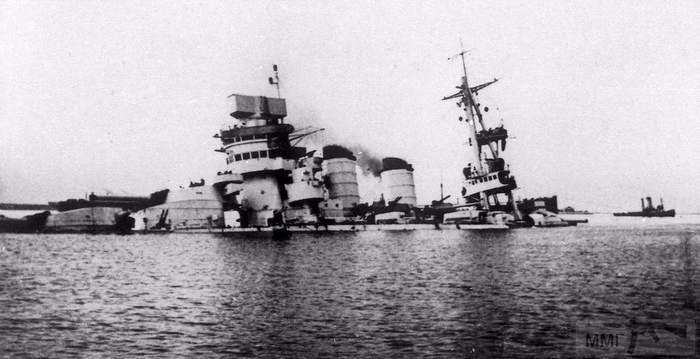
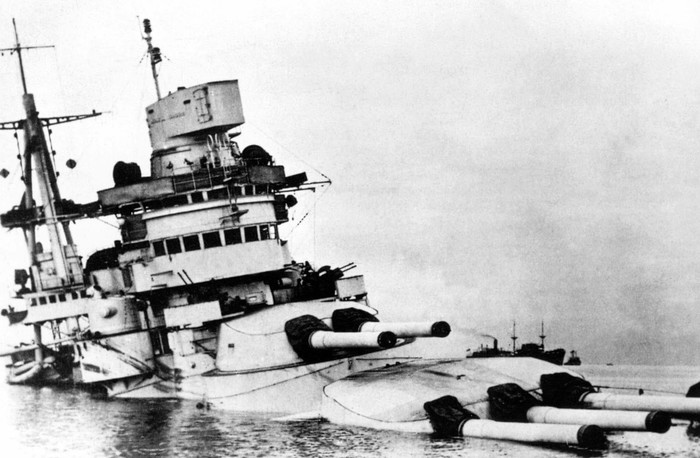
For the Italians, the attack was a disaster. The heavy cruiser *Pola* was sunk, and three destroyers were damaged. Five battleships were hit by torpedoes. The Conte di Cavour, its sister ships the Giulio Cesare and the Andrea Doria, were heavily damaged. The Conte di Cavour was repaired within a few months, but the Giulio Cesare remained out of service until early 1942.
The Andrea Doria sustained the most severe damage, and it was never repaired. The Duilio sank to a greater depth, and attempts to salvage it were poorly organized, resulting in even more damage. As a result, it was decided not to restore it either, but to cut it up for scrap.
The day after the attack on Taranto, the Regia Marina withdrew all its remaining combat-ready ships to Naples, while the only operational battleship, the Vittorio Veneto, provided cover for the retreating fleet.
As for the Royal Navy, this was its greatest victory of the 20th century. Moreover, this victory was achieved without a single shot being fired from any ship. Operation Justice ensured that the warships of the Regia Marina would never again pose a serious threat to British control of the Mediterranean.
Источник — https://www.alternatehistory.com/forum/threads/munich-shuffle-1938-1942.518000/page-35#post-22749280