I came across a very interesting article on Zen. It really does describe the life story of a man who could be considered the last White Guard soldier. So, I’m sure many people will find it interesting.

The White Movement ceased its active operations on May 20, 1999. On that day, the last head of the Union of Russian Corps Officials, Vladimir Vladimirovich Granitov, died in San Francisco, USA. And on that same day, the activities of the Union of Officers of the Russian Corps itself came to an end, as Secretary Zavadskaya announced its self-dissolution.
But what makes this man interesting is that he is one of the few White people who witnessed the demise of his sworn enemy—communism—in the form of the collapse of the USSR. This makes what he said all the more surprising.
Vladimir Vladimirovich turned out to be the last active figure in the White Movement in the 1990s. By that point, there were virtually no veterans of the White emigration left, and those who were still alive had one foot in the grave. There was no new generation to take their place; the third generation of émigrés no longer identified with Russia, and Granitov himself was from the second generation.
Vladimir Granitov was born in the Russian capital in 1915. He was taken out of the country at the age of five and did not manage to visit Russia again until 1992. By then, however, he was still a fairly spry old man. Over the next six years, Vladimir Vladimirovich visited Russia four more times, traveling repeatedly to Moscow and St. Petersburg, and also exploring Siberia. He interacted with Russian military personnel, members of various patriotic organizations, and simply with intelligent, thoughtful people. Let’s take a closer look at this man’s life story.
Vladimir Granitov Sr. was a captain at the time of his son’s birth, but he later rose through the ranks to become a colonel. After the defeat of the White movement, he moved with his family to the Kingdom of Serbs, Croats, and Slovenes—as Yugoslavia, a name more familiar to us, was then called.
In Belgrade, his son graduated from a Russian high school in 1933 and, five years later, became a certified civil engineer. At the same time, he attended various Russian military courses abroad, which were organized in the Yugoslav capital by Russian White émigré organizations. After completing his education, Vladimir Vladimirovich Granitov served in the Fourth Department of the Russian Military Overseas Association (ROVS) and was promoted to second lieutenant on April 10, 1941.
Almost immediately after the German occupation of Yugoslavia, the Russian Corps was organized on its territory. The summer of 1941 brought a wave of murders for the émigrés living in Yugoslavia. These were carried out by partisans who believed that the country’s army had been defeated almost exclusively because of the Russians. The émigrés began to fight back, which led to the creation of a military organization known as the Russian Corps. At its peak, it numbered 17,000 men. And so the former White Russians found themselves “on the hook” for the Nazis.
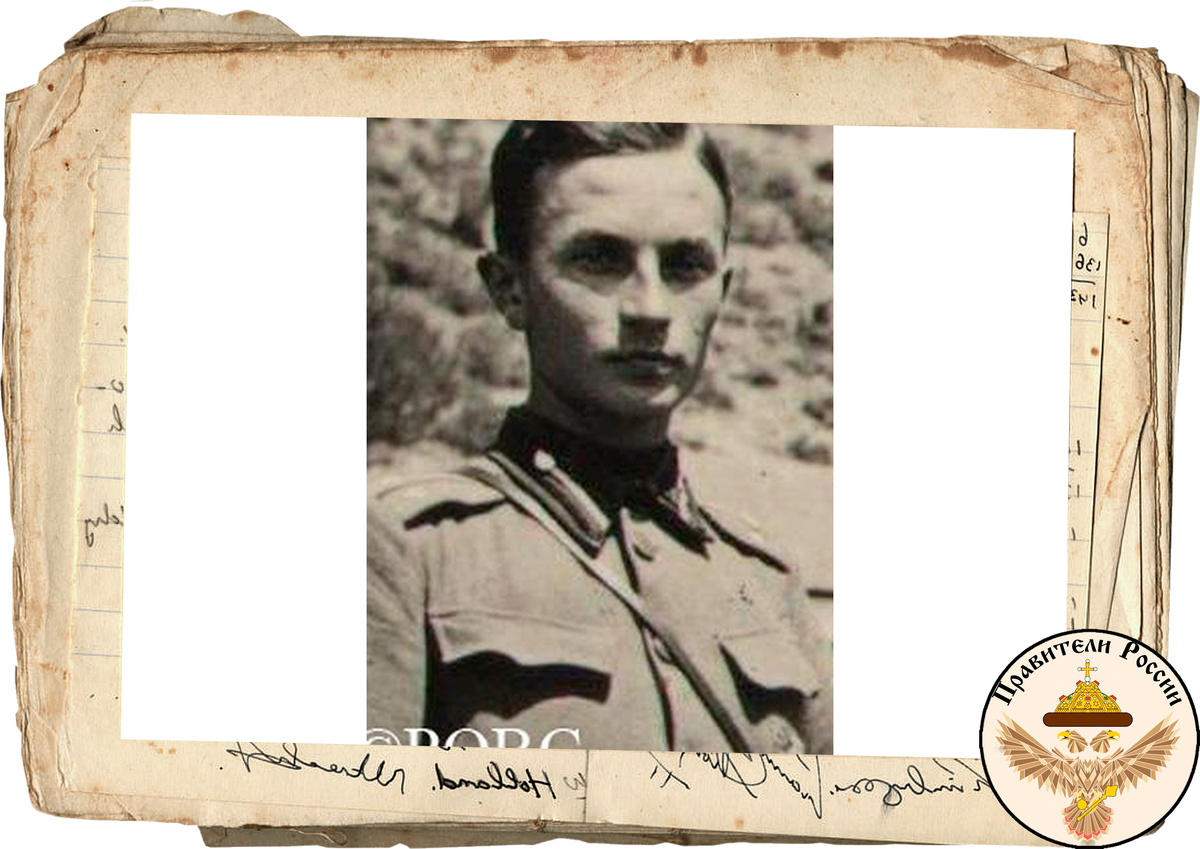
The German authorities needed loyal forces to fight the Yugoslav partisans, so they agreed to the creation of the Russian Corps. On November 30, 1942, the Russian Corps was incorporated into the Wehrmacht; its soldiers were required to wear the uniforms and insignia of the German army and were awarded German orders and medals. However, the unit retained Russian command, and its ranks consisted exclusively of Russian soldiers. And it must be acknowledged that the Russian Corps was the only collaborationist unit that did not directly participate in the Germans’ treacherous attack on the USSR.
But it is important to recognize that the soldiers of this corps wore the enemy’s uniform, received the enemy’s awards, and served the enemy’s interests; therefore, we should not delude ourselves about their motives.
The corps fought mainly against the forces of Josip Broz Tito and Mihajlović’s Chetniks. Skirmishes with Ante Pavelić’s Ustaše and pro-Italian Albanian fighters, which occurred while defending the Yugoslav population, repeatedly drew the ire of the authorities in Croatia, Germany, and Italy. But the corps was left alone. From the second half of 1944 until the end of the war, the Russian Corps fought several battles against the Red Army. These battles were marked by mixed success.
On May 12, 1945, Rogozhin, commander of the Russian Corps, managed to lead his units into Austria and surrender to the British. The Soviet government demanded the extradition of the Russian Corps prisoners, but the British refused to do so, since virtually all members of the military organization were not Soviet citizens; they were born in other countries and held passports from those countries. On November 1, 1945, by order of Commander Rogozhin, the corps was disbanded and the Union of Officers of the Russian Corps was established. Granitov subsequently became its head.
Granitov himself had been a member of the Russian Corps since its founding, successively holding various non-commissioned and commissioned officer positions, and eventually rising to the rank of company commander.
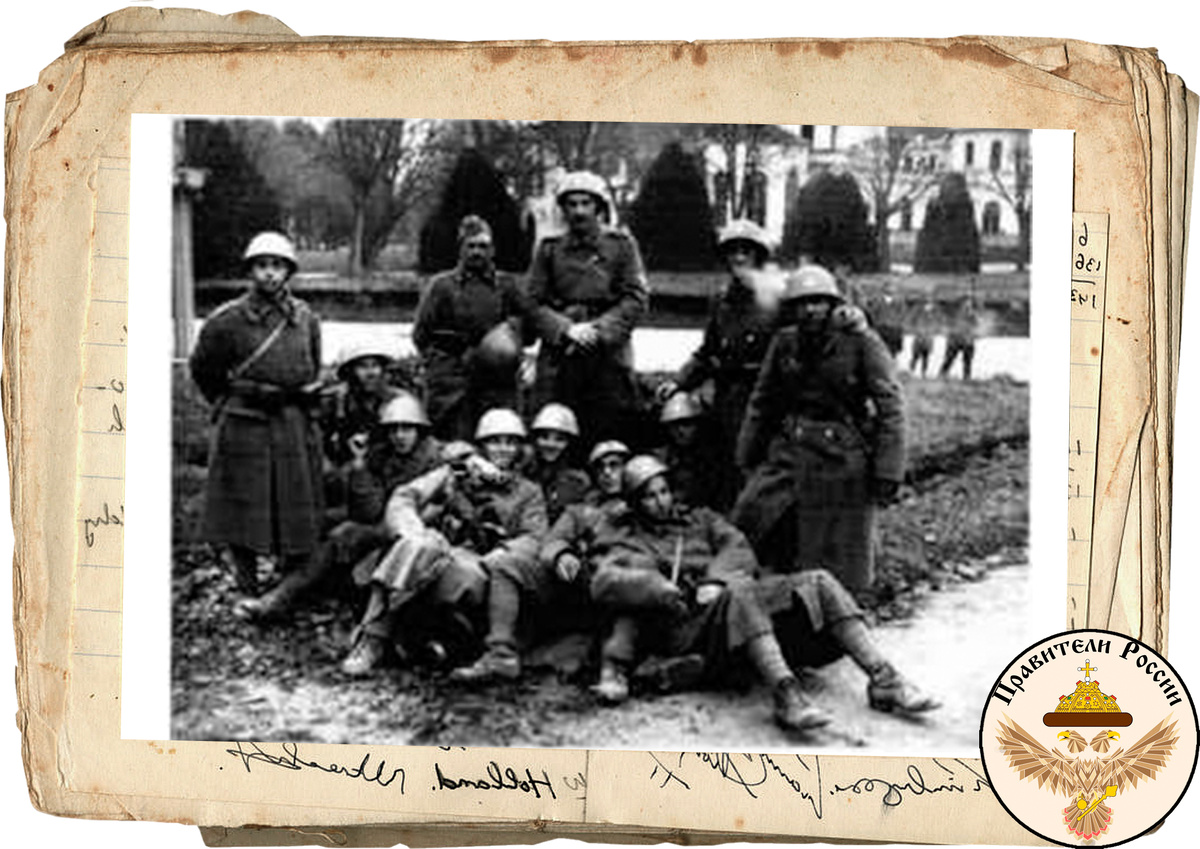
After the war, in 1948, Vladimir Vladimirovich moved to Argentina, where he became one of the founders of the Russian Corps association. In 1960, he received an invitation from the U.S. company Pacific Railway to work in the field of railway bridge design. In this role, he achieved significant professional success and also built three churches for the Russian Orthodox Church—two in the United States and one in the capital of Argentina.
Since August 1, 1988, Vladimir Granitov has served as chairman of the ROVS. He has also served on the boards and editorial boards of various émigré publications, as well as in military and civic organizations. Vladimir Vladimirovich welcomed the decommunization processes in Eastern Europe, but openly criticized Mikhail Gorbachev for his actions, which he believed threatened the territorial integrity of the Soviet Union. He said:
“Based on our bitter experience, we know that Russia has no sincere friends in the free world, and that ‘aid’ from the West could lead to Russia’s complete dismemberment. We must tirelessly warn the Russian people in the Soviet Union about this danger, since many of them naively believe in the support of the democratic West.”
With his death on May 20, 1999, the White émigré movement ceased its active operations.
Source — https://dzen.ru/a/Z1N3bBZWRiOgEKA7