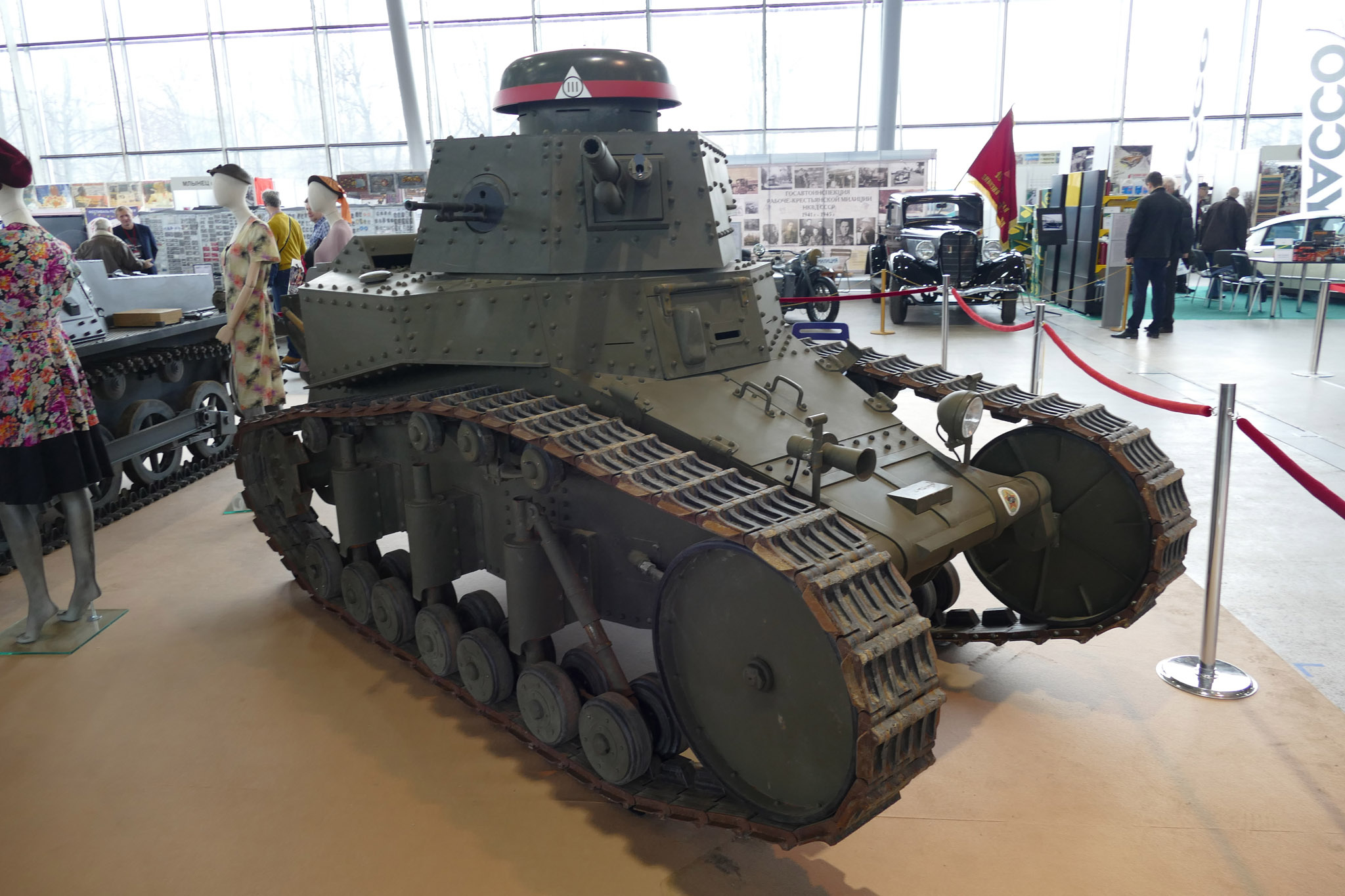
A story about a replica of the Soviet T-18 (MS-1) escort tank, created by UFO Garage
Building scale models of armored vehicles is nothing new. The need to recreate old military equipment for a wide variety of purposes arose even before the start of World War II. In our country, for example, models of tanks and armored vehicles that saw action in the Civil War were built for film productions. For a long time, the film industry was the main consumer of such equipment, but the circle of interested parties has since expanded. This included museums and organizations engaged in military-historical reenactments. A real tank, in this case, is often not readily available. Therefore, the effort is limited to building replicas.
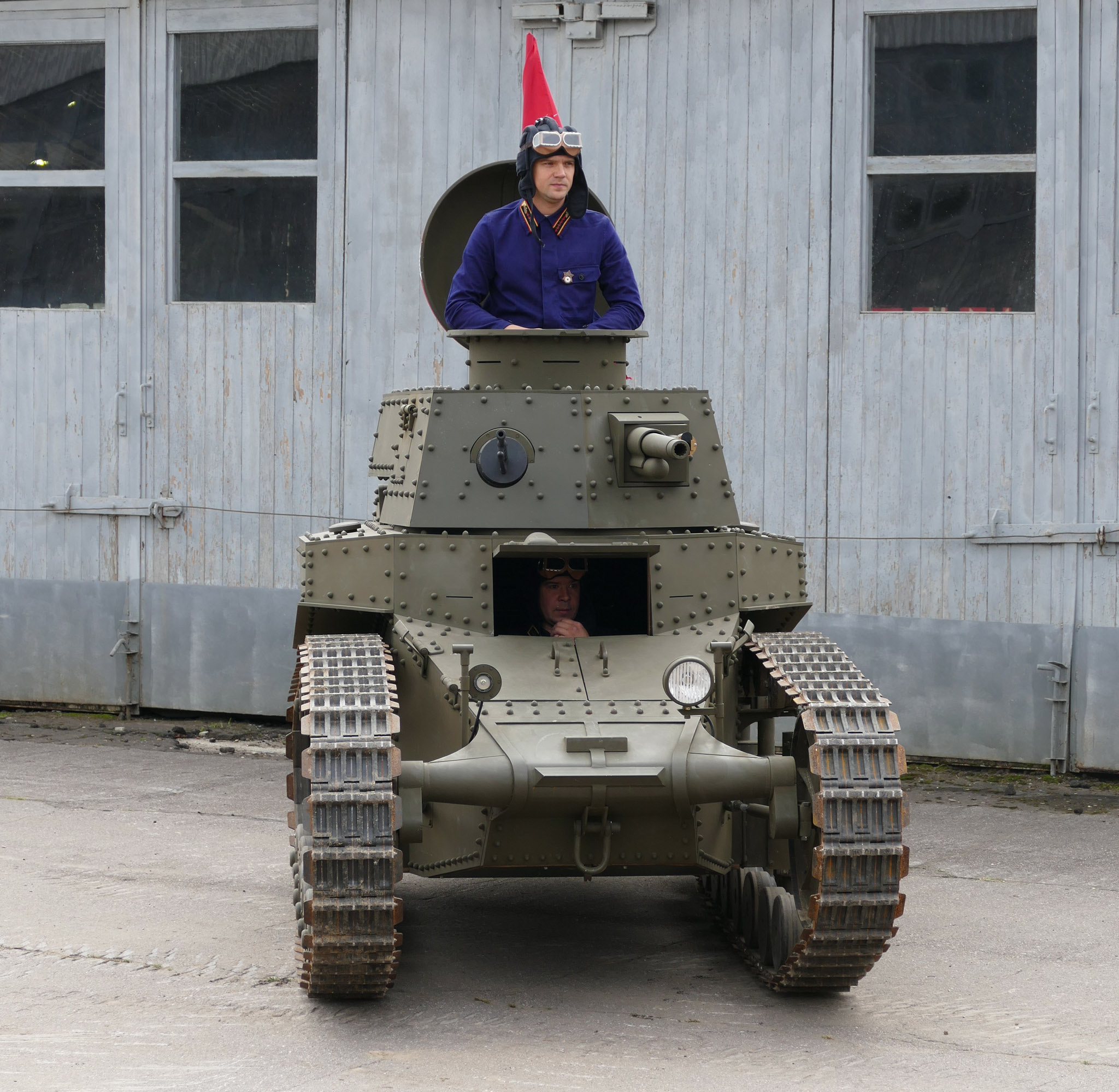
T-18 Model in Kubinka, Tankers’ Day 2015
One of the tanks that often catches the eye of restorers is the T-18 (MS-1). The first mass-produced Soviet tank of its own design did not see much action on the battlefield, but it became a truly landmark achievement for Soviet industry. With no direct predecessor, the T-18 has a unique appearance that greatly appeals to military vehicle enthusiasts. However, for a number of objective reasons, there are almost no roadworthy T-18s left, and their appearance is often somewhat stylized. This makes the experiment conducted by the UFO Garage workshop all the more interesting; they recreated such a tank from scratch.
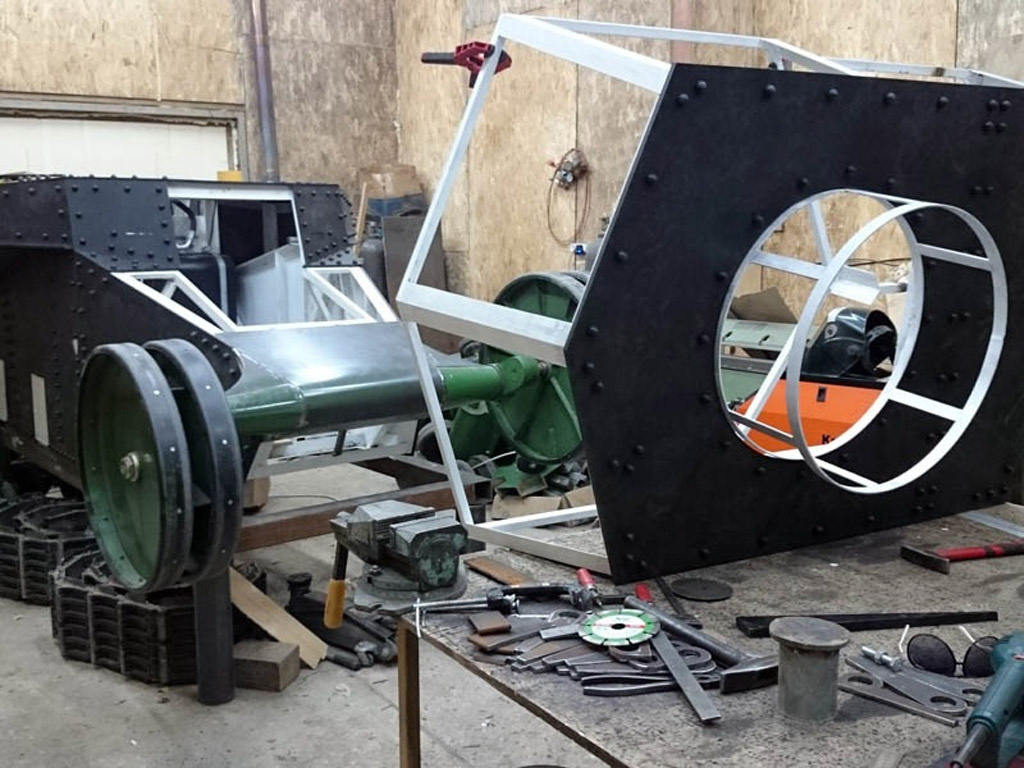
During assembly
For its time, the T-18 was a true feat of engineering. This was due to a number of reasons, the most important of which were the extremely stringent tactical and technical requirements. These requirements stipulated that the tank would be significantly lighter than the “Renault-Russian” (also known as the Soviet version of the Renault FT). This was because trucks were used to transport tanks. There were almost no trucks with a 7-metric-ton payload capacity, whereas 5-metric-ton trucks were easier to find. In addition, the new tank was required to travel at a speed of 12–15 km/h—that is, twice as fast as the Renault FT.
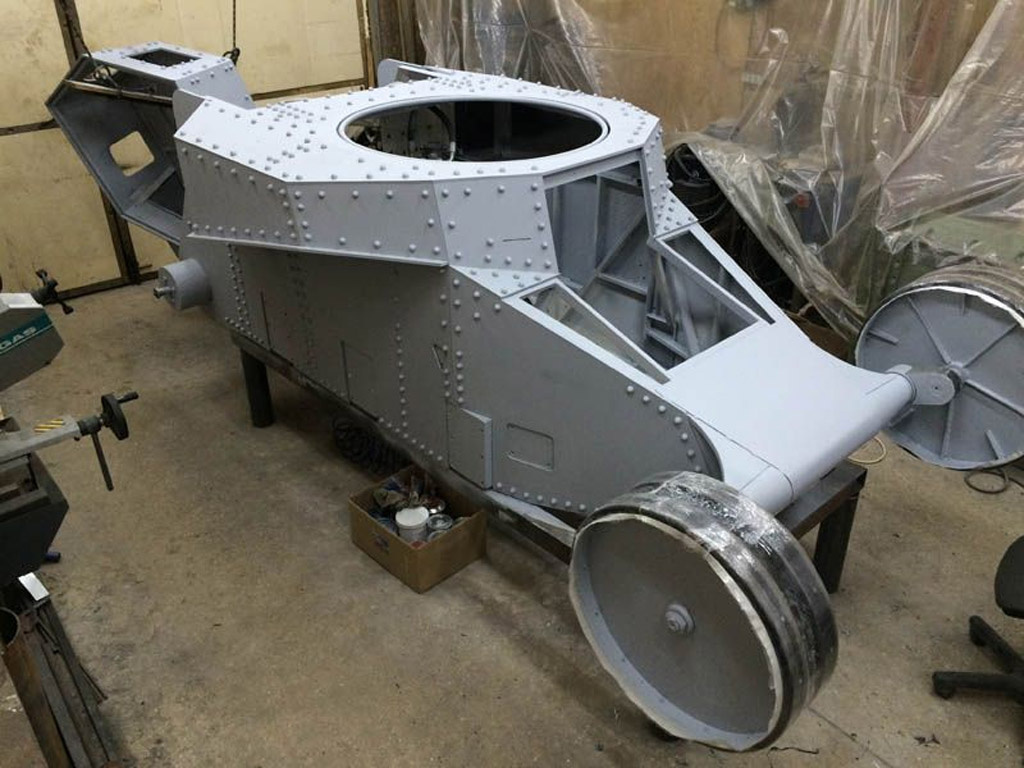
The structure consists of a frame covered with plastic panels
All of this led to the creation of a tank unlike anything else, especially in terms of its engine, transmission, overall layout, and many other aspects. The cast front section alone, to which the tracks were attached, is quite something. Although it’s a mere trifle compared to what was inside the engine and transmission compartment. Not only was the air-cooled engine mounted transversely (which helped reduce the length of the engine and transmission compartment), but it was also integrated into a single unit with the transmission. It was a complex design, but it worked—and, most importantly, the tank’s combat weight was about 5 metric tons.
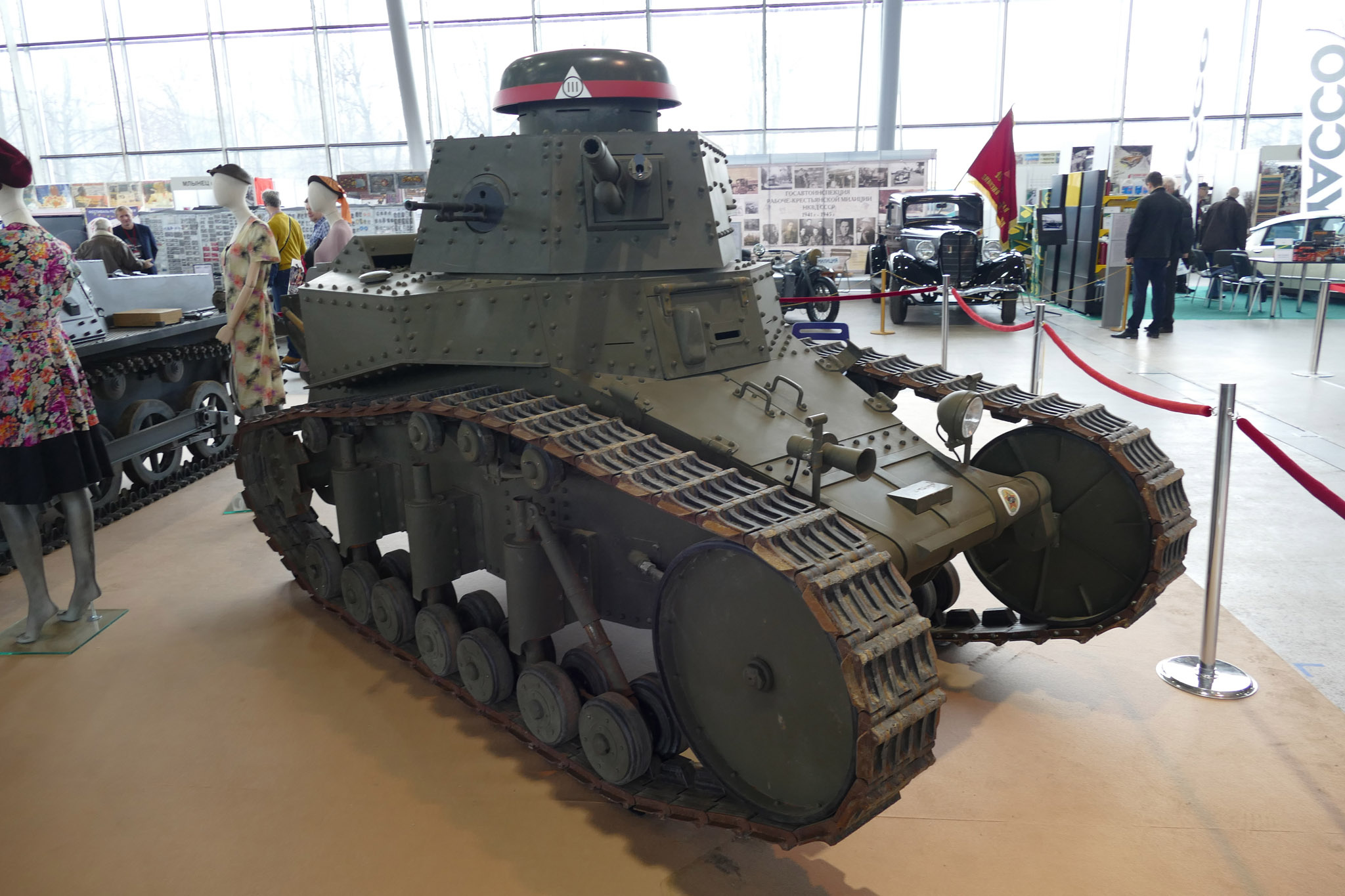
But here, the tank’s design isn’t nearly as obvious
The chassis also deviated from the original design, having undergone changes during the production of the T-18. The result was not only a whole series of original technical solutions, but also a major headache for grateful descendants. The fact is that 100% of the T-18s that have survived to this day are former stationary firing positions, dug in after these tanks were decommissioned. When they were installed in defensive fortifications, all internal components related to the engine and transmission assembly, as well as elements of the running gear, were removed. In short, only the bare hulls and turrets were dug up.
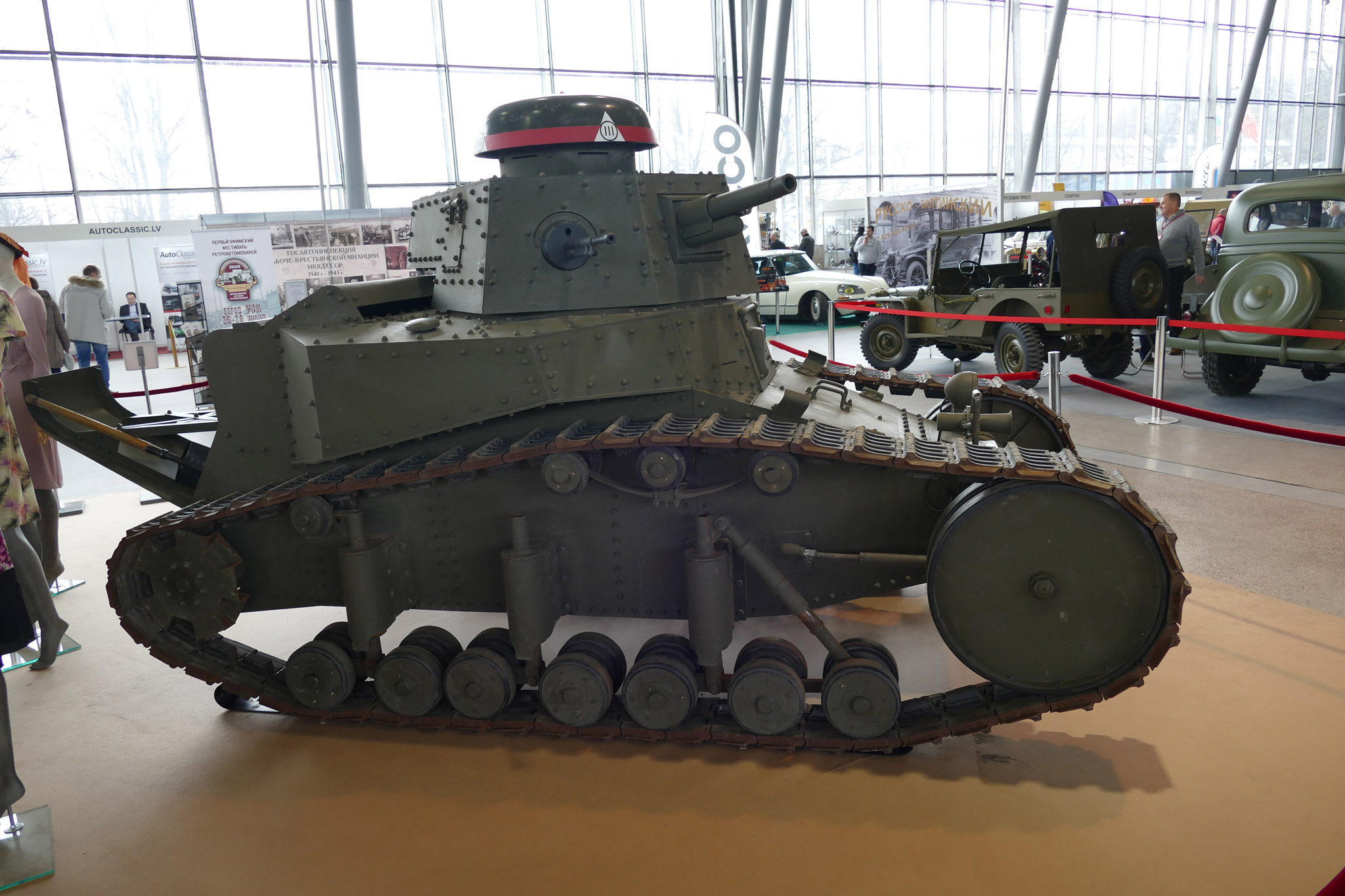
UFO Garage’s creation looks just like the real thing
This situation has turned the restoration of the T-18 into a rare form of sorcery. Usually, people try not to touch the engine and transmission compartment at all, so as not to make their lives miserable. The running gear is generally fixed according to the “good enough” principle, and the same goes for the armament. A decent number of mock-ups have been built from former firing positions. Gradually, as our knowledge base has grown and new parts have become available, we’ve managed to carry out authentic restorations of several tanks. But we’re talking about the exterior here. As for the original engine and transmission, that’s still a pipe dream.
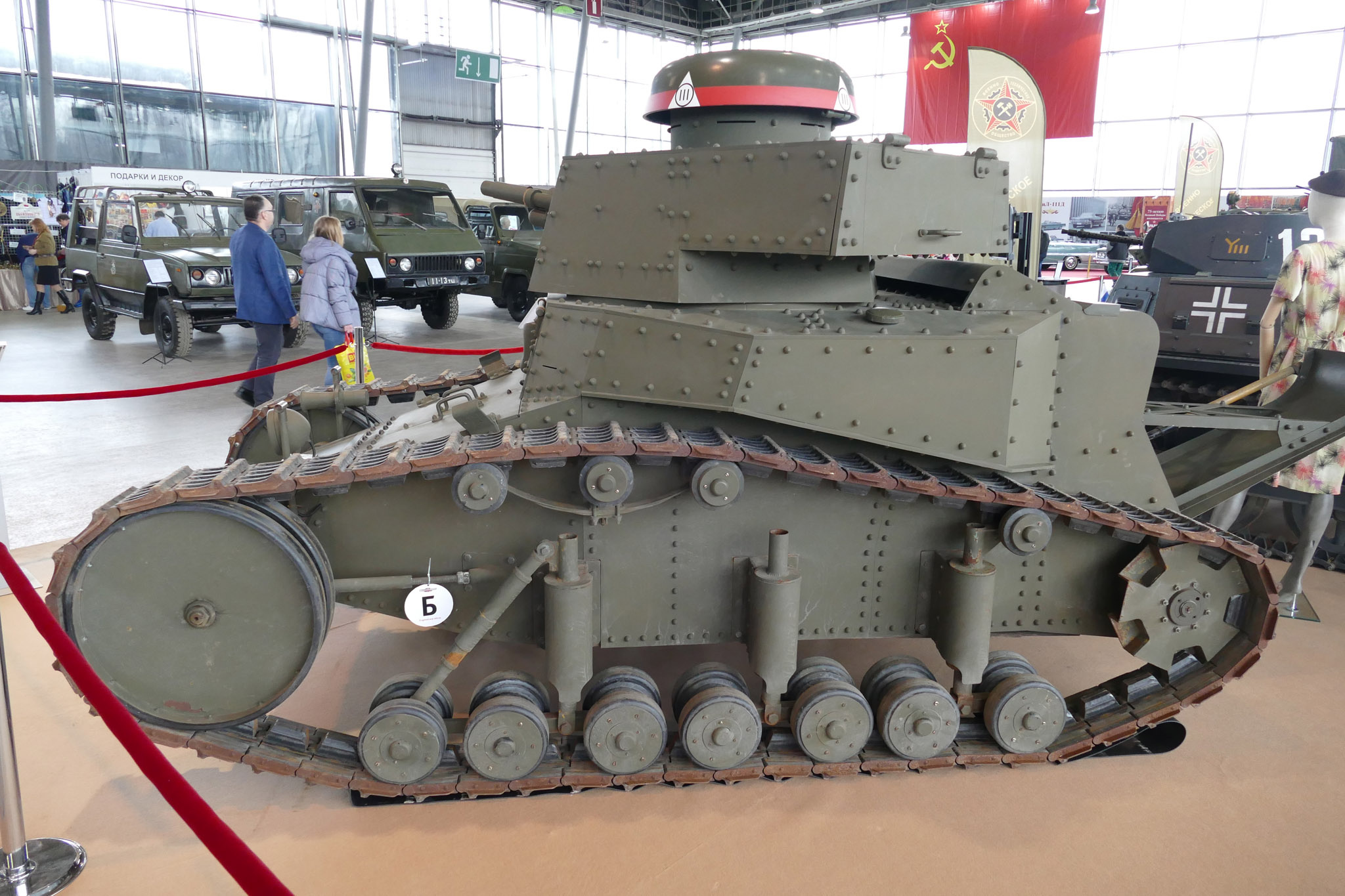
It’s no surprise that, for a while, this was the most authentic-looking T-18
In that sense, it’s no surprise that in some cases, people have gone so far as to build full-scale replicas. There aren’t any major challenges involved in manufacturing the armor plates for this tank; they’re assembled using rivets and bolts. However, in the case of the subject of this article, things turned out to be more original. At the UFO Garage workshop, they decided to take a completely different approach, choosing not to follow in the footsteps of most restorers but to create something more original. In other words, it’s a tank, but you could say it’s a mock-up. It resembles the T-18, but isn’t even made of non-armored steel.
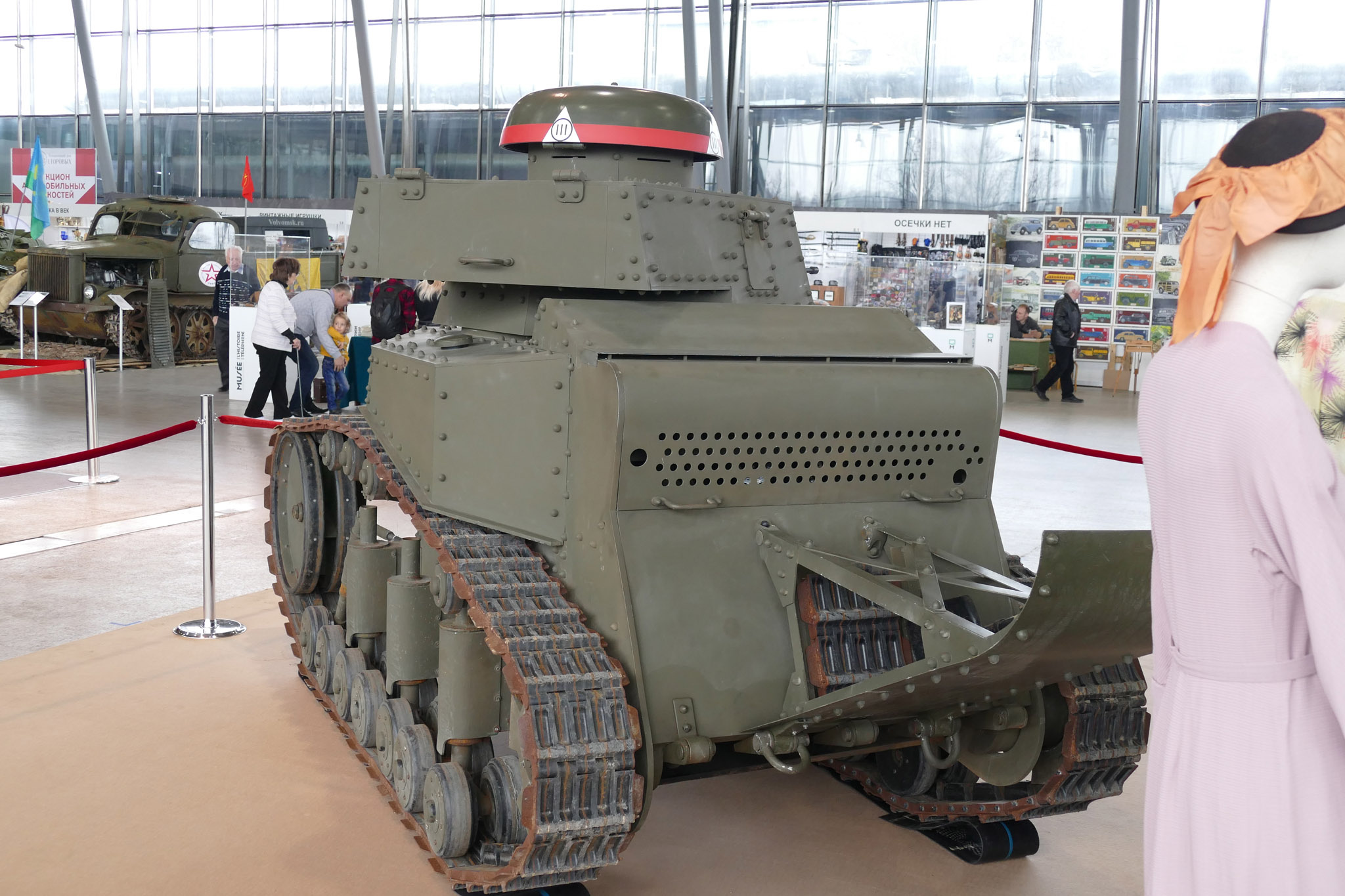
The layout is almost a five out of five
You could say that the resulting vehicle was a unique experiment. Building a tank—or, more precisely, a replica of one—isn’t all that difficult. But what the team at UFO Garage set out to do is interesting in its own right. The goal was to create something that looks like a tank but is built on a fundamentally different principle. While a tank’s armored hull usually serves as the load-bearing structure, here it is nothing more than a “shell” attached to a frame. The T-18 turned out to be the ideal prototype in this case. It’s a small tank, looks “stylish,” and is well known (in part thanks to a certain tank game).
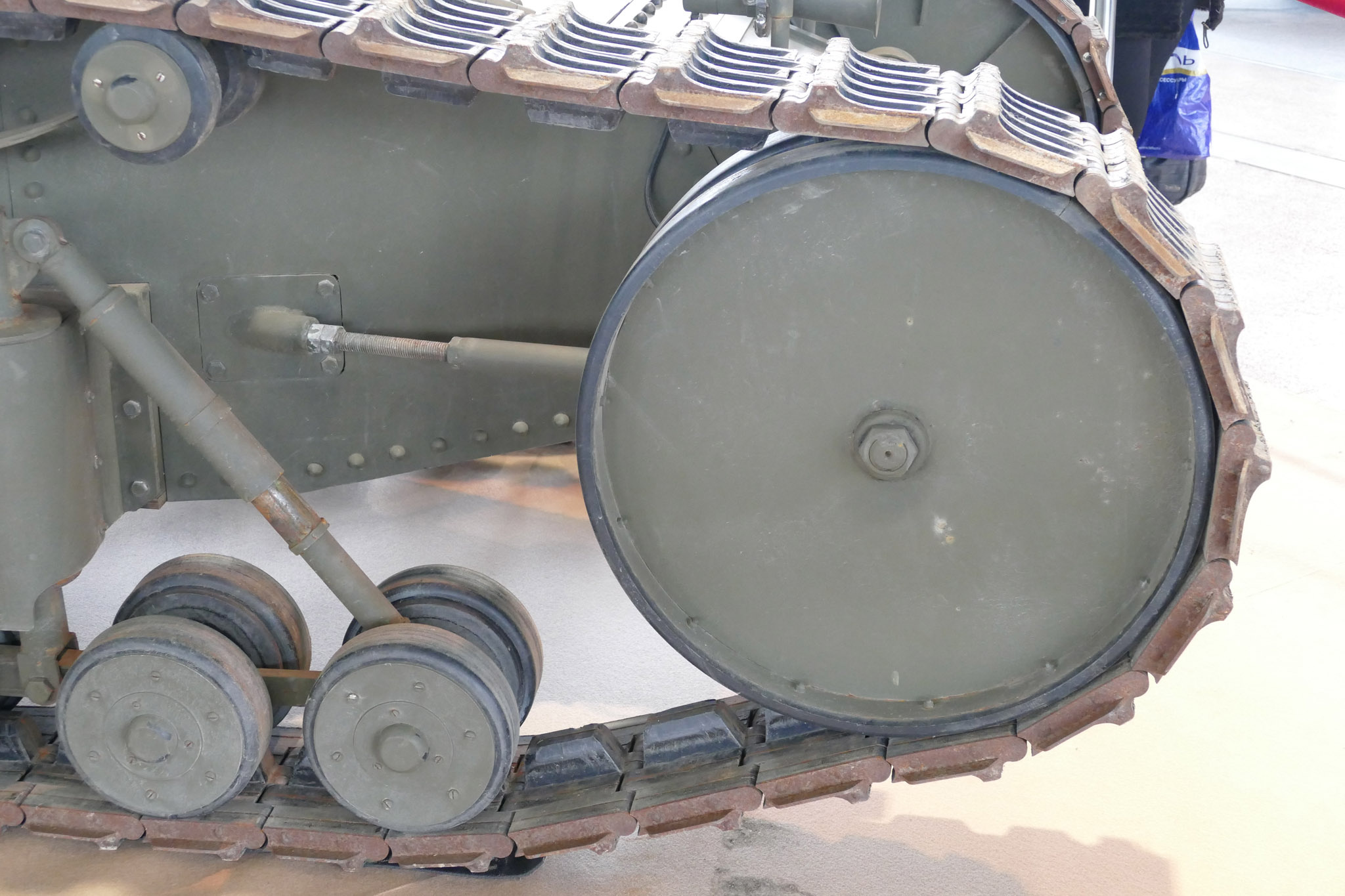
The car runs just fine and has a suspension that works
Even though this was essentially a working model, its creators took the project very seriously. The resulting replica was meant to look as much like the prototype as possible. In this regard, UFO Garage scored about a 4.5 out of 5. Only when viewed up close does it become clear that this isn’t quite an ordinary tank. The hull parts are made of LDPE (low-density polyethylene). The production of the rivets—which have a rather complex shape on the T-18—proved to be a particular headache. And they needed about 800 of them. All in all, it was no easy task.
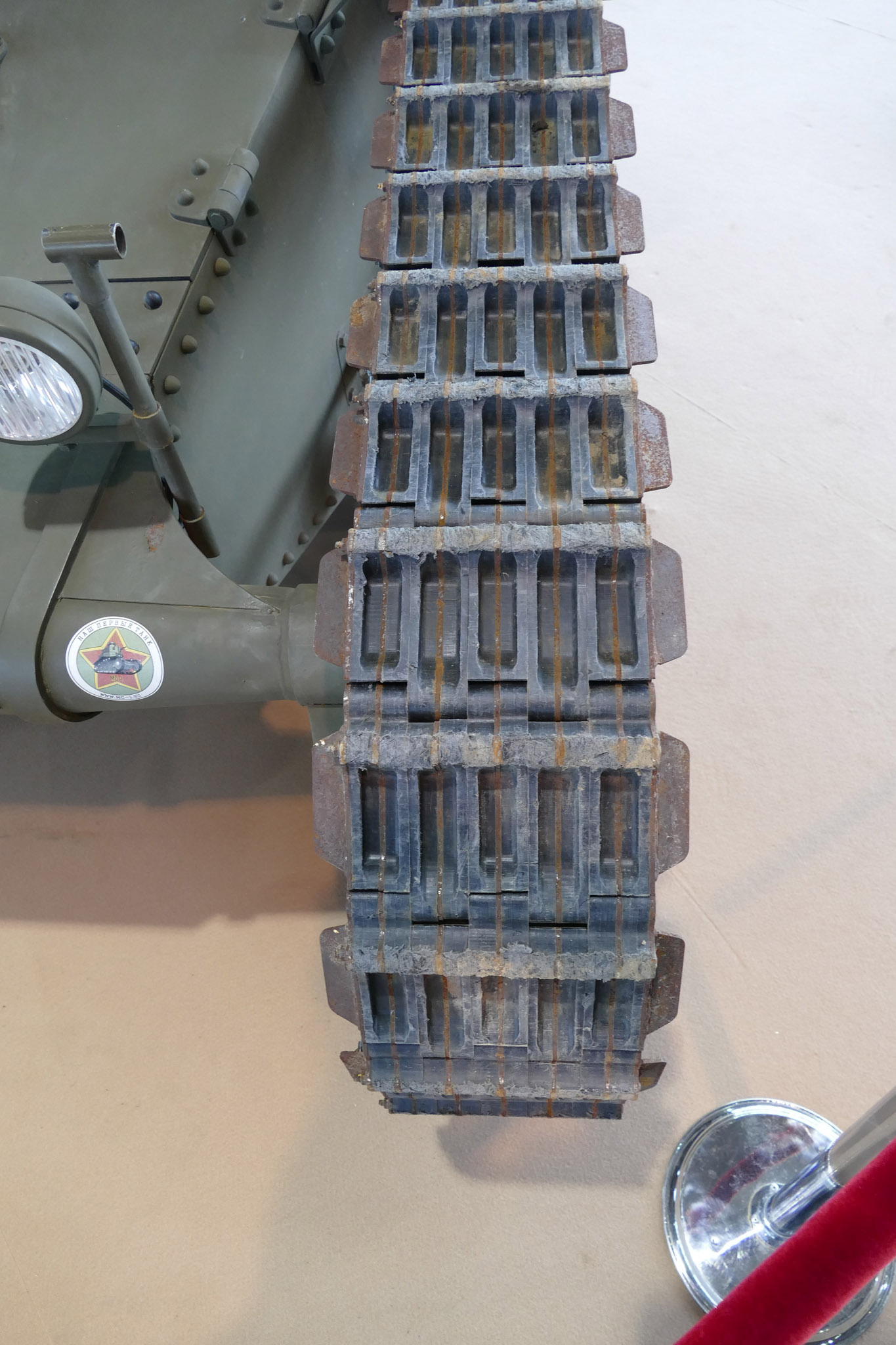
“Modular” tracks
However, the hull and turret parts were just the beginning. As mentioned above, the model was built around a welded frame. Next, the undercarriage components were attached to it, and the engine was installed… Initially, it was planned that a 21-horsepower Honda GXV 660 engine would serve as the “heart” of the model. However, during the first tests, it became clear that this engine wasn’t powerful enough. Therefore, a Kubota D 1150 diesel engine with 25 horsepower was subsequently installed. The replacement of the power unit is directly related to the operation of the transmission. The fact is that the engine drives the hydraulic pump, which in turn powers two circuits for each track.
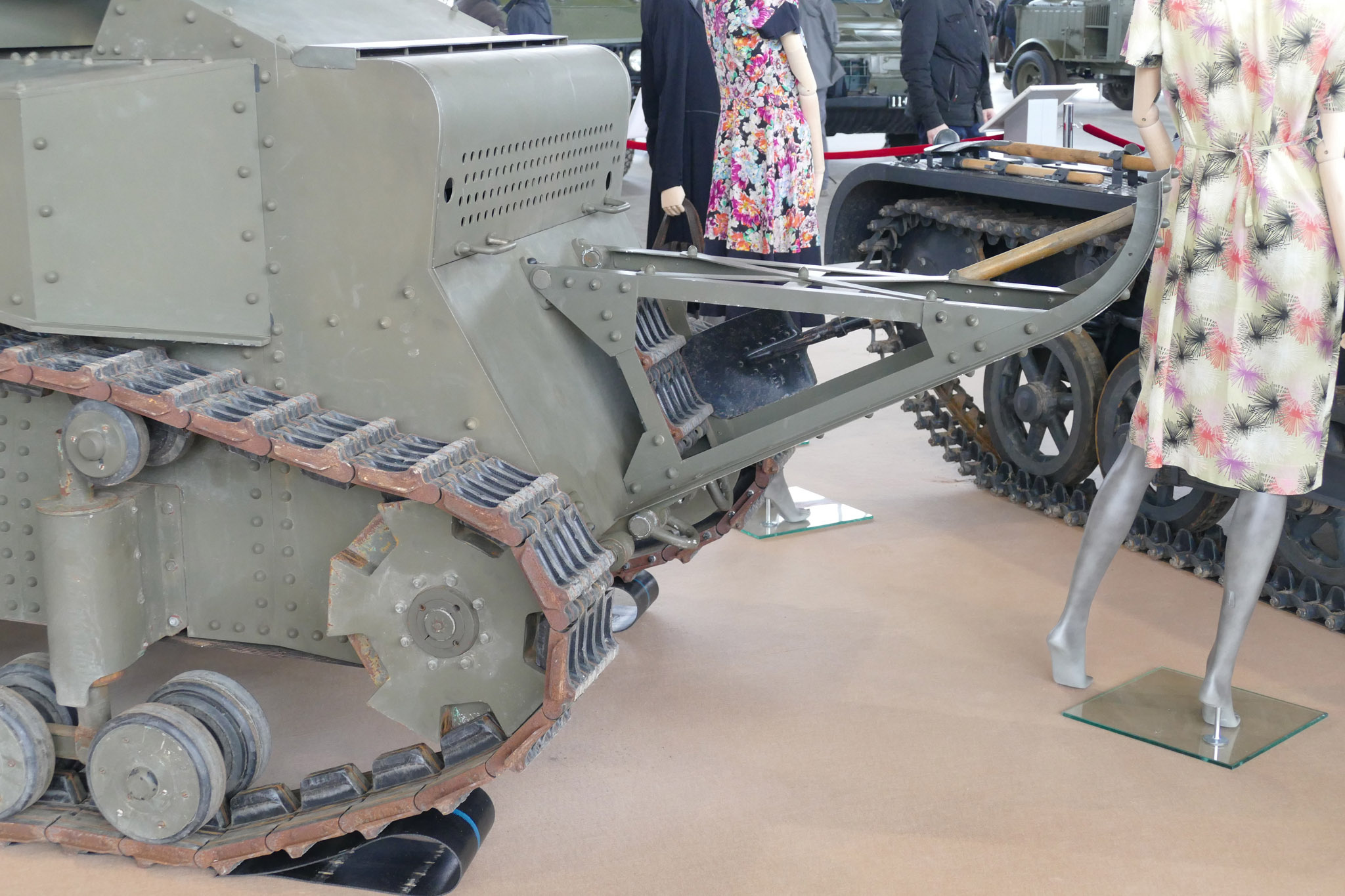
Of course, there’s a “tail”
Since the tank’s “armor” was made of HDPE, it was assumed that the mock-up would be more or less lightweight. But, as the saying goes, tanks are never lightweight. The weight quickly exceeded one metric ton, and even the very first tests—without the armor even mounted yet—provided plenty of food for thought. And not just about the upcoming engine replacement. The road wheels also presented quite a few surprises. It must be said that the T-18’s running gear isn’t as simple as it might seem. Especially since the vehicle was built as part of the fourth, most mass-produced production series. We also had our share of trouble with the “eagle’s claw” tracks, which were introduced in the third production series.
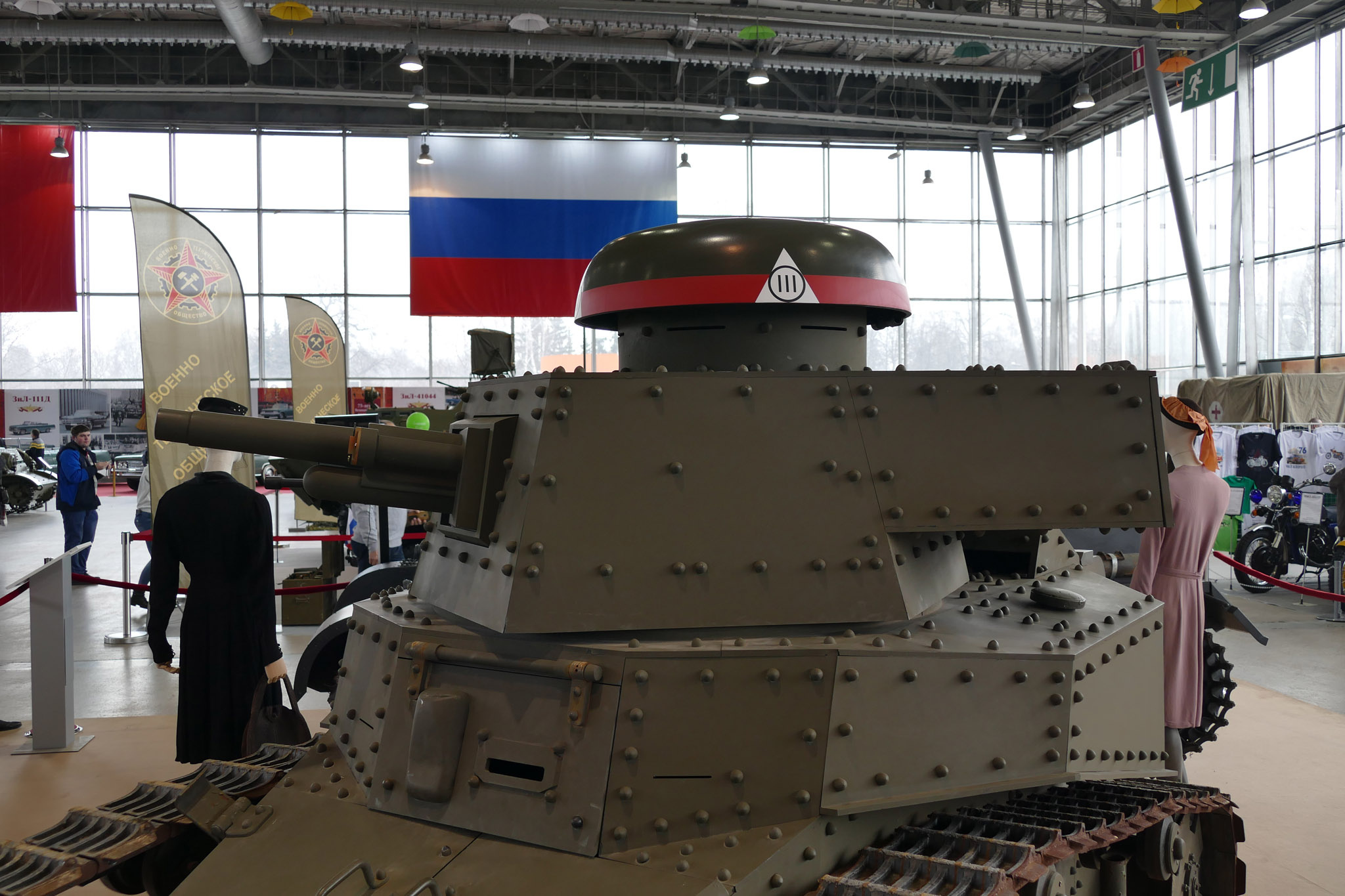
On the tower, a marking from the late 1920s
In total, it took more than 8 months to build the T-18 replica. However, all the hard work paid off thanks to the positive response to UFO Garage’s work. The vehicle made its debut on May 9, 2015, and was subsequently featured in a number of events, including Tankers’ Day in Kubinka (by that time, it was already part of the “Patriot” fleet). And that’s where the vehicle really showed off its best features—especially when compared to the T-18 on display at “Patriot.” That one had been restored a long time ago using various parts, and next to it, UFO Garage’s creation looked truly impressive.
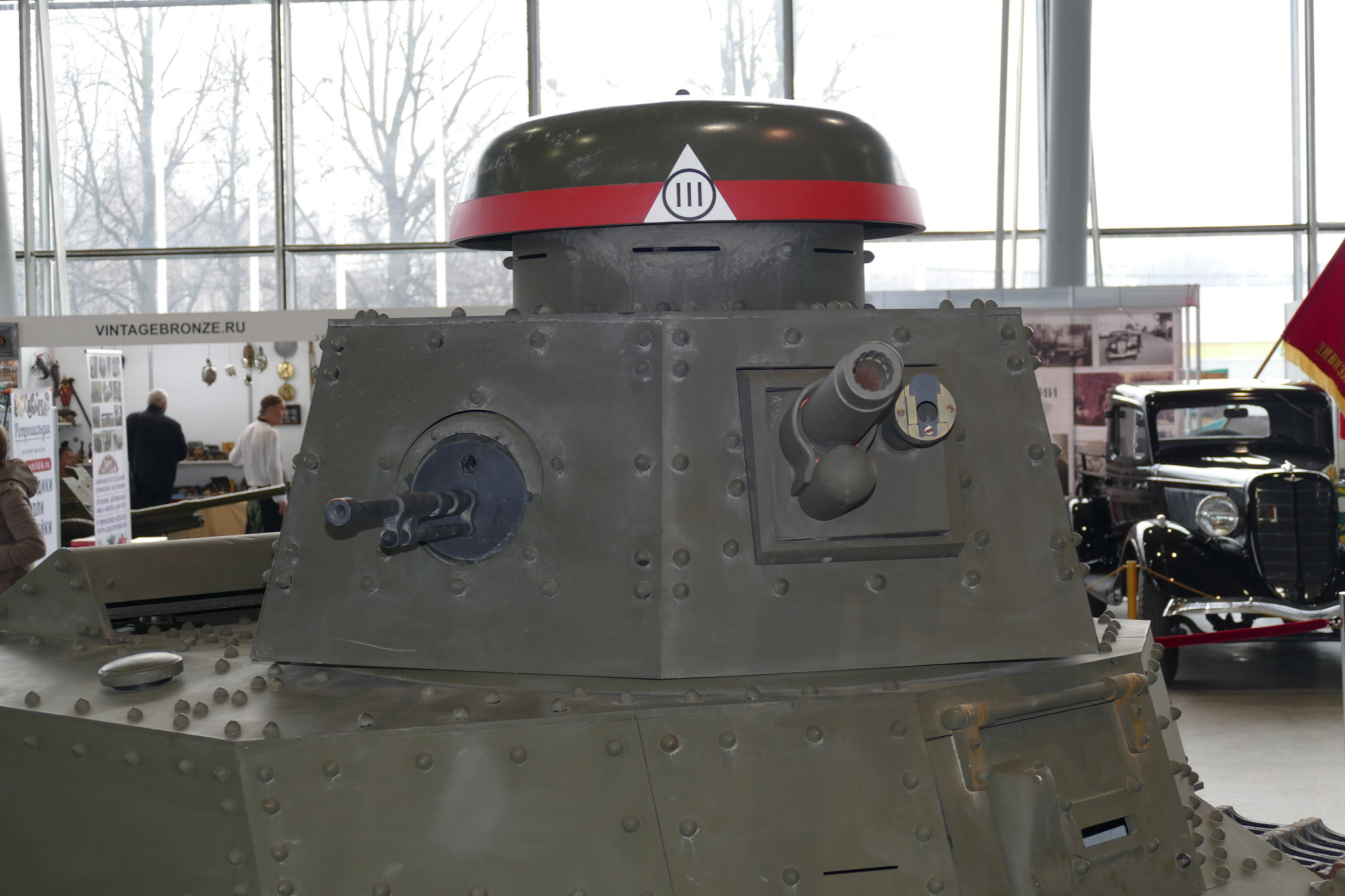
The weapon models are very well done
It probably seems funny now, but for a while, this replica was the most authentic-looking T-18. Yes, it had a body and turret made of HDPE, but in terms of appearance, it surpassed everything else available at the time. Photos of this replica even made it onto the covers of quite reputable military-technical magazines. And quite deservedly so—once the vehicle had been driven around a bit, it became virtually impossible to tell it apart from a real tank. Even now, there are only three T-18s (at the Museum of Russian Military History, the Vadim Zadorozhny Museum of Technology, and in the collection of the Obukhov Plant Museum) that are more authentic.
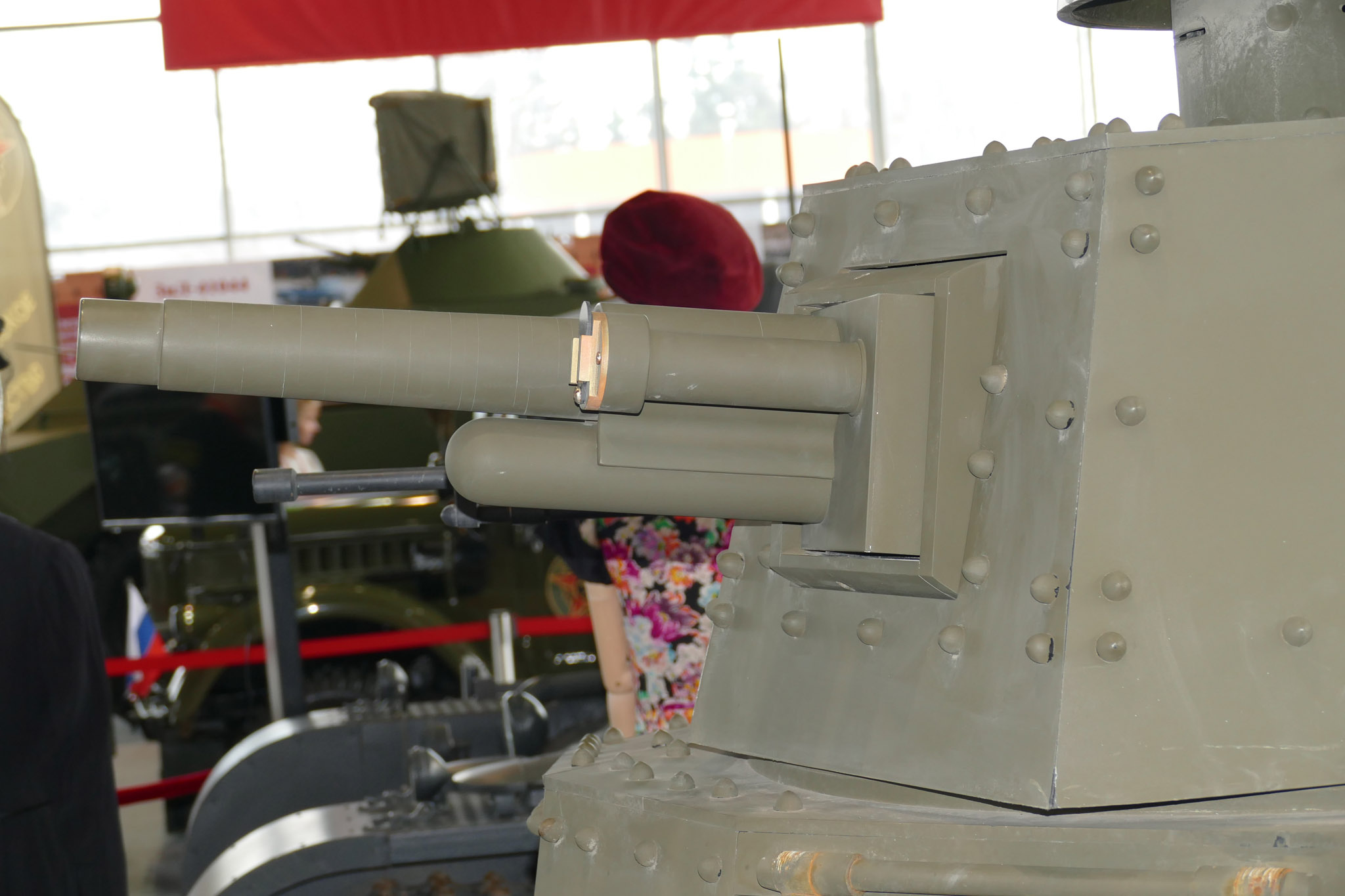
At first glance, the cannon looks just like the real thing
In conclusion, it is worth noting that this was the first and last time this team built a tank replica using this method. The very next replica, the Pz.Kpfw.I Ausf.B, was built using a more traditional approach. In other words, it was a “normal” tank. But the most interesting thing is that the experience gained with the T-18 proved useful in another area: namely, the creation of the “Tankodrom” project, which turned out to be far more in demand than a replica of the first Soviet mass-produced tank.
List of Sources:
-
-
- mc-1.su
-