The latest news on the Il-212 military transport aircraft. When is its first flight expected?

We previously reported that the Il-112 military transport aircraft project had been scrapped and replaced by the Il-212 aircraft project. In this article, I will share the latest news on this project with our esteemed readers, which has been posted on the “Technosphere. Russia” Zen Channel.

As of early 2025, only one type of military transport aircraft is in serial production in Russia. This is the heavy Il-76MD-90A (Il-476), which represents a successful, extensive modernization of the Il-76. As for more compact aircraft, nothing is currently being produced, and there is a growing need to replace the aging fleet of various aircraft types assembled back in the late Soviet era. The largest segment of this “mishmash” in the Russian Aerospace Forces consists of approximately 140 An-26 light transport aircraft with a payload capacity of up to 5.5 metric tons. The plan was to replace them with the new Il-112V, but things did not turn out to be so simple. Let’s try to make sense of this convoluted story.
Contents:
A Few Words About the Il-112V Aircraft
Development of the Il-112V light military transport aircraft began in the 2000s, amid efforts to overcome the chaos that followed the 1990s—a decade that had devastated the entire aviation industry—and the endless back-and-forth between developers and the military due to unclear prospects regarding long-term funding and priorities. Around 2010, assembly of the first prototype began at the Voronezh Aircraft Plant (VASO), but then the leadership of the Russian Ministry of Defense at the time cut funding and decided to purchase Kharkiv-built (!) cargo version of the An-140, which Ukraine and Russia had agreed to build jointly at the Aviakor plant in Samara.

Military transport version of the twin-engine An-140
This variant was designated the An-140T and was designed to carry 5 metric tons of cargo over a distance of 1,860 km (maximum payload of 6 metric tons). The Il-112V was designed to carry up to 5 metric tons of cargo over a distance of 1,200 km, and 3.5 metric tons over 2,400 km. The advantage of the An-140 was that it had already been produced in small batches in Kharkiv from 1997 to 2005 (11 aircraft were built in the passenger version), and under a 2013 agreement between the Russian Federation and the former Ukraine, the documentation and technical data for the An-140T were fully transferred to the Russian side for further independent use and production. The Ukrainian side also managed to sell the An-140 to Iran under the same arrangement, where it was renamed the IrAn-140, and between 2000 and 2015, according to various sources, up to 14 aircraft were assembled (out of a planned 80), of which 5 or 6 were kept airworthy.

In short, the Russian military had expected to receive a light military transport aircraft from Samara, where assembly of the An-140-100 variant had begun and production of the An-140T was planned (aircraft manufacturers in Kharkiv were supposed to carry out work on the An-140T using our funds and transfer the project to our Aviakor plant), and everything seemed feasible, but at the very beginning of 2014, a fascist coup took place in Kyiv, and economic ties between the neighboring states began to break down. Despite plans to manufacture the An-140 entirely in Russia, a significant number of components were still being supplied from Ukraine at that time. The An-140-100 variant was being assembled in Samara, and a few aircraft were carrying passengers (in Russia—as part of the Yakutia airline’s fleet). In the end, the Russian military did not receive the An-140T but had to settle for a dozen An-140-100s, which are still in use today. Full-scale assembly of this aircraft type in Samara was discontinued around 2016.
The unfortunate history of “cooperation” with our Ukrainian neighbors led to a situation where it wasn’t until the turn of 2013–2014 that the Russian military remembered the importance of technological independence and the long-forgotten Il-112V. At that time, the fuselage of the first prototype aircraft—which had been abandoned in a workshop at the Voronezh Aircraft Plant—was brought back to life. A program to develop a modified version of the TV7-117ST turboprop engine for the aircraft got underway: in 2016, Klimov delivered the first engines ready for installation. On March 30, 2019, the Il-112V successfully completed its maiden flight at the factory airfield in Voronezh. But then another string of problems arose in the history of the new VTS.
It was determined that significant design revisions were needed—the aircraft’s weight exceeded the project specifications, which reduced its payload and range. The aircraft manufacturers expected to resolve all issues within 2–3 years. In 2021, the Il-112V resumed test flights.

In August 2021, a test aircraft with a crew of three test pilots crashed while approaching landing in the Moscow Region due to technical problems. Investigations into the circumstances—standard in such situations—began, and in February 2022, a decision was made to temporarily suspend the project. Two unfinished aircraft remained, along with one that had been fully assembled for ground strength tests.

In the fall of 2023, reports emerged that work on the Il-112V had been completely halted and that development had shifted to a new aircraft—the Il-212. However, this was not a refined version of the “112,” but rather a virtually new aircraft.
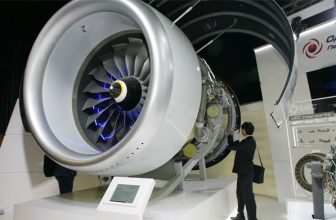
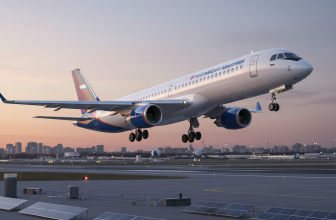
The main difference between the Il-212 project and the Il-112V is the use of new Russian PD-8 turbofan engines, which, as of early 2025, are in the flight test phase and were originally intended for the “Sukhoi Superjet” regional passenger aircraft in its new “import-substituted” variant. In 2027, the engine is scheduled to enter mass production. By that time, assembly of the Il-212 military transport aircraft prototype is expected to begin. As with the new “Superjet,” the transport aircraft will be powered by two PD-8 engines. The Il-212 configuration announced in 2024 calls for placing the engines above the aircraft’s wings (as on the Soviet An-72/An-74), which will enable it to operate from unpaved airfields, increase its maximum payload capacity from 5 to 12 metric tons, and boost the aircraft’s speed. Of course, some design elements from the Il-112V project may prove useful, but this is essentially a new aircraft.

Now is the perfect time to recall a project like the Il-214 (also known as the MTA, or Medium Transport Aircraft), which fell victim to yet another instance of interstate cooperation—this time between Russia and India. The twin-engine aircraft was designed to carry 12 metric tons over a distance of at least 2,000 km (up to 3,700 km in one version of the project) at speeds of up to 870 km/h. The plan was to equip the aircraft with engines either similar to those used on the Il-76MD-90A (PS-90 variant) or the promising PD-14 engines. Various unclear circumstances constantly affected the aircraft’s development, which lasted about 15 years. The Il-214 was intended to be “something in between” the Il-112V and the Il-76MD-90A (Il-476). In 2017, the project was renamed the Il-276 and announced as the successor to the four-engine An-12, but around 2020, it was put on hold, citing yet another round of financial problems. There is every reason to believe that the design work on the Il-214/Il-276 is also being used in the new Il-212. Incidentally, given the Il-212’s 12-metric-ton payload, it would be difficult to call this aircraft a “light” transport; however, there is an opportunity to “kill two birds with one stone” and fill the niche left by the larger An-12 after all.


Development of the Il-212 is ongoing
Sergey Chemezov, CEO of the Rostec State Corporation, confirmed this on October 23, 2024, while speaking at a plenary session of the Federation Council. Further confirmation of the ongoing work on the new VTS project is the inclusion in December 2024 of the Russian company “ODK-Star,” which develops and manufactures automatic control systems for aircraft engines, including the new Russian PD-8 for the import-substituted “Superjet.” Russia’s European adversaries claim that “this powerplant will also be used on the new Russian Il-212 military transport aircraft.” At the same time, it is worth noting that so far, not even any conceptual images of the new aircraft have been officially published. Although, it would be rather foolish to classify a conventional transport aircraft as secret (all similar foreign projects always make their way into the media at the concept stage—as computer renderings).
We’ll just have to wait until 2028, when they’ll show us something like a first prototype. Or perhaps it will happen even later, since, as we wrote earlier, developing any new, reasonably serious aircraft takes more than five years: at best, it takes five years to go from concept to a flight-ready prototype, and at least that much time again is needed before a production model is ready.
Source — https://dzen.ru/a/Z4vc9qz6fVehcUTp