When, during World War I, the battlefields of Western Europe had reached a stalemate with both sides entrenched in a labyrinth of trenches, the search began for weapons capable of turning the tide. For example, the first mortars were deployed, along with mortars and bomb launchers firing muzzle-loaded oversized grenades, flamethrowers, and chemical weapons.
Aircraft also began to be used as a means of breaking through the stalemate. The planes would descend and, flying at low altitude, strafe enemy infantry in their cramped trenches from above, attacking them from an unprotected direction. But there was one snag—low-flying wooden-and-canvas aircraft were easily hit by ground fire. Nevertheless, since aerial bombardment of the trenches proved quite effective, aircraft from both opposing sides began appearing over them in ever-greater numbers. However, aircraft losses were also rising—at a much faster rate than in aerial combat. Something had to be done about this.
In fact, the only option available to designers was to armor the most vulnerable parts of the aircraft so that they could withstand rifle-caliber bullets to at least some extent. The need to adopt specially armored aircraft arose almost simultaneously in Great Britain and Germany. France, the third leading aircraft-building power of the time, wavered on this issue. In fact, the British were the only Entente power to develop and begin mass-producing ground-attack aircraft (so-called “trench fighters”) Sopwith TF2 Salamander (based on the 7F.1 Snipe fighter). However, these aircraft were developed rather late, and the two “Salamander” squadrons did not become combat-ready until the time of the armistice negotiations and had no impact on the conduct of the trench warfare. For its part, the German military aviation (Fliegertruppe) relied more heavily on armored reconnaissance aircraft.
In 1917, the Germans began by creating a new category of military aircraft called “Infanterie” (infantry), which were designated with the letter “J” rather than “I”; this was done to avoid confusion with the serial number. Several companies participated in the competitions to develop armored attack aircraft, including A.E.G., which built the J.I and J.II aircraft; Albatros, which also built the J.I and J.II aircraft; and, finally, Junkers. While Professor Junkers’ company developed and began mass-producing an armored all-metal aircraft, A.E.G. and Albatros took the simpler route of modifying existing aircraft by adding armor and specialized armament.
Albatros chose the latest two-seat biplane—the C.XII reconnaissance aircraft and light bomber—as the basis for its J.I armored attack aircraft. In the end, very little of the original aircraft remained. A new all-wood truss fuselage was constructed, with a rectangular cross-section in the central section where the crew members were seated (the pilot in the front, the gunner-observer in the rear).
From the second crew member’s seat to the engine mount, 5-millimeter-thick rolled sheets of chromium-nickel steel were bolted to the wooden stringers and bulkheads; these sheets extended downward to the front landing gear struts. The underside of the fuselage (under the engine) was armored in the same way, with an oil drain pan protruding from it, and at the level of the rear landing gear struts, openings were cut out for two 7.92-mm Spandau LMG 08/15 machine guns, aimed diagonally downward toward the front.
The powerplant consisted of a single six-cylinder, inline, liquid-cooled Benz Bz IV engine with an output of 200–225 l.s. (147–165 kW). The engine was not fully encased in steel; the top and side surfaces were made of aluminum, and the cylinders themselves remained exposed. Since the steel plate protecting the crew compartments extended to the top of the fuselage, hinged doors were cut into it to facilitate entry and exit for the pilot and observer. The rear section of the fuselage was covered with plywood. The vertical stabilizer keel, the horizontal stabilizer, and the under-fuselage keel with tail skid were also covered with plywood.
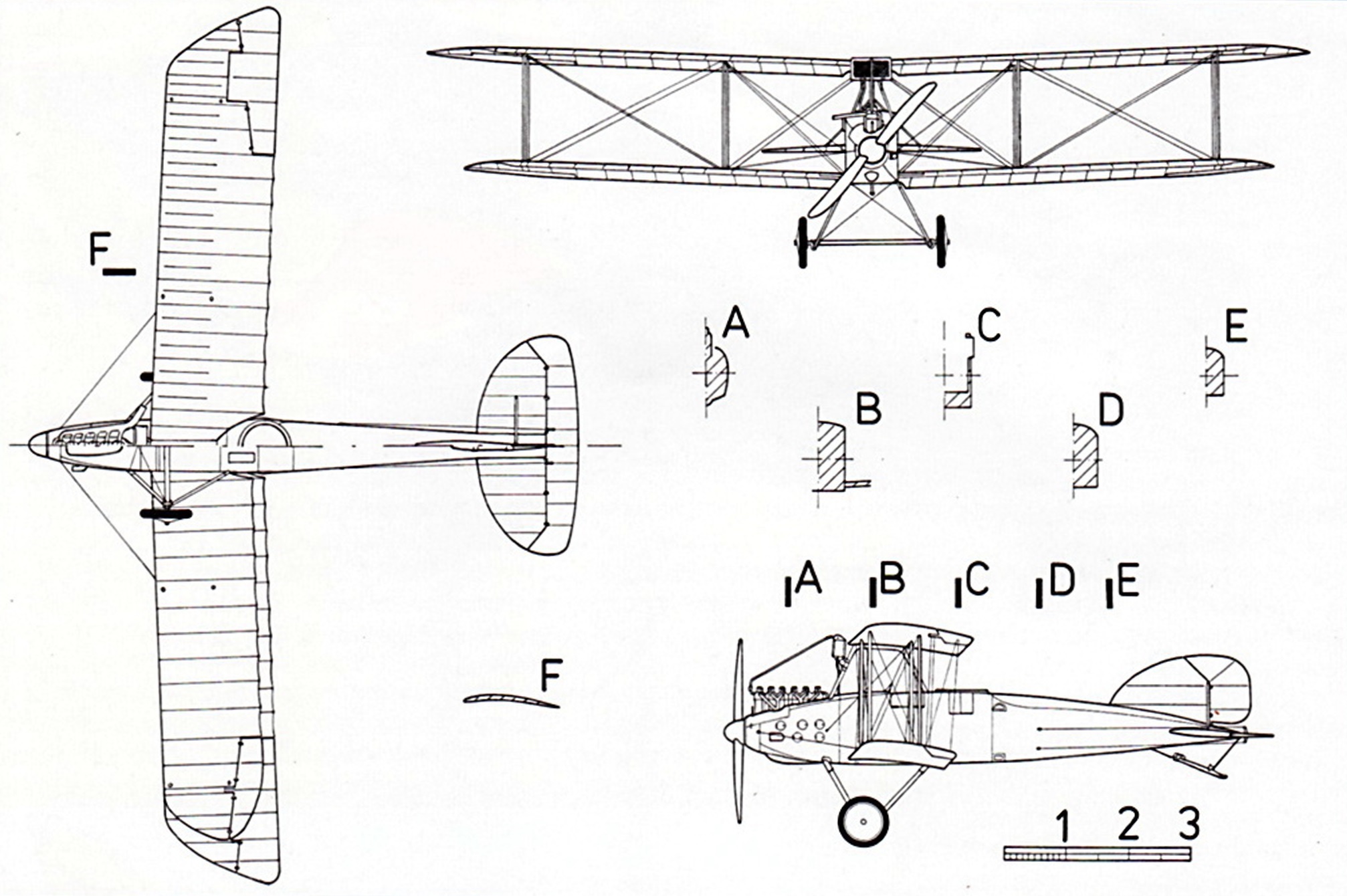
Schematic of the Albatros J.I. attack aircraft
The wing surfaces retained their basic design, including ailerons mounted on the upper and lower wings with a structural framework welded from steel tubes and fabric covering. One difference between the biplane airframe of the Albatros J.I. ground-attack aircraft and that of the original aircraft was the addition of a slight sweep to the wing spars, implemented to maintain the center of gravity. Another difference between the wings of the new aircraft and those of the Albatros C.XII reconnaissance aircraft was the replacement of the fabric covering with thin sheets of plywood. Unlike canvas, which would tear when shot through, this plywood remained intact, and even with holes in them, the wings still managed to retain their aerodynamic profile and, consequently, their function as lifting surfaces. The elevators and rudders had the same design as the ailerons: a structural frame welded from steel tubes and a fabric covering.
Due to the armor and new armament—including downward-firing machine guns—the J.I.’s takeoff weight increased by approximately 350 kg compared to the C.XII, and it is surprising that a less powerful engine was chosen for the J.I. (the C.XII was equipped with a 260-si-vny [191 kW] Mercedes D IV engine), but according to the aircraft designers’ plan, the power of the Benz Bz IV engine was supposed to be sufficient for operations over the trenches given its low-altitude performance characteristics. The J.I ground-attack aircraft did not stand out in terms of speed or rate of climb, but the engine’s power was quite sufficient for “crawling” over the front line at an altitude of about 50 meters. Unlike the C.XII, the J.I’s radiator was relocated to a more protected position. No fixed armament was installed to allow the pilot to fire forward, but the observer had at his disposal a pair of 7.92-mm Parabellum LMG 14/17 machine guns for defense against enemy aircraft and for firing at ground targets.
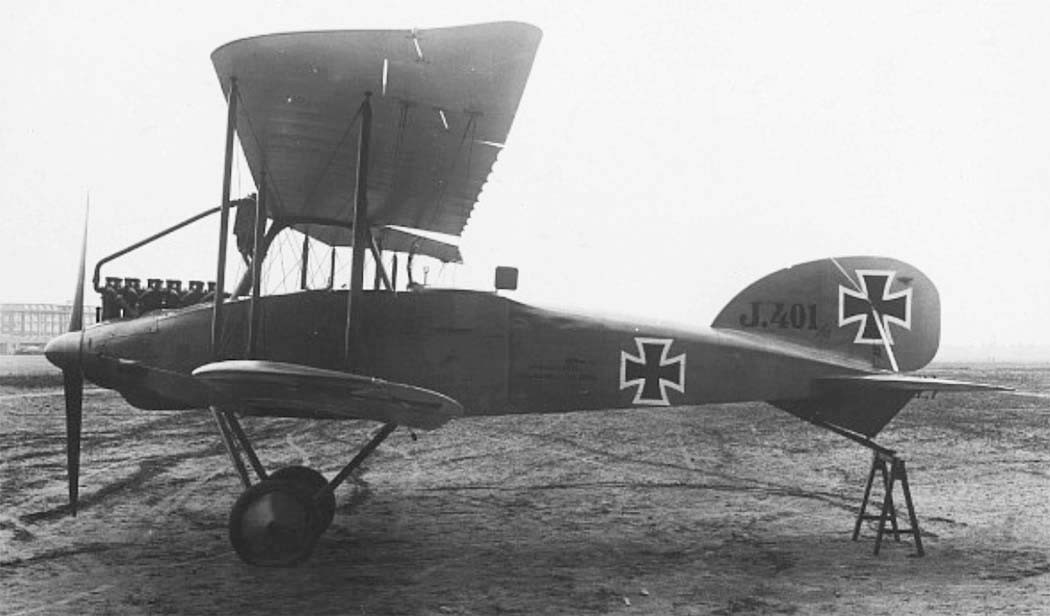
The first prototype of the Albatros J.I (401/17) ground-attack aircraft. Photo: airwar.ru
Starting in the second half of 1917, the mass-produced J.I aircraft, which were classified as military aviation aircraft (Infanterieflieger [Ifl]), were assigned to assault aviation units [Flieger Abteilung (A)], which operated in conjunction with artillery on the Western Front. The first mixed flight units of the Flieger Abteilung (A) Ifl, also equipped with reconnaissance aircraft, appeared in late summer over the trenches in Flanders to support the German 4th Army. The ground-attack aircraft operated in groups of three to six aircraft in coordination with reconnaissance aircraft and, as a rule, were escorted by fighters. The lead aircraft of such groups was equipped with a radio set for two-way telegraphic communication.
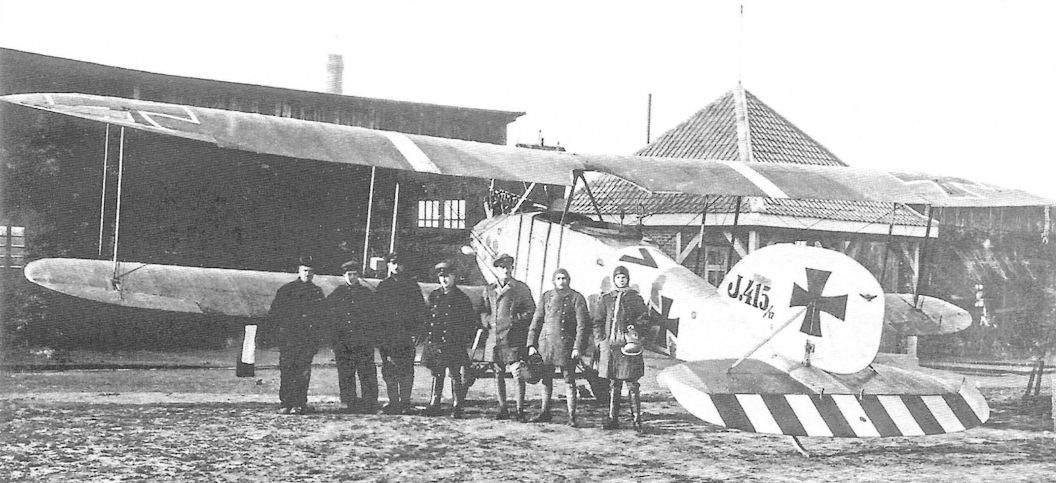
An Albatros J.I attack aircraft with the same camouflage pattern and from the same unit as the “Albatros” shown on the color insert—Flieger-Abteilung (A) 238. Photo from flyingmachines.ru
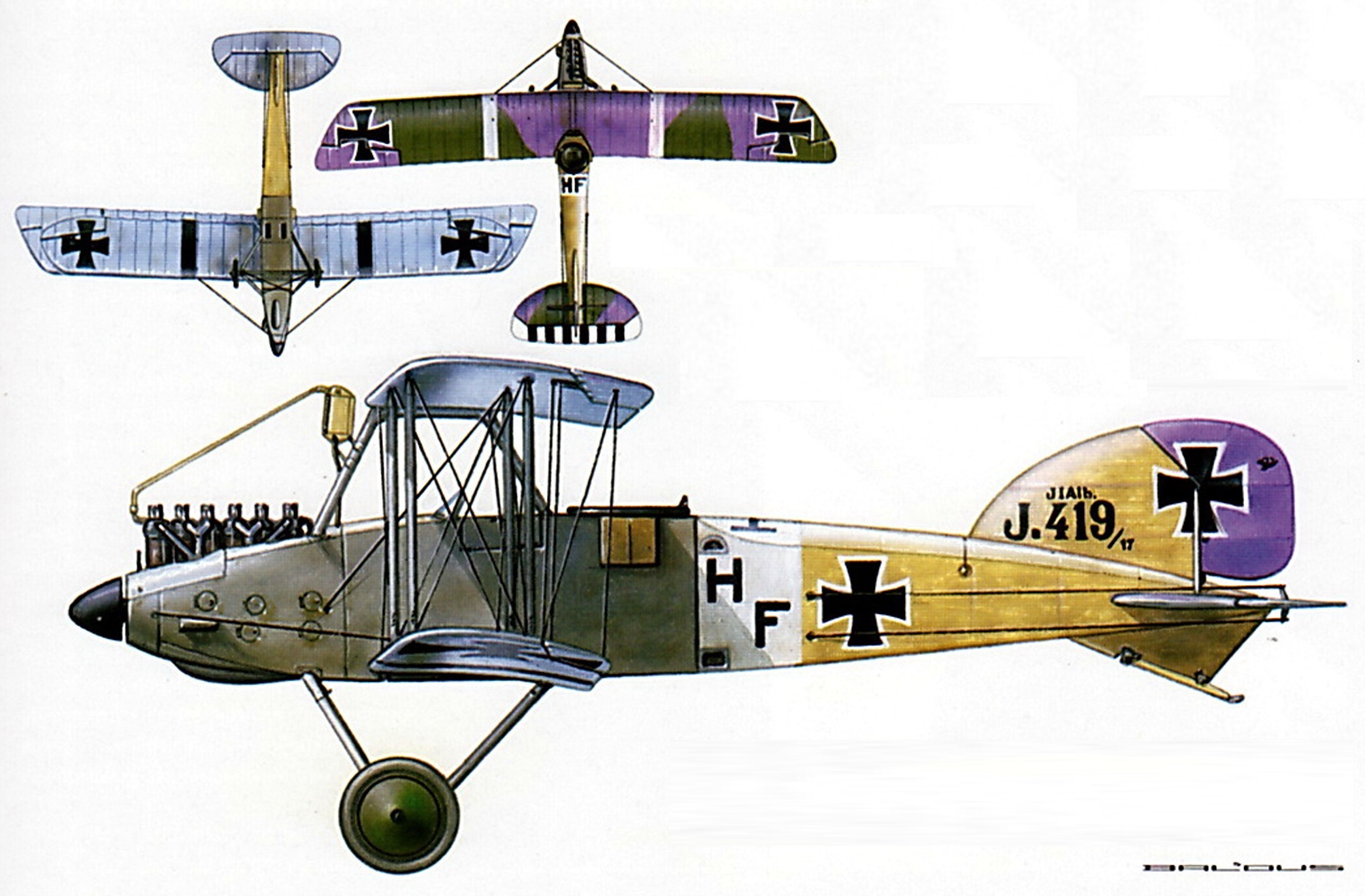
The Albatros J.I. ground-attack aircraft were painted in a simple camouflage scheme: the upper surfaces of the wings and horizontal stabilizer were covered with patches of light purple and dark green, while the lower surfaces were pale blue. The metal panels, interwing struts, and landing gear struts were painted gray. The rear fuselage and keel retained the color of varnished plywood, and the rudder was usually purple or the color of varnished fabric. The Albatros J.I (J.415/17) ground-attack aircraft shown in the illustration belonged to the 238th Ground-Attack Aviation Squadron, which operated in Flanders.
Although the “Albatrosses” managed to survive significant damage from ground fire, their losses remained high, as these slow, less-than-agile aircraft became easy prey for enemy fighters. However, the initial deployment of the Albatros J.I. ground-attack aircraft was highly successful, with one unexpected side effect. In those years, when the motorization of armies was still at a low level, cavalry was an important branch of the military, and the large, low-flying, strangely noisy aircraft frightened the horses!
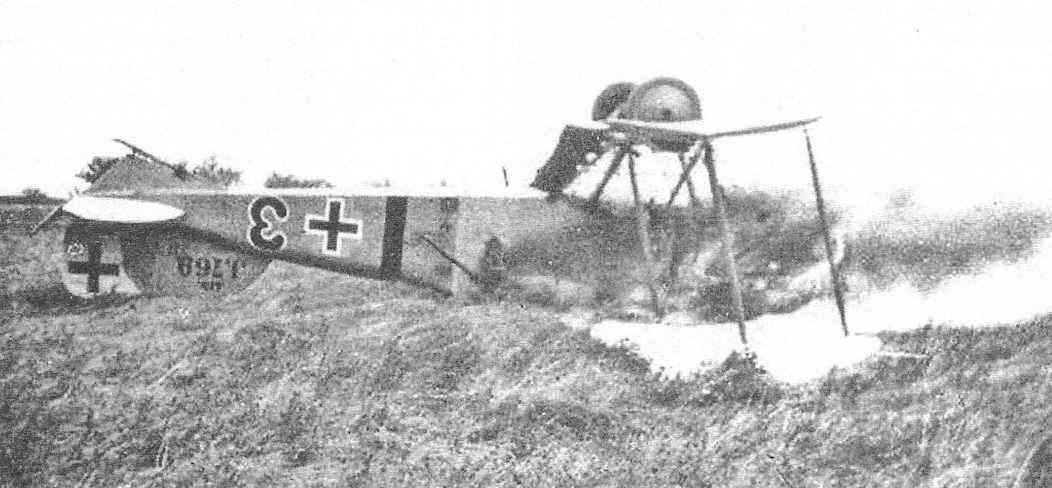
An Albatros J.I (769/18) attack aircraft with new identification markings, shot down by a French SPAD fighter from Spa 150 Squadron. The photograph is dated June 22, 1918. Photo courtesy of flyingmachines.ru
The Albatros J.I. attack aircraft remained in service with the German Air Force until the signing of the armistice and the official end of World War I. After hostilities ceased on the Western Front, German air force units took part in combat operations in East Prussia, the Baltic states, and what is now Poland. Albatros J.I. attack aircraft also took part in these engagements; under a new internal classification system introduced after the war, they were designated L.40. Even during the war, Albatros had manufactured several dozen units of the improved J.II version, in which steel armor served as a load-bearing element of the airframe, and the engine was fully protected. The Treaty of Versailles, signed in June 1919, seemed at the time to spell the end of German aviation. Under its terms, Germany was required to destroy more than 15,000 military aircraft, including the Albatros J.I ground-attack aircraft.
FLIGHT AND TECHNICAL SPECIFICATIONS
Type: Albatros J.I
Role: attack aircraft
Status: Mass production
Manufacturer: Albatros Werke G.m.b.H., Johannistal and Schneidemühl
Crew: 2 people
Powerplant: one liquid-cooled Benz Bz IV inline six-cylinder engine with an output of 200–225 l.s. (147–165 kW)
Dimensions:
Wingspan: 14.14 m
; Length: 8.83 m
; Height: 3.37 m
; Wing area: 42.82 m²
Weight:
Empty weight: 1,400 kg;
takeoff weight: 1,810 kg
Flight characteristics:
Maximum ground speed: 140 km/h
; cruising speed: 125 km/h
; climb time:
• 1,000 meters in 11.4 minutes•
3,000 meters in 50 minutes
; service ceiling: 3,100 meters
; flight duration: 2.5 hours
Number produced: approximately 240 copies
Source: Text: Miroslav Balous, Illustration: Petr Kolmann, “Aircraft 14–18: Albatros J.I,” *Aviation + Astronautics*, May 2011, pp. 40–41
Translation first published at – https://vk.com/@710541705-letauschie-tanki-kaizera-bronirovannye-shturmoviki-albatros