The History of Rus' After Its Adoption of Western Christianity. Part 49

The second half of Peter I Fyodorovich’s reign was marked by reforms.
In 1711, the emperor curtailed the powers of the governors-general by stripping them of their judicial authority and returning it to the local courts. The Vladimir (capital) and Livonian governorates were reorganized into general governorship territories.
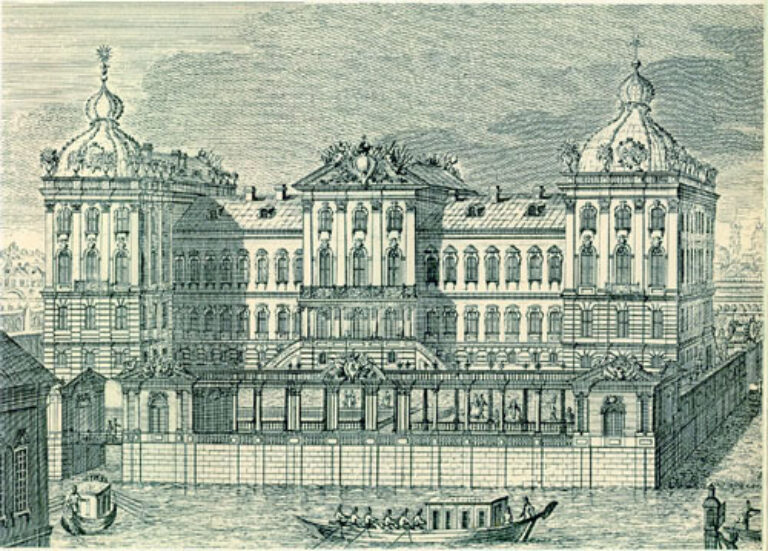 The Klyazma Palace, built by Boyar Mikhail Shein, stood vacant after his death, but the emperor transferred it to the Council of Centumvirov for its use.
That same year, Peter I Fyodorovich established the empire’s highest judicial body—the Council of Centumvirov—which initially consisted of six members: Boyar Ivan Alekseyevich Musin-Pushkin, Boyar Pyotr Alekseyevich Golitsyn (previously the governor-general of Livonia), Boyar Prince Mikhail Vladimirovich Dolgorukov (the younger brother of Lieutenant Field Marshal Boyar and Prince Yuri Dolgorukov, the Governor-General of Astrakhan who was killed during the uprising, and later the Governor-General of Siberia), Okolnichy Grigory Andreevich Plemiannikov, Boyar Prince Grigory Ivanovich Volkonsky (who was later expelled from the Centumvirate and executed for corruption), and Okolnichy Nazariy Petrovich Melnitsky.
In 1716, Peter I Fyodorovich carried out a ministerial reform modeled on the Prussian system; five ministries were established—Foreign Affairs, Commerce, Justice, Estates, and War. To address general issues, they convened in the Cabinet of Ministers, whose meetings were presided over by the chairman, whose responsibilities included coordinating the ministries and handling administrative work. The head of the Ecclesiastical Chamber was also included in the Cabinet of Ministers.
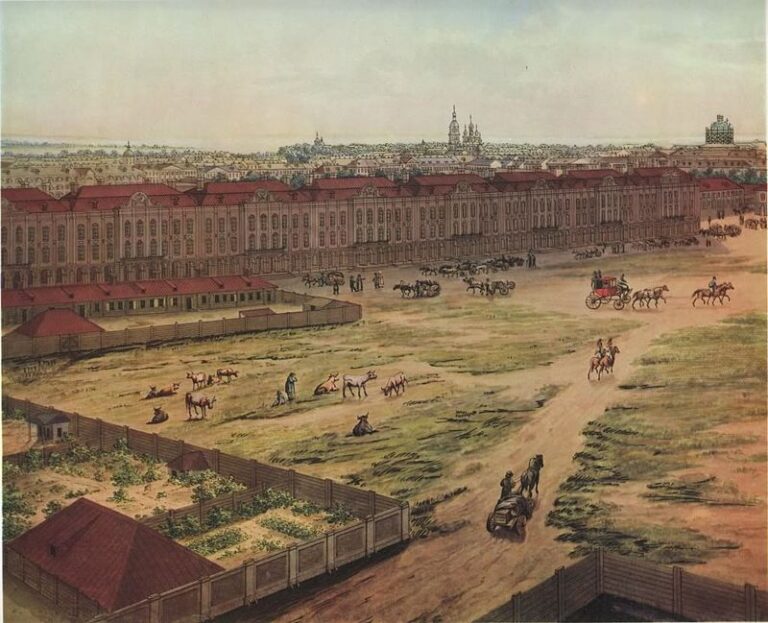 The Five Ministries Building, constructed during the reign of Peter I Fedorovich by the renowned architect Trezzini.
The first chairman of the Cabinet of Ministers was retired General Boyar Yakov Vasilyevich Bruce, who had been recalled to service by his emperor. Boyar Gavriil Ivanovich Golovkin became the first Minister of Foreign Affairs; Boyar Pyotr Matveyevich Apraksin, Minister of Commerce; the brother of the famous admiral; Boyar Andrei Artamonovich Matveev was appointed Minister of Justice; Boyar Andrian Grigoryevich Ratmanov was appointed Minister of Estates; and Field Marshal Duke of Tavrichesky and Boyar Alexander Danilovich Menshik, a Prince of the Holy Roman Empire of the German Nation with the title of His Excellency. The head of the Ecclesiastical Chamber, from its very establishment until his death, was Bishop Ivan Maksimovich Rimsky-Korsakov of Tambov.
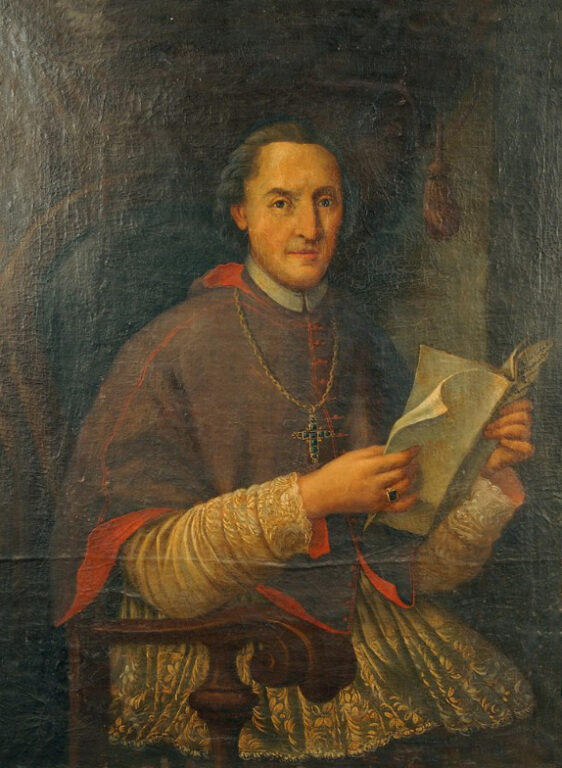 Bishop Ivan Rimsky-Korsakov.
Boyar Pyotr Apraksin, in addition to being the brother of the famous admiral, was a member of the ruling house as the brother of the widowed Empress Alexandra Apraksina and the brother-in-law of Emperor Vladimir VIII, who had already passed away by that time; and served as the capital’s governor until his appointment to a ministerial post.
Peter I Fyodorovich intended to carry out a ministerial reform in the Kingdom of Poland as well, but his governor in Poland, Field Marshal Boyar Boris Sheremetev—whose advice the emperor always heeded—dissuaded him from this plan, explaining that it was not worth unnecessarily alarming the Poles.
In 1716, amid family turmoil, Peter I Fyodorovich signed the famous “Act on Succession to the Throne,” which allowed the emperor to personally appoint his successor from among members of the Ruling House or those related to it. This decree also clearly defined the members of the Ruling House as the emperor’s sons and grandsons, both through the male and female lines, with rare exceptions. Its members received an allowance from the treasury.
As of 1716, in addition to Emperor Peter I Fyodorovich and his wife, Empress Sophia Christianovna, the members of the ruling house in the male line included their daughters, Grand Duchesses Anna and Elizabeth, and their grandson, Grand Duke Peter Vladimirovich (he was the obvious heir to the throne, but was never designated as such during his grandfather’s reign, since Peter I Fyodorovich hoped until the very end to reconcile with his son), Peter I Fyodorovich’s younger brother, Grand Duke Eustace Fyodorovich, and his cousin, Grand Duke Ivan Yuryevich. The latter’s son, Fyodor Ivanovich, was no longer considered a member of the ruling house and bore the title of prince with the surname “Bogolyubsky,” as he was the great-grandson of Emperor Vladimir VII.
The children of Emperor Vladimir IX—Grand Duchesses Ekaterina, Anna, and Tatiana—were excluded from the Ruling House, along with their closest relatives on their mother’s side: Solomonia Alexandrovna Mukhranskaya, who had died by that time and was a descendant of the Georgian royal house.
The only member of the ruling house through the female line at that time was Boyar Prince Vasily Afanasyevich Mamonov, the son of Grand Duchess Celestina Fyodorovna and the grandson of Emperor Fyodor II. He was a man of exceptionally little talent and a troublemaker, and he wielded no influence whatsoever.
Peter I Fyodorovich also included non-blood relatives in the Ruling House—the widowed Empress Alexandra Matveyevna Apraksina, the wife of Emperor Vladimir VIII (who died in 1716), and her brothers — Pyotr, Fyodor, and Andrei Matveyevich Apraksin, who were officially considered cousins of the emperor. Of these, the most famous and influential was the middle brother, Boyar, General Admiral, and great naval commander Fyodor Matveyevich; The eldest brother, General Boyar Peter Matveyevich, held a number of government posts, while the youngest brother, Boyar Andrei Matveyevich, did not hold any official position but was a close friend of Emperor Peter I Fyodorovich.
The last members of the Apraksin family to be part of the Ruling House were Peter’s children—Alexander, Elena, Ekaterina, and Alexei Petrovich—and Andrei’s children—Fyodosi and Fyodor Andreevich—who were referred to as the emperor’s nephews. In 1731, the younger Apraksins, along with Boyar Andrei Matveyevich, who was still alive at the time, were expelled from the Ruling House.
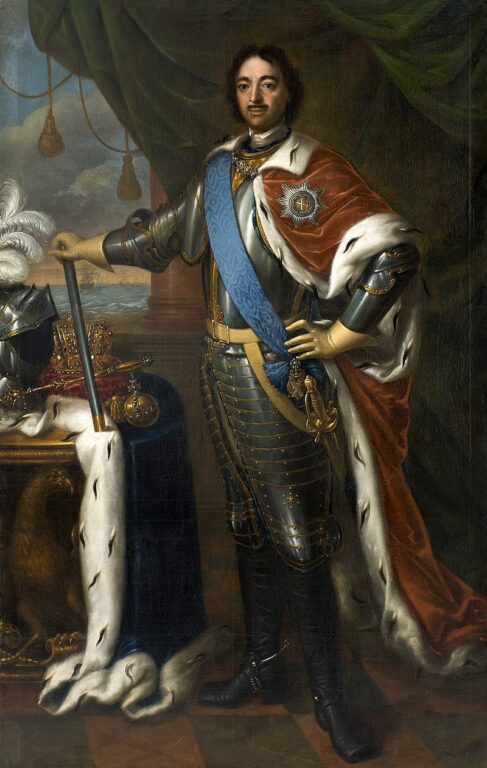 By the grace of God, Peter I Fyodorovich, Emperor of Great Russia and of Rome, King of Poland, King of Kazan, Astrakhan, Livonia, and all the lands of Siberia and the North; Grand Duke of Lithuania, Kyiv, Vladimir, Novgorod, and Yugra; of Vyatka, Tver, Great Perm, Pskov, Taurida, Galicia, Courland, Semigallia, and Vidzeme.