The History of Rus' After Its Adoption of Western Christianity. Part 51

The Great Southern War ended in 1706 with the Russian army’s capture of Constantinople, and after its conclusion, the Russian army withdrew from New Rome. As a farewell gesture, Peter I Fyodorovich repeated the legendary deed of Oleg the Prophet by nailing his shield to the gates of Tsargrad.
Constant III proved to be extremely poor at honoring treaties, but he had an excuse—during the Great Southern War and the subsequent upheavals, the Roman Empire suffered heavy losses, ranging from demographic to financial and territorial. What remained of the great empire was largely fragmented, as the prianians, in the midst of an internal crisis, had ceased to look to Constantinople for guidance.
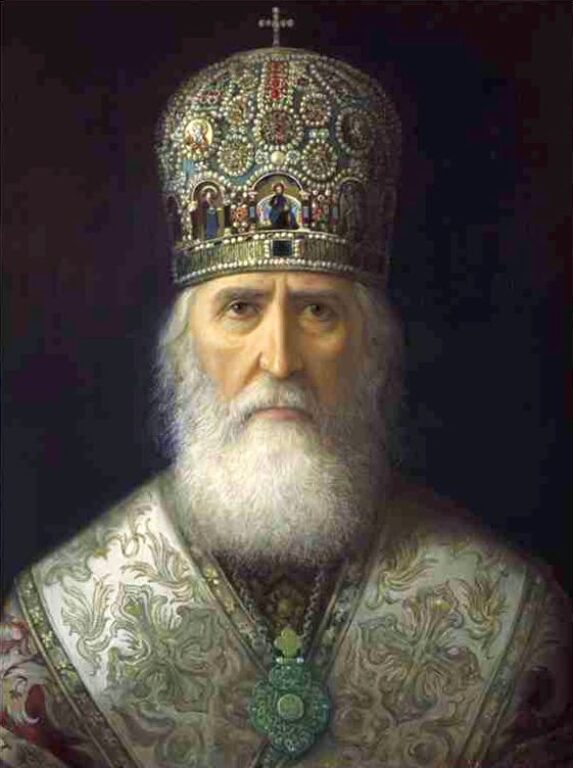 Ecumenical Patriarch Gabriel
In 1707 (October 25), the elderly Ecumenical Patriarch Gabriel, who had been vying with the basileus for power over the empire, passed away. Constant III then appointed Ioannikios III, who was loyal to him, as Ecumenical Patriarch (March 23, 1708) and seized the Church’s revenues for the needs of the empire.
When rumors of the death of Peter I Fedorovich reached Romania in 1706—even though they turned out to be false—Constant III began hastily restoring the fortifications of Constantinople and rebuilding the fleet, inviting foreign experts to assist him. Egypt’s conquest of Syria and Palestine led to the flight of Greeks and Serbs from those lands; they fled to Romania, where the basileus formed the backbone of a new army from among them, an army armed with the latest technological innovations. This new army was formed literally on the move, subduing the Proniars and forcing them to submit to their basileus.
Constant III also stepped up his foreign policy efforts. For example, he repeatedly received the French envoy Charles de Ferriol and the British envoy Robert Sutton at his residence to work out a joint treaty.
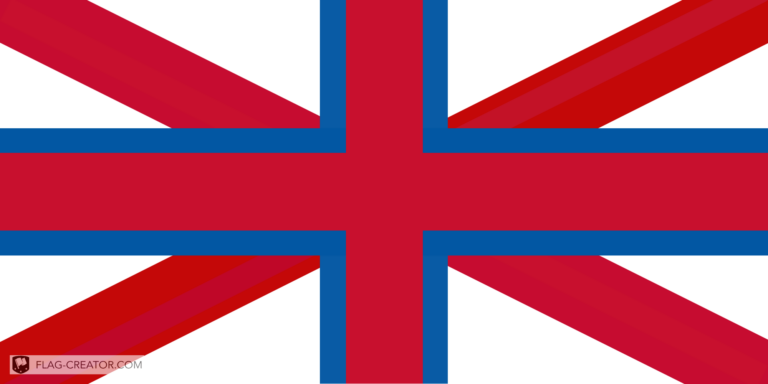 Flag of the United Kingdom of England, Portugal, and Ireland
Admittedly, the process dragged on. The French were absolutely unwilling to cooperate with the British, who had lost much of their colonial holdings during the 17th century and appeared more like a burden than a reliable ally. The French, meanwhile, dominated the race for India and were unwilling to share their gains with anyone or allow the emergence of new competitors, which they saw as Hungary and Russia.
Constant III, however, feared that his country would fall into bondage, so he also entered into negotiations with the Dutch, though these were more half-hearted. The Netherlands was competing with both France and Great Britain, but saw little point in an alliance with Romania, and the basileus was unwilling to make unilateral concessions.
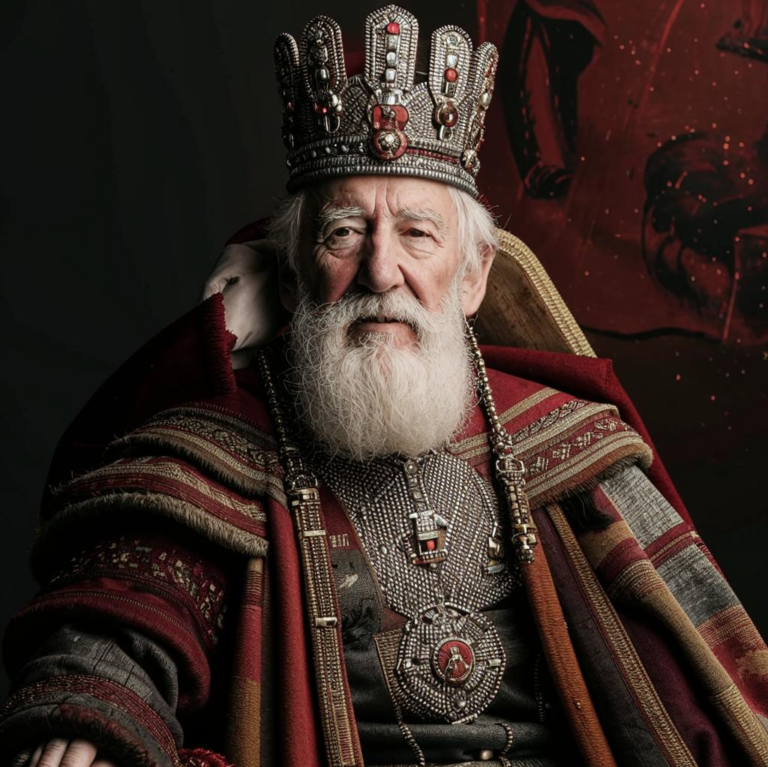 Constant III, Emperor of the Byzantine Empire
Peter I Fyodorovich watched the tsar’s actions with concern, and now, in light of the threat that the straits might be closed to Russia, the idea of annexing Constantinople no longer seemed absurd to him.
In October 1710, an army of 20,000 men, commanded by Field Marshal Boyar Avtonom Mikhailovich Golovin—who had already captured Constantinople—landed near the capital of the Roman Empire.
Over the course of several years, the fortifications had not been fully completed, and the garrison of Europe’s largest city—with a population of over seven hundred thousand—numbered no more than two thousand soldiers. Golovin entered the city without difficulty and quickly brought most of it under his control, pushing the resisting garrison to the outskirts of the city, where it surrendered a few days later. Ecumenical Patriarch Ioannikios III was taken prisoner, but he soon managed to escape; Constantine III, along with the treasury, managed to flee to the other bank.
The Romanian fleet was destroyed at the Dardanelles by the Russian fleet, which lost two ships in the battle.
Peter I Fyodorovich justified the capture of Constantinople by citing the basileus’s failure to comply with the terms of the Treaty of Novolakherna. On November 10, 1710, a manifesto was published declaring that the city of Constantinople, along with both banks of the Bosporus and the Dardanelles, was permanently annexed to the Russian Empire. Shortly thereafter, the Kronstadt Fortress was founded on the Gallipoli Peninsula.
The capture of Constantinople triggered the partition of the Byzantine Empire’s remaining European territories. Thus, Hungary annexed the historic region of Raška to the Kingdom of Bosnia, with which it was in a union, while the Greek King Alexander I seized nearly all the Greek-populated lands in the Balkans. Only the Peloponnese Peninsula posed a problem, as the Hungarian King László VI feared the strengthening of the Kingdom of Greece and landed troops there.
After seizing the peninsula, the Hungarians barred the Greeks from entering it and established the quasi-independent Principality of Achaea, whose monarch was declared to be Géza, the son of László VI; from then on, all subsequent heirs to the Hungarian throne bore the title of Prince of Achaea.
But even so, Greece expanded its territory significantly and became a major player in the Balkans.
The Macedonian region broke up into a number of Slavic principalities that came under Hungarian rule, as did the Albanian lands, which had also broken up into a number of small principalities.
From 1706 onward, Cyprus—having lost contact with the mainland—lived, as it were, on its own, but with the accession of the new King of Hungary, Geza III, Hungary and Russia formed an alliance in 1715, after which they established joint control over Cyprus, which Egypt had already set its sights on.
The newly acquired territories became part of the Greek General Governorate, whose capital was moved from Castron-Limnu to—as one might easily guess— Constantinople, and General-Admiral Boyar Fyodor Matveyevich Apraksin remained governor. In New Rome itself, Peter I Fyodorovich stationed a large garrison.
The Roman Empire had shrunk to cover only a significant portion of Anatolia, but even from this situation, Constantine III was able to turn things to his advantage. He moved to Nicaea, and with the help of a new army, he quelled the rebellion, redistributed the land, and established iron-fisted control over the country.
Romania was still living “the old way”; it was an agrarian country with a poorly developed industrial sector, with the exception of military production, it had no navy, but it had gained powerful allies in France and Egypt, which strongly disapproved of the presence of Hungary and Russia in the Mediterranean Sea.
Peter I Fyodorovich found allies in the form of the outsiders in the race for India—Great Britain and Scotland. For England under the Courtenay dynasty, the 16th century was a time when it became a great power, acquiring vast and incredibly rich colonies in the New World, as well as smaller but no less wealthy ones in other parts of the world. But by the following century, England had ceded some of its colonies and its status as a great power to the Netherlands, which led it to adopt a policy of “splendid isolation,” and it now ardently desired to regain its former might.
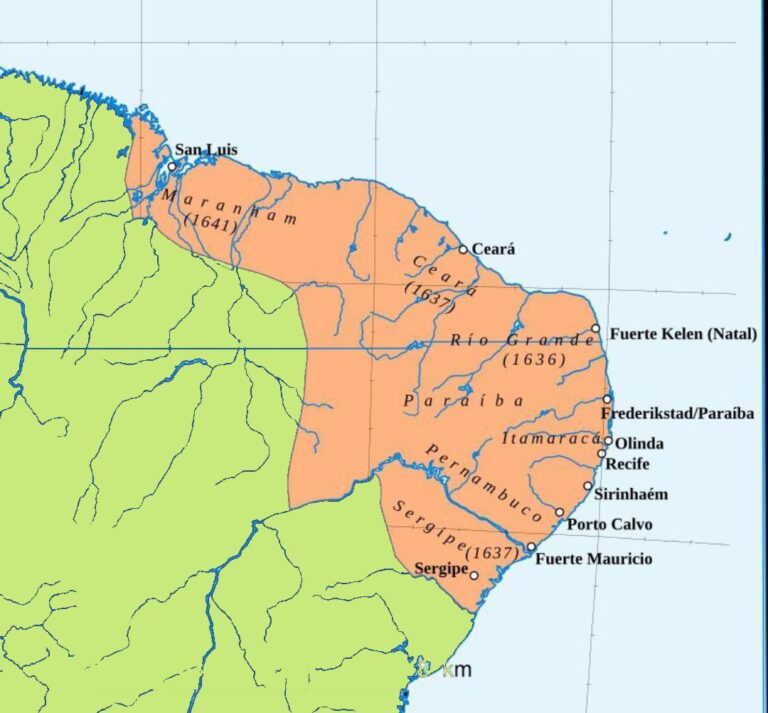 Green: Portuguese Brazil; orange: Dutch Brazil, the part of Portuguese Brazil captured by the Dutch
Scotland, for its part, had a small colony, Antarctic Scotland, in Patagonia, and the Scottish East India Company, established with significant royal capital, held two strongholds in India: the cities of Bhubaneswar and Visakhapatnam. However, further expansion by both Scotland and Great Britain was hindered by France and the Netherlands, which were firmly entrenched in India; moreover, there was a great risk of losing existing possessions and positions, as had already happened with Ceylon. Therefore, both countries set aside their old differences and turned to an unexpected ally—Russia—for help, and Peter I Fyodorovich was glad to have any allies.
The attempt to open a route to India through Egypt failed. The Egyptian Sultan Hussein I set out to Westernize and modernize the land of the pharaohs, while taking local customs and traditions into account. Among other things, he conquered vast territories, such as the Arab Caliphate—a remnant of the Karamanid Sultanate—which was located in Transjordan, the Hejaz, and Aden. The Hungarians and Russians were his rivals for influence in the Mediterranean; in particular, as mentioned above, they prevented him from capturing Cyprus.
When the door to Egypt closed, the Russian Empire found a new, even shorter route to India—through Persia—but relations with Persia were not going so smoothly either. However, an opportunity to change this situation soon arose when envoys from the Persian prince Tahmasp arrived to see Peter I Fyodorovich.