On May 29, 1453, Constantinople, the center of the Orthodox world, fell. But could this have been avoided? And how would history have unfolded?
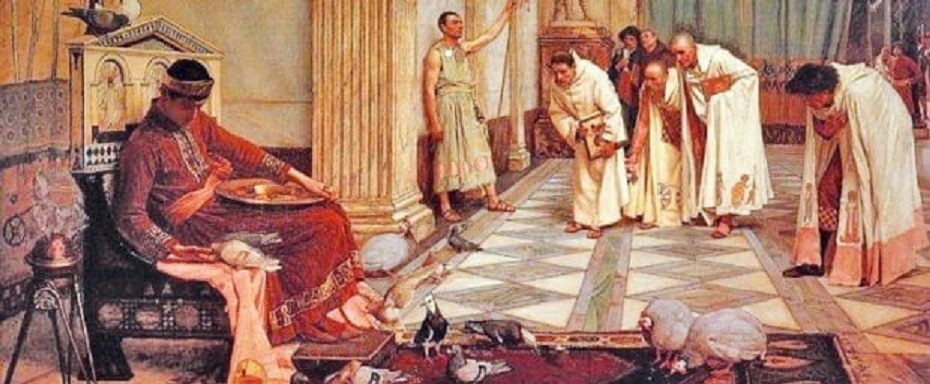
So, let’s begin our story around the year 1000. Twenty-four years earlier, Basil II—one of Byzantium’s greatest rulers—had ascended to the throne; after his death, everything began to fall apart. One of the reasons for this was the lack of an heir. Let’s imagine that Basil realized at the time that civil war might engulf the empire after his death, so he decided to have a son. For convenience, let’s call him Basil III. He trained him in the art of war and diplomacy, and did everything he could to make him a worthy heir; and when he died in 1025, all power passed precisely to his son—Basil III. He is 25 years old—a mature age for governing a state—and he continues his father’s policies. Byzantium does not lose territory, as it does in RI, nor does it become destabilized. Moreover, he plans a military campaign to reclaim Sicily, which had been captured by the Muslims. In the Real History, the Great Schism occurred in 1054; here, however, through firm diplomacy, he will prevent it from happening. In domestic policy, on February 13, 1026, he enacted a law prohibiting the seizure of peasant lands; he also distributed land to the peasants, thereby creating a strong middle class. He converted part of the taxes into monetary form to increase trade. He also imposed taxes on the churches and encouraged the extraction of resources. As a result, the economy of the Byzantine Empire only improved. On July 7, 1026, he met with Yaroslav the Wise and signed several agreements, including ones on economic and military cooperation. Rus’ gradually began to absorb Byzantine culture, and Kyiv became a new secondary center of Orthodox Christianity—a development the Byzantines did not oppose but, on the contrary, supported. On August 15, with Rus’ support, Byzantium regained control of Sicily by military force. Plans were also made to marry Yaroslav’s daughter, Elizabeth, to Basil III’s new son once they came of age. Basil began to build closer ties with the Catholics; an Ecumenical Union was even signed—in effect, Byzantium and the Holy Roman Empire recognized each other and acknowledged that they held equal authority in religious matters. On March 18, 1027, a joint crusade against the Fatimid Caliphate began—Europeans, Byzantines, and Rus’ joined forces to liberate Jerusalem. The war lasted three years, and it is clear that they could not withstand a united Europe. Following a joint decisive Christian offensive on April 20, 1030, on the Byzantine front, the Muslims signed a surrender on April 22. Damascus came under Byzantine control, as did the nearby coast of Northern Egypt. Alexandria and the surrounding territories came under German control, Cairo remained with the Fatimids, and Jerusalem came under the joint control of both churches.
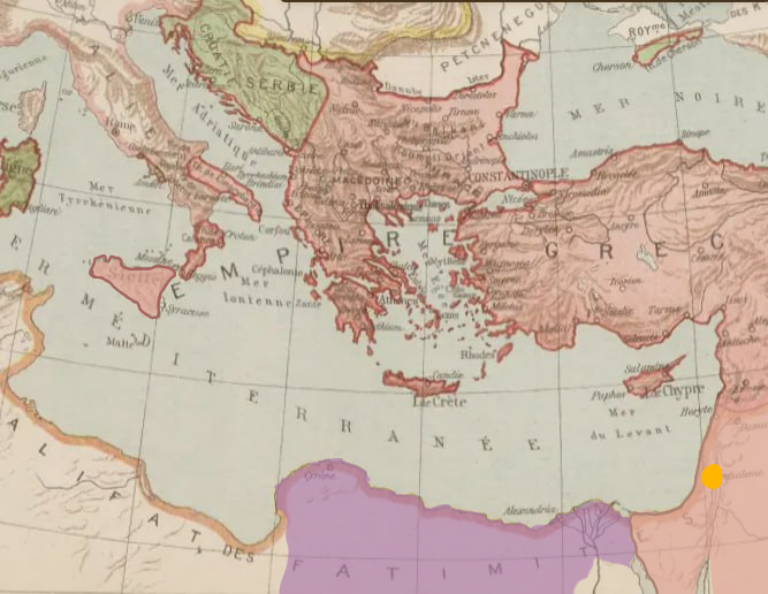
Next, on July 1, 1030, Rus’ launched a campaign against the Pechenegs. With the help of Scandinavian mercenaries, they defeated the Pechenegs, who were highly disorganized, and the Pechenegs retreated eastward, roughly toward Rostov and Krasnodar. Rus’ gained control of all the southern Ukrainian lands, while ceding the lands along the Tisa River to Byzantium.