There are two major turning points here: Carlo Tito, the eldest son of Ferdinand de Bourbon, King of Naples and Sicily, survived his childhood and lived much longer, while Alexander I, then still heir to the throne, and his wife Elizabeth Alexeyevna gave birth in 1799 not to a daughter named Maria, but a son, Peter, who succeeded his father after the latter’s abdication in 1824 and implemented liberal reforms.
Carlo Tito I ascended to the throne of the Two Sicilies following the death of his father, Ferdinand I, in 1823. He was just as conservative to the core as his father and devoted a significant amount of resources and time to the army, seeing it as his only defense against revolution. In the end, he achieved his goal—the soldiers of the Kingdom of the Two Sicilies were armed with state-of-the-art equipment, disciplined, excellently trained, and unwaveringly loyal to their king.
Carlo Tito I died in 1835, leaving the throne to his son, Carlo Tito II. Unlike his father, the younger Carlo Tito held liberal views, for which he was even stripped of his right to the throne in favor of his younger brother, Filippo; however, Filippo died shortly before their father, allowing his brother to ascend to the throne unopposed.
One of Carlo Tito II de Bourbon’s first actions was to convene parliament and adopt a constitution, making Sicily an autonomous region. Although Carlo Tito II retained a great deal of power, the country became a constitutional monarchy and entered a period of rapid economic development.
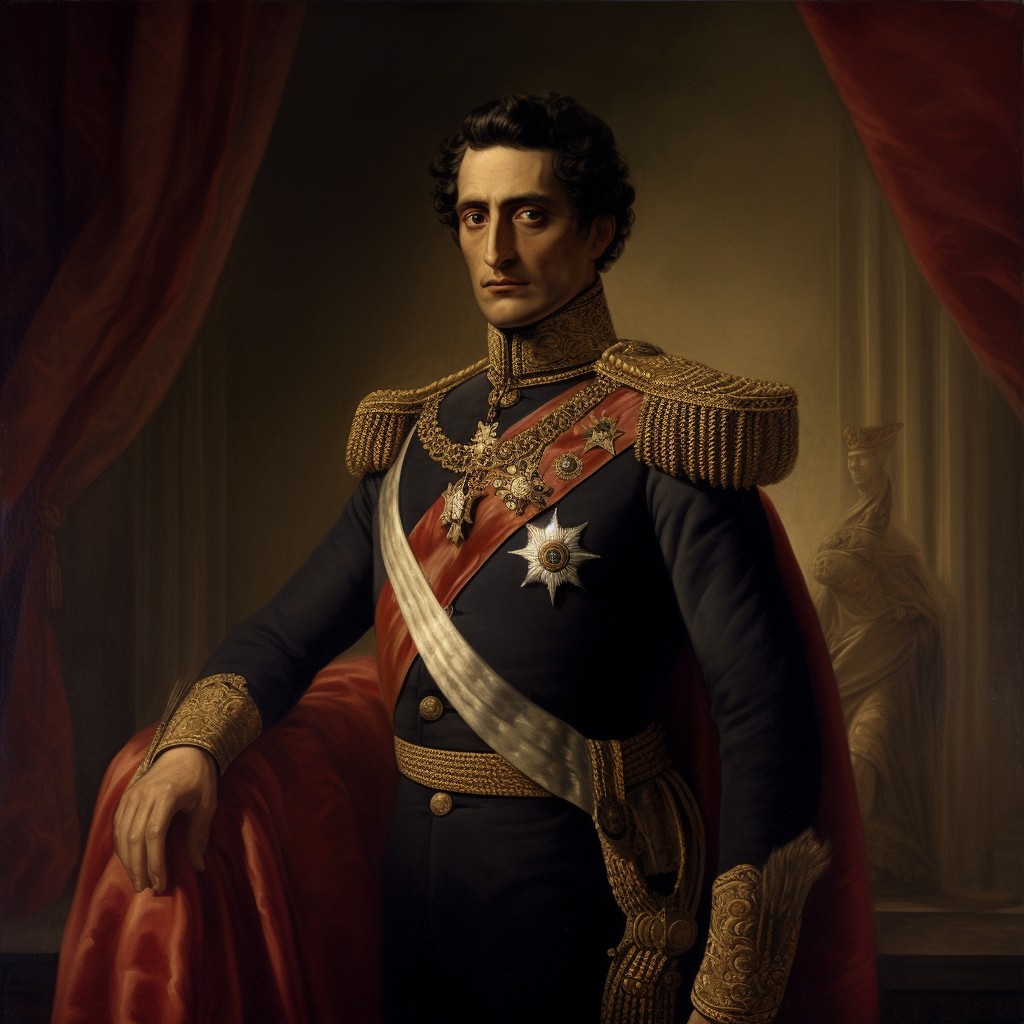
Carlo Tito II
In 1848, the War of Italian Unification unfolded in much the same way as in the RI. Carlo Tito II was in no hurry to intervene, watching events unfold, and it was not until 1849 that he came to the aid of the Kingdom of Sardinia.
When hostilities against Austria resumed, Carlo Alberto, King of Sardinia, decided to relinquish his supreme command of the army, while remaining with the troops. He appealed to France to send him a capable military commander to serve as commander-in-chief of the Savoyard army; however, no one in France was willing to compromise their reputation by participating in a venture that seemed doomed to failure. Then Carlo Tito II stepped onto the scene, offering himself for the role of commander-in-chief and declaring that this would be the first step toward the unification of Italy. Carlo Alberto agreed.
The morale of the Sardinian soldiers had been dampened by last year’s defeats, but the fresh, battle-hungry Neapolitan forces had a galvanizing effect on them. For their part, the Austrians were confident of victory and had unconditional trust in their commander, Field Marshal Count Joseph Radetzky.
On March 12, 1849, the armistice was declared terminated, and on March 20, Sardinian and Neapolitan troops, flying the Italian tricolor and under the command of Carlo Tito II, launched an offensive.
On March 22, the Battle of Biccocche took place, preceded by a very tense situation within the Italian army. The fact was that not all Sardinian commanders agreed with their superior’s stance toward the Neapolitans, but Carlo Tito II enforced discipline with an iron fist: for example, General Girolamo Ramorino was court-martialed for insubordination and sentenced to death by firing squad. The sentence was carried out on March 22, shortly before the battle, in front of the troops.
The Battle of Biccocche was fierce and bloody, and the Italians’ victory was due in large part to the tenacity and resilience of the Neapolitans; had the Sardinians fought alone, they would surely have lost.
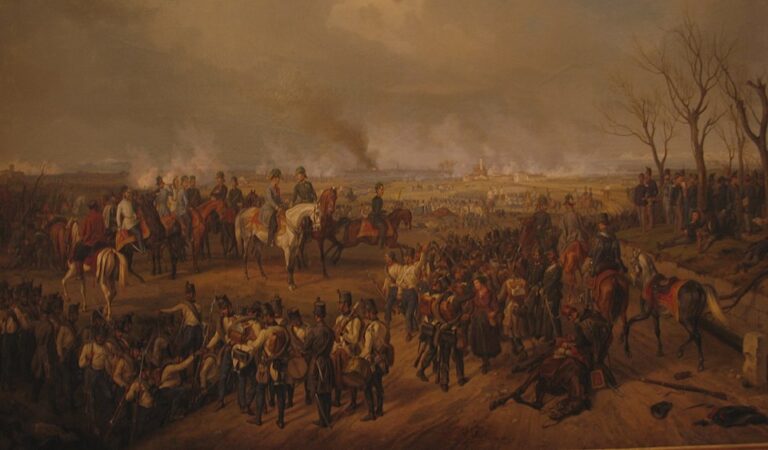
The Battle of Bikkok
The Austrians retreated in full fighting order, but the next day they were overtaken by the Neapolitan cavalry, the pride and joy of Carlo Tito II. In the ensuing skirmish, Field Marshal Count Joseph Radetzky was slain.
On April 4, Neapolitan troops entered Milan; following this, Verona, Mantua, Brescia, and Cermano were liberated from Austrian rule, and the Italians entered the Veneto region. On May 26, the government of the Republic of San Marco voted to join the Kingdom of Sardinia, which was carried out, and by the beginning of the summer of 1849, the Austrians had been driven out of Veneto.
By that time, the Austrian Empire was far from being in the best of shape. Revolutions in Austria itself, as well as in Bohemia, had been suppressed, but the situation in Hungary had escalated to the breaking point; the Hungarian War of Independence, which began in September 1848, led to the deposition of the Habsburgs from the Hungarian throne on April 14, 1849, and the proclamation of the kingdom’s independence. To make matters worse, the Russian Imperial Army, under the command of Field Marshal His Serene Highness Prince Ivan Fyodorovich Paskevich-Erivansky of Warsaw, invaded and, after a series of battles, occupied Galicia and Bukovina. Emperor Peter IV Alexandrovich of All Russia formed an alliance with Hungary, providing the rebels with weapons and military advisers. Plebiscites were held in Galicia and Bukovina, and as a result, both provinces became part of Russia.
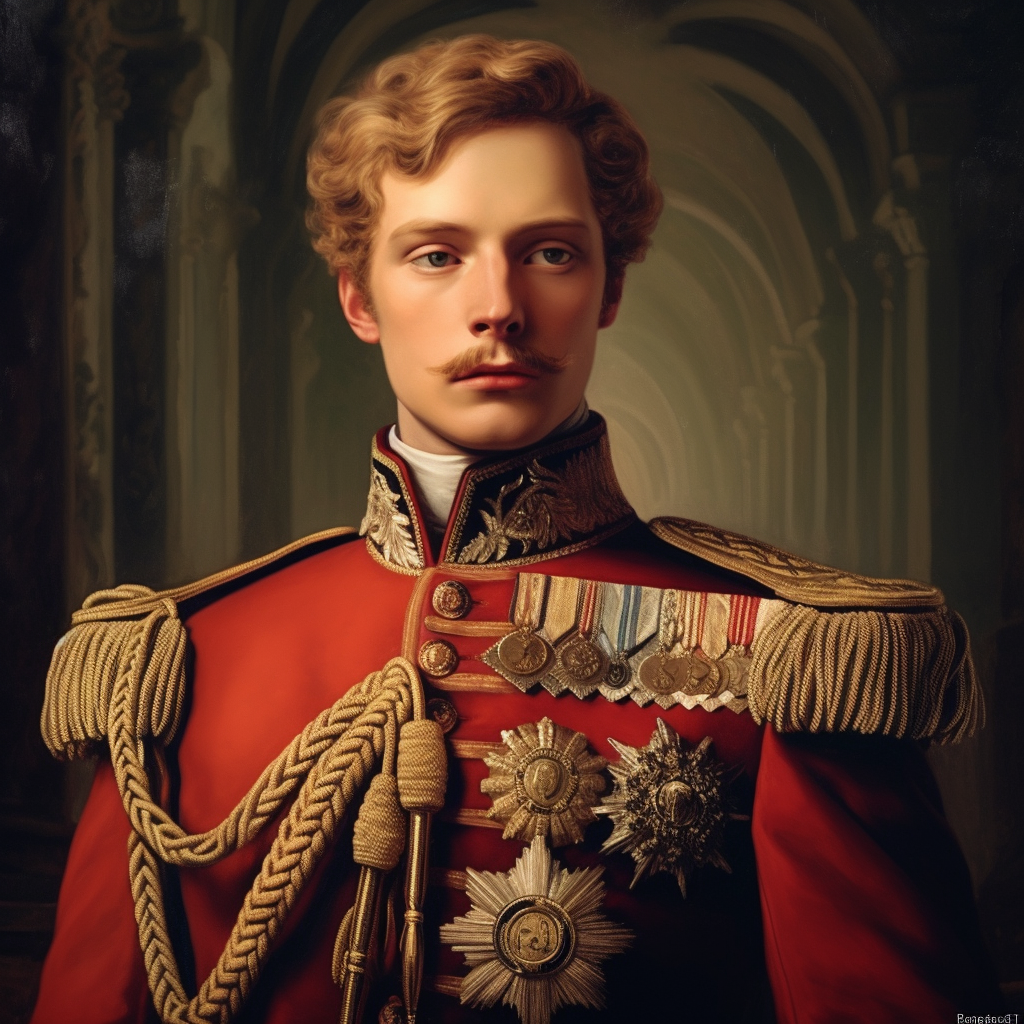
Peter IV Alexandrovich, Emperor of All Russia
Under these circumstances, Emperor Franz Joseph I of Austria decided to choose the lesser of two evils and make peace with Italy.
Against the backdrop of the victories of Carlo Tito II and Carlo Alberto, the creation of the Italian Federation—a union of Sardinia and the Two Sicilies—was proclaimed in Venice. The unification of Italy was met with euphoria among the people; the parliaments of the two kingdoms ratified the agreement, and the Italian Federation received widespread diplomatic recognition. Commissions were established in Venice to draft a constitution and define the structure of the state.
The peace treaty between the Austrian Empire and the Italian Federation was signed on July 23, 1849; under its terms, Austria ceded the entire territory of Lombardy-Venetia to Sardinia, withdrew its troops from the Grand Duchy of Tuscany, and recognized the Italian Federation.
A few days after the peace treaty was signed, on July 28, 1849, Carlo Alberto died. His son, Victor Emmanuel II, became the new king of Sardinia.
The Constitution of the Italian Federation was adopted on December 15, 1849. Under its provisions, executive power rested with the president, a position held alternately by the King of Sardinia and the King of the Two Sicilies, who were elected for a five-year term; while legislative power rested with a bicameral parliament headed by the prime minister, a position often held by the leader of the winning party. A property qualification for voting was introduced; the ministries of foreign affairs, finance, commerce, defense, and the navy were established as common ministries; and both constituent entities of the federation gained full freedom in internal affairs, provided such freedom did not conflict with federal laws. Sicily reaffirmed its autonomy.
The first president of the Italian Federation was chosen by lot, and the King of Sardinia, Victor Emmanuel II, was selected. Carlo Tito II flew into a rage and declared that, as the hero of Italian unification, he was more deserving of the presidency. But Parliament preferred to deal with the young and inexperienced Victor Emmanuel rather than with the King of the Two Sicilies, who was notorious for his authoritarian tendencies, and did not support his claim. Carlo Tito II was forced to accept this, but the army and navy remained under his control. Meanwhile, the territory of the Italian Federation began to expand.
As early as 1848, the Sardinian army occupied the Duchy of Parma, Piacenza, and Gvastalla, as well as the Duchy of Modena and Reggio—all of which had been swept up in the revolution—but was forced to withdraw its troops following the Truce of Salasco. However, in 1849, following successes in Lombardy and Veneto, Sardinian troops reentered the duchies.
On May 17, 1849, Carlo II, Duke of Parma, abdicated the throne, but his son and heir, Carlo III, remained duke for only a week and a half: following referendums, both duchies were incorporated into the Kingdom of Sardinia.
In August 1849, without waiting for the Austrian troops to withdraw, the Italians attacked the Grand Duchy of Tuscany. The Tuscan troops offered no resistance to the Italian forces, welcoming them as the unifiers of Italy. On August 18, Italian troops, still led by Carlo Tito II, entered Florence without a fight, where the townspeople joyfully welcomed the king and his soldiers, with Italian tricolor flags displayed everywhere. Grand Duke Leopold II of Tuscany, who by then had already lost his former popularity, abdicated the throne on August 21, 1849, in favor of his son, Ferdinand IV, and went into exile with his family.
A plebiscite was held in September, and as a result, on September 22, 1849, the Grand Duchy of Tuscany became part of the Kingdom of Sardinia, thus joining the Italian Federation.
After the annexation of Tuscany, Florence was declared the capital of the Italian Federation, and its government agencies moved to the city from Venice.
At that same time, a meeting took place between Victor Emmanuel II and Carlo Tito II. During the meeting, the King of Sardinia proposed to his counterpart that they divide the Papal States between them and thereby unite the two halves of Italy. Carlo Tito II was lukewarm to the idea; as a devout Catholic, he was repelled by the thought of stripping the Pope of his secular power, yet he recognized the necessity of unifying the country by land. Ultimately, during subsequent meetings, it was decided to leave the region of Lazio under the Pope’s authority, to annex the regions of Romagna, Marche, and Umbria to Sardinia, and the Marittima and Campania regions, along with the papal enclaves of Benevento and Pontecorvo, to the Two Sicilies.
Fighting against the Papal States began in November 1849 and proceeded successfully; the Papal troops offered disorganized resistance and retreated, while the common people generally sympathized with the Italian forces. Plebiscites were held in the occupied territories, and as a result, the regions listed above became part of the Italian Federation.
Pope Pius IX, whose authority now extended only to Lazio, reacted with strong disapproval to the loss of territory. Fearing the loss of the last remaining territories of the Papal States, he turned to France for help and was heeded. A French garrison was stationed in Rome, and French President Louis Napoleon Bonaparte effectively declared himself the protector of the Holy See.
Thus, most of Italy was united into a single state, which was a union of two kingdoms. But it was far too cramped for two ambitious spiders to share the same cage, and while Carlo Tito II was firmly resolved to operate within the framework of the Italian Federation, Victor Emmanuel II was prepared to choose a different path.
I think it would be worth mentioning the fate of Austria. The troops withdrawn from Lombardy-Venetia and Tuscany were thrown into the fray against Hungary, but the war there soon reached a stalemate. Hungary decided to cooperate with Russia, and as a result, on December 14, 1849, the Hungarian king elected Friedrich Wilhelm of Hesse-Kassel, the son-in-law of Peter IV Alexandrovich, who was married to his daughter, Elena Petrovna. His power was severely limited by the Constitution, but even with this move, Lajos Kossuth, who had become Prime Minister of Hungary, was unable to draw Russia into the war against Austria; however, Peter IV Alexandrovich offered to mediate the negotiations. Although both Austria and Hungary initially rejected this proposal, the conflict, having reached an impasse, forced them to seek peace.
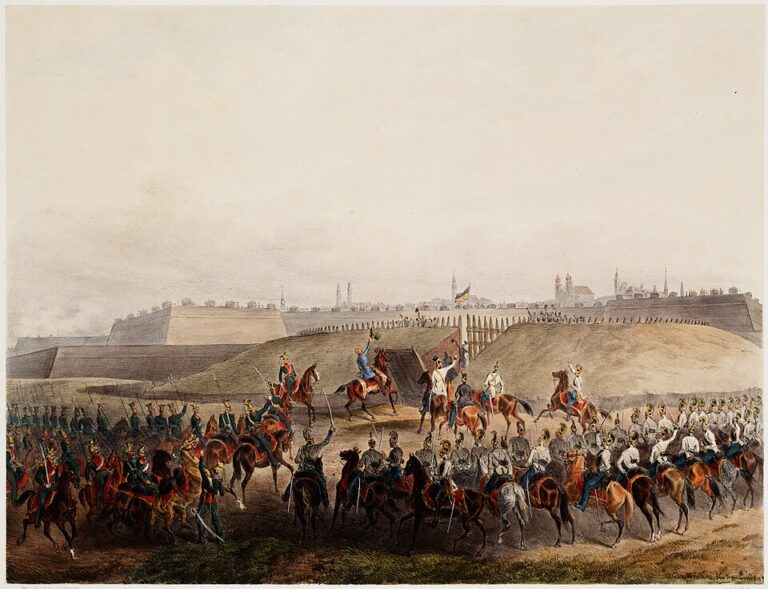 One of the battles of the Hungarian War of Independence
On February 12, 1850, a peace treaty was signed between Austria and Hungary, bringing the Hungarian War of Independence to an end. Under the terms of the treaty, Austria recognized Hungary’s independence, while Hungary recognized the Kingdom of Croatia and Slavonia as part of the Austrian Empire (within the empire, this kingdom was granted significant autonomy). At the same time, a treaty was signed under which Austria ceded Galicia and Bukovina to Russia in exchange for monetary compensation.
Both sides viewed this peace as a temporary respite. Franz Joseph I had not come to terms with the loss of Hungary, while Lajos Kossuth sought to reclaim Croatia, which he considered part of Hungary.