The Unification of Italy in 1849. Part Two. The Completion of Unification

The first parliament of the Italian Federation was elected in early 1850, with a coalition of liberal parties from Sardinia and the Two Sicilies emerging victorious. Since Victor Emmanuel II, King of Sardinia, had been elected president of the Italian Federation the previous year, the prime minister became Carlo Poerio, a Neapolitan who had previously served as minister of education in the Kingdom of the Two Sicilies.
Despite all this, King Charles Tito II of the Two Sicilies sought to maintain control over the army and make it a unified force, rather than separate forces of the two states in the union. He declared that the army would stand guard over democracy, and if democracy were threatened, the army would intervene.
Victor Emmanuel II viewed Charles Titus II as his rival; therefore, by threatening the deputies with a military dictatorship, he secured the passage of a law by parliament that nullified all efforts by the King of the Two Sicilies to create a unified army. Under this law, the armies of the two kingdoms existed separately from one another and were united under a common command only in the event of war; in peacetime, they were even prohibited from being present on the territory of the other member state of the union. Officers who had risen to prominence under Charles II were quietly dismissed from the Sardinian army.
The King of the Two Sicilies acknowledged that he had lost this time, but remained in Florence, the capital of the Italian Federation, where he continued to be an influential figure.
At the end of 1854, elections were held for the second president of the Italian Federation. They were expected to be a mere formality, since, according to the Constitution, this position rotated among the kings of the member states, but Victor Emmanuel II unexpectedly ran for re-election, arguing that the right to at least one re-election did not, in and of itself, contradict the Constitution. He won the election by a narrow margin.
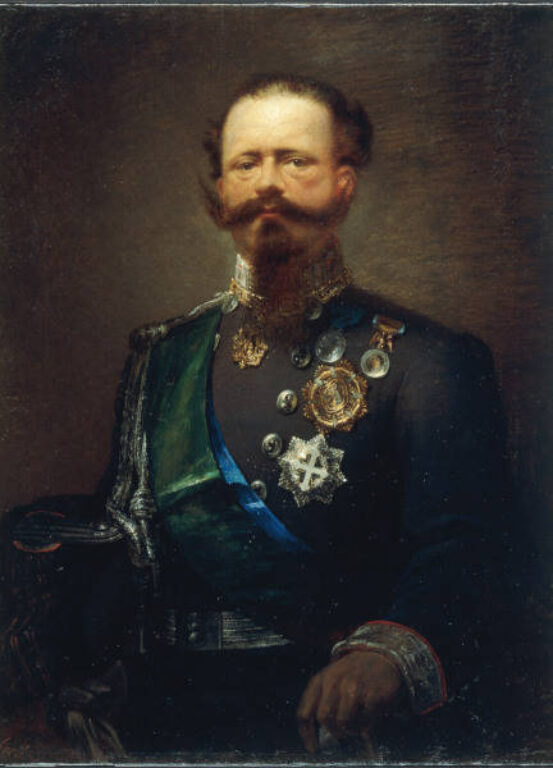 Victor Emmanuel II
Carlo Tito II refused to accept the results and demanded a runoff election. In response, Victor Emmanuel II declared the King of the Two Sicilies a rebel and ordered his arrest. To save himself, Carlo Tito II fled Florence.
However, the Sardinian king’s subsequent actions themselves amounted to a rebellion: On December 1, 1854, he issued a decree abolishing the Italian Federation as a cumbersome and ineffective state, and shortly thereafter, the unified Italian parliament was dissolved.
Carlo Tito II refused to recognize the dissolution of the Italian Federation and called on Victor Emmanuel II to reconsider—or, better yet, to abdicate the throne. In his manifesto, he accused Victor Emmanuel II of betraying the cause of Italian unification and called for the struggle to be resumed.
Meanwhile, Victor Emmanuel II had long been conducting secret negotiations with France, which proved successful: On December 20, 1854, a treaty was signed in Plombières, under which France would send an expeditionary force to aid Sardinia in exchange for Nice and Savoy. Thanks to the reforms of Charles Titus I, the Neapolitan army was far stronger than the Sardinian one, and it was largely due to its contribution that most of Italy was unified in 1849.
In April, plebiscites were held in Nice and Savoy; as a result, Nice became part of France on April 16, 1855, and Savoy on April 23, 1855. Earlier, on March 17 of that same year, the Kingdom of Sardinia was renamed the Kingdom of Italy, and Victor Emmanuel II assumed the title of King of Italy.
Since the Crimean War was avoided in this alternate history, the French Empire took an active part in the Italian War.
On January 5, 1855, the army of General Alfonso Ferrero Lamarmaire and the French corps of Marshal Armand Leroy de Saint-Arnaud (in this alternate history, he did not die of cholera) crossed the Neapolitan border.
French Admiral Alexandre Ferdinand Parseval-Deschênes, to whom Victor Emmanuel II had entrusted the entire Sardinian fleet, defeated the fleet of the Two Sicilies in battle. On April 3, 1855, French and Sardinian troops under the overall command of General Count Louis Achille Barage d’Illiers landed near the port of Marsala and captured it after a battle. As for Giuseppe Garibaldi, he remained in exile in the United States.
The first battle between the French, the Sardinians, and the Neapolitans took place four days later, on April 7, 1855, at Calatafimi. The Neapolitans were led in battle by Prince Satriano, the Duke of Cardinale and Taormina, Baron Davole, and Carlo Filangieri of Sansoste.
Both armies—the Sardinian and the Neapolitan—fought under the Italian tricolor; both aimed to unify Italy once and for all, a goal that resonated with the common people, who were increasingly coming out in favor of the Kingdom of Italy. Many liberal politicians advocated ending the conflict and recognizing Victor Emmanuel II, while conservative politicians had long been opposed to their king and had rallied around his cousin, Prince Ferdinando. Carlo Tito II felt betrayed.
The Battle of Calatafimi ended in defeat for the Neapolitans, after which the French continued their victorious advance. On May 20, Count d’Illiers laid siege to Palermo, the capital of Sicily, but Carlo Filangieri dealt him a blow near the city walls; however, the French quickly advanced from there, capturing a number of settlements. On June 24, a large-scale battle took place at Milazzo, in which the Neapolitans displayed remarkable bravery and resilience, and the French emerged victorious, though at the cost of heavy losses. The Neapolitan commander was killed in the battle.
Soon, nearly all of Sicily was under French control, and on August 30, they captured Palermo, and the last Neapolitan troops on the island surrendered. Following this, on September 19, 1855, French and Sardinian forces landed in Calabria.
Carlo Tito II left Naples a few days after the French and Sardinian invasion and personally took command of the troops. The first battle between them took place on January 26 and ended in a stalemate; the King of the Two Sicilies successfully held back the enemy, and on March 22, he defeated General Lamarmora, who had been left in charge after Marshal de Saint-Arnaud’s departure, but this had no impact whatsoever on the latter’s career.
The battles that took place on April 7 and 27 and May 16 did not produce a clear winner, but Carlo Tito II retreated to Benevento, and both sides spent the summer conducting military maneuvers.
The landing of Count d’Illes, who had been promoted to marshal on August 24, 1854, undermined the morale of the Neapolitans. On September 21, the port of Reggio was captured after a battle, following which the troops of the Kingdom of the Two Sicilies in the south of the country began to lay down their arms en masse and surrender. By October 7, Count d’Illes had taken Naples without a fight.
Upon learning of this, Carlo Tito II, leaving several corps to oppose Marshal de Saint-Arno, hurried to the aid of his capital, but on the way he received news that was devastating to him: the soldiers left behind to fight the French and Sardinians had mutinied, disarmed their officers, and surrendered.
Surrounded on all sides by the enemy, Carlo Tito II retreated to Gaeta, one of the few strongholds that remained loyal to him. Salerno soon fell, followed by Capua, where Prince Ferdinando was arrested along with his family.
The defense of Gaeta lasted from October 28, 1855, to February 13, 1856, after which the city was taken by storm. Carlo Tito II was taken prisoner after refusing to flee; he was escorted to Naples, where he was placed under house arrest in the Royal Palace along with his family.
After consulting with his family and closest associates, Carlo Tito II decided to abdicate. Consequently, on March 20, 1856, the King of the Two Sicilies signed his abdication in favor of his son, Alfonso, Duke of Calabria, who had always fought alongside his father, shoulder to shoulder. Along with his abdication, Charles Titus II issued a manifesto, written by him personally, in which he affirmed that he had always been a sincere patriot of Italy, regretted that the Italian Federation had fallen apart, but forgave Victor Emmanuel II and expressed hope that the Two Sicilies would find a worthy place within a united Italy. That same day, he bid farewell to his family and loved ones, boarded a steamship, and set off into exile.
The new King of the Two Sicilies, Alfonso I, was a fighter by nature and had no intention of giving up. He believed that in the upcoming plebiscites, the people would vote against the proposal, and Victor Emmanuel II would have no choice but to take that into account. But when he learned that the Italian authorities were prepared to rig the plebiscite results if necessary, he fled to the south of the country.
Alfonso I tried to win Britain over to his side, but relations between London and Naples had already soured during his grandfather’s reign, so the British continued to passively observe the events unfolding in Italy.
A plebiscite was held in Sicily and Naples on November 11, 1856, and as a result, the Kingdom of the Two Sicilies became part of the Kingdom of Italy. Interestingly, Napoleon III initially wanted to cede only Sicily to Italy and place Prince Lucien Murat on the Neapolitan throne, but he later changed his mind.
Following the annexation of the Two Sicilies, a guerrilla war broke out in southern Italy, led by none other than Alfonso I. This war did not affect the major cities; the guerrillas operated in rural areas, and it was not until 1860 that the movement was finally suppressed.
Sicily was extremely dissatisfied with the loss of its autonomy, and in 1857 an uprising began. The Sardinians were driven out of the major cities, and King Alfonso I, having quickly grown weary of guerrilla warfare, arrived in Palermo and assumed command of the island’s troops.
The Sicilian Revolt lasted four years and was suppressed only with direct French assistance. Alfonso I fled, and Sicily lost its autonomy.
The last king of the Two Sicilies returned in 1867 and launched another uprising, but it was not as large-scale as before, and the Italians suppressed it on their own a year and a half later. Alfonso I was captured and died a few days later under mysterious circumstances.
In 1866, Prussia, Italy, and Hungary waged war against Austria. After losing its eastern territories, Austria became actively involved in the unification of Germany, competing with Prussia. Austrian Emperor Franz Joseph I was also president of the German Confederation and wished to transform it from a confederation into a federation.
Napoleon III was extremely annoyed that Italy had entered the war without notifying Paris, a sentiment he expressed to the Italian ambassador. The ambassador replied that Italy was an independent state and had the right not to notify anyone of its actions, which puzzled the French emperor, who considered Italy to be his puppet.
During the Seven Weeks’ War, Italy performed worse than its allies. It managed to capture Trento, advanced to Trieste, and even landed troops in Austrian Dalmatia, but during the war it failed to capture either Zadar or Kotor, even though Austria’s best forces had been committed against the Prussians and Hungarians. Only the city of Split was captured, and on July 20, 1866, the Italian fleet engaged the Austrian fleet, commanded by Rear Admiral Wilhelm von Tegethoff, off the island of Lissa, which ended in a complete rout of the Italian fleet; only the rapid conclusion of the war prevented the Austrians from driving the Italians out of Dalmatia. It is also worth mentioning that this was the first battle between armored squadrons.
Admiral Count Carlo Pellione di Persano, commander of the Italian fleet at the Battle of Lissa, was brought to trial on charges of treason. Although this charge was dropped, the court found him guilty of failing to comply with the ministry’s orders, mismanagement, and inexcusable delay; he was stripped of his rank and ordered to pay court costs.
A peace treaty between the parties was signed in Prague on August 23, 1866, and under its terms, Hungary regained Croatia and Slavonia, while Italy annexed South Tyrol, Austrian Primorska, and Austrian Dalmatia. As far as Prussia was concerned, the treaty was virtually identical to the Treaty of Vienna.
Since Austria had lost its access to the sea under the Treaty of Prague, its fleet was to be divided between Italy and Hungary, but Rear Admiral Wilhelm von Tegethoff, who had invested considerable effort in developing the Austrian navy, had no intention of letting it fall into enemy hands and sank it. Franz Joseph I approved his actions.
The defeat in the Seven Weeks’ War had serious consequences for the Austrian Empire. The revolutions in Austria and Bohemia in 1848 were suppressed, the 1849 Constitution was repealed in 1851, and the Austrian Empire, which had previously been a federal state, became a unitary state with absolute monarchical power and a high level of bureaucracy. The empire endured this situation for quite some time, but the Czech national movement continued to grow, and Franz Joseph I began, around 1861, to secretly seek a way to reach a compromise with it.
Defeat in the war severely weakened the empire, and Franz Joseph I, fearing an uprising, made concessions to the Czechs; on March 15, 1867, together with František Ladislav Rieger (a renowned Czech politician and economist, one of the architects of the Czech National Revival, the chief ideologist of Austro-Slavism, and a doctor of law), signed the Austro-Bohemian Compromise, which transformed the Habsburgs’ unitary absolute monarchy into a dualistic constitutional state—both in terms of territorial-administrative structure and legal framework. The empire was divided into two parts—the Austrian and the Bohemian—each of which was granted full autonomy in internal affairs. Both parts were to have their own parliament, an elected and independent government, and their own system of public administration, courts, and justice. In addition to Bohemia, the Kingdom of Bohemia included Moravia and Austrian Silesia; all remaining territory of the empire formed the Austrian part (“kingdoms and lands represented in the Reichsrat”: Upper and Lower Austria, Styria, Carinthia, Tyrol, Salzburg, Vorarlberg, and Carniola). In Austro-Bohemia, there were three common ministries: Foreign Affairs, Finance, and War; and on June 8, 1867, in Prague, Franz Joseph I was crowned King of Bohemia.
Austro-Bohemia did not become hostile toward Germany, nor did it become its ally; instead, it maintained a policy of neutrality in foreign affairs. In the second half of the 19th century, the country entered a period of rapid economic development.
Franz Joseph I lived a long life. He died in 1916 and was succeeded by his nephew, Franz Ferdinand.
The unification of Italy was completed in 1870. As early as March 27, 1861, the Italian Parliament, which was seated in Florence, declared Rome the capital of the Kingdom of Italy, but the government could not move there, as the city remained under the authority of the Pope, a situation guaranteed by the French garrison stationed there since 1849.
But with the outbreak of the Franco-Prussian War, Napoleon III withdrew his troops from the Papal States in August 1870. However, Victor Emmanuel II still feared that the occupation of Rome would provoke a war between France and Italy, and it was only after the Battle of Sedan, when the French army led by the emperor was taken prisoner, that it became clear that France would have neither the strength nor the desire to defend the Pope’s interests.
The Italian army, under the command of General Raffaele Alessandro Cadorna, crossed the border of the Papal States on September 11, 1870. Capturing cities without resistance, General Cadorna approached Rome on September 19. Earlier, Victor Emmanuel II had made a peaceful overture, offering Pope Pius IX permission to bring troops into the Eternal City, but the pontiff refused.
Rome was defended by General Hermann Kanzler, commander of the Swiss Guard, and the Papal Zouaves. After a bombardment on September 20, Sardinian troops stormed the city through a breach in the wall and by the following day had taken full control of Rome. A plebiscite was held, and as a result, the Papal States became part of Italy on October 2, 1870, and on February 3 of the following year, the government moved to Rome. Victor Emmanuel II solemnly declared the end of the Risorgimento.
The Pope refused to recognize the occupation of the Papal States and declared himself a “prisoner of the Vatican.” On May 13, 1871, the Italian government passed the “Law of Guarantees,” under which the Vatican palaces were transferred to the Pope’s ownership and he was paid annual compensation for the loss of the Papal States.
The House of Savoy, which became the royal dynasty of Italy, went on to claim several more crowns. For example, while Victor Emmanuel II was still alive, his son, Amadeus, Duke of Aosta, was elected King of Spain by the Cortes on November 16, 1870. Unlike in Russia, General Grand of Spain Juan Prim y Pratos, Marquis of Los Castillos, Count of Reus and Viscount of Bruch, survived the assassination attempt and led the kingdom’s government for fourteen years. During this time, he restored order to the country, won the Carlist War, and the nation enjoyed stability under his rule. As for Amadeo I, he died in 1890 and was succeeded by his son, Manuel Filibert.
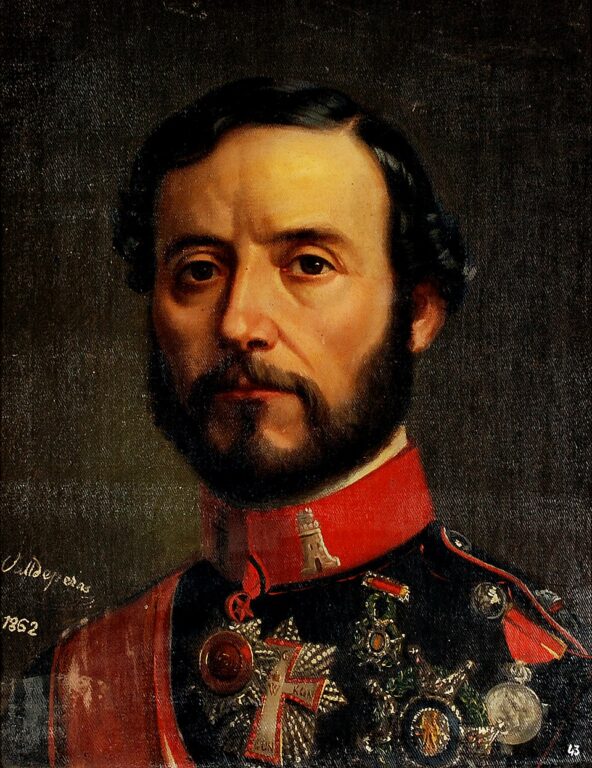 General Juan Prim y Pratos
In 1912, the government of Albania—which had gained independence that year—invited Tommaso, Duke of Genoa and cousin of King Umberto I of Italy, to ascend the throne. He accepted the offer and was proclaimed King Thomas I of Albania.
Finally, let’s touch on the fate of the Russian Empire. Peter IV Alexandrovich abolished serfdom; under his reign, the laws were codified and financial reforms were implemented. He pushed through these reforms despite resistance from the conservative opposition, but he himself later—largely under the influence of the Spring of Nations—departed from the liberal path, and the final years of his reign were marked by reactionary policies and went down in history as the “Gloomy Twelve Years.” After his death, he was succeeded by his son, Paul II Petrovich, who, upon ascending the throne, delivered his famous speech to the State Council, stating that it was better to adopt a constitution from above than to have it imposed from below. Under his reign, the Constitution was adopted, the emperor’s power was limited, and a bicameral parliament was convened. The Synod was abolished as a state institution, and the office of patriarch was restored. Metropolitan Filaret of Moscow and Kolomna was elected the new Patriarch of Moscow and All Russia.
But his most ambitious project—the plan for a tripartite state comprising Russia, Poland, and Finland, which was inspired by the Austro-Bohemian Compromise and, in some cases, directly modeled after it—he completed shortly before his death. Poland and Finland were granted full autonomy in internal affairs, and four ministries were declared common to the entire state: Foreign Affairs, Finance, War, and the Navy (though, as you know, the Kingdom of Poland did not have access to the sea at that time). Poland and Finland had their own legislation, their own parliament, and their own government, while Galicia became part of the former.