The History of Rus' After Its Adoption of Western Christianity. Part 56. England Under the Courtenay Dynasty. Part One

As has been mentioned more than once in previous chapters, King Henry VIII of England died on August 7, 1511, in the depths of the English Channel when his ship sank.
The death of the young king, who was twenty years old, triggered a succession crisis, as he was the last male in the Tudor dynasty. Both of Henry VIII’s sisters, Margaret and Elizabeth (Mary Tudor, the daughter of Henry VII, had died in infancy in this alternate history), were married to foreign kings, and the Privy Council offered the crown to Catherine, the only surviving daughter of Edward IV at that time, but she declined in favor of her son, Henry de Courtenay, Earl of Devon, who was elected King of England on August 21, 1511. He was crowned at Westminster Abbey on September 7 of that same year.
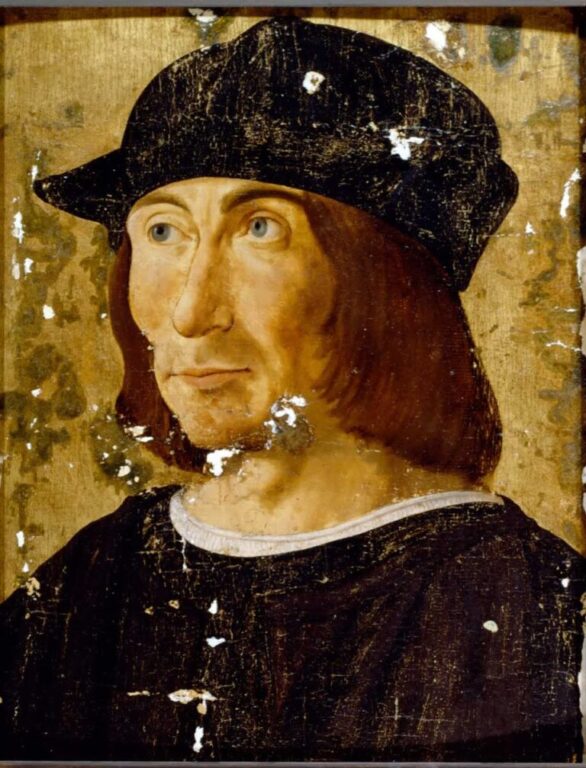
King Henry IX of England
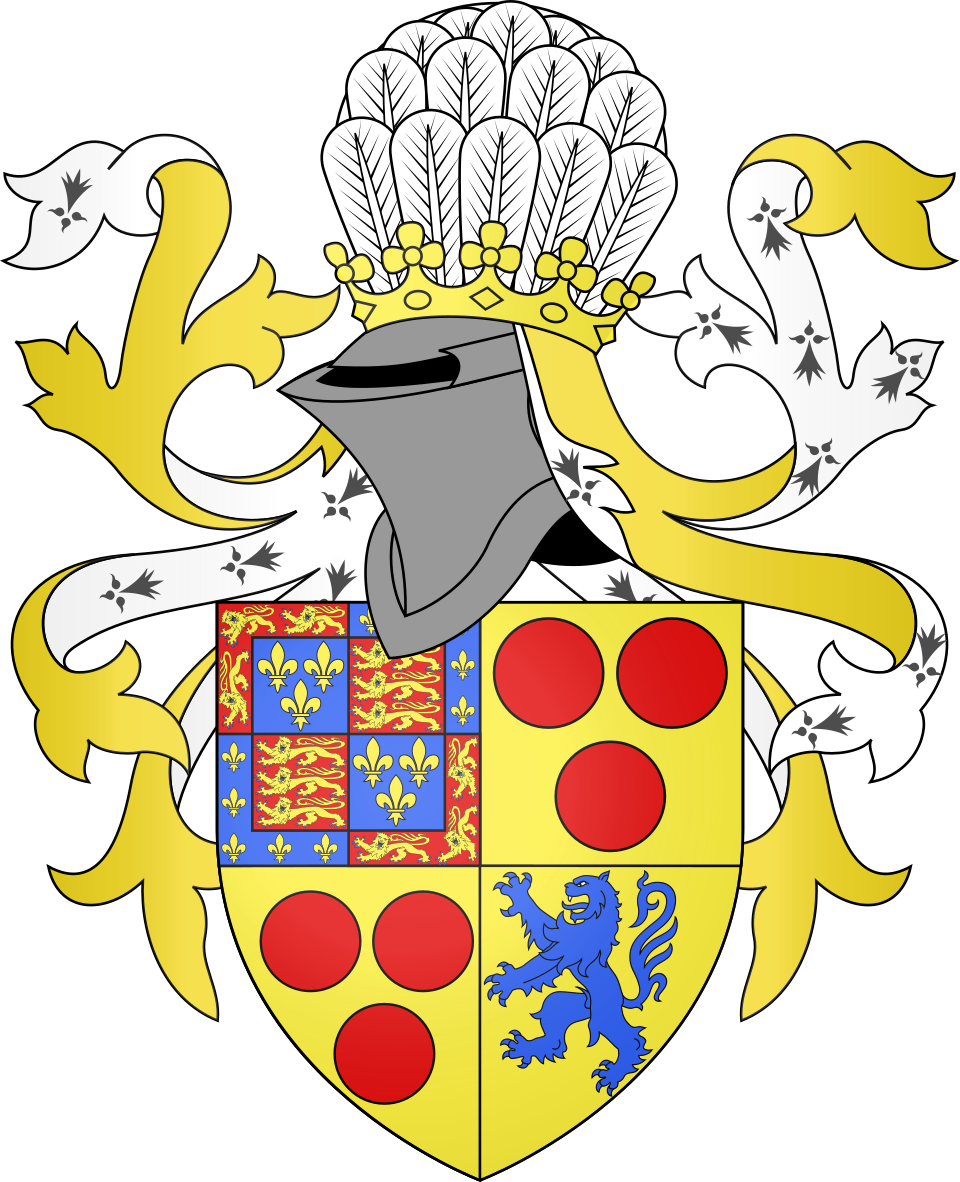 Coat of Arms of Henry de Courtenay
Henry IX was about 15 years old at the time. Thomas Wolsey, confessor to King Henry VII of England and an influential figure during previous reigns, encouraged the new king’s passion for entertainment, gradually consolidating all the reins of power in his own hands. In 1514, he became Archbishop of York and Primate of England, and in 1515, he was appointed cardinal-priest with the title of the Church of Santa Cecilia and Lord Chancellor.
During his 12 years as Lord Chancellor, Cardinal Wolsey amassed enormous power, which brought him into conflict with most of the aristocracy, who resented the cleric’s autocratic rule. But as long as he remained in the king’s favor, he enjoyed considerable freedom in domestic affairs and was kept informed of every aspect of them. Henry IX trusted him and granted Cardinal Wolsey complete freedom of action in governing the country.
Together with John Heron, Treasurer of the House of Commons, Cardinal Wolsey carried out tax reform, established a court for the poor that charged no fees, and attempted to reform the Church of England, but he encountered resistance from William Warham, Archbishop of Canterbury and Primate of All England, as a result of which he was only able, using his authority as papal legate, to dissolve 30 monasteries where monastic life had virtually ceased.
Cardinal Wolsey was one of the wealthiest men in England and was renowned as a generous patron of the arts; he supported education. For example, he founded a grammar school in Ipswich, and Cardinal’s College was established on the site of the defunct St. Frideswide Abbey.
In foreign policy, Cardinal Wolsey advocated peace and an alliance with Spain. After the death of Henry VIII, a peace treaty was concluded with France, and England withdrew from the War of the Holy League.
During this period, Henry IX rarely intervened in politics. For instance, he took an interest in overseas territories and, for this reason, convened Parliament to discuss future funding. As a result, funding was secured, and an expedition led by Sebastian Cabot set sail. In 1514, it landed at the mouth of the Orinoco River and established the first settlement.
The colonists learned from the local residents that to the southeast lay a powerful and very wealthy country where there was so much gold that they paved the streets with it and used it to cover the roofs of their houses.
In London, these reports were taken seriously. A military expedition was organized, led by Henry Bourchier, Earl of Essex.
The guides led the Englishmen into the Inca Empire, Tawantinsuyu. The Great Inca, Huayna Capac, welcomed them warmly, and the Earl of Essex initially intended to act peacefully, recognizing the Incas’ numerical superiority.
The Great Inca granted the small contingent of English warriors a vast field where they set up a tent camp; the knights were housed in the palace of one of the nobles, while the Earl of Essex himself and several of his entourage accepted Wayne Kapak’s offer and took up residence in the Great Inca’s palace.
At first, things were going pretty well. Interpreters appeared on both sides, and the Earl of Essex established trade with the Incas and secured permission for missionary work. But everything was disrupted by a smallpox epidemic brought by the English, to which the Incas had no immunity.
In July 1516, Wyne Capac and nearly all of his children died of smallpox. It must be acknowledged, however, that the Earl of Essex did everything in his power to save his life and the lives of his family.
The new Great Inca was Túpac Huálpa, the son of Wayna Kapak, who had escaped illness. He was a young man of about fifteen who soon fell under the influence of the Earl of Essex.
A smallpox epidemic sparked an uprising by dissidents, led by the priesthood and the aristocracy. Despite their small numbers, the British had the advantage of cannons and firearms. They captured Tupac Walpa and drove the Inca forces out of Cuzco, which became a stronghold for the English in their conquest of Tawantinsuyu—a campaign that stretched on for many years, with the last pockets of resistance suppressed only 16 years later.
On December 8, 1517, Túpac Huálpa converted to Christianity, taking the name Henry, and swore an oath of allegiance to the King of England, pledging to rule as the Great Inca on his behalf and in his interests.
At the same time, he was completely removed from power, spending virtually the rest of his days under house arrest in his vast palace complex. The Earl of Essex, who had been appointed Captain-General of Cuzco, ruled in his stead. He participated only in the initial campaigns against the Incas; thereafter, he exercised overall command from the capital. Count Essex died in 1540 while still in office, remaining the ruler of Tawantinsuyu until the end of his life.
The conquest of the Incas was brutal; the Inca priesthood and aristocracy were virtually wiped out. The peasants were bound to the land, which was divided among the conquerors; one of the largest landowners was, as one might expect, the Earl of Essex.
The great Inca Túpac Huálpa, also known as Heinrich, died in 1532. His younger brother, Manko Inca Yupanki, was the heir to the throne. He, along with his older brother, converted to Christianity at an early age and was subsequently sent to London.
Pavel—as Manko Inka Yupanki was now called—was warmly welcomed by Henry IX and received a brilliant European education. Paul learned two languages, English and Latin, attended balls, and soon was little different from an ordinary European prince, except perhaps in appearance. During his stay in England, he married Maria Hastings, the sister of George Hastings, Earl of Huntingdon.
When news of the death of the Great Inca Heinrich reached London, Pavel expressed a desire to return to Cusco. Before his departure, Heinrich IX knighted him into the Order of the Garter, and the Great Inca swore an oath of allegiance to him.
Pavel returned to Taowantinsuyu as, in effect, a foreigner. He had practically forgotten his native language, dressed in European style, spoke English, and relied on military officers and officials sent from London to run his administration.
Later, starting around the mid-17th century, the Great Incas began to rely on the Creoles, who had de facto replaced the old aristocracy. Wealthy landowners eagerly formed marital alliances with the family of the Great Inca. Acting on behalf of England, Tawantinsuyu consolidated its power over its territories and expanded southward, occupying what are now the Republics of Peru, Chile, Bolivia, and parts of Argentina.
The Great Inca was considered to be of higher rank than all of England’s titled aristocrats, including princes, but ranked below the king. He himself could not confer noble titles.
The more England weakened, the more freely the Great Incas acted, and by the end of the 18th century, they were already limited to paying tribute. Largely because of this, Tawantinsuyu became one of England’s first colonies to declare independence: when Napoleon Bonaparte conquered Great Britain, the Great Inca Henry IV declared his country’s independence and assumed the title of emperor.
The territories north of Tawantinsuyu, stretching from the Pacific Ocean in the west to the mouth of the Orinoco River, formed two provinces, New Yorkshire and New Cornwall, which in 1542 became the Viceroyalty of New Wales, with its capital in Bacat.
Almost at the same time as the expedition to Tawantinsuyu, the ever-present British learned of the Aztec empire. There, they were taken for descendants of the god Quetzalcoatl, which was supposed to make their task easier.
The military expedition was led by Thomas Howard, Earl of Surrey, who later inherited the title of Duke of Norfolk from his father. The English force was not very large—two thousand infantry, 400 cavalry, and eleven cannons.
However, they were aided by the fragmentation of the peoples inhabiting the Aztec empire, their mutual hatred, their technological backwardness, and their superstitious fear.
The rulers of the cities of Tescoco and Tlacopan, who had turned against their own people, were overthrown, and the Earl of Surrey installed his allies in their places: Iztlilshocitl II in Tescoco and Totokiuztl in Tlacopan. After the conquest of the Aztec Empire, they were baptized (Iztlilxochitl II took the name Thomas, and Totokiuztli took the name Ignatius), and in recognition of their loyalty, they retained their domains and were granted the titles of duke.
The descendants of Thomas and Ignatius, who founded the influential Howard and Surrey families in the viceroyalty, ruled the feudal duchies of Tescoco and Tlacopan for nearly three centuries and even for several years after the independence of Anauac.
In 1521, the Viceroyalty of New England was established, with Mexico—built on the ruins of Tenochtitlan—as its capital. The Earl of Surrey, who became the Duke of Norfolk in 1524, continued the conquest of Mesoarcadia, bringing—as he himself believed—the light of civilization and Christianity to the wild lands. From time to time, he showed mercy; for example, he pardoned Tangaksuan II, the kazonchi (ruler) of the large conquered state of Purepecha, when the latter expressed a desire to convert to Christianity. Baptized with the name Francis, Tangaksuan II was sent to London and found a place for himself at the court of Henry IX, who treated him fairly well on the whole.
The English settled a number of islands in the Caribbean, including Cuba and Jamaica, as well as the Flowers Peninsula (present-day Florida). All of these territories became part of the Viceroyalty of New England.
The vast quantities of gold and precious metals flowing in from the colonies enabled Henry IX to become one of the wealthiest monarchs in Europe and to become independent of tax revenue; consequently, he ceased to convene Parliament and established an absolute monarchy.
Cardinal Wolsey’s downfall occurred in 1527 in connection with the so-called “Montague Plot.” Henry IX received a report that Cardinal Wolsey and Baron Montague, Henry Pole, intended to depose him from the throne, with the baron himself setting his sights on the throne. The suspects were arrested, but credit must be given to Henry IX—upon discovering that there was no conspiracy, he released them.
However, this did not go unnoticed by Cardinal Wolsey: the king was annoyed that, behind his back, the cardinal was being called “alter rex,” “the other king.” As a result, on October 17, 1527, Cardinal Wolsey was dismissed from his post as Lord Chancellor and ordered to leave immediately for his diocese, to which the cardinal complied. He died in York on November 29, 1530.
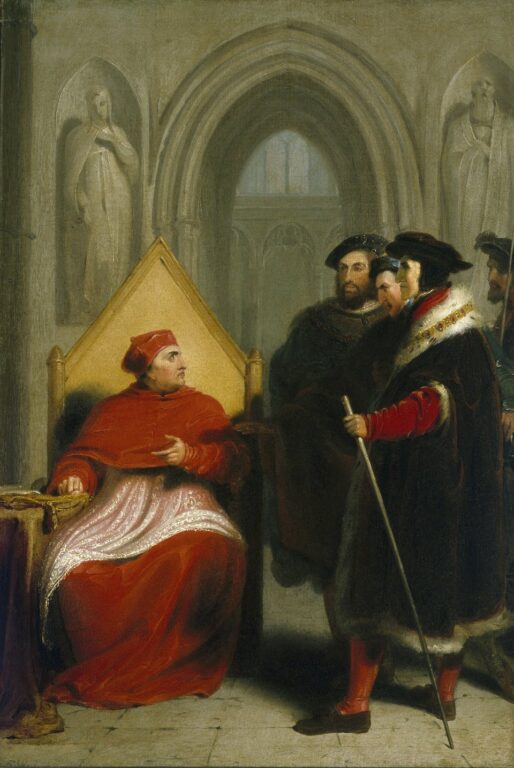
Cardinal Walsh Learns of His Resignation
Henry IX assumed full power in his country. Thomas More became his closest aide, having been appointed the new Lord Chancellor.
Under Henry IX, enclosure gained significant momentum. In the English Reformation, this process led to the impoverishment of peasants and their migration to the cities, which marked an important step toward capitalism. In the New World, peasants who had lost their land mainly migrated to the English colonies, while the cities remained administrative centers rather than industrial ones.
Henry IX responded in a peculiar way to the growing number of destitute people in his country: he enacted a law banning vagrancy, under which anyone who wandered about idly and was without work was to be brought before a court and executed. By the most conservative estimates, approximately 14,000 people were hanged for vagrancy during Henry IX’s entire reign.
On June 18, 1542, the Irish Parliament passed the “Act Declaring That the King of England, His Heirs, and Successors Shall Be Kings of Ireland,” which established the title “King of Ireland” for the monarchs of England and their successors, whereas previous monarchs had ruled the country as Lords of Ireland.
Pope Paul III was not pleased with this act—until then, Ireland had been considered a papal fief under the secular authority of the King of England, who paid the pope an annual tribute collected from the nobility and people of Ireland. Now, however, Rome had lost this source of income; yet, against the backdrop of the Reformation, the pontiff decided it was better to accept the loss than to jeopardize relations with a Catholic monarch.
Pope Paul III died on November 10, 1549, and the conclave began 19 days later. Since there were four other cardinals from England in this conclave, Cardinal Deacon Reginald Pole, with the titular church of Santa Maria-in-Cosmedin, managed to secure the necessary number of votes and, on December 5, 1549, was elected the new Pope, taking the name Adrian VII.
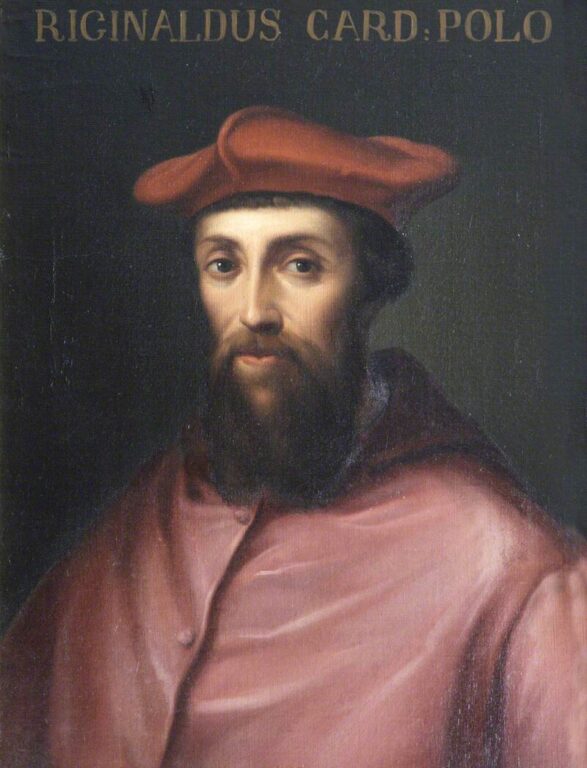
Pope Adrian VII
In 1543, the Reformation took place in Scotland, and the country broke away from Rome. The Pope excommunicated King Robert IV Stuart and recognized his niece, the Catholic Mary Stuart, as the rightful queen of Scotland.
Robert IV banished the widowed Queen Marie de Guise and her daughter Mary Stuart from the country, believing that they posed no threat to him. Marie de Guise returned to France and arranged for her daughter to marry the Dauphin Francis, despite all of Henry IX’s efforts to betroth her to his grandson.
The prospect of a Franco-Scottish union alarmed Henry IX. Anticipating the French, he invaded Scotland in 1554, justifying his actions as a defense of Mary Stuart’s rights, while pursuing his own complex strategy.
Cardinal-Priest Nicholas Heath, Archbishop of York and Primate of England, with the title of the Church of Santa Prassede, and Lord Chancellor of England, remained in charge of the country in the king’s absence.
Although Henry IX was backed by a significant portion of the Scottish aristocracy, which provided military support, the English invasion ended in failure. At the Battle of Loder, the English king was taken prisoner; the English were subsequently driven out of the country, and the aristocrats reached a compromise with Robert IV.
Robert IV demanded a huge ransom for Henry IX, which England did not pay until 1561. After that, the English king was released and allowed to return home.
During his long captivity, the king accused Cardinal Heath and dismissed him from the office of Lord Chancellor. The clergyman left London for Rome, where he died in 1578, while still holding the see of York.
Henry IX, for his part, did not give up his attempts to conquer Scotland. Mary Stuart was widowed in 1560, leaving no heirs, and Henry IX managed to arrange her marriage to his grandson: In 1563, Mary Stuart married William, Prince of Wales, and he was proclaimed King William II of Scotland, co-ruler with his wife. The king himself died in 1567.
Henry IX reigned for 56 years, 3 months, and 8 days—longer than Henry III, who had previously held the record for the longest reign in England at 56 years and 28 days. He was succeeded by his grandson, William III.
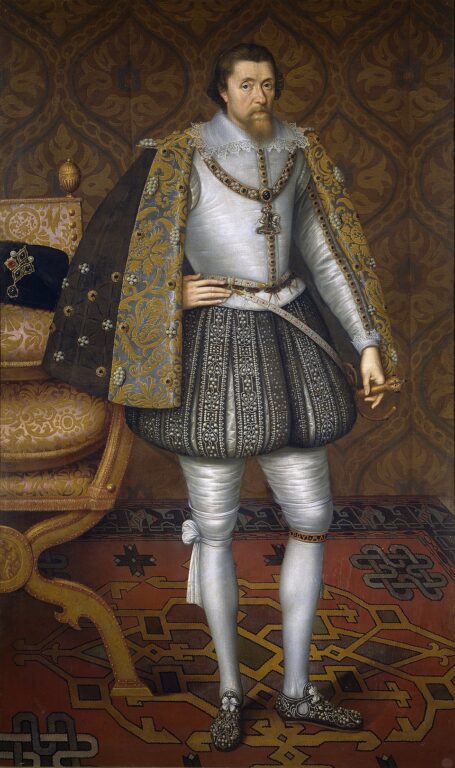
King William III of England
The reign of William III is considered one of the most disastrous in English history. During his reign, the country plunged into a severe financial crisis caused by the price revolution, gold from the New World and taxes were spent on maintaining the court, the army, and aid to German Catholics, and England’s internal weakness soon became a weakness in its foreign policy.
William III never gave up on his ambition to subjugate Scotland. In 1570, Robert IV died, leaving the crown to his two-year-old son, Robert V. That same year, William III declared his intention to defend the claim to the throne of his wife, Mary Stuart, and under this pretext invaded Scotland.
Initially, the English king commanded the troops himself, but after a severe defeat inflicted on Archibald Campbell, Earl of Argyll, at the Battle of Langside, he handed over command to Thomas Howard, Duke of Norfolk, and he himself soon returned to London.
Catholic aristocrats who had been exiled from the country also provided assistance to the English, such as Earl Huntly, George Gordon, or Earl Atholl, John Stewart, who were able to stir up a rebellion among the small number of Scottish Catholics who were oppressed by the authorities. However, these units were more of a hindrance to the English with their uncoordinated actions than a help.
The war quickly reached a stalemate, as neither country had the strength to defeat the other. The war lasted more than twenty years, and the only territory England was able to hold onto was the New Edinburgh Fortress at the southern tip of the Amazon region.
William III’s final attempt to turn the tide of the war was the assassination of Robert V, which was carried out on the second attempt. Late one night in 1591, his agent, Walter Raleigh, climbed a homemade rope ladder into Robert V’s bedroom, but not finding him there, hid in a closet when he heard footsteps in the hallway. The king entered the bedroom alone, and Raleigh, seizing the moment, leaped out of the closet and stabbed him in the back with a dagger.
Hearing the screams, a guard rushed into the bedroom. Raley, leaving the bloodied body behind, leaped out the window, quickly climbed down, and managed to disappear into the night.
Robert V died the following morning from his wounds, and his only child, Robert VI—who was not yet a year old—became King of Scotland. His grandfather, James Hamilton, Duke of Albany and Earl of Arran, became regent on his behalf.
The Duke of Norfolk decided to take advantage of the confusion and, in a desperate attempt to capture Edinburgh, but the Duke of Albany defeated him at Lindithgow, forcing him to flee the country.
After that, William III decided to make peace and sent his representative, Edward Somerset, Earl of Worcester, to Berwick Castle. In 1592, the Earl of Worcester and the Duke of Albany signed a peace treaty under which Mary Stuart and William III renounced, on behalf of themselves and their descendants, their claims to the Scottish throne, just as Robert VI renounced, on behalf of himself and his descendants, any claim to the English throne, and the fortress of New Edinburgh was recognized as English territory.
It was here that William III committed what was perhaps the most despicable act of his life. At the request of the Duke of Albany, the English king handed over Walter Raleigh—who had served him faithfully—to the Scots, who executed him by hanging, drawing, and quartering.
In 1580, King-Cardinal Henrique I of Avis of Portugal died, and power in the country was assumed by a Council of Five Regents consisting of Jorge de Almeida, Archbishop of Lisbon and Primate of Portugal, the Chief Chamberlain, Senhor São João da Fosca, Francisco de Sa de Menezes, the head of the Palace Court, Senhor Averracha João Telo de Menezes, Don João de Mascarenhas, and Don Diogo Lopes de Souza. Their goal was to elect a new king.
Almost all members of the Council of the Five Regents (with the exception of Dom João Telo de Menezes, who supported the candidacy of the Duchess of Braganza, Infanta Catherine, the granddaughter of King Manuel I of Portugal and the daughter of the Duke of Guimarães, Infanta Duarte) cast their votes for King Philip II of Spain, who was elected King of Portugal and the Algarve on May 17, 1580.
This choice was due to the fact that, through his mother, Infanta Isabella, Philip II was the grandson of Manuel I. Foreign policy factors also played a role—Philip II had conquered Algiers and defeated the pirates, securing safe passage through the western Mediterranean; preparations were underway for a war against the Hafsid Caliphate, and at that time, the Portuguese were in a tense relationship with the Sultanate of Fez.
However, on July 24, 1580, in the city of Santarém, Dom António, the illegitimate son of the Duke of Beja, Infante Luís—the second son of Manuel I—staged a rebellion and was proclaimed by the townspeople as the new king of Portugal, the legitimate successor to his uncle. A few days later, he made a triumphant entry into Lisbon, forcing the Council of Five Regents to flee.
Philip II was dissatisfied with this turn of events, so he sent an army to Portugal under the command of the Duke of Alba, Fernando Álvarez de Toledo, and-Pimentel, who defeated António I on August 25, 1580, at Alcântara, forcing him to flee to Porto.
The Duke of Alba captured Lisbon without a fight, and on September 7, 1580, the Cortes swore allegiance to Philip II, on the condition that the Kingdom of Portugal and its overseas territories would not become part of the Spanish Empire.
António I barricaded himself in Porto and had no intention of surrendering. Drawing on centuries-old ties, he appealed to William III for help; William saw this as an opportunity to turn his fortunes around somewhat amid his setbacks in Scotland.
In November 1580, an English landing force commanded by Charles Howard, Baron Howard of Effingham, landed at Porto. The Duke of Alba withdrew from the city to regroup, but a few days later he died suddenly of acute food poisoning. The Spanish forces were led by Sancho d’Ávila y Daza, who was defeated by Baron Howard in two battles and driven out of Portugal, soon dying from wounds sustained in battle.
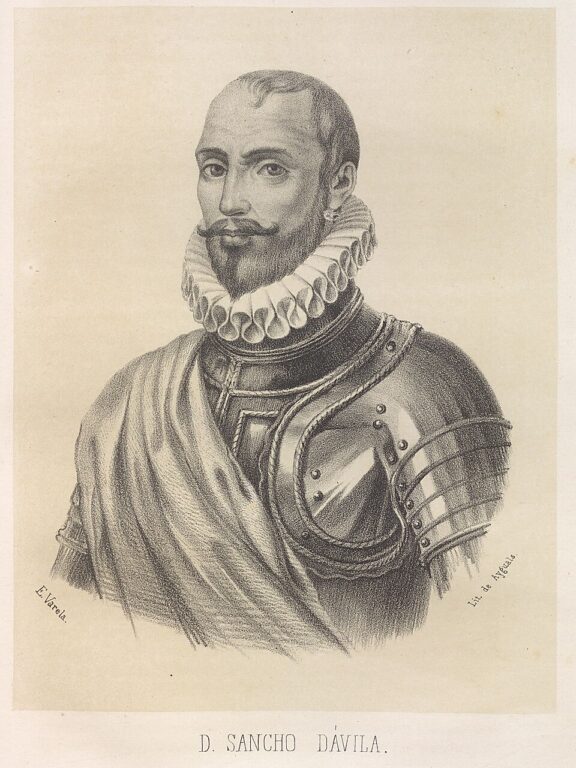
Sancho d’Ávila y Daza
In early 1581, Philip II organized a new invasion, but it was repelled, and the Spanish fleet, under the command of Admiral Álvaro de Bosana, Marquis of Santa Cruz de Mudela, was defeated by the English, led by Admiral Edward Clinton, Earl of Lincoln, off La Coruña, largely due to its large and unwieldy ships; after that, Philip II gave up on Portugal and turned his attention to more important matters.
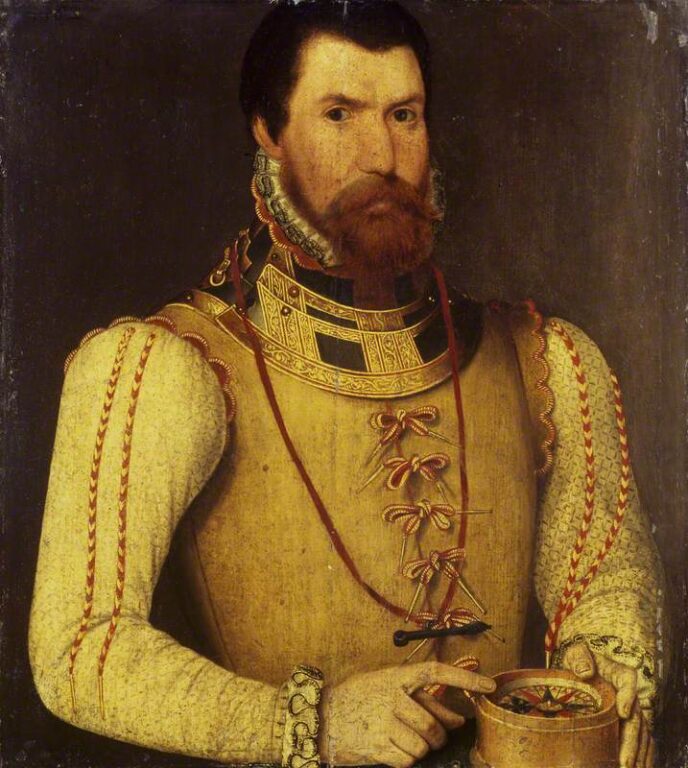 Admiral Count Lincoln Edward Clinton
António I was already celebrating his victory and preparing to rid himself of the English by ceding a couple of colonies to them, but William III had his own plans for Portugal and had no intention of withdrawing his troops from the country. On his orders, Baron Howard arrested the king on February 19, 1581, and handed him over to the Inquisition. The Inquisition ruled that António I, as the son of a Jewish woman, could not be king and must abdicate the throne.
But António I refused to abdicate, though his opinion no longer mattered. The Cortes, under the control of Baron Howard, deposed him and offered the crown to William III. He accepted, and on February 28, 1581, he was proclaimed King of Portugal and the Algarve as William I. Formally, he had no claim to the Portuguese throne, but these were retroactively confirmed by the marriage of the Infanta Catherine Cherubina of Braganza to Prince Francis of Wales, to whom his father had granted the title of Prince of the Algarve.
A few days after his deposition, António I was secretly murdered along with his son, Manuel, who was also born out of wedlock.
William III never actually visited Portugal, and the Anglo-Portuguese Union, with some interruptions, lasted almost until the mid-19th century.
Baron Howard, to whom the king granted the title of Count of Porto on behalf of the Portuguese crown, became the first viceroy of Portugal, and in 1596, the Earl of Nottingham. Upon settling in Lisbon, Baron Howard took up residence in the Royal Palace.
William III earned the infamous reputation of being a persecutor of William Shakespeare when he ordered the great playwright to be imprisoned in the Tower of London for his historical play *Richard II*. Influential friends helped Shakespeare escape. Shakespeare found a warm welcome in Scotland, where King Robert VI covered all his expenses. In Edinburgh, the great writer took charge of the royal theater troupe and continued his work.
In 1622, Susenyos, the Nguse Negeset of Abyssinia, who was pursuing a consistent policy of introducing Catholicism, faced strong opposition led by his son, Fasiledes. Through the Latin Patriarch of Abyssinia, the Portuguese Afonso Mendes, the Nguse Negest appealed for help to the King of England, Portugal, and Ireland. William III, wishing to send his son—who had discredited himself by participating in a conspiracy against him—as far away as possible, dispatched to Abyssinia the Prince of Wales and Infante of the Algarve, Francis (Francisco), at the head of an army of 13,000, recruited mostly from among the Portuguese. To his inner circle, William III expressed the hope that his son would never return.
Prince Francis did not know Portuguese and had no intention of learning it, so he communicated with the few Portuguese officers through an interpreter, and among them he gained a reputation as a despicable snob.
As a result of a bitter six-year war, Susnyos and his supporters prevailed over the Portuguese, and after his death in 1632, his illegitimate son, Kustantinos III, under whose reign Abyssinia endured a civil war but ultimately became a Catholic country.
The union with England weakened Portugal, a situation the Dutch were quick to exploit. In 1603, they captured Mumbai but were driven out of Goa; in 1619, the Portuguese colony of Jayakerta fell under their assault and was renamed Batavia by the Dutch. In 1622, the Persian Shah Abbas I drove the Portuguese out of the Persian Gulf, but the Dutch attempt to capture Macau that same year ended in failure.
Encouraged by their successes in the east, the Dutch attacked Brazil. In 1624, they attacked the colony, capturing a number of important cities, including Olinda, as well as the capital of the Portuguese possessions in the Amazon, the city of São Salvador da Baía de Todos os Santos. Dutch Brazil was established in the captured territories, with its capital at Mauritsstad.
William III reigned even longer than Henry IX and Henry III—63 years. It seemed as though he had become one with his throne and drew his vitality from it. Toward the end of his life, he had become a suspicious old man with a full set of porcelain teeth, moving slowly on his own two feet, leaning heavily on an ivory cane with a gold knob.
William III (Guilherme I), King of England and Portugal, died in 1630 at the age of 87. He was succeeded by his son, Francis I, who by that time had set a record for the longest tenure as heir to the English throne—63 years. He also became, at that time, the oldest king of England to ascend the throne whose age could be verified: he became king at the age of 65.