The History of Rus' After Its Adoption of Western Christianity. Part 57. England Under the Courtenay Dynasty. Part Two

The conspiracy by the Prince of Wales, Infante Francis, and his two sons—the elder, the Duke of Cornwall and Infante David of Lagos, and the younger, the Duke of York and Infante Alfonso of Coimbra— against King William III of England took place in 1621.
One of Infante David’s servants was able to pay a soldier enough to have him kill the king, but William III survived the assassination attempt, and the soldier, once captured, confessed to everything.
Infante Alfonso managed to flee to France, but Infante David was captured and imprisoned in the Tower, while Prince Francis of Wales initially got off with a mild scare, but the following year his father sent him to the ends of the earth to aid the Abyssinian ruler Susnyos, in the hope that he would never return.
Infante David, the eldest grandson of William III and second in line to the throne, was held in the Tower under fairly decent conditions. He occupied a large room with expensive furniture and tapestries, and he had a fireplace. He had several servants, but his social circle was limited to these servants and his jailers. The Infante spent seven years in these conditions and died under unclear circumstances in 1628.
The “princes’ conspiracy” was derailed by the brilliant rise of a nobleman named George Villiers. He was a childhood friend of the Infante David, and the two had studied dance together. He caught the attention of William III and, for some reason, found favor with him, resulting in his knighthood as a chamberlain in 1615.
In 1616, George Villiers became Royal Steward and Lord Constable of England, was granted the titles of Baron Waddon and Viscount Villiers of Brooksby, and was knighted into the Order of the Garter. The following year, he was elevated from viscount to earl, and a year later, to marquis. In 1619, George Villiers became Lord Admiral, replacing the Earl of Porto and Nottingham, Charles Howard, Baron Howard of Effingham, who had held the post for 34 years and, prior to that, had served as Viceroy of Portugal for five years, during which time he conquered that country for England.
Although the Marquis de Villiers of Brooksby was not involved in the “Princes’ Plot,” his close friendship with the Infante David played a cruel trick on him. He was dismissed from all his posts and expelled from the Order of the Garter.
Although the Marquis de Villiers could no longer appear at court without risking his head, he maintained an excellent relationship with the family of the Infante David and was a welcome guest in their home. However, Prince Francis continued to treat him with reserve.
King William III died in 1630, and even though the entire country was formally in mourning for the late king, Francis I made no secret of his joy and feasted all night long. Even at the official funeral ceremony, much to the dismay of those around him, the new king did not hide his joy; he cracked jokes and laughed.
Francis I reigned for nearly eight years and is remembered for almost nothing. He was stubborn and proud, and ruled as an absolute monarch or an autocratic despot.
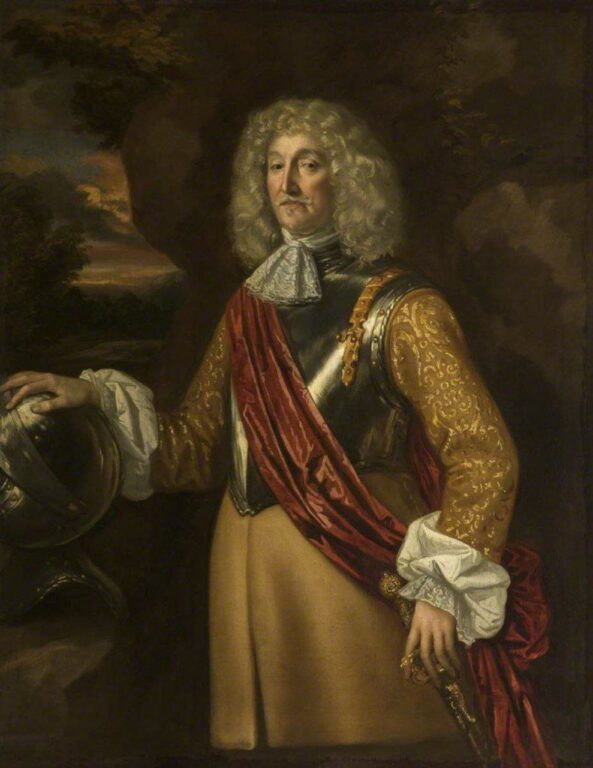 King Francis I of England
Meanwhile, in Portugal, discontent with the British was growing. The loss of the colonies hit merchants’ wallets hard, the common people were unhappy with the tax increases, and large British garrisons were stationed in Lisbon and Porto, the cost of which also fell on the Portuguese.
The Viceroy of Portugal at that time was the Duchess of Richmond and Viezu, Infanta Maria de Courtenay. The eldest child and only daughter of Francis I, she had a capricious temperament and was very affectionate, which is why she never married. She ruled no less despotically than her father.
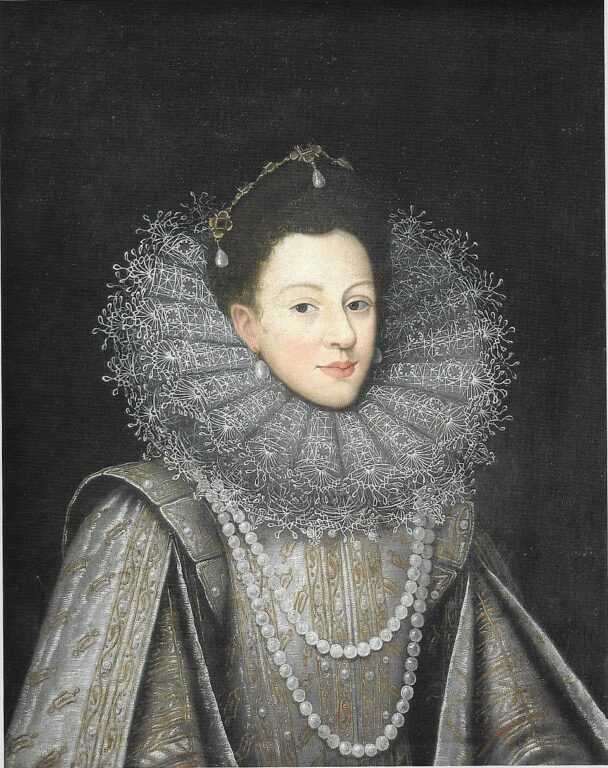 Infanta María de Courtenay, Duchess of Richmond and Viezou
The first popular uprisings broke out due to exorbitant taxes. On August 21, 1637, a revolt broke out in Évora; the rebels ransacked government offices and tore up tax rolls, and calls for the country’s independence began to ring out in the streets.
In this AI, Portuguese aristocrats—due to the dominance of the English in the administrative apparatus—supported the masses and steered them in the direction that suited their own interests.
Meanwhile, unrest was spreading throughout the country. In Lisbon, the nobility, having secured the consent of the principal claimant to the throne, Duke João of Braganza, took decisive action. On December 1, 1637, they staged an uprising in the capital, defeated the local garrison, and then stormed the Royal Palace and arrested Infanta Maria. From the palace balcony, the nobles proclaimed Duke João of Braganza as King of Portugal.
João IV of Braganza was crowned on December 15, 1637, by Rodrigo da Cunha, Archbishop of Lisbon; in January 1638, the Cortes swore allegiance to him.
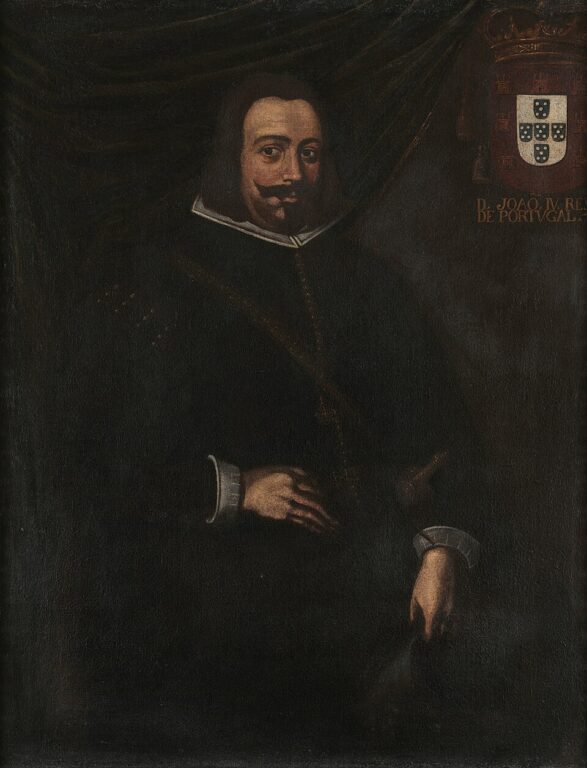 João IV of Braganza, the Rebel King
Only Porto remained under British control, where the uprising had been suppressed. It was besieged by General Matias de Albuquerque, the hero of Brazil’s defense against the Dutch (he was the governor of the Captaincy of Pernambuco and skillfully blamed the British for the ultimate failure).
Concerned about his daughter’s fate, Francis I entered into negotiations with John IV. The King of Portugal demanded very little: recognition of himself as the legitimate king of Portugal and all its colonies, and the withdrawal of English troops from the country. Francis I agreed to these terms on the condition that his daughter be released.
In early 1638, the English garrison, along with Infanta Maria, left Porto, but as soon as she reached the shores of England, Francis I immediately reneged on all agreements, sending a large army to Portugal under the command of Henry Somerset, Earl of Worcester. After the death of Francis I, the new king appointed him viceroy of Portugal.
John IV also did not command the troops; instead, one of the “Forty Conspirators,” Count Cantanhêde António Luís de Meneses, whom the king had appointed commander-in-chief, took command of the Portuguese forces.
Initially, the Portuguese were successful, but after de Meneses’s crushing defeat at Mortagua on January 14, 1642, the initiative shifted to the English. For this victory, the King elevated the Earl of Worcester from the rank of earl to that of marquis.
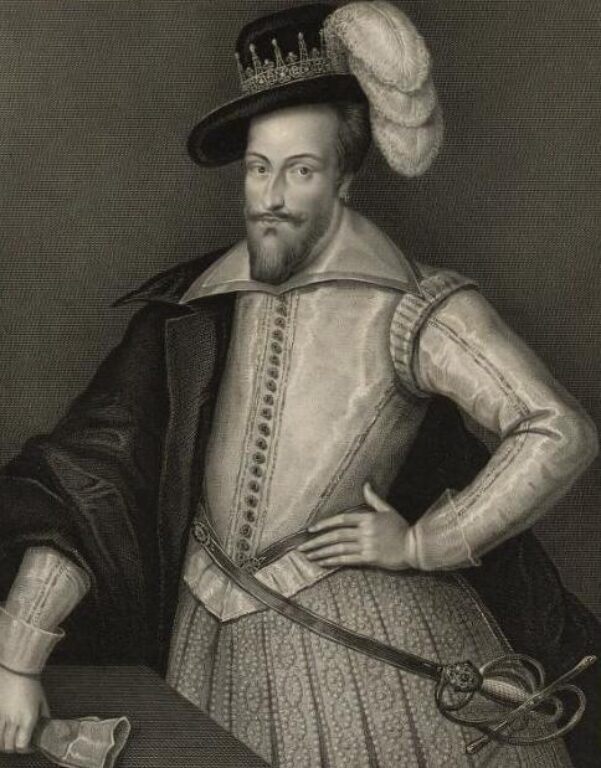 Baron Herbert and the Marquis of Worcester, Henry Somerset
John IV tried to turn to Spain for help, but the country was in the throes of turmoil (the Segador Uprising, the War of Aragon, compounded by the war with France) and had no time to spare for Portugal.
The uprising played into the hands of the Dutch. In 1638, Prince Johann Moritz von Nassau-Siegen captured the Portuguese fortress of São Jorge da Mina on the Gold Coast, in 1641, they captured the fortress of Malacca and the island of São Tomé after a battle, and in the same year they finally drove the Portuguese out of the Malabar Coast.
The administrations of most of the Portuguese colonies recognized João IV as their king, and the British had to take them by force, beating the Dutch to it. Thus, the British regained control of Luanda and repelled the Dutch attack.
From that point on, as the Portuguese and the English became embroiled in a power struggle with one another, the Dutch began to drive them out of Ceylon. They succeeded in forming an alliance with Rajasinghe II, the ruler of Kandy, and with his help, the Dutch captured Trincomalee and Batticaloa, The Dutch East India Company secured from Rajasinghe II the right to station garrisons there, turning these ports into the foundation of its power on the island. In the same year, 1640, the fortresses of Negombo and Galle were taken by storm.
The main rebel forces had been routed and suppressed by 1644, when Lisbon fell and João IV surrendered his sword to Henry Somerset, although isolated groups continued to resist the English for several more years. For example, Matias de Albuquerque continued the fight until his death in 1647. For many years afterward, English garrisons were stationed in Portugal’s major cities.
João IV and his brother, Senhor Duarte of Vila do Conde, were hanged in Lisbon’s main square on October 4, 1644, and on the scaffold, the cream of the Portuguese nobility lost their lives—those who had supported the Duke of Braganza and those who simply happened to be caught up in the crackdown. All their titles and lands were confiscated.
João IV managed to save his family. In 1643, his wife, Catarina de Couto, and their three children—Teodósio, Joana, and Afonso—were secretly smuggled by sea to France, where they found refuge.
Teodozio, who became a claimant to the Portuguese throne following his father’s execution, died in 1653 at the age of 19; his younger sister, Joana, also did not live long, passing away in the same year, 1653, at the age of 18. Catherine de Couto herself died a year later.
After the death of his older brother, Afonso became head of the dynasty, but despite four marriages, he had no children, and with his death in 1683 at the age of 40, the House of Braganza came to an end. Other collateral branches of the House of Aviz were too distantly related to him, so when a truly independent Portuguese monarchy was restored in 1848, Don Sebastián de Borbón, the great-grandson of King Carlos III of Spain and the founder of the Portuguese House of Bourbon—which continues to reign in that country to this day—was elected king.
King William IV conferred the title of Duke of Braganza upon the heir to the Portuguese throne, and the title of Prince of Brazil was created for him. The title of Prince of the Algarve, however, was abolished.
King Francis I of England and Portugal died in 1638 at the age of 73 and was succeeded by his grandson, Infante William, Duke of Cornwall and Lagos. With his accession to the throne came the return to power of the Marquis de Villiers, who once again became Royal Steward, Lord Constable of England and Lord Admiral, and in 1640—Lord Chancellor and Duke of Buckingham. This conferral sparked a storm of indignation among part of the aristocracy, particularly the Duke of Norfolk, Thomas Howard, the hereditary Lord Marshal—which is, after all, understandable, since prior to this, he had been the only duke in England not belonging to the royal family. In the Dukes of Norfolk, the Duke of Buckingham had made some implacable enemies.
William IV ascended the throne at the age of 20. He was in poor health, took little interest in affairs of state, and left them entirely in the hands of the Duke of Buckingham.
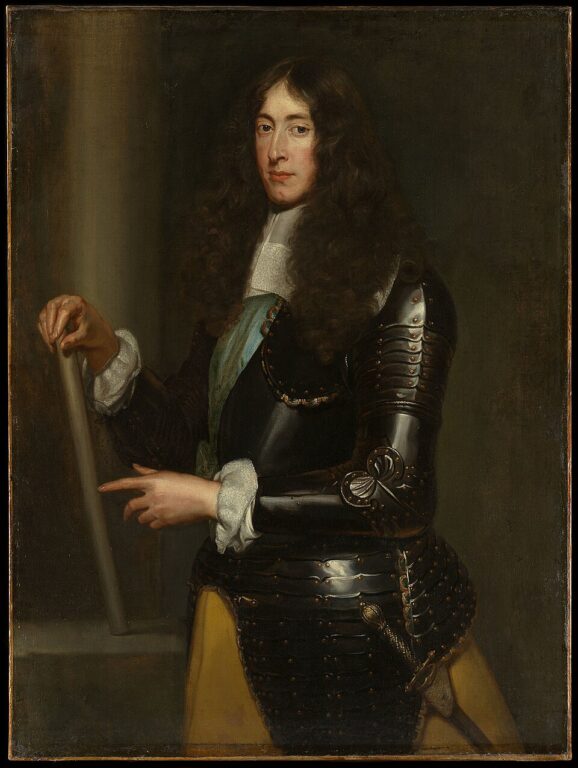 King William IV of England
The king closely followed the conflict between King Robert VII Stewart of Scotland and Parliament, and saw the civil war that had broken out as an opportunity to seize the country. In 1651, John Talbot, Earl of Shrewsbury, led English troops into Scotland; shortly before his death, he was replaced by John Paulet, Marquess of Winchester.
The Marquis of Winchester initially fared quite well, capturing Glasgow and Stirling, but during a failed assault on Edinburgh, he suffered heavy losses, which allowed Thomas Hardy, commander of the Parliamentary army, to seize the initiative: the English were driven out of Scotland, and hostilities shifted to northern England.
Due to internal conflict, William IV was unable to send reinforcements to the Marquis of Winchester and authorized him to conclude a peace treaty, which the Marquis of Winchester and Thomas Hardy signed in 1657 at Neidpath Castle.
Meanwhile, the situation in England continued to deteriorate. The ongoing crisis led to an open rebellion by the most impoverished segments of the population. Initially scattered, they soon coalesced into two peasant armies: in the south, they were led by the brewer Thomas Pride, and in the north by William Tyler, a former soldier from a peasant background, in 1653. This peasant war is known as the “Haymakers’ Revolt.”
General George Monk was sent to the south to suppress the rebellion, while in the north, the Anglo-Irish nobleman Lieutenant General James Butler, Marquis of Ormond, was in command. His regiments, recruited mainly from among the Irish, performed well in battles against the rebels (which is not surprising, given the active English colonization of the island). William IV took note of this, and Portuguese soldiers were recruited into General Monk’s regiments, which somewhat increased their combat effectiveness.
However, the royal court was not united during the Peasants’ War. Opposition to the king’s favorite, the Duke of Buckingham—the de facto ruler of the country—coalesced around the Duke of Norfolk, Thomas Howard, leaving William IV virtually alone. Seeking to resolve the problem somehow, the king convened a private council of bishops and lords in hopes of finding support, but they voted almost unanimously to find George Villars guilty of treason. With tears in his eyes, William IV signed the bill for Villiers’ execution on May 10, 1655, saying, “Lord Buckingham’s situation is happier than mine.”
During their last meeting, the Duke of Buckingham tried to cheer up and comfort his friend. He was beheaded on May 12, 1655, and a large crowd gathered to watch his execution.
In 1657, an uprising by the poor broke out in London itself. The rebels stormed the Palace of Westminster, the royal stables—where the English Parliament had previously sat—and openly demanded that Parliament be reconvened. They seized and ransacked Whitehall, the royal palace, but William IV and his family had already managed to flee the capital. A few days later, the uprising in the capital was brutally suppressed.
Thomas Pride died in 1658, and the rebellion in the south, having lost its leader, was quickly suppressed; in the north, it was suppressed over the course of the following year. William Tyler attempted to establish ties with the Scottish Parliament, for which he was betrayed by his own comrades to the Marquess of Ormonde and executed by quartering. Without a charismatic leader, the rebellion fragmented into several groups, which were crushed by the end of 1659.
France took advantage of England’s preoccupation with its internal conflict to seize England’s last remaining territories on the continent—the port of Calais and the Channel Islands.
As already mentioned, William IV was in poor health. The execution of his best—and, indeed, only—friend, the Duke of Buckingham, and his flight from the capital all took a heavy toll on his health. He began to fall ill more often and left his bed less and less. William IV died after a severe and prolonged illness in 1660 at the age of 42. He was succeeded by his only surviving child, the Prince of Wales and Brazil, Duke of Cornwall, Lagos, and Braganza, Infante Edward, who was 16 years old.
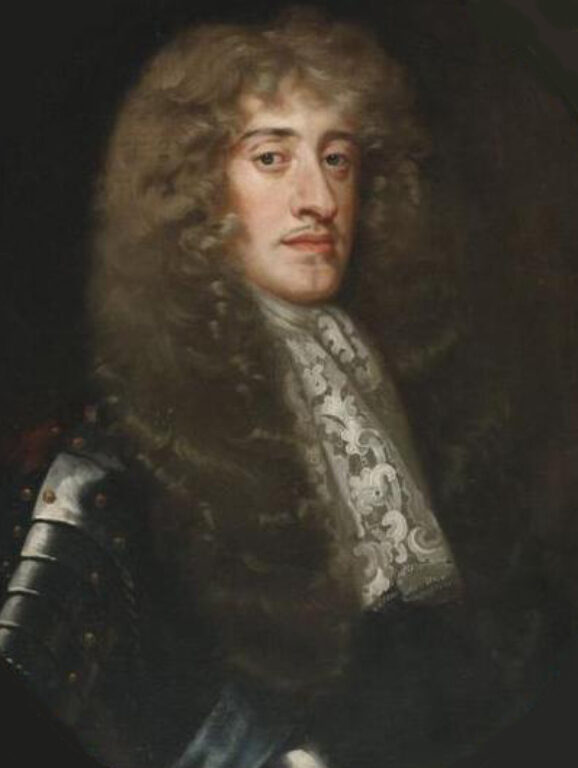 King Edward VI of England
The young king was well aware of his country’s dire situation and its need for reforms, but before that, he decided to resolve the conflict with the Netherlands.
Just as they had done before, the Dutch took advantage of internal turmoil within the union to expand their colonial empire. And this time, they decided to drive the Portuguese out of Ceylon once and for all.
In 1656, after a seven-month siege carried out jointly by Kandyan and Dutch forces, Colombo, the capital of the Portuguese possessions in Ceylon, surrendered. During 1658, Jaffna and a number of other Portuguese settlements were captured; their last stronghold in Ceylon, Fort Negapatam, fell that same year.
Meanwhile, in England, preparations were in full swing for a daring plan—a military expedition into the Netherlands itself. No, the English did not aim to conquer that country, but if the venture had succeeded, they would have been able to negotiate with the Dutch from a position of strength and exchange the captured cities for colonies.
Planning for the expedition was conducted in complete secrecy and under the close supervision of Edward VI; he delved into every detail, took an interest in even the smallest matters, and ordered that no expense be spared in organizing it.
Edward VI remained in London, while the expedition was led by William Cavendish, Marquis of Newcastle-upon-Tyne—a military man, polymath, poet, playwright, architect, and diplomat—the king himself had chosen him for this task. The English fleet, which was to defeat the Dutch ships and transport the troops of the Marquis of Newcastle-upon-to the continent, was personally commanded by the Lord Admiral of the Realm, Baron Craven of Uffington, William Craven.
In 1662, an English fleet flying the Dutch flag set sail from London and managed to reach the shores of the Republic of the United Provinces unnoticed. It encountered the Republic’s ships near the town of Scheveningen, Dutch Vice Admiral Baron Obdam Jacob van Wassenaar mistook them for his own ships and was taken by surprise when the English opened fire, during which the English flag was raised on their ships. The British emerged victorious in this battle, and Baron Obdam was killed in action.
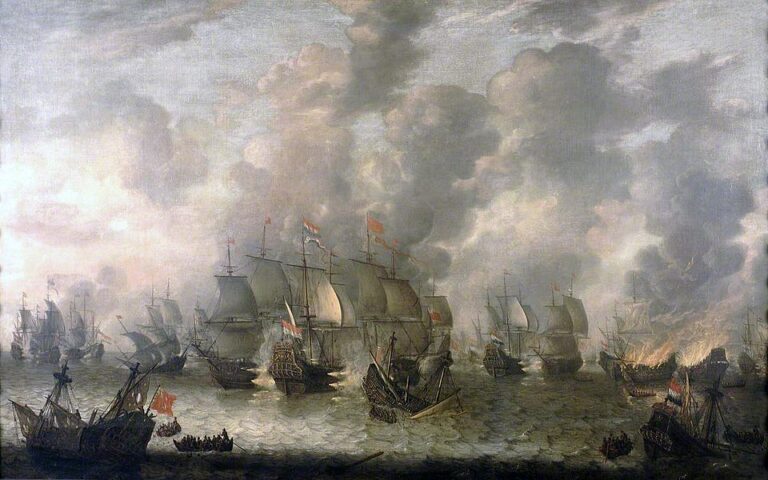 The Battle of Scheveningen
The English landed successfully and, after plundering several villages along the way, approached The Hague, near which they encountered the army of General Jacques de Fario; the battle ended in a stalemate. The sides withdrew to their starting positions, and the battle resumed the next day, but with the same result. Afterward, envoys from The Hague arrived at the Marquis of Newcastle-upon-Tyne’s camp, proposing to begin negotiations. Following instructions from London, the English commander agreed.
Pedro Jaime de Magalhães joined the negotiations, which had begun in The Hague, with a Portuguese delegation, so that it would appear as though the British were defending the interests of Portugal and its colonies. As a result of the negotiations, the Grand Pensionary of the Republic of the United Provinces, Jan de Witt, and the Marquis of Newcastle-upon-Tyne, signed the Treaty of The Hague on August 6, 1663, under which Portugal acknowledged the loss of its former colonies in exchange for monetary compensation and a guarantee of the inviolability of its remaining possessions.
In England, the treaty was considered a success, and both commanders received awards: Baron Craven of Uffington was elevated from baron to viscount, and the Marquis of Newcastle-upon-Tyne to duke, and both were admitted to the Order of the Garter. In 1665, Pedro Jaime de Magalhães was granted the title of Viscount of Fonte Arcada; six years later he became the first Portuguese to hold the office of Viceroy of Portugal, and in 1686 Edward VI made him Duke of Vila-Visosa (prior to this, the title of Marquis of Vila-Visosa had belonged to João, Duke of Braganza, but after the rebellion, it—like all his other titles—was confiscated).
Edward VI is also known for having created a large number of ducal titles. In addition to his sons, he conferred this title on several English and Portuguese aristocrats. After his coronation in 1660, he granted George Monk the titles of Earl of Torrington and Duke of Alberman, Marquess of Ormond and Earl of Ossory; James Butler received the title of Earl of Brecknock and was elevated from marquis to duke (the first ducal title in the Peerage of Ireland). In 1665, William Cavendish, Marquis of Newcastle-upon-Tyne, was elevated from marquis to duke, while William Craven, Baron Craven of Uffington, was elevated from baron to viscount (in 1688, he would be elevated again, to earl). In 1682, Edward VI granted the title of Duke of Beaufort to Baron Herbert and the Marquis of Worcester, Henry Somerset, not for merit but for lineage — he was the head of the only family descended in the direct male line from the Plantagenet dynasty, albeit through two illegitimate births. The last to receive ducal titles from the king were two Lord Chancellors—Baron Russell of Thornhouse and William Russell, Marquis of Bedford, who had previously been elevated from the rank of earl to that of marquis, who in 1694 was elevated from marquis to duke and received the title of Marquis of Tavistock, and in 1703, Lord Chancellor John Manners, Earl of Rutland, was elevated from earl to marquis, and a year later to duke, receiving the title of Marquis of Granby.
Following the death of Pedro de Lenkastra, Archbishop of Évora, Marquis of Torres-Novas, and Duke of Aveiro, his line died out, and the potential heiress, María de Guadalupe de Lancaster Cárdenas Manrique, died at a young age, and the titles and estates reverted to the crown. In 1690, Edward VI, who reigned in Portugal as Duarte II, granted them to the Constable of Portugal, Senhor Almendra, Valejas and Muta, Luís de Vasconcelos, who in 1678 received from the king the title of Count of Castelo-Melhor (in the Royal Institute, this title had been granted to his grandfather by the Spanish King Philip III). Subsequently, Luís de Vasconcelos became the last viceroy of Portugal.
For a long time, the Courtenay dynasty did not have many members. Henry IX had only one child, Edward, Prince of Wales, who died at the age of 30 and had three children: Catherine, William, and Margaret. Both of his daughters became nuns, while William III and Mary Stuart, the pretender to the Scottish throne, had a single son, Francis. King Francis I had six children: Catherine, who died in infancy; the Duchess of Richmond and Viez; Infanta Maria, who remained unmarried; the Duke of Cornwall and Lagos; Infante David; the father of King William IV; Infante Alfonso, Duke of York and Coimbra; Infante Thomas, Duke of Clarence and Guimarães; and Infante Lionel, Duke of Gloucester and Beja.
Infante Alfonso founded a younger branch of the family, which died out in 1809. Infante Thomas died at a young age, unmarried and childless; Infante Lionel was also unmarried and spent his life as a mercenary, fighting on the side of the Catholics in Europe. As for Maria’s infantes, it is unknown whether she had any children.
Of all of William IV’s children, only one survived: Edward VI. He and his wife, Maria Giovanna of Anjou—daughter of King John II of Naples—had five children:
1. Prince of Wales and Brazil, Duke of Cornwall and Braganza, Infante Philip;
2. Duke of Hereford and Lagos, Infante Frederick;
3. Infante Henry, Duke of Clarence and Beja;
4. Infante Alfred, Duke of Gloucester and Guarda;
5. Infante Leopold, Duke of Somerset and Barcelos.
While ducal titles for infantes had not previously been hereditary, under the English dynasty they became hereditary through the direct male line, and in the event of its extinction, they passed to the Crown.
The title “Infante,” conferred following the union with Portugal, became firmly established within the dynasty, and even after the dynasty lost the throne, its princes continue to use this title.
Unlike his great-great-grandfather, Edward VI did not bestow ducal titles on his grandsons; instead, he established courtesy titles for them in advance as heirs to their fathers’ duchies. The heir to the Prince of Wales and Brazil received the courtesy title of Earl of Cambridge and Ourém; the heir to the Duke of Hereford and Lagos received the courtesy title of Earl of Pembroke and Neiva; the Duke of Clarence and Beja—the Earl of Dorset and Abrantes; the Duke of Clarence and Beja—the Earl of Hartford and Mariálva; the Duke of Gloucester and Guarda—the title of Earl of Carlisle and Valenza; and the Duke of Somerset and Barcelos—the title of Earl of Warwick and Caminha.
Earlier, Francis I had established a title for the heir of his second son, Infante Alfonso—Count of Ulster and Trancoso. Its first holder was Infante August, who, incidentally, was married to Grand Duchess Elena Vladimirovna, the daughter of Emperor Vladimir VII Alexeyevich of Rus’.
As for Infante Alfonso himself, he was only able to return from France to England after his father ascended the throne. His grandfather never forgave him.
England under the Courtenay dynasty had never taken much interest in what was happening on the continent, and Edward VI continued in the same vein, announcing a policy of “splendid isolation” and non-interference in European affairs.
All of Edward VI’s efforts were focused on domestic affairs. He surrounded himself with talented individuals whom he appointed to key positions (for example, Henry Bennett, Keeper of the Privy Purse and later Lord Treasurer, who was responsible for financial reform and whose services earned him the title of Baron Arlington from the king in 1664, elevated from baron to earl in 1672), he brought order to the financial system, fostered industry, promoted stone construction, and devoted considerable resources to rebuilding the army and navy.
But perhaps his most significant achievement was the creation of a unified state from his three kingdoms. The idea had been in the air for a long time, and Edward VI moved toward it gradually, introducing English as a second language in legislation and official business in Portugal and standardizing legislation across all three states.
Ultimately, after lengthy preparations, King Edward VI, as absolute monarch throughout his dominions, enacted the “Act of Union” on July 22, 1707, which read:
Chapter 1 — The kingdoms of England, Portugal, and Ireland were merged into a single state known as the United Kingdom of England, Portugal, and Ireland, with its capital in London;
Chapter 2 — Succession to the throne would follow the direct male line, and in the event of its extinction, succession would pass through the female line; only persons of the Catholic faith would be eligible to succeed;
Chapter 3 — The new kingdom would have a single government (essentially English);
Chapters 4 through 18 — uniform rules were established regarding trade, taxes, currency, and other aspects of economic activity;
Chapter 19 — Portugal’s distinct legal system is preserved;
Chapter 20 — Hereditary government and judicial offices are retained;
Chapter 21 — The rights of royal cities are retained;
Chapter 22 — Portuguese aristocrats have equal rights with English aristocrats in trials involving nobles;
Chapter 23 — the creation of the Great Seal of the new kingdom;
Chapter 24 — any laws of England, Portugal, and Ireland that conflict with the terms of the Act are hereby declared null and void.
The territory of Portugal was divided into counties, and Lisbon lost its status as the capital, becoming the center of one of the counties; the office of viceroy was abolished. Although there were opponents of unification in Portugal, the process proceeded, on the whole, peacefully.
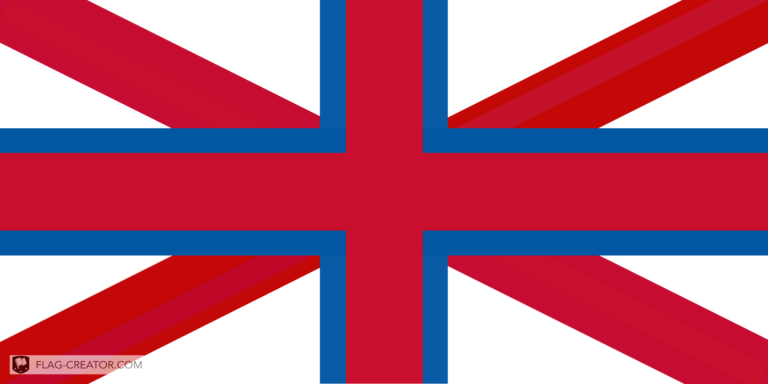
The new state adopted its own national symbols. For example, the flag of the United Kingdom of England, Portugal, and Ireland was a combination of the flags of England (St. George’s Cross) and Ireland (St. Patrick’s Cross), as well as the blue cross of Henry of Burgundy, the first Count of Portugal.
Edward VI died in 1711. His son, Philip I, succeeded him to the throne.