The History of Rus’ After Its Adoption of Western Christianity. Part 58. The Early Years of Vladimir X Petrovich’s Reign and the Formation of the Kingdom of Finland

Emperor Vladimir X Petrovich came to power on November 25, 1736, as a result of a palace coup. Everything was staged to make it appear as though the legitimate son of the great Peter I Fyodorovich had ascended to the throne, while in reality he had been forced to flee abroad due to the malicious intrigues of his uncle Eustace and had been deposed from the throne through his own fault.
On December 21, 1736, the Emperor adopted a new “Act of Succession,” which did not differ significantly from the 1716 act, repeating its provisions regarding members of the Ruling House, their maintenance, and the members themselves. The most significant changes concerned the order of succession to the throne—it followed the direct male line, and in the event of its extinction, succession would pass through the female line.
Vladimir X Petrovich treated the Saltykov clan—to which the former Empress Anna Vasilyevna belonged—with considerable leniency — Minister of War General Boyar Stepan Andreevich Saltykov and Chief of Police of the Capital General Boyar Vasily Fyodorovich Saltykov, who had been arrested during the coup, were released after they voluntarily resigned from their posts, although they were stripped of all the gifts they had received under Fyodor III Ivanovich. However, none of their relatives were affected by the disgrace, and they continued their service. Thus, Stepan Andreevich’s son, Lieutenant Field Marshal Boyar Pyotr Stepanovich Saltykov, swore allegiance to the new emperor and would go on to distinguish himself in the future, while his younger brother, General-Field Marshal Vladimir Stepanovich Saltykov, became vice-governor of the capital in 1741.
Vladimir X Petrovich granted the Uglich volost as a feudal estate to the Dowager Empress Anna Vasilyevna. While residing in Uglich—effectively in exile— the Dowager Empress Anna Vasilyevna died in 1761, and the feudal estate was transferred to her grandnephew, Ivan Alekseyevich Saltykov, with instructions to take the title of Prince of Uglich. The following year, he retired with the rank of general.
The new emperor was concerned about the fate of Grand Duchess and Duchess Praskovya Pavlovna Yaguzhinskaya and her son, Grand Duke and Duke Ivan Alekseyevich. They had been stripped of their rights to the throne and their princely titles. After a brief stay at the Bogolyubsky Palace, they were exiled to Kholmogory, where they lived in a small house belonging to a local priest. It was forbidden to tell Ivan about his origins or to teach him anything other than religion.
Along with Praskovya Pavlovna and her son, her half-brother, Sergei, was exiled to Kholmogory. She herself died of an illness in 1745.
The emperor feared that Ivan Alekseyevich might be used as a pretender to the throne, so his whereabouts were carefully concealed. Only a select few knew of him.
Following the assassination of Grand Duke and Duke of Schleswig-Holstein-Sonderburg-Beck Alexei Karlovich, his younger brother Karl Christian declared himself regent, and a few months later—full-fledged duke, having received recognition of this status from King Christian VI of Denmark.
In 1737, Elizabeth Petrovna returned to Russia from Lübeck with her husband, Karl August von Holstein-Gottorp. Her brother welcomed his sister warmly and restored them to the ruling house; however, because Karl August was in no hurry to convert to Catholicism, he did not receive the title of Grand Duke.
Grand Duchess Elizabeth Petrovna’s relationship with her older brother soured immediately when he appointed General Boyar Prince Vasily Vladimirovich Dolgorukov, who had kept them under house arrest in Lübeck for six years, as Minister of War and immediately conferred upon him the rank of field marshal. Prince Dolgorukov justified his actions by claiming that he was merely following orders to the letter.
Since Karl August was the Prince-Bishop of Lübeck, he appointed his younger brother, Adolf Frederick, to govern the principality in his absence. The Russian garrison remained in Lübeck, and following the appointment of Prince Dolgorukov as boyar, it came under the command of General Alexander Ivanovich Rumyantsev, who had been transferred from his post as governor of Aper; in 1744, he became a boyar.
On August 21, 1737, General Grigory Petrovich Chernyshev, Governor-General of the capital, was dismissed; Illarion Gavrilovich Vorontsov, who had previously served as governor of Kostroma, and was granted the rank of general and the title of boyar. Meanwhile, General-Field Marshal Alexander Borisovich Buturlin, commander of the capital’s troops, who was among the first to recognize Vladimir X Petrovich as his emperor, was promoted and transferred to the position of General Police Commissioner of the capital.
The emperor decided to make it clear from the outset that he had no intention of acting in the interests of either of the two court factions by initiating a joint trial of Boyar Osterman and his implacable opponent, Artemy Volynsky. The case was not heard by the Council of Centumviers, but by a special commission comprising General Andrei Ivanovich Ushakov, head of the Office of Secret and Criminal Investigations; Prince Ivan Yuryevich Trubetskoy, Minister of Justice; Lieutenant Field Marshal Vasily Yakovlevich Levashov (who personally blamed Osterman for his defeat at the hands of Nadir Khan, citing Osterman’s appointment of Lieutenant Field Marshal Prince Ludwig Johann (Ivan Yakovlevich) von Hessen-Gombursky as the Caucasian governor—whose incompetence, in his opinion, had caused the defeat), Prince Alexander Borisovich Kurakin, Master of the Horse (he was a supporter of Boyar Osterman), the Governor-General of Kyiv, General Boyar Prince Ivan Fyodorovich Baryatinsky (considered a supporter of Volynsky), and Centumvir Prince Alexei Danilovich Golitsyn.
The commission found them guilty of treason and a number of other crimes; they were stripped of their titles, ranks, honors, and property, and sentenced to being broken on the wheel. The sentence was carried out on January 18, 1737.
The lavish coronation of Vladimir X Petrovich took place on January 7, 1737; he was crowned by Joseph IV Ivanovich Volynsky, Archbishop of Kyiv and Vladimir and Primate of Ruthenia.
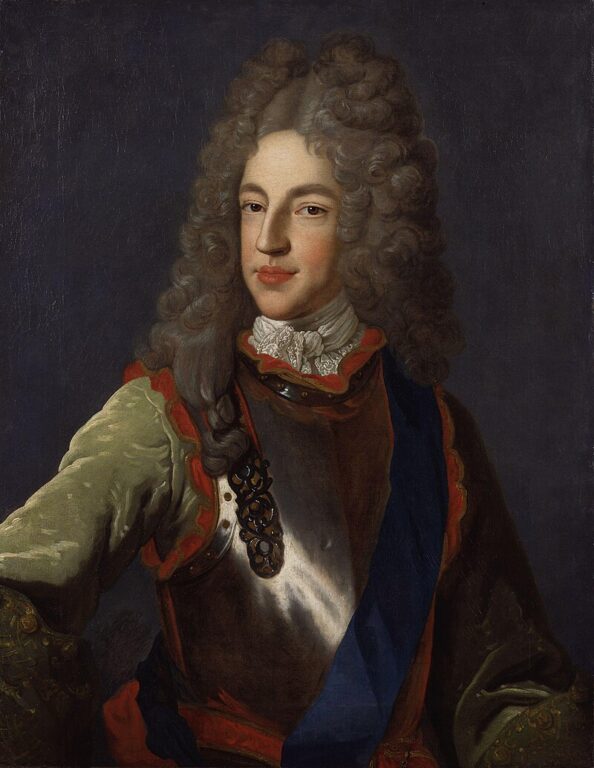 Vladimir X Petrovich
At official receptions, Vladimir X Petrovich claimed that he had returned from twenty years of exile because the imperial throne had been seized by unworthy individuals (among whom he counted his own son), who were leading the empire to ruin, while he himself was destined to become the greatest emperor in history. Every night he wandered through the empty palace, following the ghost of his mother, and heard her last words as if in real life: “You are destined to be the greatest emperor in history.”
Vladimir X Petrovich changed drastically after becoming emperor. He became rude, arrogant, cruel, and quick to punish; he considered himself far superior and smarter than others, and would not tolerate any objections.
The emperor and his father shared one common trait: a love of German culture, but the son took this love further than his father did. At his court, the Russian language fell completely out of use; Vladimir X Petrovich wished to speak only German, the language in which he communicated with his mother.
His sons, who were born and raised in Denmark, were taught German and Latin, but not Russian, since Baron Waldemar von Oldenburg (as he was known at the time) could not have imagined that he would ever return to his homeland. While visiting his mother in Copenhagen, he would sometimes meet with the Russian ambassador to the Danish court, Alexei Petrovich Bestuzhev-Ryumin, to ask how things were going back home.
The emperor did not insist that his sons study the Russian language and culture, but Grand Duke Andrei Vladimirovich, who had now become heir to the throne, eagerly set about learning them, eventually mastering the language to the point where he could speak with almost no accent. As for his younger brother, Grand Duke Yuri Vladimirovich, he took up the study only under pressure from his wife, Grand Duchess Daria Illarionovna Vorontsova, but he did not succeed in this, and for the rest of his life spoke with a strong accent, frequently interspersing words from other languages.
Vladimir X Petrovich took up residence in the Grand Palace, which once again became his home. The ostentatious and tasteless Teodorhof was demolished, and a park known as the Summer Park was laid out in its place.
With Vladimir X Petrovich’s rise to power, the Vorontsov family began its ascent to prominence; the future emperor had taken refuge in their home for half a year. In March 1737, Chamber Noble Mikhail Illarionovich Vorontsov was appointed chancellor (keeper of the imperial seal), and after the death of the Minister of Foreign Affairs, Boyar Prince Alexei Mikhailovich Cherkassky, in 1742, he took his place. His younger brother Roman became Governor-General of Astrakhan with the rank of General-Field Marshal, and another younger brother, Ivan, was appointed Minister of Estates in 1746 at the age of 27; all of them were granted boyar titles.
Their younger sister, as mentioned above, Darya Illarionovna, became the wife of the emperor’s second son, Grand Duke Yuri Vladimirovich, the most handsome man in the empire.
Vladimir X Petrovich reinstated Stanisław Rafałowicz Leszczyński as governor of the Kingdom of Poland and granted him the title of boyar. Upon his return to Lublin, Leszczyński secured the support of the nobility and began to act more cautiously.
Emperor Charles VI died on October 20, 1740. Both of his daughters had died in infancy, and all of his extensive holdings were inherited by his distant relative, Frederick Ferdinand von Habsburg, Count of Tyrol. However, he was too distantly related to the late emperor (their common ancestor lived in the 16th century), and therefore all the claimants to the Austrian inheritance (Charles Albert, Elector of Bavaria; Frederick Augustus II, Elector of Saxony, and Charles Emmanuel, Prince of Piedmont and Duke of Savoy) once again asserted their claims, and new contenders joined their ranks.
France saw this as an opportunity to rid itself of a centuries-old adversary. Prussia, the Electorate of the Palatinate, and the Archbishopric and Electorate of Cologne were successfully recruited to join the alliance against Austria; Karl Albert was promised the imperial crown in the event of victory.
As early as December 16, 1740, Prussia attacked Silesia; the following year, France and Bavaria entered the war against Austria. On January 24, 1742, the Elector of Bavaria was elected Holy Roman Emperor of the German Nation as Charles VII Albert.
In light of these events, Rus’s position in the conflict became extremely important. Previously, it had been bound by a military alliance with Austria, but Vladimir X Petrovich had his own opinion regarding agreements he had not concluded himself and did not say anything specific. However, France decided, just in case, to tie down Russia’s forces and prevent it from coming to Austria’s aid.
In 1741, the young Charles XIII—also known as Charles Peter Ulrich, Duke of Holstein-Gottorp—was King of Sweden; he was more interested in music than in politics. Under his reign, the country was governed by the Riksdag, which since 1738 had been dominated by the “Hats” party, hostile toward Russia. It was actively supported by France, with which Sweden had concluded a treaty of friendship and was also to receive subsidies from France amounting to 300,000 riksdaler per year for a period of three years.
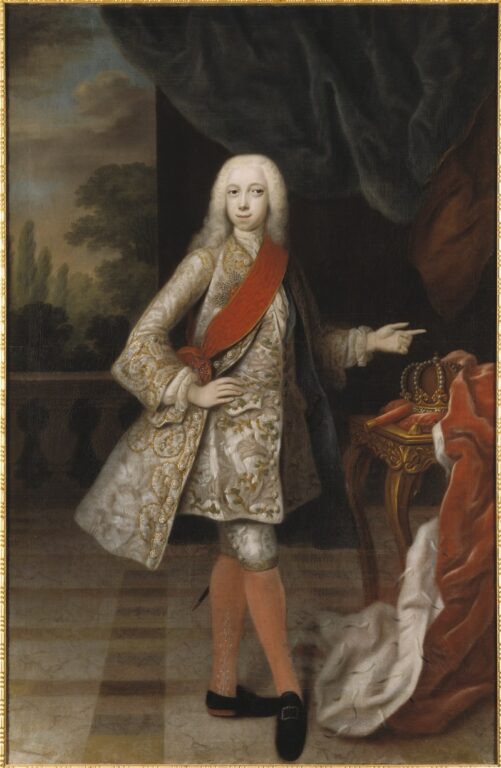 King Carl XIII of Sweden, of Holstein-Gottorp
It is perhaps worth noting that Charles XIII had close ties to the Bogolyubsky dynasty. His mother, Grand Duchess Anna Petrovna, was the daughter of Emperor Peter I Fedorovich; thus, the Swedish king was the nephew of Vladimir X Petrovich.
On August 8, 1741, Mikhail Petrovich Bestuzhev-Ryumin, the Russian ambassador to Sweden, was informed that Sweden was declaring war on Russia. The reasons cited were Russia’s interference in Sweden’s internal politics (support for the “Caps” party) and a ban on the export of grain to Sweden.
General Count Carl Emil Levenhaupt was appointed commander-in-chief of the Swedish army; under his command were two corps, the first led by Major General Carl Heinrich Wrangel, and the second by Lieutenant General Baron Heinrich Magnus von Buddenbrock. The Russian forces were led by the Governor-General of Vyborg, Lieutenant Field Marshal Boyar Pyotr Stepanovich Saltykov.
The first battle between the Swedes and the Russians took place on September 3, 1741, near the Vilmandrand Fortress, and Saltykov emerged victorious. The fortress was captured, and the Swedish commander, Major General Wrangel, was taken prisoner.
Due to poor weather conditions, the Russian army’s advance was slow; it was not until June 13, 1742, that Saltykov reached Friedrichshamn, which the Swedes had hastily abandoned after first destroying it, Levenhaupt withdrew to Helsingfors. Morale in the Swedish army began to decline, and desertions began; on August 1, 1742, Borgo was captured without a fight, followed six days later by Neuslot, and on August 26 by Tavasgus. Saltykov caught up with Levenhaupt near Helsingfors, cutting off his route to Turku. Levenhaupt and von Buddenbrock, having left their army, traveled to Stockholm, summoned to report to the Riksdag on their actions. Command was entrusted to Major General Jean Louis Busquet, who signed the Swedish army’s surrender on August 24, and on August 26, Saltykov entered Helsingfors. Soon the Russians occupied the entire territory of Finland, and Saltykov established his headquarters in Helsingfors.
The Baltic Fleet, commanded by Lieutenant Admiral Zakhar Danilovich Mishukov, did everything it could to avoid military action throughout the war, a fact the commander attributed to the dilapidated condition of the ships and the poorly trained crew. For this, he was removed from his post, and the fleet was personally taken over by the Minister of the Navy, Admiral Boyar Nikolai Fyodorovich Golovin.
The only naval battle of that war took place on May 20, 1743, off Koproström, ending in the defeat of Swedish Vice Admiral Abraham Falkengrin.
Norway became an ally of Rus’ in this war, hoping to reclaim the territories it had lost to Sweden under the Treaty of Akershus. Their troops tied down part of Sweden’s forces.
On October 29, 1742, in Åbo, Saltykov, acting on the orders of Vladimir X Petrovich, convened the Landtag. Each town and hundred sent one delegate from the nobility and two from the clergy, the bourgeoisie, and the peasants to discuss important pressing issues, but unexpectedly, many Finnish deputies spoke out in favor of establishing a Kingdom of Finland independent of Sweden and offered the crown to Karl August von Holstein-Gottorp. Puzzled by this turn of events, Saltykov requested instructions from the emperor.
Vladimir X Petrovich liked the idea, but he tweaked it slightly. As a result, on December 9, 1742, the Landtag in Åbo proclaimed the independent Kingdom of Finland, with Grand Duchess Elizabeth Petrovna as its queen; her husband, Karl August, Prince-Bishop of Lübeck, received the title of Prince Consort.
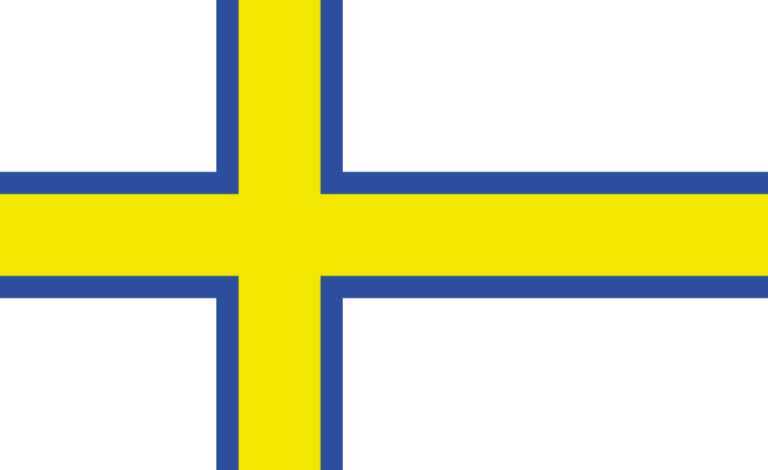 Flag of the Kingdom of Finland
On December 21, 1742, the Landtag in Turku signed a treaty with the Russian Empire, under which it ceded part of the Kymenhärkä fief and the fortress of Neuslot to Russia, and in return received guarantees of its independence from Sweden.
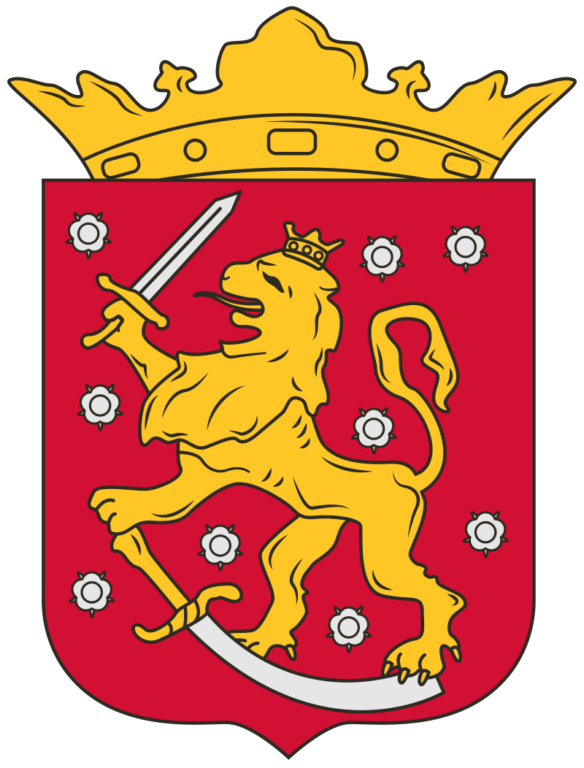 Coat of Arms of the Kingdom of Finland
Peace negotiations between Sweden and Russia, joined by Norwegian diplomats, began in January 1743. At first, the Swedes were merely hoping to buy time while awaiting support, but when it became clear that no help was to be expected from France, they decided to make peace.
A peace treaty between Sweden, Rus’, and Norway was signed at Åbo Castle on June 17, 1743. Under the terms of the treaty, Sweden recognized the independence of the Kingdom of Finland and returned the provinces of Trøndelag, Nordland, and Troms to Norway.
Levenhaupt and von Buddenbrock were declared the main culprits for Sweden’s defeat. They were arrested, and a court-martial presided over by Field Marshal Baron Hugo Johan Hamilton sentenced them to death. Von Buddenbrock was beheaded on July 20, 1743, and Levengaupt shortly thereafter, on August 4 of the same year, following a failed escape attempt.
Upon becoming Queen of Finland, Elizabeth Petrovna pursued a policy of religious tolerance, while at the same time patronizing Catholicism. The cathedral in Turku, the kingdom’s capital, along with several other churches, was returned or handed over to the Catholics; monasteries were founded; and the Catholic diocese of Turku was reestablished, though it was now part of the Metropolitan See of Vladimir-on-Klyazma; meanwhile, a Lutheran bishop continued to live and work in the city. The heir to the Finnish throne, Elizabeth Augusta, was raised as a Catholic.
The coronation of Elizabeth Petrovna as Queen of Finland took place on August 18, 1743; her husband attended as a guest of honor.
Elizaveta Petrovna had no desire to learn Swedish, the language spoken by the ruling elite, and her husband—a Lutheran by faith—served as her intermediary (and, often, her interpreter). She ruled autocratically; Carl August had no influence whatsoever, and it seems this suited him just fine.
Vladimir X Petrovich viewed the Kingdom of Finland as a buffer between Rus’ and Sweden, but his headstrong sister saw her kingdom as a great power and paid less and less attention to Vladimir-on-Klyazma. Moreover, as it soon became clear, Elizabeth Petrovna had her own territorial claims against Russia.
****
The reign of Constant III was a long one, and with each passing year, the discontent of Romania’s high nobility grew. The aristocrats expected Constant III to restore their former status, but the basileus, though he ruled “in the old manner”, relied on his officers from the new-style army—with whose help he had reestablished control over the country—rather than on the aristocrats, who, during the upheavals of the early 18th century, had lost a significant portion of their landholdings and former influence.
In 1738, Vladimir X Petrovich released Constantine III’s only child, Michael, from captivity, where he had been held for thirty years. During that time, the prince—who had previously been a staunch adherent of the old order—had converted to Catholicism, married, been widowed, and had children. After his release from his gilded cage, he embarked on a six-month tour of European capitals and arrived in Nicaea.
Constant III did not recognize his own son. Over the years, Michael had become a Westernizer through and through; he dressed in the latest Parisian fashions and could not stand his father’s reactionary court, so he began construction of a Baroque-style palace. His only concession was his conversion to Orthodox Christianity.
The aristocracy—the noble families of the Angels, the Laskaris, the Komnenos, the Makremvolites, the Kallimaki, the Kontostefanos, the Douk, the Vatatsos, the Philanthropinos, and others, whose roots stretched back into the mists of time, understood that Constantine III was growing old and would never be young again, and none of them intended to allow a Westernizer to ascend the throne; Many expressed the view that the Palaiologos dynasty had occupied the throne for too long and that an elective monarchy should be established. As a result, a conspiracy took shape.
The conspirators managed—sometimes through bribery, sometimes by playing on the ambitions and grievances of others—to win over part of the army to their side and, in 1742, to capture Nicaea with troops loyal to them. The troops loyal to the basileus were defeated, but Constantine III managed to escape.
The aristocrats gathered at the Cathedral of Saint Sophia and declared themselves the Synclite. On June 10, 1742, this assembly announced the deposition of Constantine III from the throne, along with the entire Palaiologos dynasty, and five days later elected Lazaros Komnenos as basileus; he was crowned that same day by Ecumenical Patriarch Paisios and chose to reign under the name Alexander.
Constantine III had only one hope left—the German Guard, the most combat-ready unit in the Roman army. It consisted of two regiments, whose officers were entirely foreigners, and in which foreigners made up the majority of the soldiers.
From 1728 onward, General Christoph Minich commanded the German Guard. A hereditary engineer, an intelligent and educated man, he served successively in France, Hesse-Darmstadt, Hesse-Kassel, and Saxony, until he entered the service of the Tsar in 1721. While in Romania, he stopped using his first name, Burkhard, preferring his middle name, as it was of Greek origin.
Constant III arrived at Minich’s headquarters and demanded that he suppress the rebellion, but Minich, sensing his own strength and the basileus’s weakness, demanded that Constant III pay the guard its annual salary, and to appoint him as mesazon (the empire’s highest-ranking official and the basileus’s chief advisor) and megadomestikos (commander-in-chief of the entire army, reporting directly to the basileus). The basileus flatly refused to comply with these conditions and demanded obedience, but Minich subtly hinted that the basileus’s enemies had also made him tempting offers—and that they were far more accommodating. In the end, Constant III gave in and, gritting his teeth, accepted the terms and signed the corresponding decrees.
The rebel forces attacked the guard’s camp, but the guard held its ground; it was only when Constant III officially appointed Minich as mesazon and megadomestikos that it took active measures.
The battle between General Christoph Minich’s German Guard and the rebel forces, personally commanded by Alexander III, took place near Nicaea on August 10, 1742, and ended in victory for Minich; and many prisoners were taken, including the rebellious tsar.
Alexander III had many enemies and rivals among the influential families, and as soon as he showed a moment of weakness, they seized the opportunity; on August 12, 1742, the Synclite deposed him and handed the crown to the young and easily manipulated Nicholas Laskaris, but he was basileus for no more than a day—on August 13, 1742, Minich captured Nicaea and by evening had crushed the last pockets of resistance.
Constantine III thirsted for blood, but power no longer belonged to him. Christopher Minich acted with mercy; the most prominent conspirators were exiled, Lazarus Komnenos and Nicholas Laskaris were executed, and Paisius repented and remained in his see.
The defining event of this crisis was that Christopher Minich came to power in Romania and remained there for 25 long years. That same August 1742, he urged Constantine III to abdicate, but the basileus reacted furiously and, in protest, left for his country residence.
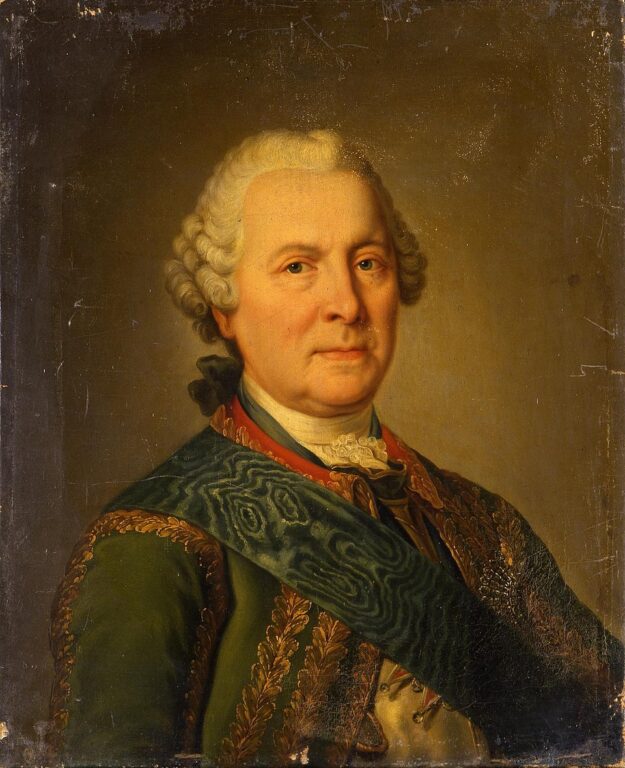 Field Marshal Count Christoph von Minnich
Christoph Minich continued the progressive reforms of Emperor Andrew I, but unlike him—while remaining a Lutheran—he implemented them cautiously, taking national sensibilities into account. He devoted considerable effort to rebuilding the fleet and visited the shipyards on numerous occasions. Prior to this, the army had been the only sphere in which Constant III had continued his nephew’s reforms.
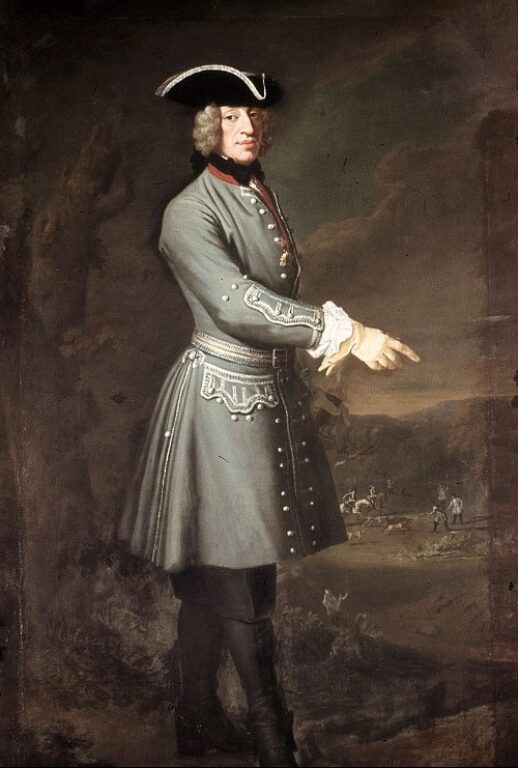 Emperor Michael XI Palaiologos
Prince Michael was crowned co-ruler alongside his father on January 12, 1743, by Ecumenical Patriarch Paisios, and made considerable efforts to introduce a European way of life. The Tsar popularized balls, shaving beards, European clothing, and wigs; he revived the practice, discontinued by Constantine III, of conferring the title of count for meritorious service (the first of the 12 people to whom he conferred the title of Count of the Roman Empire was Christophorus Minich, who was also granted the noble prefix “von”), and introduced the title of baron, while conferring princely titles on the empire’s most distinguished families. Awards of the Order of Saint Constantine the Great, established by Andrew I in 1698 and forgotten after his assassination, resumed.