Due to the high risk of political disputes, this topic is under special monitoring. Only technical discussions are permitted. Thank you in advance.
Right now, both the Russian and global internet are literally “buzzing” about the “bird” issue—specifically, discussions are centered on the “Flamingo” strategic winged missile, a test launch of which was recently demonstrated by the Ukrainian armed forces. Since guided weapons are my area of interest, I couldn’t help but take notice of this model.
What is known about the FP-5 “Flamingo”?
* The missile was developed by the UK-registered company “Milanion Group,” which has been working closely with the Ukrainian tech startup “Fire Point” since 2021. The designation “FP-5” actually stands for “Fire Point-5”;
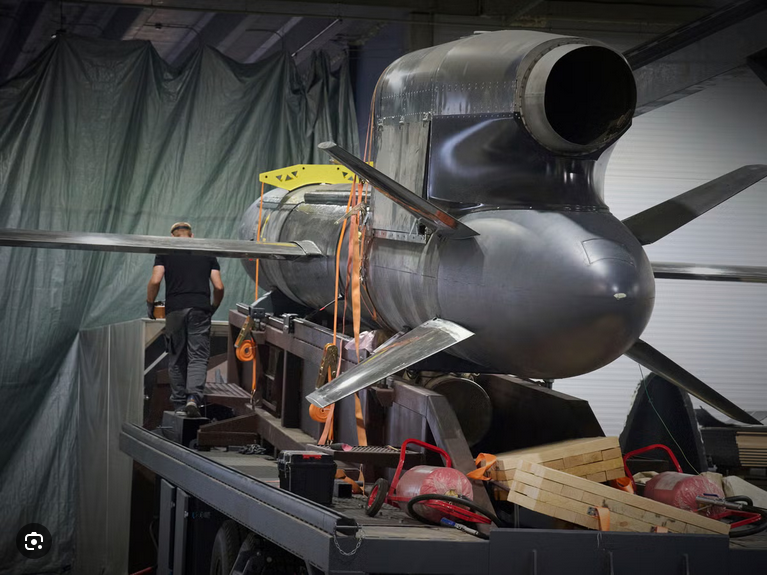
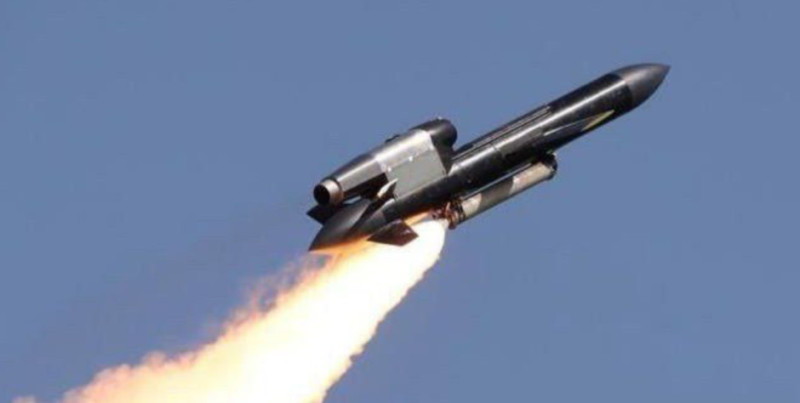
* The rocket’s design is quite unusual—a long cylindrical body with a propulsion nacelle above the fuselage, a straight wing in the central section, and an X-shaped tail. This configuration has already drawn comparisons to the German Fi-103 winged missile from World War II, but it is far more likely that the designers were inspired by the Soviet Tu-141 “Strizh” (although it uses a different configuration—with the engine inside the fuselage and an upward-facing air intake). It is interesting to note that a number of such UAVs, which were in the reserve of the Ukrainian Armed Forces, were converted in 2022–2023 into improvised cruise missiles, with a warhead installed in place of the landing parachute;
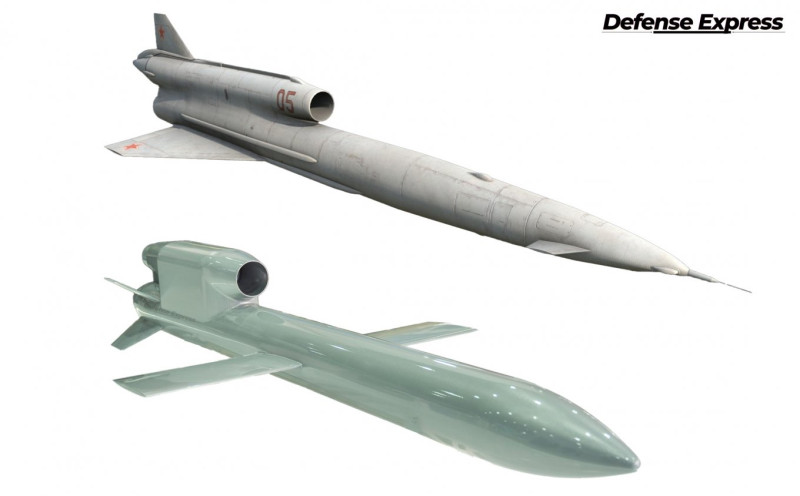
Tu-141 “Strizh” and FP-5 “Flamingo” (not to scale)
* The missile’s fuselage is of monocoque construction, with the fiberglass outer skin serving as the primary load-bearing element. Judging by the published images, the fuselage has transverse reinforcements in the areas where the warhead (in the nose) and the engine (in the tail) are located;
* The missile’s tail fin configuration is X-shaped, which is actually not very typical for such large aircraft (with a wingspan of about 6 meters and a weight of over 6 metric tons) and is most likely not optimal. Typically, this type of tail configuration is used for missiles that require high three-dimensional maneuverability—which is hardly the case for a strategic cruise missile. I would venture to suggest that the choice of an X-shaped tail was primarily driven by the missile’s layout: a main engine on top and a booster under the fuselage would have made it significantly more difficult to install conventional control surfaces with horizontal and vertical stabilizers.
* It is interesting to note that the control surfaces are one-piece and rotate as a whole. Again, this is a feature more typical of tactical missiles than of heavy aircraft. Apparently, this design choice was driven purely by manufacturing considerations—integral, fully rotating control surfaces are easier to manufacture and install in the field than fixed stabilizers with movable control edges;
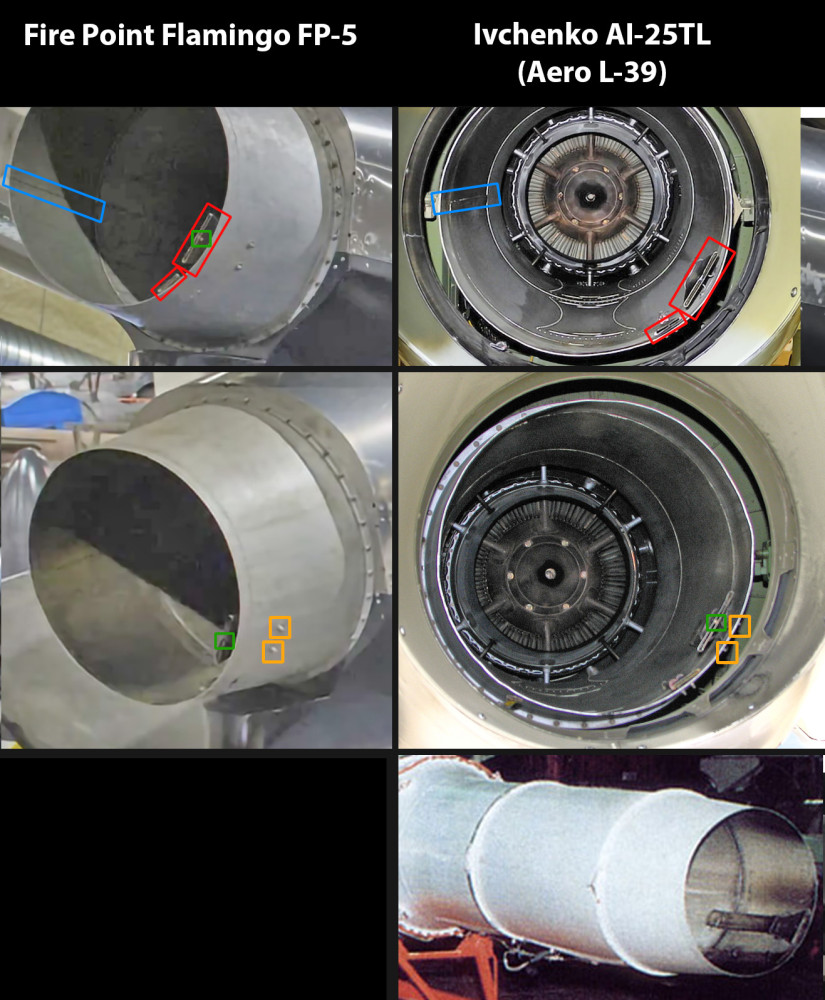
* The rocket appears to use a compact, two-circuit “Ivchenko-Progress” turbojet engine as its powerplant AI-25TL, which is widely used on light training aircraft (for example, the L-39 “Albatros,” the primary training aircraft of the Warsaw Pact, was equipped with this engine). The use of such a large aircraft engine on winged missiles generally seems rather unusual. In all likelihood, the powerplant was selected based on its availability in production and proven operational reliability;
* The missile’s range is stated as 3,000 kilometers. Although some analysts have expressed doubts that such a range is achievable with an AI-25-series engine (which is not particularly fuel-efficient), it appears realistic in theory. For example, the Chinese “Hongdu” JL-8, equipped with a WS-11 engine—a licensed copy of the AI-25TLK engine—has a range of approximately 2,000 km with a maximum takeoff weight of 4.3 metric tons. It seems quite likely that a rocket one-third heavier (with neither a cockpit nor landing gear, and designed for single-use) equipped with a similar engine could achieve a range one-third greater;
* The rocket is launched using a jettisonable solid-fuel booster suspended beneath the fuselage at the tail section. It is unclear exactly what type of booster is used to launch the rocket—but given its considerable weight, it must clearly be significantly heavier than standard JATO boosters;
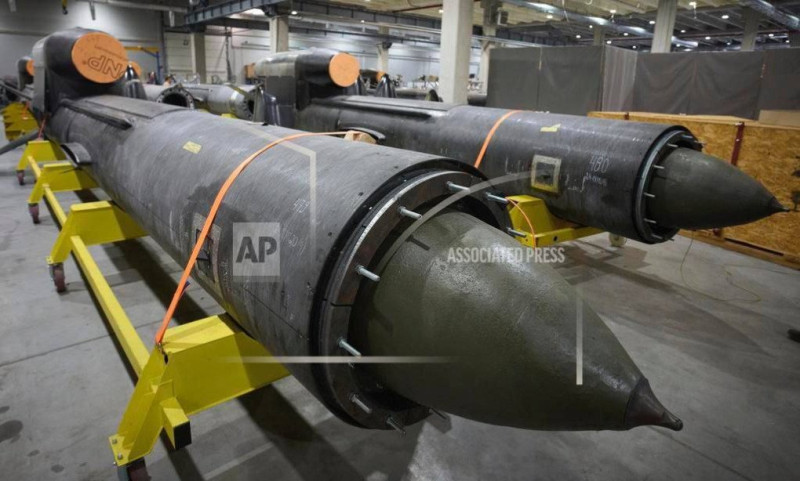
* The missile’s warhead is a standard aircraft bomb weighing approximately 1,000 kg. Judging by the published photographs, this is a U.S.-made munition: either an Mk-84 high-explosive fragmentation bomb or a BLU-109/B bunker-busting bomb with an inertial tail fuse. The warhead is housed in the nose section, behind the fairing;
* It has been reported that the missile was designed using technologies to reduce radar detectability. Since the missile’s shape shows absolutely no indication of the use of “stealth” technologies (such as flat geometric surfaces), it appears that some reduction in detectability is achieved solely by manufacturing most of the fuselage, wing, and tail section from radar-transparent composite materials. In this case, the two major reflective elements are the engine and the warhead—however, the placement of the engine on the missile’s back somewhat reduces its detectability by ground-based radars;
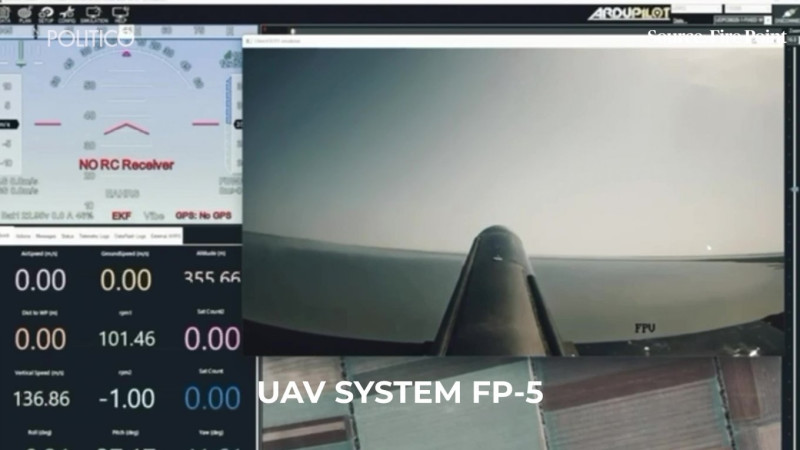
* The missile’s guidance system is described as an autonomous inertial system, supplemented by high-precision satellite guidance (GPS/GNNS) with algorithms designed to resist jamming. The missile most likely does not have a homing system capable of independently identifying a target; its nose section is entirely occupied by the warhead. It is interesting to note that the live broadcast of the test flight shows the inscription “No RC Receiver,” meaning the missile has no radio command control and is not designed to receive commands in flight;
* It is unclear whether the missile is capable of flying at an extremely low altitude while following the contours of the terrain. In the test video provided, the missile flies at a low altitude over water. It is possible that a satellite navigation system could enable the missile to fly at low altitude over relatively flat terrain—but there are some doubts about this;
* Given the lack of a homing system, the claimed high accuracy—a circular error probability (CEP) of up to 14 meters—seems rather doubtful. Theoretically, high-quality satellite navigation combined with effective position data processing algorithms could achieve such a result, but it seems unlikely that a relatively large and less-maneuverable cruise missile could be guided to the target with the required precision;
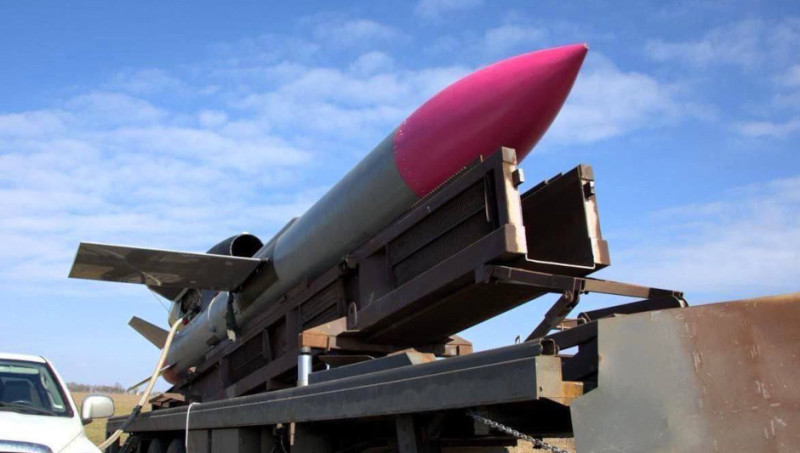
* The rocket is launched from a short launch rail mounted on a two-axle wheeled trailer. The rocket is apparently transported to the launch site partially disassembled, with its wings and tail section removed to reduce its overall dimensions—these components are reassembled during pre-launch preparations. It is also possible that the rocket uses non-cartridge fuel tanks and is fueled with aviation fuel immediately before launch (to reduce transport weight and ensure safe transport over rough terrain). This most likely explains the stated pre-launch preparation time of 40–60 minutes;
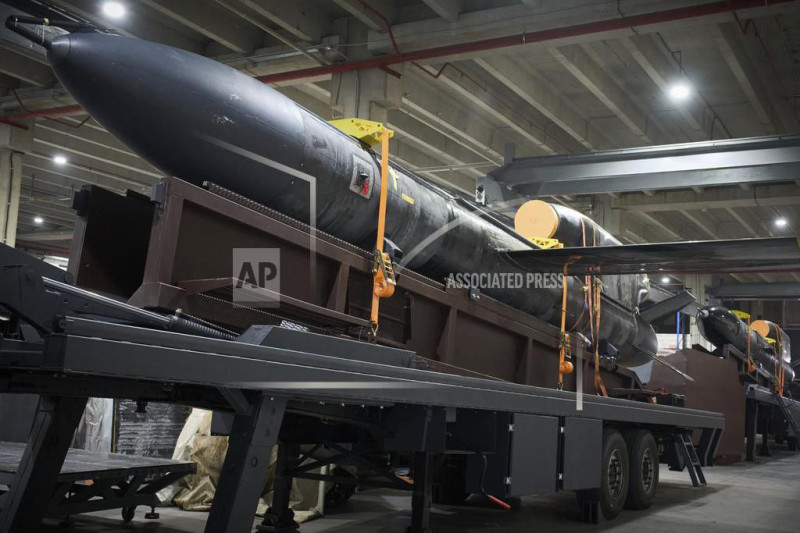
Overall, the “Flamingo” design clearly prioritizes ease of production and long range over other characteristics. Although the missile’s design includes some elements intended to reduce its detectability, but virtually all of them boil down to the use of radar-transparent materials on the fuselage—which, by modern standards, is hardly capable of concealing a relatively large aircraft in even a moderately dense radar field. The missile’s ability to fly at ultra-low altitudes over rugged terrain is also questionable. On the other hand, the design appears to be clearly adapted for mass production under conditions of inadequately equipped manufacturing facilities; as indicated by the use of a proven (albeit not optimal for this type of weapon) propulsion system and geometrically simple components (including the load-bearing fuselage).