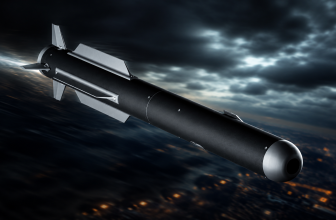
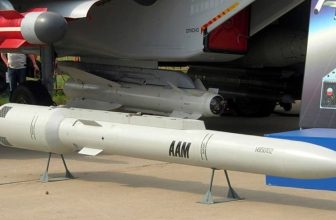
In early 2026, at one of Norway’s northern test sites, the German-British startup Hypersonica conducted a test of its HS-1 prototype—and on its very first attempt, accelerated the vehicle to speeds exceeding Mach 6. For the European private sector, this event marked a milestone: previously, such speeds had been demonstrated mainly by large government programs.
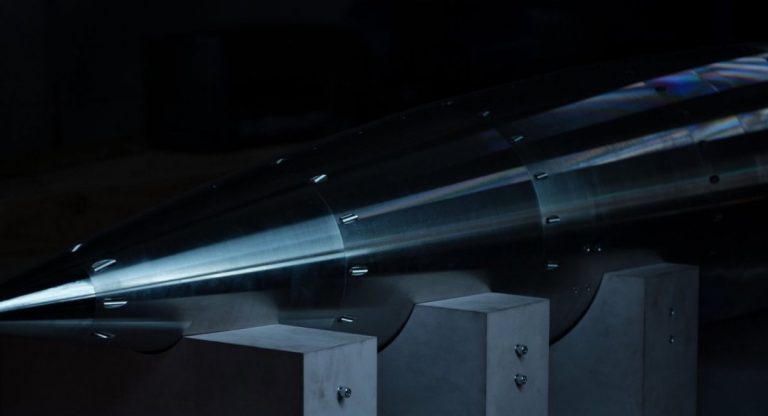
The key point in this story isn’t just the speed itself, but the pace of development. It took about nine months from concept to flight. For hypersonic projects, that’s almost “startup speed,” whereas traditional development cycles are usually measured in years.
Contents:
Who is behind the project?

The project is led by Hypersonica, a company founded in 2023 by Oxford graduates. The team has opted for a modular architecture: key subsystems—from the airframe to the avionics—are designed so that they can be quickly updated and scaled for different tasks.
The company’s stated goal is to bring the system to TRL-9 by 2029—that is, to progress from a demonstrator to a fully operational prototype.
What the First Flight of the HS-1 Revealed
During the HS-1 test:
- traveled a distance of over 300 km in the atmosphere;
- reached speeds exceeding Mach 6;
- confirmed the operational capability of key subsystems at hypersonic speeds;
- Transmitted telemetry normally throughout the entire flight path.
According to the developer, the design withstood extreme thermal and aerodynamic loads, and the control system demonstrated stability at high speeds. For a maiden flight, this is more important than “impressive numbers”: the prototype proved that the engineering system functions as a unified whole.
Architecture: Rapid Design as a Strategy
The HS-1 was developed using the “rapid cycle” approach:
- active use of digital twins and numerical simulation;
- standardization of components;
- the ability to quickly swap out modules between tests.
This approach has made it possible to shorten development timelines and, according to the company, significantly reduce development costs compared to traditional defense programs. While traditional hypersonic projects often require budgets in the billions, Hypersonica is trying to prove that agile engineering can be just as effective.
What’s next?
The first flight is a test of the fundamentals. Going forward, the company plans to:
- a series of tests with more complex profiles;
- testing of controlled flight segments at hypersonic speeds;
- expanding the range of maneuvers;
- the transition to full-scale system integration.
The ultimate goal is to create a European hypersonic platform capable of carrying out strike missions in line with modern defense requirements.
Why Is This Prototype Important?

Until now, hypersonic systems have been associated with government giants and long-term R&D efforts. The emergence of a private European program that quickly brought a vehicle up to Mach 6+ signals a paradigm shift.
The HS-1 is not a finished weapon, but rather proof of technological viability. It demonstrates that:
- Hypersonic development may proceed more quickly;
- Private companies are capable of competing in the “big leagues” of defense technology;
- Europe is striving to develop its own independent hypersonic capabilities.
Hard Facts About the HS-1

- speed: over Mach 6;
- range of the first test: 300+ km;
- Time from concept to flight: 9 months;
- Target maturity level: TRL-9 by 2029;
- Developer: Hypersonica.
The HS-1 is just the first step so far, but it’s a very rapid one. And in the hypersonic race, the speed of development may prove to be just as important as the speed of the rocket itself.
Based on material from https://en.defence-ua.com/weapon_and_tech/german_british_startups_hypersonic_missile_prototype_reaches_mach_6_in_first_test_flight-17465.html