AC-130 Hercules. Flying Artillery: How an Ordinary Transport Plane Became the Most Fearsome Aircraft of the War

My colleagues have written a great many articles about the AC-130 Hercules on this website, but in mine, I want to go into more detail about the mounted armament and the use of this marvel of engineering. So, please take a look.
In the history of aviation, few aircraft have undergone such a dramatic change in their intended purpose as the AC-130 Hercules. Starting out as a standard military transport aircraft, it evolved into a unique “flying artillery ship” capable of providing troops with precise and devastating fire support for hours on end.
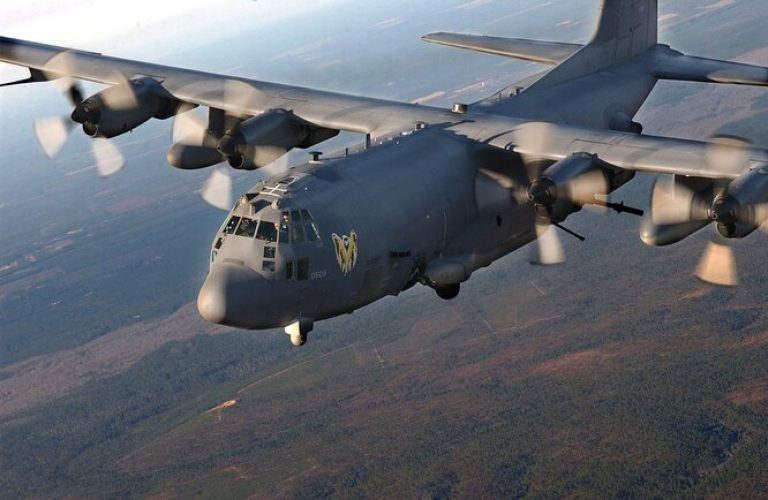
The AC-130 is neither a fighter nor a bomber in the traditional sense. It is a weapon of constant presence, designed for night operations, precision, and psychological pressure.
Origins: Vietnam and the Birth of Ganship
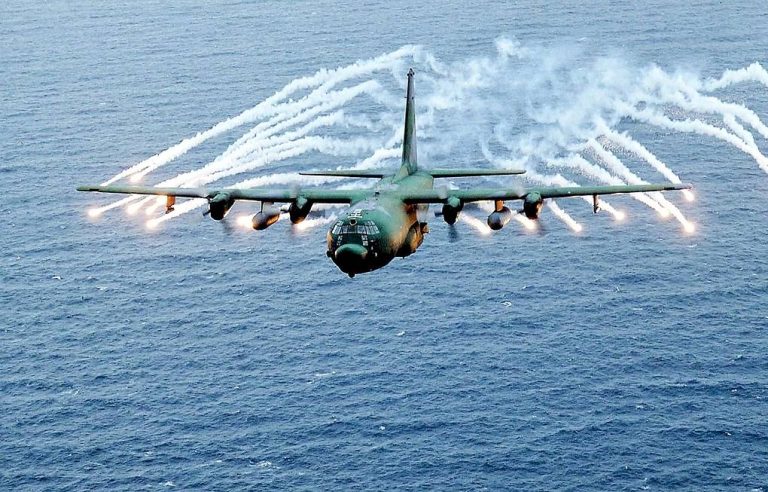
DCA01 — 20020307 — WASHINGTON, DC, UNITED STATES : This US Air Force file photo obtained 07 March 2002 shows an Air Force AC-130 gunship on a training exercise. The AC-130, like the one pictured, and the A-10 Thunderbolt aircraft have been providing close air support for coalition forces involved in Operation Anaconda. Air Force bombers and fighters, along with other coalition aircraft, have dropped more than 450 bombs to support the operation. EPA PHOTO USAF/-/USAF/jim
The idea of an aircraft that fires sideways rather than forward first emerged in the 1960s during the Vietnam War. The U.S. military was looking for a way to effectively destroy enemy supply convoys, camps, and hidden positions without resorting to carpet bombing.
The C-130 Hercules was chosen as the platform—a reliable, durable transport aircraft with a high payload capacity and excellent stability at low speeds.
That’s how the first gunship came to be—an aircraft that doesn’t attack a target in a single pass, but circles around it, keeping it under constant fire.
Why Shooting from the Side Turned Out to Be Brilliant
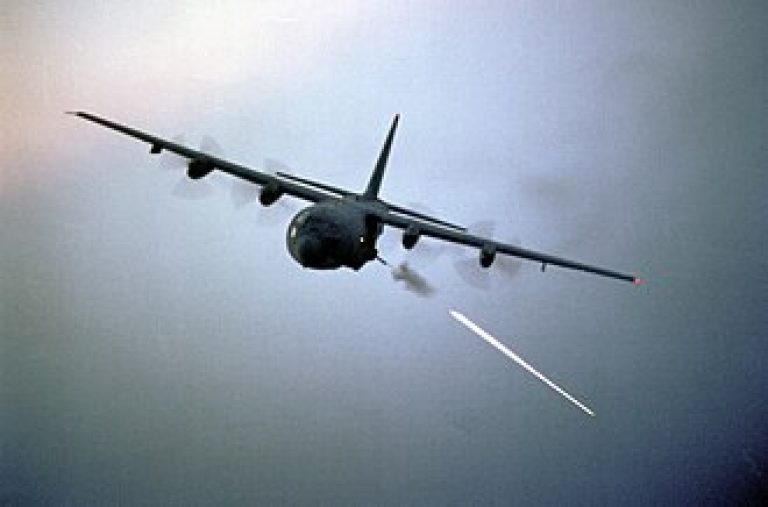
An air-to-air left front view of an AC-130 Hercules aircraft during target practice.
The AC-130 enters a left turn and keeps the target constantly in its sights. This provides several advantages at once:
- high shooting accuracy
- the ability to adjust fire in real time
- prolonged exposure to a single target
- close coordination with ground forces
In essence, the AC-130 has become an airborne artillery battery that can change positions at any time.
AC-130 Armament: From Machine Guns to a Flying Howitzer
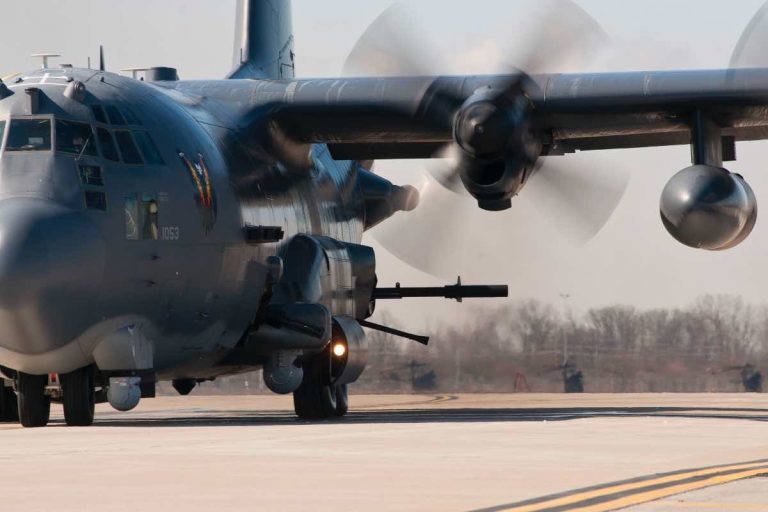
The AC-130’s main feature is its armament. Unlike fighters and bombers, it does not drop ordnance or attack while in flight. It fires methodically, effectively serving as an aerial artillery platform.
All of the main weapons are mounted along the left side of the aircraft and fire perpendicular to the flight path. During an attack, the AC-130 flies in a circle, keeping the target within its engagement zone.
Small-Caliber Weapons: Accuracy and Suppression
20-mm M61 Vulcan six-barrel cannon (early versions)
Early versions of the AC-130 were equipped with an aircraft cannon with a very high rate of fire. It was designed for:
- casualties,
- suppression of minor positions,
- firing on convoys and unprotected targets.
Over time, it was phased out: its high rate of fire was excessive, and its accuracy was inferior to that of heavier guns.
GAU-12/U Equalizer 25-mm cannon
This cannon became the “workhorse” of the gunship:
- high accuracy,
- good armor penetration,
- It is effective against light armored vehicles and fortifications.
It occupies a middle ground between rapid-fire systems and heavy artillery.
Multi-purpose gun: 40 mm
40-mm Bofors automatic cannon
One of the most well-known systems on the AC-130.
Used for:
- damage to buildings,
- fortifications,
- equipment,
- medium-range targets.
This is a versatile weapon that combines accuracy, power, and maneuverability. For decades, the 40-mm cannon was considered the optimal caliber for gunships.
Main weapon: 105-mm howitzer
M102 105-mm Howitzer
The most unusual and impressive feature of the AC-130’s armament is a full-fledged field howitzer mounted inside the aircraft.
Its objectives:
- destruction of fortified targets,
- destruction of buildings,
- the destruction of command posts,
- suppressing the enemy’s strong positions.
The howitzer fires special ammunition, and the recoil is counteracted by the aircraft’s design and stabilization system. A shot fired from it is no longer an airstrike, but an artillery barrage from the sky.
The AC-130 remains the only production aircraft in the world armed with a cannon of this caliber.
The Shift to High-Precision Weapons
Over time, it became clear that there weren’t enough cannons to cover all scenarios. Modern versions of the AC-130 were equipped with guided weapons:
Guided missiles
- small air-to-surface missiles,
- are designed for precision strikes,
- allow you to attack targets beyond the range of the cannons.
Guided bombs
- high-precision weapons with minimal collateral damage,
- is used against high-priority targets,
- Integrated with onboard sensors and laser target designation.
The AC-130 can now operate not only as artillery but also as a precision-strike platform.
How It All Works Together
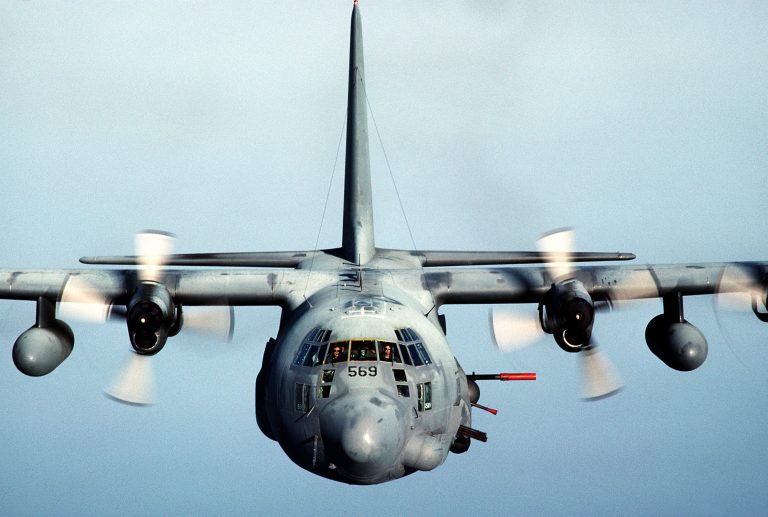
An air-to-air front view of a AC-130 Hercules aircraft in-flight near Hurlburt Field.
The AC-130’s weapons are not used indiscriminately. The crew selects the type of weapon based on the target:
- Infantry → Small-caliber guns
- Equipment and Buildings → 40 mm
- Fortified targets → 105 mm
- Long-range and high-priority targets → guided weapons
All of this is controlled by a centralized fire control system that takes into account:
- aircraft speed,
- height,
- horsetail,
- wind,
- type of ammunition.
Why Was This Model So Unique?
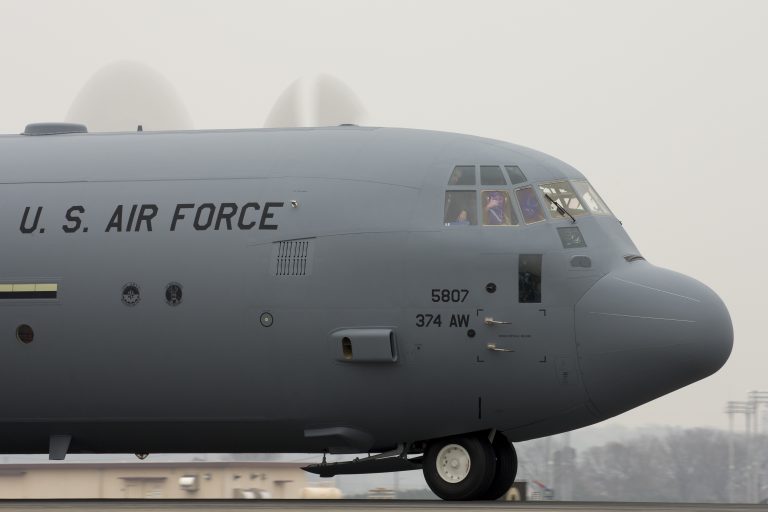
Maj. Jesse Klaetsch, 36th Airlift Squadron C-130J pilot, and Lt. Col. Denny Davies, 36th Airlift Squadron commander, greet after touching down at Yokota Air Base, Japan, March 6, 2017. This is the first C-130J to be assigned to Pacific Air Forces. Yokota serves as the primary Western Pacific airlift hub for U.S. Air Force peacetime and contingency operations. Missions include tactical air land, airdrop, aeromedical evacuation, special operations and distinguished visitor airlift.(U.S. Air Force photo by Yasuo Osakabe)
The AC-130 does not attempt to be a versatile aircraft. It is designed for a single purpose—prolonged, precise, and overwhelming fire support.
It is precisely the combination of:
- cannons,
- howitzers,
- guided weapons,
- and modern sensors
made it one of the most recognizable and unusual combat aircraft in aviation history.
Role in Military History
The AC-130 has been involved in nearly all major U.S. conflicts since the late 1960s:
- Vietnam
- Panama
- Persian Gulf
- Iraq and Afghanistan
- counterterrorism operations
For special forces units, his appearance over the area of operations often meant one thing: support would be precise and uninterrupted.
Why the AC-130 Remains Unique
Even in the age of drones and precision-guided weapons, the AC-130 remains in high demand because it combines:
- power
- prolonged presence over the target
- flexibility
- real-time decision-making by the crew
It’s not just an airplane—it’s an entire flying fire support system.
Conclusion
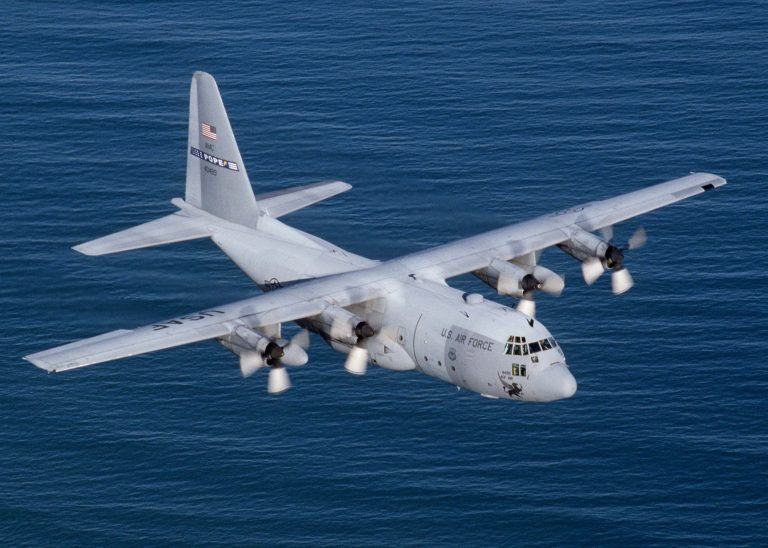
A C-130E from the 2nd Airlift Squadron, Pope AFB, N.C., flies over the Atlantic Ocean along the North Carolina coast. The C-130 Hercules primarily performs the intratheater portion of the airlift mission. The aircraft is capable of operating from rough, dirt strips and is the prime transport for paradropping troops and equipment into hostile areas. (U.S. Air Force photo by Tech. Sgt. Howard Blair)
The AC-130 Hercules is a rare example of how a simple transport aircraft became a legend in military aviation. Its history is one of adaptation, engineering ingenuity, and the pursuit of unconventional solutions.
It isn’t the fastest or the most modern, but when precise and relentless fire from the sky is needed, the AC-130 remains one of the most effective tools of war.