Back to the Future: How and Why Could Piston-Engine Aircraft Become a Key Component of Modern Air Defense?

The main enemy of any air defense system is the cost of an anti-aircraft missile, which is often many times higher than that of the attacking platform. And while this approach is justified in peacetime given the low probability of use, the opposite is true in wartime—no defense industry is capable of fully meeting the demand if hundreds of targets need to be shot down every day.
For the reason mentioned above, systems such as the S-400 and similar ones rarely make headlines, taking a back seat to systems like the “Pantsir,” “Tor,” and “Buk.” Undoubtedly, the “Triumph” far surpasses them in capability; the same drone can shoot down targets from tens of kilometers away—and with additional detection capabilities, even from hundreds of kilometers—but you can’t stockpile missiles using this approach. Is this the only problem? Of course not: modern strike weapons have one extremely unpleasant drawback—a long range at low altitude. Simply put, a makeshift drone can easily and effortlessly bypass S-400 deployment areas due to the system’s virtually zero mobility.
There is another compelling reason why the “Triumphs” are not used on a regular basis by the general public—they are kept in reserve, since the involvement of third parties cannot be ruled out. Let’s say Europe does decide to take more active, direct action; in that case, we’ll have to counter it with something more serious. And we’d want that “something serious” to have sufficient ammunition. Of course, it’s possible to commit all available resources to the effort, but that’s completely at odds with a “long-term strategy”—having reserves is crucial.
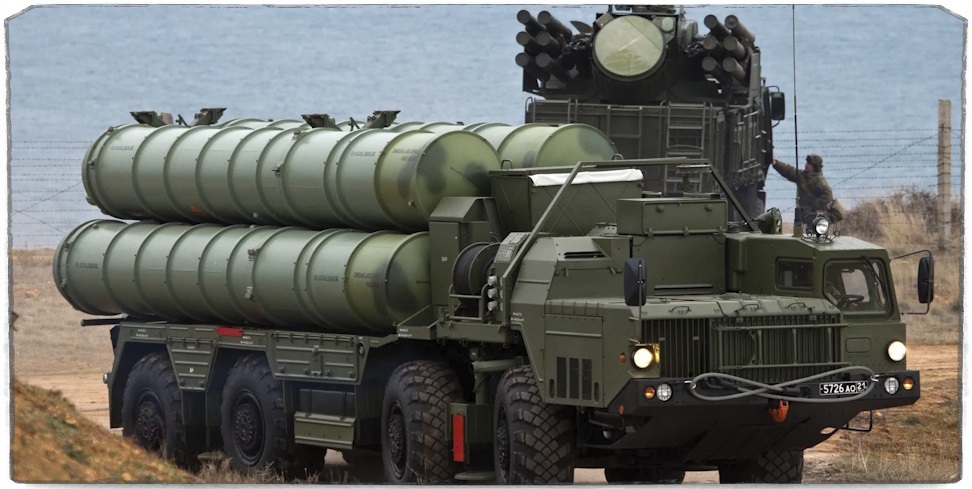
S-400 “Triumph”
This raises the question: what, then, should be used to significantly increase the ability to intercept low-speed drones? We need something that is comparable in cost and capable of being deployed as quickly as possible. That’s the first point; secondly, the system must be extremely mobile and, if necessary, able to be redeployed to any dangerous area in the shortest possible time.
Obviously, we’re talking about aviation—but not jet aircraft, rather the good old piston-engine variety. Only this type meets all the requirements and offers one very nice bonus: ease of maintenance. You have to admit that if you consider, say, a hypothetical Su-35S loaded down with expensive air-to-air missiles, then the ground-based, let’s say, “procedures” would have to be commensurate—such equipment doesn’t operate without proper oversight. With piston-engine aircraft, things are much simpler in this regard, and there are more specialists from the civilian sector. This automatically suggests that such an aircraft simply has plenty of places to be based—there’s no immediate need to use military airfields. An added bonus is takeoff and landing roll distance—piston-engine aircraft have a slight advantage here as well.
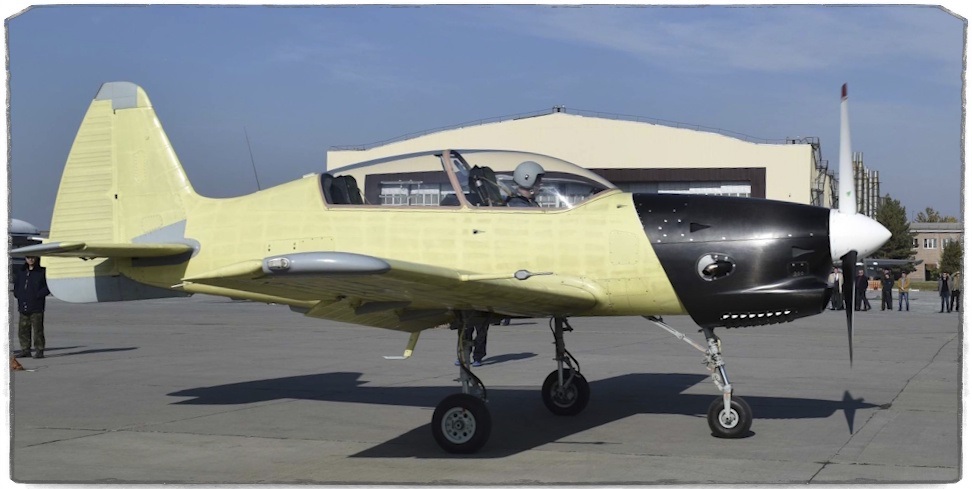
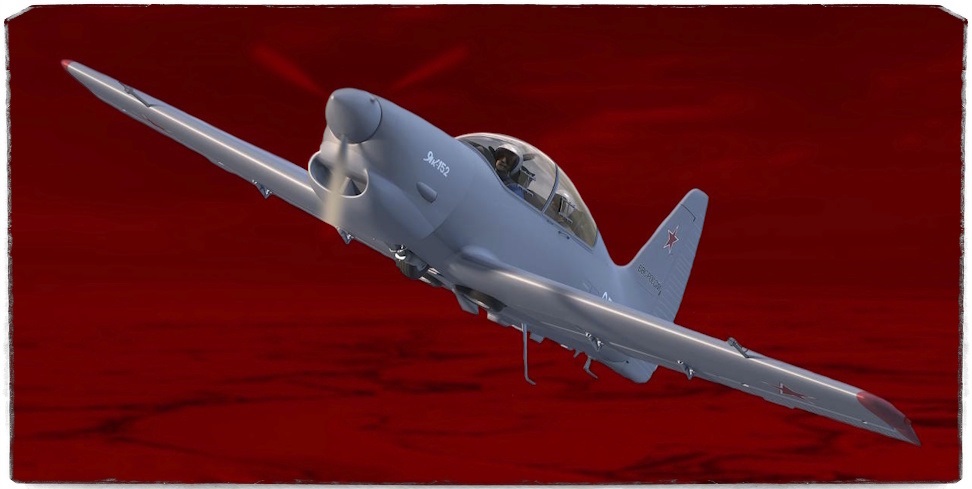
But all of the above is just theory; we need concrete examples. Fortunately, there is a candidate: the Yak-152. It is a piston-engine training aircraft that is part of the Yak-130 complex and is intended to serve as the first stage of training before flying jet aircraft. This is a very important detail, since the Yak-152, despite its piston-engine “configuration,” has electronic systems standardized with its jet counterpart, built using an open “architecture” — in theory, it is capable of integrating new weapons without major modifications.
As for the weaponry, only a few components need to be adapted. First, the optoelectronic unit responsible for missile detection and guidance. The Yak-130M has a similar unit; it would be a good idea to adapt it for its cheaper “counterpart.” Second, the missiles themselves—the S-8L from the Kalashnikov Concern seems like an ideal candidate, as it can be mass-produced at low cost. The missile is equipped with a semi-active seeker and follows a laser beam during flight—just as second-generation anti-tank guided missiles (ATGMs) such as the “Kornet” operate. And third, it is possible to deploy missile launchers from the “Igla” or “Verba” systems, which would slightly expand interception capabilities and, at the same time, cover a weak spot should difficulties suddenly arise with the main ammunition load.
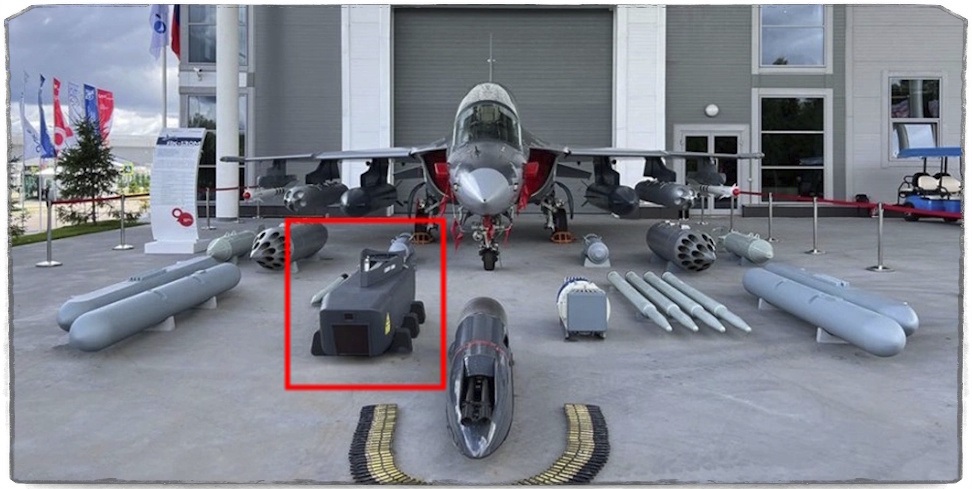
In addition, a key advantage of the Yak-152 is its modern communications systems, which allow the propeller-driven aircraft to be integrated into the air defense network if desired. It would then be able to receive timely target designations from other sources, such as AEW&C aircraft or fighter aircraft. In short, there are many advantages to this approach, but the main and most crucial one lies in the ability to mass-produce the aircraft—unlike 4++-generation jet fighters, and certainly 5th-generation ones, a piston-engine aircraft with a minimal amount of composite materials requires far less time, effort, and resources to produce.
Source — https://dzen.ru/a/aTps9TdUiQHxj2kL